Ricky Nelson Left Behind A Fortune So Big, It Made His Family Filthy Rich…. Have A Look
For a generation of Americans, Ricky Nelson did something almost no celebrity could do today.
He grew up in their living rooms.
Millions watched him as the quiet younger son on The Adventures of Ozzie and Harriet. Then they watched the boy become a teenage heartthrob, a chart-topping singer, a movie actor and eventually a husband and father.
By the late 1950s, his face was everywhere.
Girls bought his records. Parents already knew his family. His songs came directly into American homes through one of television’s most familiar programs.
Then the world changed.
The Beatles arrived. Musical tastes shifted. The boy America remembered as “Ricky” wanted to become the adult musician Rick Nelson.
Not everyone wanted to let him.
His marriage became painfully complicated. His career rose, fell and rose again. He spent years touring, trying to prove that he was more than the teenager America remembered.
Then, on New Year’s Eve 1985, it all ended.
Rick Nelson was only 45 when the plane carrying him to a performance in Texas caught fire and crash-landed near De Kalb. Nelson, his fiancée Helen Blair and five members of his band and crew did not survive.
Almost immediately, another story began.
There were four children.
There was a complicated estate.
And at first, even members of the family were uncertain about something very important:
Had Rick Nelson left a will?
Within days, his brother David produced a document that changed the situation.
But even that was not the end.
Because decades after Rick Nelson died, the music he recorded as a young man would become the center of legal battles over royalties in a digital world he never lived to see.
To understand why those recordings mattered so much, you have to go back to the beginning — when America first invited the Nelson family into its home.
The Boy America Felt It Knew
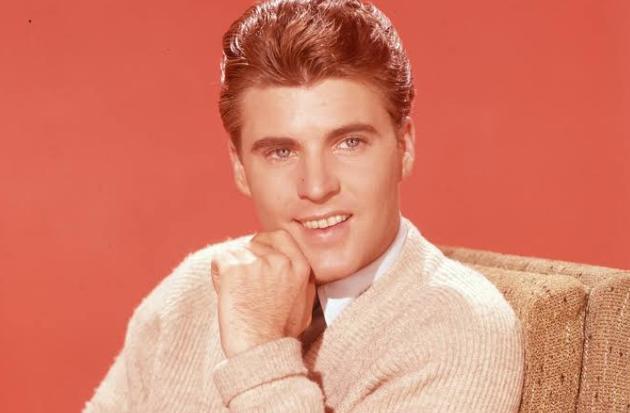
Eric Hilliard Nelson was born on May 8, 1940, in Teaneck, New Jersey.
But most Americans would know him simply as Ricky.
His parents were already entertainers. Ozzie Nelson had been a successful bandleader, and Harriet Hilliard Nelson was a singer and actress. Their family eventually became the center of The Adventures of Ozzie and Harriet, first on radio and later on television.
In 1949, Ricky and his older brother David replaced the actors who had been portraying the Nelson boys on radio.
When the program moved to ABC television in 1952, something unusual happened.
America did not simply watch two boys playing fictional sons.
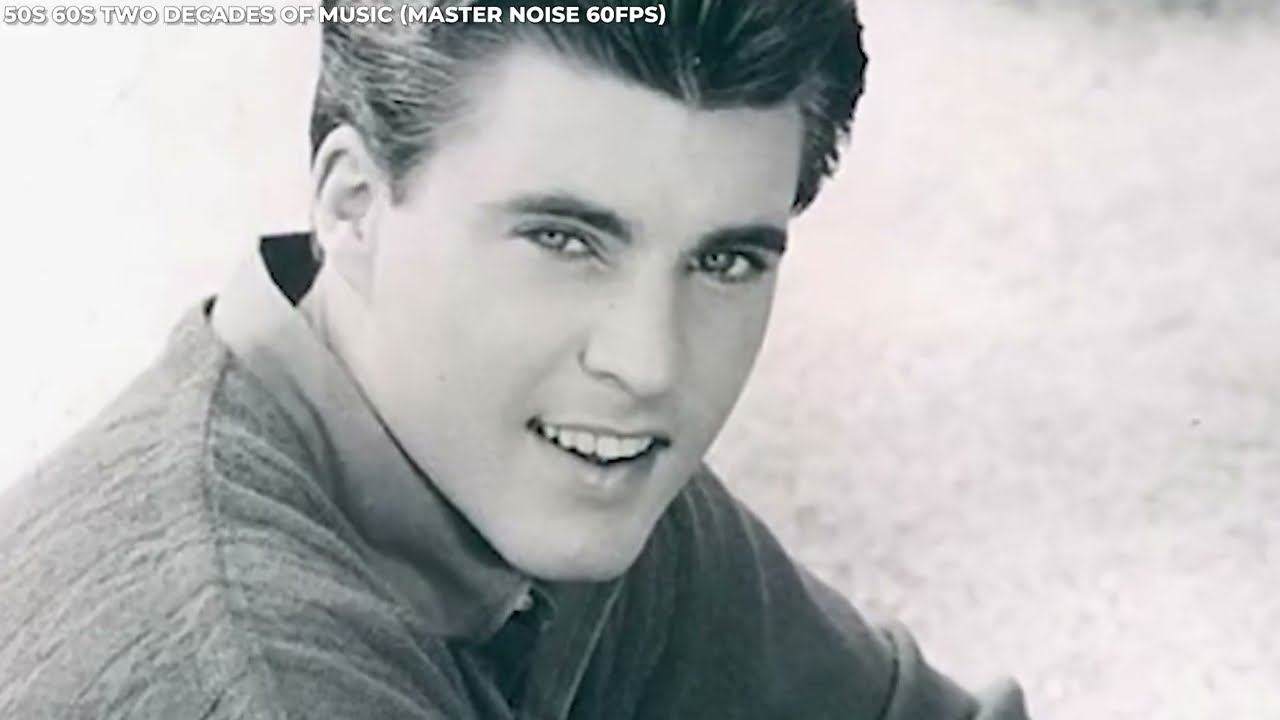
It watched David and Ricky Nelson grow up.
The series eventually ran for 435 television episodes, with marriages and other changes in the real Nelson family gradually finding their way onto the screen. The line between television and real life became unusually thin.
For viewers, it created an intimacy that television was only beginning to understand.
The Nelsons did not feel like distant Hollywood celebrities.
They felt familiar.
Years later, Rick’s son Matthew described the connection audiences felt with the family in remarkably simple terms:
“People felt like our family was their family.”
That feeling would follow Ricky for the rest of his life.
It would help make him famous.
It would also make growing up in public much more complicated.
One Television Performance Changed Everything
In 1957, teenage Ricky Nelson performed Fats Domino’s “I’m Walkin’” on his family’s television show.
The response was immediate.
Television had given the young singer something most aspiring musicians could only dream about: millions of potential record buyers already knew his face.
But it would be a mistake to dismiss Nelson as simply a television star pretending to be a rock-and-roll singer.
The Rock & Roll Hall of Fame, which inducted Nelson in 1987, has emphasized that beneath the teen-idol image was a performer with a genuine feel for rockabilly and a strong instinct for musicians and material.
His rise was remarkable.
In 1958, “Poor Little Fool” became part of music history when it sat at No. 1 on the very first Billboard Hot 100 chart.
Then came more records fans would remember for decades:
“Believe What You Say.”
“Travelin’ Man.”
“Hello Mary Lou.”
“Lonesome Town.”
“Be-Bop Baby.”
For Americans coming of age in the late 1950s and early 1960s, Ricky Nelson was not merely a singer.
He was part of the soundtrack.
And his fame moved beyond records and television.
In Howard Hawks’ 1959 Western Rio Bravo, Nelson appeared alongside John Wayne, Dean Martin, Angie Dickinson and Walter Brennan. It was the kind of cast that now reads like a roll call from another era of Hollywood.
For a while, Ricky Nelson seemed to have everything.
Television.
Movies.
Hit records.
Youth.
Fame.
And an audience that had known him since childhood.
But there was a problem hidden inside that success.
America had fallen in love with “Ricky.”
Rick Nelson was eventually going to grow up.
What Happens When Your Audience Won’t Let You Change?
By the early 1960s, Nelson was no longer the boy standing in Ozzie and Harriet’s living room.
He was a serious musician trying to decide what he wanted to sound like.
He officially began using “Rick” instead of “Ricky.”
Then popular music shifted dramatically.
The British Invasion changed American radio. The Beatles and other British groups rewrote the rules almost overnight, and many American stars of the 1950s suddenly found themselves representing an era young listeners were leaving behind.
Nelson adapted by moving increasingly toward country and country-rock.
He formed the Stone Canyon Band and surrounded himself with strong musicians. At various points, the group included performers who would later become important figures in their own right, including future Eagles member Randy Meisner.
Artistically, Nelson was moving forward.
Commercially, the journey was harder.
Then came the night that would eventually inspire perhaps the most revealing song of his career.
In October 1971, Nelson appeared at a rock-and-roll revival show at Madison Square Garden.
Many in the audience had come to remember the past.
Nelson did not look like the clean-cut Ricky they remembered.
His hair was longer.
His music had changed.
And when he performed newer material, including his version of the Rolling Stones’ “Honky Tonk Women,” boos were heard in the arena.
Exactly why the crowd reacted as it did has been debated over the years, but Nelson believed he understood the message.
They wanted the old Ricky.
He wanted to be Rick.
Out of that uncomfortable evening came “Garden Party.”
The song turned disappointment into a statement about artistic independence. Released the following year, it reached the Top 10 and became Nelson’s first gold record in more than a decade.
For longtime fans, the song carried a lesson that became more meaningful as the years passed.
You can spend your life trying to remain the person other people remember.
Or you can accept that growing older means changing.
Rick chose the second path.
There was just one place where change proved much more painful.
At home.
Behind the Family Image, a Marriage Was Falling Apart
In 1963, Rick Nelson married Kristin Harmon, the daughter of football star Tom Harmon and actress Elyse Knox.
They had four children:
Tracy, twins Matthew and Gunnar, and Sam.
For anyone watching from the outside, it appeared to be another chapter in an extraordinary American show-business family.
But the marriage became troubled.
The separation and divorce process was long and difficult, and their children later described the breakup as traumatic for the family.
This is where later retellings of Rick Nelson’s life sometimes become overloaded with rumor.
Accusations were made during the marriage and divorce. Stories circulated about money, relationships and substance abuse.
But the larger fact does not require sensationalizing.
The family was hurting.
And by the later years of Nelson’s life, the former teen idol was still working constantly.
He continued touring long after his greatest chart success had passed.
That fact matters.
Because the public image of a wealthy former superstar can hide a much more complicated reality.
Rick Nelson had sold enormous numbers of records.
But a music catalog is not the same thing as cash sitting in a bank account.
There are contracts.
Royalties.
Publishing and recording rights.
Managers.
Expenses.
Taxes.
Divorce.
Touring costs.
And obligations that can continue long after a hit record disappears from the charts.
Years later, Matthew Nelson described his father’s estate at the time of Rick’s death simply as “really a mess,” citing divorce, debt and other complications.
His brother David would soon have to untangle it.
But before that happened, Rick Nelson was preparing to try again.
He Was Planning Another Comeback
By the end of 1985, Nelson was still touring.
But according to reporting immediately after his death, he was also looking ahead.
Plans for 1986 reportedly included new music, an album and a television special.
At 45, the man who had spent much of his life trying to escape the image of a teenage idol was still working toward another chapter.
He would never reach it.
On December 31, 1985, Nelson was traveling toward Dallas for a New Year’s Eve performance aboard a Douglas DC-3.
A fire broke out during the flight.
The aircraft came down near De Kalb, Texas.
The two pilots escaped.
Rick Nelson, Helen Blair and five members of his band and crew did not.
News of his death hit longtime fans with unusual force.
One letter published by the Los Angeles Times shortly afterward captured why.
The writer admitted crying despite never having met Nelson, then explained that she had grown up with Ozzie and Harriet.
Like many baby boomers, she felt she knew him.
That was the strange intimacy television had created more than three decades earlier.
The little boy had entered their homes.
The teenager had sung to them.
The adult had tried to change in front of them.
And now he was gone at 45.
At his memorial service, hundreds of fans gathered outside.
Inside, his children helped say goodbye.
His daughter Tracy remembered him as a quiet and honorable man.
His teenage sons Matthew and Gunnar sang one of their father’s favorite songs.
And his younger son Sam, only 11, took part in the service as well.
But grief was not the only thing the Nelson family had to face.
There was also the estate.
And for a brief period, one basic question remained unresolved.
Then David Produced the Will
Shortly after Rick Nelson’s death, his former wife Kristin sought temporary control of the estate, telling the court that, to her knowledge, Rick had died without a will.
Then David Nelson produced one.
The document named David executor and left the estate to Rick’s four children:
Tracy.
Matthew.
Gunnar.
Sam.
It also addressed control over Nelson’s properties, music rights and name.
A Los Angeles judge subsequently placed David in charge of managing his brother’s estate.
This is where some later internet versions of the Ricky Nelson story become misleading.
There was no magical suitcase of hidden cash.
No credible evidence shows that the discovery of the will instantly turned the children into millionaires.
What the will did was establish who Rick intended to inherit from him.
The harder job came afterward.
David had to help make sense of an estate his nephew Matthew later described as burdened by debt, divorce and other complications.
Matthew remembered what his uncle did with gratitude.
David, he said, stepped forward during his own grief and worked to protect Rick’s children.
That alone would have been a fitting conclusion.
But Rick Nelson had left behind something whose value would continue changing long after his death.
His recordings.
The Real Legacy Was Still Playing
When Rick Nelson died in 1985, there was no Spotify.
No Apple Music.
No digital download store.
No modern streaming economy.
His recording agreements came from another age — an era of vinyl records, physical distribution and accounting practices designed around products that could be manufactured, shipped and sometimes broken in transit.
Then music became digital.
Suddenly contracts written decades earlier had to be interpreted in a world their authors could never have imagined.
And Rick Nelson’s estate became involved in that fight.
In 2011, the estate sued Capitol Records, alleging that the label had underpaid royalties connected with Nelson’s recordings.
The dispute included questions over how royalties should be calculated in the digital era. The following year, a California judge allowed significant portions of the digital-royalty case to proceed.
That litigation was important not because it uncovered a secret treasure chest.
It showed that music recorded in the 1950s and 1960s could continue generating complicated financial questions half a century later.
And the story did not stop there.
In 2018, the Rick Nelson Company brought another case, this time against Sony Music Entertainment, involving the calculation of foreign streaming royalties.
In 2020, the case resulted in a $12.7 million class-action settlement covering claims involving Nelson’s estate and other artists represented by the class.
That distinction matters.
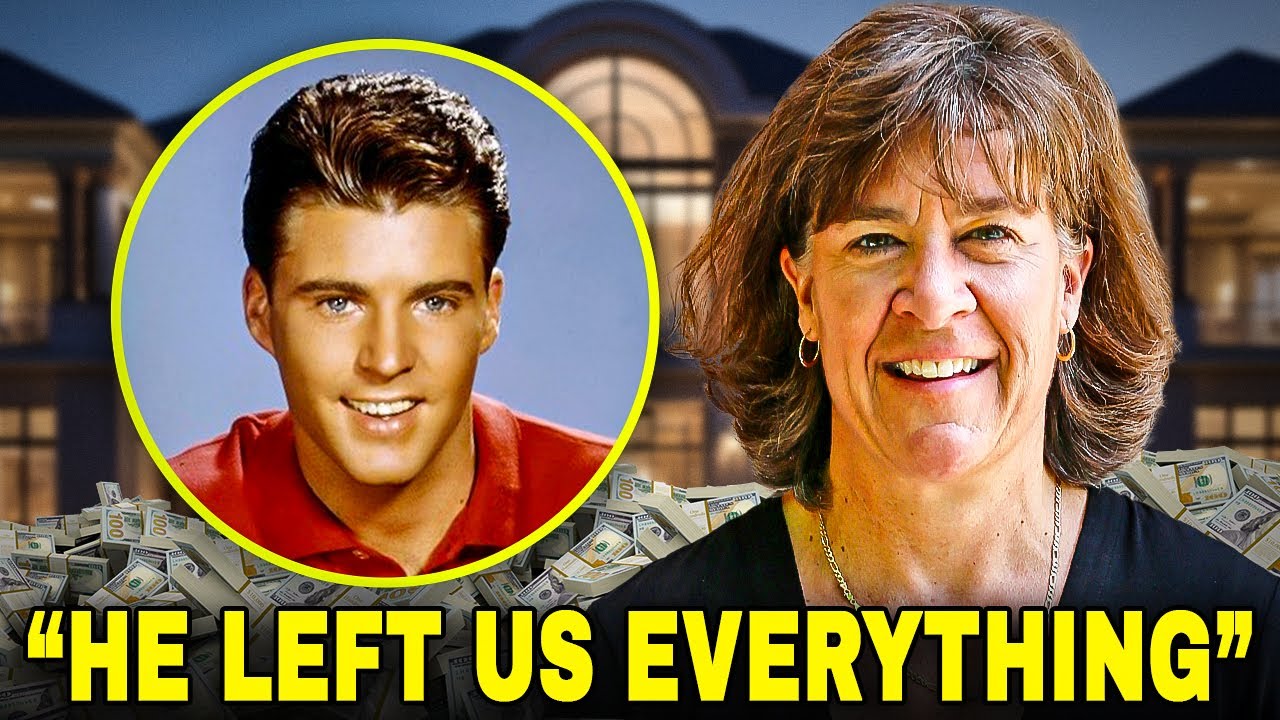
The entire $12.7 million was not simply handed to Rick Nelson’s four children.
It was a classwide settlement.
But it demonstrated something important about the legacy Rick left behind.
More than three decades after his death, the business surrounding his music was still alive.
His Children Inherited More Than an Estate
Perhaps the most interesting part of the Nelson family story is what happened next.
Rick’s children did not simply disappear into the shadow of their father.
Tracy became an actress.
Matthew and Gunnar formed the rock band Nelson and achieved their own major chart success.
Sam also built a career around music.
In recent years, Matthew and Gunnar have continued talking publicly about their father and the unusual legacy of being part of a family that entertained America across multiple generations.
The twins have also spoken about listening to old studio tapes and discovering just how involved their father had been in his early recordings.
What they heard challenged the easy assumption that Ricky Nelson had simply been a handsome television star manufactured by adults.
They heard a teenager who knew what he wanted.
A young musician shaping his own sound.
A performer more serious about the work than his image sometimes suggested.
That may be the most important inheritance of all.
Not the money.
Not the lawsuits.
Not even the famous last name.
The work.
America Never Really Stopped Watching Ricky Nelson
There is a temptation with stories about old Hollywood and early rock-and-roll stars to search for one final secret.
A hidden fortune.
A shocking confession.
A document nobody knew existed.
Rick Nelson’s life does not need that kind of invention.
The real story is more interesting.
America watched a little boy grow up in black-and-white.
Then it watched that boy become one of the biggest teenage stars of his generation.
It watched him stand beside John Wayne and Dean Martin.
It listened as “Poor Little Fool” became the first No. 1 song in the history of Billboard’s Hot 100.
It watched musical fashion turn against him.
It watched him refuse to remain frozen in 1957.
And when an audience wanted the old Ricky back, he turned the rejection into “Garden Party” — one of the defining songs of his later career.
Then, at only 45, he was gone.
His brother David was left to help untangle the estate and protect the four children named in Rick’s will.
Years turned into decades.
Records became downloads.
Downloads became streams.
And music recorded by a teenager in the 1950s became the subject of royalty disputes in the twenty-first century.
That is what makes Rick Nelson’s story so unusual.
His career was built in one America and his legacy continued into another.
The television set changed.
The record business changed.
The audience grew older.
But the songs remained.
In 1987, Rick Nelson was inducted posthumously into the Rock & Roll Hall of Fame.
The Hall summarized his place in American culture with an idea that millions of longtime viewers would immediately understand:
America had watched the kid next door grow up and become a rock-and-roll star.
Perhaps that is why his death felt personal to people who never met him.
And perhaps it is why his story still has the power to bring them back.
Not because Ricky Nelson left behind some unbelievable hidden treasure.
But because, after the television lights went dark and the teenage-idol years were gone, Rick Nelson left something far harder to erase.
A voice millions of Americans still remembered as part of their own youth.