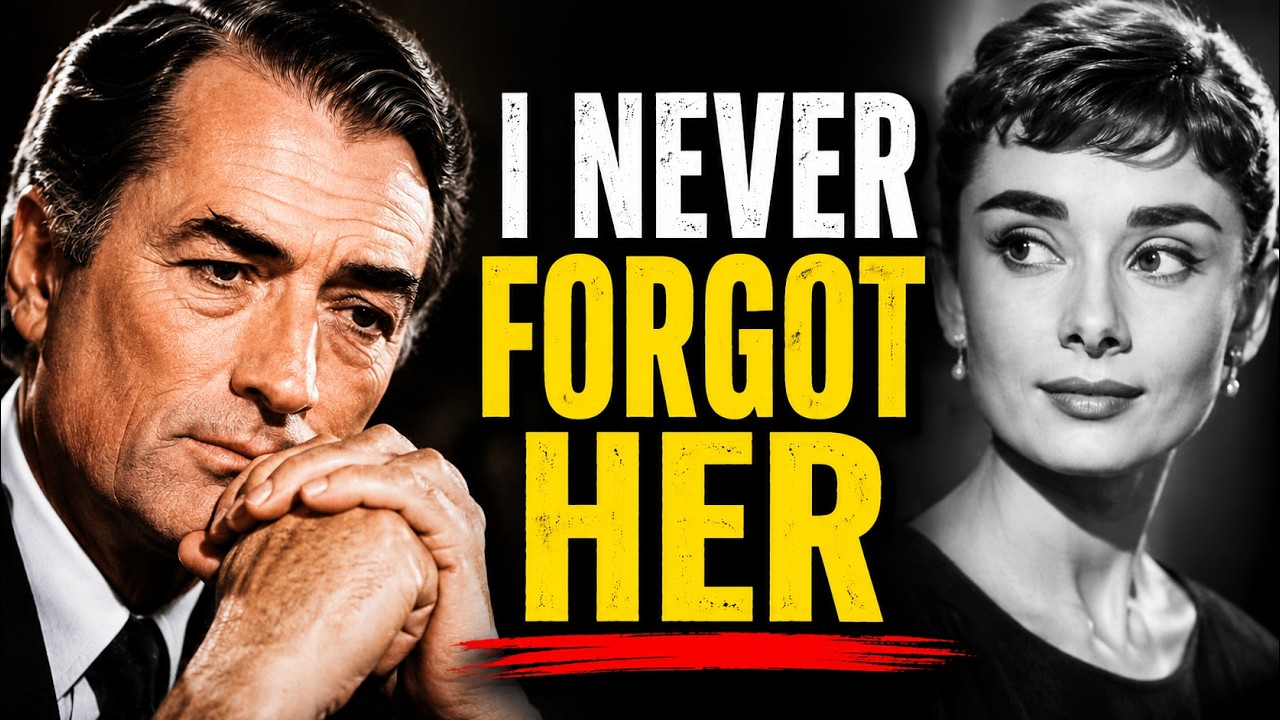
Before He Passed, Gregory Peck Finally Revealed What Audrey Hepburn Meant To Him
Gregory Peck had nothing to gain by sharing the spotlight.
By the early 1950s, his name already meant something in Hollywood. He had starred in major films, earned multiple Academy Award nominations and reached the point where studios could sell a movie simply by putting GREGORY PECK above the title.
Audrey Hepburn was different.
American movie audiences barely knew who she was.
She had appeared in small European film roles and had begun attracting attention on the stage, but she had never carried a major Hollywood picture. When Paramount prepared Roman Holiday, Peck was the established star the studio could trust.
Audrey was the risk.
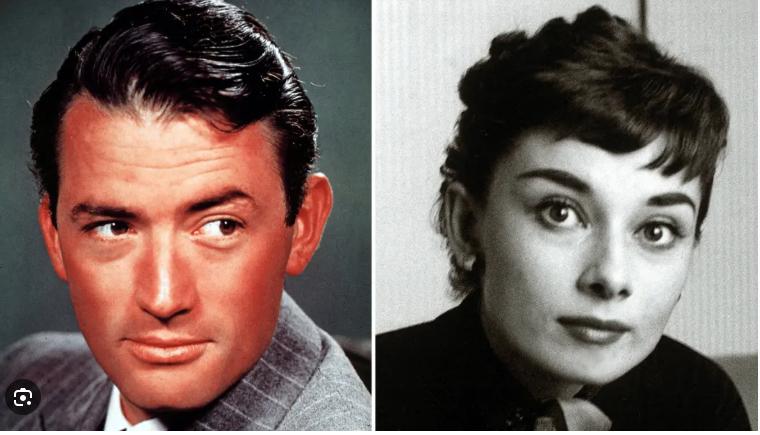
Then filming began in Rome.
Peck watched the young actress work.
He watched the camera find her face.
He watched scenes that were supposed to belong partly to him somehow become impossible to imagine without her.
And before audiences had seen a single frame of the finished film, Gregory Peck made a decision that was unusual for a leading man of his stature.
He called his agent.
Audrey Hepburn’s name, he said, should receive billing alongside his own.
The studio initially resisted.
Peck insisted.
He believed something Paramount had not yet fully accepted:
When this movie opened, Audrey Hepburn was going to be a star.
Less than a year later, she was holding an Academy Award.
But what happened between Peck and Hepburn in Rome became more than a story about a movie poster.
It began a friendship that survived fame, marriages, decades apart and the transformation of Audrey from an unknown actress into one of the most recognizable women of the 20th century.
And years later, when Gregory Peck spoke about her after her death, it became clear that what he had recognized in Rome was not only talent.
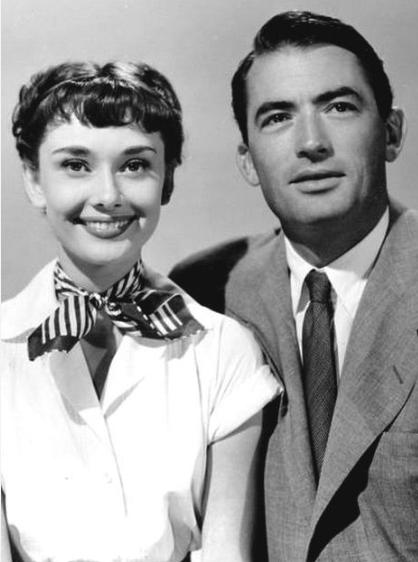
1. Hollywood Needed Gregory Peck. Audrey Hepburn Needed a Chance.
When Roman Holiday began taking shape, William Wyler faced an unusual problem.
The movie’s true center was Princess Ann, a sheltered young royal who escapes her official duties and spends an unforgettable day exploring Rome with an American journalist.
The female role needed someone audiences could believe was both royal and vulnerable.
But Wyler did not necessarily want an established Hollywood star.
He wanted discovery.
Gregory Peck, meanwhile, was already the kind of actor studios considered safe.
Born in California in 1916, Peck had risen rapidly during the 1940s. By the time Roman Holiday entered production, he had already been nominated several times for the Academy Award for Best Actor.
He had worked with major directors.
He had played romantic leads, troubled heroes and men carrying enormous moral weight.
Audiences knew his face.
They trusted him.
That made Peck valuable to a movie built around an actress most Americans had never heard of.
Even Peck initially understood that the woman’s role was the stronger part.
He had reservations about taking the film because Princess Ann clearly dominated the story.
Director William Wyler eventually convinced him.
Then came the search for the princess.
Audrey Hepburn was born in Belgium in 1929 and spent part of her childhood in the Netherlands during World War II. She trained in ballet and later found small roles in British and European productions.
She was not completely inexperienced.
But in Hollywood terms, she was still almost unknown.
When Wyler saw her screen test, something changed.
The famous story of that test helps explain why.
The cameras were deliberately kept running after Audrey believed the formal audition had ended.
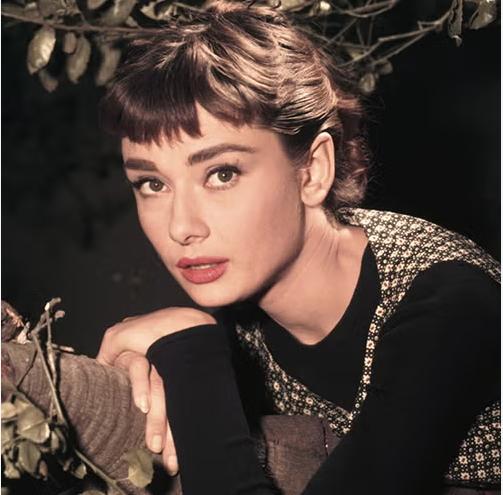
Once she relaxed, she began talking naturally.
She smiled.
She laughed.
She reacted without performing for the role.
Wyler saw the quality that would later become almost impossible to describe without using words like charm or grace.
Paramount took the chance.
Audrey Hepburn would play Princess Ann.
But the studio still had Gregory Peck’s name to protect the movie.
At least that was the plan.
2. Then Peck Saw What the Camera Saw
Filming began in Rome during the summer of 1952.
There were no modern digital effects and no controlled Hollywood recreation of Italy.
The streets were real.
The crowds were real.
The heat was real.
Audrey was making her first major American movie surrounded by people with far more experience than she had.
Gregory Peck later remembered that she was nervous.
That would have been understandable.
She was acting opposite one of America’s biggest movie stars under the direction of William Wyler, a filmmaker already respected throughout the industry.
Yet once the cameras rolled, the imbalance between “star” and “newcomer” began disappearing.
Audrey was natural in front of the lens.
She could be funny without appearing to chase the joke.
She could communicate innocence without seeming childish.
And when Princess Ann experienced Rome as an ordinary young woman for the first time, Audrey made the wonder seem spontaneous.
Peck noticed.
So did other people on the production.
The more footage they saw, the more obvious it became that Roman Holiday was not going to introduce audiences to a promising young supporting actress.
It was going to introduce them to Audrey Hepburn.
Peck could have done nothing.
His contract already protected his position.
His name was the famous one.
If Paramount wanted to sell the film as a Gregory Peck picture featuring an unknown young actress, that was standard Hollywood business.
Instead, he contacted his agent.
According to accounts preserved by Turner Classic Movies, Peck insisted Audrey receive billing alongside him above the title.
The studio resisted at first.
Why wouldn’t it?
Gregory Peck had spent years building a name that could open a movie.
Audrey Hepburn had never opened one.
But Peck believed that once audiences saw the finished picture, keeping her name below his would look foolish.
The film belonged to her as much as it belonged to him.
Eventually Paramount agreed.
It is tempting to describe the decision as some enormous sacrifice.
Peck himself apparently saw it more practically.
He simply understood what was happening before the audience did.
The newcomer was about to become the story.
3. He Was Right
Roman Holiday opened in 1953.
Audrey Hepburn did not merely receive good reviews.
She became a sensation.
Audiences fell in love with Princess Ann.
The haircut.
The Vespa ride.
The Spanish Steps.
The dance.
The bittersweet farewell.
And especially the final press conference, when the journalist and the princess both understand what cannot happen between them.
Something about Audrey felt new.
She had glamour without seeming distant.
Elegance without coldness.
Humor without losing dignity.
Within months, magazines were putting her face on their covers and women were copying her appearance.
Then came the Academy Awards.
Roman Holiday received ten nominations.
On March 25, 1954, Audrey Hepburn won the Oscar for Best Actress.
The Hollywood newcomer had become an Academy Award winner with her first starring film.
Gregory Peck’s prediction had come true almost perfectly.
The actress whose billing he had insisted be elevated beside his was now one of the most talked-about women in the movie business.
For another leading man, that might have been the end of the story.
They would make a successful film.
They would attend premieres.
Then each would move on.
Peck and Hepburn did move on professionally.
But they did not disappear from each other’s lives.
4. The Romance Audiences Wanted Wasn’t the Real Story
Part of the enduring magic of Roman Holiday comes from the chemistry between Peck and Hepburn.
Joe Bradley begins by seeing Princess Ann as an opportunity.
She is a newspaper story that could make him money.
Then, gradually, something genuine replaces the deception.
By the time Joe has fallen in love with her, both characters understand that love does not mean they get to keep each other.
The ending refuses the usual Hollywood reward.
There is no wedding.
No final kiss.
No miraculous solution.
Princess Ann returns to duty.
Joe walks away alone.
Audiences found the chemistry so convincing that speculation followed the actors offscreen.
Hollywood has always preferred a romance.
A friendship is harder to sell.
But there is no reliable evidence that Gregory Peck and Audrey Hepburn secretly became lovers during Roman Holiday.
Their lives took different paths.
Shortly after the film, Peck met French journalist Veronique Passani. They married in 1955 and remained together until his death nearly half a century later.
Audrey eventually married actor Mel Ferrer.
What survived between Gregory and Audrey was something less sensational and, in its own way, more unusual.
Friendship.
Years later, Audrey’s son Sean Hepburn Ferrer would remember the Peck family as one of the Hollywood families to whom his own family remained close.
The two stars did not need to manufacture romantic gossip to keep Roman Holiday alive.
The film did that by itself.
5. Audrey Became Everything Hollywood Had Hoped For—and Then Something Else
The Oscar was only the beginning.
After Roman Holiday, Audrey made Sabrina.
Then Funny Face.
Love in the Afternoon.
The Nun’s Story.
Breakfast at Tiffany’s.
Charade.
My Fair Lady.
Wait Until Dark.
She became not merely a successful actress but an image recognized around the world.
The little black dress.
The gloves.
The short bangs.
Hubert de Givenchy.
The enormous sunglasses.
Even people who had never seen all of her films knew what Audrey Hepburn looked like.
Hollywood had plenty of beautiful actresses.
Audrey became something different.
She became an idea of elegance.
Yet Gregory Peck’s admiration for her did not seem to center on any of those things.
He had known her before the icon existed.
He had been there when she was still the nervous newcomer arriving on the set of her first major Hollywood film.
That gave him a different perspective on what followed.
Long after Roman Holiday, Peck continued describing Audrey in terms that had little to do with glamour.
At a tribute in 1987, he spoke about something he believed came from inside her.
“There has been no one like her in movies before or since,” Peck said.
What distinguished her, in his description, was an “inner glow.”
That was the Audrey he remembered.
Not simply the face on magazine covers.
The person behind it.
6. Fame Eventually Became Less Important to Her
Audrey Hepburn’s career followed a path few people would have predicted on that first summer in Rome.
At the height of her fame, she began stepping away.
Family mattered enormously to her.
She had known instability and deprivation as a child in wartime Europe, and motherhood became more important than maintaining a constant presence in Hollywood.
She continued acting occasionally, but movies gradually stopped being the center of her life.
Then came the chapter that may have impressed Gregory Peck most.
Audrey began devoting increasing amounts of time to UNICEF.
In 1988 she became a UNICEF Goodwill Ambassador.
This was not a ceremonial title she accepted for occasional photographs.
She traveled.
Bangladesh.
Ethiopia.
Somalia.
Sudan.
Vietnam.
Countries where children faced hunger, disease and the consequences of war.
Audrey had experienced wartime deprivation herself as a child in the Netherlands.
Now, decades after Hollywood had turned her into an international symbol of glamour, she used that recognition to make people look at children the world preferred not to see.
There was a striking reversal in it.
Hollywood had spent years photographing Audrey because she was beautiful.
Audrey spent her later years trying to redirect those cameras toward someone else.
Gregory Peck noticed.
So did the rest of the world.
In 1993, the Academy would recognize her humanitarian work with the Jean Hersholt Humanitarian Award.
But Audrey would not live to accept it.
7. The News Gregory Peck Didn’t Want to Hear
In late 1992, Audrey Hepburn became seriously ill.
She was diagnosed with a rare abdominal cancer.
The decline was rapid.
On January 20, 1993, Audrey died at her home in Tolochenaz, Switzerland.
She was 63.
For movie audiences, the news felt strangely personal.
Audrey Hepburn had occupied screens for forty years, yet her image seemed preserved outside ordinary aging.
Princess Ann was still riding through Rome.
Holly Golightly was still standing outside Tiffany’s.
Eliza Doolittle was still walking down the staircase.
But for the people who actually knew her, the loss had nothing to do with cinema.
Gregory Peck had known Audrey for roughly four decades.
He had watched the unknown young actress become a star.
He had seen her become a mother.
He had watched her gradually walk away from the machinery of Hollywood.
And he had watched her turn fame into humanitarian work.
After her death, Peck took part in tributes remembering her.
UNICEF records show that at an official memorial event held at the United Nations in 1993, Gregory Peck and Elizabeth Taylor were among those who appeared in videotaped remembrances of Audrey.
But there was another moment that connected Peck to Audrey’s legacy even more directly.
Two months after her death, Hollywood gathered for the Academy Awards.
Audrey Hepburn had been selected to receive the Jean Hersholt Humanitarian Award.
Her son Sean accepted it on her behalf.
Gregory Peck participated in presenting the tribute.
Forty years earlier, he had helped make sure Audrey Hepburn’s name was placed where he thought it belonged.
Now Hollywood was honoring that same woman not for a performance, but for what she had done after much of the performing stopped.
The symmetry was difficult to miss.
8. One Decision in Rome Looked Different Forty Years Later
Think again about what Gregory Peck knew during the filming of Roman Holiday.
He did not know Audrey would win an Oscar.
He did not know she would make Breakfast at Tiffany’s.
He did not know she would become a fashion icon.
He did not know that decades later her face would still appear on posters, books and magazine covers around the world.
And he certainly could not have known that the woman riding a Vespa through Rome would eventually spend her final years traveling for UNICEF.
What Peck knew was much simpler.
He had watched her work.
And he believed she deserved to stand beside him.
That is why the billing story has survived.
Not because Gregory Peck single-handedly “created” Audrey Hepburn.
He didn’t.
William Wyler recognized her.
Paramount took the risk of casting her.
Audrey herself gave the performance.
And audiences made her a star.
But Peck possessed something rare for someone already sitting securely at the top of his profession.
He recognized another person’s moment when it arrived.
And he did not need to diminish it to protect his own.
In an industry famous for battles over billing, screen time, contracts and status, that mattered.
9. The Friendship Outlasted the Film
Gregory Peck and Audrey Hepburn never made another movie together.
That fact almost seems impossible.
Their pairing became so iconic that it feels as if Hollywood should have reunited them repeatedly.
It didn’t.
One film was enough.
Maybe that helped preserve Roman Holiday.
There was never a lesser sequel.
Never another attempt to reproduce Joe Bradley and Princess Ann.
The story remained where audiences first discovered it: one summer in Rome.
Their friendship, however, continued outside the frame.
Hepburn’s son Sean has spoken of the closeness between the families. Gregory remained part of the circle surrounding Audrey’s memory.
And when he spoke about her publicly, the language rarely sounded like a man trying to keep an old movie alive.
It sounded like someone describing a person he had genuinely admired.
That distinction matters.
Because over the years, countless stories have tried to make their friendship more dramatic than it needed to be.
Were they secretly in love?
Did Gregory spend the rest of his life carrying hidden feelings for Audrey?
Was there some confession he finally made before his death?
There is no solid evidence for those stories.
And perhaps inventing one misses what was remarkable about them.
Not every important relationship has to become a romance.
Not every deep affection needs a secret.
Sometimes two people simply recognize something good in each other and never forget it.
10. Gregory Peck Had His Own Long Goodbye to Hollywood
Gregory lived another decade after Audrey’s death.
By then, his own place in movie history was secure.
In 1962, nearly a decade after Roman Holiday, he had given the performance that became inseparable from his name: Atticus Finch in To Kill a Mockingbird.
The role earned him the Academy Award for Best Actor.
For generations of Americans, Peck became associated with decency, restraint and moral courage.
No actor is identical to his most famous character, of course.
But there was something about Peck’s public manner that made the connection endure.
He aged into the role of elder statesman almost naturally.
The booming career of his younger years slowed.
Honors accumulated.
Tributes arrived.
New generations discovered his movies.
And among all those films, Roman Holiday remained special.
Peck later called making it one of the happiest experiences he ever had on a movie set.
“Everyone on the set of Roman Holiday was in love with Audrey,” he remembered.
That sentence reveals something the romantic rumors never could.
He wasn’t describing possession.
He was describing the effect she had on people.
Gregory Peck died at his Los Angeles home on June 12, 2003.
He was 87.
His public memorial was held several days later.
By then, Audrey had been gone for more than ten years.
But their names were still being printed together.
Gregory Peck and Audrey Hepburn.
Joe Bradley and Princess Ann.
A star and the newcomer who suddenly became one.
11. The Moment Before Everyone Else Knew Her Name
Today it is difficult to imagine Audrey Hepburn as unknown.
That may be why the story of Gregory Peck and the billing matters more with time.
We see Audrey with hindsight.
Of course she became famous.
Of course audiences loved her.
Of course she won the Oscar.
Of course her name belonged above the title.
But none of those things had happened yet when Gregory Peck picked up the phone.
At that moment, he was the star.
She was the gamble.
And Hollywood operated according to hierarchy.
Billing was not merely typography on a poster. It represented status, bargaining power and the belief that one person’s name was worth more at the box office than another’s.
Peck had already earned that status.
He could have kept it.
Instead, he looked at what was happening in front of the camera and accepted that the movie’s unknown actress was about to become his equal.
Perhaps that is the part of the story that appeals so much decades later.
It was not charity.
Audrey Hepburn did not need Gregory Peck to hand her talent.
She already had it.
What he gave her was recognition before recognition was easy.
There is a difference.
12. One Movie, One Decision, Forty Years of Friendship
Hollywood history is filled with relationships remembered because they exploded.
Affairs.
Divorces.
Feuds.
Jealousy.
Careers destroyed by competition.
Gregory Peck and Audrey Hepburn left something quieter behind.
They made one movie.
He recognized what she was becoming.
She never forgot the way she had been treated when she was still new.
Their families remained connected.
Their affection endured without needing scandal to sustain it.
And when Audrey’s life moved beyond Hollywood, Gregory seemed to admire her even more.
In the end, the most revealing thing about their relationship may not be found in Roman Holiday at all.
It is in what happened after.
Audrey became one of the most famous women in the world and gradually discovered that fame was not what mattered most to her.
Gregory became one of the most respected elder figures in American cinema and continued remembering not simply Audrey’s beauty, but the quality he believed came from within.
Neither needed the other professionally by then.
The friendship remained anyway.
And that returns the story to Rome.
To a young woman making her first major Hollywood film.
To an established leading man watching her from the other side of the camera.
And to the moment Gregory Peck understood something before millions of moviegoers had the chance.
Audrey Hepburn’s name was not going to remain beneath his for very long.
So he asked Hollywood to move it up.
The studio eventually agreed.
Then the movie opened.
Audiences saw what he had seen.
And Audrey Hepburn never needed anyone to introduce her again.