After twenty years of marriage, Valerie Bertinelli learned something that forced her to confront a truth she had spent years trying not to see.
Eddie Van Halen had boarded a plane with their 10-year-old son, Wolfgang.
And according to Valerie’s later account, Eddie had cocaine in his wallet.
For years, she had watched the man she loved struggle with alcohol and drugs. She had forgiven infidelity. She had made mistakes of her own. She had kept hoping that if she loved him enough, waited long enough, or understood him better, something would finally change.
But by 2001, Valerie was beginning to understand that love could not do everything.
Soon afterward, she and Eddie separated.
Their divorce would not become final until 2007.
From the outside, that should have been the ending.
It wasn’t.
Years later, Valerie attended Eddie’s second wedding.
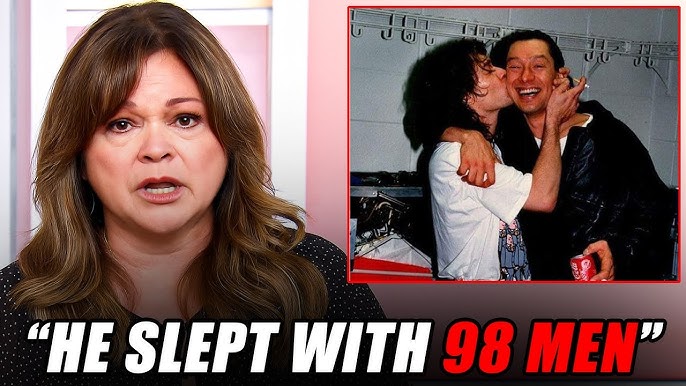
Eddie attended hers.
They remained connected through Wolfgang.
And when Eddie was dying in 2020, Valerie was there.
The story became even more complicated after his death.
At first, grief led Valerie to remember Eddie almost as the great lost love of her life. Later, she publicly admitted that she had romanticized what their marriage had actually been.
There had been drugs.
Alcohol.
Infidelity.
Pain.
Two very young people trying to build a marriage while one became one of the most famous guitarists alive and the other had already become America’s television sweetheart.
In 2024, Valerie finally said something striking:
Eddie Van Halen was not her soulmate.
Yet that was not the same as saying she had stopped loving him.
By 2026, Valerie could look back and hold two truths at once.
Their marriage had been deeply troubled.
And she had loved him deeply anyway.
That contradiction may be the most honest part of their entire story.
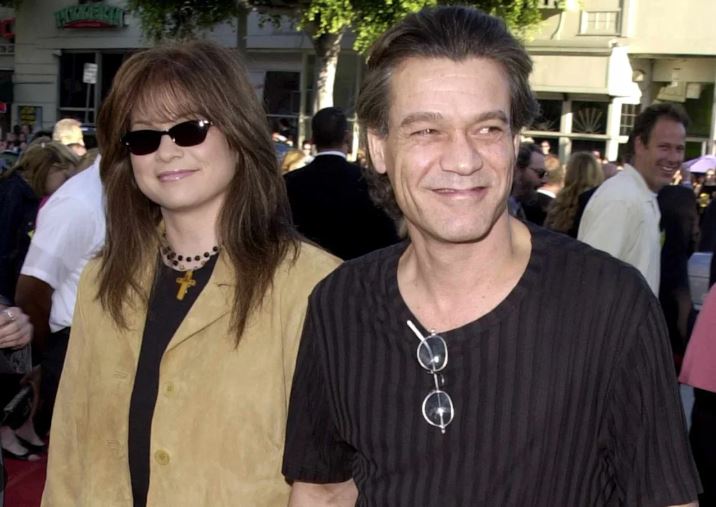
1. Before Eddie, America Already Knew Valerie
Valerie Bertinelli was only 15 when millions of Americans began watching her grow up.
In 1975, she joined Norman Lear’s One Day at a Time as Barbara Cooper, the younger daughter of a divorced mother trying to rebuild her life.
The show became a hit.
For viewers who came of age in the 1970s, Valerie seemed less like a distant movie star than someone they knew.
She had the smile.
The dark hair.
The approachable quality that made television audiences feel protective of her.
By the time she was in her early twenties, Valerie had spent much of adolescence in front of America.
Eddie Van Halen came from another world entirely.
Van Halen was loud where Valerie’s public image was wholesome.
Explosive where she seemed grounded.
By 1980, Eddie was already redefining what rock guitar could sound like.
His playing on songs such as “Eruption” had turned him into a phenomenon among musicians.
On stage, he appeared almost impossibly confident.
Offstage, people who knew him often described someone much more complicated.
Valerie barely knew the band’s music when her brother persuaded her to see Van Halen perform.
Then she saw Eddie.
Years later, she remembered the first meeting differently from the wild rock-star image people might expect.
He was shy.
She found him charming.
The attraction was immediate.
They moved fast.
Very fast.
Within roughly eight months of meeting, they were married.

Valerie was 21.
Eddie was 26.
It was April 1981.
Looking back from the distance of more than forty years, it is easy to see how young they were.
At the time, neither seemed interested in slowing down.
2. The Warning Signs Were Already There
For years, photographs from Valerie and Eddie’s wedding represented the beginning of a glamorous celebrity marriage.
The television sweetheart and the guitar hero.
But Valerie’s own memoir later complicated that image dramatically.
She recalled that drugs were not something that entered their relationship years afterward.
They were already there.
In Losing It, Valerie described herself and Eddie filling out premarital questionnaires requested by a priest while each had cocaine nearby.
Looking back, she recognized the absurdity.
It was not exactly a promising foundation for a stable marriage.
But they were young.
They were famous.
The early 1980s were an era when excess was almost woven into the culture surrounding rock music.
Valerie was not simply standing outside that world judging Eddie.
This point matters.
Later retellings sometimes turn their marriage into a straightforward story about a responsible wife trying to rescue a reckless rock star.
Valerie herself has told a messier story.
She used drugs too.
She drank.
She made mistakes.
And both she and Eddie were unfaithful.
The relationship was not destroyed by one villain.
It became damaged by patterns both of them helped create—even though Eddie’s long struggle with alcohol and drugs would become one of the most serious forces inside the marriage.
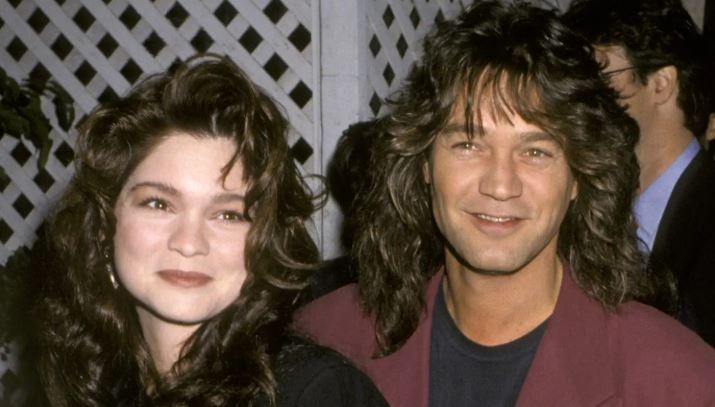
3. She Thought Loving Him Might Be Enough
Addiction is difficult to understand from inside a relationship.
For years, Valerie interpreted Eddie’s behavior personally.
If he loved her, why couldn’t he stop?
If their marriage mattered, why couldn’t he choose it over alcohol or drugs?
Why wasn’t love enough motivation?
Those questions slowly turned into anger and hurt.
Eddie’s substance problems were not abstract.
They affected the man who came home.
They affected trust.
They affected intimacy.
They affected a wife who kept hoping the person she loved would become reachable again.
Eddie himself would later discuss how early alcohol entered his life.
He said his father had encouraged him to drink when he became nervous before performing.
Alcohol worked.
At first.
It calmed the fear.
But solutions that work quickly can become problems that last for decades.
Valerie did not understand all of that when they were young.
Years later, she would regret some of the way she had interpreted his addiction.
She once believed:
If you loved me, you wouldn’t do this.
By her sixties, she saw it differently.
Eddie’s addiction was not proof that he didn’t love her.
It was evidence that he had pain he did not know how to handle.
That realization came far too late to save their marriage.
But it changed how Valerie remembered the man.
4. Then Valerie Crossed a Line Too
One of the reasons Valerie’s account carries weight is that she has not presented herself as innocent in everything that went wrong.
She has acknowledged her own infidelity.
For someone whose public image had been tied to America’s sweetheart, admitting that was uncomfortable.
But it destroyed the simple version of the story.
This wasn’t:
Good wife. Bad husband.
It was two people hurting each other while still believing, at various times, that they loved one another.
Infidelity created another fracture in a marriage already carrying drugs, alcohol, touring, fame and long periods apart.
Valerie later admitted there were things she regretted.
She had entered the marriage thinking she could change things about Eddie.
That idea would follow her for years.
If only he stopped drinking.
If only the drugs disappeared.
If only touring were easier.
If only one of them could become the person the other needed.
But marriage does not happen between the versions of people we hope will eventually appear.
It happens between the people who are actually there.
Valerie would take decades to fully understand that.
5. Then Wolfgang Changed the Center of Their Lives
On March 16, 1991, Valerie and Eddie welcomed their only child.
Wolfgang Van Halen.
Almost immediately, something existed between them that was more permanent than the marriage itself.
They were parents.
Whatever happened between husband and wife, Wolfgang belonged to both of them.
Eddie adored his son.
Valerie did too.
In later years, when Valerie tried to decide what had truly survived from her marriage, she repeatedly came back to Wolfgang.
He became the one part of the relationship she never questioned.
Their marriage may have been unstable.
Their love for their son was not.
That would matter enormously later.
Because when the marriage finally ended, Valerie and Eddie did not have the luxury of simply becoming strangers.
They shared a child.
And eventually that shared love would become the bridge that allowed them to become something other than husband and wife.
But first, the marriage had to break.
6. The Moment Valerie Could No Longer Explain Away
By 2001, Valerie and Eddie had been married for two decades.
They had survived enormous fame.
Touring.
Drug use.
Alcohol.
Infidelity.
Parenthood.
Years of trying to repair things that kept breaking.
Then came the incident Valerie would later describe to AARP.
She discovered that Eddie had boarded a plane with Wolfgang while carrying cocaine in his wallet.
Wolfgang was about ten.
For Valerie, this was different.
She could tolerate many things when the consequences fell on her.
Now their son was involved.
Soon afterward, Valerie and Eddie separated.
There was no instant Hollywood divorce.
No dramatic press-conference ending.
They remained legally married for years.
But the shared household was over.
Their divorce was finalized in 2007.
Twenty-six years after the wedding photographs.
For Valerie, separation brought its own emptiness.
She later admitted that she expected she might simply raise Wolfgang and then spend the rest of her life alone.
Relationships felt exhausting.
She turned to food and alcohol during periods of stress.
There was no triumphant moment when she walked away and instantly became happy.
Leaving one difficult life does not automatically create an easy one.
But gradually, the relationship with Eddie changed.
And the strangest part of their story began after the marriage ended.
7. Divorce Did Not Turn Them Into Enemies
Celebrity divorces are often remembered through courtroom battles.
Public accusations.
Money.
Custody.
Years of bitterness.
Valerie and Eddie certainly had plenty they could have remained angry about.
Instead, something slowly softened.
Eddie entered rehab.
Valerie later described him as becoming a better father.
Wolfgang became increasingly serious about music.
And eventually Eddie did something that worried Valerie enormously.
He invited his teenage son to join Van Halen.
Wolfgang became the band’s bassist.
Valerie initially had obvious concerns about school and about placing their son inside the same touring world that had helped shape Eddie’s problems.
But Wolfgang went.
And the father and son built a musical bond unlike anything else in their lives.
Valerie watched it happen.
The marriage was gone.
Family wasn’t.
That distinction became clearer in 2009.
Eddie married Janie Liszewski.
Valerie attended the wedding with Tom Vitale, the man who would later become her second husband.
Then, when Valerie married Tom in 2011, Eddie attended her wedding.
Think about how unlikely that would have seemed in 2001.
They had not repaired their marriage.
They had created a different relationship.
Not lovers.
Not strangers.
Family, largely because of Wolfgang.
8. Cancer Changed the Clock
Eddie’s health problems eventually became impossible to separate from the rest of his story.
He battled cancer for years.
Parts of his tongue had been removed during treatment.
There were periods of improvement and new scares.
Valerie had spent part of their marriage desperately wanting Eddie to take better care of himself.
Years later, she still struggled with watching him make choices she could not control.
But by then, something had changed in her.
She was no longer his wife.
It was no longer her job to rescue him.
That does not mean she stopped caring.
In fact, Valerie would later say that the final year of Eddie’s life gave them a closeness she treasured.
Not a romantic reunion.
That distinction is important.
The marriage was not coming back.
They were not secretly rebuilding the relationship they had lost.
They were two people with more than forty years of shared history and a son they both loved.
The future had become short enough that old arguments mattered less.
9. On October 6, 2020, Valerie Was There
Eddie Van Halen died on October 6, 2020.
He was 65.
Wolfgang was there.
So was Valerie.
Members of Eddie’s family were nearby.
Valerie later recalled that Eddie’s final words to her and Wolfgang were simple:
He loved them.
After he died, something ordinary happened in the hospital room.
The family ordered pizza.
Eddie loved pizza.
It sounds almost wrong against the gravity of death.
But grief is often like that.
People tell stories.
They eat.
They remember habits.
They laugh when they expected only to cry.
The guitar hero who had filled arenas was suddenly somebody’s father, brother, ex-husband and friend.
For Valerie, the grief was complicated because the relationship itself had been complicated.
You do not stop grieving someone simply because you divorced them.
You also do not erase the bad years because they died.
Holding both truths at once proved difficult.
For a while, Valerie leaned heavily toward the love.
10. Grief Turned the Past Into Something Softer
After Eddie’s death, Valerie spoke emotionally about him.
She remembered their connection.
The young man she had first met backstage.
The person with whom she had grown up.
The father of her son.
The person whose life had been intertwined with hers for decades even after the marriage ended.
Grief has a way of rearranging memory.
The fights become quieter.
The tenderness gets louder.
Regret asks endless questions.
What if I had understood more?
What if I had been more patient?
What if he had gotten sober earlier?
What if we had been older when we met?
Valerie was not immune.
In 2022, she said something particularly striking about Eddie’s addiction.
When she was younger, she had taken it as a rejection.
Later, she understood that alcohol and drugs had been among the only coping tools Eddie believed he had.
She regretted wanting him to get better primarily for her.
Eventually, she wanted him to get better for himself.
And she made another extraordinary acknowledgment:
She believed Eddie had loved her very deeply.
But another realization was still coming.
Love was real.
That did not mean their marriage had been healthy.
11. Then Valerie Challenged Her Own Version of the Story
In 2024, Valerie watched an episode of Behind the Music centered on Wolfgang.
It was painful.
Watching her son’s account forced her to confront the marriage from another perspective.
And Valerie realized that after Eddie died, she had begun rewriting parts of their history in her own mind.
She had turned it into what she called a kind of fantasy.
A soulmate story.
Then she publicly corrected herself.
There had been drugs.
Alcohol.
Infidelity.
Things that did not make a person feel loved, wanted or safe.
She had made mistakes too.
And she no longer wanted to pretend that she and Eddie had somehow been destined to reunite.
They weren’t.
Eddie Van Halen, Valerie said, was not her soulmate.
It sounded at first like a rejection of everything she had said after his death.
It wasn’t.
It was a more difficult kind of honesty.
You can love someone who is wrong for you.
You can miss someone you could not stay married to.
You can forgive parts of the past without pretending they never happened.
You can grieve an ex-husband without wishing the divorce had never occurred.
Those truths can exist together.
12. Wolfgang Was the Part Neither of Them Regretted
Whenever Valerie stripped the marriage down to its most undeniable legacy, she returned to one person.
Wolfgang.
For all the mistakes she believed she and Eddie made, they agreed on their son.
They loved him unconditionally.
That love kept them communicating when anger could have separated them completely.
It allowed Wolfgang to build his own relationship with his father.
It allowed Valerie to see Eddie not just as the husband who hurt her, but as the father her son loved.
And it gave Eddie a connection to Valerie long after divorce papers had legally ended their marriage.
Wolfgang became an acclaimed musician in his own right.
He played alongside Eddie.
Later, after his father’s death, he built Mammoth WVH without simply trying to become a copy of Van Halen.
Valerie has repeatedly described her son as the greatest gift she received from that marriage.
That may be the one part of the story on which nostalgia and reality agree completely.
Whatever failed between Valerie and Eddie produced something both considered precious.
13. By 2026, Valerie Could Finally Hold Both Truths
In recent interviews surrounding her 2026 memoir Getting Naked, Valerie spoke about Eddie again.
But this time the language contained fewer absolutes.
She did not restore the soulmate myth she had rejected.
She did not pretend their marriage had secretly been perfect.
She also did not pretend love disappeared because she had gained clarity.
She said, in effect, that she still could not help loving him.
Not because she wanted the marriage back.
Not because she had forgotten what happened.
But because Eddie occupied a place in her life that no later relationship could completely replace.
They had met when they were barely adults.
They grew up together.
They became parents together.
They hurt each other.
They separated.
They divorced.
They became friends again.
They watched their son become a man.
And when Eddie was dying, they found a gentler way to be together.
That is not a fairy tale.
It may be more meaningful because it isn’t.
14. The Marriage Failed. That Doesn’t Mean Every Part of It Was a Failure.
Valerie Bertinelli spent years trying to understand what her marriage to Eddie Van Halen meant.
At different points, she told herself different stories.
Young Valerie believed love could change him.
Middle-aged Valerie believed separation was necessary.
Grieving Valerie remembered the great love.
Later Valerie realized grief had made parts of the past more beautiful than they really were.
Then came something closer to acceptance.
Their marriage was not a hidden fairy tale.
It was also not twenty-six meaningless years.
Eddie was not simply the troubled rock star who ruined her life.
Valerie was not simply the endlessly patient wife who did everything right.
They were two young people who entered a marriage already surrounded by fame, drugs and unrealistic expectations.
Both made mistakes.
Both hurt the other.
Both loved their son.
And after the marriage ended, they found a way to stop treating divorce as proof that everything between them had been false.
That may be why their story still resonates with people who watched them when they were young.
Many of those viewers are older now too.
They understand something at 60 or 70 that is harder to understand at 21.
Relationships are rarely clean enough to divide into winners and losers.
A marriage can contain genuine love and still need to end.
Someone can hurt you and still matter to you.
Forgiveness does not require forgetting.
And divorce does not always erase family.
15. What Valerie Eventually Stopped Trying to Rewrite
The easiest version of Valerie Bertinelli and Eddie Van Halen’s story would have a simple ending.
She survived him.
She exposed the truth.
She moved on.
But that is not what Valerie herself has described.
Her truth changed as she changed.
She became more willing to admit what had gone wrong.
She became more willing to acknowledge her own mistakes.
She became less interested in turning Eddie into either a villain or a soulmate.
And perhaps most importantly, she stopped demanding that only one version of their history be true.
She loved him.
Their marriage was unhealthy in important ways.
He struggled with addiction.
She struggled too.
They were both unfaithful.
They created Wolfgang.
They separated.
They divorced.
They became kinder to each other.
She was there when he died.
She later admitted that grief had romanticized parts of their past.
And still, years afterward, affection remained.
That is a far more complicated story than the one printed beside their wedding photographs in 1981.
It is also far more believable.
Valerie once thought loving Eddie meant somehow saving him.
Later, she learned that love does not give one person control over another person’s healing.
She once thought divorce meant the relationship had failed.
Later, she discovered that a marriage could end while a different form of family survived.
And after Eddie was gone, she briefly turned their history into a love story smoother than the life they had actually lived.
Eventually, she let that version go too.
What remained was less perfect.
But it was real.
Two people loved each other.
They hurt each other.
They discovered that love alone could not make them good spouses.
And after everything else had fallen away, one bond remained stronger than the marriage that created it.
Their son.
Perhaps that is why Valerie can now speak about Eddie without needing to choose between love and regret.
She carries both.
And after more than four decades of trying to understand what they were to each other, that may be the closest thing to the truth.