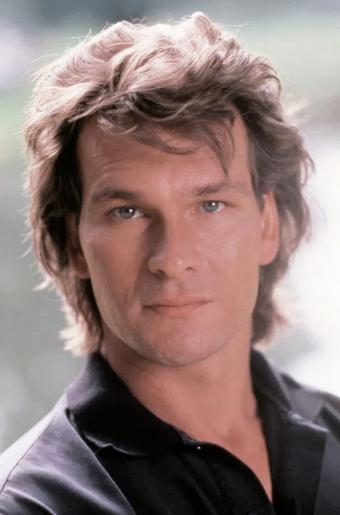
Patrick Swayze had already filmed the pilot for a new television series when doctors gave him the news that changed everything.
It was early 2008.
He was 55 years old.
For millions of people, Swayze was still Johnny Castle from Dirty Dancing—the dancer who had lifted Jennifer Grey into the air and become one of the defining romantic stars of the 1980s.
Others remembered him as Sam Wheat in Ghost, Dalton in Road House, or Bodhi racing toward one final wave in Point Break.
He had spent much of his life being associated with physical strength.
Dance.
Martial arts.
Horses.
Stunts.
A body trained since childhood to do what he asked of it.
Now that body was carrying pancreatic cancer.
And it was advanced.
The diagnosis came roughly two weeks after production wrapped on the pilot of The Beast, an A&E crime drama in which Swayze played an unorthodox FBI agent. Doctors and executives had every reason to wonder whether the series could continue.
Swayze had a different question.
Could he still work?
The answer became one of the most remarkable final chapters of his career.
Over the next several months, he underwent chemotherapy while filming in Chicago. His days could stretch to around twelve hours, often in cold nighttime conditions.
He avoided powerful prescription painkillers while performing because, as he later explained, they took the edge off his mind as well as his pain.
He missed remarkably little work.
And when people asked how he could possibly keep going, Swayze offered a response that sounded almost like a summary of his entire life:
When the statistics tell you that you are dying, “you go to work.”
But this is not only the story of Patrick Swayze’s fight against cancer.
Because when the cameras finally stopped, when the work was over and his strength was disappearing, the person beside him was not a director, a famous co-star or anyone from Hollywood.
It was Lisa Niemi.
The woman who had known Patrick before Dirty Dancing.
Before Ghost.
Before millions of strangers knew his name.
And when he could no longer keep fighting, the last words they exchanged were remarkably simple.
To understand why they mattered so much, you have to go back almost four decades.
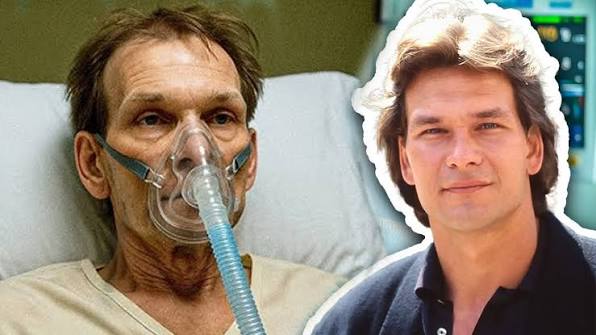
1. Lisa Knew Patrick Before Hollywood Did
Patrick Swayze grew up in Houston, Texas, in a family where movement was part of everyday life.
His mother, Patsy Swayze, was a dancer, teacher and choreographer.
Patrick trained in dance from childhood while also throwing himself into athletics.
Football.
Gymnastics.
Swimming.
Skating.
He seemed incapable of doing anything halfway.
Lisa Niemi entered that world as a teenager.
She became a student at Patsy’s dance school when she was about 15. Patrick was around 20.
They did not begin as some perfectly polished Hollywood romance.
Lisa has remembered that both had heard warnings about the other.
Patrick had a reputation as something of a ladies’ man.
Lisa had her own rebellious reputation.
Yet something between them developed quickly.
Dance became part of their language.
Lisa later recalled the first time they performed together publicly: she looked into Patrick’s eyes, and suddenly the moment seemed to come alive.
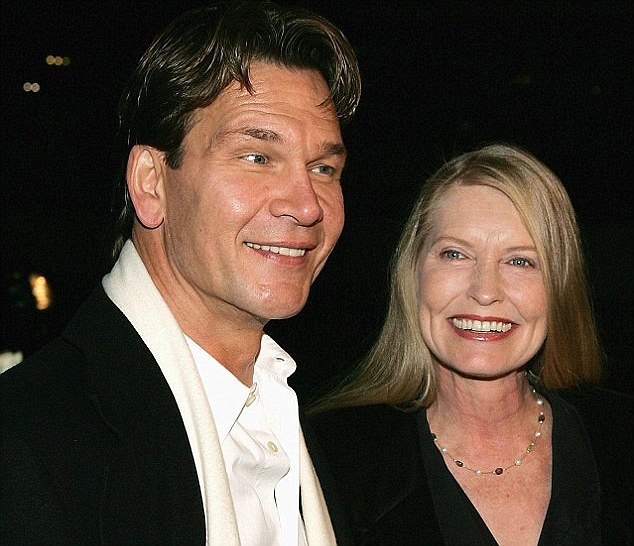
They married in 1975.
Patrick was still years away from the movie that would transform him into an international sex symbol.
Lisa married the dancer.
The ambitious young performer.
The man behind everything that came later.
That distinction would matter enormously.
2. Fame Arrived—But Lisa Was Already There
Swayze spent years dancing professionally before injuries pushed his career toward acting.
He appeared on Broadway.
Television followed.
Then movies.
By the early 1980s, audiences were beginning to recognize him from films such as The Outsiders and Red Dawn and the miniseries North and South.
Then came 1987.
Dirty Dancing was not expected to become a cultural phenomenon.
It did anyway.
Patrick’s Johnny Castle was physically confident but emotionally guarded, exactly the combination audiences responded to.
The dancing helped.
So did the chemistry with Jennifer Grey.
Then there was the song.
Swayze co-wrote and performed “She’s Like the Wind,” which became a major hit from the soundtrack.
He later said the song had been inspired by Lisa.
As millions of women were falling in love with Johnny Castle, Patrick was going home to the woman who had known him long before anyone thought of him as a heartthrob.
Then Ghost arrived in 1990.
This time he played a man trying to reach the woman he loved from beyond death.
The movie became an enormous success.
Swayze’s fame grew again.
But fame did not make his real marriage effortless.
Patrick and Lisa experienced grief, career pressure and Patrick’s struggles with alcohol.
Their relationship endured difficult periods.
The image of an eternally perfect Hollywood marriage would be false.
What remained true was that they kept returning to one another.
Swayze once described marriage as requiring friendship and the willingness to learn how to fall in love with the same person again.
That philosophy would be tested far more severely than either of them could have imagined.
3. The Diagnosis Came After a New Beginning
By the late 2000s, Swayze’s career had moved into a different phase.
He was no longer the young leading man from the Dirty Dancing poster.
That did not bother him as much as people might assume.
He wanted interesting work.
Then came The Beast.
Swayze played Charles Barker, a veteran FBI agent whose methods were often as dangerous as the criminals he pursued.
The role was darker and harder than the romantic characters most casual viewers associated with him.
He filmed the pilot.
Then his health began demanding answers.
Lisa later recalled symptoms that eventually led doctors to investigate what was happening.
The diagnosis was stage IV pancreatic cancer.
In a later interview, she remembered Patrick turning toward her after realizing the seriousness of the diagnosis and saying:
“I’m a dead man.”
That reaction is important because later accounts sometimes turn Swayze into an almost superhuman figure who never felt fear.
That was not how he described himself.
When Barbara Walters asked him about the illness in early 2009, Patrick acknowledged the emotional reality.
He was angry.
He was scared.
He was going through hell.
His courage was not the absence of fear.
It was what he did while afraid.
4. He Chose to Make The Beast
A&E faced a difficult decision.
Could a man undergoing treatment for advanced pancreatic cancer carry a television series?
Swayze wanted the chance.
Production moved forward.
The series was filmed over roughly five months in Chicago.
The schedule was brutal even for a healthy actor.
For Patrick, it meant working long days while undergoing chemotherapy.
The people making the series watched him show up again and again.
One producer described the entire production as operating in the shadow of an extraordinary act of courage.
Swayze worked about 12 hours a day, five days a week.
The cold made things harder.
Night shoots made things harder.
Chemotherapy made everything harder.
But Patrick kept working.
He explained that strong drugs such as hydrocodone or Vicodin might blunt the pain, but they could also blunt the sharpness he needed as an actor.
So during production, he largely avoided them.
An unauthorized biography later reported that he took extraordinarily little time away from filming despite severe pain. Contemporary production accounts similarly described him missing only about a day and a half over the five-month shoot.
This was not some effortless display of toughness.
Swayze described chemotherapy much more plainly:
It was “hell on wheels.”
And still he returned to the set.
5. “How Do You Stay Positive? You Go to Work.”
Swayze’s decision to continue acting can sound irrational from the outside.
Why exhaust yourself making television when time itself has become uncertain?
For Patrick, work was not simply employment.
It was evidence that cancer had not yet taken ownership of his identity.
He had spent his life using his body.
Dancing.
Acting.
Riding horses.
Performing stunts.
Creating.
Stopping everything immediately would have felt like surrendering part of himself before he had to.
When the Los Angeles Times later summarized his attitude, it recalled his response to the terrible statistics surrounding his disease:
“How do you nurture a positive attitude when all the statistics say you’re a dead man? You go to work.”
So he went.
And The Beast got made.
Thirteen episodes.
Patrick Swayze’s final television series.
6. Lisa Was Fighting a Different Battle Beside Him
The public saw Patrick losing weight.
Lisa saw everything the cameras missed.
Treatment schedules.
Medication.
Fear.
Exhaustion.
The endless calculations involved in trying to keep someone alive.
She had spent decades as Patrick’s wife and creative partner.
Now caregiving entered the marriage too.
Lisa later described the experience in Worth Fighting For, the memoir she wrote about his illness and death.
Years afterward, she said that cancer had changed their lives in an instant.
You spend every day fighting for the person’s life.
Patrick was fighting.
Lisa was fighting with him.
The fact that she had known him since adolescence gave the illness another dimension.
She did not only see the famous 55-year-old actor becoming sick.
She could remember the young man in Houston.
Their first dances.
The beginning of the marriage.
Every version of Patrick that existed before cancer arrived.
7. He Wasn’t Trying to Pretend Death Didn’t Exist
Swayze’s public comments from the period are more compelling when stripped of heroic exaggeration.
He did not claim certainty that he would beat the disease.
He understood the statistics.
He discussed mortality.
He admitted fear.
He told Barbara Walters he did not want to spend his life simply chasing the act of staying alive.
At the same time, he refused to behave as though doctors had already announced the exact date of his death.
That distinction became especially important because tabloids repeatedly published alarming reports about his condition.
Some effectively began writing his obituary while he was still working.
Swayze called such reporting emotionally cruel because hope had become so precious.
The truth was already dramatic enough.
He was seriously ill.
He knew it.
He was still alive.
And while he was alive, he wanted to live.
8. Then Pneumonia Put Him Back in the Hospital
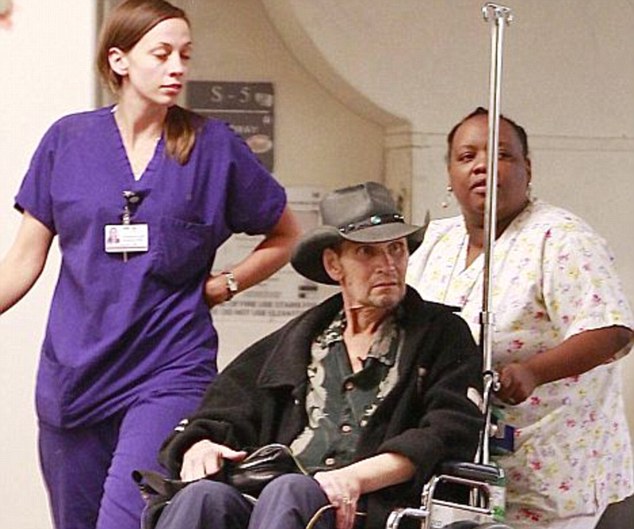
In January 2009, only days before The Beast premiered, Swayze developed pneumonia.
Chemotherapy had weakened his immune system.
He was hospitalized.
For many fans, the news felt ominous.
Patrick had only recently sat down with Barbara Walters and spoken with unusual openness about what he was facing.
Now he could not appear at a press event for his own television series.
The show’s producers and cast went without him.
He remained hospitalized for about a week before returning home to rest.
The Beast premiered on January 15, 2009.
Watching it now produces an unusual feeling.
Charles Barker looks exhausted because the character is exhausted.
But the actor portraying him was carrying something far greater than the script.
Every episode contains knowledge the audience cannot completely forget.
Patrick Swayze was sick while making this.
Yet he made it anyway.
9. The Series Ended. His Fight Did Not.
The Beast completed its 13-episode run.
A&E announced in June 2009 that it would not return for a second season.
By then, Patrick’s illness was progressing.
The cancer had spread to his liver.
There would be no miraculous Hollywood reversal.
No final treatment that suddenly erased the disease.
Patrick had already survived far longer than many people expected when the diagnosis became public.
Eventually the focus changed.
Not from caring to giving up.
From treatment to time.
That distinction was agonizing for Lisa.
She had spent months trying to help keep her husband alive.
Now love demanded something different.
She had to accept that she could not win this fight for him.
10. The Tough Guy Became Quiet
The final days described by Lisa are moving precisely because they are not theatrical.
There was no dramatic speech about fame.
No final declaration about Hollywood.
No carefully written goodbye.
When Patrick returned home near the end, Lisa treasured ordinary physical closeness.
She remembered holding his hand.
Listening to music.
Sleeping beside him with her arm around him.
Sometimes there were no words at all.
Patrick grew weaker.
Eventually he slipped into a coma.
Lisa stayed near him.
This was the man audiences had watched dance across a ballroom floor.
Fight in bars.
Surf toward danger.
Leap from airplanes.
Now the great physical performer was almost completely still.
But before he stopped speaking, Patrick and Lisa exchanged one last sentence.
11. The Last Three Words
Lisa later revealed the moment in Worth Fighting For.
Her final words to Patrick were:
“I love you.”
And she wrote that those were also his final words to her.
Nothing grander followed.
No speech.
No secret.
No final movie-star line.
Just the phrase they had presumably said thousands of times across more than three decades together.
This time it was the last.
Patrick then slipped fully into a coma.
Lisa continued staying with him.
On Monday morning, September 14, 2009, she listened as his breathing became weaker.
She held his hand.
Eventually he stopped breathing.
Patrick Swayze was 57 years old.
His publicist announced that he had died with family beside him after roughly 20 months living with pancreatic cancer.
12. Lisa Had Known Every Version of Him
Perhaps the reason those final words resonate is not because they were unusual.
It is because they were so ordinary.
Lisa had known Patrick before fame.
She knew the dancer.
The ambitious young actor.
The husband.
The man who became a global heartthrob.
The man who struggled with alcohol.
The horseman.
The songwriter.
The actor who wanted one more difficult role.
And finally, the sick man who no longer had the strength to work.
Hollywood had known Patrick Swayze in pieces.
Lisa had known the whole timeline.
Their marriage lasted 34 years.
For a celebrity marriage, that number alone attracts attention.
But longevity does not mean perfection.
Their relationship had survived enough difficulty to make the ending more meaningful, not less.
The last “I love you” did not come from two people who had lived an uninterrupted fairy tale.
It came from two people who had repeatedly chosen to remain connected after life gave them reasons to fracture.
13. Dirty Dancing Was Never the Whole Patrick Swayze
Swayze’s legacy is often compressed into a handful of images.
Johnny Castle telling Baby she does not belong in a corner.
The final dance.
Sam Wheat behind Demi Moore at the pottery wheel.
Dalton walking into the Double Deuce.
Bodhi staring at the ocean.
Those scenes matter because Swayze had a rare ability to make physicality feel emotional.
He was strong without seeming invulnerable.
That quality became even more visible after his diagnosis.
Cancer did not reveal that Patrick was fearless.
It revealed something more relatable.
He could be afraid and continue.
Angry and continue.
In pain and continue.
That was also why The Beast became such an unusual final performance.
Patrick was playing a hardened man while his own body was failing.
The production could see the struggle.
So could he.
He kept showing up.
14. Lisa Turned Grief Into Another Kind of Fight
Patrick’s death did not end Lisa’s involvement with pancreatic cancer.
She became an advocate for awareness and research, including work with the Pancreatic Cancer Action Network.
Years later, she continued speaking publicly about how quickly the disease had changed their lives and about the need for greater awareness and earlier detection.
Lisa also wrote about Patrick.
Not to create a saint.
Not to pretend the marriage had never struggled.
But to document what it meant to love someone through a disease neither of them could control.
Her book Worth Fighting For was published after his death.
Its title says almost everything.
The fight was never only about surviving cancer.
It was about preserving what remained while they still had it.
15. She Eventually Loved Again
There is another chapter that deserves to be told accurately.
Lisa Niemi did not stop living after Patrick died.
She eventually met jeweler Albert DePrisco.
They became engaged in 2013 and married in 2014.
Some Patrick Swayze fans criticized her for remarrying.
Lisa’s response revealed something mature about grief.
Loving someone new did not mean she had stopped loving Patrick.
Albert understood that.
Lisa has continued speaking openly about Patrick with affection while also building another life.
In recent years she has said she sometimes watches his movies when she misses him.
She still feels the presence of the decades they shared.
But memory did not require permanent loneliness.
That is another reason Patrick and Lisa’s story connects so strongly with people who have lived long enough to experience grief themselves.
Moving forward is not the same as replacing someone.
16. The Documentary Came Ten Years Later
In August 2019—not 2024, as some retellings incorrectly claim—the documentary I Am Patrick Swayze premiered on what would have been his 67th birthday.
It included memories from people who had worked with and loved him, including Jennifer Grey, Demi Moore, Rob Lowe, Sam Elliott and Lisa Niemi.
The documentary returned attention to the contradictions that had always made Swayze interesting.
Dancer and tough guy.
Romantic lead and action star.
Physically gifted but frequently injured.
Famous but deeply connected to ranch life and horses.
Intense but sensitive.
A man whose public image suggested strength but whose strongest work often depended on vulnerability.
The final cancer battle did not create those qualities.
It concentrated them.
17. Patrick Wasn’t a Miracle. That Makes the Story Stronger.
Swayze sometimes spoke defiantly during his illness.
He fought extraordinarily hard.
But describing him as an invincible miracle misses the point.
Cancer eventually killed him.
He knew that might happen.
He feared it.
He said so.
The extraordinary part was not that Patrick defeated death.
Nobody does.
The extraordinary part was how much living he insisted on doing while it approached.
He made a television series.
He stayed connected to Lisa.
He kept trying treatments.
He worked.
He hoped.
He got angry.
He got scared.
And he continued.
That is a much more believable form of courage than pretending fear never existed.
18. What Was Left When Everything Else Fell Away
Near the end, none of the things that had made Patrick Swayze famous could help him.
Not the Dirty Dancing poster.
Not the box-office success of Ghost.
Not magazine covers.
Not the title “Sexiest Man Alive.”
Not applause.
There was no performance left to give.
There was simply Patrick in a bed and Lisa beside him.
The woman who had watched his life expand from a Houston dance studio into worldwide fame was now watching it become smaller again.
A room.
Music.
A hand.
Breathing.
And finally, three words.
I love you.
That may be why their final exchange has endured.
The words themselves were not remarkable.
Millions of couples say them every day.
What made them remarkable was everything behind them.
Thirty-four years of marriage.
Dance studios.
Movies.
Success.
Addiction.
Recovery.
Cancer.
Hope.
Fear.
Work.
And an ending neither person could postpone forever.
Patrick Swayze spent much of his career proving how much the human body could do.
At the end, when his body could do almost nothing anymore, the thing that remained required no strength at all.
He told Lisa he loved her.
And she told him the same.
For the man who had danced his way into millions of lives, the final moment was not about Hollywood.
It was about the woman who had known him before Hollywood ever arrived.