In February 2026, Robert Wagner turned 96.
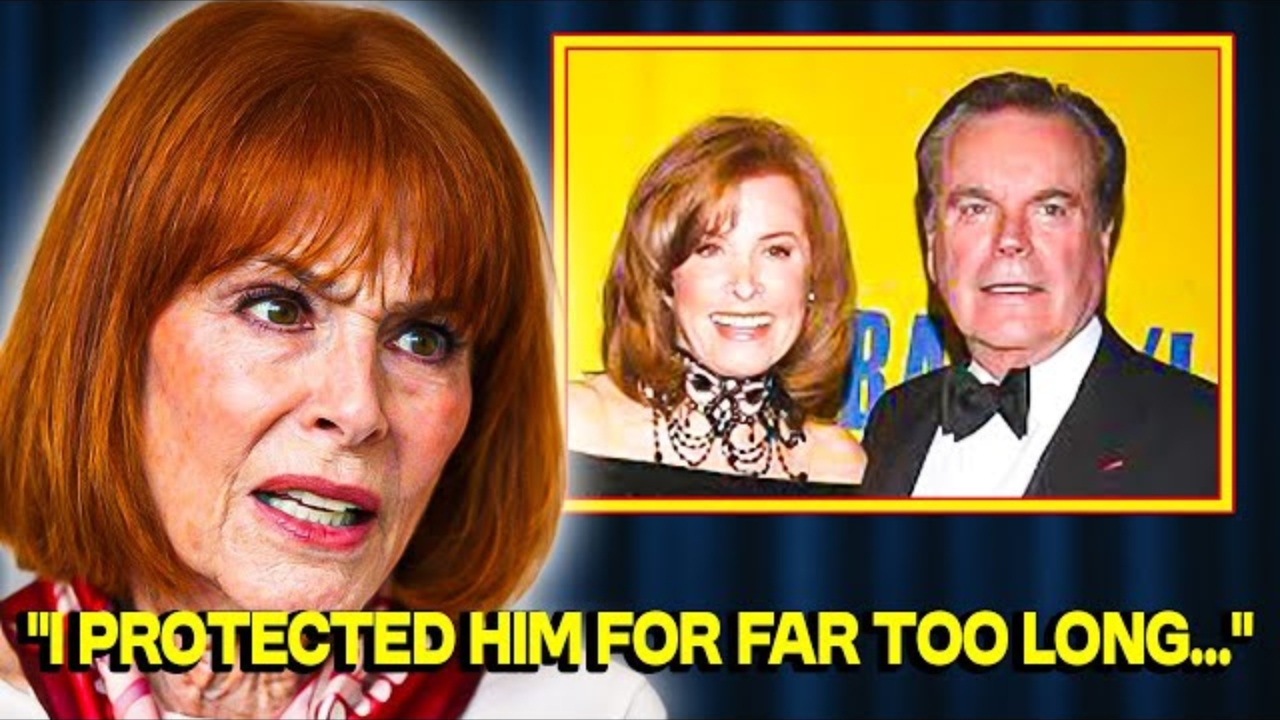
Among the people who came to see him was a woman American television audiences had spent decades associating with him: Stefanie Powers.
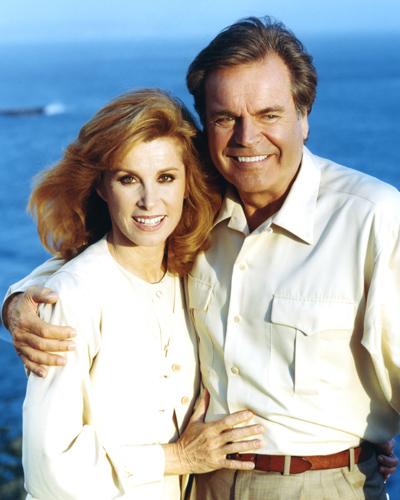
A photograph from the visit showed the two Hart to Hart stars together again, smiling more than 45 years after viewers first met them as Jonathan and Jennifer Hart—the wealthy, glamorous married couple who solved murders between dinner parties, European vacations and affectionate banter.
Wagner publicly thanked Powers for coming.
For longtime fans, the photograph was pure nostalgia.
But the relationship behind that smile carried a history far more complicated than the television romance they once performed.
Because in November 1981, while Hart to Hart was still in production, Stefanie Powers and Robert Wagner experienced two devastating losses almost simultaneously.
First, Powers lost William Holden, the Oscar-winning actor who had been the most important romantic relationship of her adult life.
Seventeen days later, Wagner’s wife, Natalie Wood, drowned off California’s Catalina Island under circumstances that would be debated for decades.
Powers and Wagner then faced an almost surreal demand.
They had to go back to work.
They had to stand under studio lights, look into each other’s eyes and continue playing one of America’s happiest married couples.
Years later, Powers described what those weeks really felt like.
Sometimes, she said, they thought:
“We couldn’t go on.”
But they did.
And she believed they “held each other up.”
That—not a newly uncovered autopsy secret or a late-life accusation—is the documented story that explains why their bond lasted so long.
1. America Fell in Love With a Marriage That Didn’t Exist
Hart to Hart premiered on ABC in August 1979.
Robert Wagner played Jonathan Hart, a wealthy businessman.
Stefanie Powers played his wife Jennifer, a journalist.
Together with their loyal butler Max and dog Freeway, the Harts somehow found murder almost everywhere they went.
The premise could have become ridiculous.
Instead, audiences bought it.
A major reason was Wagner and Powers.
Jonathan and Jennifer did not behave like the television marriages audiences were accustomed to seeing. They flirted. They touched. They clearly enjoyed being married.
The murder mysteries were entertaining.
The marriage was the fantasy.

The series ran for five seasons, from 1979 to 1984, and years later Wagner and Powers reunited for eight Hart to Hart television movies between 1993 and 1996.
Viewers naturally wondered whether the chemistry continued off camera.
Powers was eventually asked the obvious question.
Had she and Wagner ever been romantically involved?
Her answer was uncomplicated:
No.
What existed instead, she explained, was an unusually easy professional rhythm.
She compared working with Wagner to playing tennis with someone who always returned the ball at exactly the right moment.
There was a “mutual generosity” between them.
One actor gave.
The other responded.
Neither had to fight for the scene.
The irony is that while America watched Wagner and Powers perform an idealized marriage, both actors had important relationships waiting outside the studio.
And in 1981, both worlds collapsed.
2. Stefanie Powers Had Already Found the Great Love of Her Life
For Powers, that person was William Holden.
Holden belonged to an earlier generation of Hollywood stardom.
He had won the Academy Award for Stalag 17 and starred in classics including Sunset Boulevard, Sabrina, The Bridge on the River Kwai and Network.
He was 24 years older than Powers.
Their relationship began in the early 1970s and lasted roughly nine years.
It was not always easy.
Holden struggled with alcohol, and Powers never romanticized every part of the relationship afterward.
But when asked decades later whether Holden had been the love of her life, she did not hesitate.
She called it:
“the strongest relationship in the most compressed period of time.”
She said she had been devoted to him in a way she had never experienced before or since.
Holden also changed something else in Powers.
Africa.
Conservation.
Wildlife.
Those interests would eventually become one of the defining causes of the rest of her life.
Years after Holden’s death, Powers founded the William Holden Wildlife Foundation in Kenya, continuing work connected to the conservation efforts he had cared deeply about.
But in November 1981, none of that legacy existed yet.
There was only loss.
3. William Holden Died Alone
Holden died in his Santa Monica apartment on November 12, 1981.
He had fallen, struck his head and suffered a severe injury.
His death was accidental.
But his body was not discovered until several days later.
Contemporary reports indicate Powers had spoken with him by telephone shortly before his death and was still emotionally connected to him even though their romantic relationship had recently changed.
For Powers, the circumstances added another layer of pain.
There had been no bedside goodbye.
No final scene carefully arranged for closure.
A man who had occupied almost a decade of her life was suddenly gone.
And Powers was in the middle of making Hart to Hart.
The production did not disappear because her private life had fallen apart.
Episodes had to be completed.
Crews were waiting.
Schedules had been built.
Eventually she returned.
Her co-star understood grief better than either of them could have imagined.
He was about to experience his own.
4. Seventeen Days Later, Natalie Wood Was Gone
On November 29, 1981, Natalie Wood died at 43.
Wood had been a major Hollywood star since childhood.
Rebel Without a Cause.
West Side Story.
Splendor in the Grass.
She and Wagner had one of Hollywood’s most famous on-and-off love stories.
They first married in 1957, divorced several years later, then reunited and remarried in 1972.
By 1981, Natalie and Robert were raising their family together.
During Thanksgiving weekend, Wood was aboard the yacht Splendour off Catalina Island with Wagner, actor Christopher Walken—her co-star in Brainstorm—and the yacht’s captain, Dennis Davern.
At some point during the night, Wood disappeared.
Her body was found in the water the following morning.
The original ruling was accidental drowning.
For Wagner, it meant that only days after Powers had returned to work carrying grief over William Holden, he suddenly became the grieving partner.
The deaths themselves had occurred only 17 days apart.
5. “We Had to Go Back”
The emotional reality of what happened next is almost difficult to picture.
Jonathan and Jennifer Hart were supposed to represent effortless affection.
The actors playing them were grieving real people.
Powers later recalled that she and Wagner were mid-filming.
They had contractual obligations.
There was no simple option to shut down their lives indefinitely.
“We had to go back.”
She remembered thinking at times that continuing felt impossible.
But she also remembered something else:
“I like to think we held each other up.”
The shared experience, she said, bonded them as human beings.
That sentence explains decades of Wagner–Powers friendship better than any invented scandal could.
They had already liked each other.
They already trusted each other professionally.
But November 1981 gave them a private language neither would ever have wanted.
Each knew what it was like to arrive on set with cameras waiting while part of one’s personal life had just disappeared.
6. The Audience Wasn’t Supposed to See the Grief
Actors are routinely asked to perform emotions they do not feel.
In 1981, Wagner and Powers faced the opposite problem.
Their real emotions had to be hidden.
Jonathan Hart could not suddenly become a grieving widower because Robert Wagner was one.
Jennifer Hart could not spend an episode mourning William Holden because Stefanie Powers was grieving him.
The characters still flirted.
The cases still had to be solved.
The show still had to feel glamorous.
And the audience was meant to believe nothing had changed.
That is one of the strangest realities of classic television.
Millions of people watched a fictional couple whose easy affection concealed two genuine private tragedies.
For Powers and Wagner, work may also have provided structure.
There were lines to learn.
Places to stand.
Scenes to finish.
Someone beside them who did not need grief explained.
7. They Did Not Turn Their Shared Loss Into Romance
Hollywood mythology almost demands that two grieving co-stars become lovers.
It would make a perfect melodrama.
Two people suffer devastating losses.
They comfort each other.
Friendship becomes love.
But that is not what Powers says happened.
Asked directly whether there had ever been romance or flirtation between herself and Wagner, she said no.
Instead, their bond became something less sensational and ultimately more durable.
Friendship.
Powers described it as the kind of relationship where, if something happened to one of them, the other would be on a plane almost immediately.
That kind of loyalty may explain why Hart to Hart remained emotionally important to both performers long after the original show ended.
They weren’t secretly Jonathan and Jennifer.
They were Robert and Stefanie.
And the relationship had survived realities the fictional Harts never had to face.
8. Natalie Wood’s Death Would Not Remain a Simple Hollywood Tragedy
For Wagner, however, grief was eventually accompanied by something Powers did not face after Holden’s death.
Questions.
Natalie Wood’s death became one of Hollywood’s most enduring mysteries.
The original investigation concluded that she had drowned accidentally.
Decades later, new statements—particularly from yacht captain Dennis Davern—prompted the Los Angeles County Sheriff’s Department to reopen the investigation in 2011.
In 2012, Wood’s death certificate was amended.
The wording changed from an accidental drowning to:
“drowning and other undetermined factors.”
The amended record said the circumstances of how Wood entered the water were “not clearly established.”
That distinction matters enormously.
It does not prove a crime.
It does not prove Wagner harmed his wife.
It means investigators and the coroner could no longer state with confidence precisely how Natalie ended up in the water.
9. The Bruises Raised Questions—but Did Not Supply an Answer
A later coroner’s review noted unexplained bruising on Wood’s body, including injuries to her arm, wrist and knee.
Officials acknowledged that some injuries could have occurred before she entered the water.
That opened possibilities investigators could not conclusively resolve.
But possibility is not proof.
This is where many retellings of Natalie Wood’s death go too far.
They convert forensic uncertainty into a murder verdict.
Or take disputed witness accounts and present them as settled fact.
The official history is less satisfying.
Wood drowned.
Exactly how she entered the water remains unknown.
No one was ever charged.
10. Robert Wagner Became a Person of Interest—and Later Was Cleared
In 2018, Los Angeles County investigators publicly described Wagner as a “person of interest.”
A detective explained that Wagner had been the last person known to be with Natalie before she disappeared and that investigators still had questions about his account.
The phrase generated enormous headlines.
But “person of interest” is not the same as “suspect,” much less a finding of guilt.
Then in 2022, authorities said all existing leads had been exhausted and Wagner was no longer considered a person of interest.
The case remained open and unsolved in case genuinely new information ever emerged.
That is the responsible place to leave it.
Natalie Wood’s death retains unanswered questions.
Robert Wagner was never arrested or charged in connection with it.
11. Stefanie Powers Was Asked the Question Everyone Wanted Her to Answer
Given her closeness to Wagner, Powers eventually faced a difficult question.
What did she believe about Natalie Wood’s death?
Did she think Wagner was innocent?
Had he ever told her anything?
This is where sensational versions of the story often invent a dramatic late-life confession.
The documented answer is almost the opposite.
In a 2019 interview, Powers simply refused to participate.
“I won’t comment about that.”
She went even further.
She said she would not bring it up as an issue and criticized what she saw as repeated attempts to rehash the tragedy.
Whatever one thinks of that answer, it is her answer.
She did not announce that she had read secret autopsy files.
She did not accuse Wagner.
She did not produce hidden evidence.
She chose loyalty and silence.
12. Silence Does Not Prove What Either Side Wants It to Prove
That distinction is important.
Some readers may interpret Powers’ refusal to comment as proof she was protecting Wagner.
Others may see it as the reasonable boundary of a longtime friend who had no firsthand knowledge of what happened on the yacht.
Neither interpretation should be presented as fact.
What Powers did publicly say was clear:
Her relationship with Wagner had been transformed by the shared grief of 1981.
She continued to regard him as a close friend.
And she did not want to make herself part of the public prosecution or defense surrounding Natalie Wood.
That may be less dramatic than a “bombshell interview.”
It is more credible.
13. Powers Had Already Learned What Happens When Other People Rewrite the Dead
There may also have been a personal reason Powers resisted simplistic narratives about people she had known.
After William Holden died, she became frustrated by biographies and stories that, in her view, did not accurately represent him.
That frustration eventually helped motivate her to write her own memoir, One From the Hart.
Speaking to the Los Angeles Times, Powers explained that she wanted to describe Holden truthfully—not as a perfect hero, but as the real man she had known, including his flaws.
That philosophy is useful when thinking about Wagner too.
A human being can be charming and difficult.
Loyal and imperfect.
Grieving and guarded.
Real lives do not usually fit the clean categories that retrospective celebrity stories demand.
14. William Holden’s Legacy Became Part of Powers’ Life
After Holden’s death, Powers did not simply move past their relationship.
She carried forward one of his deepest interests.
Conservation.
Holden had been heavily involved with wildlife and land preservation in Kenya.
Powers founded the William Holden Wildlife Foundation, which has worked on conservation education in his memory.
In that sense, the relationship survived through purpose.
She did not need to turn Holden’s death into permanent public mourning.
She built something.
That choice also helps explain the woman who later spoke so carefully about loss.
Powers understood that grief could become action instead of spectacle.
15. Robert Wagner Also Built a Life After Natalie
Wagner eventually did what widows and widowers are often judged unfairly for doing.
He continued living.
He later formed a relationship with actress Jill St. John, whom he had known for years, and the two married in 1990.
They remain married.
In August 2026, Wagner publicly celebrated St. John’s 86th birthday, writing affectionately about their life together.
The fact that Wagner found another partner does not reveal what happened in 1981.
Nor does it erase Natalie.
Human beings can mourn one relationship and eventually build another.
Celebrity culture often treats moving forward as evidence in a case where it proves nothing.
16. Hart to Hart Outlasted the Worst Year of Their Lives
The original series ended in 1984 after five seasons.
But audiences never entirely let Jonathan and Jennifer go.
Nearly a decade later, Wagner and Powers returned for a string of television movies.
Eight were produced between 1993 and 1996.
That longevity speaks to something deeper than nostalgia.
The chemistry still worked.
Both performers had aged.
Television had changed.
The glossy late-1970s fantasy looked different in the 1990s.
Yet viewers still accepted them together.
Wagner and Powers had found a rhythm that survived time.
17. Fans Often Mistook That Rhythm for Love
That may be one of the highest compliments actors can receive.
People believed Jonathan and Jennifer loved each other because the performers never looked as though they were manufacturing affection.
Powers later described herself and Wagner almost like siblings who genuinely enjoyed one another.
They could get into laughing fits.
They stayed in contact.
They exchanged jokes.
The relationship remained warm without needing to become romantic.
In an industry that converts nearly every male-female friendship into romance rumors, theirs resisted the expectation.
Perhaps because the real intimacy came from somewhere else.
They had already seen each other at their most vulnerable.
18. November 1981 Became the Unspoken Center of Their Friendship
Imagine knowing someone for more than four decades.
You remember careers.
Marriages.
Birthdays.
Sets.
Premieres.
Jokes.
Arguments.
Old friends dying.
Bodies aging.
Hollywood changing.
But there is one month neither of you needs explained.
November 1981.
For Powers, William Holden.
For Wagner, Natalie Wood.
Two names forever connected to entirely different kinds of grief.
Holden’s death was tragic but medically understood.
Wood’s death became a mystery discussed for generations.
Yet the immediate emotional experience for the two actors shared a basic truth:
someone central to their lives was suddenly gone.
And the cameras were still waiting.
19. That Is What Makes the 2026 Photograph Different
In February 2026, Wagner turned 96.
Powers visited him.
He shared the reunion publicly, thanking her for being there.
They had last been seen together publicly not long before, and their continued friendship attracted attention from fans who still remembered Hart to Hart.
On the surface it was simply a birthday photograph.
Two elderly television stars smiling.
But the image carries decades inside it.
The pilot.
Five seasons.
Eight reunion movies.
William Holden.
Natalie Wood.
The return to set.
The public questions.
Separate lives.
Separate relationships.
And still, friendship.
20. The Stefanie Powers Story Is More Interesting Without the Fake Confession
There is a temptation when writing about aging Hollywood stars to invent urgency.
“After 45 years, she finally tells all.”
“Secret files revealed.”
“The truth he never wanted exposed.”
Those headlines work because audiences understand that time is running out.
But in this story, they actually make something remarkable less interesting.
Stefanie Powers does not need a secret autopsy file to matter.
She was there when Wagner’s life changed.
She was simultaneously living through her own loss.
She remembers what it was like to go back to work.
And she is still his friend 45 years later.
That is evidence of a relationship.
Not evidence about Natalie’s death.
The distinction is essential.
21. Natalie Wood Deserves More Than Becoming a Plot Device
Another danger in telling this story is reducing Natalie Wood entirely to a mystery.
Before Catalina, she had lived more than four decades.
She was one of the defining actresses of her generation.
Her performances in Rebel Without a Cause, Splendor in the Grass and West Side Story helped make her one of Hollywood’s most recognizable stars.
Her death deserves scrutiny.
Her life deserves memory too.
Her daughters have also spoken publicly about their mother in ways that differ sharply from some of the most sensational theories surrounding her death.
That disagreement within the family and among those who knew Natalie is another reason certainty should be approached carefully.
The unanswered question remains.
It should not swallow the woman.
22. Wagner’s Life Should Not Be Reduced to the Mystery Either
The same principle applies to Robert Wagner.
For some audiences, his name immediately brings Natalie Wood to mind.
For others:
It Takes a Thief.
Switch.
Hart to Hart.
Later generations knew him from the Austin Powers films or television appearances.
He has lived almost a century.
Natalie’s death is undeniably part of his biography.
It is not the only part.
And Stefanie Powers’ continued friendship with him does not require us to decide the Natalie Wood case one way or another.
That is precisely what makes the relationship interesting.
She appears to have made her own decision about the friend she knew.
The public is free to wrestle with the unanswered questions separately.
23. What Powers Actually Said Carries More Weight Than Any Invented Quote
The strongest words in this story are not about autopsy files.
They are these:
“Sometimes we felt we couldn’t do it.”
And:
“I like to think we held each other up.”
Those lines contain no accusation.
No conspiracy.
No self-promotion.
They describe two actors trying to function after catastrophic private loss.
That is enough.
In fact, it is more powerful because it is ordinary.
Anyone who has ever gone back to work after losing someone understands it.
The world doesn’t always stop because your life has.
24. Jonathan and Jennifer Hart Were Fiction. The Loyalty Wasn’t.
For five seasons, television viewers watched Robert Wagner and Stefanie Powers play a couple whose marriage seemed almost immune to ordinary problems.
They were rich.
Elegant.
Funny.
Romantic.
Even murder rarely spoiled dinner for long.
Real life was not nearly so accommodating.
William Holden died alone after an accident.
Natalie Wood drowned in circumstances that remained uncertain enough for officials to reopen the case decades later.
Powers and Wagner grieved.
Returned to work.
Finished scenes.
Continued careers.
And never became the romantic couple so many viewers assumed they must be.
Something else lasted instead.
Friendship.
25. Forty-Five Years Later, They’re Still Part of Each Other’s Story
In 1981, Powers and Wagner could not possibly have known what lay ahead.
They could not know that Hart to Hart would become a nostalgia classic.
That they would return for television movies.
That Natalie Wood’s death would still be debated more than four decades later.
That Powers would devote enormous energy to conservation in Holden’s memory.
That Wagner would remarry and grow old with Jill St. John.
Or that in 2026, one would turn 96 and the other would still be there to visit him.
Perhaps that is the real story behind Jonathan and Jennifer Hart.
The fictional marriage ended when the cameras stopped.
The real bond did not.
Not because Stefanie Powers discovered a secret Robert Wagner had hidden for decades.
Not because the two were lovers.
And not because she eventually chose to accuse or absolve him.
It lasted because in November 1981, two people who already trusted each other professionally found themselves carrying losses almost too large to explain.
Then they stood beside each other.
They went back under the lights.
They did the work.
And, in Powers’ own words, they held each other up.
Forty-five years later, that may be the most revealing thing either of them ever said.