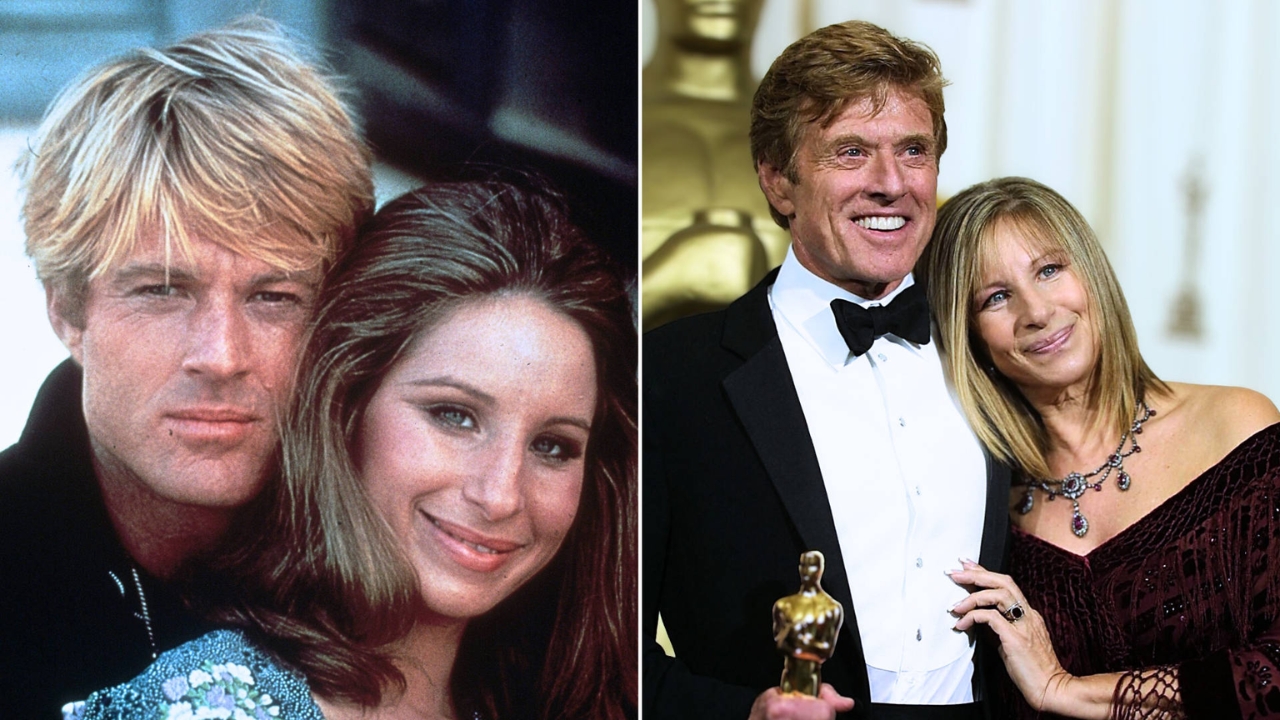
Robert Redford had a habit that used to annoy Barbra Streisand.
He called her “Babs.”
She would protest.
She was Barbra, not Babs.
Yet somehow, when Redford said it, she laughed.
More than half a century after they made The Way We Were, the teasing was still there.
So was the connection.
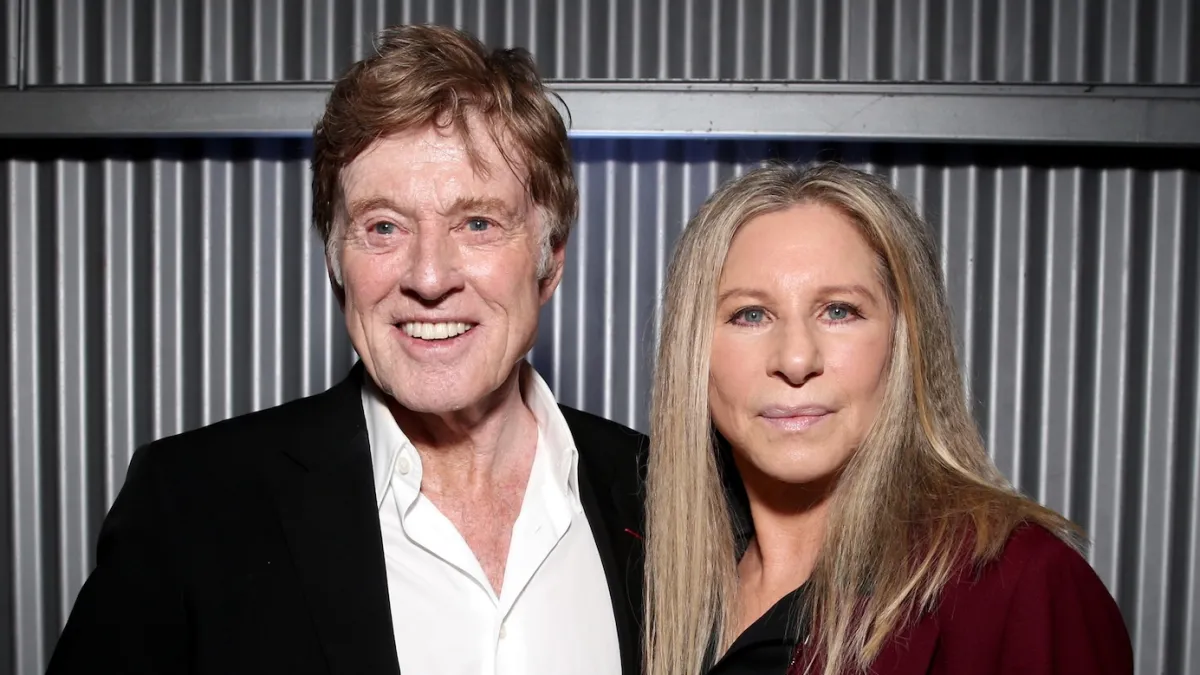
During a long phone conversation years later, Streisand and Redford talked the way old friends do — about politics, art, the painter Modigliani, and the movie that had linked their names forever.
Then, as they prepared to hang up, Redford said something Streisand would never forget.
“Babs, I love you dearly, and I always will.”
She told him she loved him too.
Later, in what became the last note she ever wrote to him, Streisand did something she once would have resisted.
She signed it:
“Babs.”
It is an unexpectedly tender ending to one of Hollywood’s most famous screen partnerships.
Especially because Streisand and Redford made only one movie together.
One.
Yet more than fifty years after The Way We Were opened in 1973, audiences still remembered Katie Morosky brushing Hubbell Gardiner’s hair away from his forehead.
They still remembered the final meeting outside the Plaza Hotel.
They still remembered the music.
And they still wondered why the chemistry between Streisand and Redford seemed so unusually real.
The easiest explanation would be a secret romance.
There is no need to invent one.
The truth Streisand herself described is more interesting.
They were almost complete opposites.
And they could never quite stop being curious about each other.
Robert Redford Almost Wasn’t Hubbell Gardiner
Today it is difficult to imagine anyone else opposite Streisand in The Way We Were.
But the pairing that became one of the defining romances of 1970s cinema nearly never happened.
When Streisand first became involved with the project, she had a specific actor in mind.
Robert Redford.
At the time, Redford already represented something very different from Streisand.
He was blond, handsome, controlled and seemingly effortless.
She was intense, expressive, politically outspoken and famously meticulous.
Streisand later admitted that blond, blue-eyed men were not normally her type.
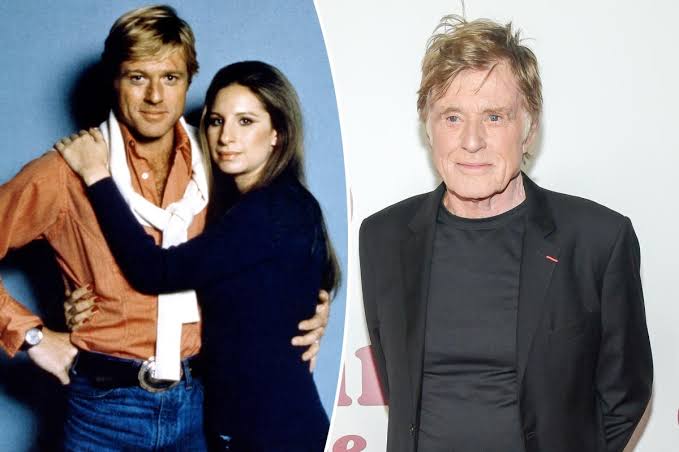
His looks were obvious.
But they were not the main reason she wanted him.
What fascinated her was what she could not immediately read.
Redford had a quality of withholding something.
You could watch his face and still wonder what he was thinking.
Streisand admired that.
She understood that mystery is valuable on a movie screen.
She also believed his restraint would create exactly the right tension opposite her own emotional openness.
There was only one problem.
Redford did not want the role.
He Thought Hubbell Was Too Empty
Redford read the script and saw a weakness immediately.
Katie had convictions.
She wanted things.
She argued.
She fought.
She pushed.
Hubbell, by comparison, was handsome and desirable — but what did he actually want?
Redford worried that the character was little more than a beautiful object for Katie to pursue.
Director Sydney Pollack understood his objection.
So did Streisand.
Instead of deciding Redford was difficult and moving on to another leading man, she agreed with him.
Hubbell needed more substance.
More motivation.
More interior life.
Streisand urged Pollack to strengthen the role.
Her message was essentially simple:
Make it equal.
Writers were brought in to develop Hubbell.
The character grew more complicated.
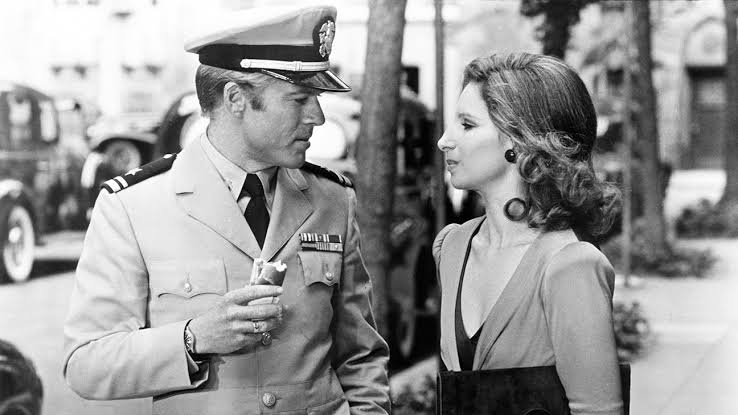
But Redford still hesitated.
Again, he said no.
For Streisand, that was devastating.
Other actors were considered.
Ryan O’Neal was among the possibilities.
But Streisand and Pollack kept hoping Redford would change his mind.
Finally, while Streisand was working overseas, she received a telegram.
The message was brief.
Redford had agreed.
The pairing that now seems inevitable had barely survived the casting process.
And ironically, Redford’s reluctance probably helped make the film better.
By forcing the filmmakers to answer his question — Who is Hubbell? — he helped turn Katie’s handsome obsession into a man audiences could understand.
That mattered.
Because The Way We Were could not work if Katie were the only fully formed person in the relationship.
The tragedy required two people who genuinely belonged together in some ways and genuinely could not remain together in others.
They Were Opposites Before the Cameras Even Rolled
Katie Morosky and Hubbell Gardiner were designed around contrast.
Katie is Jewish, working-class, political, passionate and incapable of keeping quiet when she believes something is wrong.
Hubbell is privileged, handsome, WASP, talented and uncomfortable with the level of conflict Katie brings into life.
She pushes.
He retreats.
She wants him to become more than he is.
He wants room simply to be.
The relationship works because neither person is entirely wrong.
And according to Streisand, some of that tension existed naturally between the actors themselves.
Not as hostility.
As difference.
Streisand liked preparation.
She could rehearse repeatedly.
She examined details.
She questioned scenes.
Redford worked more instinctively.
He valued spontaneity.
Where Streisand might analyze, Redford might simply step into the scene and see what happened.
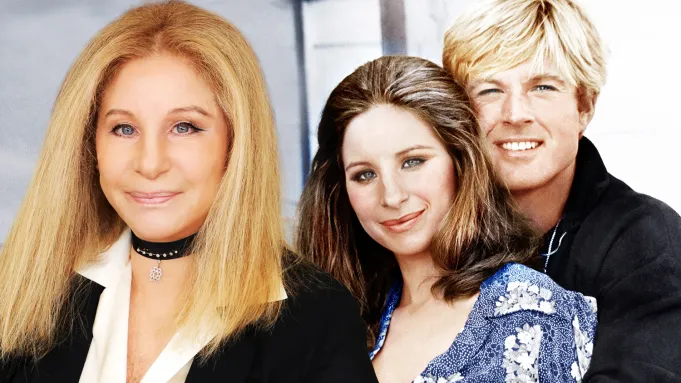
That difference could have caused a disaster.
Instead, it produced electricity.
Years later, Streisand summed it up beautifully:
They were “genuinely curious about each other.”
That curiosity is visible.
Watch Redford watching Streisand.
Watch Streisand trying to read Redford.
Neither seems entirely certain what the other person is about to do.
That is a difficult quality to manufacture.
It makes the relationship feel alive.
One Tiny Gesture Became More Famous Than Pages of Dialogue
Some of the most memorable moments in film history are carefully planned.
Others happen almost accidentally.
During a scene in The Way We Were, Redford’s hair fell across his forehead.
Streisand reached out and brushed it back.
The gesture was not originally some grand symbolic piece of direction.
It simply felt natural to her in the moment.
But when people saw the footage, something about it registered immediately.
The gesture was intimate without being sexual.
Tender without being sentimental.
It showed Katie doing what she had always wanted to do:
touch Hubbell with complete familiarity.
Streisand recognized its emotional power and allowed the gesture to echo elsewhere in the film.
That decision paid off in the final scene.
Years have passed.
Katie and Hubbell are no longer together.
They encounter each other unexpectedly in New York.
Their lives have moved forward.
Hubbell has another woman.
Katie is still politically active.
Then Katie reaches toward him.
She brushes the hair from his forehead again.
No long speech is necessary.
The gesture brings their entire relationship back.
The college years.
The marriage.
The arguments.
The tenderness.
The life they almost had.
Then the music rises.
For generations of viewers, that moment became inseparable from the song “The Way We Were.”
It is difficult to imagine it working with the same force if the actors had not genuinely been fascinated by each other.
Redford Had Been Warned About Streisand
Before making the movie, Redford had heard the reputation.
Barbra Streisand could be demanding.
Perfectionistic.
Strong-willed.
She knew what she wanted.
Hollywood has historically used words like “difficult” very differently depending on who was exercising creative control, particularly when the person was a woman.
Redford did not simply accept what others told him.
He wanted to judge for himself.
And after working with Streisand, his recollections were strikingly warm.
Years later, he described her as a joy to work with.
He understood that her intensity was part of what made her extraordinary.
Streisand, in turn, thought Redford gave one of his finest performances as Hubbell.
She believed his quietness did something essential for the movie.
If both actors had attacked every scene emotionally, the relationship might have become exhausting.
Redford provided space.
Streisand provided pressure.
He held back.
She reached toward him.
The chemistry existed in the distance between those two instincts.
The Film Was Never Just a Love Story
Memory has softened The Way We Were over the years.
People remember the romance.
The beautiful stars.
The song.
Katie touching Hubbell’s hair.
But Streisand has long argued that another part of the movie matters just as much.
Politics.
The story moves through the late 1930s and into the era of the Hollywood blacklist.
Katie believes political commitment is a moral obligation.
Hubbell is much less comfortable allowing politics to dictate his life.
Their disagreement is not decorative.
It is one of the reasons they cannot remain together.
Katie cannot stop caring.
Hubbell cannot live at her level of constant confrontation.
Yet Streisand believed crucial material explaining that divide was removed from the finished film.
That bothered her for decades.
She felt audiences saw the marriage collapse without enough of the political conflict that made the separation understandable.
Fifty years later, she was still trying to fix it.
That determination eventually led her back to Redford.
Fifty Years Later, Barbra Was Still Fighting for Katie and Hubbell
For the 50th anniversary of The Way We Were, Streisand wanted previously cut material restored in an extended version.
The project mattered deeply to her.
These were scenes she had thought about for decades.
But there was one person whose opinion mattered particularly.
Redford.
So she called him.
By then, they were no longer two movie stars in the middle of one of the biggest films of 1973.
They were older.
Their careers had traveled in different directions.
Streisand had become an actor, singer, director and cultural institution.
Redford had become not only one of America’s most respected actors but an Academy Award-winning director and a transformative force in independent film through Sundance.
Yet when they spoke, the old connection was still recognizable.
Redford listened to what Streisand wanted to do with the restored scenes.
He supported her.
Then the conversation kept going.
They talked for more than an hour.
Not only about the film.
About politics.
About art.
About life.
Then came the goodbye.
“Babs, I love you dearly, and I always will.”
Streisand answered that she loved him too.
For anyone determined to turn the moment into proof of a secret affair, that interpretation misses something more valuable.
This was affection that had survived for half a century without needing to become scandal.
They had been young stars together.
Then old friends.
The film remained between them.
They Never Needed to Become Katie and Hubbell in Real Life
Audiences often struggle to separate romantic chemistry from romance.
If two actors make people believe deeply enough in love, viewers naturally begin wondering whether some version of the relationship existed away from the camera.
Streisand and Redford have inspired that curiosity for decades.
But their own accounts point toward something more subtle.
Mutual fascination.
Professional admiration.
Affection.
Difference.
Redford once tried to describe what happened when he acted opposite Streisand.
He suggested that different aspects of her personality brought out unexpected qualities in the man opposite her — strength in some moments, vulnerability and romance in others.
Streisand loved the observation.
He had recognized something about her that helped explain why Katie worked.
And she recognized something equally important in him.
Redford could do very little and make the audience search his face.
That restraint became Hubbell.
Perhaps that was why Streisand pushed so hard for him before production began.
She knew Katie needed someone she could never completely penetrate.
And Streisand herself seems to have found Redford intriguing for the same reason.
They Made One Film — and Kept Returning to It
Hollywood history is full of famous screen couples who made movie after movie together.
Katharine Hepburn and Spencer Tracy made nine.
Fred Astaire and Ginger Rogers made ten.
Jane Fonda appeared with Redford in four films.
Streisand and Redford?
One.
That fact almost makes the endurance of their pairing stranger.
They reunited publicly over the years.
In 2002, Streisand presented Redford with an honorary Academy Award.
They appeared together on The Oprah Winfrey Show in 2010.
They continued to speak.
And audiences continued to ask the obvious question:
Why wasn’t there another Way We Were?
Ideas surfaced.
A sequel was discussed at various times.
But nothing ever materialized.
Perhaps that helped preserve the original.
Katie and Hubbell remain suspended in exactly the bittersweet place the movie leaves them.
Older.
Separated.
Still affectionate.
Unable to go back.
Some stories become more powerful because nobody tries to resolve them.
Their Last Meeting Wasn’t About Hollywood
When Robert Redford died on September 16, 2025, at 89, Streisand shared another memory.
The last time she saw him, he had come to lunch.
What did two people responsible for one of Hollywood’s most remembered romances discuss after more than fifty years?
Not box-office grosses.
Not awards.
Not gossip.
Art.
They discovered themselves talking about their early drawings and decided they would send each other examples of their first artwork.
It is a small detail.
That is precisely why it feels meaningful.
Long before Redford became one of Hollywood’s most recognizable leading men, he had studied art.
Streisand, too, had spent a lifetime obsessed with visual detail, design and collecting.
Half a century after audiences first watched Katie stare at Hubbell, their off-screen relationship had settled into something quiet.
Two old friends talking about pictures.
When Redford died, Streisand remembered that they had been opposites from the beginning.
He came from a world of horses.
She joked that she was allergic to them.
But they kept wanting to learn more about each other.
Just like Katie and Hubbell.
That comparison came from Streisand herself.
And perhaps it explains more than any rumor ever could.
Robert Redford Was More Than the Handsome Man in the Movie
Streisand never reduced Redford to his appearance.
That mattered because Hollywood frequently did.
His face became one of the defining faces of his generation.
But Redford spent much of his career pushing against the limitations of being viewed simply as a leading man.
He directed.
He produced.
He helped build Sundance into an institution that gave independent filmmakers an alternative route into American cinema.
He advocated for environmental causes.
He defended artistic freedom.
Streisand described him as an “intellectual cowboy.”
The phrase suited him.
There was the Western exterior.
And then there was the person underneath it.
Thoughtful.
Private.
Restless.
Hard to categorize.
The same mystery that made Streisand want him as Hubbell in 1973 remained part of the man she remembered after his death.
Then Came the 2026 Oscars
Six months after Redford died, Hollywood gathered for the Academy Awards.
Barbra Streisand was there.
By then, she had largely stepped away from live performance.
Singing before an enormous audience had never been easy for her despite a career that made her one of the most famous vocalists alive.
But for Redford, she returned to the Oscars stage.
Before singing, Streisand told the audience something fans of The Way We Were already knew only in pieces.
When she first saw the script, she could imagine only one actor as Hubbell.
Redford.
Then she reminded everyone of the irony.
He had turned her down.
His objection had been that Hubbell lacked backbone.
Decades later, Streisand stood before Hollywood and said Redford himself had plenty of it.
She praised his work as an artist and his principles away from the screen.
She remembered his teasing.
She remembered “Babs.”
And she told the audience about those words from their later phone call:
“I love you dearly, and I always will.”
Then Streisand sang from “The Way We Were.”
For people who had first seen the movie in theaters in 1973, the moment carried more than nostalgia.
Fifty-three years had passed.
Katie and Hubbell were fictional.
Streisand and Redford were not.
One was standing on the stage at 83.
The other was gone.
And suddenly a song about memory had accumulated another lifetime of memories.
The Chemistry Was Real — Just Not in the Way Gossip Usually Means
What did Barbra Streisand finally reveal about Robert Redford?
Not a hidden affair.
Not a secret romance.
Not a confession that rewrites Hollywood history.
Something much more believable.
Their chemistry mattered to both of them.
Redford challenged her.
She intrigued him.
They approached acting differently enough that neither could entirely predict the other.
Their personalities did not fit neatly together.
That was the point.
Streisand pushed for him before he wanted the role.
Redford pushed back against a script he thought was unbalanced.
His resistance helped improve Hubbell.
Her persistence got him into the film.
Once the cameras rolled, their differences did the rest.
Perhaps great chemistry does not always come from similarity.
Sometimes it comes from friction.
Curiosity.
The feeling that the person across from you contains something you have not yet figured out.
Streisand seemed to understand that about Redford from the beginning.
Maybe That Is Why the Final Scene Still Hurts
At the end of The Way We Were, Katie and Hubbell meet again.
They are no longer young.
They are no longer married.
Their lives have gone elsewhere.
For a moment, the past returns.
Katie touches his hair.
The music begins.
And then they separate again.
There is no dramatic reunion.
No promise that true love conquers everything.
The film understands something more difficult:
Two people can love each other and still be wrong for the life the other person needs.
That idea grows more meaningful with age.
Perhaps that is why The Way We Were has remained especially powerful for viewers who have lived long enough to understand that not every important relationship ends with happily ever after.
Some end.
And remain important anyway.
Streisand and Redford’s real relationship was not Katie and Hubbell’s.
But its longevity gives the film an additional emotional echo.
They also traveled separate paths.
They also remained connected.
They also looked back.
Barbra Kept One Last Joke Between Them
For years, Redford called her Babs.
For years, she resisted.
The nickname did not fit the image she had of herself.
But Redford kept using it.
And apparently, he kept getting away with it.
After his death, when Streisand spoke at the 2026 Oscars, she remembered that joke.
Then she revealed the ending.
In the last note she wrote to him, she told him she loved him too.
And underneath?
She signed the name he had called her all those years.
Babs.
For all the discussion of screen chemistry, that tiny decision may reveal the relationship more clearly than anything else.
Redford had teased her.
She had protested.
Decades passed.
Then, when there would be no next conversation, she let him have the last word.
One Movie Was Enough
Hollywood careers are measured in numbers.
Movies made.
Awards won.
Tickets sold.
Years at the top.
By that logic, Barbra Streisand and Robert Redford’s professional partnership should be a footnote.
One movie.
Yet The Way We Were followed both of them for the rest of their lives.
Streisand fought for decades to restore material she believed the film had lost.
Redford supported her effort.
They reunited publicly.
They called each other.
They talked about politics and paintings.
They remained curious.
After his death, she described him not merely as a beautiful movie star from her past but as an artist she still admired.
And in 2026, she returned to one of the biggest stages in Hollywood and sang the song that had connected them more than half a century earlier.
Perhaps that is the real secret behind their chemistry.
It was never simply about attraction.
It was about contrast.
Katie and Hubbell worked because each possessed qualities the other lacked.
So did the performers playing them.
Streisand brought urgency.
Redford brought restraint.
She pushed.
He held back.
She wanted the audience to feel everything.
He made them wonder what he was refusing to show.
Somewhere between those two instincts, a love story appeared.
They never made another film together.
They didn’t need to.
More than fifty years later, millions of people can still picture one small gesture:
Barbra Streisand reaching toward Robert Redford.
Brushing the hair from his forehead.
And letting him go.
Maybe that is why the story survived.
Not because Hollywood finally revealed a secret romance.
But because two very different people created something on screen neither could have created alone — then carried an affection for each other long after the cameras stopped.
One movie.
One song.
One friendship that lasted decades.
And near the end, one sentence:
“Babs, I love you dearly, and I always will.”
Some Hollywood partnerships need a dozen movies to become legendary.
Streisand and Redford needed only one.