In 1965, Pernell Roberts did something almost unthinkable.
He walked away from Bonanza.
Not after the ratings collapsed.
Not after the audience lost interest.
Not because the network canceled the series.
He left while Bonanza was one of the most successful television shows in America.
Millions of viewers knew Roberts as Adam Cartwright, the eldest son of Ben Cartwright on the Ponderosa.
He had fame.
Money.
A recognizable face.
A secure job on a television phenomenon.
And he wanted out.
To many people in Hollywood, the decision made no sense.
Why would an actor abandon the kind of role most performers spent their entire careers hoping to find?
Over the years, one explanation has been repeated again and again:
Pernell Roberts hated Lorne Greene.
The story is irresistible.
Roberts, the serious and restless actor, trapped beneath the authority of Greene, the commanding patriarch who played Ben Cartwright.
A private war behind one of television’s most beloved families.
But the documented story is more complicated.
Roberts certainly had strong opinions about Bonanza.
He could be difficult.
He criticized the writing.
He clashed with producers.
And he increasingly resented what Adam Cartwright had become.
But the strongest evidence points not to a secret personal hatred of Lorne Greene.
It points to something larger.
Pernell Roberts felt trapped by the very formula that had made him famous.
And at the center of that formula was a question he could no longer ignore:
Why was Adam Cartwright, a grown, intelligent man, still behaving like a boy who needed his father’s permission?
Before Bonanza, Pernell Roberts Was a Serious Stage Actor
Roberts did not arrive in Hollywood dreaming only of television fame.
He came from the theater.
Born in Georgia in 1928, he developed an early interest in music and performance.
By the time television discovered him, Roberts had already built a reputation as a serious actor.
He performed Shakespeare.
He worked in classical productions.
He won recognition for stage work before Bonanza ever existed.
That background mattered.
Roberts did not see acting simply as a way to become famous.
He believed characters should grow.
Contradict themselves.
Change.
Reveal new dimensions.
He wanted stories to ask difficult questions.
Television, especially weekly network television in the late 1950s, operated under different pressures.
A successful series needed familiarity.
Audiences returned because they knew who the characters were.
Networks wanted stability.
Advertisers wanted reliability.
Producers needed a structure they could reproduce week after week.
Those competing values would eventually collide.
At first, however, Bonanza looked like an opportunity.
Adam Cartwright Seemed Like the Perfect Role
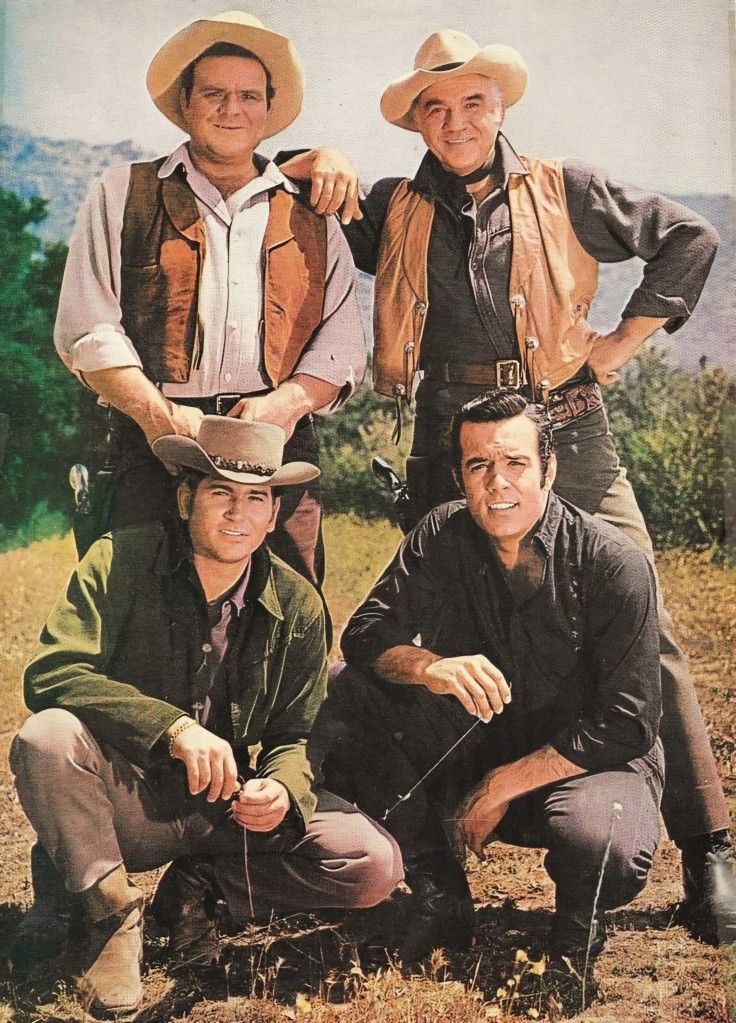
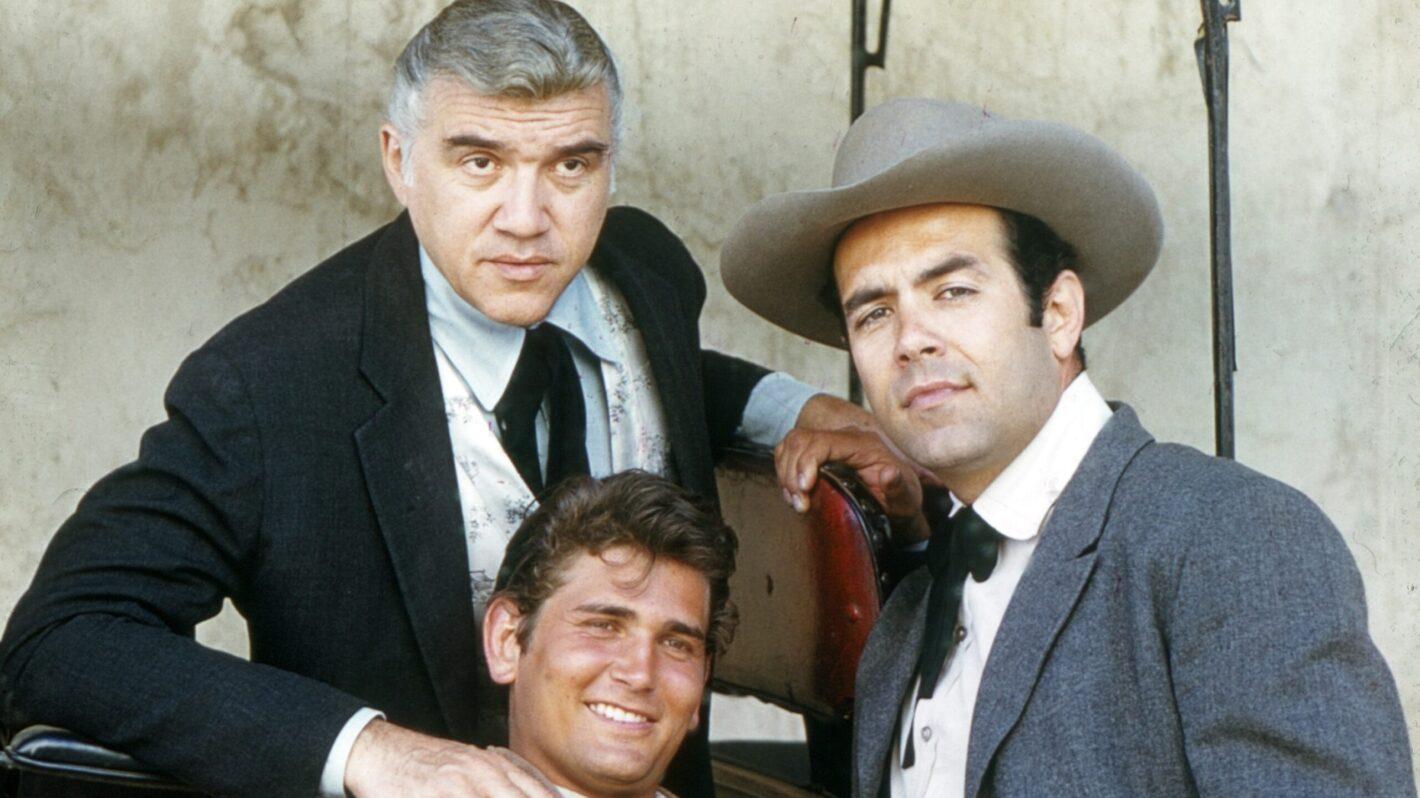
When Bonanza premiered in 1959, the Cartwright family consisted of four men.
Ben Cartwright, played by Lorne Greene, was the powerful patriarch.
His sons were Adam, Hoss and Little Joe.
Each had a distinct personality.
Hoss, played by Dan Blocker, was large, warm and gentle.
Little Joe, played by Michael Landon, was impulsive, youthful and emotional.
Adam was different.
He was educated.
Thoughtful.
Reserved.
The intellectual member of the family.
For an actor like Roberts, that seemed promising.
Adam could be the Cartwright who questioned things.
The man who looked beyond the immediate gunfight.
The son most capable of challenging the assumptions around him.
Roberts understood the possibilities.
Then Bonanza became enormous.
And enormous success changed the equation.
The Ponderosa Became One of America’s Favorite Places
The show did not become merely popular.
It became part of American television culture.
The Ponderosa.
Ben Cartwright.
Adam.
Hoss.
Little Joe.
The burning map in the opening credits.
The theme music.
Families gathered around television sets to watch the Cartwrights solve problems together.
And increasingly, that family structure became the show’s greatest strength.
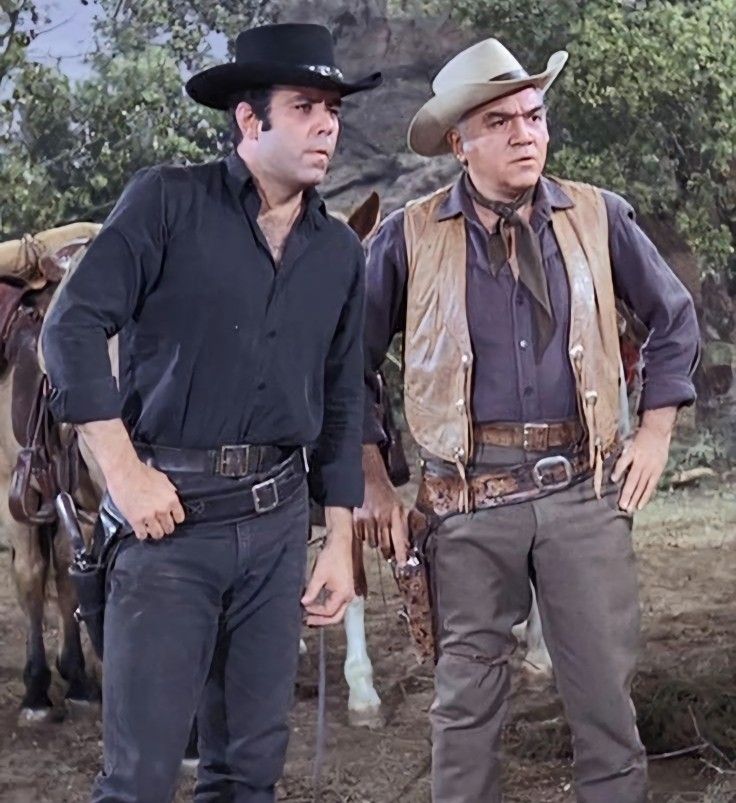
Ben Cartwright was the center.
His sons could disagree.
They could get into trouble.
They could fall in love.
They could make mistakes.
But the family eventually came back together.
For millions of viewers, that was comforting.
For Pernell Roberts, it gradually became frustrating.
The problem was not that Lorne Greene played a strong father.
The problem was that Roberts believed the scripts kept Adam emotionally dependent on that father.
And Adam was supposed to be a grown man.
“Does He Still Need Father’s Permission?”
Roberts eventually began asking the question publicly.
Why, after all these years, were Ben Cartwright’s adult sons still constantly looking to their father for approval?
Roberts complained that the premise became increasingly difficult for him to believe.
In one of his best-known criticisms, he essentially asked why three grown men still seemed to need “father’s permission” for what they did.
That was not simply a joke.
It went to the heart of his frustration.
Adam had been introduced as mature and intelligent.
Yet week after week, Roberts felt the character remained stuck.
He could not truly outgrow the Ponderosa.
He could not develop into a fully independent man.
The family formula required him to return.
Again.
And again.
And again.
Roberts called the role limited.
At times, he used even harsher language.
He felt Adam had become dramatically “impotent.”
Everywhere he turned, Roberts complained, there was the father image.
And on screen, that father image had a face.
Lorne Greene.
That Is Where the Lorne Greene Myth Begins
It is easy to understand how later viewers transformed this complaint into a personal feud.
Lorne Greene was Ben Cartwright.
Ben was the authority figure Roberts resented within the scripts.
Greene also had the presence of a patriarch off camera.
He was older than the actors playing his sons.
He was confident.
Respected.
He became one of the defining faces of the program.
So a simple narrative formed:
Pernell Roberts hated Lorne Greene because Greene controlled everything.
But that conclusion goes beyond what the strongest historical evidence supports.
Roberts’ documented anger was aimed repeatedly at:
the scripts,
the formula,
the producers,
the lack of character development,
and the overall creative limitations of the series.
That distinction matters.
Roberts could resent what Ben Cartwright represented dramatically without personally despising the man playing him.
And the person Roberts had the clearest documented friction with was not Greene.
It was producer and creator David Dortort.
David Dortort and Pernell Roberts Were a Volatile Combination
Dortort had helped create the world that made Roberts famous.
He also had to keep that world functioning.
From a producer’s point of view, Bonanza was working.
The ratings were extraordinary.
Audiences loved the Cartwright family exactly as they were.
Why take apart a machine that was delivering one success after another?
Roberts looked at the same success and saw something different.
He saw unrealized potential.
He believed the scripts could be stronger.
He wanted more rehearsal.
More depth.
More character growth.
More willingness to challenge the audience.
Dortort saw a television production with deadlines.
Roberts saw artistic compromise.
The tension became real.
Roberts gained a reputation for complaining about the material.
He questioned scripts.
He could be blunt.
He did not hide his dissatisfaction very well.
That behavior frustrated the production.
But there is a fascinating contradiction in the way Dortort later discussed him.
The producer could describe Roberts as difficult.
And still acknowledge how good he was.
That contradiction may be the most revealing part of the entire story.
They Were Angry With Him — And Still Knew He Could Act
Roberts was not an easily replaceable performer while he was still playing Adam.
He had presence.
Authority.
Intelligence.
His restrained style gave the Cartwright family a balance the other brothers did not provide.
Even people who disliked his attitude could recognize his talent.
This is why reducing him to “the actor who complained too much” misses something.
He was not frustrated because he had nothing to contribute.
He was frustrated precisely because he believed he could contribute more.
Dortort might have wished Roberts were easier to manage.
Roberts wished the producers were more ambitious.
Neither side saw the central problem the same way.
And meanwhile, Bonanza kept getting more popular.
That success made Roberts’ position harder to defend.
How Do You Argue Against Being Number One?
Imagine walking into a producer’s office and saying:
The show needs to change.
Then imagine the producer pointing at the ratings.
That was Roberts’ problem.
By the mid-1960s, Bonanza was not merely successful.
It was a ratings powerhouse.
The series reached No. 1 in the Nielsen rankings and remained there for multiple seasons.
From NBC’s point of view, the formula worked.
From the audience’s point of view, the formula worked.
From the advertisers’ point of view, the formula worked.
Pernell Roberts was arguing that a winning formula was artistically suffocating.
Hollywood tends to listen more carefully to complaints when something is failing.
Bonanza was doing the opposite.
Every success made Roberts look more unreasonable.
Why was he unhappy?
Millions of people loved him.
Why did he want Adam to change?
Viewers already loved Adam.
Why risk damaging the family structure?
Because Roberts was not measuring success only in ratings.
Roberts Wanted Adam to Become an Adult
This is the simplest way to understand his argument.
Roberts wanted time to matter.
He wanted years on the show to change Adam.
He wanted Adam to form an independent life.
To mature.
To challenge Ben.
To become something more than the eldest son standing beside his father.
Weekly television often resists that kind of development.
Characters who change too much threaten the premise.
If Adam truly became independent, why would he still be living at the Ponderosa?
If the brothers stopped needing Ben, what happened to the family center of the show?
Roberts was asking the program to risk one of the things viewers found reassuring.
To him, that was drama.
To the series, it was danger.
Neither side necessarily misunderstood the other.
They simply wanted different things.
His Politics Also Made Him an Unusual Western Star
Roberts’ restlessness was not limited to acting technique.
He was politically engaged.
He supported civil rights.
He participated in the 1965 Selma-to-Montgomery march.
He cared about social questions beyond Hollywood.
That background helps explain why he sometimes wanted television to do more than provide comforting family entertainment.
Roberts believed stories could engage with the world.
He did not see television merely as escape.
Bonanza, meanwhile, was built around a broad audience.
It certainly addressed moral issues.
But it did so within a highly recognizable family framework.
Ben usually represented stability.
The Ponderosa represented home.
Roberts increasingly wanted to disturb that stability.
The show had little incentive to let him.
Fame Became a Cage
This is where the story becomes more human than a simple feud.
Pernell Roberts had achieved exactly what actors are supposed to want.
He was famous.
Financially secure.
Recognized everywhere.
Working steadily.
Yet he was miserable enough to leave.
That contradiction puzzled people then and still fascinates viewers now.
Success did not make Roberts feel free.
It made departure harder.
Every year the show became more successful, walking away became more irrational from a business perspective.
That is why his decision remains remarkable.
He was not leaving a sinking ship.
He was stepping off one of television’s biggest vessels while it was still moving at full speed.
He Completed His Contract — Then Walked
Roberts ultimately remained through the 1964–65 season.
After six years as Adam Cartwright, he left.
There was no great on-screen death.
No dramatic confrontation in which Adam turned against Ben.
The character simply disappeared from the regular family structure.
For fans, it was jarring.
The eldest Cartwright was suddenly gone.
Hollywood immediately began asking whether Roberts had made the worst decision of his career.
He had walked away from money.
Security.
Visibility.
One of television’s biggest hits.
Roberts later summarized his reasoning with brutal simplicity:
He left for his own good.
That may be the most important statement he ever made about Bonanza.
Not:
“I defeated Lorne Greene.”
Not:
“I hated everyone.”
For his own good.
The role had stopped being worth the price.
And Then Bonanza Proved It Didn’t Need Him
If Roberts hoped his departure would force the show to reconsider its formula, the ratings delivered an uncomfortable answer.
Bonanza continued.
Lorne Greene stayed.
Dan Blocker stayed.
Michael Landon stayed.
The Ponderosa kept attracting audiences.
The series remained successful for years after Roberts left and ultimately ran until 1973.
That fact can be used to argue that Roberts was wrong.
The formula he despised remained popular.
Adam was gone.
Millions kept watching.
But that interpretation depends on what question you think Roberts was trying to answer.
NBC asked:
What keeps the show successful?
Roberts was asking:
What kind of work can I live with doing?
Those are not the same question.
Bonanza could continue thriving without him.
And leaving could still be the right decision for him.
Both things can be true.
His Career Immediately Became Harder
There is no reason to romanticize what happened next.
Roberts did give up tremendous security.
For years after Bonanza, he did not find another television role with anything close to Adam Cartwright’s visibility.
He returned frequently to theater.
He appeared in guest roles.
He worked.
But from the outside, it looked like the industry had punished him for abandoning a hit.
People remembered Adam.
They wondered why Roberts had walked away.
The decision followed him.
And Hollywood loves a cautionary tale.
Roberts became an easy example:
The actor who thought he was bigger than the show.
The difficult man who left too soon.
The performer who threw away success.
Except the story was not finished.
More Than a Decade Later, Television Came Calling Again
In 1979, Roberts returned to series television.
The role could hardly have been more different from Adam Cartwright.
He became Dr. John McIntyre in Trapper John, M.D.
The character had originated in MASH*, but the new series imagined him years later as a surgeon and hospital administrator.
Roberts was no longer a son standing beneath a father.
He was the senior figure.
The authority.
The experienced man younger doctors looked toward.
Think about the irony.
One of Roberts’ greatest complaints about Bonanza was that Adam was never allowed to become fully adult.
Now Roberts was playing a character whose age and authority were central to the role.
And audiences accepted him.
Trapper John Became a Hit
Trapper John, M.D. did not disappear after one season.
It ran for seven years.
Roberts received an Emmy nomination for his performance.
The man many people had written off after Bonanza had become the star of another long-running network series.
That did not prove every criticism he made about Bonanza was correct.
It did prove something else.
Leaving Adam Cartwright had not destroyed him.
His career had taken a more difficult route.
But eventually he found a role better suited to the performer he had become.
For Roberts, that probably mattered more than proving Hollywood wrong.
So Did Pernell Roberts Hate Lorne Greene?
There is no solid basis for stating that Lorne Greene was “the man Pernell Roberts hated more than anyone.”
That headline is dramatic.
The evidence is not.
Roberts clearly hated aspects of working on Bonanza.
He hated the lack of development he saw in Adam.
He hated the endless return to paternal authority.
He hated what he considered formulaic writing.
He fought with producers.
He could be abrasive.
But hatred of the show’s creative structure is not the same thing as hatred of Lorne Greene personally.
Greene played the father Roberts constantly complained about.
That made him symbolically central to the conflict.
But symbol and person are different things.
The more historically responsible conclusion is also more interesting.
Roberts was fighting against Ben Cartwright’s gravity.
Not necessarily Lorne Greene’s personality.
Lorne Greene Had His Own View of the Show
Greene understood something Roberts never fully embraced.
Television audiences often wanted comfort.
Ben Cartwright represented stability.
He was the man who held the family together.
That was not an artistic failure to millions of viewers.
It was the reason they watched.
Greene played that role beautifully.
He gave Ben warmth, authority and dignity.
Roberts wanted Adam to break away.
The show needed Adam to remain part of the family.
That tension existed inside the premise itself.
You did not need an off-screen personal war to create it.
The conflict was already written into the relationship.
Father.
Adult son.
Independence.
Loyalty.
Growth.
Tradition.
Those ideas were larger than either actor.
Roberts Was Difficult Because He Cared
This does not excuse every complaint or every confrontation.
By multiple accounts, Roberts could be hard to work with.
He was outspoken.
He criticized material publicly.
He could make producers furious.
There is no need to turn him into a misunderstood saint.
But there is also no need to flatten him into an arrogant actor who failed to appreciate success.
Roberts cared deeply about acting.
Perhaps too deeply for the kind of television machine Bonanza had become.
He wanted each script to matter.
The production needed to deliver episodes.
He wanted Adam to evolve.
The audience wanted the Cartwrights they already loved.
Roberts believed repetition meant stagnation.
Network television often calls repetition a format.
Both sides had a point.
The Strange Thing Is That Bonanza Needed Exactly What Roberts Resented
The show’s refusal to transform may have been one of the reasons it lasted.
Viewers could return to the Ponderosa and know what they would find.
Ben would still be Ben.
Hoss would still be Hoss.
Little Joe would still be Little Joe.
The family would face trouble.
Then somehow the family would endure.
Roberts wanted the consequences of time.
Television wanted timelessness.
That battle did not have a clean winner.
The show survived Roberts.
Roberts survived leaving the show.
And decades later, both are remembered.
Adam’s Absence Became Part of Bonanza History
For longtime viewers, Adam’s departure remains one of the great “what ifs” of classic television.
What if Roberts had stayed?
Would Adam have married?
Would he have left the Ponderosa within the story?
Would the writers eventually have allowed the character to develop?
Would Roberts have become less frustrated?
Or would another six years have made him even more bitter?
Nobody can answer those questions.
But Roberts himself seems to have understood the danger.
He feared becoming permanently identified with a character he no longer believed in.
Leaving meant uncertainty.
Staying meant security.
He chose uncertainty.
That is an unusual choice in any profession.
In Hollywood, it can look almost insane.
Maybe That Is Why the Story Still Resonates
The easiest version is a feud.
Pernell Roberts versus Lorne Greene.
Two powerful actors.
One show.
One man finally walks away.
But the real story cuts deeper.
Roberts had to decide what success was worth.
Would he continue playing Adam because the money was good and the audience loved him?
Or would he leave because the work no longer gave him what he needed?
Most people never face that decision at the top of the ratings.
Roberts did.
And he chose the option that made almost everyone else think he was wrong.
That is why his departure still fascinates fans more than sixty years later.
He Did Not Leave Because Bonanza Failed
This is the detail that gives the story its power.
If Bonanza had been collapsing, Roberts’ departure would barely matter.
If Adam had become unpopular, nobody would still debate it.
The decision matters because almost everything externally was going right.
The ratings were enormous.
The show was secure.
Roberts was famous.
And internally, he felt increasingly trapped.
That contradiction is more compelling than any invented secret hatred.
The cage was not failure.
The cage was success.
The Final Irony
Years later, Roberts became a respected television patriarch himself.
On Trapper John, M.D., younger characters operated around him.
He had the senior role.
He carried authority.
In a strange way, the actor who had once rebelled against Ben Cartwright eventually became the mature figure at the center of another television world.
But there was a crucial difference.
He had arrived there by choice.
He was no longer playing a son who could not grow up.
He had finally grown into the kind of role he had wanted.
That may be the most satisfying ending to the entire story.
Pernell Roberts Did Not Need Lorne Greene to Be the Villain
Lorne Greene remained one of television’s most beloved fathers.
Pernell Roberts remained one of classic television’s most famous rebels.
Both legacies can coexist.
Greene understood how to make Ben Cartwright dependable enough that millions wanted to invite him into their homes every week.
Roberts understood that dependable was not what he wanted from his own work forever.
Neither man had to be evil.
Neither had to secretly destroy the other.
They simply stood on opposite sides of a larger question:
Is a television character supposed to remain familiar—
or be allowed to grow?
Bonanza chose familiarity.
Pernell Roberts chose growth.
The show went on without him.
He went on without the show.
And eventually, both choices worked.
The Real Reason He Walked Away
Pernell Roberts did not leave television’s biggest Western because he had one secret enemy.
He left because he could no longer accept the version of Adam Cartwright he was being asked to repeat.
A grown man who still seemed trapped beneath the “father image.”
A serious actor playing a character he felt had stopped developing.
A restless performer inside one of television’s most successful formulas.
Roberts knew what leaving could cost him.
Money.
Fame.
Security.
Possibly his entire television career.
He left anyway.
For years, Hollywood treated that decision as proof he had made a mistake.
Then Trapper John, M.D. gave him another seven seasons in front of a national audience.
Maybe Roberts never needed to prove that Bonanza was wrong.
Maybe he only needed to prove that walking away had been right for him.
That is the truth behind the famous departure.
Not a secret hatred of Lorne Greene.
Something harder to explain.
Pernell Roberts had reached the top of television—
and discovered that staying there frightened him more than leaving.