James Garner FINALLY Breaks Silence On Steve McQueen
James Garner was 83 years old when he decided there was little reason left to be diplomatic.
By then, he had spent more than half a century in Hollywood.
He had survived the studio system.
He had fought Warner Bros. in court.
He had been Bret Maverick.
Jim Rockford.
A Korean War veteran with two Purple Hearts.
A movie star who often insisted he had never cared much about being one.
And in 2011, when Garner published The Garner Files, he finally put into print what he really thought about some of the famous people he had worked beside.
Few received a more complicated assessment than Steve McQueen.
Garner called his old friend an “insecure poseur” and said he was “not much of an actor.”
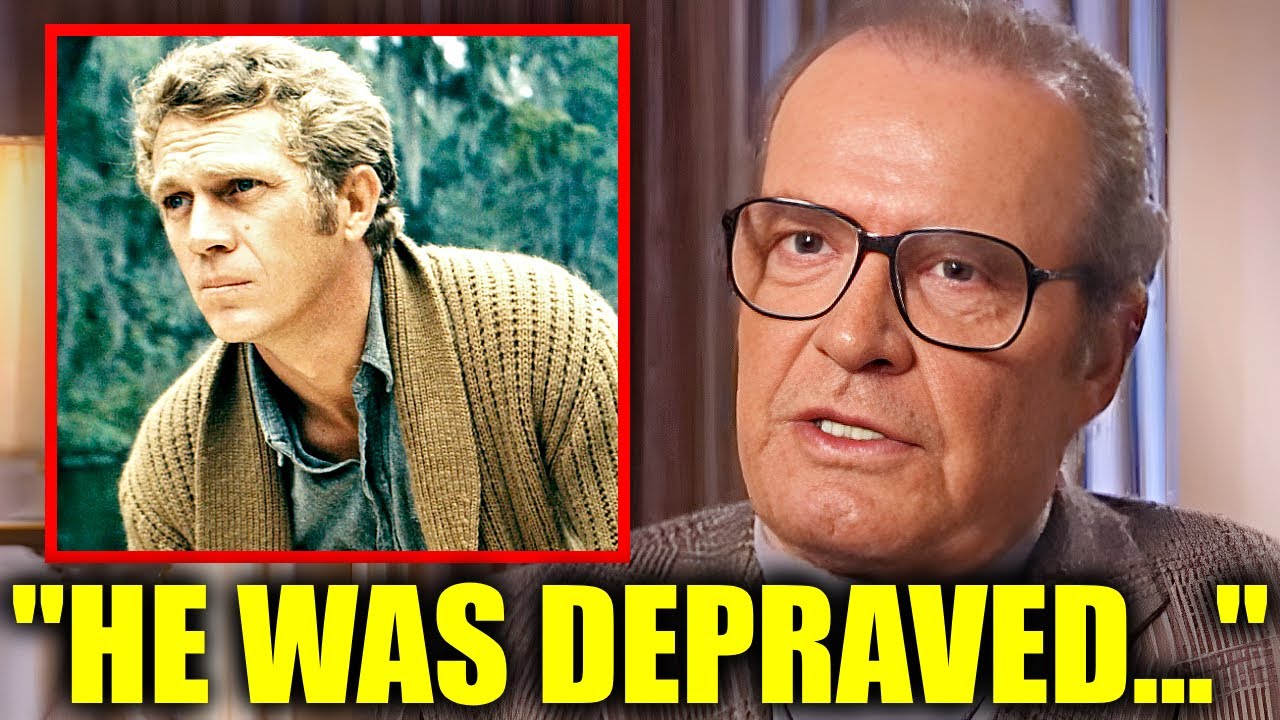
Coming from almost anyone else, those words could be dismissed as jealousy.
Coming from James Garner, they carried a different weight.
Because Garner had not merely worked with McQueen.
He had lived next door to him.
Raced cars with him.
Watched him become one of the biggest movie stars in the world.
Worked beside him on The Great Escape.
And, by Garner’s own account, spent four years barely speaking to him after another movie came between them.
Yet Garner never reduced Steve McQueen to a villain.
Years before the memoir, he had described McQueen as a friend who looked at him almost like an older brother.
That contradiction is where the real story begins.
James Garner could be driven crazy by Steve McQueen.
He could question his acting.
He could laugh at the image McQueen carefully constructed around himself.
But he also understood something undeniable:
When Steve McQueen appeared on a movie screen, people looked at him.
Garner might not have considered him a great actor.
He absolutely knew he was a great star.
And the difference between those two things fascinated him for the rest of his life.
Before They Became Rivals, They Were Two Very Different Kinds of Leading Men
James Garner and Steve McQueen came to Hollywood from hard beginnings.
Neither had been groomed for stardom.
Neither seemed likely, as a child, to end up as an American screen icon.
Garner was born James Scott Bumgarner in Oklahoma in 1928.
His mother died when he was young.
His childhood was difficult.
After leaving home as a teenager, he eventually served in the Korean War and was wounded in combat.
Acting came later almost by accident.
Garner never liked romantic descriptions of the profession.
He treated it as work.
Know the lines.
Hit the mark.
Be ready.
Do the scene.
Go home.
That attitude shaped the roles audiences loved him for.
Bret Maverick was clever, relaxed and deeply suspicious of pointless heroics.
Jim Rockford was much the same decades later.
Garner rarely appeared to be trying too hard.
Steve McQueen created an entirely different kind of effortlessness.
His cool looked instinctive.
But according to people who knew him, McQueen cared intensely about how that cool appeared on screen.
He studied what the camera saw.
He understood silence.
Movement.
Clothing.
Machines.
The power of doing less than everybody else in a scene.
Garner admired the effect.
What he questioned was the mythology around it.
To Garner, McQueen was not Laurence Olivier.
He was something else.
A movie star in the oldest and most mysterious sense of the term.
And in 1963, John Sturges put both men in the same enormous movie.
That was when admiration, competition and irritation began colliding.
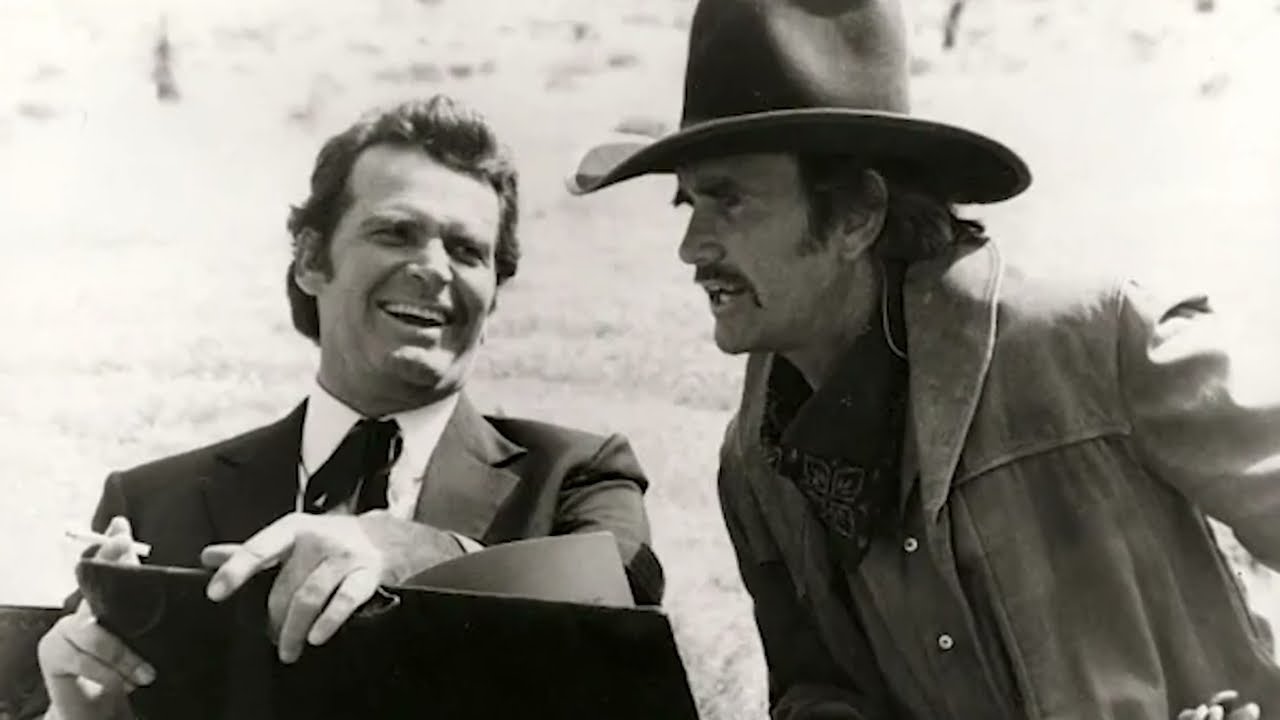
The Great Escape Was Supposed to Be an Ensemble
John Sturges had an enormous problem.
He was trying to turn the real story of a mass Allied prisoner-of-war escape into a commercial Hollywood movie.
The cast was extraordinary.
Richard Attenborough.
Charles Bronson.
Donald Pleasence.
James Coburn.
David McCallum.
James Donald.
James Garner.
And Steve McQueen.
Garner played Flight Lieutenant Hendley, “The Scrounger,” the man who could somehow obtain almost anything the prisoners needed.
McQueen played Captain Virgil Hilts, “The Cooler King,” an American repeatedly thrown into solitary confinement because he could not stop attempting escapes.
The movie was intentionally built around many characters.
That was central to Sturges’ vision.
Nobody was supposed to swallow the entire picture.
But McQueen had a problem with that.
He was becoming a major star.
And when he looked at the material being shot, he began to wonder whether Steve McQueen was disappearing inside The Great Escape.
Eventually, he decided the answer was yes.
Six Weeks Into Filming, McQueen Saw the Rushes — and Walked Out
After roughly six weeks of production, Sturges screened footage for the cast.
McQueen did not like what he saw.
His character was strong early in the movie.
Then Hilts essentially disappeared from the story for a long stretch.
For an actor whose name was helping sell the picture, that was unacceptable.
McQueen wanted changes.
Production was already difficult.
The German weather had caused delays.
The screenplay itself had gone through multiple writers and versions.
Sturges did not want another major rewrite.
McQueen walked away from filming.
Suddenly one of the most expensive and complicated movies of the year had a star who did not want to continue under the existing script.
Donald Pleasence, coming largely from the British theatrical tradition, later recalled being astonished that Hollywood stars could behave this way.
For James Garner, it was less surprising.
It was Steve.
Garner knew the personality.
He also knew that simply dismissing McQueen as difficult would not solve the problem.
So Garner and James Coburn sat down with him.
They wanted to know what Steve actually wanted.
Garner Realized McQueen Wanted to Be the Hero — Without Looking Like He Was Trying to Be the Hero
That was the paradox.
According to Garner’s recollection, McQueen wanted Hilts to have a more heroic role.
But the traditional version of heroism did not fit the character McQueen had created.
Hilts was supposed to be cool.
Detached.
Almost amused by danger.
If he suddenly began delivering speeches and visibly sacrificing himself for everyone around him, the character stopped being Steve McQueen’s version of Hilts.
McQueen wanted something bigger.
But it also had to look effortless.
That was a very Steve McQueen problem.
And it helps explain why Garner found him both fascinating and maddening.
Garner’s own screen style also depended on appearing effortless.
But he approached it differently.
Garner believed the job was to serve the story.
McQueen increasingly understood that sometimes the story also had to serve the star.
John Sturges became frustrated enough to consider an extraordinary possibility.
Sturges Considered Writing McQueen Out
This is where Hollywood legend often becomes exaggerated.
Some versions claim Sturges offered James Garner McQueen’s position and wanted to rebuild The Great Escape around Garner.
Reliable production histories do not support that.
What did happen was dramatic enough.
Sturges considered removing McQueen’s character from the film.
United Artists objected.
To the studio, Steve McQueen was simply too important.
They were willing to pay for another writer to solve the problem.
Ivan Moffat was brought in to work on the material.
McQueen returned.
Whatever frustration Sturges felt, the studio understood something Garner understood too:
Steve McQueen might drive people crazy.
But Steve McQueen sold Steve McQueen.
And soon the production found a way to give him exactly the kind of screen moment he needed.
A motorcycle.
The Scene That Defined McQueen Wasn’t Part of the Real Escape
The actual World War II escape on which the movie was based did not contain Captain Hilts racing across the countryside on a motorcycle.
That was Hollywood.
More specifically, it was a combination of McQueen’s obsession with motorcycles and the production’s need to give his character a memorable action climax.
McQueen was an accomplished rider.
He wanted the motorcycle material.
Sturges gave Hilts the chase.
The result helped transform The Great Escape from a classic ensemble war movie into one of the defining pieces of the Steve McQueen legend.
Hilts steals a German motorcycle.
He races across open country.
German soldiers pursue him.
He reaches the border.
Barbed wire stands between him and freedom.
Then comes the shot almost everyone remembers.
The motorcycle flies.
For decades, many casual viewers assumed Steve McQueen made the famous jump himself.
He didn’t.
The Most Famous Steve McQueen Stunt Was Performed by Bud Ekins
McQueen performed a remarkable amount of the motorcycle work.
He was such a skilled rider that the production even used him as one of the German motorcyclists chasing Hilts.
Through editing, Steve McQueen was essentially chasing Steve McQueen.
But the enormous jump over the barbed-wire fence was another matter.
The studio considered it too dangerous.
If McQueen were injured badly, the entire production could collapse.
His friend Bud Ekins performed the jump.
Ekins was already a celebrated off-road rider.
The stunt helped begin a long movie-stunt career for him.
Steve did the approach and much of the riding.
Bud did the jump everybody remembered.
It is almost a perfect metaphor for the way Garner viewed McQueen.
The image was extraordinary.
The reality behind the image was more complicated.
But Garner never denied that the image worked.
It worked spectacularly.
The Great Escape Helped Create the “King of Cool”
The movie arrived in 1963 and became a major success.
Its cast was excellent.
Garner’s storyline with Donald Pleasence gave the film some of its most humane moments.
Richard Attenborough carried much of the strategic drama.
Bronson, Coburn and the British cast all had memorable roles.
Yet popular memory gradually tilted toward one man.
Steve McQueen.
The baseball.
The cooler.
The motorcycle.
The fence.
The leather jacket.
That was the strange power Garner was talking about when he separated “actor” from “star.”
Steve did not have to dominate every minute of the movie.
He dominated the memory of it.
Garner might have disliked some of the maneuvering that created those moments.
But he could not argue with their effect.
McQueen emerged from The Great Escape more famous than before.
The Cooler King became increasingly indistinguishable from the man playing him.
Steve McQueen was becoming the King of Cool.
Away from the cameras, however, Garner knew something the audience did not.
“Cool” Steve McQueen could be extremely competitive.
Especially with James Garner.
They Went Home From Germany — and Became Neighbors Again
McQueen and Garner were not strangers forced together for a movie.
They lived next door to each other in Los Angeles.
Their families knew one another.
Garner’s daughter Gigi was friends with McQueen’s daughter.
The men shared another obsession:
machines.
Cars.
Motorcycles.
Speed.
When they returned from making The Great Escape, both men brought Mini Coopers home from Europe.
Garner had one color.
McQueen another.
The two movie stars then did something that sounds more like a pair of teenagers than two famous Hollywood leading men.
They raced the Minis down their residential street.
There were traffic islands.
Speed bumps.
Families living nearby.
None of that apparently mattered very much.
Gigi Garner remembered watching them race down the road.
The friendship had an unmistakably competitive edge.
Steve wanted to be faster.
Garner liked being fast too.
But for a time, competition was part of the fun.
Garner later said McQueen looked at him like an older brother.
That may explain why the rivalry could become so intense.
You do not usually obsess over beating somebody who means nothing to you.
Then came a movie about racing.
And the competition stopped being playful.
Grand Prix Changed Everything
A few years after The Great Escape, director John Frankenheimer was developing a massive Formula One movie.
The project became Grand Prix.
Steve McQueen was connected to it early.
He was an obvious choice.
McQueen loved racing.
His entire image seemed built for a movie about men risking death at high speed.
But negotiations and relationships around the project broke down.
McQueen did not make the film.
James Garner did.
Garner became Pete Aron.
And something unexpected happened.
The supposedly easygoing television actor proved to be extraordinarily comfortable in a racing car.
Professional driver Bob Bondurant helped evaluate and train the actors.
At high speed, most became understandably nervous.
Garner loved it.
The movie changed him.
Racing became a genuine passion.
Garner did much of his own driving and eventually became deeply involved in motorsports beyond Hollywood.
Grand Prix became one of the movies he was most proud of.
But according to Garner, Steve McQueen was not happy about it.
Garner Said They Stopped Talking for Four Years
Garner’s own explanation was remarkably direct.
McQueen had wanted the role.
Garner got it.
And according to Garner, that was enough to create a four-year freeze between the neighbors.
Think about the irony.
They had survived the tensions of The Great Escape.
Survived McQueen’s walkout.
Survived arguments over screen time.
Survived competing egos.
Then a racing movie became the breaking point.
Cars were one of the things that had brought them together.
Now a car movie was pushing them apart.
For someone as competitive as McQueen, Grand Prix may have landed particularly hard.
Garner was not merely starring in the racing movie Steve had once been connected to.
Garner turned out to be genuinely good behind the wheel.
And the film was a success.
It eventually won three Academy Awards for technical achievement.
McQueen, meanwhile, still wanted to make the racing film that represented his own passion properly.
A few years later, he would make Le Mans.
Hollywood now had two famous racing pictures tied to two next-door neighbors who had once raced Mini Coopers down the street.
The rivalry almost sounds scripted.
It wasn’t.
McQueen Eventually Went to See Garner’s Movie
There is a wonderfully understated ending to this part of the story.
For a long time, McQueen apparently did not see Grand Prix.
Then his son Chad persuaded him to watch it.
Garner later remembered encountering Steve afterward.
McQueen acknowledged that he had finally seen the movie.
Garner naturally wanted to know what he thought.
Steve’s verdict was hardly enthusiastic.
Essentially:
It was pretty good.
For McQueen, that was apparently about as generous as the review was going to get.
Garner remembered the exchange with amusement.
The hostility had softened.
The rivalry had not entirely disappeared.
And perhaps it never could.
These were two men who liked each other and also liked beating each other.
Sometimes the two instincts occupied the same space.
So Why Was Garner So Harsh in His Memoir?
Nearly three decades after McQueen’s death, Garner was still unsparing.
He described him as insecure.
A poseur.
Not much of an actor.
That sounds brutal.
But context changes it.
Garner was blunt about almost everyone.
He disliked Hollywood pretension.
He had little patience for people who mistreated others or made the work unnecessarily difficult.
Charles Bronson, another Great Escape co-star, received an even harsher assessment in Garner’s memoir.
Jack Warner did not escape.
Charlton Heston did not escape.
Garner did not turn old age into diplomacy.
As he put it at the beginning of his memoir, getting older meant holding back less.
Steve McQueen happened to sit at the intersection of several things Garner distrusted.
Insecurity disguised as confidence.
Star behavior.
Image management.
Competition that could disrupt the job.
But there was another reason Garner’s criticism had bite.
He knew Steve well enough to see behind it.
Garner Believed the Cool Was Partly Armor
McQueen’s childhood had been chaotic.
His father was absent.
His relationship with his mother was unstable.
He spent time in reform school.
He came into adulthood carrying an intense need to prove himself.
Once success arrived, McQueen was famously competitive about protecting it.
Co-stars could become threats.
Billing mattered.
Screen time mattered.
Image mattered.
Garner interpreted much of that as insecurity.
That does not make Garner’s psychological judgment automatically correct.
It was his view of his friend.
But it makes the harsh phrase “insecure poseur” more understandable.
Garner did not mean Steve McQueen had no talent.
Quite the opposite.
He thought McQueen possessed something almost impossible to teach.
Star quality.
An enormous amount of it.
Garner simply believed McQueen worked very hard to maintain the illusion that the cool required no work at all.
The Greatest Irony Is That Garner’s Criticism Also Contained a Compliment
Garner distinguished between acting ability and star power.
In his view, McQueen was not among the truly great actors.
But when it came to pure star quality?
Garner thought Steve had about as much as anyone he had ever seen.
That is not a small compliment.
Plenty of technically accomplished actors never become stars.
They can transform completely from character to character.
They can dominate a theater.
They can deliver extraordinary performances.
And yet the public never becomes fascinated with them as people.
Steve McQueen had the opposite gift.
The camera wanted him.
Audiences wanted to know what he was doing even when he was doing almost nothing.
He could bounce a baseball against a wall and make it memorable.
He could sit on a motorcycle and make the machine look like part of his personality.
He could stare instead of speak.
That was not the acting Garner valued most.
But it was real.
Garner and McQueen Were More Alike Than Garner Might Have Wanted to Admit
Both men specialized in understatement.
Both resisted theatrical overplaying.
Both projected masculinity without constant speeches about masculinity.
Both loved machines.
Both loved speed.
Both distrusted parts of Hollywood.
Both had difficult early lives.
And both built screen personas that audiences partially confused with the men themselves.
The difference was that Garner liked presenting himself as someone who did not care much about being a star.
McQueen seemed to care very much—
while presenting himself as someone who did not.
That distinction may have driven Garner crazy because it was subtle.
McQueen’s cool was carefully guarded.
Garner’s charm depended on appearing unguarded.
Two forms of effortlessness.
Two completely different philosophies behind them.
Put those men next door to each other and competition was almost inevitable.
Their Friendship Was Never a Simple Hollywood Feud
This is the part sensational versions usually miss.
James Garner did not spend his life secretly hating Steve McQueen.
He publicly called him a friend.
He remembered Steve as rebellious, competitive and at times downright crazy.
But he also remembered that McQueen looked to him as an older brother.
Their children played together.
Their families socialized.
They raced cars.
They made one of the most beloved adventure films in American cinema together.
Then they fell out.
Then they spoke again.
That is not hatred.
It is something messier.
Friendship mixed with rivalry.
Admiration mixed with irritation.
Affection mixed with judgment.
The kind of relationship that can exist only when two people know exactly which buttons to press.
McQueen Never Got to Read The Garner Files
Steve McQueen died in November 1980.
He was only 50.
Cancer ended a career that had already turned him into one of Hollywood’s permanent icons.
James Garner lived more than three decades longer.
He continued acting.
The Rockford Files remained beloved.
He earned an Academy Award nomination for Murphy’s Romance.
Later generations discovered him in films such as The Notebook.
When The Garner Files was published on November 1, 2011, Garner was alive and able to stand behind everything he had written.
The memoir was not a posthumous revelation.
It was James Garner, at 83, deciding to stop editing himself quite so carefully.
By then McQueen had been gone for 31 years.
There would be no rebuttal.
No phone call from next door.
No argument over the driveway.
No new race in the Mini Coopers.
Garner had the last word.
But surprisingly, that last word was not simply cruel.
Because after all the criticism, he still gave Steve something he did not hand out lightly.
Recognition.
McQueen was a star.
A huge one.
The Great Escape Proved Garner Right — and Wrong
Garner was right that McQueen’s role in The Great Escape was shaped partly by his desire to protect and enlarge his image.
The production history supports that.
He protested.
He walked out.
Rewrites happened.
The motorcycle material became central to his character.
And the resulting scenes strengthened the very persona McQueen was protecting.
But that also means McQueen’s instincts worked.
That is the uncomfortable part.
The star knew what the audience wanted before the finished movie existed.
More than 60 years later, when people picture The Great Escape, many immediately picture Steve McQueen on that motorcycle.
Not because the scene was historically accurate.
It wasn’t.
Not because Steve performed every stunt.
He didn’t.
Because it became cinema.
McQueen understood that.
Perhaps sooner than anyone around him.
Garner might have considered the process infuriating.
History suggests the result was effective.
And Garner Was Never Overshadowed in the Way McQueen Feared
There is another irony.
McQueen worried about his place in the ensemble.
But Garner did not need Steve’s motorcycle sequence to disappear for his own performance to matter.
Hendley remains one of The Great Escape’s most memorable characters.
His friendship with the increasingly blind Colin Blythe gives the enormous war adventure an emotional center.
The Scrounger becomes more than a charming operator.
He becomes responsible for another man.
He must decide how far loyalty should go when escape becomes dangerous.
Those quieter scenes are part of what director Sturges later praised about the picture.
Garner’s strengths were almost the opposite of McQueen’s.
Steve gave the movie iconography.
Garner gave it warmth.
The film needed both.
Maybe That Is Why Their Rivalry Endures
If James Garner and Steve McQueen had simply hated each other, the story would actually be less interesting.
Hollywood has no shortage of co-stars who disliked one another.
Garner and McQueen were different.
They had enough in common to connect.
Enough differences to clash.
Enough competitiveness to hurt each other.
Enough affection to eventually move past at least some of it.
Garner saw McQueen without the magazine covers.
Without the “King of Cool” label.
Without the carefully selected photographs.
He saw the neighbor.
The father.
The racer.
The difficult co-star.
The insecure man.
The friend.
That is why his criticism still attracts attention.
It came from someone who knew both versions.
The Famous Motorcycle Tells the Whole Story
Maybe the best way to understand Steve McQueen through Garner’s eyes is to return to the motorcycle.
McQueen wanted the sequence.
He understood exactly what it could do for Hilts.
He rode almost all of it himself.
He even disguised himself as a German rider to help create the chase.
Then came the one image everybody remembered.
The jump.
Steve did not perform it.
Bud Ekins did.
Yet the audience remembered Steve.
That is star power.
The labor of many people disappears into one unforgettable image.
Garner understood how Hollywood worked well enough to recognize the trick.
He simply refused to confuse the image with the whole man.
James Garner Didn’t Destroy the Myth of Steve McQueen
He complicated it.
That is more valuable.
McQueen really was difficult during The Great Escape.
He really did care fiercely about his screen presence.
The motorcycle chase really was added to a story in which it had no historical basis.
Bud Ekins really performed the famous fence jump.
McQueen really possessed extraordinary natural charisma.
Garner really was his neighbor and friend.
They really shared a love of cars.
And according to Garner, the battle over Grand Prix really did leave them not speaking for years.
All of those things can exist simultaneously.
A man can be insecure and magnetic.
A difficult co-star and a loyal friend.
A limited actor in another actor’s opinion and still one of the greatest movie stars Hollywood ever produced.
That was Steve McQueen as James Garner knew him.
Garner Had One Advantage Most Fans Never Did
He knew what happened when Steve McQueen stopped performing “Steve McQueen.”
The public had the photographs.
The turtlenecks.
The Triumphs.
The Mustangs.
The Porsche.
The cigarette.
The stare.
Garner had the guy next door.
The man racing a Mini Cooper over neighborhood speed bumps.
The co-star furious about disappearing from a movie for 30 minutes.
The competitor who could stop talking to a friend over a racing picture.
The father eventually persuaded by his son to go watch that rival’s film.
And the friend who, once he finally saw it, could just about force himself to admit:
It was pretty good.
That Steve McQueen is more interesting than the flawless King of Cool.
Because he is human.
Perhaps Garner’s Harshest Words Were Possible Because They Had Been Friends
There is an intimacy to irritation.
Strangers rarely disappoint us with such precision.
Garner knew exactly what he disliked about Steve because he also knew what he liked.
He knew the talent.
The humor.
The competitiveness.
The reckless streak.
The charisma.
And the insecurity underneath it.
So when an 83-year-old James Garner finally wrote his version of Hollywood history, he did not polish Steve McQueen into a monument.
He refused to.
McQueen already had enough monuments.
Garner instead left something more complicated behind:
the memory of a difficult man with astonishing star power.
A friend capable of driving him crazy.
A neighbor capable of turning an ordinary street into a racetrack.
A co-star whose demands almost derailed a production—
and then helped create one of the most famous sequences in movie history.
A rival who stopped speaking to him over Grand Prix—
and eventually had to admit the movie was good.
James Garner never pretended Steve McQueen was easy.
He never pretended he thought Steve was a great actor.
But he never denied what millions of people had seen either.
When Steve McQueen appeared on screen, you watched him.
Maybe that is the real meaning behind Garner’s apparently brutal judgment.
He could see through the image.
He just couldn’t deny its power.
The world knew Steve McQueen as the King of Cool. James Garner knew the man next door—and that man was far more complicated than the legend.