Why Do Husbands Start to Dislike Their Wives as They Get Older?
He used to ask how your day was.
Now, almost everything you say seems to irritate him.
You tell him a story and he barely looks up. You ask a simple question and he sighs. He can be friendly with neighbors, patient with strangers, and cheerful on the phone — then strangely cold the moment the two of you are alone.
After 30 or 40 years of marriage, that change can be deeply painful.
And it can leave a wife wondering something she never imagined she would have to ask:
“Does my husband even like me anymore?”
Sometimes a marriage really is in serious trouble.
But becoming distant, impatient, or emotionally withdrawn does not always mean a husband has simply stopped loving his wife.
In long marriages, resentment can build quietly. Retirement can change the balance of a relationship. Health problems can affect mood and intimacy. Old disagreements can become harder to ignore. And sometimes a person who is struggling with his own aging, disappointments, or fears begins directing that frustration toward the person closest to him.
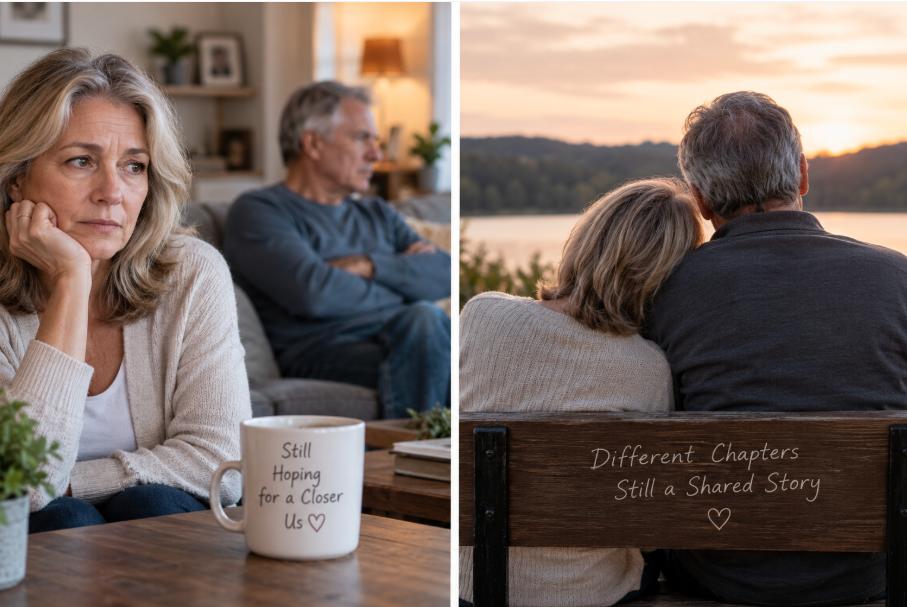
Understanding what may be happening does not excuse cruelty.
But it can help couples recognize the difference between a relationship that needs attention and one in which disrespect has become something more serious.
Here are some of the most common reasons emotional distance can develop later in marriage.
1. Resentment Usually Builds Long Before Anyone Notices It
Most husbands do not wake up one morning after 35 years of marriage and suddenly decide they dislike their wives.
The change is usually much slower.
It may begin with conversations that never happened.
A disagreement about money gets pushed aside.
A hurtful comment is never discussed.
One partner feels ignored.
The other feels criticized.
Someone apologizes just enough to end the argument, but the hurt itself never goes away.
Months become years.
Eventually, people may stop arguing not because everything has been resolved, but because they have given up trying to be understood.
That is when small comments can suddenly carry enormous emotional weight.
A wife asks, “Did you remember to call the doctor?”
Her husband hears, “You can’t do anything right.”
A husband says, “I’ll take care of it later.”
His wife hears, “What matters to you doesn’t matter to me.”
Neither statement necessarily means what the other person hears.
But decades of unresolved frustration can change the way ordinary conversations are interpreted.
This is one reason resentment can be so destructive: after enough time, couples may stop reacting to what is happening today and start reacting to everything that has happened during the previous 20 years.
2. Retirement Can Reveal Problems That Work Once Hid
Retirement is often imagined as one of the happiest stages of marriage.
No alarm clocks.
No commute.
More time together.
But for some couples, retirement creates an unexpected shock.
A husband who once spent eight or ten hours a day outside the home may suddenly be there nearly all the time.
A wife who developed her own routines, friendships, hobbies, and responsibilities may feel as though someone has entered a life she spent decades building.
The husband may feel equally lost.
Work may have given him structure, identity, social contact, and a sense of being needed. When that disappears, he may become restless or irritable without fully understanding why.
And now the couple is together far more often.
Habits that were once barely noticeable become impossible to ignore.
The television is too loud.
Someone leaves dishes in the sink.
One partner wants to travel.
The other wants to stay home.
One expects retirement to mean doing everything together.
The other expected more independence.
These differences may have existed for years.
Retirement simply removes the distractions that kept them hidden.
Sometimes the husband appears to be growing tired of his wife when what he is really struggling with is the loss of the life he once knew.
That frustration still needs to be addressed.
But blaming the marriage for every uncomfortable feeling can lead couples in the wrong direction.
3. Sometimes He Is Angry About Aging — and You Are the Closest Person to Him
Aging can bring losses people rarely talk about openly.
Strength changes.
Health changes.
Friends become ill or die.
Careers end.
Children build lives of their own.
Sexual function may change.
Financial worries can become more frightening because there is less time to recover from a major setback.
For some men, these changes challenge the identity they carried for most of their adult lives.
A man who once saw himself as strong, independent, financially secure, or physically capable may suddenly feel much more vulnerable.
And vulnerability is uncomfortable for people who were taught not to talk about fear.
Instead of saying:
“I’m scared about getting older.”
he may become impatient.
Instead of saying:
“I don’t feel useful anymore.”
he may criticize.
Instead of admitting:
“I’m worried about my health.”
he may withdraw.
None of this means a wife should accept being treated badly.
But it helps explain why a husband can sometimes appear angry with his wife when part of what he is actually fighting is his own changing life.
There is another uncomfortable layer.
Seeing a spouse age also reminds us that we are aging.
Gray hair, medical appointments, physical limitations, and retirement plans are not only changes happening to a partner. They are reminders of time passing for both people.
Some people accept that transition with grace.
Others struggle with it.
4. Couples Can Slowly Become Household Managers Instead of Partners
Think about the conversations many long-married couples have during an ordinary week.
Did you pay the electric bill?
What time is the doctor’s appointment?
Can you pick up the prescription?
When are the grandchildren coming?
Did you call the insurance company?
What are we having for dinner?
These conversations are necessary.
But they are not intimacy.
Over the years, a marriage can gradually become very efficient while becoming emotionally empty.
The couple manages the house.
They manage money.
They manage medical appointments.
They manage family obligations.
But they stop asking questions such as:
“What have you been thinking about lately?”
“What are you worried about?”
“What are you looking forward to?”
“Are you happy?”
People can live in the same house for decades while knowing surprisingly little about what is happening inside each other’s minds.
Eventually, both partners may feel lonely.
The danger is that each person may assume the other caused the loneliness.
5. Parenthood and Family Roles Can Change a Marriage for Decades
Children bring enormous meaning to family life.
They also change the structure of a marriage.
For years, couples may organize almost everything around their children.
School.
Sports.
College.
Weddings.
Grandchildren.
Family emergencies.
And even when the children are grown, those patterns can continue.
One partner may become deeply involved with adult children and grandchildren while the other feels increasingly peripheral.
But this should not automatically be framed as a wife “choosing the children over her husband.”
In many families, women spent decades carrying a larger share of caregiving, scheduling, emotional support, and household organization.
Those roles do not disappear simply because the children turn 30.
The more useful question is:
Did the couple preserve a relationship with each other while building a family?
If they did not, empty nesting or retirement can expose something painful.
Without the children at the center of everyday life, they may realize they no longer know how to be a couple.
That discovery can feel frightening.
But it does not necessarily mean the relationship is beyond repair.
6. Physical Intimacy Changes With Age — for Both Partners
Physical attraction is often discussed in a way that places nearly all the pressure on women.
Wrinkles.
Weight.
Gray hair.
Changing bodies.
But aging affects both spouses.
Menopause can affect comfort and sexual desire.
Medications can change libido.
Chronic pain can make intimacy difficult.
Heart disease, diabetes, prostate problems, erectile difficulties, fatigue, depression, sleep problems, and other health conditions can affect sexual relationships as couples grow older.
Body confidence may change for both partners.
And sometimes couples stop touching long before they stop loving each other.
A hug becomes less frequent.
Holding hands disappears.
Kissing becomes routine or stops entirely.
Eventually, physical distance begins to reinforce emotional distance.
The mistake is assuming this is simply about looking older.
Long-term intimacy is usually much more complicated than appearance.
For many couples, affection in later life depends less on looking like they did at 30 and more on feeling safe, valued, wanted, and emotionally connected.
7. Constant Criticism Can Change the Emotional Climate of a Marriage
Every couple gets irritated with each other.
That is normal.
But there is an important difference between occasional frustration and a relationship dominated by criticism.
Consider the difference between:
“I wish you’d put the dishes away.”
and:
“You never do anything around here.”
Or between:
“We need to talk about our spending.”
and:
“You’ve always been terrible with money.”
The first addresses a problem.
The second attacks the person.
When criticism becomes the normal language of a marriage, both partners may become defensive.
One criticizes.
The other withdraws.
The withdrawal feels dismissive.
That creates more criticism.
Soon, the original problem matters less than the pattern surrounding it.
This can make a husband seem increasingly cold, but the same cycle can happen in either direction.
The important question is not simply:
“Who started it?”
It is:
“What pattern have we created, and are both of us willing to change it?”
8. Feeling Unappreciated Can Affect Both Husbands and Wives
One of the most common complaints in long relationships is surprisingly simple:
“Nobody notices what I do anymore.”
A husband may feel that decades of work, repairs, driving, financial responsibility, or caregiving are taken for granted.
A wife may feel exactly the same way about cooking, cleaning, raising children, organizing the household, caring for relatives, supporting her husband’s career, or holding the family together emotionally.
Both people can feel unappreciated at the same time.
That is why it is dangerous to tell the story as though only husbands need gratitude.
In many strained marriages, both partners have been giving for years while quietly believing the other person no longer sees their effort.
Eventually, generosity becomes obligation.
Obligation becomes resentment.
And resentment can make affection difficult.
Small expressions of appreciation will not solve serious marital problems.
But in relationships that have simply become emotionally neglected, they can begin changing the atmosphere surprisingly quickly.
9. A Midlife or Later-Life Crisis Can Be Mistaken for a Marriage Crisis
People sometimes reach their 50s, 60s, or 70s and begin asking questions they avoided earlier.
Did I choose the right career?
Did I spend too much time working?
What happened to the things I wanted to do?
How much healthy time do I have left?
Is this what the rest of my life will look like?
These questions can create powerful restlessness.
And the spouse may become an easy target.
A husband may look at his marriage and think:
“This is why I feel trapped.”
But the marriage may not actually be the source of the dissatisfaction.
Sometimes the deeper problem is grief over aging, lost opportunities, health, identity, or time.
That does not mean marital problems should be ignored.
It means people should be careful about blaming the person beside them for feelings that may have much deeper roots.
10. Emotional Withdrawal Does Not Always Mean He Has Stopped Loving You
A husband who becomes quiet or distant may no longer feel connected to the marriage.
That possibility should not be dismissed.
But withdrawal can also accompany stress, grief, depression, health concerns, financial pressure, shame, unresolved resentment, or simply not knowing how to communicate difficult emotions.
Some men were raised in generations where talking openly about loneliness, fear, sadness, or vulnerability was discouraged.
They may know how to express anger more easily than fear.
That does not make anger acceptable.
But it can make its source harder to recognize.
Instead of immediately asking:
“Why doesn’t he love me anymore?”
a more useful starting question may sometimes be:
“When did this change begin, and what else was happening in our lives at that time?”
The answer can reveal patterns that would otherwise remain invisible.
11. One Warning Sign Deserves Special Attention: Contempt
Distance is one thing.
Contempt is different.
A spouse who occasionally becomes impatient during a difficult period is not the same as someone who repeatedly humiliates, mocks, belittles, or intimidates their partner.
Warning signs can include:
- constant name-calling;
- mocking your intelligence or appearance;
- rolling his eyes whenever you speak;
- humiliating you in front of family or friends;
- deliberately withholding affection as punishment;
- threatening you;
- controlling money or access to basic needs;
- frightening or intimidating behavior;
- treating you as though your feelings have no value.
These behaviors should not simply be explained away as aging, retirement, stress, or “how men are.”
And a spouse should not be expected to become more accommodating in order to earn basic respect.
If a relationship involves threats, coercion, fear, or physical violence, the issue is no longer simply about improving communication.
Personal safety comes first.
12. The Most Important Question May Not Be “Why Does He Dislike Me?”
When a husband becomes distant, many wives immediately turn the question inward.
What did I do?
Am I too old?
Did I gain too much weight?
Did I stop being interesting?
Should I have been more affectionate?
Should I have complained less?
Some self-reflection can be healthy in any marriage.
Self-blame is different.
One partner cannot repair a relationship alone.
A better question may be:
“What changed between us, and are both of us willing to understand it?”
That shifts the focus away from proving who is guilty.
It creates room to examine the relationship itself.
Maybe both partners stopped listening.
Maybe one has been carrying resentment for years.
Maybe retirement created new tension.
Maybe intimacy disappeared after a health problem.
Maybe one person feels invisible.
Maybe there are unresolved wounds neither partner knows how to discuss.
And sometimes the answer is more difficult:
one partner may simply no longer be treating the other with the kindness and respect a healthy marriage requires.
Recognizing that distinction matters.
What Can Couples Actually Do?
If both people still want the relationship, dramatic gestures are usually less important than changing everyday patterns.
Start by examining how you speak to each other.
How many conversations in an average day are about problems, chores, money, health, or obligations?
How many involve curiosity, affection, humor, or genuine interest?
Try having a conversation where the goal is not to prove a point.
Ask:
“When did you first start feeling distant from me?”
Then listen.
That does not mean automatically agreeing with every accusation.
It means trying to understand the experience underneath it.
Another useful question is:
“What do you miss about us?”
The answer may be more revealing than asking, “What’s wrong with our marriage?”
Couples can also rebuild connection through small shared experiences.
A walk.
Coffee outside the house.
Cooking something together.
Visiting a place they used to enjoy.
Trying a new activity.
Looking through old photographs.
Calling old friends.
The purpose is not to pretend the problems do not exist.
It is to remember that the relationship contains more than problems.
For some couples, these conversations are too difficult to manage alone.
A qualified couples therapist or counselor can sometimes help partners discuss issues that repeatedly turn into arguments or silence.
Seeking help does not mean the marriage has failed.
Sometimes it simply means the patterns have become too established to untangle without help.
Growing Older Together Is a Transition, Not an Automatic Decline
A long marriage changes many times.
The people who married at 25 are not the same people living together at 65.
Bodies change.
Priorities change.
Families change.
Health changes.
Dreams change.
The challenge is continuing to become acquainted with the person your spouse is becoming rather than assuming you already know everything about them.
Some marriages grow colder with age.
Others become warmer, more forgiving, and more intimate.
The difference is rarely one secret technique.
It is usually found in hundreds of ordinary moments:
whether partners still listen;
whether they still show respect;
whether they can admit hurt without attacking;
whether they remain curious about each other;
whether affection survives beyond romance;
and whether both people still believe the relationship deserves attention.
So if your husband seems more distant than he once was, do not automatically conclude that you have somehow become less worthy of love.
But do not ignore the change either.
Pay attention to when it began.
Look at what has happened in both of your lives.
Notice the patterns in the way you speak to each other.
Ask whether there is resentment that was never resolved.
And most importantly, ask whether both of you are willing to participate in rebuilding what has been lost.
Because growing older does not automatically make husbands dislike their wives.
But years of silence, resentment, loneliness, stress, and emotional neglect can change the way two people experience each other.
And when those changes are recognized early enough — and both partners are willing to respond — distance does not always have to be the final chapter of a marriage.