Jack Nicholson’s Disappearance From Hollywood FINALLY Makes Sense
For a few seconds in February 2025, it felt as if Jack Nicholson had never gone anywhere.
The camera found him at Saturday Night Live’s 50th anniversary celebration.
There he was.
The unmistakable grin.
The sunglasses.
The voice generations of moviegoers could recognize before seeing his face.
Nicholson introduced Adam Sandler, his former Anger Management co-star, and the audience erupted.
It was a remarkably brief appearance.
Yet it reopened a question Hollywood had been asking for more than a decade.
If Jack Nicholson was still capable of walking into a room and commanding every eye in it, why had he stopped making movies?
His last released film had arrived 15 years earlier.
There had been no retirement announcement.
No farewell performance.
No final interview explaining that the career was over.
Jack Nicholson had simply stopped.
That vacuum produced exactly what Hollywood vacuums always produce:
rumors.
Memory loss.
Illness.
Isolation.
A mysterious decline behind the gates of his longtime Los Angeles home.
Some stories went so far as to suggest that Nicholson was no longer mentally capable of working.
But none of those claims ever became a publicly confirmed medical explanation for his absence.
And Nicholson himself had already offered a much simpler answer.
Years earlier, when rumors first spread that his memory had forced him into retirement, he pushed back.
He wasn’t finished because somebody had taken acting away from him.
He simply wasn’t as driven to be out there anymore.
That distinction may explain Jack Nicholson’s disappearance from movies better than any tabloid mystery ever has.
Hollywood Kept Looking for a Dramatic Ending
Perhaps that was inevitable.
Jack Nicholson spent his career giving audiences dramatic endings.
He was R.P. McMurphy being carried toward freedom in One Flew Over the Cuckoo’s Nest.
Jake Gittes staring helplessly into the darkness of Chinatown.
Jack Torrance frozen outside the Overlook Hotel.
Colonel Nathan Jessup exploding in a military courtroom.
The Joker laughing through Gotham City.
Melvin Udall discovering, to his own horror, that he might actually need another human being.
Nicholson did not play quiet men fading gently into the background.
He played men who erupted.
So when one of the most recognizable actors in movie history stopped acting, the public naturally searched for an equally dramatic explanation.
But Jack Nicholson’s real exit appears to have been almost defiantly undramatic.
To understand why, it helps to remember how long it took him to reach the position from which he eventually walked away.
Before Jack Nicholson Was Jack Nicholson, He Almost Gave Up on Acting
Nicholson was born on April 22, 1937, in Neptune, New Jersey.
When he arrived in Hollywood as a young man, immediate stardom did not follow.
He spent years in low-budget movies, worked with filmmakers such as Roger Corman, wrote screenplays and tried to find a place in an industry that did not yet seem convinced he belonged in front of the camera.
By the late 1960s, Nicholson had been working around Hollywood for years without becoming a major star.
He was beginning to consider focusing more heavily on writing and producing.
Then another actor did not play a role in a strange little motorcycle movie.
And Jack Nicholson’s life changed.
Easy Rider Was the Accident That Changed Everything
The role of alcoholic Southern lawyer George Hanson in Easy Rider was originally associated with Rip Torn.
Exactly why Torn left the project has been told differently by the people involved.
Some accounts center on money.
Others on a falling-out with director Dennis Hopper.
Nicholson himself later indicated that he did not know exactly what had happened between the two men.
What is certain is that the role eventually went to him.
It was not the biggest role in the movie.
He did not appear until well into the story.
It did not matter.
Once Nicholson entered Easy Rider, audiences noticed him.
George Hanson was funny, intelligent, drunk, frightened and fascinated by the strange young men he met in jail.
Nicholson somehow made the character feel both comic and doomed.
The performance earned him his first Academy Award nomination.
TCM has described Easy Rider as the movie that launched Nicholson’s career at a moment when he was considering moving away from acting.
He had spent more than a decade trying to become somebody.
Suddenly Hollywood knew his name.
And what followed was one of the great acting runs of the New Hollywood era.
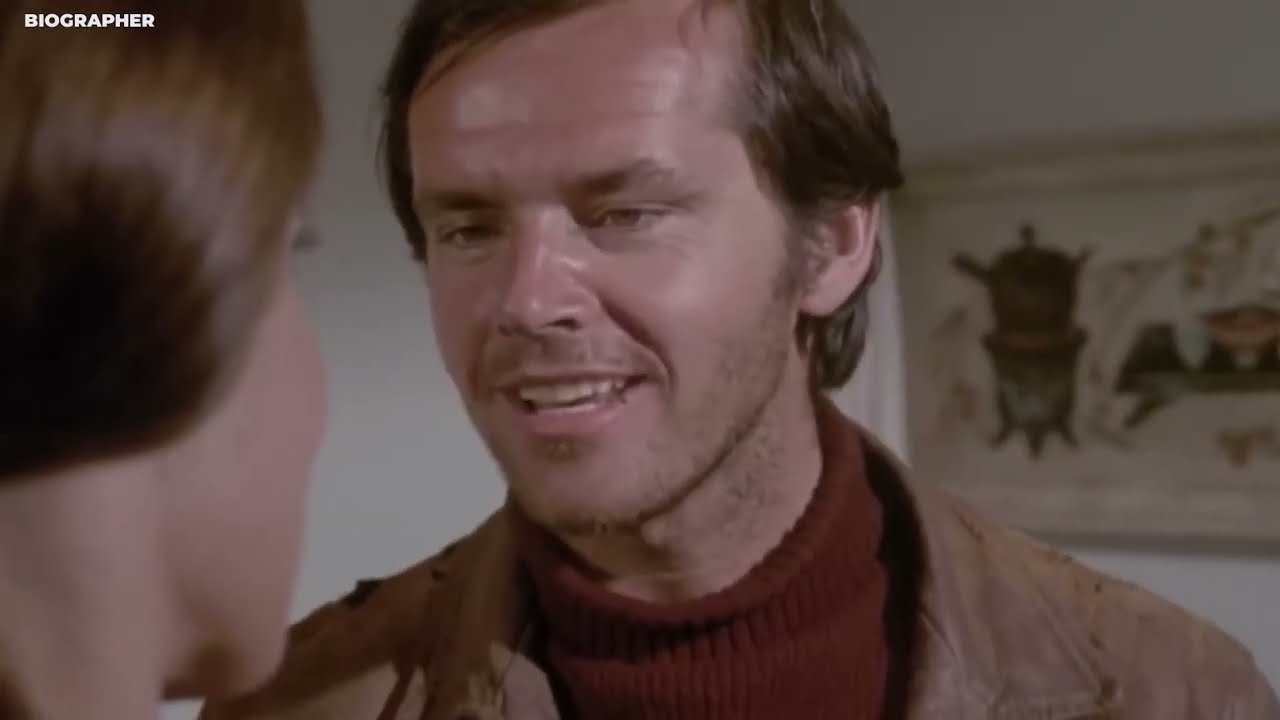
The 1970s Turned Him Into Something Hollywood Had Never Quite Seen Before
Five Easy Pieces.
The Last Detail.
Chinatown.
One Flew Over the Cuckoo’s Nest.
The performances did not feel interchangeable.
But they shared something unmistakably Nicholson.
An intelligence that seemed slightly dangerous.
A smile that could become threatening without warning.
A sense that the character might obey the rules for another thirty seconds—
or overturn the table.
By 1975, Nicholson was no longer a promising actor.
He was becoming one of the defining American movie stars of his generation.
That year One Flew Over the Cuckoo’s Nest gave him his first Academy Award for Best Actor.
TCM later described Nicholson’s McMurphy as the moment when an actor once seen as an outsider became something close to a new Hollywood standard.
And right in the middle of that extraordinary rise, Nicholson learned that part of his own childhood had not been what he thought it was.
At 37, Nicholson Learned His “Sister” Had Actually Been His Mother
This part of Jack Nicholson’s life sounds like a screenplay.
It wasn’t.
Nicholson had grown up believing June Nicholson was his older sister.
In 1974, while Time magazine was researching a story about him, he learned that June had actually been his biological mother.
The people he had believed were his parents were his maternal grandparents.
June had been a teenager when Jack was born, and the family had raised him in a way designed to conceal the circumstances of his birth.
By the time Nicholson discovered the truth, June had already died.
So had the grandmother he had known as his mother.
He could never sit both women down and ask exactly why they had made that decision.
That sounds like the kind of revelation Hollywood would immediately use to explain every dark role Nicholson ever played.
Nicholson himself resisted doing that.
He later described discovering the truth as dramatic, but not traumatic, noting that by 37 he was already psychologically formed.
That distinction matters.
His family history was extraordinary.
But it should not be turned into a convenient diagnosis for the rest of his life.
Nicholson did not.
Neither should we.
The Public Became Fascinated With the Dangerous Version of Jack
As his fame grew, Nicholson became more than an actor.
He became a personality.
The grin.
The sunglasses.
The Lakers seats.
The stories about women.
The parties.
The sense that Jack Nicholson was somehow enjoying Hollywood more recklessly than everybody else.
Then Stanley Kubrick gave that persona its nightmare version.
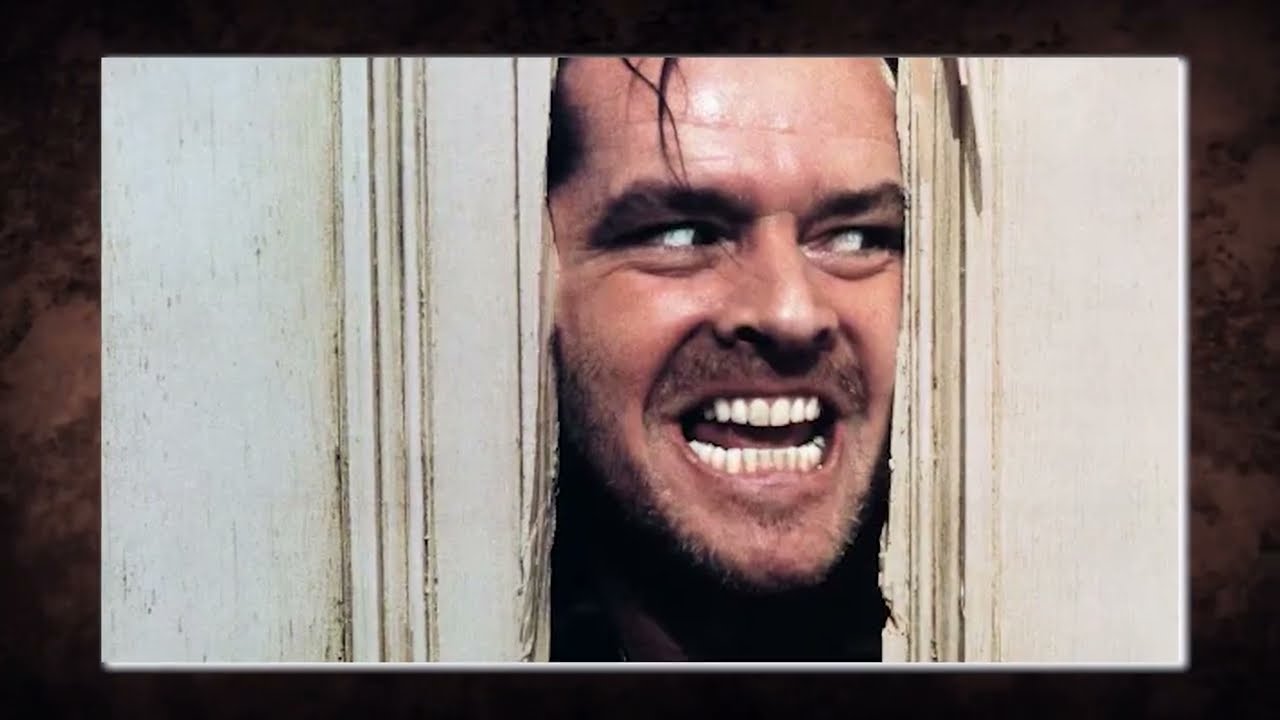
In The Shining, Nicholson played Jack Torrance, a frustrated writer who arrives at the isolated Overlook Hotel with his wife and son and slowly becomes murderous.
The production became famous for Kubrick’s exhaustive methods and repeated takes.
But one often-repeated story needs correcting:
the famous figure of roughly 127 takes is associated with the staircase confrontation involving Shelley Duvall and Nicholson—not with Nicholson smashing through the bathroom door.
The production was grueling enough without rewriting its history.
And the performance became immortal anyway.
“Here’s Johnny” required only seconds to enter movie history.
By the beginning of the 1980s, Nicholson no longer needed to prove that he could be frightening.
His next challenge was demonstrating how many other kinds of men he could play.
He Won Again Without Playing a Madman
In Terms of Endearment, Nicholson played Garrett Breedlove, a retired astronaut who initially looks like an aging womanizer.
The character gradually reveals something more vulnerable.
The performance won Nicholson the Academy Award for Best Supporting Actor.
Then came more risks.
Prizzi’s Honor.
Ironweed.
The Witches of Eastwick.
And eventually one of the biggest pieces of evidence that Jack Nicholson understood Hollywood not merely as an artist—
but as a business.
Batman Made Nicholson Rich in a Way Even Hollywood Found Shocking
Tim Burton’s Batman arrived in 1989 with enormous expectations.
Michael Keaton played Batman.
Jack Nicholson played the Joker.
Nicholson had enough power by then to negotiate an extraordinary compensation package.
Contemporary reporting by the Los Angeles Times said he received an upfront payment reported at $6 million along with a huge percentage participation in the film’s gross, rising under certain conditions.
Industry sources placed Nicholson’s eventual earnings above $50 million.
AFI’s historical record likewise notes that his deal guaranteed a major percentage of gross receipts and that reported earnings exceeded $50 million.
Nicholson later took obvious satisfaction in the deal.
Hollywood had once struggled to decide what to do with him.
Now Hollywood had to pay enormously simply to get him.
That financial freedom becomes important when considering his eventual retreat.
Jack Nicholson did not reach his seventies wondering whether he could afford to stop.
He had reached a point where work had to give him something money no longer could.
By A Few Good Men, Jack Didn’t Need Much Screen Time to Own a Movie
Nicholson was not the lead in A Few Good Men.
Tom Cruise was.
But Nicholson’s Colonel Nathan Jessup became the movie’s most quoted character.
The courtroom confrontation culminated in a line that remains inseparable from Nicholson:
“You can’t handle the truth!”
His actual schedule was almost as astonishing as the performance.
The Los Angeles Times reported that Nicholson received $5 million for ten days of work—
about $500,000 per day.
Think about the trajectory.
In the late 1960s, Nicholson was close enough to abandoning acting that Easy Rider could redirect his career.
Two decades later, Hollywood was paying him half a million dollars a day.
He had achieved the thing young Jack had spent years chasing.
And he kept going.
Then Came a Third Oscar
In 1997, As Good as It Gets paired Nicholson with Helen Hunt.
Melvin Udall was abrasive, obsessive, selfish and frequently unbearable.
But the movie asked Nicholson to uncover humanity beneath the armor.
He did.
Nicholson won his third competitive Academy Award.
At an age when many actors begin sliding toward supporting roles, he was still carrying major studio pictures.
Then came About Schmidt.
Something’s Gotta Give.
The Departed.
He worked with Warren Beatty, Martin Scorsese, Nancy Meyers and James L. Brooks.
There was no obvious collapse.
No single performance after which everyone agreed Jack had lost his ability.
That is what makes 2010 interesting.
His Last Movie Didn’t Look Like a Farewell
Nicholson’s last released film to date is How Do You Know, released in 2010.
It was directed by James L. Brooks, who had already directed Nicholson to Oscars in Terms of Endearment and As Good as It Gets.
The cast included Reese Witherspoon, Paul Rudd and Owen Wilson.
Nicholson played Charles Madison, the wealthy father of Wilson’s character.
The movie was not treated as Jack Nicholson’s final film.
There was no farewell campaign.
No career retrospective built into the marketing.
No sense that audiences were witnessing the final screen performance of one of American cinema’s giants.
The movie simply came out.
Then Nicholson stopped appearing in new films.
One year passed.
Then another.
Then another.
And because Jack himself did not explain the silence immediately, other people began explaining it for him.
The First Big Retirement Rumor Blamed His Memory
By 2013, reports began claiming that Nicholson had quietly retired because memory problems made it difficult for him to learn lines.
The story spread quickly.
It made intuitive sense to people.
An older actor.
No films for several years.
No retirement announcement.
Perhaps something had happened.
Except Nicholson disputed the basic premise.
Vanity Fair, reporting on Nicholson’s comments at the time, wrote that he had not decided to retire because of memory problems.
Nicholson said he simply was no longer driven to “be out there” the way he once had been.
He still loved movies.
But he wanted films that moved people—
stories about emotion and people.
That answer deserves much more attention than it usually receives.
Because it is not the answer of a man claiming Hollywood rejected him.
It is the answer of someone whose relationship with ambition had changed.
“I Was Driven — But I’m Not”
Those words may be the key to everything.
Jack Nicholson had been driven.
You do not survive those early years without drive.
You do not become the defining face of 1970s American film without it.
You do not negotiate Batman-level deals without it.
You do not work with directors like Kubrick, Polanski, Forman, Huston, Brooks, Nichols and Scorsese without demanding extraordinary things from yourself.
But ambition can change.
At 30, not being wanted by Hollywood might feel unbearable.
At 50, controlling Hollywood might feel exhilarating.
At 70-plus, the entire contest might begin to look different.
Nicholson told the press that he did not plan to work until the day he died.
That was not why he had begun acting.
He had already been driven.
He no longer needed to be.
For audiences accustomed to celebrity ambition being endless, that may be difficult to accept.
Hollywood trains us to expect stars to keep coming back.
Another movie.
Another Oscar campaign.
Another comeback.
Another standing ovation.
Nicholson seemed increasingly uninterested in needing one.
He Never Even Made a Formal Retirement Announcement
This is one of the strangest parts of the story.
Jack Nicholson never held a press conference and said:
I’m retired.
He left the door technically open.
And for a while, it seemed he might walk through it again.
In 2017, Nicholson became attached to an English-language adaptation of the acclaimed German comedy Toni Erdmann, opposite Kristen Wiig.
Reports at the time described the project as Nicholson’s return to acting, and Nicholson himself had reportedly been enthusiastic enough about the original movie to help get the remake moving.
But the Nicholson version never happened.
Another possible return vanished.
The years continued accumulating.
Still no announcement.
Still no final bow.
Just a man increasingly choosing not to work.
Then one of his closest longtime friends gave the public a tiny story that may explain the whole thing better than any grand theory.
Someone Offered Jack Another Movie. Jack Talked About a Tree.
In 2023, longtime Nicholson friend and record producer Lou Adler appeared on Marc Maron’s podcast.
Maron mentioned that a friend had tried to put Nicholson in a movie.
Jack’s response was revealing.
He did not describe a medical problem.
He did not attack Hollywood.
He did not say nobody was writing good enough roles for him.
Instead, the anecdote went something like this:
Jack didn’t want to make the movie.
And then he mentioned what he had done that day.
He had sat under a tree.
And read a book.
Adler laughed because the answer sounded exactly like Jack.
He explained that Nicholson was doing what he wanted to do.
He wanted quiet.
He wanted to eat what he wanted.
He wanted to live the life he wanted.
There may be no more important detail in the entire story.
For decades, Jack Nicholson’s life appeared to be defined by appetite.
Movies.
Women.
Basketball.
Art.
Parties.
Friends.
Success.
Competition.
Experience.
By his eighties, one afternoon under a tree with a book could apparently beat a movie set.
That is not necessarily decline.
It may simply be perspective.
Hollywood Still Wanted a Medical Mystery
Quiet explanations are rarely satisfying in celebrity culture.
So rumors continued.
Anonymous-source stories appeared suggesting dementia or serious memory decline.
Others described Nicholson as increasingly isolated.
Photographs of an elderly Nicholson were sometimes presented as evidence that something terrible had happened.
But aging is not a diagnosis.
Privacy is not a diagnosis.
And no publicly confirmed medical diagnosis has established dementia as the reason Jack Nicholson stopped acting.
That distinction should not be blurred.
Especially because Nicholson continued appearing publicly from time to time.
The actor disappeared from movie screens.
He did not literally disappear from existence.
For Years, the Lakers Seat Remained His Second Stage
Long before he stopped acting, Nicholson was one of the NBA’s most famous fans.
His courtside presence at Los Angeles Lakers games became nearly as recognizable as his sunglasses.
After his movie career went quiet, those appearances took on another meaning.
Fans could see Jack.
Older.
More private.
But still Jack.
In April 2023, Nicholson returned to a Lakers playoff game after a long absence from courtside appearances.
The reaction was enormous.
It was evidence of how strange Nicholson’s relationship with fame had become.
He no longer had to promote anything.
He did not need a new movie.
Simply entering an arena was news.
Then, less than two years later, he made an appearance even more unexpected.
SNL50 Proved the Star Power Hadn’t Gone Anywhere
On February 16, 2025, Nicholson attended SNL50: The Anniversary Special in New York.
It was one of his rare major public appearances.
He introduced Adam Sandler.
Sandler responded with obvious affection before performing his musical tribute to Saturday Night Live.
Nicholson barely needed to do anything.
His presence was the event.
A man who had not released a movie since 2010 could still make a room full of famous people react like fans.
And that evening complicates the word disappearance.
Jack had not vanished.
He had simply become selective about when the world got to see him.
There is a difference.
Meanwhile, Another Nicholson Started Appearing on Movie Screens
Jack’s son Ray Nicholson chose acting too.
The resemblance was always difficult to ignore.
Then Smile 2 made it impossible.
Ray’s grin immediately reminded audiences of his father’s.
Predictably, interviews began asking him about Jack.
Ray’s answers were affectionate but revealing.
He said the two did not constantly discuss acting because he feared he might cling too tightly to his father’s advice rather than discovering his own way.
At the same time, he described Jack as his inspiration and hero.
He said he had grown up eating dinner with him and learning simply by watching him live.
And he described acting as a kind of “love language” between father and son.
That is a softer continuation of Jack Nicholson’s Hollywood story.
He did not need to return to the screen for Nicholson’s influence to remain visible on one.
Then Came Another Photograph in 2026
On April 22, 2026, Jack Nicholson turned 89.
His daughter Lorraine marked the birthday by sharing a rare photograph.
Nicholson was smiling.
Clapping.
Joni Mitchell sat beside him.
It was not evidence of an acting comeback.
It did not answer every question about his private life.
And it should not be treated as medical evidence in either direction.
It was simply another reminder that the dramatic “vanished Hollywood legend” narrative had always been too simple.
As of September 2026, Jack Nicholson is 89 years old.
He remains retired from filmmaking in practice, whether or not he ever chose to use that word officially.
The Family Secret Doesn’t Explain Why He Left Hollywood
This is worth emphasizing because stories about Nicholson often try to connect everything.
The hidden truth about his mother.
His roles.
His relationships.
The parties.
His retreat.
As though one revelation at 37 contains the psychological code to an entire 89-year life.
Nicholson himself did not frame it that way.
Nor is there evidence that discovering the truth in 1974 caused him to retreat from acting 36 years later.
The timeline alone should make us cautious.
What the family story does show is something subtler.
Nicholson had experienced the enormous gap that can exist between a public story and private reality.
He knew that the version outsiders believe is not always the full version.
Perhaps that makes his later privacy feel fitting.
But that is interpretation—
not a diagnosis.
The strongest evidence for why Nicholson stepped back still comes from what Nicholson actually said about work.
He simply was not driven the way he once had been.
Nor Does One Unsuccessful Movie Explain It
How Do You Know did not become the ending anybody would have designed for Jack Nicholson.
But treating its disappointing reception as the reason he quit is equally speculative.
Actors with Nicholson’s status survive unsuccessful movies all the time.
More importantly, years later he was willing to explore Toni Erdmann.
That does not look like a man humiliated into permanent retirement by one flop.
It looks more like somebody whose standards for saying yes had become extraordinarily high.
At a certain point, Nicholson had virtually nothing left to gain from working merely to remain visible.
He already had the Oscars.
The money.
The classics.
The lines people still quoted.
The legendary directors.
The cultural image.
What was the next movie supposed to give him?
There Is a Strange Freedom in Having Nothing Left to Prove
Most careers are built around fear.
Fear of being forgotten.
Fear that the next generation is coming.
Fear that the phone will stop ringing.
Fear that one failure will undo everything.
Jack Nicholson lived long enough to reach a place very few actors ever reach.
The phone could stop ringing and nothing important would disappear.
Chinatown would still exist.
Cuckoo’s Nest would still exist.
The Shining.
Batman.
A Few Good Men.
As Good as It Gets.
The Academy Awards would remain.
The face would remain.
The voice would remain.
Even the grin had become part of American visual culture.
Nicholson did not need another role to prove he had once mattered.
And perhaps that is the part of his retirement that resonates most strongly with people closer to his generation than to Hollywood’s newest stars.
At some point, success can stop meaning more.
It can begin meaning enough.
Nicholson Had Spent a Lifetime Turning Attention Into Power
Think about the arc.
At first he needed somebody to notice him.
Easy Rider gave him that.
Then he needed great parts.
The 1970s gave him those.
Then he acquired leverage.
Batman showed how effectively he could use it.
By A Few Good Men, a short appearance could command millions.
Eventually he reached the ultimate version of celebrity power.
He no longer had to show up at all.
And the public still watched the empty space.
Every rare Lakers appearance became news.
Every photograph became news.
SNL50 became an event partly because Nicholson had made scarcity more powerful than publicity.
Whether he planned that effect or not, it happened.
The less Jack Nicholson appeared, the more extraordinary an appearance became.
That Doesn’t Mean Aging Is Easy
There is also no reason to romanticize getting older.
Nicholson himself spoke candidly in 2013 about the changes he felt with age.
His life was not frozen at the swaggering peak represented by magazine covers from the 1970s and 1980s.
People age.
Energy changes.
Desire changes.
Bodies change.
Priorities change.
Friends die.
The circle gets smaller.
None of that requires a secret tragedy to be meaningful.
Perhaps the mistake was expecting Jack Nicholson to age like a Jack Nicholson character—
dramatically, publicly and with one final unforgettable speech.
Real aging usually looks much quieter.
Sometimes it looks like not taking the movie.
Sometimes it looks like going to fewer basketball games.
Sometimes it looks like being with family.
Sometimes it looks like sitting beneath a tree with a book.
The Most Revealing Part May Be That He Never Needed to Explain Himself
Hollywood stars normally explain.
They promote.
They clarify.
They announce.
They manage narratives.
Nicholson had done all of that when required.
But he never seemed interested in giving the public a formal retirement story.
Maybe because, from his perspective, there was no dramatic retirement story to tell.
He stopped accepting roles.
Years accumulated.
And eventually the absence became the announcement.
The audience wanted a reason.
Nicholson had already given one:
He wasn’t driven to be out there anymore.
It is almost comically simple.
And after a career built around enormously complicated men, maybe that simplicity is exactly why people had trouble believing it.
Ray Nicholson Offers the Most Human Epilogue
The most interesting continuation of the Nicholson story may not be a comeback at all.
It may be Ray.
Not because Ray is becoming “the next Jack Nicholson.”
He has explicitly tried to establish his own identity.
But because father and son appear to share something deeper than facial resemblance.
A relationship with movies.
Ray grew up watching the person millions regarded as one of the greatest actors alive from a completely different position.
To the world, Jack Nicholson was an icon.
To Ray, he was Dad at dinner.
Now Ray walks onto sets himself.
And acting, in his phrase, becomes a love language between them.
That is a much more graceful ending than imagining an elderly Nicholson imprisoned inside a mysterious Hollywood tragedy.
The movies continued.
His son entered them.
Jack simply stopped needing to stand in front of the camera himself.
Maybe Jack Nicholson Didn’t Disappear at All
That is the conclusion the evidence increasingly points toward.
He stopped acting after How Do You Know.
He never formally announced retirement.
He denied that memory problems had forced him out when those rumors first exploded in 2013.
He said he was simply less driven.
He considered another movie years later.
He continued turning down offers.
A close friend said Jack wanted quiet and wanted to live as he pleased.
He appeared at Lakers games.
He surfaced at SNL50.
His daughter shared a new image of him at 89.
None of that gives outsiders permission to claim they know every detail of his health or private life.
But it does make one thing clearer:
There is no need to invent a dramatic medical explanation for a decision Nicholson himself described much more simply.
Hollywood Kept Asking, “What Happened to Jack?”
Perhaps the better question is:
What if nothing happened?
What if there was no single catastrophe?
What if one of Hollywood’s most ambitious young actors simply became an older man who had already achieved everything that ambition once promised?
The struggling performer became an Oscar winner.
The outsider became one of the industry’s most powerful stars.
The man who once needed Easy Rider to save his acting career eventually became valuable enough to earn millions for a handful of shooting days.
Then, after more than half a century around movies, the equation changed.
A script had to compete with everything else he could do with his time.
And sometimes—
apparently—
the book under the tree won.
That May Be Jack Nicholson’s Final Hollywood Power Move
Nicholson built his screen identity around men who resisted being controlled.
McMurphy refused the institution.
Jake Gittes kept digging after being told to stop.
The Joker turned order into chaos.
Jessup believed he alone understood the rules necessary to protect everyone else.
Even Melvin Udall resisted almost every social expectation placed upon him.
Jack Nicholson’s real departure from movies contained none of their fireworks.
But it did contain the same basic refusal.
Hollywood could want him back.
Fans could want him back.
Producers could bring him scripts.
Journalists could invent explanations.
The public could keep asking.
Nicholson still got to say no.
And he apparently did.
Again and again.
At 89, the Mystery Looks Different
Jack Nicholson’s last movie was released in 2010.
That means sixteen years have now passed without another film performance.
For an actor whose career stretched across six decades, the silence initially looked strange.
Then suspicious.
Then mysterious.
Now it increasingly looks like something else.
A choice.
Not necessarily one made on a single afternoon.
Not necessarily permanent from the beginning.
But a gradual decision that another movie was no longer automatically better than another day lived privately.
There was no farewell tour because perhaps Jack never felt he owed Hollywood one.
There was no final Oscar-bait performance because perhaps another Oscar could not change very much.
There was no carefully staged retirement special.
Jack Nicholson simply stopped auditioning for our attention.
And remarkably—
sixteen years later—
he still has it.
The audience at SNL50 proved that.
The reaction to every rare photograph proves it.
The fascination surrounding Ray proves it.
Hollywood spent years searching for the tragedy that explained Jack Nicholson’s disappearance.
The quieter truth may be far more interesting.
He didn’t disappear.
He reached a point where being Jack Nicholson no longer required a camera to be rolling.