I am 81 years old. I have buried my wife, buried friends, retired from a 40-year career, and watched decades vanish like smoke. At this age, you stop pretending. You stop dressing pain in pretty words.
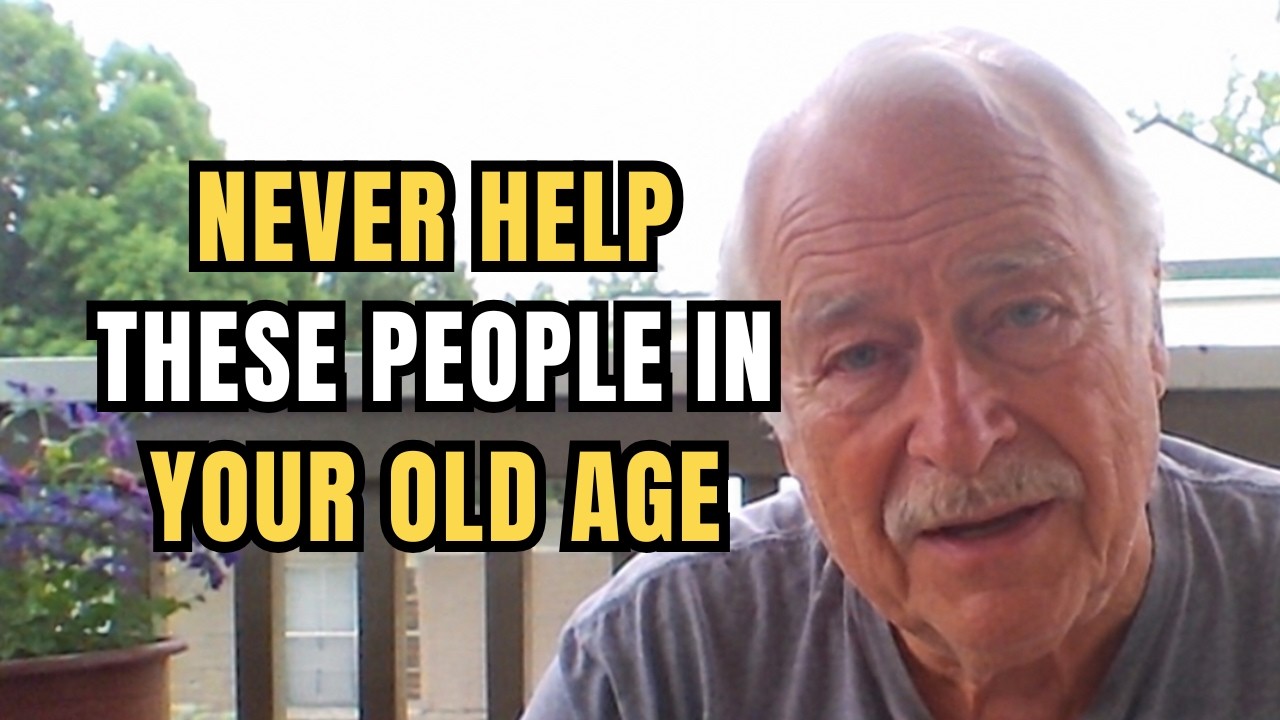
You say things honestly because time no longer feels endless. That is why I want to talk about five kinds of people you must avoid in old age—even when they are family, even when you have known them your whole life, even when walking away hurts deeply. Because peace becomes more valuable than approval once you reach a certain age. There are people who take your peace without ever raising their voice.
The hardest part is that many of them do not look harmful at first. Some look like love. Some look like family. Some look like duty.
But over time, you begin to see the pattern. The first kind I had to face was the manipulator. It did not arrive loudly. It arrived with urgency, with emotion, with what felt like responsibility.
Someone very close to me always seemed to be standing at the edge of a crisis. Every call came with pressure. Every request felt like a final chance. There was always a problem that only I could solve.
If I hesitated, the tone shifted into disappointment or fear or guilt. Over time, I stopped noticing that my decisions were no longer fully mine. I was reacting, not choosing. Every time I helped, there was temporary relief, followed by another emergency.
My life became measured by someone else’s instability. Only much later did I understand that love does not require surrendering your entire sense of balance. When I finally stepped back, I did not do it with anger. I simply stopped responding with immediate rescue.
I learned to pause, to say no without long explanations. Slowly, the pressure lifted, and I began to breathe again. The second kind came in a very different form. The self-absorbed narcissist.
This person does not necessarily ask for help, but they never truly see you. Conversations always circle back to themselves. At first, I thought it was just personality. But over time, I noticed a quiet erosion happening inside me.
I would share something meaningful, and it would be turned, redirected, or overshadowed by their own stories. Even my milestones became background noise to their narration of life. I remember sitting once with someone very close to me, realizing halfway through the conversation that I had not been asked a single real question about myself in a very long time. That moment stayed with me.
I was slowly disappearing inside my own relationships. So, I began making small adjustments. I shortened conversations. I stopped waiting for acknowledgement that never came.
I started reclaiming space in dialogue—not aggressively, but firmly. If I was interrupted, I learned to continue my sentence anyway. It felt uncomfortable at first, but over time I realized the rule had never been mutual to begin with. The third person appeared in a much quieter way, but with a very steady impact.
The critic. This kind of person does not raise their voice, and often they believe they are being helpful. Their comments come disguised as advice, as concern, as experience. But the result is always the same.
You begin to doubt yourself. In my life, this showed up in small remarks about how I lived, how I dressed, how I arranged my home, how I chose to spend my days after retirement. Nothing ever felt good enough, even when I had spent a lifetime building stability for myself. At first, I absorbed those words quietly.
I would replay them later in my mind, wondering if perhaps they were right. That is the subtle damage of a constant critic. It does not break you immediately. It reshapes how you see yourself over time.
Eventually, I realized something important. Not every opinion deserves a place in your inner world. Some words are just noise, even when they come from familiar voices. So, I stopped defending every choice.
I stopped explaining my life as if it needed approval. Instead, I would simply acknowledge and continue living in my own direction. And with that shift, the weight of those opinions began to lose its grip on me. The fourth kind is the irresponsible one.
These people move through life leaving chaos behind them. Missed payments, broken promises, bad decisions, constant crises. And somehow, they always expect somebody else to clean up the mess afterward. Many older people become targets for this kind of behavior because younger relatives assume seniors have extra time, extra patience, or extra savings.
They see us as safety nets instead of human beings trying to enjoy the years we have left. I learned this lesson from my nephew, Daniel. He was not a bad young man at heart. Lazy sometimes, careless certainly, but charming enough to make everybody keep giving him second chances.
He drifted from job to job for years. Whenever something went wrong, there was always an explanation. Nothing was ever truly his fault. Then one winter, he asked if he could stay with me temporarily.
That word has trapped many old people. At first, it seemed harmless. He would help around the house a little, find work, save money, and move out within a month or two. That was the plan anyway.
But weeks turned into months. Dirty dishes piled up. Bills increased. My peaceful routines disappeared.
I started waking up irritated in my own home. One afternoon, I came back from a doctor appointment and found him asleep on the couch at 3:00 in the afternoon while empty beer bottles sat on the table beside him. Meanwhile, I had spent the morning worrying about my blood pressure results and whether my heart medication needed changing. And suddenly I had this thought that shook me deeply.
Why was I spending the final chapter of my life carrying a grown man who refused to carry himself? That realization hurt because older generations are taught endurance. We were raised to help family no matter what, to sacrifice quietly, to keep giving even when exhausted. But there is a difference between helping somebody during hardship and enabling a pattern that never ends.
So, I sat Daniel down one evening and calmly explained that he needed to leave within 30 days. No yelling, no cruelty, just honesty. He acted shocked, hurt, even offended. But deep inside, I knew I had waited far too long already.
After he left, my home finally felt like mine again. The silence returned. The peace returned. Even my health improved.
The fifth and final kind is the ungrateful person. This one may sound small compared to manipulation or criticism, but chronic ingratitude can wound the human heart over time. When you spend your life giving sincerely to others and your kindness is constantly treated like something expected, eventually you begin feeling emotionally invisible. Ungrateful people rarely say thank you in a meaningful way.
Nothing is enough for them. If you give time, they focus on what you did not give. If you offer help, they complain about how it was done. If you sacrifice for them, they behave as though you merely fulfilled an obligation.
I remember a woman from my church group named Eleanor. Every Christmas, I used to drive several seniors around town to look at holiday lights because many of them could no longer drive safely at night. I enjoyed it. It brought me happiness seeing older faces light up like children again.
But Eleanor criticized every outing. Too cold, too crowded, too slow. Wrong neighborhood, wrong restaurant afterward. One year, I spent nearly six hours organizing a little dinner for the group, and the only thing she said afterward was that the mashed potatoes were dry.
I drove home that night feeling strangely empty, not angry, just tired. And somewhere along the road, I understood an important truth. Gratitude is emotional oxygen. Human beings need appreciation the same way plants need sunlight, especially older people.
Because many seniors already feel discarded by society. After that, I stopped overextending myself for people who treated kindness casually. Instead, I invested my energy into relationships where care flowed both ways, and life became lighter because of it. When you are young, you think life is mostly about achievement—building careers, raising children, paying mortgages, chasing goals.
But when you become old, your definition of a good life changes completely. Peace becomes wealth. Calm mornings become luxury. A stress-free afternoon becomes more valuable than impressing anybody.
The people around you matter more than almost anything else because they either protect your spirit or slowly drain it. I do not hate the people I talked about tonight. Truly, I do not. Some of them probably carried wounds I never fully understood.
But age teaches you something important. Compassion does not require unlimited access. You can love people while still protecting yourself from the damage they cause. That lesson took me nearly 80 years to learn.
So, if somebody in your life constantly leaves you anxious, exhausted, guilty, invisible, or emotionally small, please do not ignore those feelings anymore. At our age, peace is not a luxury. It is a necessity. Protect your remaining years.
Protect your heart. Protect the quiet little joys that still make life beautiful. And if nobody has told you this lately, let this old man say it now.
You are still allowed to choose yourself.