On Father’s Day in 2015, Oliver Hudson posted an old photograph of himself, his sister Kate, and their biological father, Bill Hudson.
The picture looked harmless.
The caption did not.
“Happy abandonment day.”
Three words.
That was all it took to reopen a family wound that had been building for more than three decades.
Bill Hudson saw the post.
His response was devastating.
In a public interview, he said that Kate and Oliver were no longer part of his life. He even said they should stop using the Hudson name and described them in language so final that it sounded as if any possibility of reconciliation had disappeared.
From the outside, it looked like the last chapter of a Hollywood family breakup.
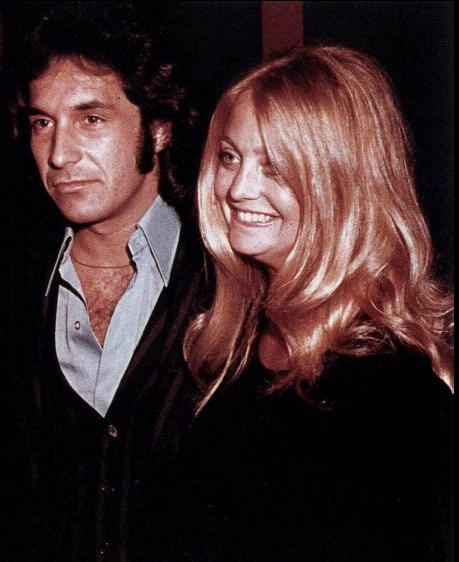
A famous mother.
An estranged father.
Two adult children who had grown up believing another man had become the father they could depend on.
But almost nobody expected what happened next.
The cruel Father’s Day post that seemed to destroy whatever remained between Bill and Oliver eventually did something else.
It got them talking.
And to understand why that mattered, you have to go back nearly forty years—to a marriage that lasted only a few years, but shaped one of Hollywood’s most famous families for decades.
Before the Family Feud, There Was a Very Fast Love Story
By the mid-1970s, Goldie Hawn was already one of the most recognizable women in American entertainment.
She had become a national sensation on Rowan & Martin’s Laugh-In, where her bright smile, comic timing and apparently effortless charm turned her into one of television’s most memorable personalities.
But Goldie was not simply the giggling blonde audiences thought they knew.
She was ambitious.
Independent.
And increasingly successful.
By the time she met Bill Hudson, she had already won an Academy Award for Cactus Flower and established herself as a serious movie star.
Bill came from another corner of show business.
He and his brothers had formed the Hudson Brothers, a pop group that became popular enough to land television appearances and eventually their own variety-show exposure.
When Goldie and Bill met in the 1970s, the attraction was immediate.
The relationship moved quickly.
They married in 1976.
That same year, their son Oliver was born.
Three years later came Kate.
For a brief period, the Hudson family looked exactly like the kind of Hollywood picture magazines loved.
Beautiful actress.
Successful musician.
Two children.
A glamorous young family.
But inside the marriage, Goldie and Bill would later remember things very differently.
Bill Said They Wanted Different Kinds of Marriage
Years after the divorce, Bill began speaking publicly about what he believed had gone wrong.
His version was blunt.
He said he wanted a more traditional marriage.
A wife.
A husband.
A home.
Commitment with clear boundaries.
According to Bill, Goldie wanted something different.
He later claimed that she had raised the idea of a more open marriage and that the two fundamentally disagreed over monogamy.
That allegation has since been repeated across countless celebrity stories.
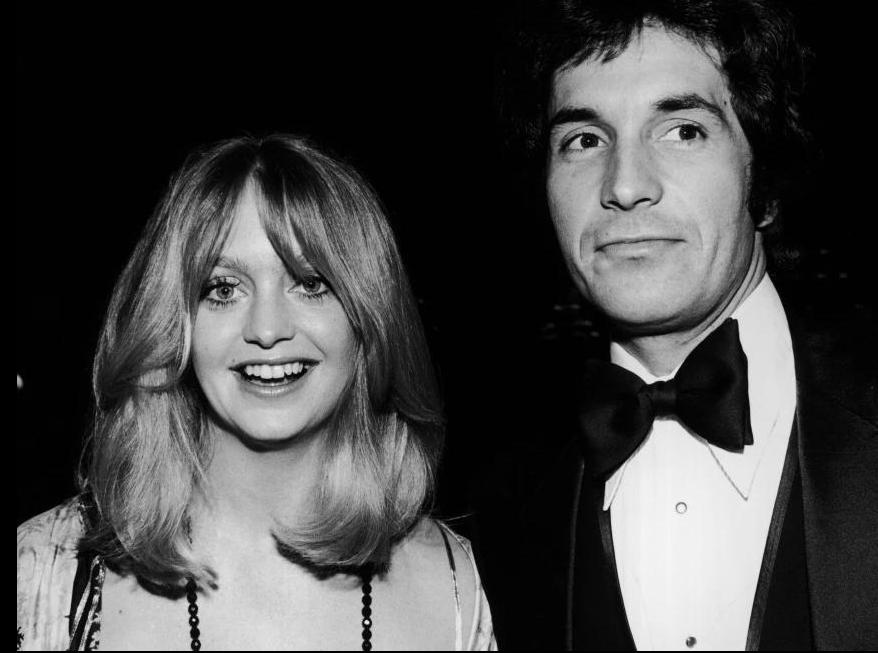
But one distinction matters.
It is Bill Hudson’s account of what happened.
It is not a jointly confirmed statement from both former spouses.
Goldie has not publicly endorsed Bill’s description of their marriage in those terms.
And years later, when she was asked more broadly about open relationships, Goldie said she did not believe open marriage worked.
That contradiction tells us something important.
There was never just one version of the Hudson marriage.
Bill had his.
Goldie had hers.
And as happens in many divorces, the children eventually inherited pieces of both.
Fame Was Growing Faster Than the Marriage
Bill also described another source of tension.
Goldie’s career was accelerating.
She was becoming one of Hollywood’s biggest female stars.
The opportunities became larger.
The demands became heavier.
The travel increased.
The balance between two show-business careers became harder to maintain.
Bill later described feeling that Goldie’s professional life had become the dominant force in their relationship.
From his perspective, the marriage was increasingly being asked to survive around a career that could not simply be paused.
Goldie remembered the breakup differently.
She has generally resisted turning the marriage into a public blame game.
In one later interview, she made the point that a relationship cannot be created—or destroyed—by only one person.
That difference in tone would become a pattern.
Bill tended to describe specific grievances.
Goldie tended to speak more generally about compatibility, independence and what she learned from failed marriages.
Neither version has to be treated as the complete truth.
That is one of the central facts of this story.
Two people can live through the same marriage and leave it carrying completely different memories.
The Marriage Ended, but the Family Story Was Only Beginning
Bill filed for divorce in 1980.
The divorce was finalized in 1982.
Oliver was still young.
Kate was even younger.
For Goldie and Bill, the marriage was over.
For their children, however, the consequences were just beginning.
Then another man entered the picture.
Kurt Russell.
Goldie and Kurt had actually known each other years earlier, but they became romantically involved in 1983 while working together on Swing Shift.
The relationship lasted.
And lasted.
And lasted.
More than four decades later, Goldie and Kurt are still together.
They never married.
That fact alone created one of the great ironies of Goldie’s personal life.
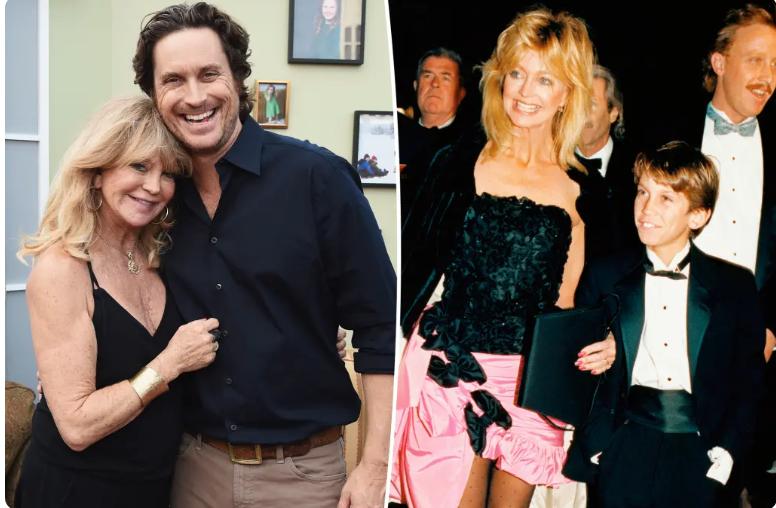
Her legal marriage to Bill Hudson lasted only a few years.
Her unmarried partnership with Kurt Russell lasted more than forty.
Kurt Russell Became More Than Goldie’s Partner
For Kate and Oliver, Kurt was not simply their mother’s boyfriend.
He became the man who was there.
Family holidays.
School years.
Arguments.
Celebrations.
Ordinary days.
The routines that turn a relationship into a family.
Over time, Kate and Oliver came to describe Kurt as their father in the emotional sense.
That distinction would become crucial.
Bill Hudson was their biological father.
Kurt Russell became the father figure who helped raise them.
For millions of families who have experienced divorce, remarriage or blended parenting, that tension is instantly recognizable.
What makes someone a father?
DNA?
Presence?
History?
Consistency?
Love?
The Hudson family never found an easy answer.
Bill Said He Was Pushed Out
Bill’s version of those years is painful.
He has insisted that he did not simply wake up one day and decide to abandon his children.
He has accused Goldie of helping create distance between him and Oliver and Kate.
In later interviews and his memoir, he described himself as a father who believed he had gradually been pushed out of the family.
From his point of view, the public story became unfairly simple:
Goldie and Kurt raised the children.
Bill disappeared.
He argued there was far more to it.
He remembered attempts at contact.
Legal disputes.
Frustrations over access.
And a sense that the more Kurt became established as “Dad,” the less room remained for Bill.
Whether every detail of Bill’s account is accepted or not, it reveals something essential:
He did not experience the story as a father casually walking away.
He experienced it as a father losing his children.
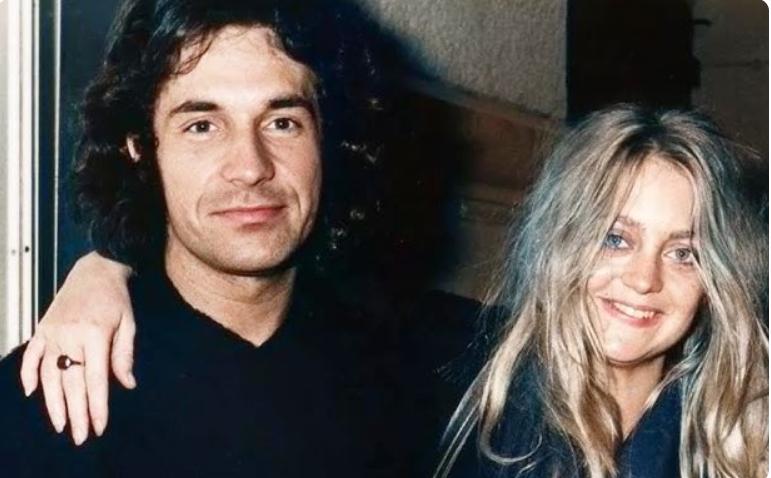
Kate and Oliver Remembered Something Else
Children do not experience custody battles as legal arguments.
They experience who calls.
Who arrives.
Who remembers.
Who is there when something hurts.
Kate has spoken publicly about the emotional absence she felt from Bill.
For her, the debate over exactly why he was absent did not erase the result.
He was not the father she felt raised her.
Kurt was.
Kate has been remarkably direct about that distinction.
She has referred to Kurt as her dad.
Oliver has expressed similar feelings.
Whatever the adults believed they were fighting about, the children grew up with their own emotional reality.
That is what made the later explosion so painful.
Bill believed he had been pushed out.
Kate and Oliver believed he had left.
Both sides felt abandoned.
Goldie and Kurt Built a Different Kind of Family
Goldie never remarried.
Kurt never insisted that she should.
Over the years, the couple repeatedly explained that they did not believe a marriage license was necessary to prove commitment.
Goldie had already gone through divorce twice.
She knew how ugly the legal ending of a marriage could become.
With Kurt, she chose a different model.
They stayed together because they wanted to stay.
Not because a document required it.
Their family eventually included Goldie’s children, Kurt’s son Boston, and their son Wyatt.
It was a blended family long before that phrase became as commonplace as it is today.
From the outside, it became one of Hollywood’s most celebrated relationships.
That success created another uncomfortable contrast for Bill.
The man who had not married Goldie became the father figure celebrated beside her.
The man who had married her became the estranged biological father outside the family picture.
The Rift Became Part of Kate Hudson’s Public Story
As Kate became famous in her own right, questions about her father followed.
The daughter of Goldie Hawn became an actress.
Then a star.
Then a mother.
And the Bill Hudson question never completely disappeared.
Kate was clear that Kurt had fulfilled the role she associated with fatherhood.
That did not mean Bill stopped mattering.
Estrangement rarely works that way.
A parent can be absent and still occupy enormous emotional space.
Sometimes anger is proof of that.
If someone truly means nothing, people usually do not spend decades discussing the wound.
Oliver demonstrated that more dramatically than anyone.
“Happy Abandonment Day”
By 2015, Oliver Hudson was an adult.
He had children of his own.
Father’s Day arrived.
He found an old picture.
Young Oliver.
Young Kate.
Bill.
Then he posted it with the words:
“Happy abandonment day.”
The line exploded across entertainment media.
For some readers, it looked funny.
For others, cruel.
For Bill Hudson, it apparently felt devastating.
He responded publicly.
His anger was raw.
He said Oliver and Kate were dead to him.
He said they should stop using his name.
He accused Goldie of poisoning the children against him.
Years of resentment suddenly spilled into public view.
There was no polished celebrity language left.
No careful publicist.
Just a father and son hurting each other in front of millions of strangers.
It looked final.
Then something unexpected happened.
The Post That Nearly Destroyed Them Started a Conversation
Oliver later revealed that the Father’s Day post had an unintended consequence.
Bill reached out.
Or Oliver reached back.
However it began, father and son finally talked.
Not for five minutes.
Not for a few awkward sentences.
For hours.
Oliver said they had a roughly three-hour conversation.
It was the first real connection after many years of little or no communication.
The post meant to express abandonment became the thing that broke the silence.
Oliver later said:
“It actually started a dialogue.”
That sentence changes the meaning of the entire episode.
The cruelest public moment between them was not necessarily the end.
It may have been the beginning of something else.
Reconciliation Did Not Happen Overnight
This was not a Hollywood ending where everyone hugged and forgot forty years of pain.
Family estrangement rarely works that way.
There were still old stories.
Old accusations.
Different memories.
And years that could never be recovered.
But the communication mattered.
For Oliver, it meant Bill was no longer simply an abstract figure from childhood.
There was once again a real person on the other end of the phone.
For Bill, it meant the door was not completely closed.
That door remained uncertain for Kate.
But even there, something slowly changed.
Kate Began Talking About Bill Differently
For years, Kate’s public comments about her biological father could sound final.
Kurt was her dad.
Bill was the man she did not really know.
Then her tone began to soften.
By 2024, Kate said something notable about her relationship with Bill.
She did not claim they had suddenly become close.
She did not pretend the past had disappeared.
Instead, she said the relationship was:
“warming up.”
That phrase matters precisely because it is so modest.
Not healed.
Not repaired.
Not perfect.
Warming up.
Kate also expressed a more mature kind of acceptance.
She no longer seemed interested in forcing the relationship to become something specific.
She wanted Bill to be happy.
There was less accusation.
Less expectation.
More room for whatever might still be possible.
For a family that had spent decades speaking through pain, that was a major change.
Bill Said the Rift Was Healing
Bill eventually used similar language.
He said the family rift was beginning to heal.
Again, nobody claimed that everything had been fixed.
How could it be?
Oliver and Kate were no longer children waiting for their father.
Bill was no longer a young musician fighting through a divorce.
Goldie was no longer the rising actress caught between marriage and career.
Everyone had aged.
Everyone had lived enough life to understand that family stories become harder to simplify with time.
The question was no longer:
Who was completely right in 1980?
It became:
Is there anything worth saving now?
That is a much more powerful question.
By 2025, Oliver and Bill Were Speaking More Than Ever
Then came another sign.
Oliver said that he and Bill were in contact more than they had been in years.
He even discussed the possibility that they might someday work together.
Think about how far that is from:
“Happy abandonment day.”
And from:
“They’re dead to me.”
Those sentences once sounded irreversible.
They weren’t.
That may be one of the most human parts of the Hudson story.
People say permanent things when they are hurt.
Families sometimes survive them anyway.
What Really Happened Between Goldie and Bill?
This is the question every headline wants to answer.
And there is no single clean answer.
Bill says they had fundamentally different expectations about marriage.
He has claimed Goldie wanted freedoms he could not accept.
He says her career increasingly overwhelmed the relationship.
And he says the aftermath of the divorce cost him his children.
Goldie has generally framed relationships through a different lens.
She has emphasized compatibility.
Freedom.
Mutual choice.
The idea that two people must continue choosing each other.
She built a relationship with Kurt Russell based on precisely that philosophy.
Who is telling the truth?
Possibly both.
At least parts of it.
A Divorce Can Produce Two Honest Stories That Contradict Each Other
This is something celebrity coverage rarely allows.
We want:
hero.
villain.
Victim.
Betrayer.
But real marriages are not written like movies.
Bill may genuinely believe Goldie’s choices destroyed their marriage and helped distance him from his children.
Goldie may genuinely believe the marriage simply could not work and that she later created a healthier family structure.
Kate and Oliver may genuinely believe Bill failed them.
Bill may genuinely believe he was prevented from being the father he wanted to be.
Those truths can collide.
That does not automatically make one side fraudulent.
It makes divorce painful.
Kurt Russell Became the Answer to a Question Bill Never Stopped Asking
Perhaps the hardest part for Bill was not merely losing Goldie.
It was watching Kurt become central to the family he had once imagined as his own.
Kurt did not arrive for a weekend.
He stayed.
Year after year.
Decade after decade.
Kate and Oliver called him Dad.
Father’s Day tributes went to him.
Their children knew him as family.
For Bill, that must have been difficult regardless of how the estrangement began.
For Kate and Oliver, however, Kurt’s presence represented something else.
Reliability.
They were not making an argument about biology.
They were describing experience.
That is why this story still provokes such powerful reactions.
Both sides are speaking about something emotionally real.
Goldie Learned Something Different From Divorce
Goldie’s later philosophy about marriage cannot be separated from what happened with Bill.
She and Kurt Russell have been together since 1983 without marrying.
When asked why they never made it legal, Goldie has repeatedly questioned why they should.
She believes commitment is something people continue to choose.
The irony is impossible to miss.
A legal marriage lasted a few years.
An unmarried relationship lasted more than forty.
For Goldie, that probably confirmed what she already believed:
A certificate cannot save a relationship that no longer works.
And the absence of one cannot destroy a relationship that does.
Bill’s Story Is Also About Losing Control of Your Own Narrative
Goldie became one of America’s most beloved actresses.
Kurt became one of Hollywood’s most respected leading men.
Kate became a star.
Oliver built his own acting career.
And Bill Hudson increasingly became known through a single phrase:
estranged father.
That kind of public identity can be brutal.
Bill spent years trying to challenge it.
His memoir was titled 2 Versions for a reason.
He believed the public had heard one version of the family story for too long.
His goal was to offer another.
Whether readers agree with him or not, the title captures the entire Hudson saga.
There were always two versions.
Probably more than two.
Oliver Eventually Understood Something About His Mother Too
In 2024, another set of headlines briefly complicated the family image.
Oliver discussed childhood emotions he had explored through a personal-development program.
He used the word “trauma” while discussing his mother.
Immediately, headlines suggested that Oliver was revealing some dark truth about Goldie.
He quickly pushed back.
He said his comments had been taken out of context.
He was describing how a child processes experiences—not accusing Goldie of being a terrible mother.
He emphasized how deeply he loved and respected her.
That episode is revealing.
The Hudson family has spent decades having complex emotions transformed into simple headlines.
Bill versus Goldie.
Abandoned children.
Perfect stepfather.
Trauma.
Estrangement.
Reconciliation.
Reality has always been messier.
No One in This Story Remained the Same Person
The Goldie who married Bill in 1976 was in her thirties.
The Bill who divorced her was a young father.
Kate and Oliver were children.
Kurt was still at the beginning of the family role he would eventually fill.
Forty years changes people.
Parents become grandparents.
Children become parents themselves.
Old anger looks different when you reach the age your parents were when they made the decisions you once hated.
That does not erase pain.
Sometimes it creates understanding.
Perhaps That’s Why the Story Is Finally Softening
There was a time when the Hudson family story seemed locked into permanent roles.
Goldie and Kurt:
the stable couple.
Kate and Oliver:
the abandoned children.
Bill:
the estranged father.
Then life kept going.
Oliver called Bill.
Bill answered.
They talked.
Kate described things as warming.
Bill described the rift as healing.
Oliver said they were communicating more.
Nobody rewrote history.
Nobody needed to.
The goal was no longer to win the divorce.
The divorce had ended more than forty years earlier.
The Real Tragedy Wasn’t the Divorce
Hollywood marriages end all the time.
The Hudson marriage was short enough to become just another celebrity footnote.
What made this one different was what came afterward.
A father who believed his children had been taken from him.
Children who believed their father had abandoned them.
A stepfather who filled the space.
A mother who built a new kind of family.
And decades during which every person involved kept living while the original wound remained.
That is why the marriage itself is almost the least important part of the story.
The divorce papers ended one relationship.
They did not end the consequences.
And the Real Ending May Still Be Unwritten
Bill Hudson is older now.
So are Goldie and Kurt.
Kate and Oliver are no longer wounded children trying to understand why their family changed.
They have families and histories of their own.
That changes what reconciliation can mean.
It does not have to restore childhood.
It cannot.
It does not require deciding who was right about every argument in 1980.
It may simply mean refusing to spend whatever years remain repeating the same fight.
For decades, the Hudson story was told as a story of abandonment.
Then it became a story of anger.
Now, unexpectedly, it may be becoming something else.
Not forgiveness in the Hollywood sense.
Not a perfect reunion.
Something quieter.
Contact.
Conversation.
Possibility.
Their Marriage Lasted Only a Few Years. The Family Rift Lasted More Than Four Decades.
That may be the simplest way to understand Goldie Hawn and Bill Hudson.
Their love story moved fast.
Their divorce came quickly.
The aftermath did not.
Bill told one version.
Goldie lived another.
Kate and Oliver formed their own understanding from what they experienced as children.
Kurt Russell stepped into the space and stayed there.
Then decades later, after public insults that sounded impossible to take back, father and son finally spoke again.
And eventually Kate began leaving the door slightly open too.
There is no perfect villain here.
There is no clean hero.
Only a family that broke apart and then spent most of a lifetime deciding what those pieces still meant.
Perhaps the most surprising part of the story is not that Goldie Hawn and Bill Hudson failed to stay married.
Hollywood has seen thousands of failed marriages.
It is that after all the accusations, all the Father’s Days, all the years without speaking, the story may still have room for another chapter.
In 2015, Oliver Hudson posted:
“Happy abandonment day.”
It sounded like a goodbye.
Instead, it started a conversation.
And sometimes, after forty years of pain, a conversation is where healing finally begins.