
Prince Harry has escalated his long-running conflict with the Royal Family with a new and even more incendiary accusation — one that goes beyond claims of neglect or misunderstanding, and instead strikes at the core of how the monarchy manages reputation, hierarchy, and internal protection.
In his latest account, Harry alleges that Meghan Markle was not simply unsupported during her time as a working royal, but was actively exposed to negative press while senior members of the Royal Family were protected — particularly his brother, Prince William.
The Palace has not responded to these specific claims. But the implications of Harry’s statements have already reignited one of the most divisive debates in modern royal history.

The Core of Harry’s Claim
At the heart of Harry’s accusation is a stark narrative:
- William, as heir to the throne, was shielded from reputational damage
- Meghan, as a non-heir and outsider to the institution, was left vulnerable
- Internal communications and media dynamics allegedly worked in favour of protecting the future King
- While Meghan became, in Harry’s view, the primary target of public scrutiny
Harry’s most controversial assertion is the idea that the Palace tolerated or strategically allowed negative stories about Meghan to circulate in order to reduce pressure on other members of the Royal Family.
One of the most repeated lines associated with his position is that senior royals were “happy to protect William, but unwilling to correct the record for us.”
It is important to stress: this is Harry’s interpretation of events, not independently verified fact.
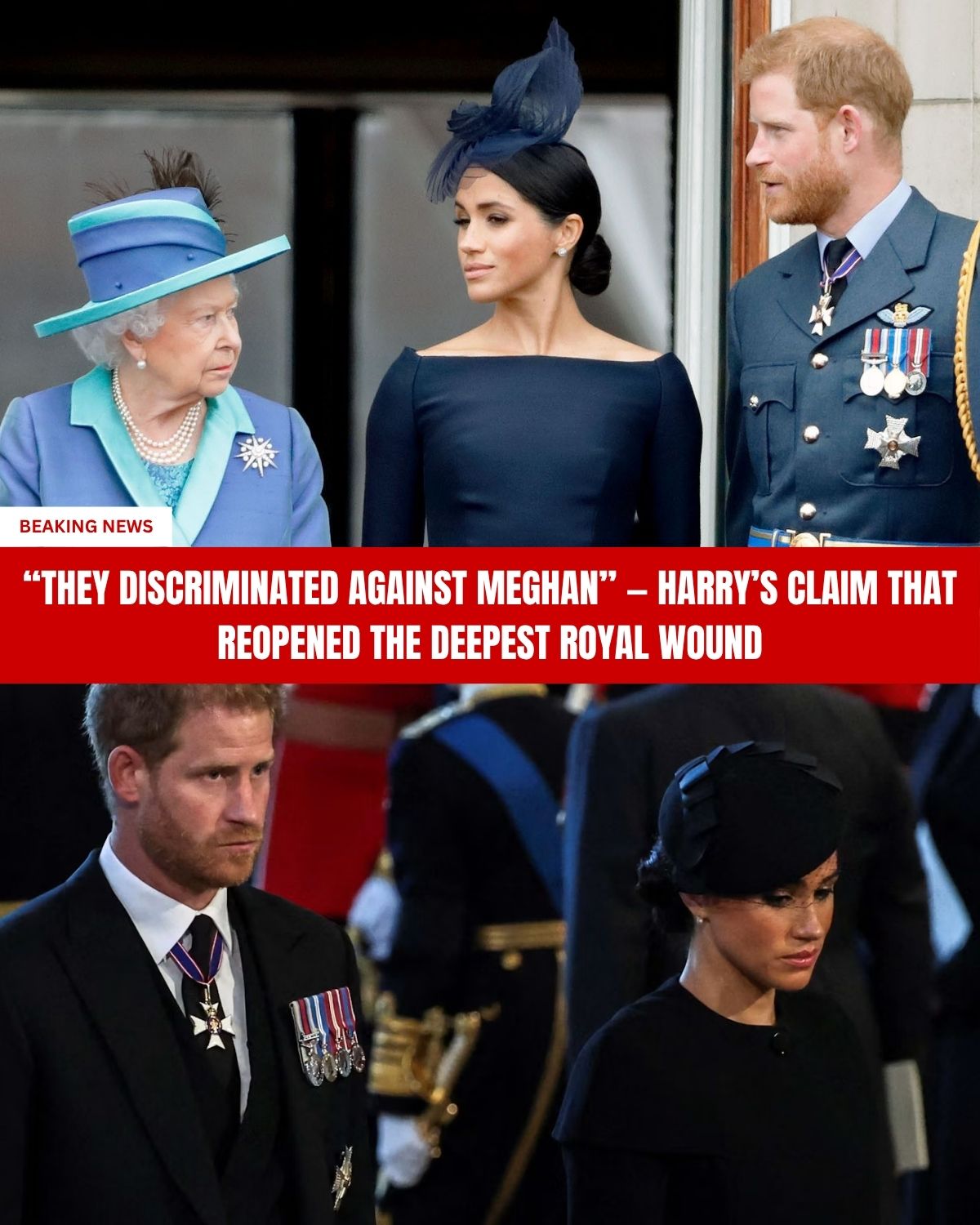
The Palace System: Protection by Hierarchy
To understand why this claim resonates — even among critics — it is necessary to understand how royal communications traditionally operate.
The Royal Family does not function like a typical organisation. There is no equal distribution of media protection. Instead, reputation management is closely tied to constitutional importance.
In practical terms:
- The heir to the throne is treated as the highest priority
- The monarch and direct line of succession are protected with extreme caution
- Other working royals receive varying levels of press support depending on role
- Silence is often used as a strategic tool rather than public correction
From this perspective, what Harry interprets as “protection of William at Meghan’s expense” may also be understood as institutional hierarchy — not personal favouritism.
This distinction lies at the centre of the dispute.
The Media Allegation: “Controlled Silence” or “Strategic Exposure”?
One of the most serious elements of Harry’s broader narrative is the suggestion that damaging stories about Meghan were not effectively challenged at the institutional level.
Harry argues that:
- Negative narratives about Meghan were allowed to circulate uncorrected
- Official responses were either delayed or limited in scope
- Internal priorities appeared to favour protecting certain royals over others
However, royal commentators note that the Palace has historically avoided engaging directly with every media claim, particularly those originating from tabloids. The institution’s long-standing policy of “never complain, never explain” means that silence is often a default position — not necessarily an endorsement of any narrative.
This creates a critical ambiguity:
Was Meghan singled out?
Or was she entering a system that applies the same communication strategy across all members, but impacts individuals differently depending on their public role?
The William Factor: Why This Claim Is So Explosive
Harry’s repeated comparisons between himself and Prince William are what give this controversy its political weight.
William is not just Harry’s brother. He is:
- The Prince of Wales
- The direct heir to King Charles III
- A central figure in the monarchy’s long-term stability plan
From an institutional standpoint, William’s public image is not optional — it is foundational.
This creates a structural imbalance that Harry interprets emotionally, but which the Palace frames constitutionally.
In Harry’s view, this became a system where:
the heir is protected, and the spare absorbs the pressure
In the Palace’s structural logic:
the heir must be protected, because the institution depends on continuity
Both interpretations can coexist — but they lead to completely different conclusions about fairness.
Meghan as the “Pressure Point” of the System
Harry’s narrative also positions Meghan as a pressure point within an already sensitive institution.
According to his account:
- Meghan entered the Royal Family at a time of intense media scrutiny
- Her public profile made her highly visible and widely discussed
- Internal support, in his view, did not match external pressure
- This imbalance contributed to their decision to step back from royal duties
Supporters of Harry and Meghan argue that this reveals structural issues inside the monarchy regarding race, class, and media handling.
Critics argue that Meghan was entering a rigid constitutional institution that had not been designed for modern celebrity-driven narratives or global media engagement at the scale she brought.
Why Britain Reacts So Strongly
The reason this latest accusation has reignited anger in the UK is not only because of what Harry is saying — but because of what it implies.
If Harry is correct, then:
- The Royal Family selectively manages protection
- Meghan became a scapegoat within internal media dynamics
- Institutional silence may have contributed to reputational damage
If Harry is incorrect or overstating his interpretation, then:
- A private family dispute is being reframed as systemic injustice
- The monarchy is being accused of coordinated media manipulation without verifiable evidence
- Public trust in royal neutrality is being challenged repeatedly
This is why the divide is so deep. There is no neutral reading that satisfies both sides.
Buckingham Palace’s Position
Buckingham Palace has not issued a direct response to Harry’s most recent claims. In previous controversies, however, the Palace has typically maintained a consistent position:
- Royal matters are handled privately within the family
- The institution does not engage in detailed public rebuttals
- Individual recollections of events may differ
This approach avoids escalation, but it also leaves space for competing narratives to grow unchecked.
A Conflict That No Longer Has a Clear Endpoint
What makes this phase of the Sussex–Royal conflict different is that it is no longer about a single event, interview, or documentary.
It has become a layered dispute over interpretation:
- Was Meghan inadequately supported?
- Was William simply prioritised due to constitutional role?
- Was silence a failure of protection, or a deliberate strategy?
- Or is this a breakdown in trust between a former royal and the institution he left?
Each new accusation does not resolve the debate — it expands it.
Conclusion: A Story That Keeps Rewriting Itself
Harry’s claim that Meghan was left to “burn” while William was protected has become one of the most emotionally charged narratives in the modern Royal Family crisis.
But whether it is understood as truth, perception, or reinterpretation, one thing is undeniable:
It has permanently changed how the public reads the Royal Family.
Not as a unified institution above politics — but as a system where hierarchy, perception, and silence can shape very different realities for different members.
And that is why this conflict continues to return.
Because in the absence of a shared version of events, every new statement becomes not an ending — but another beginning.