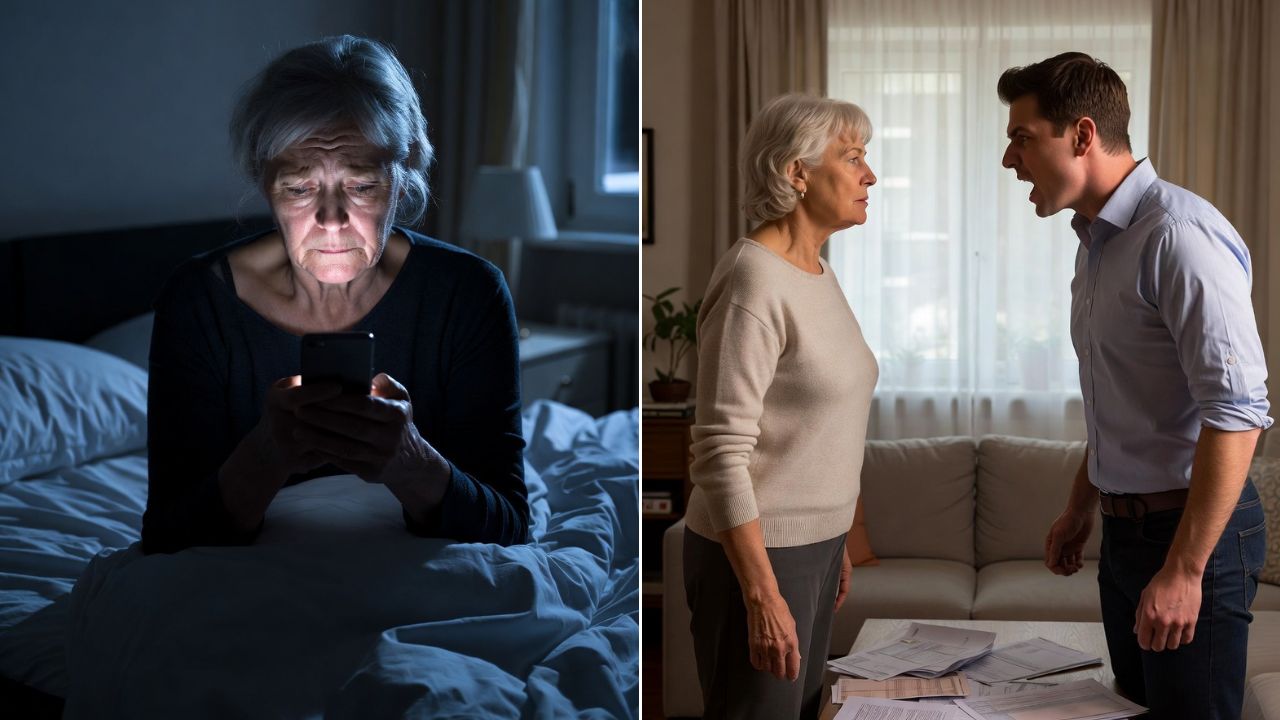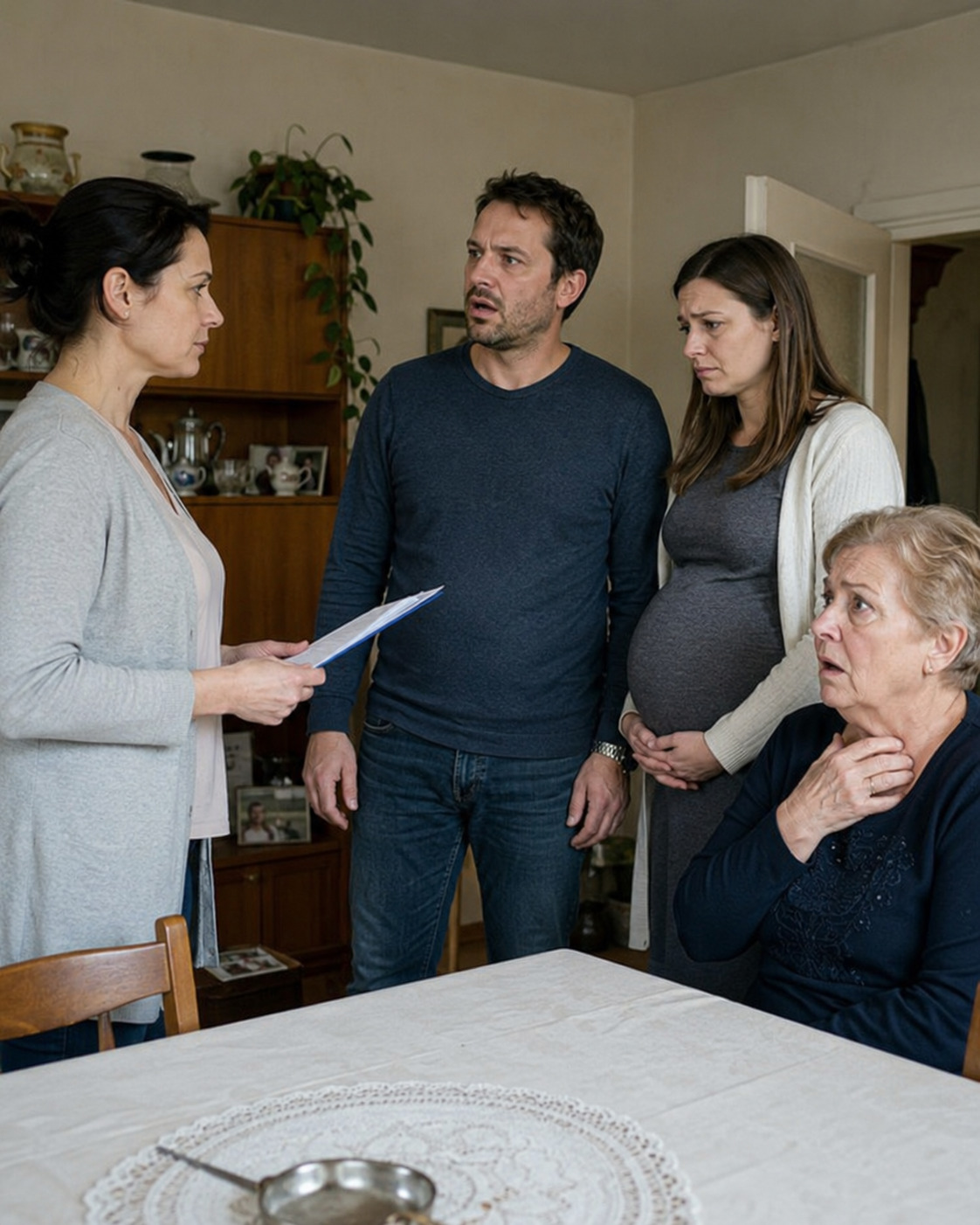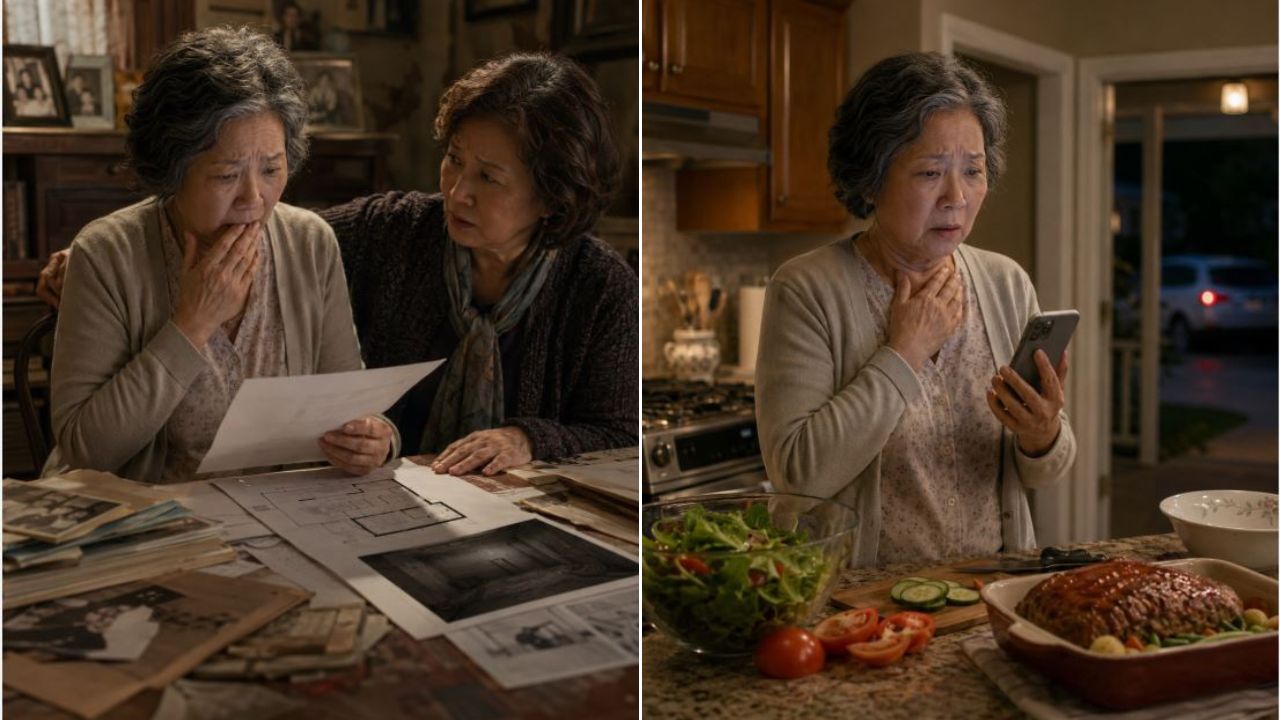
My son celebrated his promotion with “the whole family.”
I learned from a photograph that I was no longer part of it.
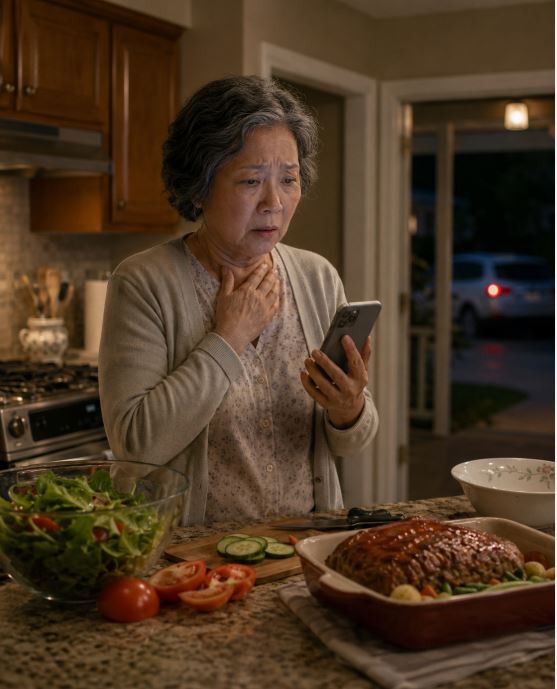
That evening, I had been standing in the kitchen, slicing cucumbers for the salad Julian had loved since he was a boy. The meatloaf was already in the oven. A pot of soup simmered on the stove, filling the room with the smell of thyme and roasted onions.
At six twenty, the front door opened.
Three-year-old Leo ran out of the living room shouting, “Daddy!”
Julian lifted him into the air, laughing despite the exhaustion on his face. His tie was loose, and there were new lines around his eyes that I had not noticed before.
“Mom,” he said, “I got the promotion.”
For one bright second, I forgot everything else.
I clapped my hands.
“I knew you would. Wait until you see what I made. I can add the potatoes you like. We should celebrate properly.”
Julian did not look toward the kitchen.
“I already booked a private room at the Oak Room.”
The Oak Room was the kind of restaurant where the menu did not show prices and the waiters folded your napkin when you left the table.
“That’s wonderful,” I said. “You and Clara deserve a nice evening.”
Julian loosened his tie.
“Her parents are already there. My sister and Mark are coming too.”
I waited.
Perhaps he would tell me to change clothes.
Perhaps he would say the reservation was at seven.
Instead, he bent down to fasten Leo’s shoes.
“We’re taking him with us.”
The kitchen suddenly felt very quiet.
“Oh,” I said. “Then I suppose I’ll have the evening to myself.”
Julian smiled with relief, as though I had solved a problem for him.
“There are leftovers in the fridge. Don’t bother cooking anything else.”
He showered, changed into a fresh shirt and left with Leo less than twenty minutes later.
Before the elevator doors closed, Leo waved.
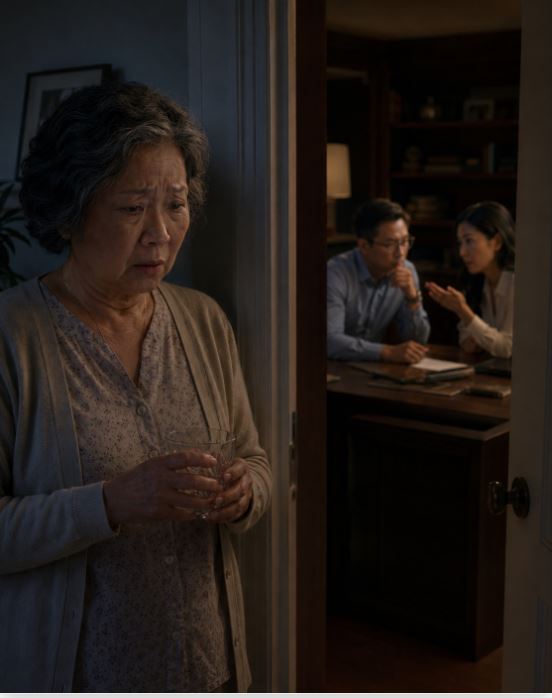
“Bye, Grandma!”
I waved back until I could no longer see him.
Then I returned to the kitchen.
The meatloaf was beginning to brown around the edges. I switched off the oven and stood there with the mitt still on my hand.
Three years earlier, after my husband Arthur died, Julian had asked me to move in with him and Clara.
“We don’t want you living alone,” he had said. “And you can help with Leo when Clara goes back to work.”
I heard the second part.
I simply chose to hold on to the first.
At sixty-five, newly widowed and terrified of the silence in my own house, I had wanted to believe my son needed me as much as I needed him.
So I moved into their guest room.
I woke with Leo at night.
I made his bottles.
I washed the sheets when he was sick, took him to preschool, learned which song calmed his tantrums and which spoon he refused to use.
I cooked dinner every evening.
I folded Julian’s shirts the way I had when he was twelve.
I told myself that this was what love looked like when a mother grew old.
That night, I reheated a piece of yesterday’s meatloaf.
At seven thirty, my phone buzzed.
It was a message from Clara.
Please finish the leftovers. I don’t want food going to waste.
A second message arrived before I could answer.
It was a photograph.
Julian stood at the center of a long table, raising a glass. Clara sat beside him in a red dress. Her parents were there. Julian’s sister and brother-in-law were there. Two cousins I had not seen since Christmas were there.
Leo sat on Clara’s father’s lap, holding a spoonful of cake.
Every chair was occupied.
There was no empty place waiting for me.
Under the photograph, Clara had written:
The whole family came out for Julian tonight.
I stared at those words until the screen dimmed.
Then I typed:
That’s lovely. Congratulations again.
I placed the phone facedown.
The meatloaf remained untouched.
For the first time in three years, I allowed myself to ask a question I had been avoiding.
If I stopped cooking, cleaning and caring for their child, would they still want me in that house?
I did not sleep much.
Around midnight, I heard them return.
Leo was carried past my door, half asleep. Clara laughed about someone ordering a two-hundred-dollar bottle of wine. Julian told her to keep her voice down.
Neither of them knocked.
The following morning, I was in the kitchen before anyone else.
Habit is difficult to kill, even after your heart has caught up with the truth.
I packed Leo’s lunch, cut the crusts from his sandwich and placed apple slices into the blue container he liked.
Clara walked in wearing her bathrobe.
“Did you sleep well?” she asked.
“Yes.”
“The restaurant was very noisy. You would have hated it.”
She said it casually, almost kindly.
As though excluding me had been an act of consideration.
“I’m sure you all had a good time.”
“We did. Julian’s parents—I mean, my parents—were so proud.”
She corrected herself quickly, but not quickly enough.
A few minutes later, Julian entered, kissed Leo and poured coffee without looking at me.
“Thanks for making his lunch, Mom.”
There was no mention of the photograph.
No apology.
No awkwardness.
That hurt more than the dinner itself.
To them, nothing unusual had happened.
I had simply remained where I belonged.
At home.
The phone rang that afternoon while Leo was napping.
It was Carol, my former neighbor.
“Eleanor, I heard about Julian’s promotion,” she said. “You must be proud.”
“I am.”
“And now with the redevelopment money, he’ll really be doing well.”
I straightened in my chair.
“What redevelopment money?”
There was a pause.
“Your old block. The city’s buying the whole row for the new transit project. Notices went up two weeks ago.”
My fingers tightened around the phone.
“I haven’t heard anything.”
“Oh. I assumed Julian told you. He was here last Thursday. I saw him going into the municipal office with a folder.”
I looked toward the hallway.
Julian had told me he was attending an all-day management seminar last Thursday.
“Perhaps he wanted to wait until the details were certain,” I said.
Carol continued speaking, but I barely heard her.
After we hung up, I remained seated beside Leo’s bed, watching him sleep.
My old house had belonged to Arthur and me for twenty-six years.
We had bought it when Julian was eight.
Arthur built the shelves in the study himself. I painted the kitchen twice because I could never choose the right shade of yellow. Julian had measured his height against the pantry door every birthday until he left for college.
After Arthur’s death, I had not sold it.
I could not.
The deed had been updated through probate. My name remained on the property, along with Julian’s inherited interest.
No one could legally make decisions about it without me.
At least, that was what I believed.
That evening, I waited for Julian to mention the redevelopment.
He did not.
At dinner, he talked about his new office and complained that Leo had spilled juice on his laptop bag.
Clara talked about interest rates.
“Townhouses are getting more expensive every month,” she said. “If we don’t move soon, we’ll be stuck here forever.”
Julian gave her a warning glance.
I pretended not to notice.
“Are you thinking about moving?” I asked.
Clara smiled too brightly.
“Only looking.”
“What would happen to this house?”
“We’d sell it,” she replied. “It’s too small for a growing family.”
There were four bedrooms.
I looked toward Julian.
He concentrated on cutting his meat.
That night, I packed a small suitcase.
I did not do it dramatically.
I folded two sweaters, three blouses, my medications and Arthur’s old photograph.
On a piece of paper, I wrote:
I’m staying with Helen for a few days. I need some quiet. Leo’s breakfast is in the freezer.
I almost added, Don’t worry about me.
Then I crossed it out.
For three years, I had worried about all of them.
They could manage one evening without being reassured.
Helen opened her apartment door at ten fifteen.
She was seventy, widowed and still wore lipstick even when she had nowhere to go.
The moment she saw my suitcase, she stepped aside.
“You can explain tomorrow,” she said. “Tonight, you’re having tea.”
I cried before the water boiled.
Not loudly.
That would have been easier.
I sat at her small kitchen table and tried to tell the story calmly, but my voice broke when I reached the photograph.
“The whole family,” I said. “That’s what she wrote.”
Helen placed her hand over mine.
“Sometimes people show you your place in their lives without realizing they’ve done it.”
The next morning, we took the bus to my old neighborhood.
The redevelopment notice was posted beside the mailboxes.
The city intended to acquire six buildings for a new light-rail station and commercial complex.
Property owners had thirty days to review the preliminary valuation.
My address was listed.
The estimated payment was $318,000.
I read the figure twice.
Then I saw a handwritten note beneath it:
Authorized representative contacted. Documentation pending.
At the municipal office, a young clerk named Sarah recognized me.
“Mrs. Chen, your son was here last week.”
“What did he submit?”
Sarah pulled up the file.
“Copies of the deed, death certificate and a limited authorization form.”
“I never signed an authorization form.”
Her expression changed.
She turned the monitor slightly away from the waiting area and lowered her voice.
“There is a signature here.”
She printed the document.
The handwriting resembled mine at first glance.
The E curved the way I formed it.
The final r trailed downward.
But the person who copied my name had made one mistake.
For forty-five years, I had connected the l and e in Eleanor without lifting my pen.
On the form, they were separate.
“That is not my signature.”
Sarah stopped smiling.
“Mrs. Chen, this may require legal review.”
I felt no dramatic surge of anger.
Only a strange coldness.
As though something inside me had finally stopped hoping.
I asked for copies of everything.
Sarah hesitated.
“There’s also a preliminary instruction regarding disbursement.”
“Whose instruction?”
“Your son requested that the funds be deposited into a joint account after closing.”
“What joint account?”
She checked the file.
“An account in his and his wife’s names.”
Helen made a sound beside me.
I did not.
I folded the papers carefully and placed them in my purse.
Before leaving, I submitted a written objection.
No transfer.
No closing.
No further communication through Julian.
All notices were to come directly to me.
Outside, Helen asked whether I wanted to confront him immediately.
“No.”
“Why not?”
“Because he has been lying to me for weeks. I want to know how far the lie goes before he realizes I can see it.”
We entered the old house with the spare key I had carried for three years.
Dust covered the furniture. The rooms smelled closed and forgotten.
Arthur’s chair still stood by the front window.
On the wall of the study were Julian’s school awards, his debate medal and the photograph from his college graduation.
I was standing on one side of him.
Arthur was on the other.
Julian had his arms around us both.
Helen began opening windows while I looked through the desk.
I was not searching for anything specific.
Perhaps part of me still hoped the forged signature had been some misguided shortcut. Perhaps Julian intended to protect the money. Perhaps there was an explanation that would allow me to remain his mother without also becoming his victim.
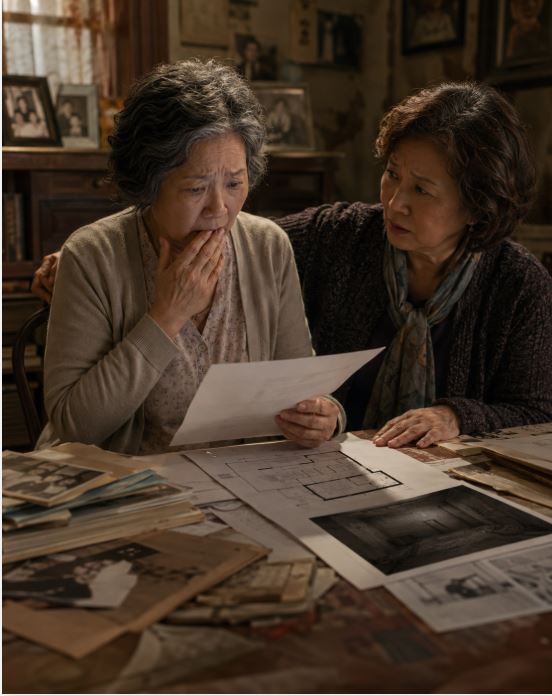
In the bottom drawer, beneath old tax documents, I found a folder from Willow Creek Estates.
Inside were floor plans for a four-bedroom townhouse.
The master suite was upstairs.
Two rooms were marked for Leo and a future child.
A small bedroom on the first floor had been converted into Clara’s home office.
In the basement, beside the laundry room and unfinished storage area, someone had drawn a rectangle in blue ink.
Mom.
An arrow pointed toward it.
Beside the rectangle, in Clara’s handwriting, were the words:
Could add a small bathroom later. Close to kitchen stairs. Convenient when she cooks.
I sat down in Arthur’s chair.
Helen read the note over my shoulder.
“Oh, Eleanor.”
That was when I finally cried.
Not because they planned to place me in a basement.
A room is only a room.
I cried because even in the house they intended to buy with money taken from me, they still imagined me serving them.
Cooking.
Cleaning.
Raising their child.
Close enough to be useful.
Far enough away not to interfere.
Helen called her nephew David, an attorney who worked in elder law and property disputes.
He arrived that afternoon.
After reading the documents, he spoke carefully.
“Your son may have committed fraud. The city has not transferred anything yet, which is good. You can stop the process immediately.”
“Can he sell his share without me?”
“Not in the manner he attempted. The property must be handled through a valid agreement, and the forged authorization creates a serious problem for him.”
I looked at Arthur’s photograph.
“I don’t want my son arrested.”
David nodded.
“That choice is yours. But protecting him from consequences does not require giving him access to your property.”
He helped me file a formal revocation and fraud notice.
Then he advised me to open a separate bank account and update my estate documents.
I had not revised my will since Arthur died.
That night, I slept in my old bedroom.
The sheets smelled faintly of dust, and the pipes knocked after midnight.
Yet I felt safer there than I had in Julian’s house.
My phone contained twenty-three missed calls.
The first messages sounded concerned.
Mom, where are you?
Leo keeps asking for you.
Please call.
Then the tone changed.
Why are you at the old house?
The building isn’t safe.
You need to come home.
Finally:
Mom, did you go to the city office?
I replied only once.
I am safe. We will speak when I am ready.
Julian arrived the following morning.
He did not knock gently.
The front door opened, and his footsteps moved quickly through the hall.
“Mom?”
I was drinking tea at the kitchen table.
When he saw the papers beside me, he stopped.
His face revealed the truth before his mouth could hide it.
“Why didn’t you tell me about the redevelopment?” I asked.
He lowered his keys.
“I was going to.”
“When?”
“When everything was finalized.”
“So after the money entered your account?”
His mouth opened.
No sound came out.
I placed the authorization form in front of him.
“Is this my signature?”
Julian sat down.
“Mom, listen. We weren’t trying to steal from you.”
“You copied my name.”
“Clara thought it would be easier. You are emotional about this house. We were afraid you would refuse.”
“It is my house.”
“It’s partly mine too.”
“Then why did you need to pretend I agreed?”
His eyes moved toward the window.
“We need a larger place.”
“You wanted to use the entire payment?”
“Only temporarily. The townhouse would have been for all of us.”
I opened the Willow Creek folder and placed the floor plan on the table.
Julian went pale.
“Where did you find that?”
“In your father’s desk.”
“That wasn’t final.”
“The basement?”
“Mom—”
“Close to the kitchen. Convenient when she cooks.”
He rubbed both hands over his face.
“That was Clara’s note.”
“But you kept the plan.”
His shoulders dropped.
For the first time, he looked less like a successful manager and more like the boy who used to hide broken toys under his bed.
“I didn’t know how to say no to her.”
I stared at him.
“So you said no to me instead.”
He began to cry.
I had seen my son cry at his father’s funeral.
I had held him while his body shook.
The sight still weakened me.
But grief does not make every tear innocent.
“Mom, I’m sorry.”
“Are you sorry you did it, or sorry I found out?”
He could not answer.
That was answer enough.
I told him I would remain in the old house until the matter was resolved.
He immediately mentioned Leo.
“He’s barely sleeping. He wants his grandma.”
“Then comfort him.”
“You know he only settles for you.”
“No, Julian. You have allowed him to believe that because it made your life easier.”
His face tightened.
“You’re punishing a three-year-old.”
“I am asking his parents to parent him.”
He stood abruptly.
“I don’t even recognize you.”
“That makes two of us.”
After he left, I sat at the table for a long time.
My hands shook, but I did not call him back.
Three days later, Leo became sick.
Julian called at seven in the morning.
His voice was panicked.
“Mom, he has a fever of one hundred and three. He keeps crying for you.”
“Have you called the pediatrician?”
“Clara says we should wait.”
“Take him to urgent care.”
“Can you come?”
I closed my eyes.
The easiest answer would have been no.
The safest answer for my heart would have been no.
But Leo had done nothing wrong.
When I arrived, he was curled on the sofa, cheeks flushed and eyes glassy.
“Grandma,” he whispered.
I sat beside him and pressed my hand to his forehead.
Julian and Clara hovered nearby.
They looked exhausted and frightened.
“Get his shoes,” I said. “We’re taking him in.”
At urgent care, the doctor diagnosed strep throat and dehydration.
Nothing life-threatening.
Nothing that required a grandmother.
Still, Leo clung to me while the nurse examined him.
That evening, after he fell asleep, I went to the kitchen for water.
The study door was almost closed.
Clara’s voice carried through the gap.
“She froze the payment. Do you understand what that means? We could lose the townhouse.”
“I know,” Julian said.
“You need to make her change her mind.”
“How?”
“Use Leo.”
There was silence.
Then Julian said, “What do you mean?”
“She can’t stand being away from him. Tell her that if she moves out or hires a lawyer, we won’t bring him to see her.”
My hand tightened around the glass.
Julian spoke quietly.
“That’s cruel.”
“So is taking more than a hundred thousand dollars from your grandson’s future.”
“It’s her money.”
“Then whose side are you on?”
Another silence.
Longer this time.
When Julian answered, his voice was barely audible.
“I’m on my family’s side.”
Clara gave a short laugh.
“Then act like it.”
I stepped away from the door before they could see me.
By morning, I had made my decision.
I kissed Leo goodbye, returned to the old house and called David.
“Proceed with everything necessary to protect my share.”
“Do you want to report the forgery?”
“Not yet.”
“And the house?”
“Have it independently appraised. I want the legal division documented.”
He paused.
“Are you sure?”
“For the first time in years.”
The city valuation eventually increased to $336,000 after appeal.
Based on the probate documents and ownership history, my legal share was slightly more than half.
I accepted $175,000.
Julian received the rest.
He and Clara could not afford Willow Creek without my portion.
They lost their reservation deposit.
Two weeks after the funds cleared, I received a message from Clara.
I hope you are happy. You took a home away from your grandson.
I read it twice.
Then I deleted it.
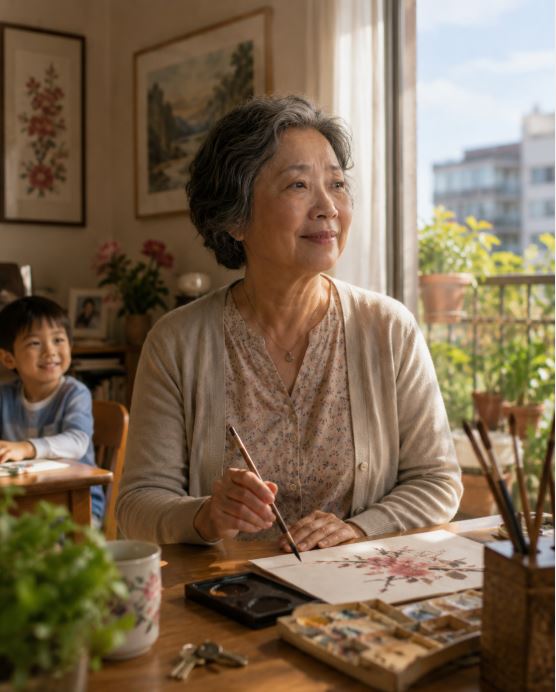
I used part of my money to purchase a small condominium in a quiet fifty-five-plus community ten minutes from Leo’s preschool.
It had one bedroom, wide doorways, a balcony and a community room where residents held painting classes on Thursdays.
I did not need luxury.
I needed a door that belonged to me.
David helped me establish an education trust for Leo.
Neither Julian nor Clara could withdraw the money.
It could only be used for tuition, approved medical expenses or vocational training after he turned eighteen.
The rest remained in my account for my own care.
When Julian learned about the trust, he came to my new apartment alone.
I had not invited him.
He stood outside holding Arthur’s old photo album.
“Can I come in?”
I stepped aside.
He looked around the apartment.
My brushes stood in a jar beside the window. A half-finished watercolor rested on the dining table. There were no toys on the floor, no laundry waiting to be folded, no list of groceries written by Clara.
“It’s nice,” he said.
“I like it.”
He sat on the sofa but did not remove his coat.
“Clara says you did all this to punish us.”
“I did it to protect myself.”
“You could have lived with us.”
“In a basement?”
His eyes dropped.
“That plan was never final.”
“The way you saw me was final.”
He flinched.
I continued before I lost the courage.
“You did not forget to invite me to one dinner, Julian. You had already stopped seeing me long before that. I became childcare, meals and money. When I was useful, I was family. When I had an opinion, I became difficult.”
Tears filled his eyes.
“I was under pressure.”
“So was I. For three years.”
“I didn’t know you were unhappy.”
“You never asked.”
He opened the album.
Inside were photographs from his childhood.
His first bicycle.
His science fair.
His high school graduation.
Next to each picture, I had written dates, details and little sentences he had once said.
Julian touched one photograph with his thumb.
“You remembered all of this.”
“Yes.”
He swallowed.
“I didn’t even know you painted.”
“I stopped when you were born.”
“Because of me?”
“Because I chose to. That does not mean you owed me your life. But I did deserve honesty.”
He closed the album.
“Can you forgive me?”
I looked at him for a long time.
“Not today.”
His face crumpled slightly.
“But you can begin making it possible.”
He nodded.
“What do I do?”
“Learn how to care for your own son. Stop blaming Clara for decisions you agreed to. Never use Leo to control me. And understand that I will not return to your house as your unpaid employee.”
“I understand.”
“No. You understand the words. Time will show whether you understand what they mean.”
He left without asking for money.
That was the first hopeful thing he had done.
For several months, our relationship remained cautious.
Julian brought Leo on Saturday mornings.
At first, he arrived with a bag of dirty clothes and a list of foods Leo would eat.
I handed both back.
“This is a visit, not a childcare shift.”
The following week, Julian brought lunch and stayed.
He learned how to guide Leo’s hand while he painted.
He cleaned the brushes afterward.
He stopped calling me when Leo refused to sleep.
Clara did not come for nearly two months.
When she finally did, she stood in my doorway holding a small potted orchid.
“I didn’t know what to bring,” she said.
“Tea would have been enough.”
She looked embarrassed.
We sat on the balcony while Julian and Leo played in the community garden below.
“I was wrong,” she said.
I waited.
She looked toward the garden.
“I kept thinking if we had a bigger house, everything would feel easier. Work, money, parenting. I convinced myself you didn’t need your share because you lived with us.”
“I did need it.”
“I know that now.”
“No,” I said gently. “You know I refused to give it to you. That is not quite the same thing.”
She accepted the correction.
“I don’t expect you to trust me.”
“That’s sensible.”
A faint smile passed across her face.
It was the first honest expression I had seen from her in months.
“I’m sorry about the dinner,” she said. “I told myself you wouldn’t enjoy it.”
“You told yourself that because it was more comfortable than admitting you didn’t want me there.”
Her eyes filled with tears.
“Yes.”
I appreciated that answer more than every apology that had come before it.
Trust did not return that afternoon.
But truth entered the room.
That was enough for a beginning.
A year later, I stood in the community center beside one of my paintings.
It showed an old house in late-afternoon light, its windows glowing gold while the garden around it faded into shadow.
I had titled it The Place We Leave Behind.
Julian stood in front of it for a long time.
“Is that our old house?”
“It is.”
“Do you miss it?”
“Sometimes.”
“Do you regret selling?”
I thought about Arthur’s chair, the kitchen wall, Julian’s height marks on the pantry door.
Then I looked across the room.
Leo was showing Clara a crooked picture he had painted. She crouched beside him, listening carefully.
“No,” I said. “A home should hold memories. It should not hold you prisoner.”
Julian slipped his hands into his pockets.
“I still feel ashamed.”
“That may be useful for a while.”
He gave a small, sad laugh.
“Mom, do you think we’ll ever be the way we were?”
I looked at my son.
At the gray beginning to show near his temples.
At the man he had become and the boy I could still see beneath him.
“I hope not.”
He looked surprised.
“The way we were allowed you to take me for granted and allowed me to disappear without complaining. We can build something better than that.”
Across the room, Leo called my name.
“Grandma! Come see!”
I walked toward him.
Not because I was needed to solve a problem.
Not because dinner had to be made or laundry had to be folded.
I walked toward him because I wanted to.
There is a difference.
For most of my life, I believed love meant giving until there was nothing left of you.
At sixty-eight, I learned that love without respect becomes a quiet form of erasure.
My son did not lose me when I moved out.
He lost the version of me who would accept any cruelty to remain close to him.
And slowly, painfully, he began to know the woman who remained.
Eleanor.
Mother.
Grandmother.
Painter.
Homeowner.
A woman with her own money, her own key and a life that no longer fit inside anyone’s basement.