Your cat is safe indoors.
They have food, clean water, a warm place to sleep, and someone who loves them.
But safety alone does not always guarantee happiness.
Some indoor cats live long, secure, deeply satisfying lives. Others quietly develop frustration, weight problems, stress, or unhealthy habits their owners mistake for normal feline behavior.
The greatest risk is usually not the closed door.
It is something much easier to overlook.
And even loving, responsible owners can accidentally make it worse every day.
So when your cat spends hours staring through a window, sleeps most of the afternoon, or races toward the front door, are they simply acting like a cat—or are they trying to tell you that something is missing?
The answer is more comforting, and more complicated, than many owners expect.
Indoor Living Can Add Years to a Cat’s Life
The strongest reason to keep a cat indoors is not convenience.
It is safety.
Cats allowed to roam freely may encounter traffic, aggressive animals, toxic substances, parasites, infectious diseases, harsh weather, and people who may not treat them kindly.
Some become trapped in garages or sheds. Others wander farther than expected and never find their way home.
For the family waiting for them, the most painful part is often never knowing what happened.
An indoor cat, by comparison, has predictable access to food, clean water, shelter, veterinary care, and a familiar place to rest. Their life may appear less adventurous, but it is also far less exposed to sudden danger.
Many indoor cats live well into their teens. With proper care, some reach their early 20s.
Those extra years are not just numbers.
They are more mornings when your cat waits outside the bedroom door. More evenings when they curl up beside you. More time for their strange little habits to become part of the emotional rhythm of your home.
Keeping a cat indoors cannot guarantee a long life.
But it removes many of the risks that can end one without warning.
Living Longer Is Not the Same as Living Well
This is where many caring owners unintentionally stop too soon.
They assume that because their cat is protected, fed, and medically cared for, the cat must also be emotionally fulfilled.
But cats need more than survival.
They are built to climb, stalk, chase, scratch, hide, observe, explore, and make choices. Those instincts do not disappear when the front door closes.
A cat can be physically safe and still be mentally understimulated.
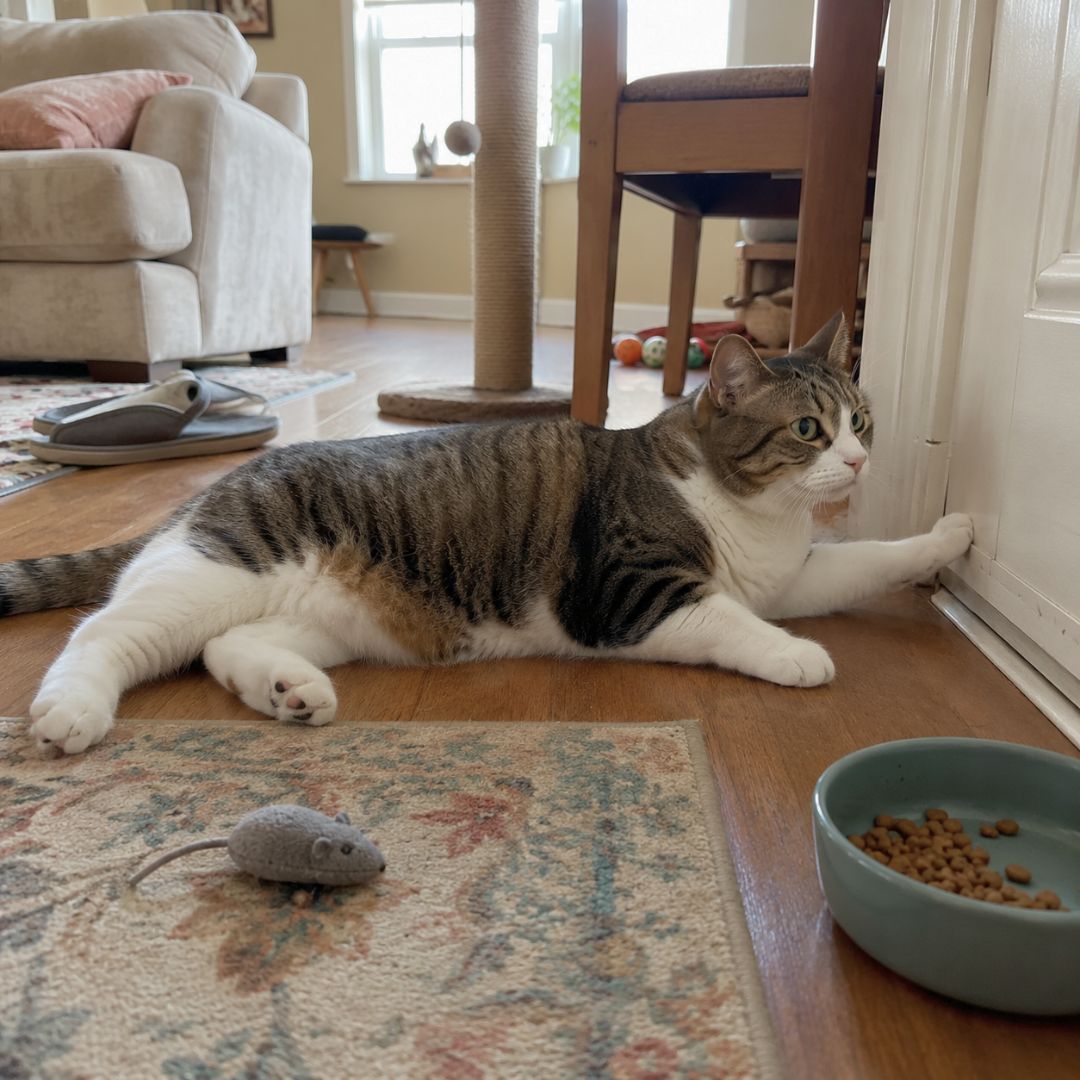
The signs may be subtle. They may sleep because nothing interesting happens. They may eat because they are bored rather than hungry. They may scratch furniture, attack ankles, cry near doors, gain weight, or groom excessively.
Owners often dismiss these behaviors as laziness, stubbornness, or “just being a cat.”
That is the mistake.
The real question is not whether your cat lives indoors.
It is whether the indoor world you created gives them enough opportunities to behave like a cat.
Your Cat May Not Be Dreaming of Escape
One of the most common sources of guilt begins at the window.
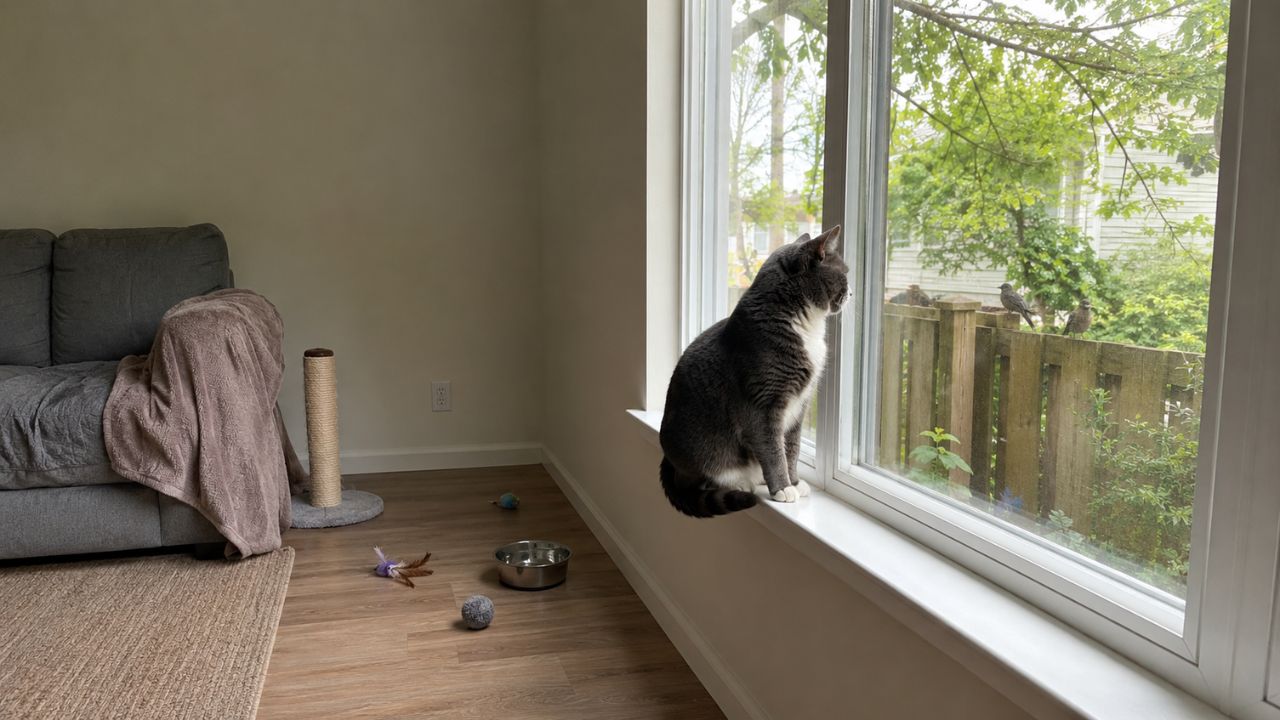
Your cat sits there watching birds, squirrels, passing people, insects, and moving leaves. You look at them and imagine what they must be thinking.
Maybe they feel trapped.
Maybe they are longing for freedom.
Maybe they would be happier outside.
But staring through a window does not automatically mean a cat is miserable.
For many cats, a window is entertainment. It provides movement, changing light, unfamiliar sounds, and a safe way to observe the world. It can function almost like television for the feline brain.
The more useful clue is what your cat does after leaving the window.
Do they eat normally?
Do they groom, explore, play, or settle down comfortably?
Do they approach you, blink slowly, or follow you from room to room?
A cat who watches birds for an hour and then falls asleep in a warm patch of sunlight may not be grieving a life they never had.
They may simply be enjoying one of the best parts of the life they do have.
Watch What Happens During the Next 30 Minutes
Before deciding that your cat needs outdoor freedom, pay attention to what happens after they leave the window.
A relaxed cat may stretch, groom, eat, nap, or calmly move into another room.
A frustrated cat may pace, vocalize repeatedly, scratch the door, attack another pet, or remain restless for a long time.
One isolated moment does not prove anything.
Patterns matter.
If your cat repeatedly appears agitated after watching outdoor activity, they may need more opportunities to chase, climb, investigate, or solve problems inside the home.
The solution may not be opening the door.
It may be changing what happens indoors.
Seven Signs Your Indoor Cat May Need More Stimulation
No single behavior proves that a cat is unhappy. However, repeated patterns may suggest that their environment needs improvement.
1. Sleeping Almost All Day
Cats naturally sleep for many hours, but they should still have periods of curiosity, movement, play, and interaction.
A cat who rarely shows interest in anything may be understimulated—or may have a medical problem.
2. Constantly Crying or Scratching Near Doors
Occasional curiosity is normal.
Repeated agitation may signal frustration, unmet curiosity, or a learned behavior that receives attention.
3. Attacking Hands, Feet, or Ankles
This often happens when a cat has hunting energy but no appropriate target.
Your moving feet may become the most interesting “prey” available.
4. Eating Out of Boredom and Gaining Weight
Indoor cats may consume more calories than they use, especially when food is always available but opportunities for activity are limited.
5. Destructive Scratching
Scratching is normal. Destroying furniture despite having a scratching post may mean the post is unstable, poorly placed, too short, or made from a material the cat dislikes.
6. Excessive Grooming
Repeated licking or pulling out fur can be associated with stress, allergies, parasites, pain, or other medical problems.
It should never automatically be blamed on boredom.
7. Losing Interest in Play or Familiar Routines
A sudden change in activity can indicate boredom, but it may also be an early sign of illness.
The goal is not to make owners feel guilty.
The goal is to notice patterns early enough to make useful changes.
The One Mistake Many Indoor Cat Owners Make
The most common mistake is not keeping the cat inside.
It is creating an indoor life that never changes.
The same bowl.
The same toys lying in the same places.
The same empty window ledge.
The same routine with no opportunity to hunt, climb, search, or make choices.
Cats need stability, but they also need manageable novelty.
This does not mean buying expensive equipment or turning the house into a giant pet playground.
Small, regular changes can make a significant difference.
Five Ways to Make an Indoor Cat Happier
1. Create Vertical Territory
Cats experience space in three dimensions.
A cat tree, sturdy shelf, secure cabinet top, or window perch can make a room feel much larger. High spaces also let cats observe the household without feeling trapped in the middle of activity.
A small apartment with useful vertical space may be more satisfying than a large home with nothing to climb.
2. Turn Play Into a Short Hunting Session
A five- to ten-minute play session can be more satisfying than leaving dozens of toys on the floor all day.
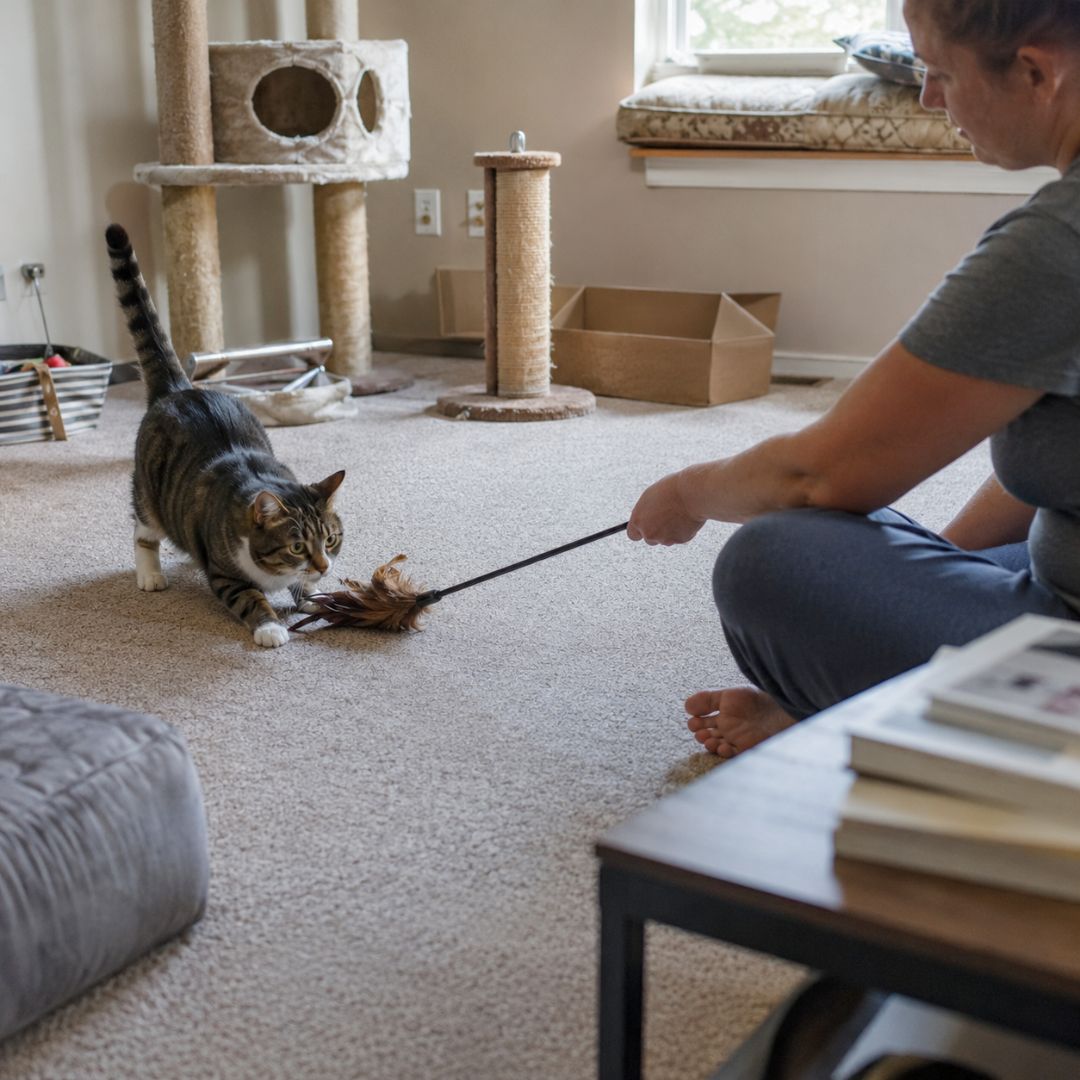
Move a wand toy like prey. Let it hide, pause, and suddenly move again. Allow your cat to stalk, chase, and catch it.
Letting the cat “win” matters. A game that can never be completed may become frustrating.
Two or three short sessions throughout the day can help release energy and strengthen your bond.
3. Rotate Toys and Use Simple Objects
Cats often lose interest in things that are always available.
Put some toys away and bring them back several days later. An old toy may suddenly feel new after it disappears for a while.
Cardboard boxes, paper bags without handles, tunnels, and crumpled paper can sometimes provide more excitement than expensive products.
4. Make Food More Engaging
Instead of serving every meal in the same bowl, try puzzle feeders, treat balls, or hiding small portions in safe places.
This gives your cat an opportunity to search, think, and “work” for part of their food.
Remember to include all treats and hidden food in their daily calorie allowance.
5. Protect Rest, Privacy, and Essential Resources
A happy cat does not need constant attention.
Cats need quiet places where they can retreat without being followed, touched, or picked up. A covered bed, cardboard box, high shelf, or peaceful corner can give them control over social interaction.
Scratching areas and litter boxes also matter. Offer stable scratching surfaces in different positions and materials.
A common litter-box guideline is one box per cat, plus one extra. Boxes should be clean, large enough, easy to reach, and placed away from loud machines or busy household areas.
When “Boredom” May Actually Be Illness
Some behaviors that look like boredom can be signs of pain or disease.
Contact a veterinarian if your cat suddenly:
- Stops eating or begins drinking much more
- Hides for long periods
- Struggles to jump
- Uses the litter box more or less often
- Urinates outside the box
- Becomes unusually aggressive
- Stops grooming or repeatedly licks one area
- Loses interest in play
- Gains or loses weight unexpectedly
Environmental enrichment is important, but it should never replace medical evaluation when behavior changes suddenly or persists.
Cats are skilled at hiding discomfort. A change that appears small may be the first clue that something is wrong.
Can an Indoor Cat Safely Experience the Outdoors?
Living indoors does not have to mean complete separation from fresh air.
Some cats enjoy controlled outdoor experiences, such as a secure catio, screened porch, protected balcony, or supervised time with a properly fitted harness and leash.
The important word is controlled.
Not every cat enjoys outdoor exposure. Some become confident and curious. Others freeze, hide, or try to escape.
Their personality should guide the decision.
Outdoor experiences should be introduced slowly and never forced. Before allowing access, speak with a veterinarian about vaccinations, parasite protection, identification, and microchipping.
Is It Cruel to Keep a Cat Indoors for Life?
No—provided that their needs are being met.
Walls do not determine whether a life is cruel.
Neglect does.
A cat living in a safe home with affection, veterinary care, stimulation, rest, and opportunities to express natural behavior may have a much better life than a cat wandering through an unpredictable environment.
The size of a cat’s world matters less than the quality of that world.
A good indoor home offers choices:
A high shelf or a hidden box.
Playtime or solitude.
A sunny window or a quiet bed.
Interaction when the cat wants it and distance when they do not.
That sense of control is one of the most important parts of feline well-being.
Final Thoughts
Your cat may never chase a bird across an open field.
They may never disappear beneath a garden fence or wander through the neighborhood at night.
But they may live long enough to develop a favorite chair, a favorite window, a favorite toy, and a collection of strange little habits that make you laugh.
They may learn the sound of your car.
They may wait for you at the same time every evening.
They may grow from a fearless kitten into a slow-moving senior who still chooses to sleep beside you.
That is not a life without freedom.
It is a life built around safety, trust, familiarity, and connection.
For many cats, an indoor home is not a prison.
It is their territory.
It is the place where they feel protected.
And it is the place where the person they trust always comes back.