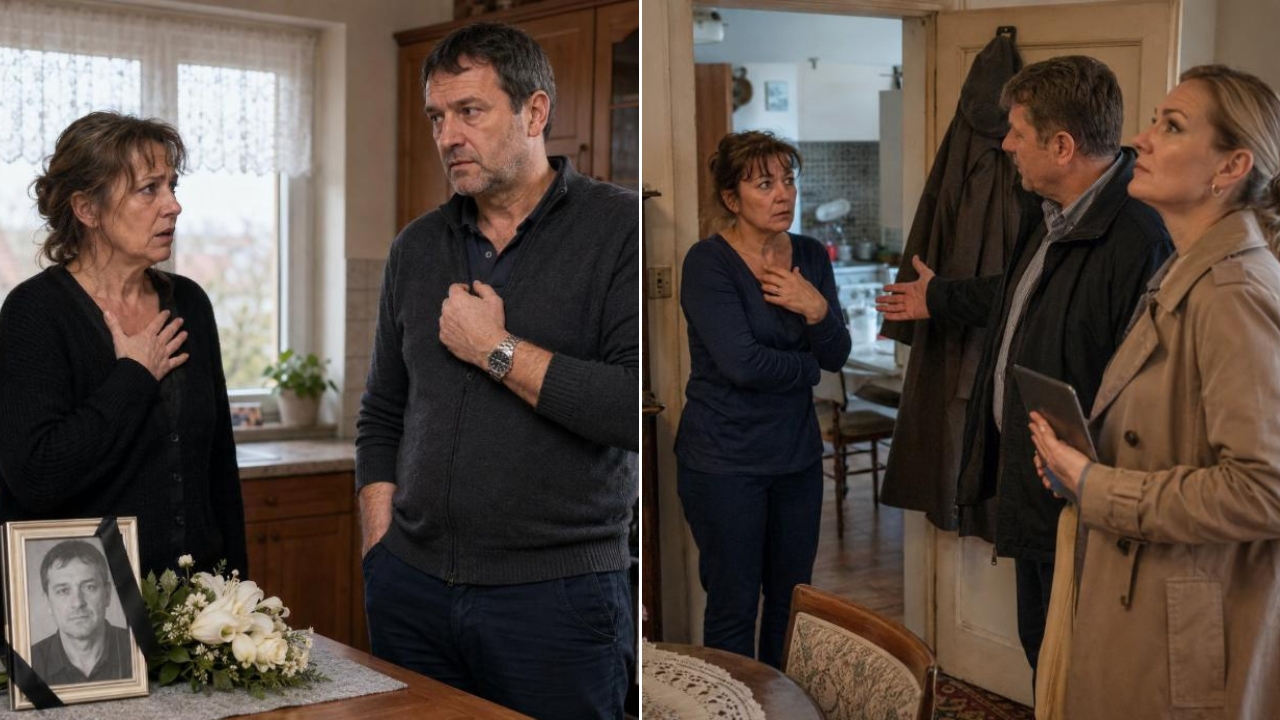
On what should have been the happiest day of his life, a groom found himself torn between love and a mother’s disapproval. Years later, a 𝓈𝒽𝓸𝒸𝓀𝒾𝓃𝑔 discovery revealed a hidden truth that would change everything he thought he knew about his mother’s feelings toward his wife.

The tension between the mother and daughter-in-law was palpable from the start. On his wedding day, the groom’s mother pulled him aside, her eyes filled with tears. “Son, she’s not the one for you,” she warned, leaving him feeling a mix of anger and protectiveness over his bride. He reassured her, “One day you’ll love her too,” but that day never seemed to come.
As the years passed, their relationship remained strained. Family gatherings were marked by awkwardness, and his wife often felt judged. The groom, while loving his wife deeply, couldn’t shake the feeling that his mother’s disapproval loomed over their lives.
Then, two years ago, tragedy struck when his mother passed away unexpectedly from a stroke. In the weeks that followed her funeral, he began sorting through her belongings, expecting to find nothing more than the usual items—clothes, photographs, and old papers. But while cleaning out her room, he stumbled upon a dusty storage box tucked away under her bed.
Inside, he found an astonishing collection of photographs—hundreds of images of his wife, capturing moments he had never seen before: birthdays, family gatherings, and quiet afternoons at home. Confused and shocked, he began to piece together a narrative that contradicted everything he thought he knew.
Beneath the photos lay several notebooks, which turned out to be a journal. As he flipped through the pages, he was stunned to read his mother’s thoughts about his wife. The first entry spoke of his wedding day, describing his bride as a “wonderful woman.” This was not the sentiment he had expected from someone who had seemed so distant.
As he continued reading, the truth began to unfold. His mother’s apparent dislike stemmed from a deep-seated fear, rooted in her own past. Years before his marriage, she had been devastated when his father left her for another woman. This betrayal left her terrified that her son might also suffer heartbreak. Her journal entries revealed her worries about losing him, projecting her fears onto his relationship.
Then he found an envelope with his wife’s name on it. Inside was a letter, dated just six months before his mother’s death. The opening line struck him hard: “I owe you an apology.” In it, she confessed to judging his wife too harshly and acknowledged that her own pain had clouded her judgment. The letter was filled with admiration for the way his wife had supported him and cared for their family.
Tears streamed down his face as he read his mother’s heartfelt words, especially the closing line: “Thank you for loving my son. And thank you for becoming the daughter I was too stubborn to appreciate.”
That evening, he shared the letter with his wife, who read it in silence, her own tears falling as she absorbed the weight of his mother’s unspoken love. “Why didn’t she ever tell me?” she whispered, leaving him without an answer.
At the bottom of the box was a photo album labeled “For the grandchildren,” filled with cherished family memories. On the last page, a single sentence read, “Families don’t become perfect. They become precious.”
Now, that box sits in their living room, a bittersweet reminder of what could have been. His wife occasionally flips through the album with their children, and they revisit the letter, reflecting on the pain that might have been avoided had his mother expressed her feelings sooner.
What does it take for families to truly communicate their love before it’s too late?