Chapter 1: Gate 42
The morning my daughter left me at Gate 42, I was wearing the navy pantsuit she once said made me look elegant.
I had chosen it carefully the night before, smoothing the sleeves over the back of my bedroom chair and setting my small carry-on beside the door. My medications were sorted into their weekly plastic case. My passport was tucked into the leather travel folder Rebecca had given me three Christmases earlier. I even packed the sunhat my granddaughter Emma said would make me look like “a movie grandma” on the beach.
For three months, I had been looking forward to Costa Rica.
Not because I cared so much about the beaches or the resorts, though I had spent many evenings reading about them. I had looked up photos of rainforest trails, monkeys in the trees, warm turquoise water, and little cafes with bright painted chairs. I had even taken beginner Spanish lessons online, practicing phrases alone at my kitchen table after dinner.
But what I really wanted was simple.
I wanted to be included.
Since my husband Walter died eight years earlier, my house had become too quiet. There were no footsteps in the hallway at night, no low voice asking if I wanted tea, no familiar jacket hanging crookedly by the back door. Rebecca had her own life now, a husband, two children, a demanding job, a home in a beautiful suburb, and a calendar so full I sometimes felt guilty for asking for an hour of her time.
So when she called in March and said, “Mom, we’re finally taking the kids to Costa Rica. Wouldn’t it be wonderful if you came with us?” I held the phone to my ear and closed my eyes.
For a moment, I felt chosen.
I arrived at Denver International Airport two hours early because that is what mothers do. We arrive early. We pack tissues and extra mints. We keep our documents organized. We worry about everyone else even when no one has asked us to.
Gate 42 was busy when I reached it. Families sat on the floor around charging cords. Business travelers stared into laptops. Children rolled little suitcases with cartoon animals on them. I found a seat with a good view of the boarding area and checked my phone again.
Rebecca’s text from the night before was still there.
See you at Gate 42, Mom. Flight leaves at 10:45.
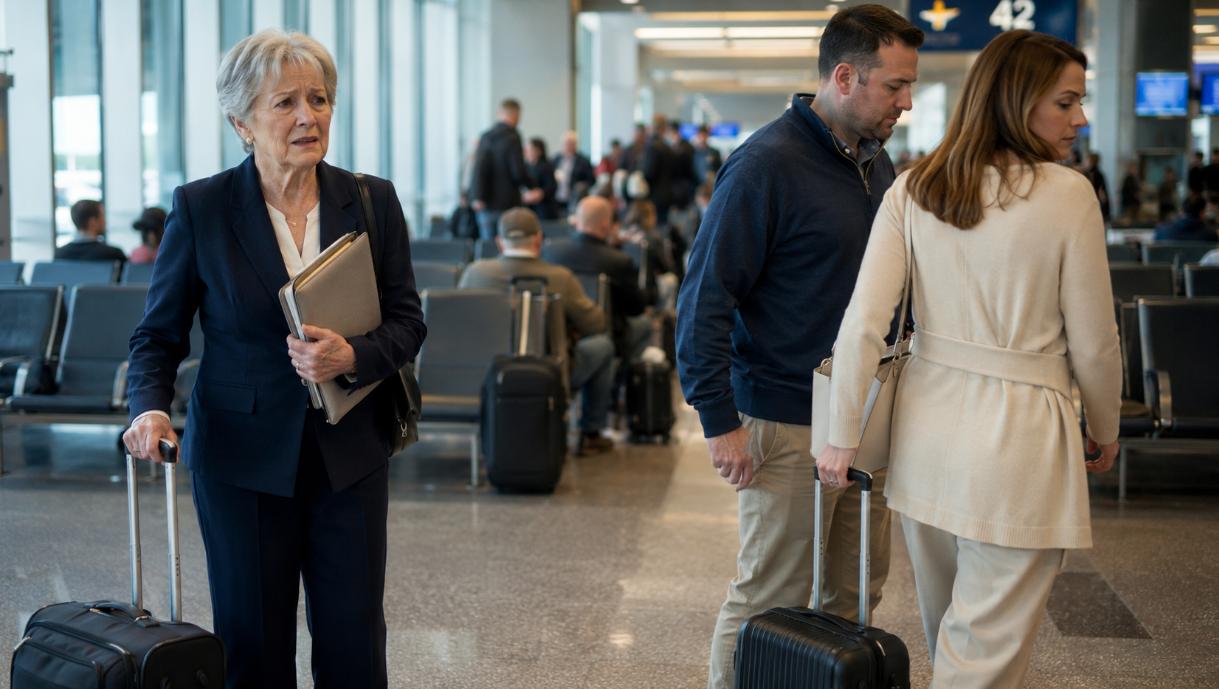
At 9:30, I saw them.
Rebecca walked ahead of everyone, polished and beautiful in a cream travel outfit, her blonde hair pulled back like she had stepped out of a catalog. Dave followed with the large suitcase, one hand on the handle and the other checking his phone. Emma, twelve, waved when she saw me. Michael, nine, glanced up from his tablet just long enough to smile.
I stood, expecting hugs.
Rebecca did not hug me.
She stopped in front of me with a tight smile that never touched her eyes.
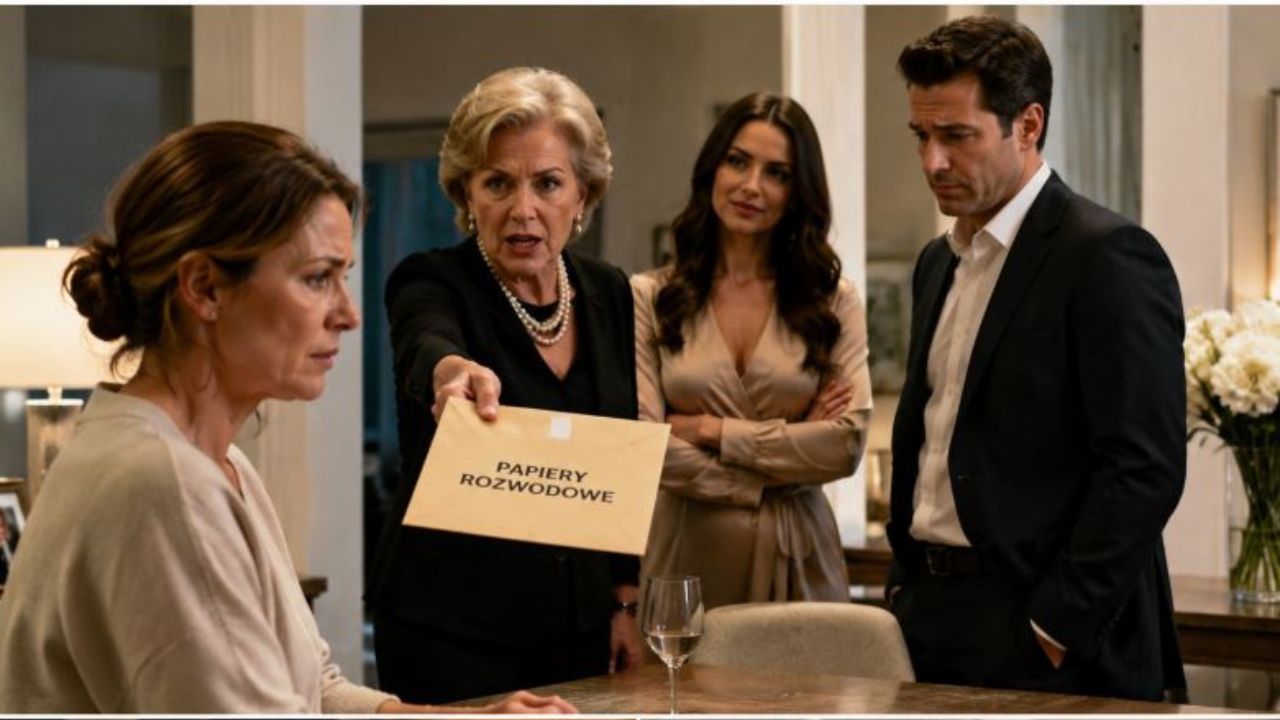
“Mom,” she said. “We need to talk.”
There are four-word sentences that can change the temperature of your blood.
“What’s wrong?” I asked.
Rebecca glanced toward the gate desk, then at Dave. He would not look at me. That was when I knew, before she said anything, that whatever was coming had been discussed without me.
“I’m so sorry,” she said. “There’s been a change of plans. We can’t take you with us.”
For a second, all the airport noise fell away.
I looked at her, waiting for the rest of the sentence, the part that would make it make sense.
“Dave’s boss decided to join us last minute,” she continued quickly. “It’s turned into more of a business trip, and it just wouldn’t be appropriate for you to be there.”
Dave shifted his weight.
“Sorry, Anna,” he muttered. “Company stuff.”
I have lived seventy-three years. I have raised a child, buried a husband, built a business in rooms full of men who assumed I was somebody’s secretary, and negotiated contracts with people who smiled while lying through their teeth.
My daughter was lying.
It was in the way she touched her earring. The way she would not hold my eyes. The way Dave looked at the departure screen like it might rescue him. She had done the same thing at sixteen when she came home after curfew and claimed the movie had run late.
“Rebecca,” I said carefully, “if there’s a problem, we can work it out. I can stay in a different room. I can keep to myself if you need—”
“No, Mom.” Her voice sharpened. “It’s already decided.”
Already decided.
Three months of planning. A passport renewed. Clothes bought. Medication packed. A grandmother’s heart quietly rebuilt around the hope of being wanted.
And it had already been decided without me.
Emma looked between us. “Mommy, why can’t Grandma Anna come? You said she was excited about seeing the monkeys.”
Rebecca’s jaw tightened.
“Emma, go sit with your father.”
I knelt down slowly because my knees felt less steady than they should have. “It’s all right, sweetheart,” I told Emma. “You take lots of pictures for me.”
Her young face folded with confusion.
The boarding announcement crackled overhead.
Now boarding first class and passengers needing additional assistance.
Rebecca’s expression changed instantly. Relief, almost. She reached for her bag.
“We have to go,” she said.
I stood there while my daughter gathered her family. She did not ask how I would get home. She did not offer to sit with me for five minutes. She did not say she was ashamed.
“Rebecca,” I called as she turned toward the jetway.
She looked back.
“Is this really how you want to leave things?”
For one brief second, guilt crossed her face. Then it disappeared beneath the practiced efficiency she wore like makeup.
“I’ll call you when we get back,” she said.
Then she boarded the plane to Costa Rica without me.
Chapter 2: The Long Walk Back
I stood at Gate 42 long after the jetway door closed.
People moved around me. A young couple laughed over coffee. A father lifted a sleepy toddler onto his shoulder. A woman in a business suit argued into her phone about meeting times. Life continued with insulting ease while mine felt pinned to the carpet.
The gate agent glanced at me twice with professional concern.
I could not move.
There is a kind of humiliation that does not make you cry immediately. It makes you still. It makes your hands go cold. It makes you aware of ridiculous details, like the scratch on your suitcase handle or the little thread coming loose on your sleeve.
I had already paid for parts of that trip. Not all of it, not directly in a way Rebecca would acknowledge, but enough. The excursion deposits. A few “Mom, can you cover this now and we’ll settle later?” charges. A hotel upgrade she had insisted was “only temporary” on my card because hers was close to the limit that month.
I had done what I always did.
I helped.
The walk back through the airport was one of the longest walks of my life. I passed families heading toward vacations, couples holding hands, grandparents surrounded by children who actually seemed pleased to see them. Every step felt like an announcement: unwanted woman returning home.
Near baggage claim, I sat in a hard plastic chair and opened my phone.
My first instinct was to call a taxi.
That was the version of me Rebecca expected.
The quiet mother. The agreeable grandmother. The woman who would go home, cry in private, and answer cheerfully when Rebecca called a week later with sunburned children and selective guilt.
My thumb hovered over the taxi number.
Then I stopped.
A memory came to me with sudden sharpness. Walter, sitting across from me at our old dining table, reviewing our first big client contract in 1979. He had looked at me over his glasses and said, “Anna, never let anyone confuse your patience with weakness.”
I had been patient for years.
Years of last-minute babysitting. Years of “Mom, can you help us just this once?” Years of Rebecca sending me grocery lists before family holidays, then calling it “hosting.” Years of birthdays where I cooked, cleaned, and left before the pictures were posted. Years of writing checks quietly so she could feel like her life was entirely self-made.
I scrolled past the taxi number.
Then I tapped a contact I had not used in months.
“Peterson Aviation Services,” a professional voice answered.
“This is Anna Washington,” I said.
The calmness in my own voice surprised me.
“Good morning, Mrs. Washington.”
“I need a flight to Chicago. As soon as possible.”
“Of course. The usual aircraft?”
“Yes.”
“Will there be additional passengers?”
I looked toward the terminal windows, where the plane to Costa Rica was probably still waiting for clearance.
“No,” I said. “Just me.”
I ended the call and sat there for another moment, phone in my lap, pulse steadying.
Rebecca thought she had left behind an aging mother with a suitcase and wounded feelings.
She had forgotten something.
Before I was Rebecca’s mother, I was Anna Washington.
And Anna Washington had not always been small.
Chapter 3: The Woman I Hid
Walter and I built Morrison Financial in 1978 with one rented office, two secondhand desks, and a rotary phone that crackled whenever it rained.
Back then, men in finance loved to call me “Mrs. Washington” with a tone that meant “secretary.” I learned to let them underestimate me until the numbers were on the table. Walter handled charm. I handled strategy. Together, we built something solid enough that by the time he died, I owned forty percent of one of the most respected investment firms in the Midwest.
Rebecca knew almost none of that.
That was my fault.
After Walter died, I stepped back from the day-to-day work and wrapped myself in the role everyone seemed most comfortable with: widow, mother, grandmother. I kept the house modest. I drove an old Honda. I wore cardigans, shopped at Target, volunteered at the library, and let Rebecca believe my life was simple because I thought simplicity would make her feel secure.
I told myself I was giving her independence.
I did not want her comparing her career to mine. I did not want her feeling overshadowed by family money. I did not want her choosing comfort over ambition because she knew I could catch her.
So I became useful but not impressive.
Available but not complicated.
Generous but quiet.
The problem with hiding your strength for too long is that people eventually mistake the costume for the person.
Rebecca saw me as her aging mother in the suburbs. She did not know my “bridge lunches” were often board meetings in private dining rooms. She did not know the quarterly reports came to my house in plain envelopes. She did not know I had rental properties downtown or a legal team in Chicago or enough assets to stop every automatic transfer I had been sending her without affecting my own life in the slightest.
She also did not know how much I had given her.
That changed the day she left me at Gate 42.
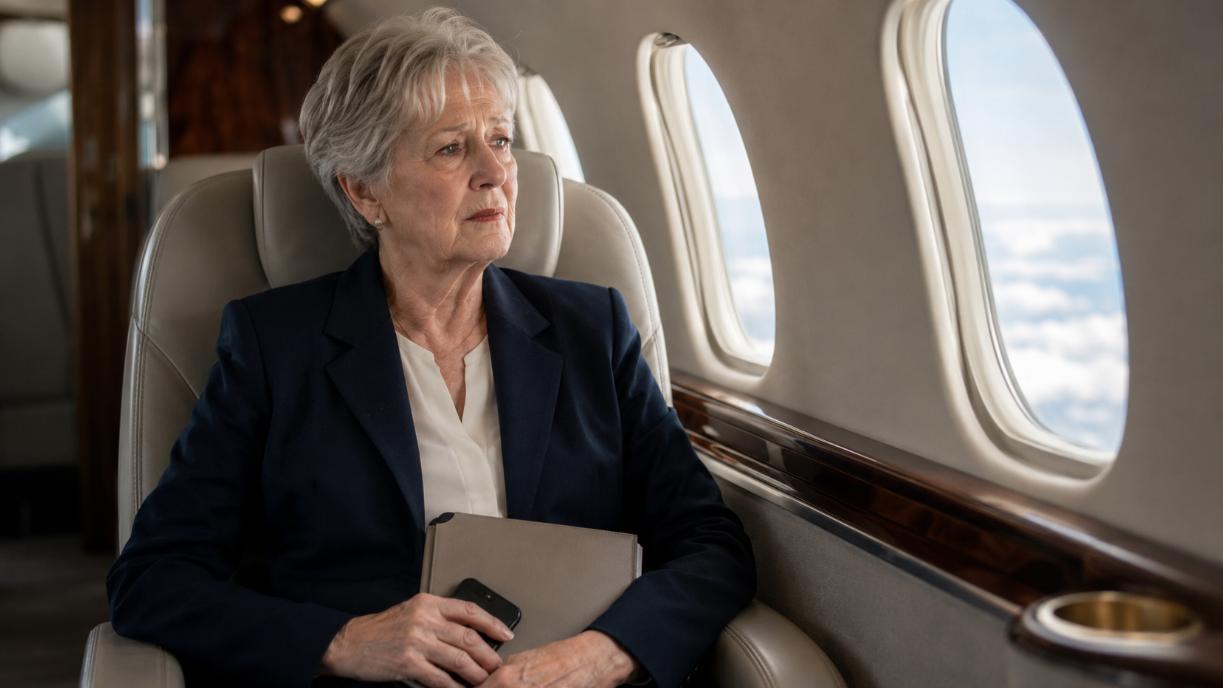
My flight to Chicago took less than two hours. The small aircraft rose above the clouds while I sat in a leather seat by the window with a legal pad on the table in front of me. At first, my hand shook too much to write.
Then the list began.
Down payment assistance for Rebecca and Dave’s house.
Monthly mortgage support disguised as “just helping until things settle.”
Private school tuition for Emma and Michael.
Summer camps.
Emergency car repairs.
Credit card balances I had paid when Rebecca was “between bonus cycles.”
Vacation deposits.
The new refrigerator.
The orthodontist bill.
The money had not bothered me at the time. I had enough. She was my daughter. I loved my grandchildren. Helping family felt natural.
What bothered me, at thirty-five thousand feet, was how invisible that help had made me.
Rebecca did not see generosity.
She saw expectation.
When the plane landed in Chicago, my driver Thomas was waiting. He had driven me to business meetings for years and was one of the few people who knew both versions of my life.
“Good to see you, Mrs. Washington,” he said, opening the car door. “Morrison Financial?”
“Patterson, Webb & Associates first.”
His eyes met mine in the mirror.
“The law firm?”
“Yes.”
“Everything all right?”
I looked out at the Chicago skyline.
“It will be.”
Chapter 4: Consequences
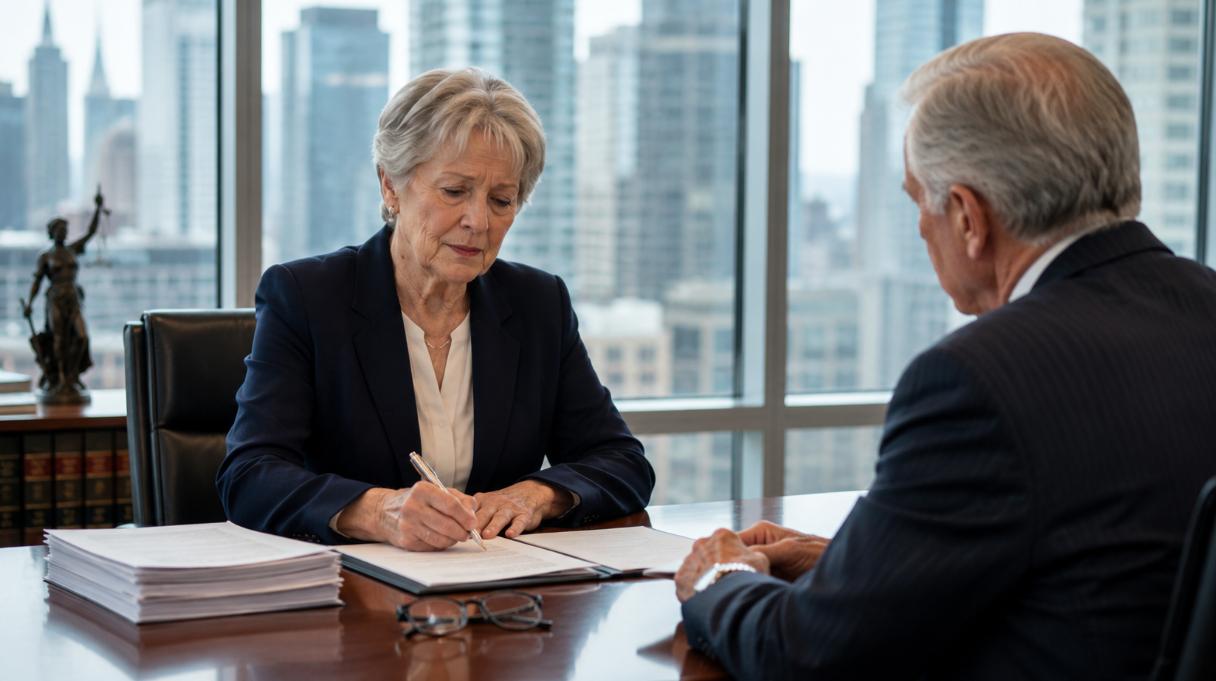
Jonathan Patterson came out to meet me personally.
That told me he had heard something in my voice when I called from the plane. He was in his sixties, silver-haired, precise, the kind of attorney who never wasted words because he charged too much for them.
“Anna,” he said, taking my hand. “You said this was urgent.”
“It is.”
We sat in a conference room overlooking the river. Margaret, his assistant, brought coffee, and I waited until the door closed behind her before I began.
“My daughter left me at an airport gate this morning,” I said.
Jonathan’s expression did not change dramatically. Good lawyers know how to let silence work.
I told him everything. The Costa Rica trip. The lie about Dave’s boss. The way Rebecca boarded without me. Then I told him what mattered legally.
“I want to stop the transfers.”
He opened a folder.
“All of them?”
“All of them.”
He studied me. “The mortgage supplement, the school tuition payments, the household support, the vacation account?”
“Yes.”
“Effective when?”
“Thirty days from receipt of notice.”
“That is generous, considering.”
“I am not trying to destroy her.”
“No,” he said. “You are trying to stop funding your own disrespect.”
The words landed exactly where they needed to.
For the next two hours, we reviewed everything. The automatic transfers. The accounts. The tuition agreements. The informal notes Rebecca had sent over the years. Jonathan’s team prepared notices terminating my voluntary support. They drafted a letter explaining, in professional language, that all financial assistance would cease and that future support should not be assumed.
I asked for one additional document.
A summary.
Fifteen years of financial support, calculated clearly.
Jonathan raised an eyebrow when the final number appeared.
“Anna,” he said, “this exceeds four hundred thousand dollars.”
“I know.”
“Does Rebecca know?”
“She is about to.”
He removed his glasses and set them on the table. “Before you sign, I need to ask if you are ready for what follows. She may be angry. She may accuse you of punishing the children. She may try to make you feel cruel.”
“I am prepared.”
“Are you sure?”
I thought of Emma asking why Grandma could not see the monkeys. I thought of Rebecca’s tight smile. I thought of Dave looking at his phone rather than at me. I thought of all the years I had made myself smaller so they could feel bigger.
Then I picked up the pen.
“My daughter is forty-three years old,” I said. “If her life cannot stand without my money, then what I built for her was never stability. It was dependency.”
I signed every page.
My hand did not shake once.
Chapter 5: The Call
Rebecca received the documents the day after she returned from Costa Rica.
I know because Jonathan sent them by courier and required a signature. At 10:47 on Saturday morning, someone at Rebecca’s address signed for the envelope. At 11:16, my phone rang.
I let it ring four times.
Walter had taught me that.
Never answer too quickly when the other person is panicking.
“Hello, Rebecca.”
“Mom, what is this?”
Her voice was sharp, but underneath the sharpness was fear.
“What part confused you?”
“Don’t do that. Don’t talk to me like I’m a client. I just opened a packet saying you’re cutting off all support. The house money. The school tuition. Everything.”
“Yes.”
“You can’t just do that.”
“I can. It was voluntary.”
“Mom, we depend on that money.”
“That,” I said, “is the problem.”
There was a pause. I heard Dave in the background asking what was happening. A door closed. Rebecca must have moved into another room.
“This is about Costa Rica,” she said. “I knew you were upset, but this is extreme.”
“This is not only about Costa Rica. Costa Rica was simply the moment I finally understood the arrangement.”
“What arrangement?”
“The one where I give, and you assume. Where I show up, and you use me. Where I am invited when convenient and dismissed when inconvenient.”
“That’s not fair.”
“No, Rebecca. What was not fair was being told at an airport gate that I could not board a trip I had planned for months because you did not have the courage to tell me you did not want me there.”
“That’s not what happened.”
“Dave’s boss did not join the trip.”
Silence.
“I called the resort,” I said. “You were registered as a family of four. No additional guest. No business reservation. No company booking.”
Her breath changed.
“It wasn’t supposed to be a lie.”
“That is what people say when a lie fails.”
“Mom—”
“You could have told me the truth. You could have said you wanted a trip with just your husband and children. It would have hurt, but I would have survived. Instead, you let me renew my passport, buy clothes, pack a suitcase, and meet you at the airport so you could discard me in public.”
She began to cry then.
Years ago, that sound would have folded me immediately. I would have softened. I would have rushed in to fix the wound, even if I was the one bleeding.
Not this time.
“Do you know how much I have given you in fifteen years?” I asked.
“Mom, please don’t make this about money.”
“It has always been about money. You just never had to look at it.”
I opened the folder Jonathan had prepared.
“Forty thousand toward your down payment. One thousand two hundred dollars a month toward your mortgage for ten years. Sixty-eight thousand in private school tuition so far. Vacation deposits. Car payments. Emergency bills. Credit cards. Home repairs. Over four hundred thousand dollars.”
Rebecca was quiet long enough that I wondered if she had sat down.
“I didn’t realize it was that much,” she said finally.
“No. Because I made sure you didn’t have to.”
“Why would you do that?”
“Because I thought I was helping you.”
“And now you’re just stopping?”
“Yes.”
“What about Emma and Michael?”
“They have two capable parents with good jobs. Their needs are your responsibility, not mine.”
“You sound so cold.”
“I sound clear. You are not used to that from me.”
She made a small wounded noise.
“Who are you right now?”
For the first time that day, I almost smiled.
“Someone you never bothered to know.”
Chapter 6: Anna Washington
Three weeks passed before Rebecca came to see me.
By then, I had moved into a downtown apartment I should have allowed myself years earlier. It was not ridiculous, not some fantasy palace, but it was elegant, high above the city, with large windows, a proper office, and a terrace where I could drink coffee while looking at a skyline I had helped build my life inside.
The modest house in the suburbs had been comfortable.
It had also been camouflage.
Rebecca found my new address through Dave, who found it through property records. I did not hide it. I wanted her to see the truth in person.
When the elevator opened into the foyer, she stepped out slowly. Dave followed. Both of them looked around as if they had walked into the wrong life.
“Mom,” Rebecca said, “what is this place?”
“My home.”
“When did you buy it?”
“Last week.”
Dave looked at the windows, the art, the view. “Anna, this place must have cost—”
“It did.”
Rebecca turned to me, confusion and hurt twisting together on her face.
“I don’t understand. You live like this now? You could always live like this?”
“Yes.”
“But your old house. Your car. Your clothes.”
“Choices. Not limitations.”
She stared at me.
I gestured toward the living room. “Sit down.”
They sat close together on the sofa, two adults suddenly looking younger than they had in years.
“I own forty percent of Morrison Financial Holdings,” I said. “I have for decades. Walter and I built it together. After he died, I stepped back from public involvement, but I never stopped being an owner.”
Dave leaned forward.
“Morrison Financial? The investment firm?”
“Yes.”
Rebecca looked almost offended by the information, as if I had hidden a betrayal rather than a business.
“Why didn’t you tell me?”
“I thought I was protecting you.”
“From what?”
“From feeling overshadowed. From relying on family wealth. From measuring your success against mine.”
She laughed once, but there was no humor in it.
“So you pretended to be less than you were?”
“Yes.”
“For me?”
“For you. For the children. Maybe for myself too. After Walter died, it was easier to become the quiet grandmother than to remain the woman who made hard decisions in rooms full of people watching for weakness.”
Rebecca looked down at her hands.
“I thought you were lonely.”
“I was.”
“Then why didn’t you say anything?”
“Because when I tried to be included, you made me feel like I was asking for too much.”
She flinched.
Good.
Not because I wanted to hurt her, but because sometimes truth has to touch the bruise before healing can begin.
Dave cleared his throat. “Anna, financially speaking, we’re in trouble.”
“I assumed so.”
“The mortgage is too high without your support. The school tuition is impossible. We can cut back, but not enough.”
“Then you will need to make different choices.”
“Sell the house?” Rebecca asked, her voice small.
“If you cannot afford it.”
“The kids’ school?”
“Public school exists, Rebecca. Good public schools.”
She pressed her lips together.
“You make it sound easy.”
“No. I make it sound possible.”
She stood and walked toward the window. The city stretched beneath her, bright and indifferent.
“You have tens of millions of dollars,” she said. “And you’re going to let us struggle.”
“I am going to let you live within your means.”
“That feels like punishment.”
“It may feel that way because you have mistaken my help for your income.”
Dave nodded slowly, though Rebecca shot him a look.
I softened my voice.
“I love you. I love Emma and Michael. I will always be their grandmother. But I am finished being the hidden foundation under a life where I am treated as optional.”
Rebecca turned back to me with tears in her eyes.
“I’m sorry about the airport.”
“I believe you are sorry now.”
“That’s not fair.”
“It is honest.”
Her mouth trembled.
“What do you want from me?”
“The truth. Accountability. A relationship that is not based on what I can pay for, fix, or provide.”
She wiped her cheek.
“I don’t know how to do that.”
“Then learn.”
Chapter 7: The Smaller House
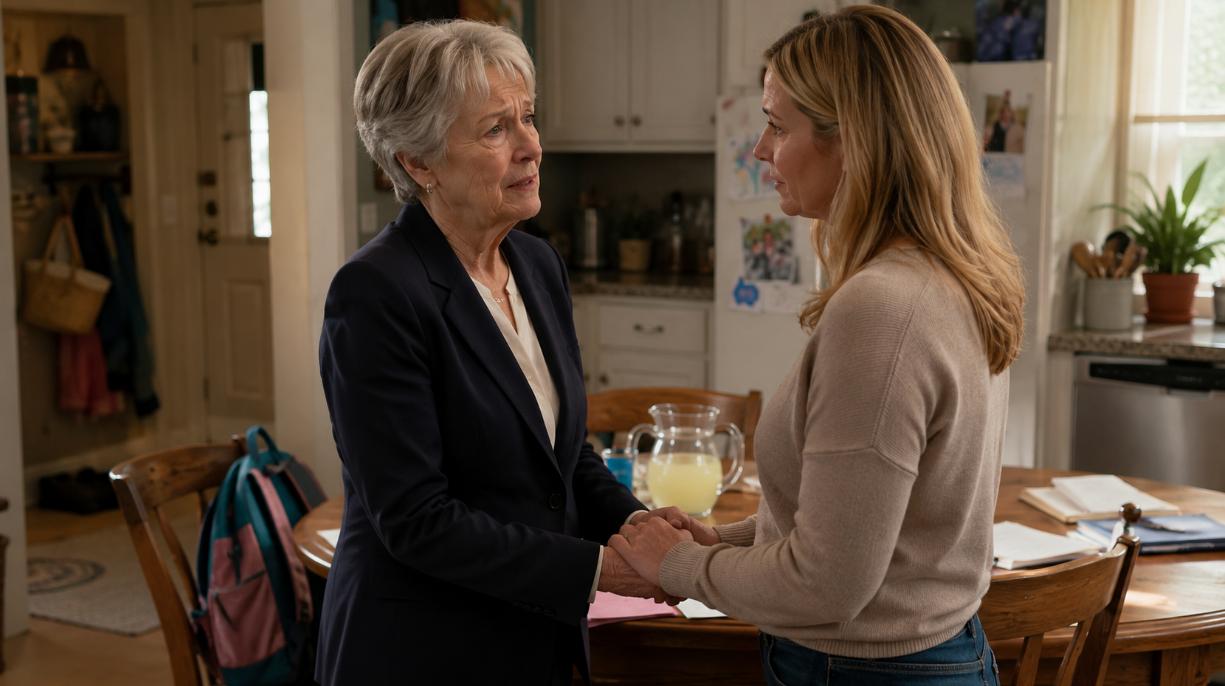
Six months later, Rebecca invited me to lunch in her new kitchen.
The house was smaller. A three-bedroom ranch in a neighborhood with older trees, public sidewalks, and children’s bikes scattered across lawns. It was not the polished suburb she had once insisted was necessary, but it had warmth the old house never did.
Emma met me at the door.
“Grandma Anna, my new school has a better science lab,” she said before hello.
“That is excellent news.”
Michael showed me his room, which was smaller than his old one but, according to him, “better for forts.”
Dave was in the kitchen making sandwiches. Rebecca wore jeans and no makeup, her hair pulled into a loose knot. She looked tired, but not defeated. There was a steadiness in her I had not seen before.
“We sold the house,” she said after the children ran outside.
“I heard.”
“We were angry at first.”
“I know.”
“Then we did the math.”
“That often clarifies things.”
She smiled faintly.
“We couldn’t afford the life we were living. Not really. It was humiliating to admit.”
“Humility is not the same as humiliation.”
“I’m learning that.”
We ate at a small table by the window. The sandwiches were simple. The lemonade came from a pitcher Emma had made. No one asked me for money. No one handed me a problem to solve. For the first time in years, I felt like a guest rather than a resource.
Rebecca told me she had started freelance marketing work from home. Dave had taken consulting projects on weekends. They had moved the children to public school, sold one car, canceled two memberships, and started cooking more often.
“It’s been hard,” she said. “But also strange.”
“How?”
“I feel more like an adult now than I did in the bigger house.”
That sentence did more for me than any apology could have.
After lunch, Rebecca walked me to the porch.
“I need to say something,” she said.
I waited.
“I did take you for granted. Not just the money. You. Your time. Your feelings. Your availability. I thought because you were my mother, you would always absorb whatever I didn’t want to deal with.”
I looked at my daughter, really looked at her.
“And now?”
“Now I want to know you. Not just need you.”
The wind moved through the trees. A basketball bounced somewhere down the block. Inside, Emma and Michael were arguing about who got the last cookie.
“I would like that,” I said.
She hugged me then, not hurriedly, not out of obligation, but like someone trying to understand the shape of what she had almost lost.
I hugged her back.
Not because everything was fixed.
Because something honest had finally begun.
Chapter 8: Gate 42 Was Not the End
People think the twist in my story is that I was wealthy all along.
It was not.
Money was only the tool that made the truth impossible to ignore.
The real twist was that I had been strong all along. I had simply buried that strength under years of usefulness, politeness, motherhood, widowhood, and the quiet fear that if I became fully myself, I might be too much for the people I loved.
Rebecca leaving me at Gate 42 was cruel.
It was also clarifying.
She thought she was removing an inconvenience from her perfect vacation. Instead, she forced me to look at the life I had built around keeping everyone else comfortable. She forced me to ask why I had made myself small enough to be left behind.
I still love my daughter.
Love does not disappear just because respect has to be rebuilt.
But I no longer confuse love with unlimited access. I no longer believe that a mother’s job is to absorb every slight, pay every bill, smile through every dismissal, and call it family harmony. I no longer mistake being needed for being cherished.
Rebecca and I have lunch twice a month now.
Sometimes at my apartment, sometimes at her smaller house. She calls to talk about her business, not to ask me to fund it. She asks about Morrison Financial. She asks about Walter. She asks about the version of me she never knew because I did not let her.
Emma calls me for help with math sometimes. Michael sends me pictures of forts. Dave still looks uncomfortable when finances come up, but discomfort can be useful when it teaches people to stand on their own feet.
As for the Costa Rica trip, I never asked to see the photos.
I did not need to.
I had already seen enough at Gate 42.
A woman can spend decades being patient. She can forgive more than people deserve. She can give quietly, love deeply, and hold a family together with invisible thread.
But even invisible thread can snap.
And when it does, the sound may be soft.
A phone call instead of a scream.
A signature instead of a fight.
A closed account instead of a slammed door.
That morning, my daughter boarded a plane without me.
I boarded one too.
Hers took her to Costa Rica.
Mine brought me back to myself.