Chapter 1: The Garage Key
I never expected to spend my sixty-eighth birthday standing in front of a rusted garage door in the industrial part of Los Angeles, holding a suitcase in one hand and a key I barely recognized in the other.
The air smelled of old rain, motor oil, and dust. A streetlight flickered above me, turning the cracked pavement pale yellow for a few seconds at a time. Behind me, my old Toyota sat with the engine still ticking from the drive. I had nowhere else to go. Three hours earlier, my son had thrown me out of the penthouse I had shared with my husband for the last fifteen years of our marriage.
His words still rang in my ears.
“You’re just a useless old woman, Mom. What would you even do with a real inheritance?”
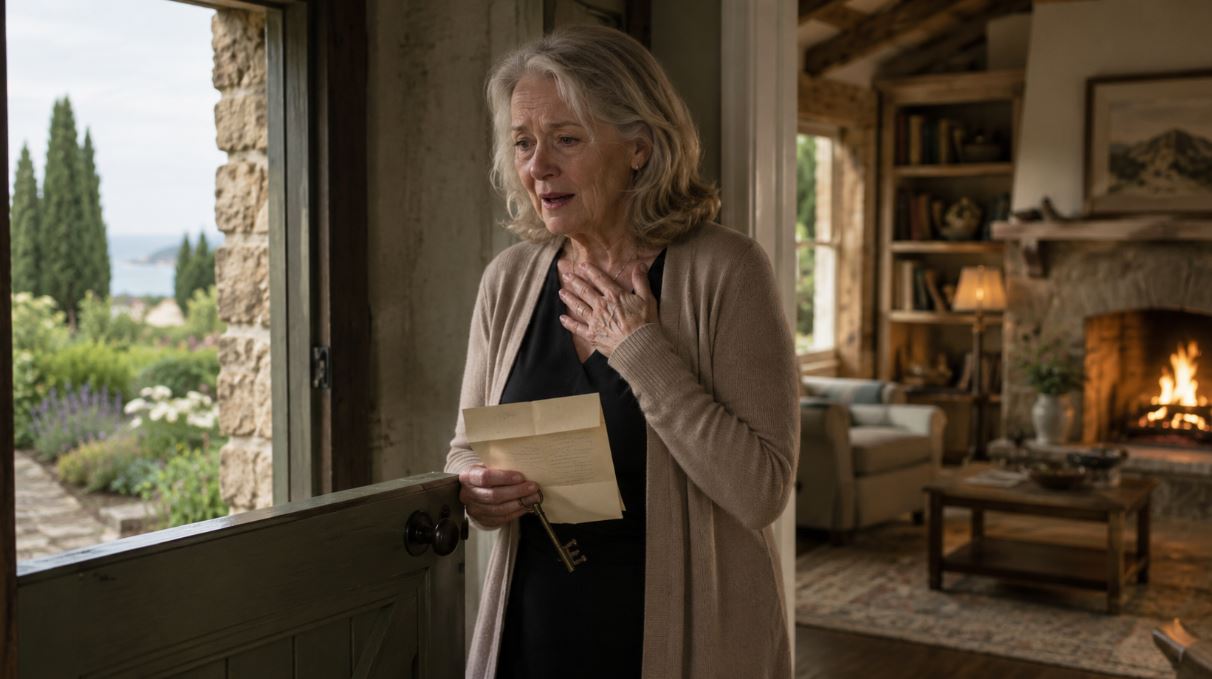
I stood in front of the garage and tried not to cry again. The key Mr. Hoffman had given me after the will reading felt small and ridiculous in my palm. This was what Robert had left me after forty-two years of marriage: an old garage at 1420 Industrial Parkway and whatever was inside it.
The lock fought me at first. My hands were shaking so badly I had to try three times before the key finally turned. The door groaned as I pushed it open, and a wave of stale air rolled over me. I lifted my flashlight, expecting to see broken tools, oil cans, maybe boxes of forgotten junk.
Instead, I froze.
The beam of light landed on three large shapes beneath fitted gray covers, lined up with perfect care. They did not look abandoned. They looked protected.
I stepped inside slowly. My heels echoed against the polished concrete floor. This was no ordinary garage. Even in the dark, I could sense that. The air was dry and cool. The floor was spotless. The walls were lined with cabinets, framed photographs, and equipment I did not understand.
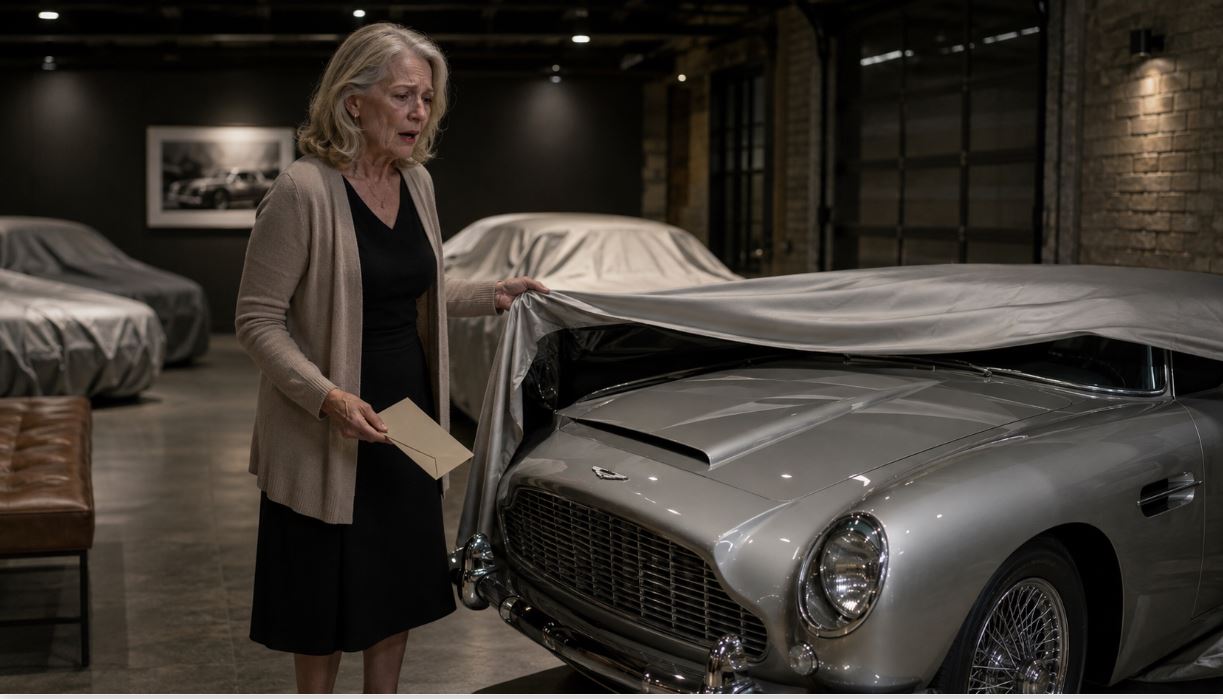
I reached for the closest cover and pulled it back.
Silver metal gleamed under the flashlight.
I knew almost nothing about cars, but even I recognized the shape from the James Bond films Robert loved so much. A vintage Aston Martin, polished like a jewel, sat in front of me as if it had been waiting for years.
“Robert,” I whispered. “What did you do?”
I uncovered the second car, then the third. A blue Mercedes with doors that looked like wings. A deep red Ferrari with leather seats and chrome details that caught the light like scattered stars. Beside each car was a leather folder filled with papers, certificates, and careful notes in Robert’s handwriting.
I backed away, my chest tight.
Then I saw the envelope taped beside the light switch.
Susan.
My name.
Written in Robert’s hand.
With trembling fingers, I pulled it down and flipped the switch. Modern lights flooded the space, revealing the truth completely. This garage was a hidden showroom. Climate control. Security cameras. Custom flooring. A small office through a glass door at the back. A leather sofa. A bathroom. A kitchenette. Even a closet.
My husband had not left me a garage.
He had left me a secret.
I sat down on the leather bench, broke the seal on the envelope, and began to read.
Chapter 2: The Will
That morning had started in Mr. Hoffman’s office, three weeks after Robert’s funeral.
Jonathan stood beside me in a tailored suit, checking his phone every few minutes. My son was forty-one, handsome like his father, successful, polished, and increasingly difficult to recognize. I wore the black dress I had worn to Robert’s service. It still smelled faintly of lilies from the church.
Mr. Hoffman, our family attorney for decades, looked uncomfortable before he even opened the folder.
“Before I begin,” he said, adjusting his glasses, “I want to assure you that everything is legally binding and precisely as Mr. Campbell instructed.”
I should have understood that as a warning.
The will reading passed like a bad dream. Certain words cut through the fog.
To my son, Jonathan Campbell, I leave our penthouse residence in Los Angeles and my primary investment portfolio.
Jonathan straightened slightly.
Then Mr. Hoffman continued.
To my beloved wife, Susan Campbell, I leave the property located at 1420 Industrial Parkway. The garage and its contents.
A garage.
After forty-two years of marriage, I had been left a garage.
I remember turning toward Mr. Hoffman, waiting for him to explain that there must be more. There was no more explanation, at least not then. He only handed me a key and a sealed envelope of ownership documents.
Jonathan’s hand landed on my shoulder. He squeezed too hard.
“Don’t worry, Mom,” he whispered. “I’ll make sure you’re taken care of.”
At the time, I was too shocked to answer. Robert and I had not had a perfect marriage, but it had been a real one. We had built a life out of small sacrifices, stubborn love, and ordinary routines. I knew his coffee order. I knew how he folded his shirts. I knew which chair he preferred by the window. I thought I knew everything about him.
Why would he leave our home to Jonathan?
Why would he leave me a garage?
That evening, Jonathan drove me back to the penthouse. I still thought of it as my home. Robert and I had chosen the curtains together. We had watched winter rain over the city from the living room windows. He had spent his final months in the study, pretending he was stronger than he was.
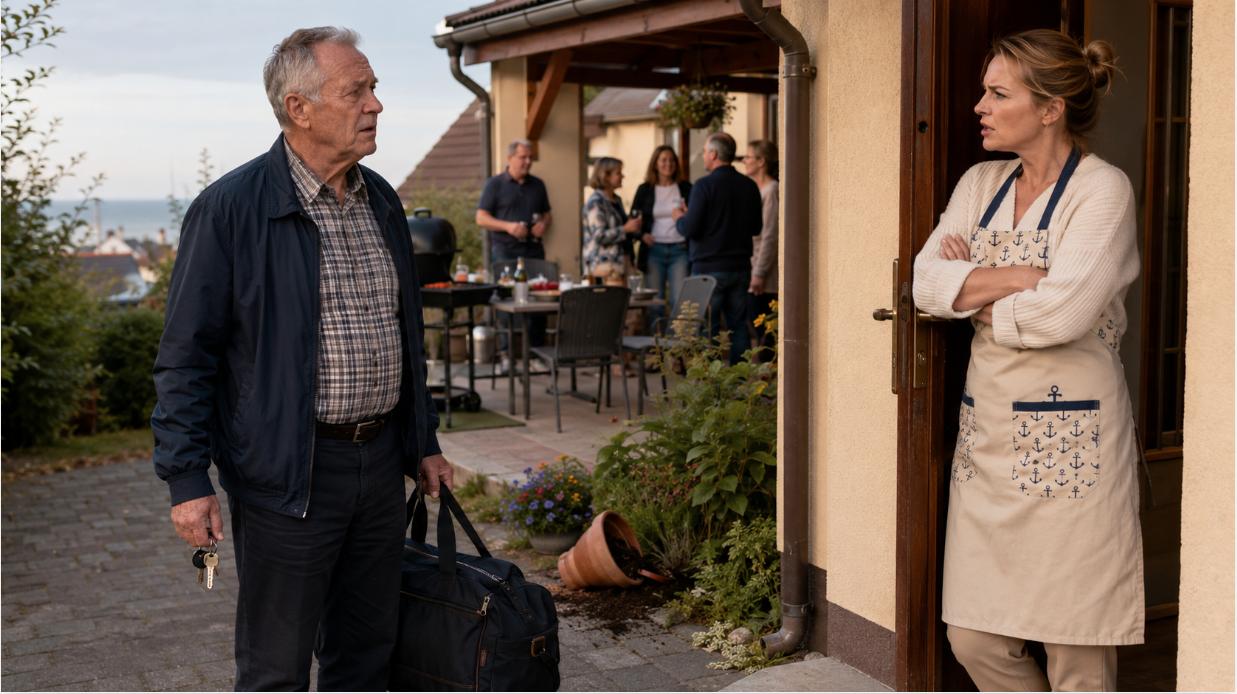
I had barely stepped through the door when Jonathan set my suitcase beside the entry table.
“I think it would be best if you found somewhere else to stay, Mom.”
I stared at him.
“What do you mean?”
“The penthouse is mine now,” he said. “It’s in the will. I have colleagues coming tomorrow to discuss turning Dad’s study into a home office. I need to start making changes.”
“But this is my home.”
His face tightened.
“It was your home. Dad made his wishes clear.”
I reached for the back of a chair to steady myself.
“Jonathan, I need time. Surely you don’t expect me to leave tonight.”
He sighed, impatient now.
“You could stay with Aunt Helen. Or there’s always that garage Dad left you.”
He laughed then. Not warmly. Not nervously. Cruelly.
“What are you going to do with it anyway? Open a mechanic shop at your age?”
I stared at the son I had raised, the boy whose fevers I had cooled, whose school projects I had stayed up finishing, whose college tuition Robert and I had paid without hesitation.
“Jonathan,” I whispered, “I’m your mother.”
His face hardened.
“You’re a useless old woman, Mom. What would you even do with a real inheritance? Dad knew that.”
The sentence landed like a door closing.
I did not argue. I did not beg. Something inside me had gone too quiet for that. I picked up my suitcase, my purse, and the garage key.
Then I walked out of the penthouse without knowing where I would sleep.
Chapter 3: Robert’s Letter
The first line of Robert’s letter blurred before I reached the second.
My dearest Susan,
If you are reading this, then I am gone, and you have discovered what I came to think of as my final gift to you.
I pressed the paper to my chest and took a breath.
First, I need to say I am sorry for the shock and confusion you must be feeling. The secrecy was not meant to hurt you. It was meant to protect what I was building for your future.
Six years ago, when I received my diagnosis, the doctors gave me five years at best. I beat their estimate by a year, but I knew our time together was limited. I needed to make sure you would be safe after I was gone.
My tears fell before I could stop them.
Robert had told me about his heart failure, of course. But he had always downplayed it. He would smile, wave off my worry, and say, “Don’t start burying me early, Susie.” I had believed him because I wanted to. Now I understood he had been preparing for the end while trying to let me live without fear.
I kept reading.
I know you are wondering why I left the penthouse to Jonathan. Believe me, that decision caused me more sleepless nights than my illness did. But over the past decade, I watched our son change. The ambitious boy we raised became harder, colder, more calculating than I ever wanted him to be.
I feared what would happen if I left everything jointly, or if I left you dependent on him in any way. I saw how he spoke to you when he thought I wasn’t listening. I saw how he dismissed your opinions, your needs, your patience.
I had to stop.
I had made excuses for Jonathan for years. He was busy. He was under pressure. He was building a career. He did not mean to sound dismissive. He loved me in his own way.
Robert had seen what I refused to see.
So I created a split inheritance with deliberate intent. Jonathan received what he would see as valuable: the penthouse, the visible investments, the status. But what you are looking at now, my love, is the real wealth. These three cars alone are worth approximately twelve million dollars.
I looked up at the vehicles.
Twelve million dollars.
The number made no sense. It belonged to another life, another woman, another story. Not to me, sitting alone on a leather bench with a funeral dress in my suitcase.
The cars are only the beginning, Robert continued.
In the safe behind the photograph of us in Venice, the combination is our anniversary. You will find documents for several investment properties I acquired over the last six years, all placed in a living trust that transferred to you upon my death. You will also find banking information for accounts that will provide you with comfort and independence for the rest of your life.
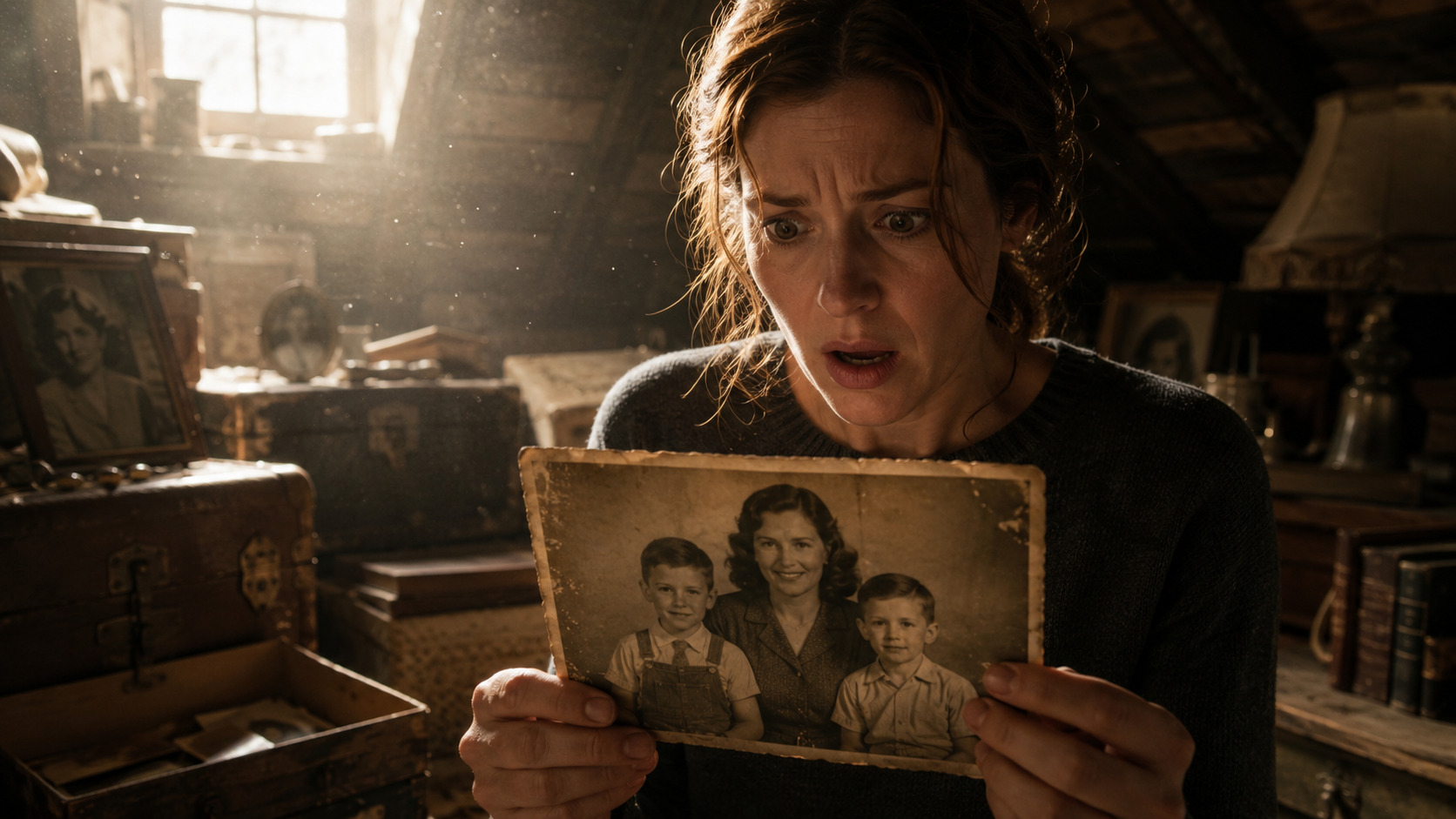
I looked around until I saw the photograph. Venice. Our thirty-fifth anniversary. Robert and me laughing on the Rialto Bridge while a street musician played badly and loudly beside us.
The safe opened with our anniversary date.
Inside were folders, USB drives, deeds, account summaries, and a thick document titled: Complete Asset Inventory for Susan Campbell.
I sat on the floor to read it because my knees would not hold me.
Apartment buildings in Seattle. Commercial property in Chicago. A small vineyard in Northern California. Investment accounts. Bonds. Trust income. The total value at the bottom of the page made my ears ring.
Robert had built an entire second estate in secret.
For me.
I returned to his letter.
I wanted Jonathan to have a chance to show his true character. If he treated you with kindness, if he protected you, if he honored the mother who gave him everything, then perhaps you might choose to share some of this with him. But if he revealed a different nature, then this legacy is your protection. Your independence. Your freedom.
Character reveals itself most clearly at moments of inheritance—both in what we receive and in what we believe we deserve.
Jonathan is receiving a test as much as an inheritance.
And you, my love, are receiving the means to live the rest of your life exactly as you choose, beholden to no one.
All my love, now and always,
Robert.
I cried then. Not neatly. Not quietly. I cried for my husband, for the secret burden he had carried, for the son he had feared, and for the woman I had almost forgotten I was.
Just hours earlier, Jonathan had thrown me out like a piece of furniture that no longer matched his plans.
He believed he had received the real inheritance.
He was wrong.
Robert had left him a test.
And he had failed it before sunset.
Chapter 4: The Real Home
I slept that night on the leather sofa in the small office behind the garage showroom.
Robert had prepared even that. In the bathroom cabinet were unopened toiletries. In the closet were several outfits in my size, tags still attached. In the mini refrigerator were bottled waters, protein bars, and a note in his handwriting: I know you forget to eat when you’re upset.
I laughed through tears when I read it.
The next morning, I called the man listed in Robert’s letter: Marcus Weatherbee, a classic car dealer and adviser. He answered as if he had been expecting me.
“Mrs. Campbell,” he said in a gentle British accent. “First, please accept my condolences. Robert was not just a client. He was a friend.”
Two hours later, Marcus arrived in a modest sedan. He walked through the garage with me and explained what I had inherited. The Aston Martin. The Mercedes. The Ferrari. Each one rare, documented, and maintained. Each one chosen with care.
“Your husband said cars were tangible beauty,” Marcus told me over coffee. “He wanted to leave you something you could see and touch. Not just numbers on a statement.”
That sounded like Robert. Practical, sentimental, and quietly dramatic in ways he would never admit.
“What am I supposed to do with them?” I asked.
“Whatever you wish. Sell them. Keep them. Drive one, if it gives you joy. Robert paid for five years of storage and maintenance. You do not need to decide anything today.”
That was the first gift after the shock: time.
Later, as I reviewed the portfolio from the safe, I found the deed to a cottage in Carmel-by-the-Sea. Robert had purchased it four years earlier, fully furnished and ready for occupancy.
Not a mansion. Not a showpiece. A small stone cottage near the coast, with a garden and a view of the ocean through the trees.
I had a home.
A real home.
That evening, Jonathan called.
“Mom, where are you?” he asked, irritated rather than worried. “Aunt Helen said you never came.”
“I’m fine,” I said.
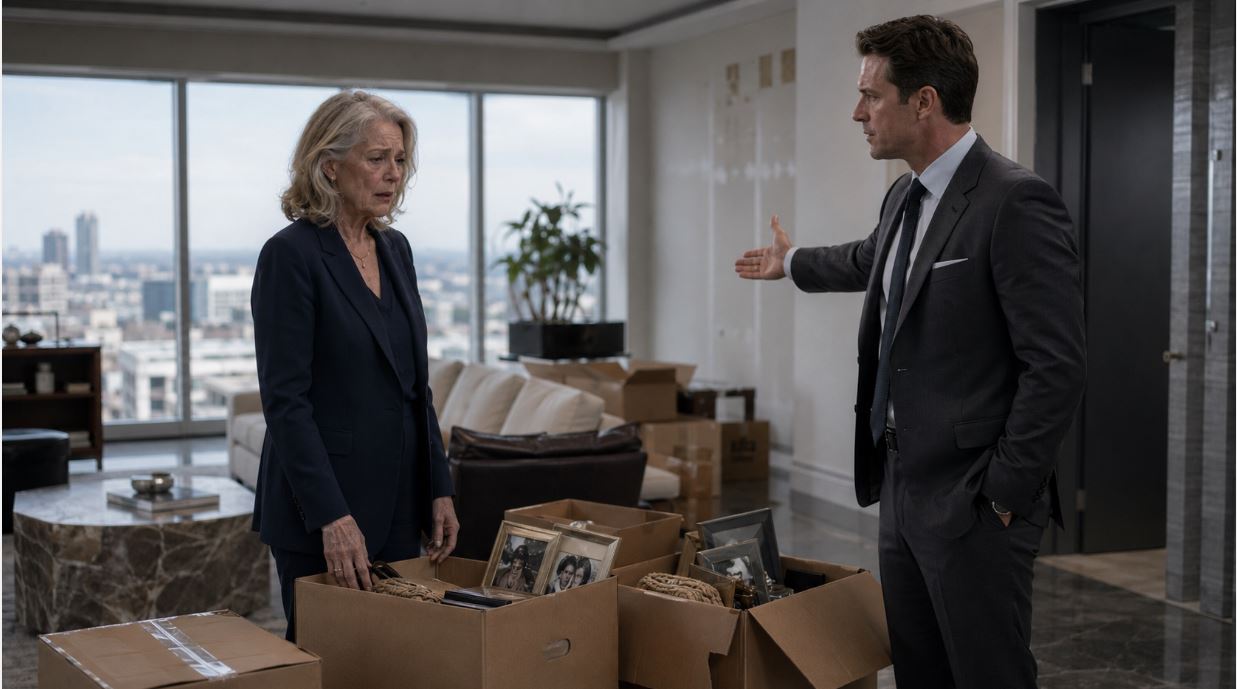
“Well, I need you to come get the rest of your things from the penthouse. Designers are starting tomorrow. Everything needs to be cleared out.”
No apology.
No concern.
Just instructions.
“I’ll be there in the morning,” I said.
The next day, I arrived at the penthouse at 8:45 wearing a navy pantsuit Robert had placed in the garage closet for me. Small thing, maybe. But I felt steadier in it.
Jonathan opened the door with his phone in his hand.
“I boxed most of your stuff,” he said. “Designers arrive at 9:30, so let’s be efficient.”
The hallway walls were already bare where family photos had once hung. Boxes sat in the bedroom, some half-open, filled with my life as if it were clutter.
In one box I found Robert’s books, his fountain pens, the sweater I had given him his last Christmas.
Jonathan glanced at it.
“The rest is just old man stuff,” he said. “Take what you want. I’ll donate the rest.”
Old man stuff.
I looked at him then, really looked at him, and wondered how long Robert had been grieving the man our son had become.
“I’ll take my time,” I said. “These are memories, Jonathan.”
He rolled his eyes.
I did not rush.
When he left to meet the designers downstairs, I walked through the penthouse alone. I said goodbye to the windows, the kitchen, the study, the bedroom where Robert had slept through so many painful nights without telling me how little time he believed he had.
At the back of Robert’s closet, I found his old leather messenger bag. Inside was another envelope addressed to me.
If you find this, Susan, it is an extra copy of everything in the garage safe. Just in case.
Even then, he had planned for Jonathan’s possible interference.
I tucked the envelope into my purse, loaded my chosen things into the car, and drove away.
That afternoon, I met with Patricia Winters, an estate attorney Marcus recommended. She reviewed the documents and confirmed what Robert had written. Everything was legal. Everything was clean. Everything had already transferred to me.
“What do you want to do now?” she asked.
I thought about Jonathan’s words.
Useless old woman.
“I want to secure my future,” I said. “And I want to decide, carefully, what kind of relationship I can still have with my son.”
Patricia nodded.
“Then the first thing you need is distance.”
That night, I drove to Carmel.
The cottage looked like something from one of the small paintings Robert used to admire in galleries but never bought. Stone walls. A green door. Cypress trees. A narrow garden path.
Inside, every detail felt chosen for me. Built-in bookshelves. A stone fireplace. Soft blue cushions in the window seat. A kitchen with a breakfast nook overlooking the garden.
In the study hung a watercolor of a Venice canal.
The place where Robert proposed to me.
I pressed a hand to my mouth.
He had not simply left me money. He had built me a life to step into when the old one fell apart.
A neighbor named Margaret came by with a casserole that evening.
“Robert asked me to keep an eye out for you,” she said. “He thought you might need a friend.”
That undid me more than the cars, more than the accounts, more than the numbers in the portfolio.
Even dying, Robert had thought about whether I would be lonely.
Chapter 5: The Letter He Wasn’t Ready to Read
For two weeks, I lived quietly in Carmel.
I walked the beach in the mornings. I met financial advisers in the afternoons. I drank tea with Margaret in the evenings. I learned the names of neighbors, the rhythm of fog, the sound of the sea through the windows at night.
I did not tell Jonathan where I was.
He called often, at first irritated, then suspicious. He had found notes in Robert’s papers, references to advisers and assets outside the will reading. He wanted to meet. He wanted answers.
I gave him neither.
Then one afternoon, I returned from a meeting to find his luxury SUV parked in front of the cottage.
He stood on the porch, arms crossed.
“Interesting place you’ve got here, Mom,” he said. “When were you planning to mention it?”
My heart raced, but my voice stayed calm.
“Hello, Jonathan.”
He followed me inside, looking around with the sharp eyes of someone calculating square footage and resale value.
“How did you find me?”
“I hired someone,” he said. “You disappeared after showing signs of confusion. I had to make sure my elderly mother was safe.”
There it was again. Not concern. Strategy.
“You mean you had me followed.”
His face did not change.
“I also visited the garage.”
My hands stilled on the kettle.
“I saw enough through the windows to know there are cars in there,” he continued. “Vintage cars. Valuable cars.”
He stepped closer.
“Dad left you a secret fortune, didn’t he?”
I poured the tea because my hands needed something to do.
“Your father made choices.”
“He manipulated me.”
“No,” I said. “He protected me.”
Jonathan’s face flushed.
“From me?”
I did not answer fast enough.
He understood.
For a moment, beneath the anger, I saw pain. Real pain. Not greed. Not only greed, anyway. The pain of a son who realized his father had not trusted him.
“There’s a letter,” I said finally. “From Robert.”
Jonathan stiffened.
“You had a letter and didn’t tell me?”
“It was addressed to me. And after you called me useless and threw me out of my home, I wasn’t eager to share something that personal.”
His eyes flicked away.
“I was upset.”
“People often reveal themselves when they are upset.”
He did not answer.
I brought the copy of Robert’s letter from the study and placed it on the kitchen table.
Before he read it, I said, “Your father loved you. Nothing in this letter changes that.”
Jonathan read in silence.
I watched his face change. Anger first. Then disbelief. Then humiliation. When he reached the part where Robert wrote about his concerns, Jonathan’s fingers tightened around the paper.
When he finished, he set the letter down too carefully.
“So Dad decided I was selfish. Materialistic. Unworthy.”
“He was worried about the man you were becoming.”
“And his solution was to test me?”
“In part, yes.”
Jonathan stood so abruptly the chair scraped the floor.
“I got the penthouse and debts. You got everything else.”
“You got millions in property and investments,” I said. “You also got responsibility. What you did with that responsibility was your choice.”
He turned on me.
“You’re actually defending this?”
“I’m honoring it.”
His expression shifted then from anger to calculation.
“We can still fix this. Split things more fairly. Half of the hidden assets. That would honor Dad and acknowledge my position as his son.”
“No.”
The word surprised us both.
I had spent decades softening my answers. Making things easier. Smoothing conflict. That woman had been left at a penthouse door with a suitcase. She was not gone, but she was no longer in charge.
“No,” I said again. “I am not negotiating Robert’s final wishes. These assets are not only wealth. They are protection.”
“From me,” he said bitterly.
“Yes,” I said quietly.
The truth hurt. It also stood.
He grabbed his keys.
“This isn’t over.”
Before he reached the door, I spoke once more.
“Jonathan, what if your father was right? What if the inheritance you received was exactly what you needed to see yourself clearly?”
He did not turn around.
“Save the lesson, Mom.”
Then he left.
I sat alone for a long time after the door slammed. Part of me wanted to run after him, to apologize for making him hurt. Another part of me understood that I had spent too many years protecting him from discomfort while he mistook my gentleness for weakness.
Robert had not made me the judge of Jonathan’s soul.
But he had given me the right to protect my own future.
And I would.
Chapter 6: What the Garage Really Opened
Three months later, Jonathan’s assistant came to the cottage.
Her name was Diane. She stood on my porch with a leather folder, professional but visibly tense.
“Mrs. Campbell,” she said, “Jonathan is facing some serious financial setbacks.”
I invited her inside.
The penthouse renovation had gone badly. Structural problems. Contractor disputes. Loans against the property. A development investment Jonathan had put money into had collapsed after environmental issues surfaced. Now he was at risk of losing the penthouse.
“He needs help,” Diane said carefully. “He knows you have resources.”
Of course he did.
Not an apology. Not a phone call. Not a visit from my son.
A request delivered through an assistant.
“I’ll consider it,” I said.
The next day, I drove to Los Angeles to see the penthouse myself. The doorman still recognized me and let me up. What I found nearly broke my heart.
The home Robert and I had shared had been gutted. Walls opened. Wiring exposed. Marble stacked carelessly. Dust everywhere. The study where Robert had spent his final months was nearly unrecognizable.
Jonathan appeared while I was standing in what had been our bedroom.
He looked thinner. Tired. His suit was still expensive, but wrinkled.
“Diane spoke to you,” he said.
“She did.”
“I overextended,” he admitted after a long silence.
That was the first honest thing he had said to me in months.
He told me about the failed project, the renovation costs, the debts. He did not ask for a blank check, not immediately. He was too proud for that. But the fear in his face asked for him.
“I’m willing to help,” I said.
Relief flashed across his face.
“But not by simply writing a check.”
His jaw tightened.
“There are conditions.”
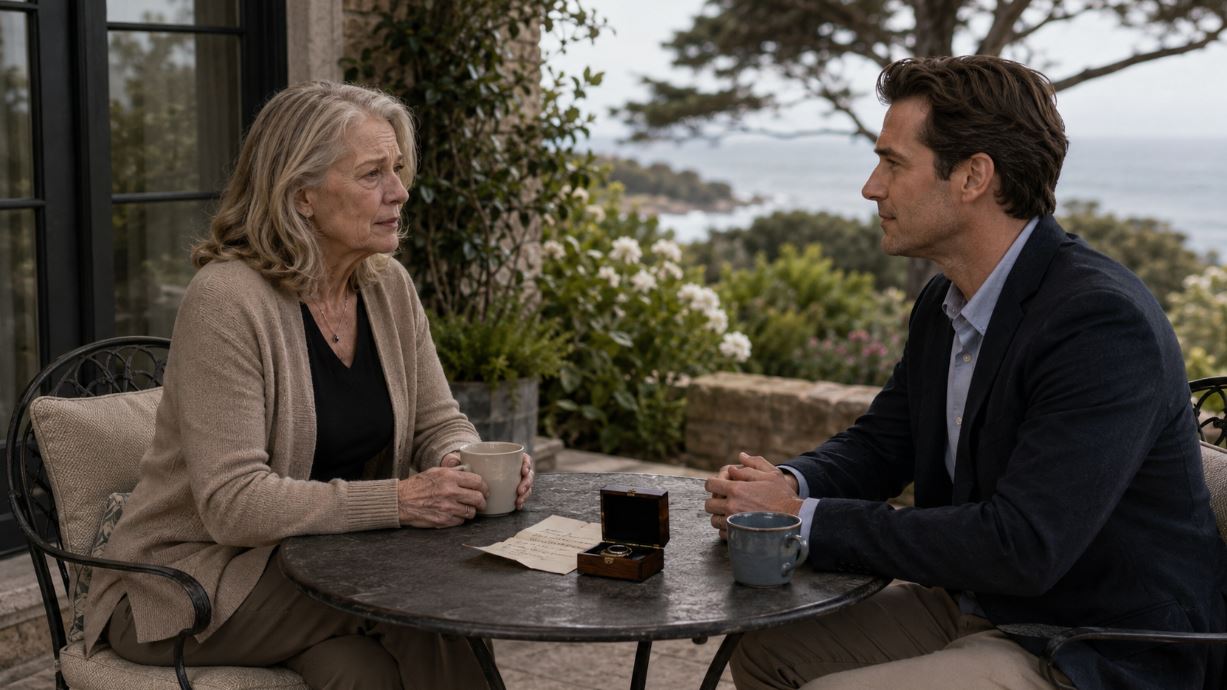
The next morning, he came to Carmel. We sat on the patio overlooking the garden and the distant ocean. I had prepared folders, much as Robert once must have prepared them for me.
“First,” I said, “complete transparency. Every account. Every debt. Every contract.”
He nodded stiffly.
“Second, professional financial oversight. Any help I provide goes through a trust with independent management. Not through your hands.”
His face darkened.
“So I’m on an allowance.”
“No. You are rebuilding after serious mistakes, and those mistakes require guardrails.”
“And the penthouse?”
“The practical answer is to sell it.”
He looked shocked.
“That was our family home.”
“You were ready to gut it and flip it for profit. Do not call it sacred now because losing it embarrasses you.”
The words landed hard.
For a long moment, he said nothing.
Then he lowered his head.
“I really did destroy everything, didn’t I?”
For the first time in a long time, I saw my son without polish. Without performance. A frightened man sitting with the consequences of his choices.
“Not everything,” I said. “But you damaged more than money.”
He looked up.
“I didn’t mean what I said that day. About you being useless.”
“Maybe not. But those words came from somewhere.”
He swallowed.
“I know.”
The apology was not enough. But it was a beginning.
Over the next months, Jonathan agreed to the conditions. The penthouse was sold after targeted repairs. Creditors were paid. A trust was created to stabilize what remained of his finances. He began therapy, reluctantly at first, then with surprising seriousness.
Our relationship did not magically heal.
Real families do not heal in one dramatic scene. They heal awkwardly, slowly, with pauses and mistakes and conversations that leave both people tired.
But something changed.
One spring morning, Jonathan came to the cottage carrying a small wooden box.
“I found these during the final clearance of the penthouse,” he said.
Inside were Robert’s cuff links, tie pins, and beneath them, a velvet pouch.
My original wedding band.
I had thought it was lost.
There was also a card in Robert’s handwriting.
For our forty-fifth anniversary. The first band was a promise of the life we would build. This one celebrates the life we created. All my love always.
Jonathan pulled a small jewelry box from his pocket.
“The jeweler still had the order,” he said. “Dad never got to give it to you.”
Inside was a delicate eternity band of sapphires and diamonds.
I slipped it onto my finger beside my old gold ring and cried quietly.
Jonathan did not rush me. He did not look at his phone. He simply sat there, allowing my grief to exist without making it inconvenient.
That, more than the ring, told me something had begun to change.
Later, as he stood by the garden gate, he asked, “What are you doing with the cars?”
“I’m keeping the Aston Martin,” I said. “Your father would have loved that.”
He smiled faintly.
“And the others?”
“I’ll sell them. Some proceeds will go to a foundation for financial education. Some will be placed in trust for future grandchildren, if there are any.”
He looked down.
“You still think about my future?”
“I am your mother,” I said. “That never stopped. But loving you does not mean handing you everything without wisdom.”
He nodded.
“I’m learning that.”
That evening, I drove the Aston Martin along the coastal highway.
The ocean burned gold under the setting sun. My hands gripped the wheel, both wedding bands catching the last light. For a moment, I imagined Robert beside me, amused and proud, probably telling me I was taking the curves too slowly.
“You were right,” I said aloud. “About more than I wanted to admit.”
The garage key had seemed like an insult the night I first held it. A cruel symbol of being discarded. But it had opened more than a door.
It opened Robert’s final act of love.
It opened the truth about my son.
It opened a home by the sea, a future of my own, and a version of myself I had almost forgotten.
Jonathan once asked what a useless old woman would do with a real inheritance.
Now I know.
She protects it.
She learns from it.
She uses it to rebuild what can be rebuilt, and to walk away from what cannot.
And then, when she is ready, she takes the wheel.