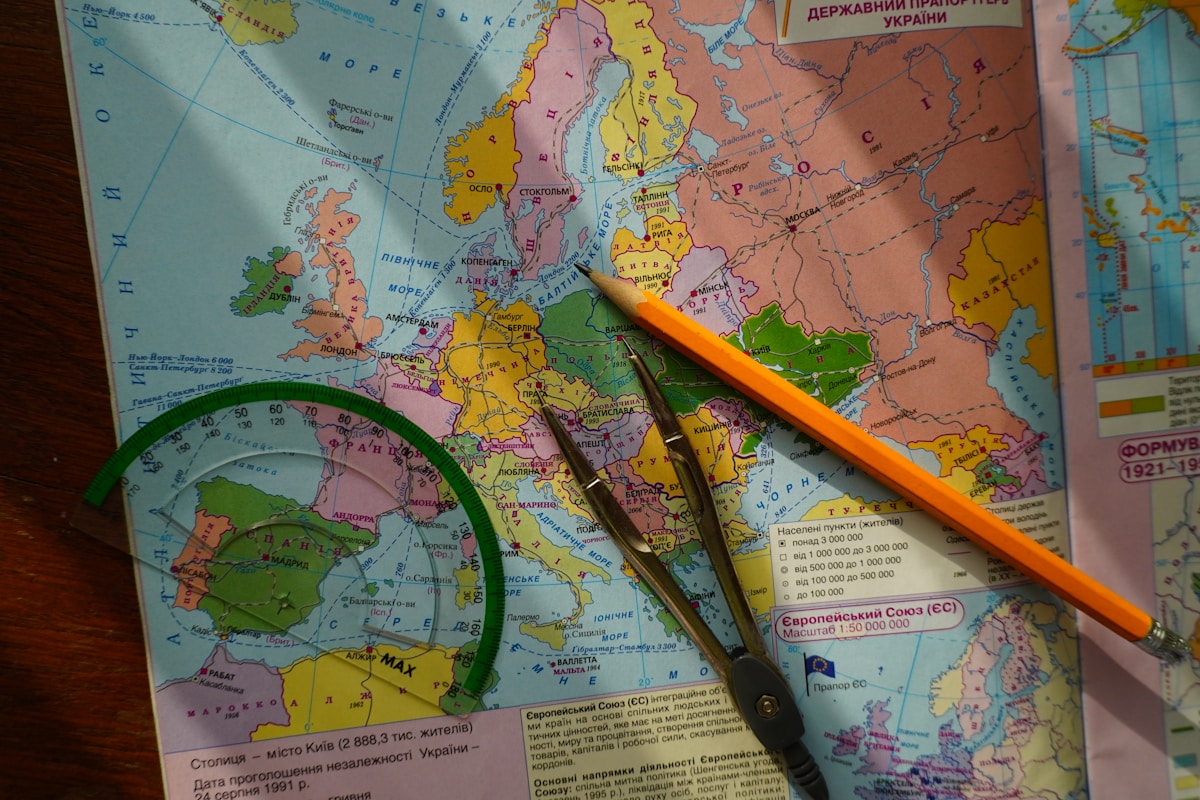
Why Budget Travel in Europe Actually Works
Here’s the thing about Europe: it’s expensive if you do it wrong, and surprisingly affordable if you know the tricks. I’ve watched friends blow $5,000 in two weeks while others did the same trip for under $2,000. The difference wasn’t luck — it was planning.
A 2-week Europe trip on a budget is totally doable. We’re talking $70-100 per day including everything. That’s accommodation, food, transport between cities, activities, and yes, even a few beers. Let me walk you through exactly how to make this happen.
Step 1: Pick Your Route Strategically

Your biggest decision is which countries to visit. And this is where most people mess up.
Don’t try to see everything. Seriously. I know the temptation to hit Paris, Rome, Barcelona, Amsterdam, Prague, and Vienna in 14 days. But you’ll spend half your trip on trains and planes, exhausted and broke.
The golden rule: maximum 4-5 cities in two weeks.
Budget-friendly regions to consider:
- Eastern Europe — Prague, Budapest, Krakow, and Ljubljana. You’re looking at $40-60/day.
- Portugal and Spain — Outside major tourist centers, incredibly affordable.
- The Balkans — Croatia’s coast is pricey, but Split, Sarajevo, and Mostar are bargains.
- Southern Italy — Skip Rome’s tourist traps for Puglia or Sicily.
Western Europe (London, Paris, Amsterdam, Switzerland) will eat your budget fast. If you must include them, balance with cheaper destinations.
Step 2: Set Your Realistic Budget
Let’s break down actual numbers for a budget trip. These are 2024 figures based on hostels and smart spending:
Daily costs by region:
| Region | Accommodation | Food | Transport | Activities |
|——–|————–|——|———–|————|
| Eastern Europe | $15-25 | $15-20 | $5-10 | $10-15 |
| Southern Europe | $25-40 | $20-30 | $10-15 | $15-20 |
| Western Europe | $35-60 | $30-45 | $15-20 | $20-30 |
For two weeks mixing regions, budget $1,400-2,100 for in-Europe expenses. Add flights from home and you’ve got your total.
I always add a 15% buffer. Things happen. You’ll want that extra day trip or that incredible restaurant someone recommends.
Step 3: Book Flights at the Right Time

Flight timing matters more than most people realize.
When to book: 6-8 weeks before departure for the best prices. Too early and prices are inflated. Too late and you’re paying premium.
Where to search: Google Flights lets you see prices across entire months. Skyscanner’s “everywhere” feature shows cheapest destinations from your airport.
Pro tip: Fly into one city, out of another. Open-jaw tickets often cost the same as round trips but save you backtracking. Fly into Lisbon, travel through Spain, fly home from Barcelona.
Budget airlines like Ryanair and EasyJet connect European cities for $20-50 if you book early. But watch those baggage fees — a carry-on only policy saves hundreds.
Step 4: Choose Accommodation That Won’t Break You
Hostels aren’t what they used to be. Modern hostels have private rooms, gorgeous common areas, and social atmospheres that hotels cant match.
Best hostel booking sites:
- Hostelworld — largest selection, reliable reviews
- Booking.com — sometimes has better hostel prices
- Hostelz — aggregates prices across platforms
Look for hostels with free breakfast. A decent hostel breakfast saves $7-10 daily. That’s $100+ over two weeks.
Alternatives to traditional hostels:
Couchsurfing is still alive, though harder to use than before. For couples or groups, Airbnb private rooms often beat hostel prices when split. In Portugal and Spain, guesthouses (pensiones) run $30-40 for private doubles.
Step 5: Master the Transport Game
Getting between cities is where you’ll either save or hemorrhage money.
Trains vs. buses vs. flights:
Buses are almost always cheapest. FlixBus connects most of Europe for $10-30 per journey. They’re comfortable enough, have WiFi, and run constantly.
Trains are romantic but pricey unless you book smart. Check seat61.com for train deals — it’s the best resource online. Night trains save a hotel night, which offsets the cost.
Budget flights work for longer distances. Prague to Lisbon? Fly. Prague to Vienna? Bus or train.
Skip the Eurail Pass. Despite what travel companies push, the pass rarely saves money unless you’re constantly moving. Point-to-point tickets booked in advance are cheaper for most itineraries.
Step 6: Plan Activities Without Overspending
Here’s a secret: the best experiences in Europe are often free.
Walking through old towns costs nothing. Sitting in piazzas, hiking coastal paths, wandering markets — free. Many museums offer free entry on certain days. First Sundays work for most Italian museums. Paris has free permanent collections at many spots.
Free walking tours run in every major city. You pay what you feel at the end. They’re actually excellent, run by locals who know hidden spots.
Budget for 2-3 paid attractions per city max. Prioritize ruthlessly. You don’t need to see every church in Rome.
Book anything popular in advance. The Vatican, Anne Frank House, Sagrada Familia — these sell out. Buy tickets online weeks ahead and skip the chaos.
Step 7: Eat Like a Local, Not a Tourist
Food is where most travelers overspend.
Never eat within eyesight of a major attraction. That restaurant facing the Colosseum? You’re paying for the view, not the food. Walk 10 minutes in any direction for prices that are half as much.
Budget eating strategies:
Grocery stores are your friend. European supermarkets have incredible prepared foods — fresh bread, cheeses, meats, salads. A $6 picnic beats a $20 mediocre restaurant lunch.
Lunch menus offer the best value. In Spain, Portugal, and Italy, the “menu del dia” or “menu turistico” gets you a multi-course meal for $10-15. The same food costs double at dinner.
Street food varies by country. Turkish kebabs across Europe are cheap and filling. Portuguese pastel de nata runs $1.50. German currywurst is a $4 meal.
Drink less or drink smart. A beer at a tourist bar costs $7. The same beer at a local supermarket: $1.50. Pre-game like a college student if your budget demands it.
Step 8: Handle Money Without Getting Robbed by Fees
ATM fees and currency conversion eat budgets silently.
Get a no-foreign-transaction-fee card before you leave. Charles Schwab debit card reimburses all ATM fees worldwide. Wise (formerly TransferWise) offers great exchange rates with a debit card.
Always choose local currency when ATMs or card machines ask. “Pay in your home currency” means dynamic conversion, which means you lose 3-5%.
Withdraw larger amounts less frequently. A $3 ATM fee on $300 is 1%. On $50? That’s 6%.
Step 9: Pack Light to Stay Flexible
One backpack. Maximum 40 liters. That’s it.
Light packing isn’t just comfortable — it saves money. No checked baggage fees. No taxi because you can’t haul luggage on public transport. Freedom to walk away from bad accommodation.
You need far less than you think. Europe has washing machines. Buy toiletries there (they’re often cheaper anyway).
Building Your Actual Itinerary
Here’s how I’d structure a 2-week budget trip:
Days 1-3: Start in a cheaper destination. Prague works perfectly — stunning, affordable, easy to navigate.
Days 4-6: Move south. Vienna or Budapest both accessible by train or bus.
Days 7-10: Continue the route naturally. For budgets, Budapest into the Balkans (Ljubljana, Zagreb) keeps costs low.
Days 11-14: End somewhere with good flight connections home. Ljubljana to Venice is close — fly home from a major hub.
For weather timing, there’s a sweet spot in shoulder season. If you’re considering Iceland as part of a broader trip, the timing matters significantly — same principle applies across Europe. May-June and September-October offer decent weather, smaller crowds, and lower prices than peak summer.
The Week Before You Leave
Confirm all bookings. Screenshot important reservations. Download offline maps in Google Maps. Tell your bank you’re traveling.
Buy travel insurance. It’s $30-50 for two weeks and covers thousands in potential medical emergencies. Don’t skip this.
Learn basic phrases in local languages. “Hello,” “thank you,” “please,” “beer” — locals appreciate the effort.
Final Thoughts
Two weeks in Europe on a budget isn’t about deprivation. Its about prioritizing experiences over comfort, flexibility over luxury. You’ll sleep in dorms, eat picnics in parks, and take overnight buses. You’ll also have conversations with travelers from everywhere, stumble into hole-in-the-wall restaurants that become trip highlights, and return home with stories — not just photos.
Start with the route. Book those flights. The rest falls into place.