Before Her Death, Vivian Vance Revealed The Truth About “I Love Lucy”
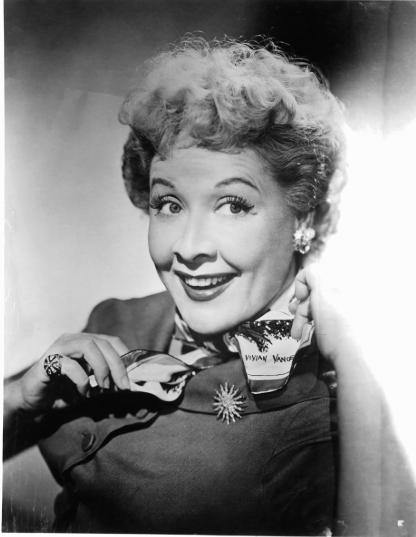
For millions of Americans, she will always be Ethel Mertz.
The sensible neighbor. The loyal best friend. The woman standing beside Lucy Ricardo as another perfectly reasonable afternoon somehow turned into a disaster involving a chocolate factory, a ridiculous disguise, or a scheme neither woman had any business attempting.
Vivian Vance made it look effortless.
But the woman behind Ethel was far more complicated than the character America fell in love with.
Before television made her famous, Vance had already spent years on the stage. She had known Broadway success, professional disappointment and a serious emotional collapse. Then I Love Lucy transformed her into one of the most recognizable women in America — while attaching her so completely to Ethel Mertz that escaping the character would become one of the defining struggles of her later career.
There was another irony viewers could never see.
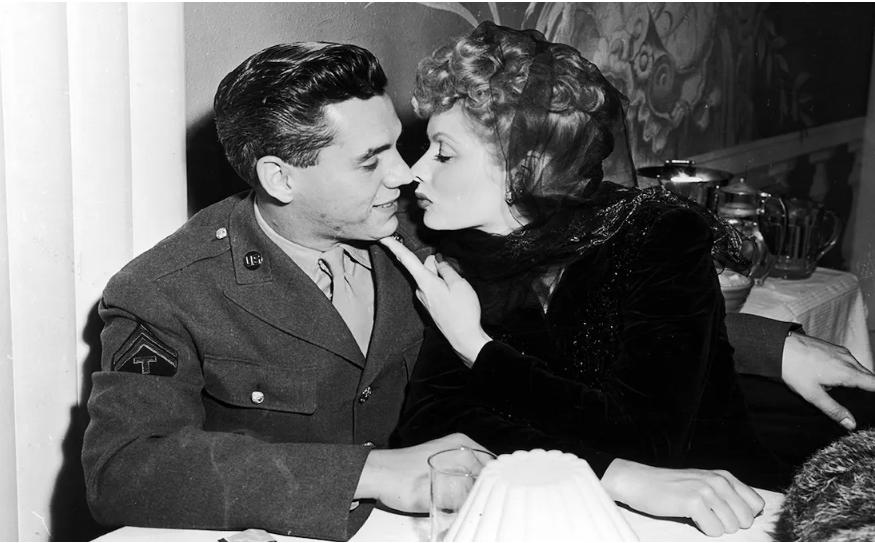
The man playing her husband was someone she famously did not get along with.
The woman playing her best friend, on the other hand, would become one of the most important people in her life.
And in the summer of 1979, as Vivian Vance was nearing the end, Lucille Ball came to say goodbye.
To understand why that farewell mattered so much, you have to go back to a time before anyone knew the name Ethel Mertz.
Long Before Ethel, There Was Vivian
Vivian Vance was born Vivian Roberta Jones on July 26, 1909, in Cherryvale, Kansas, and grew up in a large family with strong religious influences. Her interest in performing did not fit easily with the expectations of her home life. Eventually, acting became not simply a hobby but a way of imagining a different future for herself.
After her family moved to Albuquerque, New Mexico, Vance became involved with local theater. From there came the ambition that would carry her to New York.
It is easy, looking backward through the enormous shadow of I Love Lucy, to assume that television discovered an unknown actress and turned her into Ethel Mertz.
That is not what happened.
Vivian Vance had already built a substantial stage career before America ever saw her standing in the Ricardos’ apartment.
She worked her way through chorus roles and eventually appeared on Broadway, including as an understudy to Ethel Merman. In 1941, Vance appeared in Cole Porter’s Let’s Face It!, a successful Broadway production that ran for 547 performances. She shared the production with performers including Danny Kaye and Eve Arden.
She was not Ethel Mertz.
She was a working actress with years of experience behind her.
And that distinction would matter later.
Her career was not a smooth climb. While performing in The Voice of the Turtle, Vance suffered a nervous breakdown and stepped away from the production. She eventually returned to acting, and by the beginning of the 1950s she was once again appearing onstage in California.
Then came the role that would change everything.
The Woman They Almost Didn’t Cast
In 1951, Lucille Ball and Desi Arnaz were assembling the cast of a new television comedy called I Love Lucy.
Lucy and Ricky Ricardo needed neighbors — a couple who could serve as friends, foils and unwilling participants in whatever trouble Lucy created that week.
William Frawley was cast as Fred Mertz.
Vivian Vance became Ethel.
At the time, Vance was 42. Frawley was 64 — a 22-year age difference that immediately became a source of tension between them. Television historians have long recounted that Vance reacted badly when she learned Frawley would be playing her husband, and that Frawley overheard a remark suggesting he looked old enough to be her grandfather.
He apparently never forgot it.
Their relationship off camera became one of the great ironies of early television.
On screen, Fred and Ethel Mertz worked beautifully.
They bickered. They complained. They traded insults with the comfortable rhythm of two people who seemed to have been married forever.
Off screen, Vance and Frawley were famously not close.
Yet instead of destroying the chemistry, that tension may have sharpened it. The irritation viewers saw between Fred and Ethel felt believable because, in some ways, it was not entirely being invented for the camera. Television Academy accounts emphasize that despite their personal friction, both performers were consummate professionals once the cameras rolled.
That was the strange bargain of Vivian Vance’s most famous role.
She had been transformed into a woman who looked older and dowdier than she did in real life, paired with a man more than two decades her senior, and placed beside one of the most powerful comic performers television had ever seen.
It should have been a thankless role.
Instead, she made Ethel unforgettable.
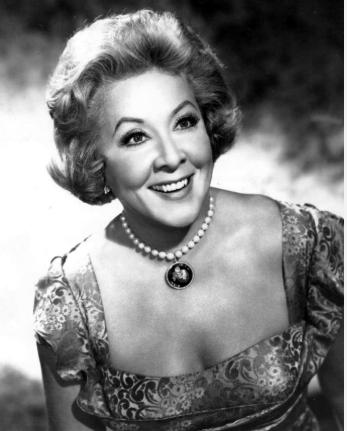
The Secret to Lucy and Ethel Wasn’t Lucy Alone
Lucille Ball was the star.
There was never any question about that.
But comedy requires more than someone delivering the punch line. Somebody has to build the situation, react at exactly the right moment and give the star something to play against.
Vivian Vance understood that job brilliantly.
The Television Academy has described Vance and Ball together as comedy magic, and Vance’s work was rewarded with an Emmy for her portrayal of Ethel. She ultimately received four Emmy nominations for I Love Lucy and won once.
Watch the old episodes carefully and something becomes obvious.
Ethel is rarely just standing in the background.
She watches Lucy.
She doubts Lucy.
She warns Lucy.
Then, inevitably, she joins Lucy.
That rhythm helped make the friendship believable.
And that friendship became one of the emotional foundations of the show.
The fascinating part is that, unlike the relationship between Vance and Frawley, the bond between Vance and Lucille Ball did not end when the cameras stopped.
Stories suggesting the two women secretly hated each other have circulated for years, but accounts from people who knew them describe something much more enduring: affection, professional respect and a friendship that survived disagreements and changes in their careers.
That does not mean everything was always easy.
Two strong performers working under enormous pressure were bound to have difficult moments.
But the bigger story is not that Lucy and Vivian were enemies.
It is that after creating one of television’s most famous friendships, they remained important to each other for the rest of Vance’s life.
And Lucille Ball would eventually ask her to do it all again.
There Was One Thing Vivian Wanted Back: Her Own Name
When the original I Love Lucy run ended in 1957, Vance faced a problem created by her own success.
America knew Ethel Mertz.
America loved Ethel Mertz.
But America sometimes seemed to forget Vivian Vance.
The cast continued appearing in hour-long specials after the original series, but when Ball prepared to return to television in The Lucy Show in 1962, she wanted Vance beside her again.
Vance agreed — with changes.
The most revealing concerned her character’s name.
She did not want to be Ethel again.
This time she would play Vivian Bagley.
Accounts of the negotiations describe Vance wanting more flattering clothing as well, a clear departure from the deliberately dowdy image associated with Mrs. Mertz. More importantly, having the character named Vivian helped separate the actress from the television identity that had followed her everywhere.
It says something about the strange price of television fame.
Actors dream of finding the role audiences will never forget.
Vivian Vance found it.
Then she discovered that being unforgettable as one person could make it difficult for the public to see you as anyone else.
Ethel Mertz had given her security, recognition and an Emmy.
But Vivian Vance had existed long before Ethel.
The Broadway performer, the singer, the working actress who had fought her way from Kansas to Albuquerque to New York had not disappeared simply because millions of viewers believed they knew her.
For Vance, The Lucy Show offered a chance to be funny beside Lucille Ball without entirely surrendering herself to Mrs. Mertz again.
And once again, the chemistry worked.
The Feud America Remembered — and the Friendship It Sometimes Forgot
William Frawley and Vivian Vance remain linked forever because of Fred and Ethel.
Their off-screen dislike has become television legend, and later recollections suggest that the friction continued long after I Love Lucy. Even when the two were working on different television shows, stories about Frawley teasing or needling his former co-star persisted.
It makes for a wonderful piece of Hollywood trivia:
The husband and wife America watched every week could barely tolerate each other.
But there is a danger in allowing that feud to become the entire Vivian Vance story.
Because the more meaningful relationship was arguably the one viewers wanted to believe in all along.
Lucy and Ethel really did become Lucy and Viv.
People close to Vance have described the affection and respect between Vance and Ball as genuine. Vance understood exactly what she brought to their partnership. She did not need to steal the scene from Ball. Her genius often came from knowing precisely how to help construct it.
That skill can be easy to underestimate.
A great “second banana,” as comic supporting performers were once called, does not simply stand next to the star.
She controls rhythm.
She reacts.
She leaves room.
She knows when one raised eyebrow will be funnier than another line of dialogue.
And Vivian Vance could do all of it.
That may be why, decades later, viewers can watch Lucy and Ethel in a kitchen, a dress shop or a disastrous new job and feel as though they are watching two old friends rather than two actresses performing a script.
Away From Lucy, Life Became Quieter
Vance continued working after leaving The Lucy Show as a regular cast member, returning occasionally to appear with Ball and taking other television roles.
But by the 1970s, health increasingly shaped what she could do.
She was diagnosed with breast cancer in 1973. She continued to appear on television when her health allowed, including guest work, television movies and commercials. In 1977, she reunited with Ball for the CBS special Lucy Calls the President, their final television appearance together.
By then, decades had passed since two women named Lucy and Ethel first began plotting together in a New York apartment.
America had changed.
Television had changed.
The women themselves had changed.
But the association between them never disappeared.
Neither did the friendship.
In 1979, Vance’s cancer had spread to her bones. She was living in Belvedere, California, and knew she was gravely ill.
Then Lucille Ball came to see her.
Lucy’s Last Visit
There was no studio audience.
No writers.
No perfectly timed entrance.
No applause sign waiting to light up.
Just two women who had shared nearly three decades of history.
Paige Peterson, who was close to Vance during her final years, later recalled that Ball visited Vance at her Belvedere home in August 1979. Vance was resting on a couch. The two women had lunch and spent hours talking. There was laughter, and there were tears.
When Ball finally left, Peterson remembered seeing a woman overwhelmed by grief.
It is difficult not to think of Lucy and Ethel in that moment.
For years, television audiences had watched one of them get into trouble and the other reluctantly follow.
Whatever absurd situation appeared, the two women somehow ended up facing it together.
This time there was nothing to fix.
Vivian Vance died on August 17, 1979, at the age of 70.
The friendship had reached the one ending no sitcom could rewrite.
More Than Ethel Mertz
There is a peculiar kind of immortality in being remembered as a television character.
For Vivian Vance, it was both a gift and a limitation.
Generations of viewers knew Ethel before they knew Vivian.
They knew the sensible landlady with the sharp reply.
They knew Fred’s long-suffering wife.
They knew Lucy’s partner in crime.
Many never knew that before television, Vance had spent years building a serious stage career. They did not know about the Broadway performer who had worked alongside some of the major names of her era. They did not see the woman who had struggled, stepped away, returned and then accepted a role that required her to make herself less glamorous so another performer could shine brighter.
And perhaps that is what makes her story worth remembering.
Vivian Vance did something extraordinarily difficult.
She made supporting another performer look like an art form.
Without Ethel, Lucy’s wild ideas would have had one less skeptical face staring back at them.
Without Vivian, some of television’s most famous comedy might have sounded different, moved differently and felt different.
Her contribution was eventually recognized beyond the original series. Vance was inducted into the Television Academy Hall of Fame alongside William Frawley in 2012 — an appropriately ironic final pairing for two actors who may not have enjoyed each other’s company but created something together that audiences never forgot.
In the end, there was no shocking deathbed confession required to make Vivian Vance’s life interesting.
The real story was better.
She spent years being known as someone else.
Yet underneath Ethel’s unfashionable dresses, comic frustration and perfectly timed exasperation was a seasoned performer who understood something fundamental about comedy: you do not always have to stand at the center of the stage to become unforgettable.
America may have called her Ethel.
But the woman who made Ethel matter was Vivian Vance.