By the time Robert Redford met Sibylle Szaggars in 1996, there were very few places in America where he could simply walk into a room as an ordinary man.
He had been the Sundance Kid.
He had conned his way through The Sting with Paul Newman.
He had broken hearts opposite Barbra Streisand in The Way We Were, played Bob Woodward in All the President’s Men, directed the Oscar-winning Ordinary People, and built Sundance into one of the most important institutions in independent film.
For decades, millions of women had known his face.
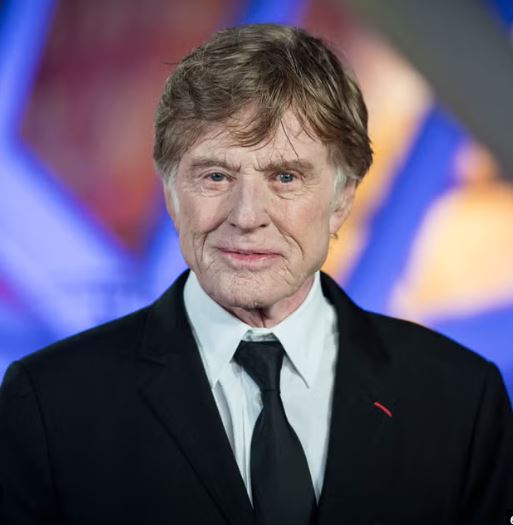
Sibylle was different.
The German-born artist knew surprisingly little about Robert Redford’s movie career when they met at his Sundance Mountain Resort in Utah.
And for Redford, that was refreshing.
She was not meeting an image created by Hollywood.
She was meeting him.
Years later, Redford would describe Sibylle as “a very special person” and say that being with her had given him “a whole new life.”
Those were unusually personal words from a man who had spent most of his career protecting a hard boundary between his public image and his private self.
The relationship would last nearly three decades.
They would marry in 2009.
They would share art, environmental activism and a life built largely away from Hollywood.
And Sibylle would remain his wife until Redford died at his Utah home in September 2025 at age 89.
It is tempting to turn that into a simple story about an aging movie star finally finding “the love of his life.”
But Redford’s real story was more complicated—and more interesting.
Because long before Sibylle, another woman had known him before Hollywood did.
She married him when he was still struggling to find his way.
She shared the devastating loss of their first child.
She watched him become one of the most famous men in the world.
And even after their marriage ended, Redford spoke of her with affection rather than bitterness.
To understand why his relationship with Sibylle mattered so much in the later chapters of his life, you first have to understand everything that came before her.
1. Before Anyone Called Him a Movie Star
Robert Redford did not begin adulthood looking like a man destined for a perfectly ordered life.
Born in Santa Monica, California, in 1936, he was restless as a young man.
He had artistic ambitions but little patience for conventional expectations.
After losing his mother relatively young, he went through a particularly unsettled period.
Then he met Lola Van Wagenen.
She was from Utah.
He was still years away from becoming the Robert Redford audiences would later recognize.
They married in 1958.
He was 22.
This was before Butch Cassidy and the Sundance Kid.
Before The Sting.
Before magazine covers.
Before audiences had turned his blond hair, blue eyes and quiet confidence into a particular kind of American ideal.
Lola knew the man before the myth.
Redford later acknowledged that marrying young gave him something he desperately needed at that stage of his life: stability.
But the young couple would face a loss almost immediately that neither fame nor money could ever repair.
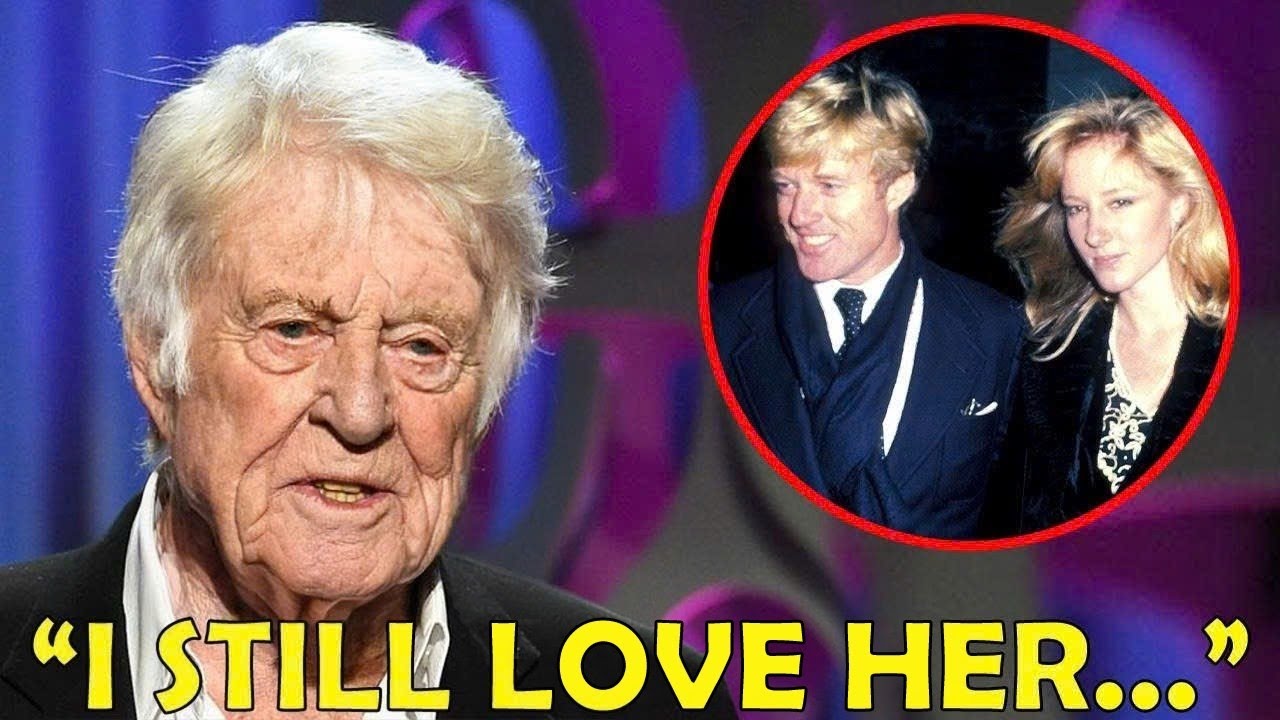
2. Their First Son Lived Only a Few Months
In 1959, Robert and Lola welcomed their first child, Scott.
He died at approximately two and a half months old from sudden infant death syndrome.
Redford rarely turned private grief into public material.
That became characteristic of him.
He could spend an entire career exploring loss, family and regret through movies while saying remarkably little about his own wounds.
But losing Scott remained part of the family history.
Robert and Lola eventually had three more children: Shauna, James and Amy.
They built a family while Redford built a career.
And slowly, the struggling young actor became something neither of them could have completely anticipated when they married.
Famous.
Then very famous.
3. Hollywood Turned Him Into Someone the Public Thought It Knew
Redford worked in television and theater before establishing himself in movies.
Then came the late 1960s.
Butch Cassidy and the Sundance Kid arrived in 1969, pairing him with Paul Newman and turning Redford into one of the defining leading men of his era.
The public image hardened quickly.
Handsome.
Independent.
A little mysterious.
Never too eager.
Redford possessed the unusual advantage of looking like a conventional movie star while seeming faintly uncomfortable with the entire idea of celebrity.
Jane Fonda, who worked with him repeatedly, once explained part of his appeal simply: there was always something he did not reveal.
That mystery became part of the attraction.
Audiences projected things onto him.
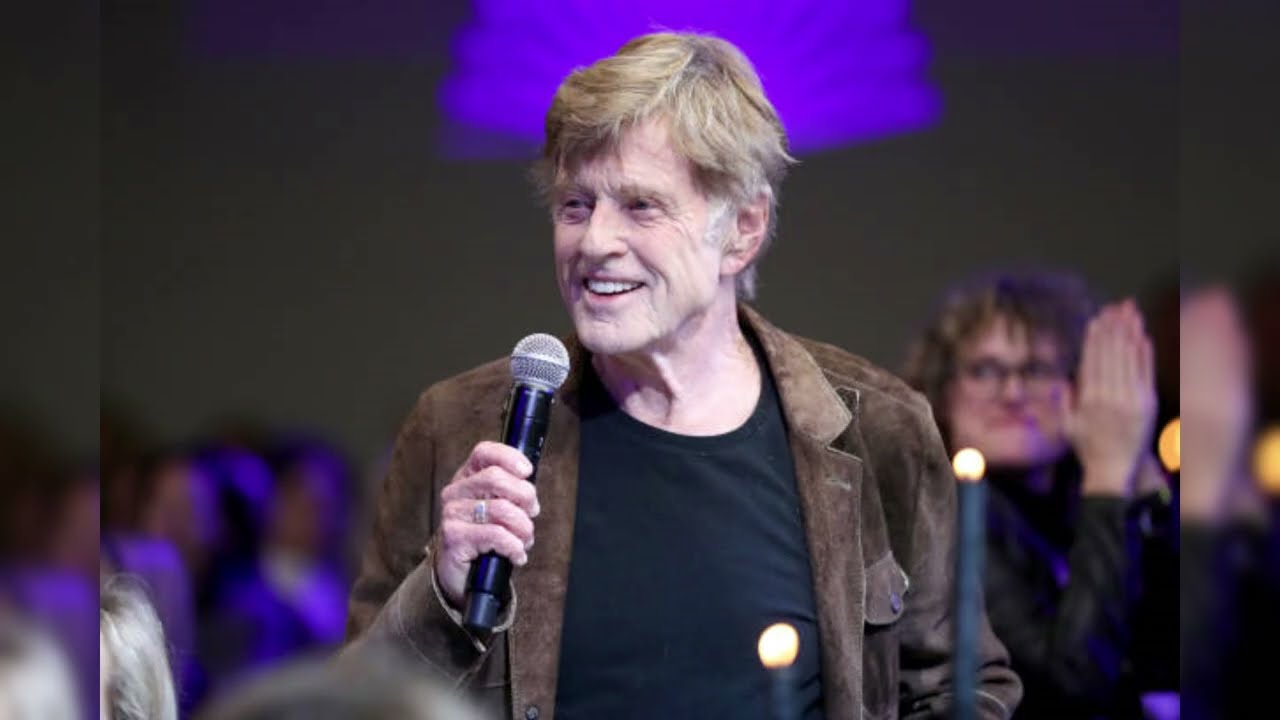
So did magazines.
Every actress he appeared opposite became a possible romance in the imagination of fans.
Barbra Streisand.
Jane Fonda.
Other costars.
The chemistry was real on screen.
But Redford spent much of his life resisting the idea that the public was automatically entitled to the private man behind it.
Years later, he explained that he had always tried to separate his public self from his private life.
The public could have the performance.
It did not automatically get everything else.
That position helped preserve his mystique.
It also meant that the pressures inside his first marriage were largely invisible to people watching from outside.
4. Lola Watched Fame Change Their Life
Redford’s success meant travel.
Long productions.
Public attention.
A lifestyle that became increasingly difficult to separate from the family waiting at home.
Lola, meanwhile, developed intellectual and professional interests of her own.
She eventually became a historian and activist.
The marriage lasted for more than two decades.
But lasting a long time is not the same as lasting forever.
By the early 1980s, reports indicated that they were living largely separate lives.
Their marriage ultimately ended in divorce, commonly dated to 1985.
Redford would later admit something revealing.
He had wanted his marriage to survive partly because he did not want to become another predictable Hollywood divorce story.
He wanted to prove that fame did not have to destroy a marriage.
He couldn’t.
But what he said about Lola afterward is more interesting than the failure itself.
There was no grand public attack.
No rewriting her as a mistake.
Years later, Redford described their separation as mutual and said they still shared “great love, great affection, great friendship.”
That sentence matters.
He did not say the marriage should have continued.
He did not pretend divorce had been easy.
He simply allowed the relationship to contain more than one truth.
They had loved one another.
They had built a family.
The marriage had reached its end.
And affection remained.
It would not be the last time Redford’s private life refused to fit neatly into a Hollywood headline.
5. The World’s Heartthrob Was Suddenly Alone in a Different Way
By the time Redford’s first marriage ended, his career was secure beyond question.
He could act.
Direct.
Produce.
Choose projects.
He had already created Sundance Institute in 1981, beginning what would become perhaps his most important contribution beyond his own films.
He owned land in Utah and had long felt drawn toward landscapes that seemed far removed from Los Angeles.
Nature was not a decorative interest for him.
It was part of the way he organized his life.
The more famous he became, the more he seemed to need places where fame had less authority.
That may help explain why his later relationship developed where it did.
Not at an awards ceremony.
Not during a publicity tour.
Not on a movie set engineered around two glamorous stars.
At Sundance.
6. Then Sibylle Szaggars Entered His Life
Sibylle Szaggars was born in Germany and built her life as an artist.
Her work focused increasingly on nature, climate and the environment.
She and Redford met in 1996 at Sundance Mountain Resort in Utah.
He was about 60.
She was younger and came from a different cultural world.
And most important for the beginning of their relationship, she did not approach him as someone overwhelmed by his filmography.
Accounts of their relationship have emphasized that Sibylle was not deeply familiar with Redford’s movies when they met.
Imagine what that must have felt like.
For decades, many new people meeting Robert Redford had already formed an opinion before he said a word.
They knew Sundance.
They knew Hubbell Gardiner.
They knew Johnny Hooker.
They knew Bob Woodward.
They knew the face on the movie poster.
Sibylle had less of that baggage.
He did not have to compete with his own mythology quite as much.
They could begin more simply.
As two people.
For a man who had spent years insisting that Robert Redford the public figure was not the entire person, that distinction mattered.
7. It Wasn’t a Hollywood Whirlwind
Their relationship did not follow the kind of timetable celebrity magazines usually prefer.
There was no eight-week engagement.
No breathless rush to the altar.
Robert and Sibylle spent years together before marrying.
That slow pace fits Redford remarkably well.
By then he had already lived one long marriage.
Raised children.
Experienced divorce.
Built a career.
Built Sundance.
Lost people.
Grown more protective of the things he considered private.
There was no need to prove anything quickly.
Sibylle also had a life and identity of her own.
She was not entering his world simply to become “Mrs. Robert Redford.”
She was an artist.
Their shared interest in the natural world gave them common ground beyond celebrity.
And gradually, the woman who had entered his life without being particularly impressed by the star became one of the most enduring people in the man’s later years.
8. In 2009, They Quietly Married
Robert Redford and Sibylle Szaggars married in Hamburg, Germany, in July 2009.
Redford was 72.
There is something almost beautifully anticlimactic about the timing.
Hollywood had spent decades casting him as the romantic lead.
He had kissed some of cinema’s most famous actresses.
Audiences had projected fantasies onto him since the 1960s.
Yet the marriage that would carry him through the rest of his life happened long after the period in which Hollywood had made him a romantic symbol.
He did not need a movie ending.
He had a relationship built outside that machinery.
Two years later, during a candid AARP interview, Redford spoke about Sibylle in a way that revealed how he experienced the difference.
He called her “a very special person.”
Then he noted that she was younger, European and an artist.
And he added:
It was “a whole new life.”
Not the recovery of his youth.
Not an attempt to repeat his first marriage.
Something new.
At an age when culture often tells people that the essential chapters of love are already behind them.
9. The Artist Saw Something Other Than the Movie Star
Redford had once considered becoming an artist himself.
Even after acting consumed his professional life, drawing and painting never completely disappeared from his identity.
Sibylle understood that part of him.
She built her own work around nature and environmental questions, eventually creating projects combining visual art, music, performance and concerns about climate.
This mattered because environmental activism had been central to Redford for decades.
Sundance itself had grown partly from his desire to protect a particular landscape while creating a place where independent ideas could survive.
Sibylle was not simply accompanying him to environmental causes because they mattered to her husband.
They mattered to her too.
In 2015, she founded The Way of the Rain, a nonprofit organization using art and performance to raise environmental awareness.
Redford served as vice president.
Their partnership had moved far beyond companionship.
It had become creative.
That is an important distinction when thinking about why the relationship lasted.
They were not simply living beside each other in retirement.
They still had things they wanted to make.
Things they wanted to protect.
Ideas they believed mattered.
10. Redford Never Pretended the First Marriage Had Meant Nothing
Celebrity storytelling often insists on replacing one great love with another.
The new partner must be “the real one.”
The former spouse must become the mistake.
Redford’s own comments resist that structure.
Lola had been part of his life when almost nobody knew his name.
They had children.
They experienced the death of their infant son together.
They spent more than two decades married.
And after the divorce, Redford still spoke of love, affection and friendship.
That history did not need to be erased for Sibylle to matter.
Sibylle represented a different chapter.
She met an older Redford.
A man who had already learned what fame could give him and what it could not.
A man who no longer seemed interested in proving that his life fit anyone else’s definition of success.
That may be one reason the phrase “a whole new life” carries more weight than calling someone “the love of his life.”
The second phrase turns a human relationship into a competition.
Redford’s own words described transformation instead.
11. The Later Years Brought More Loss
Age did not spare Redford from grief.
In 2020, his son James Redford died from cancer at age 58.
James had become a filmmaker and environmental advocate himself.
For a father who had already lost his first son in infancy more than six decades earlier, it was another devastating family loss.
Redford was famously private about grief.
He did not build a public identity around suffering.
But the losses were there beneath the public story.
Scott.
His mother decades earlier.
Friends and colleagues.
Then James.
One of the remarkable things about Redford’s later life is how consistently he continued creating despite loss.
Sundance.
Environmental work.
Film.
Art.
And beside him during those years was Sibylle.
Not as a late-life trophy.
Not as the answer to every sorrow.
As a partner.
12. The Man Who Created Sundance Never Really Wanted Hollywood to Own Him
Robert Redford’s career is sometimes reduced to a list of famous films.
But Sundance may reveal more about him than any single role.
He created the Sundance Institute to support filmmakers who might otherwise have no way into the mainstream system.
It reflected something that had always existed in Redford’s personality.
A distrust of machinery that became too powerful.
A preference for independence.
A need to preserve space where people could make work without asking permission from the biggest institutions.
The same instinct seemed to govern his private life.
He did not want celebrity to own that either.
In a rare interview, he once explained that his old belief had been simple:
Let the work speak for itself.
He resisted talking about himself because he did not think fame created an obligation to surrender his private life.
That makes his comments about Sibylle more meaningful.
He did not speak about her constantly.
So when he called her special and said she brought him a new life, the words were not part of some endless celebrity relationship campaign.
They were unusual precisely because Redford normally kept those doors closed.
13. Growing Older Changed What He Wanted to Talk About
In that same 2011 interview, Redford discussed aging with surprising energy.
He was approaching 75.
Instead of talking as though the important part of life had ended, he described age as something that could bring a new kind of wisdom.
You learn lessons.
You apply them.
Then, as he put it, you can suddenly feel as if you’ve been given another lease on life.
He was still riding horses.
Skiing.
Playing tennis.
Thinking about movies he wanted to make.
And then he mentioned another idea that almost sounded personal.
He wanted to tell a story about people rediscovering love when they were older.
Two people whose earlier passion had failed, who later came back into each other’s lives with a more mature understanding of love.
Redford joked that he was qualified to write it.
Maybe he was.
By then, he knew something about young marriage.
Long marriage.
Divorce.
Friendship after divorce.
And love later in life.
He had lived enough versions of the story to understand that none of them looked quite like the movies.
14. Sibylle Never Needed to Compete With His Most Famous Leading Ladies
For audiences, Robert Redford will always be linked with women such as Jane Fonda and Barbra Streisand.
That is what movies do.
They preserve chemistry forever.
Hubbell and Katie remain young every time someone watches The Way We Were.
Redford and Fonda remain beautiful together each time Barefoot in the Park starts again.
Public imagination does not age.
Real people do.
And outside those frozen screen romances, Redford’s life continued.
The woman beside him in later decades was not one of the actresses audiences had spent years pairing him with.
She was a German artist who had not built her idea of him from his movies.
Perhaps that was part of the freedom.
She did not need Hubbell.
Or Sundance.
Or Jay Gatsby.
Or any other version of Robert Redford audiences believed they owned.
The man was enough.
15. They Chose Art and Nature Over Celebrity Spectacle
As the years passed, Robert and Sibylle appeared together publicly from time to time.
Film festivals.
Environmental events.
Art-related projects.
But they never became the sort of celebrity couple whose marriage itself became a brand.
Their shared public work increasingly centered on environmentalism.
Sibylle’s artistic projects explored rain, climate and humanity’s relationship with the natural world.
Redford had spent decades campaigning for environmental protection.
Their lives converged in a way that had nothing to do with Hollywood glamour.
It was not difficult to understand why.
The mountains around Sundance had long given Redford the sense of distance from the entertainment business that he needed.
Nature was where he could escape the myth.
Sibylle’s art began from that same kind of attention to the natural world.
Their common language was not fame.
It was place.
16. Robert Redford Died Where He Had Built Much of His Real Life
On September 16, 2025, Robert Redford died peacefully at his home in Utah.
He was 89.
The tributes arrived immediately.
People remembered Paul Newman.
Butch Cassidy.
The Sting.
The Way We Were.
All the President’s Men.
Ordinary People.
Sundance.
Environmental activism.
Independent film.
For millions of people, those achievements were Robert Redford.
But the people closest to him knew a life that could never be reduced to filmography.
Sibylle had been his wife for 16 years and his partner for nearly three decades.
She survived him.
So did his daughters Shauna and Amy, grandchildren and an artistic legacy that extended far beyond his acting career.
James had died five years earlier.
Scott had been gone since 1959.
The losses were part of the story.
So were the relationships that endured.
17. There Was Never a Need for a “Final Confession”
Perhaps that is the most important correction to make when telling Robert Redford’s love story now.
There is no credible evidence that at 88 he suddenly revealed a secret woman and announced that she had been the hidden love of his life.
He did not need to.
The documented story is better.
A young Robert Redford married Lola Van Wagenen before Hollywood knew who he was.
They built a family.
They lost a child.
They stayed together through his rise to enormous fame.
The marriage eventually ended.
And instead of reducing those years to failure, Redford later said love, affection and friendship remained.
Then, much later, he met Sibylle Szaggars.
She knew comparatively little about the movie-star version of him.
Their relationship grew slowly.
They married after more than a decade together.
They shared art.
Environmental work.
A life centered partly on the mountains Redford had spent years trying to protect.
And when Redford finally spoke publicly about what she meant to him, his description was quiet.
A very special person.
A whole new life.
Maybe those words tell us more than a dramatic confession ever could.
18. What the Woman Who Barely Knew His Movies Gave Him
Robert Redford spent much of his adult life surrounded by people who knew exactly who he was before they met him.
That is one of the hidden costs of fame.
The introduction is never neutral.
People arrive carrying expectations.
Desire.
Admiration.
A character they have watched.
A magazine cover they remember.
Sibylle arrived with less of that.
She met an artist.
An environmentalist.
An older man who happened to have lived one of the most famous careers in American cinema.
And that may explain why, after decades of being looked at, Robert Redford seemed to value being seen differently.
Not as a legend.
He disliked that word anyway.
Not as the eternal golden-haired romantic hero.
Not even primarily as an actor.
As himself.
That is far less sensational than the idea of a secret love he finally confessed at the end of his life.
It is also more believable.
And perhaps more moving.
Because when Robert Redford looked back on his later marriage, he did not need to declare that Sibylle had erased everything that came before her.
He simply said she gave him something new.
After fame.
After heartbreak.
After divorce.
After children had grown.
After the world had already decided who Robert Redford was.
He discovered that life could still open another door.
And the woman waiting on the other side barely cared about the movie star everyone else thought they knew.