Burt Lancaster Reveals the 8 Most Evil Actors of Hollywood’s Golden Age
In August 1963, Burt Lancaster was supposed to be in Europe making a movie.
Instead, he got on a plane.
Lancaster had been filming The Train in Paris when the March on Washington for Jobs and Freedom was about to take place. He traveled back to the United States carrying a petition signed by roughly 1,500 Americans in Paris who wanted to show their support for the civil-rights movement.
On August 28, cameras captured him near Harry Belafonte, Charlton Heston, Sidney Poitier and other artists as more than 200,000 people gathered around the Lincoln Memorial.
Lancaster addressed the crowd before Martin Luther King Jr. delivered the words that would become known around the world.
This was not the behavior of a movie star who spent his life carefully avoiding confrontation.
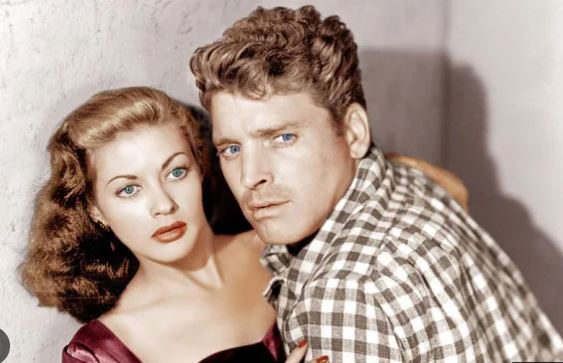
That same quality followed Lancaster into Hollywood.
He had the physique of an old-fashioned leading man, the smile of a matinee idol and enough physical confidence to make swashbuckling look effortless. But beneath the image was an unusually forceful personality.
Lancaster argued with directors.
He challenged studios.
He became a producer when stars were still expected to take whatever the studio handed them.
And when another major actor entered the room, Lancaster rarely behaved as though he should be grateful simply to stand beside them.
Sometimes that created friendship.
Sometimes competition.
Occasionally it brought production to a halt.
And one famous actress needed only a single morning with him before making very clear how she expected Burt Lancaster to behave.
There is no need for a mysterious “secret journal” to understand Lancaster’s place in Golden Age Hollywood.
The documented stories are better.
They show what happened when one of Hollywood’s strongest personalities met seven people who were strong enough to push back.
1. Kirk Douglas: They Argued, Competed—and Kept Coming Back to Each Other
If one relationship best explains Burt Lancaster, it may be Kirk Douglas.
They were not gentle personalities.
Both were ambitious.
Both had enormous screen presence.
Both wanted control over their careers at a time when studios still controlled most actors.
And somehow, putting them together worked.
Their first film together was I Walk Alone in 1947.
Douglas later described their working relationship with remarkable simplicity:
“We argued, we fought, we talked, we made up.”
Then he added that somehow it worked.
That pattern would continue for decades.
They appeared together in films including Gunfight at the O.K. Corral, The Devil’s Disciple, The List of Adrian Messenger, Seven Days in May and, much later, Tough Guys.
Their chemistry worked partly because audiences could sense that neither man looked naturally willing to surrender.
In Gunfight at the O.K. Corral, Lancaster’s Wyatt Earp and Douglas’s Doc Holliday spend much of the film circling one another emotionally.
In Seven Days in May, the tension became even sharper.
Douglas played the officer attempting to stop a military coup.
Lancaster played the general behind it.
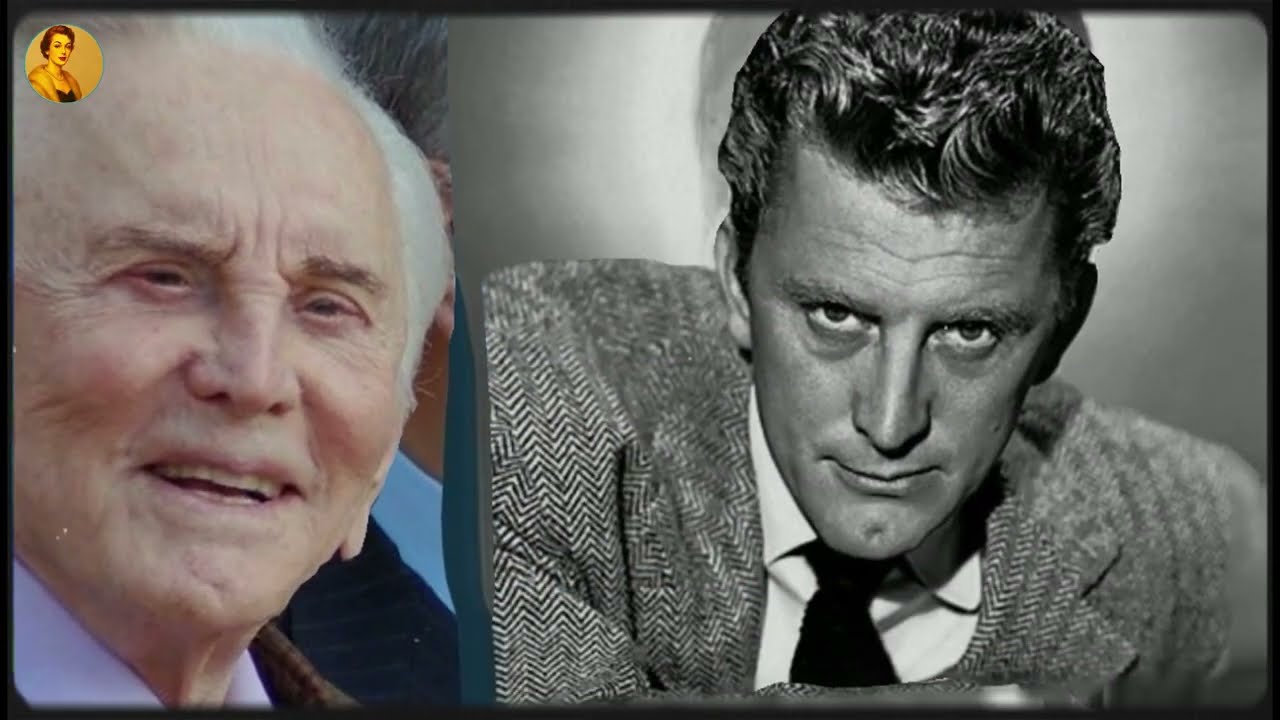
Director John Frankenheimer later claimed Douglas sometimes felt overshadowed by Lancaster. He even remembered Douglas being sensitive about the height difference between them; Lancaster supposedly responded with the sort of joke only an old rival could make—hiding the built-up heels Douglas sometimes used beside him.
Lancaster once joked publicly that Douglas himself would be the first to admit he could be difficult—and Lancaster would happily be the second.
But there was affection beneath the needling.
When Lancaster later suffered serious health problems, Douglas spoke about him with real concern and admiration, calling attention to how hard Burt had worked throughout his life.
Their final major pairing, Tough Guys in 1986, understood exactly what audiences remembered.
They were no longer the physically dominant young stars of the 1950s.
They were older men.
But put Burt Lancaster and Kirk Douglas in the same frame and the old competition immediately returned.
That may have been the secret of the partnership.
They did not need to pretend the rivalry wasn’t there.
They used it.
And Douglas was hardly the only screen legend who discovered that sharing a film with Lancaster could become a contest over who controlled the room.
Clark Gable found that out in 1958.
2. Clark Gable: The King of Hollywood Arrived for a Meeting—and Found the Door Locked
Few actors could intimidate Hollywood simply by walking onto a set the way Clark Gable could.
By the time Run Silent, Run Deep was made, Gable had been a superstar for more than two decades.
This was Rhett Butler.
The man still associated with Gone with the Wind, It Happened One Night and an era when MGM stars seemed almost royal.
Burt Lancaster was younger.
But there was an unusual complication.
Lancaster wasn’t merely Gable’s co-star.
His production company was involved in making the film.
In effect, one of Hollywood’s younger leading men was helping produce a picture starring one of Hollywood’s most established legends.
The relationship began badly.
According to Turner Classic Movies’ production history, Gable became concerned that his character might appear secondary to Lancaster’s. He was especially unhappy after learning that script changes were taking place.
Then came an incident that probably did little to reassure him.
Gable arrived with his wife for a 7 a.m. production meeting.
The office was locked.
Nobody had told him that the meeting had been moved.
Gable was furious.
According to the account, he asked what kind of “cheesy, crummy outfit” he had signed on with.
But the more serious battle involved the screenplay.
The story placed Gable’s submarine commander in conflict with Lancaster’s second-in-command. At one point, Lancaster’s character was supposed to take control away from him.
Gable refused.
For a star who had spent decades playing dominant men, the scene apparently crossed a line.
Production stopped for two days.
Eventually screenwriter John Gay found a solution.
Instead of Lancaster’s character simply taking command from Gable, Gable’s commander would become seriously injured, making it necessary for the second-in-command to assume control.
Gable accepted the change.
Filming continued.
What’s striking is what happened afterward.
The production did not collapse into a lifelong feud.
Once filming settled down, accounts indicate Gable became more relaxed and congenial.
The finished movie is stronger because neither actor appears weak.
On screen, they seem to be fighting over the submarine.
Behind the camera, two major stars had effectively been negotiating the same thing:
Who gets to surrender authority—and how?
It was a quintessential Golden Age problem.
But Lancaster’s next collision came from a very different direction.
Clark Gable objected because he feared looking weaker.
Katharine Hepburn became angry because Lancaster was late.
3. Katharine Hepburn: Burt Was 25 Minutes Late. She Made Sure It Didn’t Happen Again.
In 1956, Burt Lancaster began work opposite Katharine Hepburn in The Rainmaker.
It was their only movie together.
Their characters needed chemistry.
The actors initially had something closer to friction.
Hepburn approached acting with formidable discipline.
She learned her material thoroughly before filming.
Lancaster had a different method. He was more comfortable learning material close to the day it would be shot and was notorious for challenging creative decisions when he thought he had a better idea.
Then came the first day.
Lancaster arrived about 25 minutes late.
Katharine Hepburn took him aside and let him know exactly how she felt about it.
After that, according to TCM’s production history, Lancaster arrived on time.
It is difficult to imagine a more appropriate first confrontation between those two actors.
Hepburn had spent decades refusing to behave the way Hollywood expected women to behave.
Lancaster was accustomed to being one of the strongest personalities around him.
Neither was likely to quietly accommodate the other.
And Lancaster was not making life easy for the director either.
Director Joseph Anthony later described him as difficult from the beginning, recalling Lancaster criticizing the material and attempting to exercise considerable influence over the way the film was made.
Yet something interesting happened between Lancaster and Hepburn.
Once they established the rules, they worked.
They even collaborated intensely on an important romantic scene, revising the moment in which Lancaster’s Starbuck kisses Hepburn’s Lizzie.
Producer Hal Wallis watched the footage and was startled by how good Lancaster was.
The difficult man who had irritated his co-star on the first day had become the man she could build the film’s crucial romantic scene with.
That is a recurring pattern in Lancaster’s career.
Friction did not necessarily mean failure.
Sometimes it meant two serious actors testing one another until they found something that worked.
Hepburn did not need Lancaster to be easy.
She needed him to be good.
And he was.
A younger actor named Tony Curtis would soon discover something else about Lancaster:
being challenged by Burt could also be an invitation into his inner circle.
4. Tony Curtis: Lancaster Teased Him Before Hollywood Took Him Seriously
Before Tony Curtis became one of the biggest stars of the late 1950s, Hollywood often treated him primarily as a handsome young man.
The dark hair.
The face.
The fan magazines.
The matinee-idol image.
Burt Lancaster saw something more useful.
Their connection stretched back to Criss Cross in 1949, when Curtis appeared briefly in an uncredited part.
TCM’s history of the film says Lancaster played practical jokes on the younger actor.
Curtis apparently understood the message correctly.
The teasing meant Lancaster liked him.
They became friends.
Years later, Lancaster helped place Curtis in films that forced audiences to reconsider what he could do.
They worked together on Trapeze in 1956.
Then came Sweet Smell of Success.
Curtis wanted the role of Sidney Falco desperately.
His studio, Universal, had good reason to worry.
Falco was not charming.
He was desperate, morally compromised and willing to crawl through New York’s nightlife doing almost anything to stay useful to the powerful columnist J.J. Hunsecker.
Lancaster played Hunsecker.
The relationship on screen was poisonous.
Behind the camera, Lancaster already knew Curtis could handle the challenge.
TCM notes that Lancaster had enjoyed their give-and-take while making Trapeze, and Lancaster and Curtis eventually became the terrifying center of Sweet Smell of Success.
The production itself was hardly peaceful.
Lancaster’s company controlled the film, and director Alexander Mackendrick later described an atmosphere full of tension.
Lancaster argued over creative decisions.
At one point, according to Mackendrick’s account, a heated argument became so intense that Lancaster vaulted over a sofa toward him with the athletic energy of the former acrobat he was.
Lancaster also tried to direct performers himself.
The director felt threatened enough by the production politics to protect certain scenes against later editing.
And yet the film they made became a classic.
Curtis delivered one of the performances that transformed his reputation.
Lancaster created one of his coldest and most memorable characters.
The movie initially struggled commercially, but its stature grew enormously over time and it was eventually selected for preservation in the National Film Registry.
For Curtis, Lancaster had become more than an intimidating senior star.
He was part of the bridge between Tony Curtis the pretty boy and Tony Curtis the actor.
Lancaster had experienced a similar transformation himself a decade earlier.
And the woman beside him in his first major film was undergoing one too.
Her name was Ava Gardner.
5. Ava Gardner: One Movie Changed Both of Their Lives
When audiences first encountered Burt Lancaster in The Killers in 1946, he did not look like an inexperienced film actor.
He looked as though he had been built specifically for noir.
Large.
Physical.
Dangerous.
Yet vulnerable enough to make his character’s destruction believable.
It was Lancaster’s first released movie.
Across from him was Ava Gardner.
Gardner had been under contract at MGM for years without finding the role that would make the industry take her seriously.
MGM knew she was beautiful.
That wasn’t the problem.
The problem was getting people to see an actress behind the beauty.
Producer Mark Hellinger believed he had found that opportunity in The Killers.
MGM loaned Gardner out for the film.
She later credited Hellinger with seeing her as an actress rather than simply a sex symbol.
Then she and Lancaster stepped in front of the same camera.
He played the doomed Swede.
She played Kitty Collins, the woman whose combination of glamour and deception helps pull him toward disaster.
Their chemistry did exactly what film noir required.
She seems dangerous.
He knows she is dangerous.
He walks toward her anyway.
Contemporary and later film accounts repeatedly emphasize the intensity created by pairing them.
There is a temptation, especially with Old Hollywood, to turn good chemistry into a secret-romance story.
It isn’t necessary here.
The real significance is professional.
The Killers helped launch Lancaster almost immediately into stardom.
It also became the film Gardner regarded as the turning point that allowed her to be treated as a serious screen presence.
Two future icons entered one noir together.
Neither came out of it with the same career.
And only a few years later, Lancaster would create another romantic pairing that became even more famous.
The woman involved was almost the opposite of Ava Gardner’s screen image.
6. Deborah Kerr: Hollywood Thought of Her as Proper—Until She Hit the Beach With Burt
Before From Here to Eternity, Deborah Kerr was generally associated with sophistication, restraint and British elegance.
Then Columbia Pictures cast her as Karen Holmes.
Karen was trapped in an unhappy marriage and involved in an affair with Lancaster’s Sergeant Warden.
The casting was deliberately against type.
And early during filming, it became clear that the contrast between Kerr and Lancaster was generating exactly the kind of screen heat the film needed.
Then they filmed the beach scene.
Lancaster and Kerr lie together at the water’s edge as waves crash around them.
By modern standards, the sequence is tame.
In 1953, it was startling.
Censors objected not only to the physical intimacy but to the imagery of the waves and foam around the couple.
The scene survived.
It became one of the most famous romantic images in American cinema.
But the scene’s importance goes beyond the kiss.
It shattered expectations about both stars.
Lancaster could easily have remained the athletic tough guy.
Kerr could easily have remained the proper Englishwoman.
Together, they allowed audiences to see something different.
From Here to Eternity became one of the defining films of the decade, winning eight Academy Awards.
Lancaster did not win that year—William Holden took Best Actor—but the movie pushed Lancaster even further toward the center of Hollywood.
By now he had worked beside enormous stars.
He had argued with them.
Matched them.
Produced them.
Occasionally outmaneuvered them.
But one of the most important men in Burt Lancaster’s life had nothing to do with Oscars.
He knew Burt before there was a Burt Lancaster movie.
Before Hollywood.
Before the smile.
Before anyone had heard his name.
7. Nick Cravat: The Man Who Knew Burt Before Hollywood Did
Nick Cravat was not Clark Gable.
He was not Kirk Douglas.
He wasn’t a major movie star.
And that is precisely why his place in Lancaster’s story matters.
Cravat and Lancaster knew each other as boys in New York.
They trained in acrobatics together and eventually created a professional act.
Before Hollywood, before leading roles, before Lancaster became famous for his physique, the two young men performed in circuses and vaudeville as an acrobatic team.
They were known as Lang and Cravat.
The partnership ended after Lancaster suffered an injury.
Then war and life intervened.
Lancaster eventually landed on Broadway.
Hollywood followed.
Suddenly one half of the old acrobatic team was becoming a movie star.
He did not forget the other half.
When opportunities arose to bring physical adventure into his films, Lancaster brought Nick Cravat back into his world.
They performed together again.
Cravat appeared alongside him repeatedly, including in The Flame and the Arrow, The Crimson Pirate, Run Silent, Run Deep, The Scalphunters and The Island of Dr. Moreau.
Lancaster’s daughter Joanna later described Cravat as her father’s dear friend dating back to their teenage years.
That friendship lasted across an extraordinary transformation.
Imagine knowing Burt Lancaster before millions of people knew his face.
Before The Killers.
Before From Here to Eternity.
Before the Oscar.
Before production companies and famous arguments and political speeches.
Nick Cravat knew the boy who wanted to be an acrobat.
Then he watched that boy become one of Hollywood’s most formidable stars.
Their relationship may reveal more about Lancaster than any supposed secret list of enemies ever could.
Because after all the famous names had entered and left his life, Lancaster still made room for the friend who knew him before fame had anything to offer.
Burt Lancaster Was More Complicated Than the Smile Suggested
Hollywood liked images it could sell quickly.
Burt Lancaster made that easy at first.
The physique.
The grin.
The athleticism.
He looked like an adventure star.
But Lancaster was never comfortable being only the thing Hollywood first decided he was.
That helps explain why he became an independent producer so early.
After Lancaster’s brief Broadway breakthrough brought film offers, agent Harold Hecht persuaded him to think beyond simply becoming another contract actor.
Their partnership eventually helped create one of Hollywood’s important early independent production operations.
Lancaster used that power to stretch.
Film noir.
Western.
War movies.
Political thrillers.
Prestige drama.
European cinema.
Difficult characters.
Villains.
Older men who bore almost no resemblance to the acrobatic hero of his youth.
And that hunger for control inevitably affected the people around him.
Directors sometimes found him difficult.
Other stars sometimes competed with him.
He could push.
Challenge.
Interfere.
But describing that simply as cruelty misses the larger pattern.
Lancaster wanted the work to matter.
Sometimes that made him exhausting.
Sometimes it made the movie better.
And His Politics Complicate the Old-Hollywood Image Even Further
That is why the image from August 1963 remains so revealing.
Lancaster could easily have remained overseas.
He was working.
The March on Washington did not need another movie star to become historically important.
Yet Lancaster came.
At the Lincoln Memorial, he presented the petition he had brought from Paris and spoke about America’s struggle for freedom and dignity before turning the program over to other artists and civil-rights figures.
Library of Congress photographs preserve him standing among Harry Belafonte, Charlton Heston and Sidney Poitier.
This does not mean Burt Lancaster was always right.
It does not mean everyone who worked with him liked him.
And it certainly does not mean Hollywood’s complicated history can be divided neatly into heroes and monsters.
It means Lancaster was willing to use power.
Sometimes on a movie set.
Sometimes beyond one.
That is more interesting than a fabricated list of people he supposedly hated.
Kirk Douglas May Have Understood Him Best
When people remember Lancaster and Douglas, it is easy to focus on the jokes.
The heels.
The arguments.
The competing egos.
The performances in which they seem to be testing each other every second.
But look at the timeline.
Their first movie together arrived in 1947.
Their last major pairing came in 1986.
Almost forty years.
Nobody sustains that kind of working relationship through pure dislike.
Douglas described the chemistry between them by saying that when they worked together, one plus one somehow became three.
Something extra appeared.
That may be the best explanation.
Lancaster needed people strong enough not to disappear beside him.
Kirk Douglas was one.
Katharine Hepburn was another.
Clark Gable refused to surrender his authority simply because Lancaster’s company was producing the movie.
Tony Curtis grew stronger by working opposite him.
Ava Gardner and Deborah Kerr helped create images with him that remained embedded in movie history.
And Nick Cravat never needed to compete with Burt Lancaster at all.
He had known him too long.
The Real Hollywood Story Doesn’t Need a Secret Journal
Burt Lancaster died on October 20, 1994, at age 80 after a long period of declining health.
He left behind dozens of films.
An Academy Award for Elmer Gantry.
One of the most unusual star careers of his generation.
A history as an early independent producer.
And relationships with people whose names still define classic American cinema.
The source version of this story claimed that a mysterious journal discovered years after Lancaster’s death contained a list of 14 “ruthless” Hollywood figures and then attributed severe accusations to Kirk Douglas, Natalie Wood, Jimmy Stewart, Marilyn Monroe and others without traceable evidence.
That version creates immediate shock.
The documented history creates something better.
It gives us Clark Gable bringing a production to a halt because he would not let his character surrender command.
Katharine Hepburn privately confronting Lancaster on his first morning of work.
Tony Curtis being teased by the older star before becoming his friend and collaborator.
Ava Gardner and Lancaster stepping into The Killers before either fully understood how much the film would change them.
Deborah Kerr abandoning her proper screen image in one of cinema’s most famous embraces.
Kirk Douglas fighting and joking with Lancaster for nearly forty years.
And Nick Cravat, the circus partner from New York, remaining beside him after Hollywood transformed everything else.
Those stories contain ego.
Competition.
Anger.
Loyalty.
Respect.
Friendship.
And power.
In other words, they contain exactly what made Golden Age Hollywood so fascinating in the first place.
Burt Lancaster did not need to leave behind a secret list telling us who the monsters were.
The real stories of the people who stood beside him reveal something far more interesting:
when Burt Lancaster entered a room, even Hollywood’s biggest legends knew they were dealing with someone who would not easily step aside.