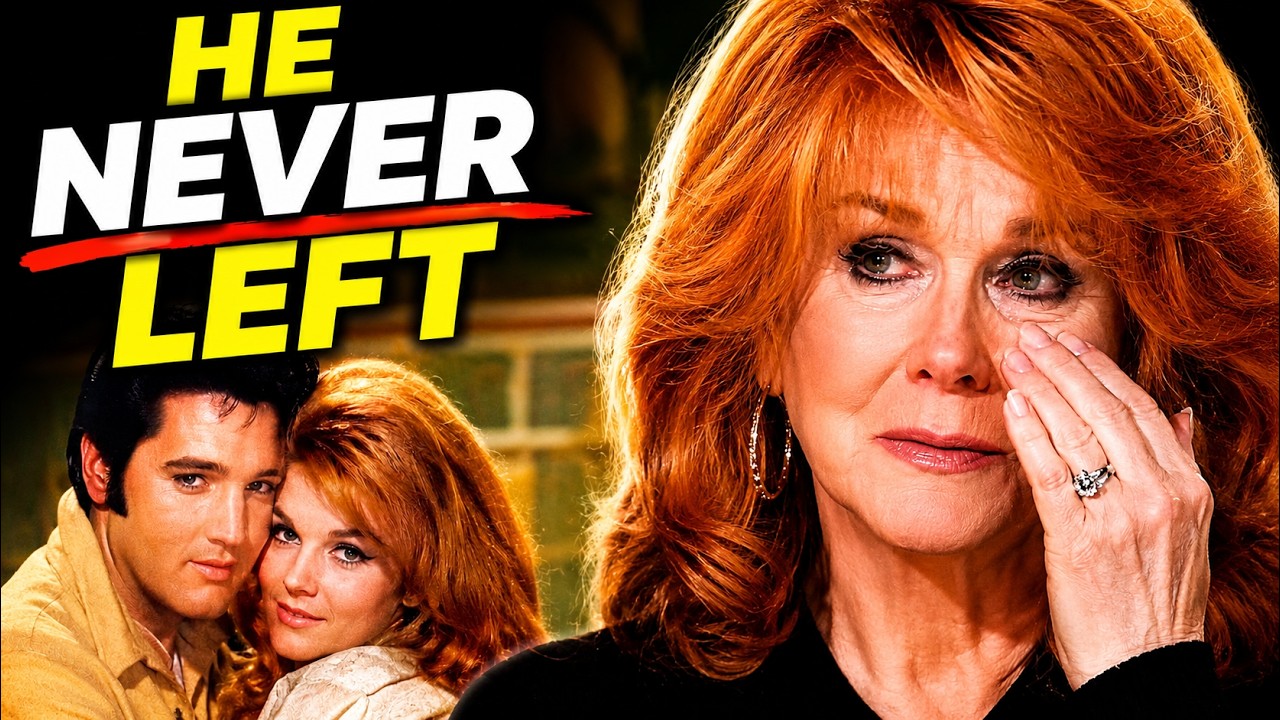
At 85, Ann-Margret Finally Revealed The Truth About Elvis Presley
On August 15, 1977, Ann-Margret walked into the Hilton in Las Vegas for another opening night.
By then, she knew the ritual.
For years, whenever she began a new Las Vegas engagement, flowers would arrive from Elvis Presley.
Not an ordinary bouquet.
The red flowers were arranged in the shape of a guitar.
There was never any need to ask who had sent them.
Elvis had been doing it for years.
But that night, there were no flowers.
No guitar.
No telegram.
No message.
Ann-Margret went onstage and performed two shows, but she could not shake the feeling that something was wrong.
The next morning, the telephone rang.
Her husband, Roger Smith, answered.
Ann-Margret looked at his face and immediately knew the call was not ordinary.
Then came the news.
Elvis Presley was dead.
He was 42 years old.
In her memoir, Ann-Margret later remembered that Elvis had not missed one of her Las Vegas openings in roughly a decade. The missing flowers were the first warning that the quiet tradition connecting them had suddenly ended.
It is the kind of detail Hollywood could never have invented more effectively.
Two of the most electric young stars of the 1960s had fallen for each other while making a movie.
They did not marry.
They built separate lives.
Ann-Margret eventually spent half a century married to another man.
Yet a small ritual survived long after the romance was over.
To understand why those flowers mattered, you have to go back to 1963, when Ann-Margret first walked onto the set of Viva Las Vegas and met the most famous man in American music.
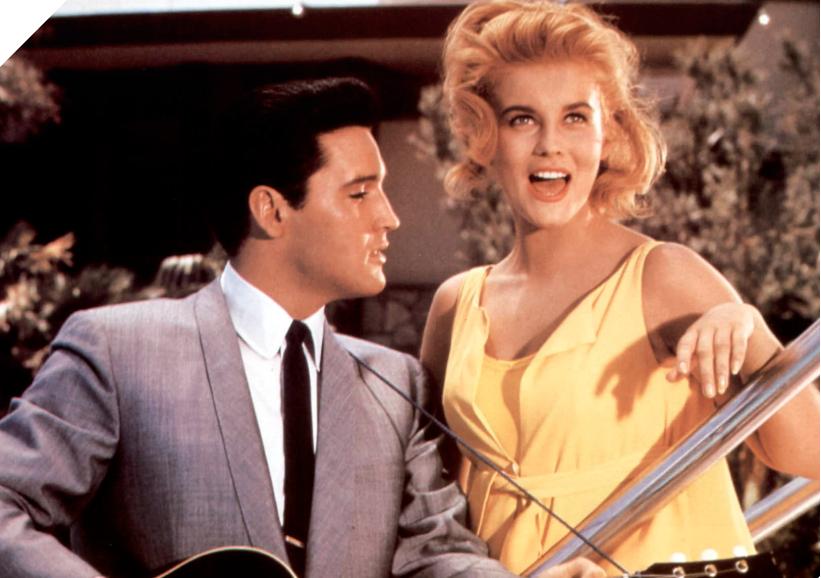
1. When Ann-Margret Met Elvis, Neither Was Looking for an Ordinary Co-Star
By 1963, Elvis Presley needed no introduction.
He had already changed American popular music.
He had survived the hysteria of his early television appearances, military service and the transition into Hollywood films.
His name alone could sell a movie.
Ann-Margret was in a different stage of fame.
Born in Sweden in 1941 and raised largely in Illinois after her family immigrated to the United States, she had already attracted enormous attention through movies such as Bye Bye Birdie.
She could sing.
Dance.
Act.
And most importantly, she had an energy that did not disappear when another star entered the frame.
That mattered when the other star was Elvis Presley.
The two were introduced during preparations for Viva Las Vegas.
Years later, Ann-Margret remembered the first meeting as somewhat awkward but good.
Then they began working on the music.
That was when something changed.
In her autobiography, she recalled realizing almost immediately how similar their physical reactions to music were. Once music started, both seemed unable to remain still. Their movements mirrored one another in a way she found almost uncanny.
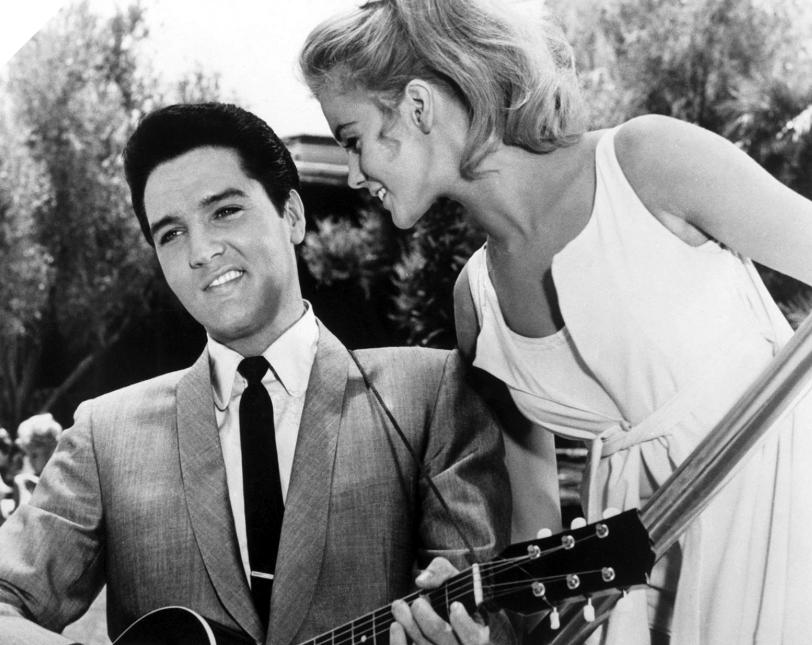
Watch Viva Las Vegas now and the reason for the fascination becomes obvious.
Neither performer disappears beside the other.
Elvis is Elvis.
Ann-Margret is unmistakably Ann-Margret.
The movie does not feel like a giant male star dancing beside a decorative leading lady.
It feels like two performers trying to out-energize one another.
That chemistry did not remain entirely on screen.
2. Their Romance Was Real
For decades, the Elvis–Ann-Margret relationship lived somewhere between Hollywood history and fan mythology.
But Ann-Margret herself eventually confirmed the essential truth.
They became romantically involved while making Viva Las Vegas.
Turner Classic Movies, drawing from her autobiography, notes that the two tried to keep the relationship away from the press even as rumors circulated.
The attraction was not difficult to understand.
They loved performing.
They enjoyed motorcycles.
They had both experienced sudden fame at young ages.
And unlike many people surrounding Elvis, Ann-Margret was already developing an important career of her own.
She did not need to be introduced as “Elvis Presley’s girlfriend” to have an identity.
She could walk onto a stage and command attention without him.
That equality appears to have mattered.
There was also something more private connecting them.
Both knew what it felt like to be watched constantly while still wanting parts of themselves to remain inaccessible.
Decades later, when CBS asked Ann-Margret for her fondest memory of Elvis, she stopped herself.
The memories were too personal, she explained.
They belonged to the two of them.
That answer may reveal more than another sensational confession would have.
She had already acknowledged the relationship.
What she refused to do was turn every intimate memory into public property.
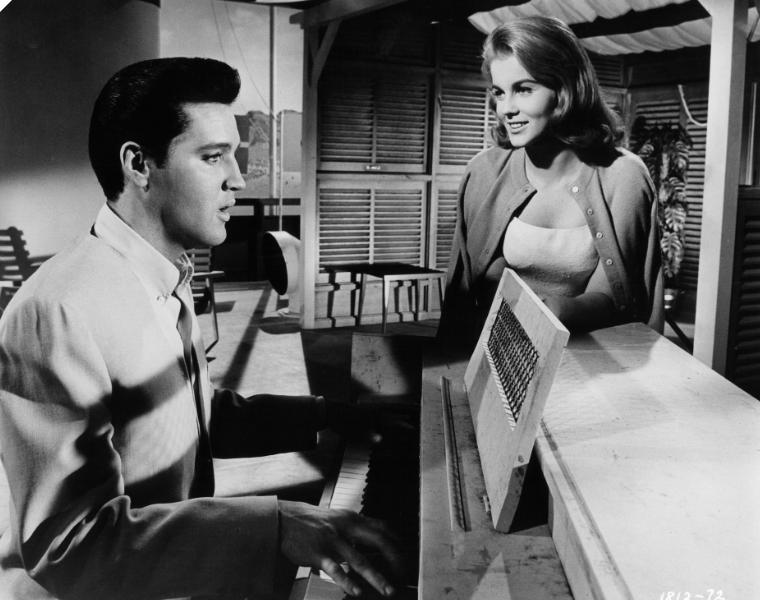
3. But There Was Already Another Life Waiting for Elvis
The romance had a problem almost from the beginning.
Priscilla Beaulieu was already part of Elvis Presley’s life.
Elvis had met Priscilla while serving in Germany.
Their relationship continued through the years when his connection with Ann-Margret developed.
That fact made the situation emotionally complicated and guaranteed that there could be no clean Hollywood ending.
Later accounts of Ann-Margret’s memoir make clear that she understood the relationship had limits.
Whatever Elvis felt for her, he also had obligations and commitments outside their romance.
Eventually the relationship stopped.
Elvis married Priscilla on May 1, 1967.
Ann-Margret married actor Roger Smith later that same month.
The timing is almost too neat for a movie.
But real life was already moving both of them in different directions.
And this is where many retellings of the story make a mistake.
They treat Roger Smith as though he were simply the man Ann-Margret settled for after losing Elvis.
Her own words suggest something very different.
4. Roger Smith Was Not the Consolation Prize
Ann-Margret and Roger Smith had known each other before their marriage.
Smith was an actor known for 77 Sunset Strip, but over time he increasingly turned his attention toward managing Ann-Margret’s career.
They married in 1967.
The marriage lasted until his death in 2017.
Fifty years.
In later interviews, Ann-Margret spoke about Roger with extraordinary warmth.
She described their marriage as incredible.
She said both partners had wanted it to work and emphasized that a marriage cannot survive if only one person is making the effort.
More recently, reflecting on her accomplishments, she went even further.
The actress said she was most proud of her marriage and described Roger as someone who meant everything to her.
She remembered their laughter.
Their shared jokes.
The feeling that more than five decades together seemed to pass quickly because the relationship had been so good.
That matters when telling the Elvis story accurately.
Elvis was enormously important to Ann-Margret.
But the existence of one profound relationship does not erase another.
One belonged largely to youth.
Another became a life.
And yet, remarkably, Roger Smith’s presence did not require Ann-Margret to pretend Elvis had never mattered.
Nor did Elvis disappear completely.
5. The Guitar-Shaped Flowers Began
After the romance ended, Elvis and Ann-Margret remained connected.
One of the clearest symbols of that connection was surprisingly simple.
Flowers.
When Ann-Margret opened a Las Vegas engagement, Elvis sent a floral arrangement shaped like a guitar.
According to accounts based on her autobiography, the tradition continued through the remaining years of Elvis’s life.
Think about how unusual that is.
The gesture was public enough for people around Ann-Margret to see.
But it was also deeply personal.
It did not demand anything from her.
It did not announce that they should be together.
It did not attempt to rewrite either person’s life.
It simply said:
I remember.
Year after year.
Opening after opening.
The flowers arrived.
That is one reason the story continues to fascinate people decades later.
A dramatic affair can be dismissed as chemistry.
A repeated gesture over years suggests something else.
Not necessarily unresolved romance.
But enduring affection.
A shared history neither person needed to pretend had never happened.
6. Ann-Margret Built the Life in Front of Her
While Elvis continued to dominate American culture, Ann-Margret kept building a formidable career of her own.
She moved beyond the sex-symbol image that had defined much of her early fame.
She appeared in dramatic roles.
Television specials.
Stage performances.
Later films.
She collected Golden Globe wins and Emmy nominations and remained a recognizable figure across generations.
Her life also included serious setbacks.
In 1972, Ann-Margret suffered devastating injuries after falling from a stage platform in Lake Tahoe.
Her survival and recovery became another chapter in a career built partly on physical performance.
Roger Smith remained beside her through the difficult period.
He increasingly managed her career and helped shape their professional life together.
Years later, she still remembered that partnership not simply as a business arrangement but as a marriage built on knowing one another deeply.
Even their differences became part of the affection.
Ann-Margret loved motorcycles.
Roger was initially less enthusiastic.
Eventually, as she later recalled, he bought one himself and rode with her because he understood how much motorcycles meant to her.
That small detail tells us almost as much about Roger as Elvis’s flowers tell us about Elvis.
Two men.
Two completely different gestures.
Both trying, in their own ways, to understand the same woman.
7. Elvis’s Life Was Becoming Harder
By the 1970s, the Elvis Ann-Margret had met on Viva Las Vegas was carrying a different weight.
He was still Elvis Presley.
Crowds still came.
His voice could still transform a room.
Las Vegas became an essential part of his later career.
But the pressure was increasingly visible.
Touring.
Personal difficulties.
Prescription drug use.
The extraordinary burden of remaining Elvis Presley every time he walked into public view.
The man who had once seemed almost physically unstoppable was struggling.
Ann-Margret was no longer the woman beside him.
She had her own husband.
Her own work.
Her own life.
But the guitar arrangements kept arriving.
And then came August 1977.
8. The First Time the Flowers Did Not Come
Ann-Margret opened at the Las Vegas Hilton on August 15.
The usual flowers from Elvis were missing.
In her later account, she remembered worrying through the evening.
Something felt wrong.
She performed.
Then she and Roger went to sleep.
The next morning, the telephone rang despite instructions not to disturb them.
Roger answered.
Ann-Margret saw the grief on his face before he fully explained.
She knew the call involved Elvis.
Presley had died at Graceland on August 16, 1977.
Ann-Margret was 36.
Elvis was 42.
The guitar-shaped flowers would never arrive again.
For nearly a decade, they had marked the beginning of her Las Vegas appearances.
Their absence marked an ending.
9. Roger Went With Her to Say Goodbye
This is another part of the story that deserves more attention.
Ann-Margret did not go through Elvis’s death alone.
Roger Smith went with her.
They traveled to Memphis.
Ann-Margret attended the private funeral at Graceland.
Her own recollection describes an overwhelmingly emotional scene.
Flowers filled the room.
She clung to Roger to make it through the service.
Then she embraced Elvis’s father, Vernon Presley.
They cried together.
That scene complicates every simplistic version of the story.
The woman who had once loved Elvis was mourning him.
And the husband with whom she had built her life was beside her.
Roger did not need to erase the past in order to be present in the future.
Ann-Margret did not need to deny what Elvis had meant to her in order to love her husband.
That is a much more mature love story than the usual triangle.
10. She Never Turned Elvis Into a Public Spectacle
After Elvis died, Ann-Margret could easily have built an entire second career around her memories of him.
The demand was certainly there.
Elvis fans wanted details.
Biographers wanted details.
Interviewers wanted details.
Every private story about Presley carried enormous commercial value.
Ann-Margret eventually wrote about their relationship in her autobiography.
But even after that, she remained selective.
During a CBS interview decades later, she was asked for her fondest memory of him.
Her reaction was immediate.
She did not want to go there.
It was personal.
Between them.
That boundary is worth noticing.
Many celebrity stories become larger after one person dies because the survivor can suddenly control the narrative.
Ann-Margret did not use Elvis that way.
She confirmed that their connection had been real.
She acknowledged its importance.
Then she kept part of it for herself.
Perhaps that is why the relationship still feels unusually intimate despite being one of Hollywood’s most famous romances.
The most important parts were never fully sold.
11. Was Elvis Really “The Love of Her Life”?
This question has followed the story for decades.
In 1994, advance coverage of Ann-Margret’s autobiography generated headlines declaring that Elvis had been the love of her life.
The reporting described the memoir as revealing how important the relationship remained to her and emphasized the guitar-shaped flowers that continued into the 1970s.
It is an irresistible phrase.
The love of her life.
It creates a clean story.
Elvis was the one.
They lost each other.
She never forgot him.
But life rarely fits into four words.
Because if we listen to what Ann-Margret herself has said about Roger Smith, another truth appears.
She was proud of her marriage.
She called it incredible.
She said Roger meant everything to her.
They spent half a century married and more than five decades together.
Those statements do not invalidate what she felt for Elvis.
Nor does her love for Elvis diminish her marriage.
Perhaps trying to rank the two relationships misses the point entirely.
12. Elvis Was a Love of Youth. Roger Became the Partner of a Lifetime.
Ann-Margret met Elvis during an extraordinary period.
They were young.
Famous.
Beautiful.
Working together on a movie built around speed, music and desire.
Their chemistry was immediate.
Everything around them intensified emotion.
They lived in a world where a photograph could become a headline before either person had time to understand what they were feeling.
Roger entered a different part of her life.
Marriage requires mornings.
Illness.
Career decisions.
Disagreements.
Recovery.
Age.
Loss.
Ordinary days when no cameras are present.
Roger and Ann-Margret had fifty years of those.
The difference is not:
real love versus fake love.
It is:
two different forms of love at two different stages of a life.
That is why reducing Ann-Margret’s story to “the woman Elvis should have married” does her a disservice.
She was not a footnote in Elvis Presley’s biography.
She built an enormous life after their romance.
And she did not spend that life waiting for him to return.
13. Yet the Flowers Still Meant Something
None of that makes the guitar-shaped flowers less moving.
In fact, it may make them more moving.
Elvis was not sending flowers to convince Ann-Margret to leave her husband.
There is no credible evidence that the tradition represented some decades-long plan to reunite romantically.
The gesture seems to have become a sign of affection and remembrance between two people who had once shared something intense.
They had moved on.
But they had not become strangers.
For people who have lived long enough, that distinction is easy to understand.
Not every former love becomes an enemy.
Not every meaningful relationship needs to be restarted.
Sometimes someone belongs permanently to your past without needing to belong to your present.
The relationship survives by changing form.
That appears to be what happened here.
14. Ann-Margret Still Guards Part of the Story
Ann-Margret is now in her eighties.
She continues to speak about her career, music, motorcycles and the remarkable life she has lived.
When she talks about Roger, there is still unmistakable grief and affection.
In a recent interview, she said she misses his humor and the laughter they shared.
She described him as someone who took great care of her.
When she talks about Elvis, the tone is different.
Warm.
Protective.
Private.
She does not deny what they had.
She simply refuses to make all of it available.
That is perhaps the most credible answer to the question people have asked for more than sixty years.
What did Elvis Presley really mean to Ann-Margret?
Enough that she remembered him with tenderness.
Enough that the guitar flowers mattered.
Enough that their final absence frightened her before she knew why.
Enough that she traveled to Memphis and wept with his father.
But not enough to erase the life she chose afterward.
15. Roger Smith Deserves the Last Word Too
When Roger died in 2017, Ann-Margret lost the person who had shared fifty years of marriage with her.
She did not describe those decades as second best.
She described them as extraordinary.
In interviews since his death, she has spoken of seeing him again one day.
She has talked about their laughter.
She has remembered the effort both of them made to keep the marriage strong.
And when asked what achievement made her most proud, she did not choose Viva Las Vegas.
Or a Golden Globe.
Or an iconic performance.
She chose her marriage.
That one detail changes the entire Elvis story.
It prevents nostalgia from becoming fantasy.
Ann-Margret did not spend fifty years trapped inside a romance from 1963.
She carried the memory with her while continuing to live.
16. The Night Without Flowers
And that brings us back to August 1977.
A dressing room in Las Vegas.
An opening night.
A familiar gift that did not arrive.
For years, Elvis Presley had remembered.
That night, Ann-Margret noticed immediately when he didn’t.
She did not yet know that the tradition had already ended forever.
The next morning, Roger answered the phone.
Hours later, the world would begin mourning Elvis Presley—the King of Rock and Roll, the cultural phenomenon, the man whose records and performances had changed American music.
Ann-Margret mourned someone else too.
The young man she had met beside a piano in 1963.
The performer whose body understood music the way hers did.
The man who rode motorcycles with her.
The man with whom a future had once seemed imaginable.
The man who later sent flowers when their lives no longer belonged together.
Then Roger took her to Memphis.
And stood beside her while she said goodbye.
Maybe that is the part of the story Hollywood’s old love-triangle narrative has always missed.
There was no simple winner.
No woman who defeated another.
No single romance that invalidated everything that followed.
There was a young love powerful enough to survive as memory.
And there was a marriage strong enough to make room for that memory without being threatened by it.
Elvis Presley became one unforgettable chapter in Ann-Margret’s life.
Roger Smith became the man with whom she wrote fifty years of it.
Both were real.
Both mattered.
And perhaps that is why the missing guitar-shaped flowers remain so haunting almost half a century later.
They were never proof that Ann-Margret had failed to move on.
They were proof that moving on does not always require forgetting.