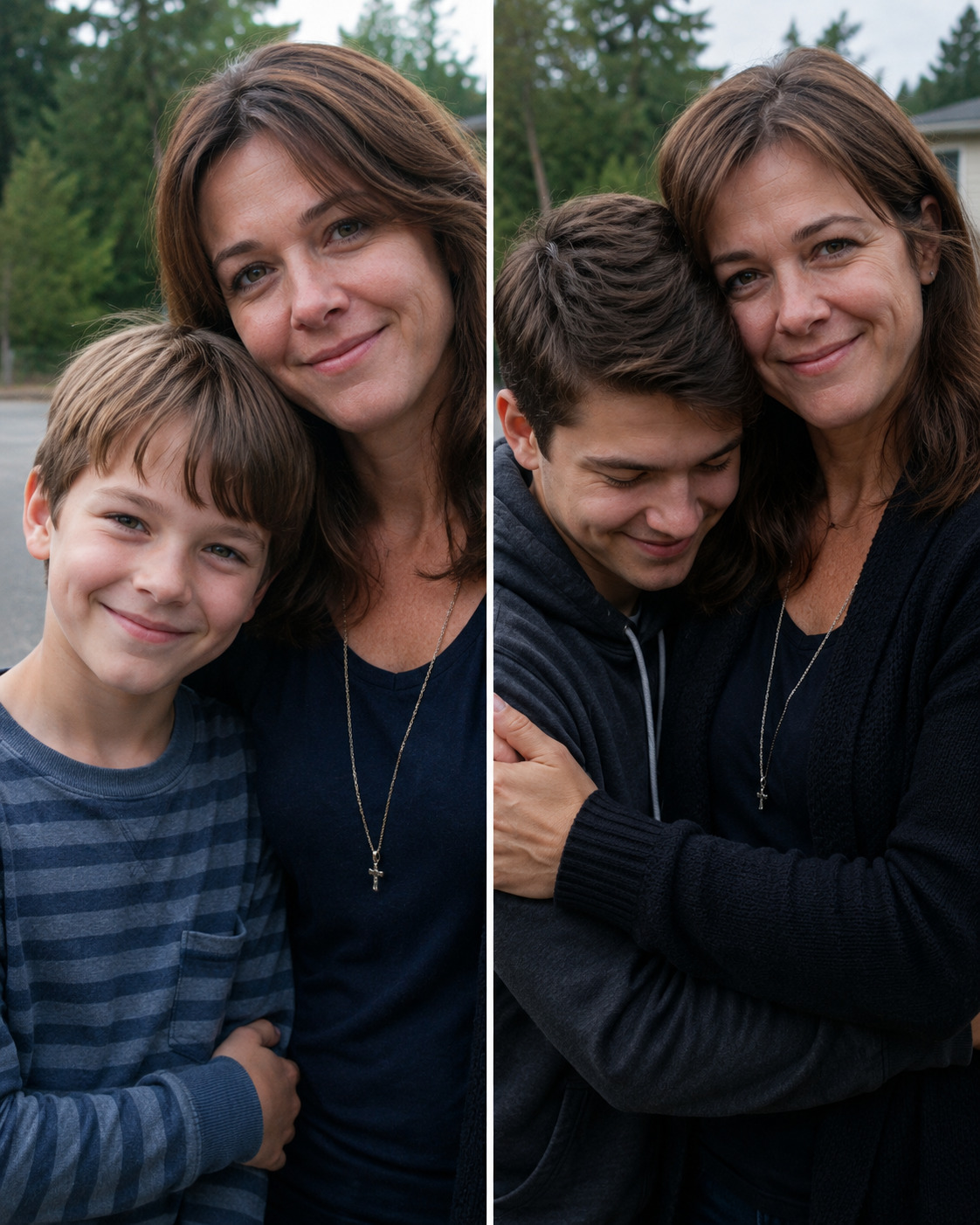
On Christmas morning in 1995, one of the coolest men America had ever known died quietly at his Beverly Hills home.
Dean Martin was 78.
For decades, audiences had watched him stroll onto stages in a tuxedo, cigarette between his fingers, drink in his hand, looking as though nothing in the world could possibly bother him.
He sang as if singing required no effort.
He told jokes as if he had just thought of them.
He stood beside Frank Sinatra and Sammy Davis Jr. while Las Vegas turned their nights into legend.
Even his apparent drunkenness became part of the charm.
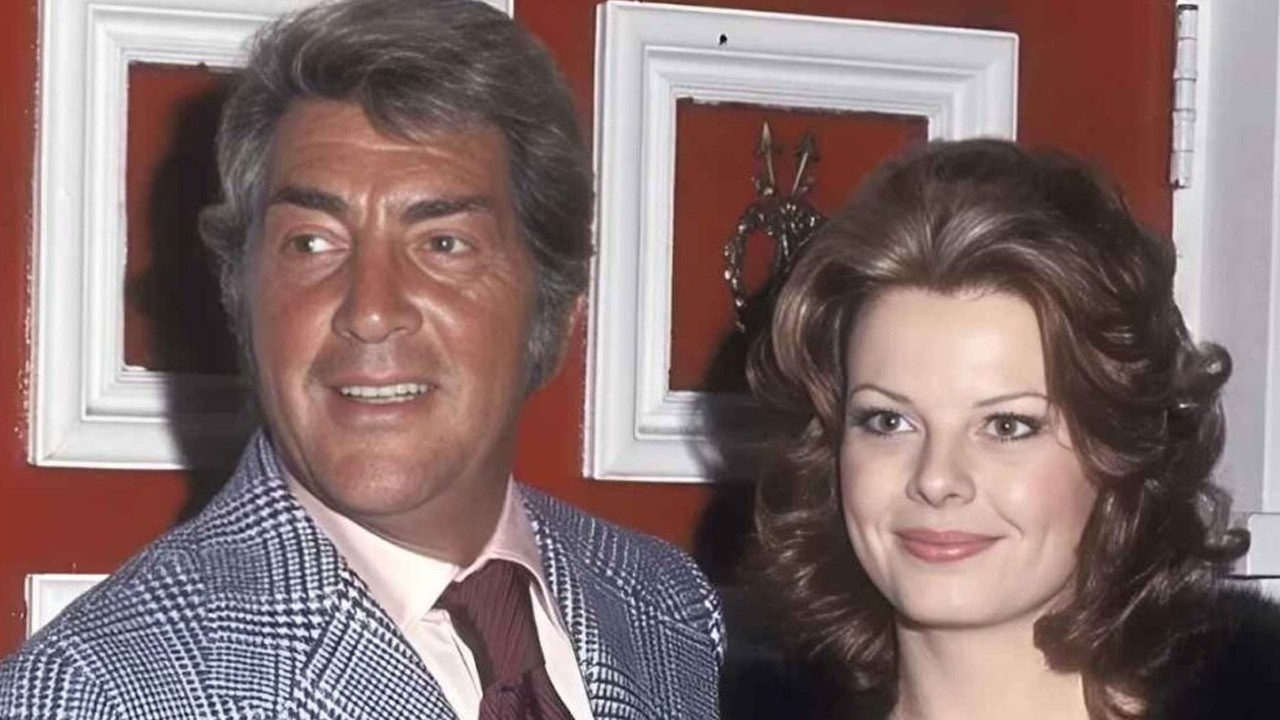
But when Martin died at 3:30 a.m. on December 25, his longtime publicist said the immediate cause was acute respiratory failure. He had been in declining health for several years and had largely withdrawn from public life.
Three days later, Las Vegas did something reserved for very few entertainers.
The Strip dimmed its lights.
For ten minutes, the city that had helped create Dean Martin’s legend went dark in his memory.
It was a fitting tribute.
But it also highlighted a strange contrast.
The public remembered a man surrounded by music, laughter, friends and bright lights.
Those who knew Dean’s later years remembered something quieter.
A devastating family loss in 1987 had changed the rhythm of his life.
His 35-year-old son, Dean Paul Martin, had vanished in a military jet during a training flight.
And after the wreckage was finally found, friends and relatives said the father who had made emotional distance look like coolness was never quite the same.
1. The “Drunk” America Loved Was Mostly a Character
To understand Dean Martin’s later years, it helps to begin with one of the biggest misconceptions about him.
That glass.
For generations, people assumed Dean was drinking heavily every time he wandered through a television monologue or nightclub act sounding slightly amused by his own existence.
His daughter Deana Martin later explained that much of it was a carefully constructed gimmick.
After Martin’s partnership with Jerry Lewis ended, writers helping reshape his solo nightclub act needed an instantly recognizable persona.
Dean was handsome.
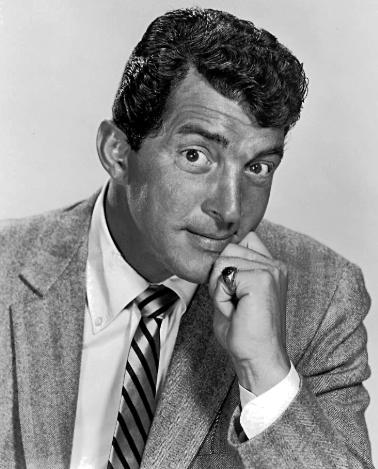
Debonair.
Relaxed.
So they put a cigarette in one hand and a drink in the other.
According to Deana, the supposed liquor onstage was often apple juice.
The image worked almost too well.
Viewers believed Dean was the man who could drink all night and still wake up looking immaculate.
In reality, his daughter remembered a father who came home for dinner, played golf early and was far more disciplined than the television character suggested.
Dean Martin was not a teetotaler.
He drank.
He smoked heavily.
But the perpetually intoxicated “Dino” was theater.
And perhaps no part of his career illustrates his talent better than the fact that millions never realized they were watching a performance.
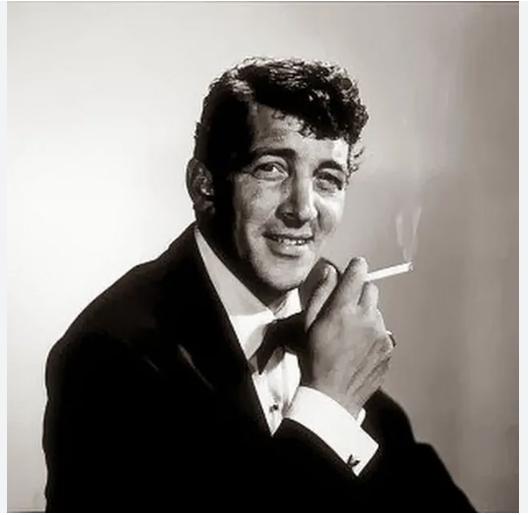
2. Before the Tuxedo, He Was Dino Crocetti From Ohio
Dean Martin was born Dino Paul Crocetti in Steubenville, Ohio, on June 7, 1917, to Italian immigrant parents.
He left high school early.
Before entertainment became his life, he worked various jobs and even boxed under the name “Kid Crochet.”
Eventually the voice took over.
He began singing in clubs and with bands, changed his professional name and made his way toward New York.
Then Jerry Lewis entered the story.
The combination seemed unlikely.
Martin was the handsome singer who appeared almost indifferent to everything happening around him.
Lewis was chaos.
He interrupted songs.
Made faces.
Screamed.
Destroyed the rhythm.
Audiences loved them.
Together, Martin and Lewis became one of America’s biggest entertainment acts, appearing on radio, television, nightclub stages and in 16 films.
Then, in 1956, the partnership ended.
For many entertainers, losing half of an enormously successful act would have been the beginning of decline.
For Dean Martin, it became a second beginning.
3. Dean Discovered He Didn’t Need Jerry Lewis to Fill a Room
Martin rebuilt himself.
He recorded hit songs.
He acted in films including Rio Bravo, The Young Lions, Some Came Running and Ocean’s 11.
He became one of the central figures associated with the group later known as the Rat Pack.
Then television made him even bigger.
In 1964, “Everybody Loves Somebody” reached No. 1 in America.
The following year, The Dean Martin Show premiered on NBC and became a major part of his public identity.
Here was the perfected version of Dean.
Unhurried.
Amused.
Apparently under-rehearsed.
A little drunk.
Never desperate for the audience’s approval.
He seemed to be the only man in show business who could become more charismatic by appearing not to care whether the show continued.
It earned him the image that would follow him forever:
The King of Cool.
But coolness can hide many things.
Dean’s family life was considerably more complicated than the persona suggested.
4. Jeanne Entered His Life Before the Rat Pack Legend
Dean met Jeanne Biegger in the late 1940s.
She had been a model and Orange Bowl queen.
According to Jeanne’s later recollection, attraction came almost immediately.
They married in 1949.
Dean already had four children from his first marriage, and when he gained custody of them, Jeanne helped raise them.
Together, Dean and Jeanne had three more children:
Dean Paul.
Ricci.
Gina.
For years, photographs presented an enviable picture.
Beautiful parents.
A large Hollywood family.
Increasing fame.
Money.
Success.
But the marriage eventually fractured.
Dean and Jeanne announced their divorce in 1969; it was finalized in 1972. Dean later married Catherine Hawn, though that marriage also ended. Jeanne never remarried.
It would be easy to transform that into a conventional lost-love story.
To say Jeanne was always “the one.”
To claim Dean spent the rest of his life regretting the divorce.
The available evidence does not support such certainty.
What is documented is more restrained—and perhaps more moving.
Years after the marriage ended, a shared tragedy brought Dean and Jeanne back into one another’s lives.
5. Their Son Dean Paul Seemed Able to Do Almost Anything
Dean Paul Martin was born in 1951.
As a teenager, he became part of the pop group Dino, Desi & Billy with Desi Arnaz Jr. and Billy Hinsche.
Music was only one of his pursuits.
He played competitive tennis.
Acted.
Raced cars.
Studied.
And learned to fly.
Flying eventually became much more than a hobby.
Dean Paul joined the California Air National Guard and became an F-4C Phantom pilot.
His father was proud of him.
In one recollection published decades later, Dean described his son simply as a “good boy,” saying he would have been proud of him even without the jet-pilot achievement.
Then, on March 21, 1987, Dean Paul’s F-4C took off from March Air Force Base on a routine training mission.
He was 35 years old.
His teenage son Alex had watched him take off.
About ten minutes later, the aircraft disappeared from radar.
6. For Days, the Martin Family Waited
The weather was terrible.
Snow and clouds covered the mountains east of Los Angeles.
Dean Paul’s fighter was one of three aircraft participating in the mission.
Search teams began looking across rugged terrain near Mount San Gorgonio.
At first there was still hope.
The family’s public statement was simple:
They were watching.
Waiting.
Praying.
Day after day, rescuers searched.
Then the wreckage was spotted.
Dean Paul Martin and his weapons systems officer, Capt. Ramon Ortiz, had been killed when the aircraft struck the mountainside.
Investigators said the men died instantly.
For Dean Martin, the loss was not public mythology.
It was his son.
And people close to him noticed a change.
7. “A Huge Turning Point”
Years later, friends and family consistently identified Dean Paul’s death as one of the defining moments in Dean Martin’s later life.
Singer Paul Anka described it as a “huge turning point.”
Others remembered Martin becoming quieter and more withdrawn.
Author William Keck, who encountered Dean during those later years, used a particularly haunting image:
He looked like “a candle without a flame.”
Those words are powerful.
But they should not be turned into a medical diagnosis.
There is no basis for saying grief literally caused Dean Martin’s eventual death.
What the evidence does support is that losing Dean Paul profoundly affected him.
His daughter Deana remembered how devastating the loss was for the entire family and acknowledged how hard it was on her father.
Dean began preferring quieter surroundings.
He increasingly ate alone.
He wanted less conversation, not more.
The man who had spent much of his career looking detached from everything suddenly had a reason that detachment could not neutralize.
8. The Tragedy Also Brought Dean and Jeanne Back Together
By 1987, Dean and Jeanne had been divorced for years.
Their romantic marriage was over.
But they had one thing nobody else could fully share:
they had lost the same son.
According to Jeanne’s obituary and later accounts of the family, the former spouses renewed their friendship after Dean Paul’s death.
They remained on friendly terms until Dean’s death in 1995.
That is an important distinction.
The documented story is not that Jeanne moved back into Dean’s home.
There is no solid basis for saying she became his nurse, visited him every day or held his hand as he died.
Nor is there reliable evidence that Dean publicly declared her the great lost love of his life.
The true story does not need those additions.
Two people had married.
Raised a large family.
Divorced.
Lived separate lives.
Then suffered the worst loss a parent can imagine.
And somehow, grief created a path back to friendship.
That is enough.
9. Dean Tried to Return to the Old Life
One of the biggest inaccuracies in sentimental retellings of Dean Martin’s story is the suggestion that he simply stopped performing after his son’s death.
He didn’t.
Late in 1987, Dean joined Frank Sinatra and Sammy Davis Jr. to announce an ambitious reunion tour.
The three legends planned dozens of performances across North America.
In March 1988, they opened the tour in Oakland in front of roughly 14,500 people.
The old imagery was still there.
The songs.
The jokes.
The drink-in-hand routine.
The Rat Pack nostalgia.
But contemporary coverage noticed that Dean showed less energy than the others.
Then health problems intervened.
He was hospitalized with a kidney condition and left the tour.
Liza Minnelli eventually took his place.
But even then, Dean did not disappear completely.
10. He Went Back to Las Vegas
By August 1988, Dean was performing again.
He opened what the Los Angeles Times described as his 200th Las Vegas engagement, at Bally’s Grand Hotel.
That matters.
The later Dean Martin story is not:
His son died, and he instantly gave up.
Reality was less neat.
He tried.
He returned.
He performed.
He appeared at tributes for old friends.
But the trajectory was clearly changing.
The enormous appetite for public performance that had sustained his career for decades was fading.
And the friends around him were aging too.
Sammy Davis Jr. was ill.
Sinatra was getting older.
The world that had created the Rat Pack was disappearing.
Dean was increasingly ready to let it go.
11. Jerry Lewis Gave Him One Last Birthday Surprise
Perhaps the most emotional public reunion of Dean’s later career came from someone who had once seemed permanently gone from his life.
Jerry Lewis.
Martin and Lewis had separated professionally in 1956 after ten enormously successful years together.
Their breakup had been bitter enough to become Hollywood history.
Frank Sinatra famously surprised them with an onstage reunion during the 1976 Muscular Dystrophy Association telethon.
Then came another moment.
In 1989, when Dean was celebrating his 72nd birthday during a Las Vegas appearance, Jerry Lewis unexpectedly joined him onstage.
By that point, the two men were elderly veterans of a partnership that had once seemed destined to last forever.
There was no need to pretend the intervening decades had not happened.
The significance was simply that they were together again.
Dean would make relatively few major public appearances after that period.
The stage was becoming part of his past.
12. The Man Who Looked Like He Loved Crowds Actually Preferred Quiet
This may be the most important difference between the Dean Martin myth and the man himself.
The myth belonged in a crowded casino at two in the morning.
The man often preferred an early dinner.
Golf.
Family.
Privacy.
Even before his later withdrawal, colleagues frequently described Martin as more reserved than his stage persona suggested.
The “King of Cool” image encouraged audiences to believe nothing touched him very deeply.
But coolness was partly a professional shield.
In his later years, witnesses recalled him eating quietly at familiar Beverly Hills restaurants.
Sometimes family joined him.
His daughter Deana remembered asking whether he wanted company.
He would accept—with one condition.
Not too much conversation.
There is something almost touching about the contrast.
Dean Martin had spent decades being paid to make rooms feel effortless.
Eventually, he preferred rooms that asked nothing of him.
13. His Health Was Failing Too
Dean had smoked heavily for much of his life.
By the early 1990s, his health had deteriorated substantially.
Reliable contemporary reporting at the time of his death emphasized years of declining health and several years away from work.
Later biographical accounts state that he was diagnosed with lung cancer in 1993 and declined major surgery proposed to prolong his life.
But when Dean died, his publicist did not announce lung cancer as the immediate cause.
The official public statement gave:
acute respiratory failure.
That distinction matters.
It is tempting to turn Dean’s death into a metaphor:
his son died, his heart broke, and eventually he simply stopped wanting to live.
That makes for dramatic writing.
It is not responsible biography.
Dean suffered emotional loss.
He suffered serious physical illness.
Both can be true without pretending one medically caused the other.
14. Christmas Morning
Dean Martin died at home in Beverly Hills on December 25, 1995.
He was 78.
The news arrived on a holiday Americans associated with family.
For generations who had watched Martin on television, bought his records or seen him in Las Vegas, the timing made the announcement feel even more poignant.
Tributes came quickly.
Frank Sinatra called Dean his brother “not through blood but through choice.”
Jerry Lewis was described by his representative as devastated.
Dean’s funeral was private, attended by family and friends away from the crowds and cameras that had followed so much of his life.
Then Las Vegas prepared its own goodbye.
15. The Strip Went Dark
Three days after Dean Martin died, the lights along the Las Vegas Strip were dimmed in tribute.
TIME reported that they remained dark for roughly ten minutes.
Consider the image.
The Sands was part of history.
The Rat Pack’s wildest nights belonged to another age.
Sammy Davis Jr. was gone.
Dean was gone.
Sinatra would die less than three years later.
Yet for a few minutes, casinos and neon signs went dark for the man whose public identity had seemed inseparable from them.
It was more eloquent than any invented final speech.
Dean Martin had spent decades lighting up Las Vegas.
Las Vegas answered his death by switching the lights off.
16. Jeanne Lived Another 21 Years
Jeanne Martin outlived Dean by more than two decades.
She never remarried.
She lived long enough to experience more family loss, including the deaths of additional children.
Jeanne died in August 2016 at 89.
By then, the glamorous Hollywood marriage photographed in the 1950s belonged to a completely different America.
But one fact remained.
Whatever had destroyed the marriage itself, the relationship did not end in permanent hostility.
After Dean Paul died, Dean and Jeanne became friends again.
They stayed that way for the rest of Dean’s life.
That is a quieter story than the claim that she was secretly the only woman Dean ever loved.
It may also be the more believable one.
Sometimes divorce ends a marriage without erasing the decades that came before it.
Sometimes tragedy reconnects people who no longer know how to be husband and wife but still know exactly what the other has lost.
17. Dean Paul Became the Divide Between Two Versions of Dean
When people describe Dean Martin’s later life, it is easy to divide his story too neatly.
Before 1987:
laughing.
singing.
Rat Pack.
Vegas.
Television.
After 1987:
silence.
grief.
decline.
Life was not that simple.
Dean continued performing after his son’s death.
He tried the reunion tour.
Returned to Vegas.
Saw Jerry Lewis again.
Appeared at tributes for old friends.
But the people who knew him still saw a difference.
Paul Anka called Dean Paul’s death a turning point.
His daughter acknowledged how deeply it affected him.
Later observers remembered a quieter, sadder man.
That is the responsible way to tell the story.
Not:
Dean Paul died, so Dean stopped living.
But:
Dean Paul died, and something about the way Dean lived afterward changed.
18. The King of Cool Had Always Been More Complicated Than the Character
Maybe that is why Dean Martin still fascinates people.
His greatest performance may not have been one particular song, film or television episode.
It was Dean Martin.
The man audiences thought they knew.
The loose tie.
The heavy eyelids.
The cigarette.
The drink.
The shrug.
The impression that everything came naturally and nothing mattered enough to hurt.
But his daughter later told us that the drink was often apple juice.
His colleagues knew he could be disciplined and precise.
His family knew the private man.
And the death of Dean Paul exposed the limitation of the “King of Cool” mythology.
Some things cannot be shrugged away.
Not even by Dean Martin.
19. Fame Did Not Destroy Dean Martin—and It Could Not Protect Him Either
The most sensational versions of Dean’s story say Hollywood took everything from him.
His marriage.
His happiness.
His son.
His will to live.
That goes too far.
Hollywood did not cause Dean Paul’s military jet to crash into a mountain.
Fame alone did not explain Dean’s divorce.
And grief should not be substituted for the documented medical cause of his death.
The more truthful conclusion is also more universal.
Dean Martin had almost everything Americans are taught to associate with success:
money.
fame.
friends.
hit records.
movies.
television.
Las Vegas.
A name recognized around the world.
None of it could protect him from the ordinary tragedies that eventually reach even extraordinary people.
A marriage ended.
Friends aged.
Health failed.
A child died before his father.
That last loss was the one people closest to Dean remembered changing him most deeply.
20. When the Lights Finally Went Out
On television, Dean Martin always seemed capable of delivering one more joke.
One more song.
One more careless smile.
The audience could believe the night might continue forever.
It didn’t.
By the time Dean died on Christmas Day 1995, his life had become far quieter than the image people remembered.
But there is no need to say he died a “broken man.”
No one outside another person’s mind can know something that absolute.
What we can say is that he experienced devastating grief.
That friends noticed the change.
That he became more withdrawn.
That he eventually stepped away from show business.
And that his former wife Jeanne, with whom he had shared both decades of family life and the unbearable loss of a son, had once again become his friend.
Then the man who had made carelessness into an art died.
And Las Vegas turned off the lights.
For ten minutes, the Strip was dark.
After all the myths surrounding Dean Martin, perhaps the most fitting ending was also the simplest.
No drink.
No punch line.
No stage.
Just silence.
And the memory of a man who had spent a lifetime making everything look easier than it really was.