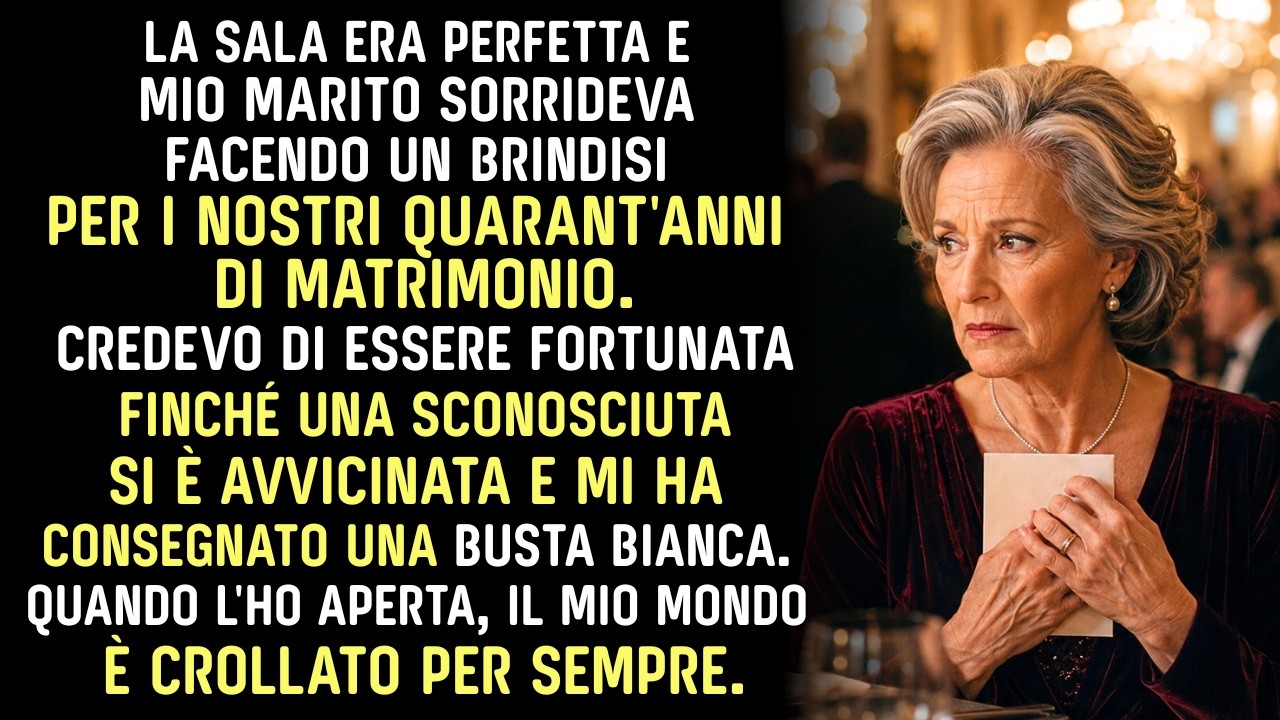
The anniversary celebration at the church was cancelled at the last minute, so I came home earlier than expected. At the garden gate stood my eight-year-old granddaughter, begging me tearfully to leave before my son got home from work. When I asked her what was wrong, she whispered, trembling, “Grandma, if you promise not to tell anyone, I’ll show you something. ” What I saw through that window shattered everything I thought I knew about my family.

My name is Rosemarie. I’m 68 years old, and that Thursday afternoon I should have been at the church’s anniversary celebration for at least three hours. I had ironed my ivory dress, fixed my hair, and was ready to leave when the phone rang. A burst pipe had flooded the church hall.
I put my bag away, took off my shoes, and thought I’d use the time to rest. I had no idea that this cancellation would save me from losing absolutely everything. I arrived home around three in the afternoon, two hours earlier than planned. The street was empty, the sun was still strong, and everything seemed normal.
I parked my old car and walked to the gate, keys in hand. Then I saw her. Leonie was sitting on the veranda steps. Her school uniform was wrinkled, her knees were dirty, but what broke my heart was her face.
Her eyes were red and swollen, her face streaked with tears. When she saw me coming, she didn’t run to hug me like she always did. She jumped up, and her eyes held pure terror. “Grandma, no,” she said with a shaky voice, glancing nervously at the front door.
“Grandma, you have to go. Please go away before Papa comes. ”
I felt the world stop. My granddaughter, the child I had cared for since the day she was born, was begging me to leave my own house.
“Leonie, what happened? ” I asked, kneeling in front of her and taking her by the shoulders. “Who made you cry? Are you hurt?
”
She shook her head, but the fear in her eyes was so real that a chill ran down my spine. She looked toward the dining room window, then toward the street, as if expecting someone any moment. “If you stay,” she whispered, “Mama will be very angry, and Papa too. They said you’re not supposed to be here today.
They said they had something important to do. ”
I tried to keep my voice calm, but my hands were shaking. “And what important thing is that, my darling? ”
Leonie looked at me with her big tear-filled eyes, and what she said next made my whole body go rigid.
“If you promise not to tell anyone,” she murmured so quietly I had to lean closer, “I’ll show you something, but you have to swear you won’t tell, Grandma. If Mama finds out I told you, she’ll punish me. ”
I swore it. I swore it with every fiber of my being because I saw the real terror in that child’s face, and because something in me, a primal survival instinct, screamed that I needed to know what was going on in this house.
In my house. Leonie took my hand. Her small palm was sweaty and trembling as she led me to the side of the building. There’s a dining room window there that we always leave slightly open for air.
The cream-colored curtains were drawn, but not completely. There was a small gap, just big enough to see through. “Listen,” Leonie whispered, pointing at the window. “She’s talking to Uncle Matthias again.
”
I approached slowly, holding my breath. And then I heard her. Sabine, my daughter-in-law, was on the phone. But it wasn’t the voice I knew, not the sweet, controlled tone she used with me every day.
It was something entirely different. It was pure ice laced with poison. “I told you everything is going perfectly, Matthias,” she said with a cruel laugh. “The old woman is getting more trusting every day.
She has no idea at all. ”
The world stopped. My heart skipped a whole beat. “The old woman.
” She was talking about me. “In about two weeks we’ll have everything settled,” Sabine continued, and I could hear her footsteps pacing across the living room. “Dr. Mertens has already prepared the paperwork.
We just need a few more incidents we can record, and then we’ll have her declared legally incompetent. It’s easier than we thought. ”
I felt my legs give way. Leonie held my arm with all her strength, looking at me with eyes that seemed to apologize for having to show me the truth.
“Legally incompetent,” I repeated in a choked whisper. “What does that mean? ”
“I don’t know,” Leonie said, tears rolling down her cheeks. “But Mama says that after that you have to go to a home for old people, and the house will belong only to them.
”
The house. My house. The house I had paid for with the last money I had left in this world. I looked through the window again.
Sabine was still talking, completely unaware that I was standing there hearing every word that sealed my fate. “Michael won’t say anything,” she continued in that tone that made my stomach turn. “You know how he is. He does whatever I tell him.
Besides, he’s tired of supporting her. He says her pension barely covers her own expenses and that she’s a burden. ”
A burden. My son thought I was a burden.
Suddenly, all the little signs I had ignored for months made sense. The awkward silences, the looks Michael and Sabine exchanged when I entered a room, the way they excluded me from family conversations, how Sabine began treating me more like an employee than family. “How long have you been hearing these conversations? ” I asked Leonie, trying to keep my voice steady.
“Three weeks,” she answered, wiping her tears with the back of her hand. “At first I didn’t understand what they were talking about, but a few days ago I heard your name and got scared. ”
Three weeks. They had been planning this for three weeks, maybe longer.
“And your Papa? ” The question burned in my throat. “Does your Papa talk about it too? ”
Leonie lowered her eyes, and that was the only answer I needed.
I had given everything for this family. Everything. Every cent, every drop of sweat, every sacrifice. When my husband died twenty years ago, Michael was only fifteen.
I worked double shifts at the textile factory so he could study. I sold the house where we had been happy to pay for his university. I lived in a tiny apartment and ate only what was necessary so he would lack nothing. When he graduated and met Sabine, I was so happy.
I thought my sacrifices had been worth it. When they asked for help buying this house, I sold the land my husband had left me. Fifty thousand euros. My only inheritance, my entire fortune.
I gave them everything without a second thought. “You’ll live with us forever, Mama,” Michael had said to me with tears in his eyes. “You’ll never be alone, I promise you. ”
And now, six years later, I was hearing them plan to declare me demented so they could take what little I had left and lock me away in some cheap nursing home.
“Grandma,” Leonie whispered, taking my hand again. “Please go before they come back. I don’t want something bad to happen to you. ”
I looked at her.
This eight-year-old girl was the only person in that house who still loved me. The only one who had the courage to warn me. And in that moment, I made a decision. I wouldn’t confront them.
Not yet. Because if I had learned anything in sixty-eight years of life, it was that true revenge isn’t served hot. It’s served cold, calculated, with evidence they can’t refute. “Calm down, my darling,” I said, stroking her hair.
“I’ll go, but I need a very big favor from you. I need you to keep being my eyes and ears. ”
She nodded and wiped away her tears. I got in my car and drove away.
But as I drove through streets I knew by heart, something burned inside me. It wasn’t sadness. Not yet. It was something far more dangerous.
It was the quiet anger of someone who had finally woken up. I drove aimlessly for almost an hour, hands clenched so tight on the steering wheel my knuckles turned white. Sabine’s words kept echoing in my head like a hammer striking metal. “The old woman is getting more trusting.
” “She has no idea at all. ” Every syllable was a knife. Every laugh I remembered was pure poison in my veins. But what hurt most, what truly tore me apart, was knowing Michael was aware.
My son, the child I had carried, the child I had nursed with my own body when we couldn’t afford milk. The child for whom I would have sold my soul. That child was now a man who called me a burden. Finally, I parked in front of a small café downtown, one of those old places where they still serve hot chocolate in thick ceramic mugs.
I needed to think. I needed to calm down before I did something stupid. I went in and ordered black coffee, even though I knew my empty stomach wouldn’t handle it well. I sat at a table in the back, far from the windows, and pulled out my phone with trembling hands.
I needed to call someone. But who? I didn’t have many friends. After I moved in with Michael and Sabine, I’d lost contact with most people I knew.
They always had some excuse for me not to go out—I was too tired, the weather was bad, Leonie needed me. Gradually, they had isolated me, and I hadn’t even noticed. What an idiot I was. Then I remembered Friederike, my neighbor from years ago when I lived in the small apartment.
We had been very close, and although we didn’t see each other often, she always sent me messages at Christmas and on my birthday. I found her number and dialed before I could change my mind. “Rosemarie? ” Her voice sounded surprised but warm.
“What a surprise. How are you? ”
And there, in that nearly empty café, phone at my ear and coffee going cold in front of me, I broke down. I told her everything.
Every word I’d heard, every plan Sabine and this Matthias were making, the fear in Leonie’s eyes, Michael’s betrayal. It all came out like a flood I’d held back for too long. Friederike listened in silence, interrupting only occasionally with disbelieving murmurs. When I finished, there was a long silence on the other end of the line.
“Rosemarie,” she said finally, and her voice had completely changed. It was no longer gentle or sympathetic. It was hard, firm, full of determination. “Listen to me carefully.
You cannot go back to that house. Not until we have a plan. ”
“But Friederike, what am I supposed to do? All my money went into buying that house.
I have no savings. My pension barely covers my medications. ”
“Exactly why you cannot let them have you declared incompetent,” she replied urgently. “If they do that, you lose control over everything.
Your pension, your documents, your decisions. They’d lock you away somewhere dreadful and take what little you have. We’re not going to let that happen. ”
“I don’t even know where to start.
”
“I do,” Friederike said, and I could hear her writing something down. “My nephew is a lawyer. He specializes in cases of family abuse and fraud. Give me a few hours to contact him and set up a meeting.
In the meantime, you have to act like nothing happened. ”
“What? ” The coffee nearly slipped from my hands. “You want me to go back there and pretend I know nothing?
”
“Exactly,” Friederike replied firmly. “Rosemarie, if you confront them now, they’ll accelerate their plan. They’ll hide evidence. They’ll invent some emergency to lock you up before you can fight back.
We need time to build a solid legal strategy, but for that, they need to keep believing you’re a defenseless old woman who suspects nothing. ”
Her words stabbed like needles into my chest. A defenseless old woman. That’s how they saw me.
That’s what I’d become without noticing. “I don’t know if I can do this,” I admitted with a shaky voice. “I don’t know if I can look them in the face and pretend everything is fine. ”
“But you can,” Friederike insisted.
“Because you’re stronger than they believe. You’ve survived worse. You lost your husband and raised your son alone. You worked your back into knots to give him a better life.
This is no different. It’s just another battle, and this time you won’t lose. ”
I closed my eyes and let her words sink in. She was right.
I had survived worse. I had buried the love of my life and still gotten up every morning. I had worked twelve-hour shifts with cracked hands and broken back without complaining. I had sold everything I owned without a second thought for my son.
And now that very son wanted to steal even my dignity. “Alright,” I said finally, wiping my tears with a napkin. “I’ll do it. But I need that meeting with your nephew as soon as possible.
I don’t know how much time I have before they carry out their plan. ”
“Tomorrow at ten,” Friederike promised. “I’ll send you the address by message. And Rosemarie, one more thing.
Start documenting everything. If Sabine or Michael says or does anything suspicious, note it with date and time. If you can record conversations without them noticing, do it. We’ll need as much evidence as possible.
”
We hung up, and I sat there staring at the cold coffee in my cup. Recording conversations. Documenting. Acting.
Becoming a spy in my own house. The irony was so bitter I almost laughed. But there was no time for self-pity. If I wanted to survive, I had to be smarter than them.
Cunninger. More patient. I looked at the clock on my phone. Five-thirty.
Michael would be home any minute. Sabine would expect me to be at the church ceremony until six. I had time to return and pretend I’d just arrived. I paid for the coffee, left a few euros tip, and walked out.
The sun was beginning to set, painting the sky in orange and pink. It was a beautiful evening sky, the kind that used to bring me peace. Now it only reminded me that time was running out. I drove back to the house with my heart pounding.
Every red light was an eternity. Every block brought me closer to facing the people who wanted to destroy me. But Friederike was right. I couldn’t let them know I was onto them.
I had to be invisible, insignificant, exactly what they expected. When I arrived, Michael’s car was already in the driveway. I cursed under my breath. I was late.
I took three deep breaths, rehearsed what I would say, and got out of the car with my bag in hand. I opened the front door, and the smell of freshly cooked food hit me. Sabine was in the kitchen preparing dinner as if nothing had happened, as if she hadn’t just hours ago been planning my institutionalization. She saw me come in and gave me a perfect smile.
One of those smiles I now recognized as completely false. “Rosemarie, there you are,” she said in that saccharine tone that made my stomach turn. “How was the celebration? ”
I swallowed the lump in my throat and forced a smile, hoping it looked natural.
“Cancelled,” I answered, setting my bag on the sofa. “A pipe burst and the hall was flooded. So I went for a little walk. I used the time to run some errands.
”
A lie. But a necessary lie. “What a shame,” Sabine said. But there wasn’t a spark of genuine sympathy in her eyes.
“Well, at least you’re in time for dinner. We’re having roast chicken. ”
Michael emerged from the hallway, loosening his tie. He barely glanced at me for a second before looking away.
Not even a greeting. Not even a “hello, Mama, how are you? ” Just pure indifference. “I’m going to change,” he muttered, walking past me to his room.
I stood there in the middle of the living room, watching my son ignore me as if I were just another piece of furniture. And something in me, something that had been sleeping for years, began to wake. It wasn’t sadness. It wasn’t pain.
It was anger. Cold, calculated anger. If they wanted to play, I would play. But this time, the rules would be mine.
That evening at dinner, I forced myself to swallow every bite of that chicken even though it tasted like cardboard. I forced myself to smile when Sabine asked if the food was good. I forced myself to nod when Michael talked about his day at the office as if I actually cared. Every second at that table was agony.
Every false word that came from their lips was a knife in my back. But I kept the mask on because I could play this game too now. Leonie ate in silence, pushing peas around her plate. Occasionally she looked up at me with eyes full of worry.
I winked at her discreetly, trying to convey that everything would be okay. I wasn’t sure that was true, but this child didn’t deserve to carry the weight of this hell. “Rosemarie,” Sabine said suddenly, her tone dangerously casual. “I’ve noticed you’ve been looking a bit tired lately.
Have you been sleeping well? ”
There it was. The first move. The first seed they wanted to plant for their story of dementia.
“I sleep fine,” I answered calmly, taking a sip of water. “Though at my age, the body naturally isn’t what it used to be. ”
“Of course, of course,” she continued, exchanging a quick look with Michael. “It’s just that I called you three times yesterday to ask where you left the car keys, and you didn’t answer.
I was worried. ”
Liar. I had been home all afternoon the previous day, and my phone had never rung. But now I understood what they were doing.
They were constructing a false story of forgetfulness and confusion that they would later use as evidence. “Really? ” I feigned surprise, frowning. “How strange.
Maybe I didn’t hear the phone. I was in the garden trimming the plants. ”
“You see? ” Sabine said, looking at Michael with a feigned concerned expression.
“I told you we should talk to her about this. ”
Michael nodded but didn’t look me in the eye. Coward. That was my son.
A coward who let his wife do the dirty work. “It’s nothing serious, Mama,” he said finally. “We just want to make sure you’re okay. Maybe you should get a check-up.
A routine examination. ”
A check-up with Dr. Mertens. The one Sabine had mentioned in her phone call.
The one who already had the paperwork ready to declare me incompetent. I wouldn’t walk into that trap. “I had an examination just three months ago,” I replied calmly. “Dr.
Fischer said I’m perfectly healthy for my age. Blood pressure normal. Sugar normal. Everything’s fine.
”
I saw a brief flash of frustration cross Sabine’s face, but she quickly hid it behind a smile. “Well, a second opinion never hurts,” she insisted. “I know a very good doctor who could examine you for free. He’s a friend of the family.
”
An accomplice in fraud, more accurately. “I’ll think about it,” I said, committing to nothing. “Now, if you’ll excuse me, I’m tired. I’m going to bed early.
”
I stood up from the table, took my plate to the sink, and walked to my room, feeling their eyes on my back. Once inside, I locked the door—something I had never done before—and collapsed onto the bed, my heart racing. I pulled out my phone and saw a message from Friederike. Meeting tomorrow at 10.
Address: Liberty Street 445, Office 302. Attorney Elias Rode. Bring all documents you have about the house and your pension. Elias Rode.
That name became my lifeline. I replied confirming my attendance. Then I began searching for all the important papers I kept in my nightstand drawer. Deeds, bank transfer receipts, the document showing I had contributed fifty thousand euros toward the purchase of this house.
Everything was there, carefully preserved, because some part of me had sensed even then that I might need it one day. I couldn’t sleep that night. Every sound in the hallway made me alert. Every creak in the floorboards made me think someone was trying to break in.
Paranoia was a slow poison, but I couldn’t stop it. Now I knew there were people living in this house who wanted to harm me, and every shadow had become a threat. At three in the morning, I heard soft, whispered voices coming from Michael and Sabine’s room. I got up barefoot, opened my door carefully so it wouldn’t squeak, and crept down the dark hallway until I was close to their door.
It was open just a few centimeters. “We can’t rush this,” Sabine was saying in an impatient tone. “Matthias says we need at least two more weeks of documentation. Videos, witness statements from neighbors saying she’s confused, that sort of thing.
”
“And if she figures it out? ” Michael’s voice sounded unsure, weak. “She won’t,” Sabine replied contemptuously. “She’s an old woman, Michael.
She trusts you blindly. She believes you would never do anything to hurt her. ”
The silence that followed was worse than any insult, because Michael didn’t contradict her. He didn’t defend my intelligence.
He didn’t defend my trust in him. He just stayed silent. And that silence was his complicity. “Tomorrow I’ll start recording with my phone,” Sabine continued.
“Little moments where she seems confused. I’ll ask her questions she’ll answer, then claim she asked me three times. I’ll build such a solid chain of evidence that no judge will doubt it. ”
“And then?
” Michael asked. “After she’s declared incompetent? We send her to the St. Raphael nursing home.
It costs three hundred euros a month, it’s cheap, and it’s outside the city. No one will visit her there, and we keep her pension. That’s almost twelve hundred euros a month. Plus what we can sell from her things.
”
My entire pension. The money I had earned after forty years of hard work in that factory that destroyed my back and hands. They wanted to keep every cent while I rotted in some shabby hole. “I don’t know, Sabine,” Michael murmured.
And for a second—just one damn second—I thought he might come to his senses. “She’s my mother. ”
“And that’s exactly why,” she replied coolly, “you should want what’s best for her. A place where she’s taken care of, where she doesn’t have to worry about anything.
Think of it as a favor you’re doing her. ”
A favor. They called it a favor—stealing my freedom, my money, my dignity. “Besides,” Sabine added, her voice softening into something manipulative, “think about Leonie.
She needs her own room. She’s growing up. She can’t share a space with your mother forever. And we need the extra money.
You know my salary doesn’t cover everything we want. ”
There it was. The naked truth. It wasn’t for my well-being.
It was for the money, for convenience, for simple selfishness. I moved away from that door before I could hear more. I returned to my room, legs trembling, and sat on the bed, hugging myself. The tears finally came, silent and burning.
They rolled down my cheeks like rivers of pain. I cried for the son I had raised. I cried for the years I had wasted believing I was loved. I cried for the naïveté with which I had trusted blindly.
But above all, I cried from anger. An anger so deep and pure it burned my insides. When dawn broke, there were no tears left. Only determination.
I dressed carefully, choosing simple but neat clothing—gray pants, a cream blouse, my comfortable shoes. I tied my hair in a low knot and put on the pearl earrings my husband had given me for our fifth anniversary. I needed to look dignified. I needed to look strong.
I went downstairs for breakfast as if nothing was wrong. Sabine was making scrambled eggs, humming a tune. She greeted me with that fake smile I wanted to tear off her face. “Good morning, Rosemarie.
Did you sleep well? ”
“Like a log,” I lied, pouring myself coffee. “I need to leave early today. Friederike invited me for tea.
”
I saw Sabine’s eyes narrow slightly, calculating whether this posed a problem for her plans. “How nice,” she said finally. “Give Friederike my regards. ”
Sure.
As if Friederike had ever interested her. I ate breakfast quickly, grabbed my bag with all the documents hidden at the bottom, and left that house feeling like every step took me further from hell. The fresh morning air hit my face like a blessing. I got in my car, started the engine, and drove toward Liberty Street with only one thing in mind: justice.
No matter how much it hurt, no matter what I had to sacrifice, they would pay for every lie, every betrayal, every cruel plan they had spun in the dark. Attorney Elias Rode’s office was in an old but well-maintained building in the city center. I climbed the three flights of stairs because the elevator was being serviced. When I reached the door with the number 302 engraved on a bronze plaque, I was out of breath.
I knocked twice, and a man’s voice invited me in. Elias Rode was a man of about forty, serious-looking but with kind eyes. He had black hair with a few gray strands at the temples and wore thin-framed glasses. He rose from his desk when he saw me enter and extended his hand with a professional smile.
“Mrs. Rosemarie, Friederike has told me a lot about you. Please, take a seat. ”
I sat in one of the chairs in front of his desk, clutching my bag like it was a life preserver.
He sat back down, placed his hands on the table, and looked at me attentively. “Friederike has given me the basics of your situation,” he began in a calm voice. “But I want you to tell me everything in your own words. Every detail matters.
And I want you to know something from the start. What’s happening to you is more common than you think, and there are legal ways to protect yourself. You’re not alone. ”
Those last words broke something open in me.
“Not alone. ” It had been so long since I’d heard that sincerely that I almost cried again. But I held back. I had cried enough.
Now it was time to act. I told him everything from the beginning. About my husband’s death and the sacrifices I had made to raise Michael. About the money I had invested in the house with the promise we would live together forever.
About the gradual change in Sabine’s treatment, the isolation I had suffered without noticing, the conversation I had overheard between Sabine and her brother Matthias, the plan to declare me incompetent, the corrupt doctor, the cheap nursing home. Everything. Elias took notes quickly in a notebook, nodding occasionally and frowning from time to time. When I finished, there was a long silence while he reviewed his notes.
“This is serious,” he said finally, taking off his glasses to clean them with a cloth. “We’re talking about attempted fraud, financial abuse of an elderly person, and possibly conspiracy. But we need solid evidence so this doesn’t become a word-against-word battle. ”
“I have this,” I said, pulling all the documents from my bag—bank transfer receipts for the house purchase, copies of contracts, old account statements showing I had sold my land.
Elias examined them carefully, one by one, and with each paper he read, his face grew grimmer. “Mrs. Rosemarie, according to these documents, you contributed eighty percent of the money for this property. Whose name is the house registered in?
”
“Michael’s,” I admitted, feeling a weight on my chest. “He said it would be easier for the bank loan, but he promised me it was for both of us, that I would always live there. ”
Elias let out a long sigh and shook his head. “That’s the most common mistake I see in these cases.
Parents trusting their children blindly and not protecting their investments legally. But all is not lost. There’s something called unjust enrichment. You gave this money with a specific promise that isn’t being kept.
We can argue that your son has a moral and legal debt to you. ”
“But can we stop them? ” I asked urgently. “Can we prevent them from declaring me incompetent and locking me away?
”
“Yes, but we have to move quickly, and we need more evidence. You said you overheard conversations. Did you record any? ”
I shook my head, feeling foolish.
“It didn’t occur to me to record. I was just listening. ”
“Alright,” Elias said patiently. “From now on, here’s what we’ll do.
First, we’ll have an independent psychological and medical evaluation done by certified professionals I know. That will formally establish that you’re in full possession of your mental faculties. Second, if possible, you need to record every conversation where they mention their plans. In this state, recording conversations on your own property is admissible as evidence if there’s suspicion of criminal activity.
”
I pulled out my phone, an old model, but it had a voice recorder function. “I can do this perfectly. ”
“Good. Every time they talk about the subject, record them.
You don’t need video; audio is enough. Third, we’ll prepare legal documents to protect your assets immediately. Your pension, any bank account you have, everything must be legally secured. ”
“How much time do we have?
” My voice sounded desperate even to my own ears. “Based on what you’ve told me, they mentioned two weeks. That gives us a small but workable window. The legal process to declare someone incompetent doesn’t move fast, but if they have a corrupt doctor willing to falsify documents, they might try to speed it up.
Which is why we must act. ”
He explained the entire process—the papers I needed to sign, the medical examinations I should undergo, the witness statements we needed to collect from people who could testify to my mental clarity. Friederike would be a key witness. He also suggested I talk to former coworkers if I still had contact with anyone.
“And how much will all this cost? ” I asked with a knot in my stomach. My pension was twelve hundred euros a month, and most of it went to medications and basic expenses. Elias looked at me with an expression I couldn’t quite read.
There was compassion, but also something else. Determination. “Mrs. Rosemarie, my great-aunt went through something similar ten years ago.
Her own children took everything from her and let her die alone in a terrible nursing home. By the time I found out, it was too late to help her. Since then, I’ve specialized in these cases. My normal rate is two hundred euros an hour.
But for you, we’ll work on a different system. You pay what you can now to cover immediate costs, and we settle the rest when this is all over. If we recover some of your investment in that house, we’re paid from that. Does that seem fair?
”
The tears I had been holding back finally spilled over. This man, this complete stranger, was offering me more compassion and justice than my own son. “Thank you,” I whispered, wiping my cheeks with the back of my hand. “You have no idea what this means to me.
”
“I know exactly what it means,” he answered with a sad smile. “Now let’s get to work. We have a lot to do and little time. ”
We spent the next two hours going over every detail of my case.
Elias had me sign several documents, including one that appointed him as my immediate legal representative. He explained that this would prevent Michael or Sabine from making legal decisions about me without my express consent, knowledge, and presence. “From this moment on,” he said as he stamped the documents, “any attempt they make to declare you incompetent has to go through me first. And believe me, it won’t be easy for them.
”
I left his office with a strange feeling. On one hand, I was afraid. Afraid of what was to come, afraid of facing my son, afraid of losing the little I had left. But on the other hand, I felt something I hadn’t felt in months: hope.
I wasn’t defenseless. I wasn’t alone. I had a plan. I drove home with steady hands on the wheel.
They weren’t shaking anymore. The phone with the recording function was ready in my bag. The legal documents were safe in my satchel. And in my chest, where pain and betrayal had been, something far more dangerous now burned.
Revenge. No, justice. That’s what I was seeking, and I wouldn’t rest until I achieved it. The following days were the hardest of my life.
I had to become an actress in my own home, pretending to be the confused and vulnerable old woman they expected while secretly documenting every move, every conversation, every lie. The phone was always in my pocket, ready to record. My eyes were always watchful, and my heart, though broken, had turned to iron. Sabine intensified her attacks in predictable ways.
She began asking me repetitive questions in front of Leonie and recording with her phone hidden between sofa cushions. I let her, while my own phone in my pocket captured everything—not just my answers, but her later comments when she thought I wasn’t listening. “Rosemarie, have you taken your pills yet? ” she’d ask in the morning.
“Yes, after breakfast,” I’d answer. Ten minutes later, she’d ask the same thing again. “Rosemarie, don’t forget to take your pills. ”
“I’ve already taken them, Sabine.
”
And she’d note something in her phone, building her false narrative of forgetfulness. But what she didn’t know was that I was recording everything, including the moment she told Michael that evening, “Today I got three perfect scenes of her forgetting things. Dr. Mertens says we almost have enough.
”
One afternoon while I was preparing food, Sabine came into the kitchen with a worried expression and her phone in her hand, obviously recording. “Rosemarie, do you remember where you left your car keys this morning? I’ve looked everywhere. ”
I knew exactly where my keys were—in my bag, where I always kept them.
But I decided to play along. “They’re in my bag,” I said calmly. “Are you sure? Because I looked in your bag and they weren’t there.
”
Of course they weren’t. She had hidden them herself to create this scene. But I knew the trick. “How strange,” I said, frowning.
“I always keep them there. ”
I saw the flash of satisfaction in her eyes. She thought she had me. She kept recording while I searched the kitchen pretending confusion.
When she finally “found” them in the refrigerator, where she had obviously placed them, her expression was one of absolute triumph. “Rosemarie, you put the keys in the refrigerator,” she said in a feigned concerned tone. “Don’t you find that worrying? ”
“Oh dear,” I muttered, pressing my hand to my head.
“I don’t remember doing that. ”
She left the kitchen satisfied, probably to send the video to Matthias or the corrupt doctor. But what she didn’t see was that I had recorded everything from the moment she walked in. More importantly, I had had my keys in my bag all morning.
I had taken a photo of them there with date and time before Sabine started her theater. That night, after everyone was asleep, I sent the recordings and photos to Elias. His response came within minutes. “Perfect.
This proves deliberate manipulation. Keep going, but stay careful. We don’t want them becoming suspicious. ”
The medical examinations Elias had arranged were a relief.
Dr. Fischer, my longtime family doctor, subjected me to thorough tests—memory tests, logical reasoning, complete cognitive analysis. The results were clear. I was in perfect mental condition for my age.
In fact, he noted, I had better memory than many people twenty years younger. “Rosemarie,” he told me as he signed the documents, “I don’t know what’s going on, but I want you to know these results are legally binding. No one can declare you incompetent with this evidence. ”
I also visited a psychologist Elias recommended.
I told her the whole situation and had her assess my emotional state and decision-making capacity. She determined that I was suffering from emotional and financial abuse but was mentally completely competent. “What you’re experiencing is trauma, not dementia,” she explained. “And the fact that you had the presence of mind to seek legal help proves the exact opposite of what they’re trying to prove.
”
With every medical document we collected, I felt stronger, but also angrier, because every proof of my mental health was also proof of their betrayal. A week after my first meeting with Elias, Sabine finally dropped the mask. We were at dinner when she and Michael exchanged one of those loaded looks. I knew something was coming.
“Rosemarie,” Michael began. The fact that he used my name instead of “Mama” told me everything. “Sabine and I have been worried about you. We’ve noticed some changes in your behavior lately.
”
“Changes? ” I asked innocently, my hand already activating the recorder in my pocket. “Honestly,” Sabine interjected with false gentleness, “lost things, confusion about what day it is. Little things that worry us.
”
“We think it would be good for you to see a specialist,” Michael continued, not looking me in the eye. “Someone who can assess whether you need any kind of help or treatment. ”
There it was. The moment they had been preparing for weeks.
“A specialist,” I repeated, letting my voice sound slightly concerned. “Do you think something’s wrong with me? ”
“It’s nothing serious,” Sabine rushed to say. “We just want to make sure you’re okay.
In fact, we’ve already made an appointment with Dr. Mertens for the day after tomorrow. He’s an excellent geriatric specialist, very well regarded. ”
Dr.
Mertens. The corrupt doctor who already had the paperwork ready to declare me incompetent. The one who had probably already been paid in advance. “I don’t know,” I said, biting my lip as if uncertain.
“Dr. Fischer has always treated me well. Maybe I should talk to him first. ”
I saw a brief flash of irritation on Sabine’s face, quickly hidden behind a smile.
“Dr. Fischer is a general practitioner,” she argued. “Dr. Mertens is a specialist for people your age.
He knows exactly what to look for. Besides,” Michael added, and there was something almost threatening in his tone, “everything’s already arranged. The appointment is at ten in the morning. We’ll go with you.
”
Of course they would accompany me. They couldn’t risk me going alone and saying something that would derail their plans. “Alright,” I agreed finally with a resigned sigh. “If you think it’s necessary.
”
The satisfaction on their faces was disgusting. They thought they had won. They thought I was so naïve I would walk willingly to the slaughter. But what they didn’t know was that I had also made an appointment—a meeting with Elias, who would be present at the appointment with Dr.
Mertens, armed with legal documents and enough evidence to destroy their entire plan. That night, Leonie crept into my room after everyone was asleep. Her eyes were red from crying, and she clung to me desperately. “Grandma,” she sobbed against my chest, “I heard Mama on the phone.
She said they’re going to take you to a faraway place after the doctor’s appointment. She said I won’t be allowed to visit you anymore. ”
I stroked her hair, feeling my heart break for this innocent child trapped in her parents’ greed. “Calm down, my darling,” I whispered, kissing her forehead.
“Nothing like that is going to happen. I promise you. ”
“How can you be so sure? ”
“Because sometimes,” I said, looking into her eyes, “people underestimate old women.
They think we’re weak, that we’re stupid, that we can’t defend ourselves. But your grandma learned a long time ago that in this world, you either fight or you get eaten. And I don’t intend to be eaten. ”
Leonie looked at me with those big eyes full of a mix of fear and hope.
“Are you going to fight? ”
“I’m going to do something better,” I replied with a smile that was probably darker than I intended. “I’m going to win. ”
I put her in my bed that night and held her until she fell asleep.
And as I listened to her steady breathing, I thought about everything that lay ahead. In less than forty-eight hours, Michael and Sabine would discover they had made the biggest mistake of their lives. They had awakened something in me that had slept for too long. I wasn’t just a betrayed mother.
I was a woman who had survived devastating losses, who had worked herself to the bone for her family, who had sacrificed everything. And now I was finally a woman who had decided that enough was enough. The morning of the appointment with Dr. Mertens dawned gray and cold, as if the sky itself knew something important was about to happen.
I dressed carefully, choosing a simple but dignified outfit: black pants, cream blouse, my favorite cardigan. I wanted to look like what I was—a respectable older woman, not the mentally confused person they wanted to portray me as. Michael and Sabine were unusually attentive during breakfast. Too attentive.
Sabine poured my coffee without me asking. Michael asked if I’d slept well. It was all a perfectly coordinated performance, as if they were rehearsing for an invisible audience. In a way, they were.
They were constructing the image of concerned, self-sacrificing children who only wanted what was best for their poor senile mother. “Are you ready, Mama? ” Michael asked when we finished eating. The word “Mama” sounded so hollow it almost made me laugh.
“Ready,” I answered in a quiet, submissive voice, exactly what they expected. Dr. Mertens’s practice was in a medical building in the north of the city. During the car ride, Sabine talked nonstop, filling the silence with superficial comments about the weather, about Leonie, about anything to maintain the appearance of normalcy.
Michael drove silently. His knuckles stood out white on the steering wheel. He was nervous. Good.
He should be. What neither of them knew was that Elias was already in that building. He had arrived an hour early. He had spoken with the receptionist.
He had presented legal documents identifying him as my authorized representative in all medical procedures related to mental competency assessments, and he had made unmistakably clear that any diagnosis or document emerging from this consultation would be legally scrutinized. We rode to the fourth floor in an elevator that smelled of disinfectant. The waiting room was small, with pale green walls and uncomfortable plastic chairs. A few people were there, flipping through old magazines without paying attention.
The receptionist, a young woman with a bored expression, gestured for us to wait. “Dr. Mertens will see you in a few minutes,” she said without looking up from her computer. Michael and Sabine sat on either side of me, like guards escorting a prisoner.
Sabine pulled out her phone and started reviewing something, probably mentally going through all the false incidents she had documented. Michael simply stared straight ahead with a tense jaw. Ten minutes later, the office door opened and a man of about fifty came out. Short, plump, with an oily smile that didn’t reach his eyes.
He wore an immaculate white coat and carried a clipboard under his arm. “Family Salas? ” he asked in a honey-sweet voice. Michael stood immediately.
“Yes, Dr. Mertens. Thank you for seeing us. ”
“Of course, of course,” the doctor replied, gesturing for us to enter.
“Please, come in. ”
We entered an examination room that tried to feel cozy but only succeeded in feeling impersonal. There was a wooden desk, framed diplomas on the walls that were probably fake or purchased, and an examination table in the corner. Dr.
Mertens sat behind his desk and gestured for us to sit. “Well then,” he began, opening a file he had already prepared. “I understand you’re concerned about Mrs…. ” He looked at the paper, pretending not to know my name.
“… Rosemarie. Can you tell me what you’ve observed? ”
Sabine leaned forward with such a false concerned expression that I wanted to gag.
“Doctor, we’ve noticed significant changes over the past few months. She constantly forgets things. She leaves objects in strange places. Sometimes she doesn’t remember conversations we had just the day before.
”
The doctor nodded while writing, without even looking at me. As if I weren’t present, as if I were an object to be evaluated rather than a person. “I see, I see,” he murmured. “And these incidents have worsened recently?
”
“Yes,” Michael lied shamelessly. “They’re becoming more frequent. We’re afraid she might hurt herself. Last week she left the stove on.
”
Completely invented. I had never left the stove on. But there sat my son, inventing incidents that never happened to construct a story of incompetence. Dr.
Mertens finally looked at me, and his eyes were cold, calculating. This man had made his decision before I walked through his door. He had already been paid. He already had the documents ready.
“Mrs. Rosemarie,” he said in a condescending tone, as if speaking to a small child. “How are you feeling? ”
“I feel fine, Doctor,” I answered with a calm voice.
“Do you remember what day it is today? ”
“Thursday, the twenty-second of November. ”
“And can you tell me where we are? ”
“In your practice in the medical building on North Avenue.
”
He asked more questions, all designed to seem like a legitimate assessment. But I saw how he exchanged looks with Sabine, how he wrote conclusions in his notebook before I even finished answering. This was theater. A cruel farce.
“Well,” he said finally, closing his file. “Based on what the family describes and my preliminary assessment, I recommend that Mrs. Rosemarie undergo more extensive examinations. It’s possible we’re dealing with cognitive decline that requires constant supervision.
”
The trap snapped shut. Sabine and Michael exchanged a look of barely concealed satisfaction. “What does that mean exactly, Doctor? ” Sabine asked with false innocence.
“It means,” the doctor answered, pulling papers from his drawer—documents he had obviously prepared beforehand—”that we should consider establishing legal guardianship. Someone who can make medical and financial decisions on Mrs. Rosemarie’s behalf for her own protection. ”
“My own protection.
” What a pretty way to say they wanted to steal my freedom and my money. The doctor began explaining the process, the papers that needed to be signed, the legal steps. Sabine nodded with a serious expression. Michael stared at the floor, unable to face the magnitude of what he was doing.
A coward to the end. And then, just as Dr. Mertens was about to ask me to sign the first document, the office door opened. Elias Rode stepped in with firm stride, impeccably dressed, a leather briefcase in his hand, and an expression that could freeze hell.
Behind him came a woman with an official appearance, carrying a camera and recording equipment. “Good morning,” Elias said in a voice that brooked no contradiction. “I am Attorney Elias Rode, legal representative of Mrs. Rosemarie Salazar.
And this,” he gestured to the woman, “is court reporter Claudia Markis, who will officially document this consultation. ”
Dr. Mertens went pale. Sabine stiffened in her chair.
Michael finally looked up, confused and frightened. “What is the meaning of this? ” the doctor stammered, trying to regain composure. “This is a private medical consultation.
”
“No, not when there’s suspicion of medical fraud and conspiracy for the financial abuse of an elderly person,” Elias replied, setting his briefcase on the desk and opening it with precise movements. “Dr. Mertens, or should I say Mr. Mertens, because I have here documents proving your medical license was revoked three years ago due to irregularities in similar geriatric assessments.
”
The silence that followed was absolute. I could hear my own heart pounding in my ears. “That’s… that’s ridiculous,” the doctor stuttered, but sweat was already glistening on his forehead.
“Ridiculous? ” Elias pulled out a folder and began spreading documents across the desk. “Here I have legitimate medical evaluations of Mrs. Rosemarie, prepared last week by Dr.
Fischer and psychologist Dr. Reinhard. Both certified and recognized professionals. Both evaluations conclude that Mrs.
Rosemarie is in perfect mental condition. ” He placed more papers on the table. “I also have recordings of conversations in which your plan is openly discussed—declaring Mrs. Rosemarie incompetent to take control of her assets and pension.
Recordings that specifically mention you, Mr. Mertens, and the documents you allegedly already prepared. ”
Sabine had turned white as paper. Michael looked like he might be sick.
“This is a misunderstanding,” Sabine tried to say with a shaky voice. “We only want what’s best for Rosemarie. ”
Elias looked at her with pure contempt. “Mrs.
Sabine, I have recordings of you admitting you plan to lock your mother-in-law in the St. Raphael nursing home, which costs three hundred euros a month, while you collect her twelve-hundred-euro pension. I have evidence of deliberate manipulation, including videos of you hiding objects and then accusing Mrs. Rosemarie of losing them.
”
The examination room had turned into a silent tomb. Sabine was visibly shaking, her hands gripping the edge of her chair. Michael had his head in his hands, unable to look at anyone. Dr.
Mertens tried to maintain a neutral expression, but the panic in his eyes betrayed him. And I, sitting among them, finally allowed myself to feel something close to satisfaction. “I don’t understand,” Michael murmured, looking at me for the first time, something like genuine confusion in his eyes. “Mama, you knew all this?
”
The word “Mama” sounded different this time. There was fear in it. And guilt. “I’ve known since the moment I heard your wife planning my institutionalization,” I answered with a steady voice, steadier than it had sounded in months.
“I knew when I heard you calling me a burden. I knew when you decided that my pension was worth more than my dignity. ”
Michael opened his mouth, but no sound came out. What could he say?
There was no defense for what they had done. Elias continued pulling documents from his briefcase, each more damning than the last. “Here we have the call logs between Mrs. Sabine and her brother Matthias, discussing the details of the fraud.
We have the bank transfers Mrs. Rosemarie made six years ago, proving she contributed fifty thousand euros toward the purchase of the house she currently lives in. And we have statements from neighbors confirming that Mrs. Rosemarie is in perfect mental condition—active, clear, without any signs of decline.
”
Every word was a hammer blow. Every document was a nail in the coffin of their plan. “Mr. Mertens,” Elias continued, turning to the corrupt doctor, “you have two options.
You can now immediately admit that this assessment was fraudulent and cooperate with the authorities. Or I can present all this evidence to the medical board and the prosecutor’s office, in which case you’ll face criminal consequences for conspiracy to defraud and elder abuse, in addition to the permanent revocation of your license. Which do you prefer? ”
Dr.
Mertens collapsed like a house of cards. His shoulders sagged, his face fell, and for a moment he looked ten years older. “I just needed the money,” he mumbled with a broken voice. “I didn’t think it would be so serious.
They told me it was just a formality, that the lady would be better taken care of. ”
“How much did they pay you? ” Elias asked without a trace of sympathy. “Five thousand euros,” the doctor admitted without looking up.
“Two thousand upfront, three thousand when I signed the incompetency papers. ”
Five thousand euros. That was the price of my freedom. Less than what I had invested in my son’s education.
Elias turned to Michael and Sabine. “And you two also have two options. We settle this legally right now with civil consequences but no criminal charges. Or I take everything to the prosecutor’s office and let you face the full consequences of attempted fraud, conspiracy, and financial and emotional abuse of an elderly person.
In some states, that can mean up to ten years in prison. ”
“No,” Sabine whispered, and for the first time her mask of perfect control completely crumbled. “No, please. We have a daughter.
You can’t do this to us. ”
“I can. ” Elias’s voice was pure ice. “You were going to put this woman in a shabby nursing home and steal every cent from her.
And now you’re asking me for mercy. ”
“Michael,” I said finally, and my son looked up at me with glassy eyes. “Look at me when I speak to you. ”
He obeyed, and I saw tears rising.
Too late for tears. “I gave you everything,” I continued, and my voice didn’t tremble. It should have trembled. It should have broken.
But it didn’t. “I worked until I ruined my body so you could get an education. I sold the house where you were happy. I sold the last piece of land your father left me.
And you—my own son, the person I carried for nine months—you decided I was expendable. ”
“Mama,” he tried to speak, but I cut him off. “Don’t call me Mama. You lost that right when you decided my pension was worth more than my life.
”
The tears rolled down his cheeks. Good. He should cry. He should feel it, even a fraction of the pain he had caused me.
Elias placed a document on the desk in front of Michael and Sabine. “This is an agreement. Mrs. Rosemarie will refrain from filing criminal charges in exchange for the following.
First, legal recognition that the fifty thousand euros she invested in the house constitutes a family debt. Second, the immediate transfer of fifty percent of the property title into Mrs. Rosemarie’s name. Third, Michael and Sabine will cover all legal fees for this process, which currently amount to eight thousand euros.
And fourth, a restraining order prohibiting you from making legal, medical, or financial decisions on behalf of Mrs. Rosemarie without her express consent and the presence of a legal witness. ”
“That’s… that’s impossible,” Sabine stammered.
“We don’t have eight thousand euros. ”
“Then sell something,” Elias replied unperturbed. “You have one week to raise the money and sign the property transfer. If you don’t deliver, I’ll file criminal charges, and this will become public.
Your employers will find out. Your neighbors will find out. And believe me, the stigma of trying to steal from a defenseless old woman doesn’t fade easily. ”
Sabine stared at the document as if it were a poisonous snake.
Michael kept his head lowered, defeated. “And if we don’t sign? ” Sabine asked with a last flash of defiance. “Then,” Elias said with a smile that had nothing friendly about it, “we’ll see you in court.
And I assure you, when a judge sees these recordings, these documents, this evidence of deliberate manipulation, you won’t just lose the house—you’ll face criminal charges that will follow you for the rest of your lives. Your daughter will grow up knowing her parents tried to steal from her own grandmother. ”
The mention of Leonie was the final blow. I saw something break permanently in Michael.
He reached with a trembling hand for the pen Elias held out to him. “I’ll sign,” he said with a choked voice. “Sabine, sign. ”
“But Michael—”
“Sign!
” he shouted, and it was the first time in years I had seen him raise his voice at his wife. “We’ve already done enough damage. ”
Sabine took the pen with trembling hands and signed. The sound of the pen on paper was like a final verdict.
The court reporter documented everything, took photos of the signatures, and notarized the documents. When it was done, Elias packed everything into his briefcase with precise movements. “You have one week,” he repeated. “If you don’t deliver, the consequences will be permanent.
”
We stood up to leave. I walked past Michael and paused for a moment. He looked at me with pleading eyes, as if expecting me to say something, to forgive, to forget. But I said nothing, because there was nothing to say.
The son I knew—the boy I had loved with every fiber of my being—was dead. In his place was a stranger who had chosen greed over love. I left the examination room with my head held high. Elias walked beside me, and the court reporter behind us.
And as the elevator took us down, I finally allowed myself a small smile. A very small one. I had won. I hadn’t gotten my son back.
I probably never would. But I had regained something more important: my dignity. The days that followed were strange and painful. I continued living in the house, as it was legally my right, but the atmosphere was so tense you could cut it with a knife.
Michael and Sabine barely spoke a word to me. When we passed in the hallway, they looked away. During meals, absolute silence prevailed, broken only by the sound of silverware on plates. It was as if I were living with ghosts who blamed me for exposing their betrayal.
Sabine had changed completely. No more fake smiles, no more sugary questions. Her true face had emerged—bitter, resentful, filled with a hatred she no longer tried to hide. She looked at me as if I had ruined her life, as if I were the villain of this story.
The irony was so profound it almost hurt. Michael, in turn, seemed like a broken man. He kept losing weight, had deep circles under his eyes, and I caught him looking at me from a distance with an expression that might have been regret. But he never approached me, never said “I’m sorry.
” He never tried to explain or justify anything. He simply existed in that house as a shadow of what my son once was. The only light in this darkness was Leonie. The girl crept into my room every night, curled up beside me, and hugged me as if afraid I would disappear.
I read her stories, stroked her hair, and promised her everything would be okay, even though I wasn’t sure it was true. “Grandma,” she asked me one evening as we stared at the ceiling of my room, “why are Mama and Papa so angry? ”
“Because I did something they didn’t expect,” I answered, choosing my words carefully. “I defended myself.
”
“Is that wrong? ”
“No, my darling. Defending yourself is never wrong. But sometimes, when you defend yourself against people you love, it hurts more.
”
She processed this silently. Her small hand squeezed mine. “Do you still love Papa? ” she asked finally.
The question hit me like a punch. I loved Michael—the boy he was. Yes, I would always love him. But the man he had become, the man who had conspired to lock me away and steal from me, that man was a stranger.
“I love what he was,” I answered honestly. “But I don’t know if I love what he chose to become. ”
Exactly one week after the confrontation in the clinic, Elias called me early in the morning. “Rosemarie, the documents are ready.
Michael and Sabine delivered. They sold their car and took out a loan to scrape together the eight thousand euros. The property transfer is processed. You are officially the owner of fifty percent of that house.
”
I should have felt victorious. I should have celebrated. But I only felt a deep emptiness in my chest. “And now what?
” I asked with a tired voice. “Now you have options,” Elias answered. “You can stay there. It’s your right.
You can force the sale of the property and split the proceeds. Or you can negotiate your move with a settlement. Your choice. ”
That afternoon, I sat in the garden I had planted myself years ago.
The roses I had so carefully tended were blooming, untouched by the human chaos playing out within those walls. And as I looked at them, I made a decision. I didn’t want to stay in that house. I didn’t want to live surrounded by resentment and silence.
I didn’t want Leonie to grow up amid this toxic tension. But I also wouldn’t leave empty-handed after everything I had invested. I called Elias and asked him to arrange a meeting—a final conversation with Michael and Sabine to close this chapter of my life. The meeting took place in the living room on a rainy afternoon.
Elias was present as mediator. Michael and Sabine sat on the other side of the coffee table, tense as wires about to snap. “I’ve made a decision,” I began without preamble. “I’m going to leave this house.
But not for free. I want you to buy out my share. ”
I saw something like relief cross Sabine’s face, but she held back. “How much?
” Michael asked with a hoarse voice. “Exactly what I invested six years ago,” I answered. “Fifty thousand euros. ”
“That’s impossible,” Sabine burst out.
“We don’t have that kind of money. ”
“Then take out a mortgage on the house,” I replied calmly. “You have six months to raise the money and pay me out. In the meantime, I’ll move out.
But if you miss that deadline, I’ll force the sale of the entire property and we split everything fifty-fifty. And believe me, on today’s market, this house is worth a good deal. ”
Michael ran his hand over his face wearily. “Why six months?
Why not just sell the house now and split it? ”
“Why? ” I said, looking directly at him for the first time in days. “Because I still remember that you were once my son, and because Leonie deserves a stable home.
But this is the last thing I do for you. After this, you owe me nothing, and I owe you nothing. ”
A long silence followed. Elias placed the documents on the table, explained the legal terms, the clauses, the consequences of non-compliance.
Michael and Sabine read them with grim expressions. “And where will you live? ” Michael asked suddenly, and there was genuine concern in his voice that caught me off guard. “I found a small apartment,” I answered.
“Friederike helped me look. It has one bedroom, a kitchen. It’s near the park I used to walk in when you were a child. That’s all I need.
”
“Mama,” Michael began, and his voice broke. “I never wanted… I didn’t know it would come to this. ”
“But it did come to this,” I interrupted.
“And you allowed it to come to this. You weren’t the one who planned it, Michael. But you also weren’t the one who stopped it. And that’s just as bad.
”
He lowered his gaze, unable to contradict me because he knew it was the truth. They signed the documents. Each signature was a silent goodbye. Each signature was the end of something that had once been a family.
When it was over, I stood to leave. But before I left the room, I turned one last time. “Sabine,” I said. She looked up with a defensive expression.
“You got what you wanted. The house is now fully yours. Or it will be in six months. But I want you to understand something.
You won a house, but you lost far more. You lost the chance for your daughter to grow up with her grandmother. You lost the respect of everyone who finds out what you tried to do. And you lost the ability to look your daughter in the eye without shame when she’s old enough to understand what you did.
”
Sabine didn’t answer, but I saw her hands clench into fists in her lap. “And Michael,” I continued, turning to my son. “You lost something you can never get back. You lost your mother.
Not because I died, but because you chose to kill me while I was still alive. And I sincerely hope that choice doesn’t haunt you every night when you close your eyes. ”
I left that house without looking back. Elias walked me to my car, and before I got in, he placed a hand on my shoulder.
“You did the right thing,” he said firmly. “It doesn’t feel like the right thing,” I admitted with a tired voice. “It never does,” he answered. “But it was.
”
I drove to my new apartment—a place that was small but mine, where no one could betray me because no one had the power to anymore. And that night, alone in my new bed, in my new life, I finally let all the pain out. I cried for the son I had lost. I cried for the wasted years.
I cried for the family I had believed in that turned out to be an illusion. But when dawn broke, I got up, dressed, made myself coffee, and looked out the window into an uncertain but finally my own future. Four months have passed since I left that house. Four months in which I’ve learned to live alone again, to rediscover who I was without the burden of family expectations on my shoulders.
The small apartment has become my sanctuary. I painted the walls a light cream color, hung ivory curtains that let in the sunlight, and gradually filled it with things that make me happy. Plants on the balcony, old photos from when my husband was still alive, books I never had time to read. Friederike visits twice a week.
We drink coffee in my little living room, talk about everything and nothing, and she never makes me feel like a burden. She helped me find volunteer work at the city library, where I sort books and help children with their homework. It doesn’t pay much—barely two hundred euros a month. But I don’t do it for the money.
I do it because I feel useful again, because it reminds me I still have something to offer the world. My twelve-hundred-euro pension covers my four-hundred-euro rent, my medications, my food, and I even manage to save a little. It’s ironic. Sabine and Michael had wanted to steal all this from me, and it turns out I don’t need much to be happy.
I just need peace. I just need dignity. Leonie visits me on Sundays. Michael drops her off and waits in the car.
He never comes up. He never looks me in the eye. He just waits until Leonie is inside and drives away. The girl spends the day with me.
We bake cookies, play cards, watch old movies. And in these moments, in this simple happiness, I find something like healing. “Mama is quieter now,” Leonie told me one Sunday while we decorated cookies with frosting. “She doesn’t talk to Uncle Matthias as much anymore.
”
“And your Papa? ” I asked, not sure I wanted to know the answer. “Papa works a lot. He’s hardly ever home.
When he is, he sits alone in the garden looking at the roses you planted. ”
That image hurt more than I expected. Michael, staring at what I had built, probably realizing far too late what he had lost. “Does he talk about me?
” I asked. Leonie nodded sadly. “Sometimes. Mama says you were too hard on them.
But Papa doesn’t say anything. He just stays quiet. ”
Too hard. What an interesting word.
I was too hard by defending myself against being robbed, locked away, stripped of my freedom and dignity. If that was being hard, I accepted it with pride. In the fifth month, news came. Elias called me one afternoon with a serious voice.
“Rosemarie, Michael called my office. He says they have the money. They want to complete the deal. ”
My heart skipped a beat.
Fifty thousand euros. More than I had owned in years. Money I could invest, money that would give me real security in my old age. But it also meant final closure.
It meant legally and officially, I would have no more connection to that family—except as Leonie’s grandmother. “Arrange the meeting,” I said finally. We met a week later in Elias’s office. It was a gray afternoon with low clouds threatening rain.
Michael came first, alone. Sabine didn’t come. That said everything. She didn’t have the courage to face me again.
My son looked terrible. He had lost more weight. His face was gaunt, and when he saw me, something broke in his gaze. But he stood tall, as if serving a sentence.
Elias handled everything professionally. The documents, the bank transfers, the signatures. Fifty thousand euros were transferred to my account. The house passed fully into Michael and Sabine’s names.
All legal ties between us were severed, except those concerning Leonie. When everything was signed and notarized, Elias excused himself and left the office, giving us privacy. I hadn’t asked him to, but he probably saw in my face that I needed to say something. Michael and I sat there in that office that smelled of old paper and cold coffee, not knowing what to say.
“Mama,” he began finally, and his voice was pure pain. “I don’t expect you to forgive me. I don’t deserve your forgiveness. But I want you to know that I hate myself every day for what I did, for what I allowed.
”
“Not enough,” I answered coldly. “If you truly hated yourself, you would have done something sooner. You would have stopped Sabine before it got this far. ”
“You’re right,” he admitted, tears in his eyes.
“I was a coward. I’m still a coward. But I want you to know something. That money we just gave you—it’s not from a mortgage on the house.
It’s my retirement savings. Everything I saved in ten years. I spent it all to pay you off. ”
I was silent, processing this information.
His retirement savings. His future. He had sacrificed it. “Sabine doesn’t know,” he continued.
“She thinks we took out a bank loan. But I used all my money because it was the only thing I could do to begin paying for what I did to you. ”
“And what am I supposed to say to that? ” I asked with a tired voice.
“That everything is fine now? That I forgive you because you sacrificed your future? No. ”
He shook his head.
“I don’t want you to forgive me. I just wanted you to know. So that maybe someday, when I’m old and alone, you can think that at least I tried to do something right. ”
We looked at each other in silence.
I saw the boy he was in those tear-filled eyes. I saw the young man who had graduated with honors thanks to my sacrifices. I saw the man who had married full of dreams. And I saw the broken man sitting before me now, paying the price for his choices.
“Michael,” I said finally, “I don’t know if I can ever fully forgive you. I don’t know if I can ever forget what I heard, what I felt when I discovered that my own son wanted to get rid of me like garbage. But I’ll tell you one thing, and listen carefully because it’s the last thing I’ll say to you on this subject. ”
He nodded and waited.
“You chose Sabine over me. You chose convenience over loyalty. You chose money over love. And now you have to live with those choices.
But Leonie shouldn’t pay for your mistakes. So I’m going to ask you for something. When that girl grows up, when she’s old enough to understand what happened, tell her the truth. Don’t paint me as the villain.
Don’t make excuses. Tell her exactly what you did and why it was wrong. Because if you don’t—if you lie to her—then all of this was for nothing. ”
“I promise you,” he whispered with a broken voice.
“Your promises don’t mean much to me anymore,” I answered, standing up. “But it’s all I can ask of you. ”
I left the office without saying goodbye, without hugging him, without giving him the comfort he was probably seeking. Because in that moment, I wasn’t his mother.
I was simply a woman who had learned, late but finally, that self-love isn’t selfishness—it’s survival. Two months later, on a Sunday afternoon, Leonie and I were sitting in the park feeding the pigeons when she told me something that shook me. “Grandma, Papa and Mama are getting a divorce. ”
I looked at her in surprise.
“How do you know? ”
“I heard them last night. Papa told Mama he can’t live with someone who turned him into a monster. Mama screamed a lot.
She said it’s your fault, that you destroyed their family. ”
I should have felt guilty. I should have felt some sense of responsibility. But I felt nothing of the sort.
I only felt a deep calm. Because it wasn’t me who had destroyed this family. It had been their own greed, their own cruelty, their own inability to recognize that true love has no price. “And what do you think about that?
” I asked Leonie. She was quiet for a moment, watching the pigeons peck at the breadcrumbs we had brought. “I think you did the right thing, Grandma,” she said finally. “I think if someone tries to hurt you, it’s okay to defend yourself.
Even if it’s your own family. ”
I pulled her close. This wise girl in a small body. I thought that maybe, just maybe, something good had come out of all this.
Leonie had learned a lesson I had learned too late: self-respect is non-negotiable, dignity has no price, and sometimes the family that hurts you doesn’t deserve your loyalty. As we walked hand in hand back to my house, I looked at the sky beginning to darken. I didn’t know what the future would bring. I didn’t know if Michael and I could ever have anything like a relationship again.
I didn’t know if Sabine would ever learn anything from this or simply hate me forever. But one thing I knew with certainty: I had survived, I had fought back, and I had regained what mattered most. My freedom. My dignity.
My life. And in the end, that was all that really counted.