Debbie Reynolds was still a teenager when she was cast opposite Gene Kelly in Singin’ in the Rain. She could sing and act, but compared with Kelly and Donald O’Connor, there was one serious problem: she was not an experienced dancer.
Kelly expected her to become one.
Fast.
Months of exhausting rehearsals followed. Reynolds later remembered crying during the process. After filming the relentless “Good Morning” number, the work had been so punishing that blood vessels in her feet burst and she had to be carried back to her dressing room. She would eventually describe Kelly as both a “perfectionist and a disciplinarian” and one of the most exciting directors she ever worked with.
The story has followed Gene Kelly ever since.
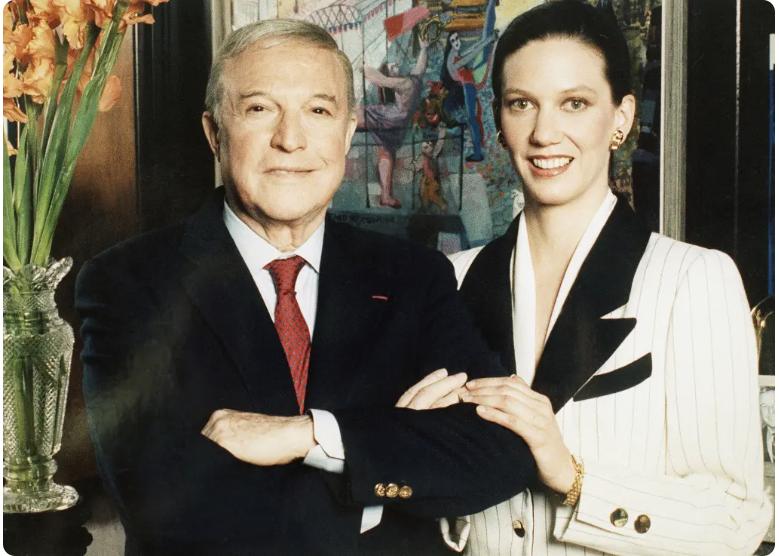
Was the smiling man who made dancing through the rain look effortless actually one of Hollywood’s toughest taskmasters?
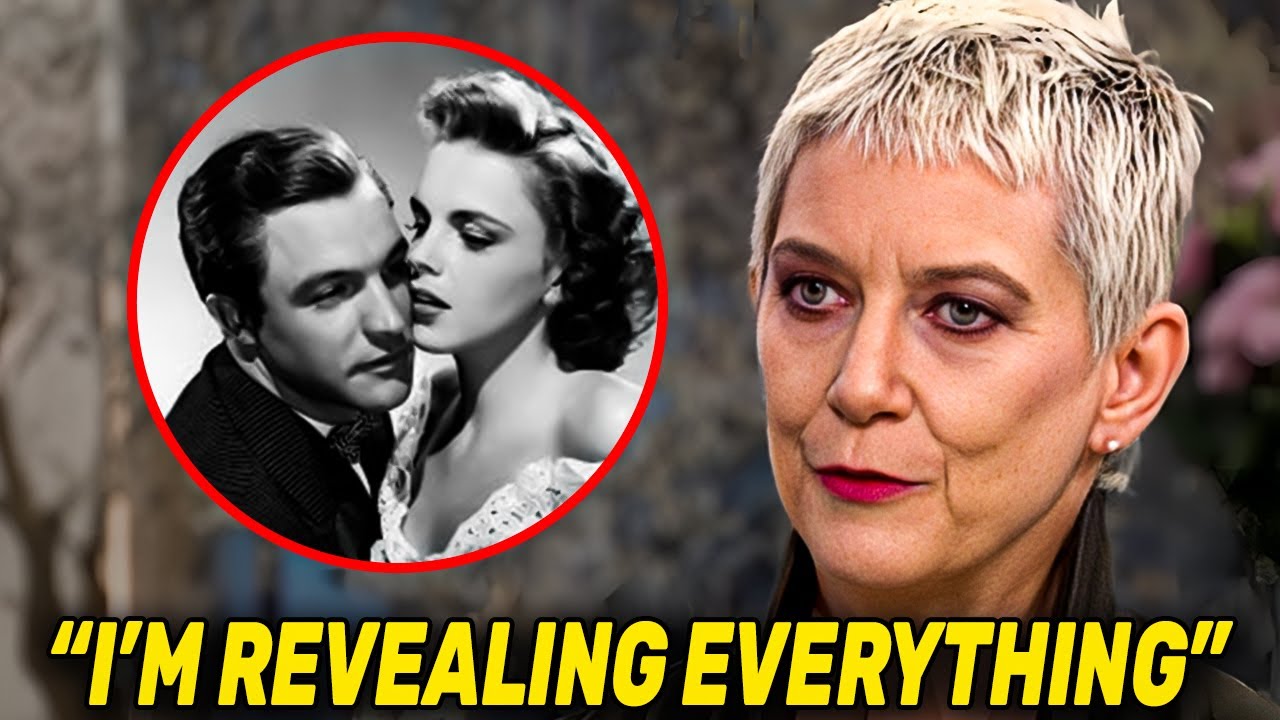
His widow, Patricia Ward Kelly, has spent years arguing that the answer is more complicated. She does not deny that Gene was demanding. She says the problem comes when demanding is automatically translated into cruel.
Donald O’Connor remembered something different again. He knew Kelly had a temperamental reputation, but while making Singin’ in the Rain, O’Connor remembered him as “wonderful and amenable.”
Three people.
Three perspectives.
And perhaps all three were true.
Because the quality that made Gene Kelly difficult for some colleagues may have been the same quality that transformed movie dancing forever.
1. Before Hollywood, Gene Kelly Wasn’t Trying to Become a Movie Star
Eugene Curran Kelly was born in Pittsburgh on August 23, 1912. His childhood image was far removed from the tuxedoed movie star Americans would later know. He was athletic, competitive and initially more interested in sports than in becoming a dancer.
His mother pushed all five Kelly children toward the arts, and by his teenage years Gene and his brother Fred were involved in the family’s dance school. Gene eventually studied economics at the University of Pittsburgh while teaching and choreographing on the side.
Dance was becoming his profession, but Kelly did not want to imitate the men who already dominated it.
Fred Astaire represented elegance.
Kelly wanted weight.
He wanted dancers to look as though gravity existed.
He wanted movement that could feel athletic, masculine and unmistakably American.
By 1938, he decided Pittsburgh was no longer enough and headed for New York.
Broadway followed.
Then came the role that changed everything.

2. Pal Joey Made Hollywood Notice
Kelly’s great Broadway breakthrough came as Joey Evans in Rodgers and Hart’s Pal Joey.
Joey was not a traditional romantic hero. He was ambitious, charming and morally slippery.
Kelly’s performance demonstrated that he could do more than execute choreography. He could build a character through movement.
Producer David O. Selznick noticed him and signed Kelly to a long-term contract. There was an irony: Selznick was not particularly interested in making musicals and initially imagined Kelly as a dramatic actor. With little appropriate work available, Kelly was loaned to MGM for For Me and My Gal opposite Judy Garland.
The 1942 film became Kelly’s Hollywood debut.
It worked.
MGM eventually acquired his contract.
But Kelly had not come west simply to stand where the studio told him and smile at the camera.
He wanted to change how dance itself worked on film.
That ambition would create masterpieces.
It would also create conflict.
3. Kelly Wanted the Camera to Dance Too
Movie musicals had existed long before Gene Kelly.
But Kelly became increasingly frustrated with choreography photographed as though audiences were sitting in a theater watching a stage.
He wanted dance integrated into storytelling.
A character should not simply stop the plot, perform a number and then resume speaking.
Movement could reveal psychology.
Fantasy.
Desire.
Conflict.
In Cover Girl in 1944, Kelly and collaborator Stanley Donen helped create the celebrated “Alter Ego” sequence, in which Kelly danced with another image of himself. PBS describes the sequence as a major advance in combining special effects with psychological storytelling through dance.
Then came Anchors Aweigh.
Kelly danced with Jerry Mouse.
Today, combining live action and animation feels familiar. In the mid-1940s, the sequence was technically audacious.
Kelly was no longer simply starring in musicals.
He was experimenting with what movie musicals could do.
And as his influence grew, so did his control.
4. He Was Not Interested in Making Dance Look Like Work
One of the paradoxes of Gene Kelly’s screen image is that enormous effort was spent creating the appearance of spontaneity.
He wanted movement to feel natural.
A sailor dances because he is happy.
A man swings around a lamppost because he has fallen in love.
A group bursts into motion because speaking is no longer enough.
Behind the camera, achieving that effortlessness could require extraordinary repetition.
That distinction matters when examining Kelly’s reputation.
The audience saw joy.
The performers sometimes experienced exhaustion.
Martin Scorsese, writing about classic Hollywood dance, later noted the punishing degree of rehearsal behind Kelly’s films. He cited Debbie Reynolds’ experience and Cyd Charisse returning home bruised from repeated dance work—not because Kelly physically harmed her, but because numbers were rehearsed relentlessly until everything aligned.
Kelly’s philosophy was essentially unforgiving:
The final result had to look effortless precisely because the preparation was not.
5. Then MGM Gave Him Debbie Reynolds
When Singin’ in the Rain went into production, Reynolds was around 19 and had comparatively little dance training.
MGM executives themselves were concerned.
Kelly and co-director Stanley Donen believed she could handle the role of Kathy Selden.
Then reality hit.
Reynolds suddenly had to dance beside Gene Kelly and Donald O’Connor.
She later remembered their first meeting. Kelly asked whether she could dance. She said no. He named a particular step. She had no idea what he was talking about.
Three intense months of dance training followed. At one low point, Reynolds was found crying beneath a piano before Fred Astaire encouraged her by showing her how much work even an established master had to put into rehearsal.
That story complicates the easy interpretation.
Reynolds suffered.
But dance itself was suffering for Kelly too.
Greatness did not mean things came easily.
It meant audiences weren’t supposed to see how difficult they were.
6. “Good Morning” Became the Breaking Point
The number looks joyous today.
Kelly, O’Connor and Reynolds race through a house, leap onto furniture, sing and tap their way through an apparently spontaneous celebration.
Behind the scenes, Reynolds paid heavily for it.
When filming “Good Morning” finished, she had damaged her feet so badly that she needed help returning to her dressing room. TCM records that burst blood vessels were the result.
It would be tempting to make Kelly the villain of the scene.
Reynolds herself never told the story quite that simply.
She acknowledged that he yelled at her and sometimes made her cry.
But she also emphasized how much patience it required for a dancer of Kelly’s level to work with someone who had entered the movie unable to dance professionally.
And she said she learned enormously from him.
That ambiguity is important.
Years later, Kelly himself reportedly admitted that given what he put Reynolds through, it was remarkable she still spoke to him.
He knew he had pushed hard.
The argument is over what that pushing meant.
7. Donald O’Connor Remembered Another Gene
Donald O’Connor was different from Reynolds.
He arrived with an extraordinary physical background.
His parents had been circus performers. He had been performing since childhood.
He could keep up.
When O’Connor later discussed Singin’ in the Rain with Roger Ebert, he acknowledged Kelly’s earlier reputation for temperament.
But his own memory of that movie was surprisingly positive.
Kelly, he said, was collaborative.
When they constructed “Make ’Em Laugh,” O’Connor contributed old vaudeville ideas and physical gags; Kelly wrote them down and helped shape the sequence rather than simply dictating it.
That does not cancel Debbie Reynolds’ experience.
It reveals something more useful:
Gene Kelly may have behaved differently depending on whom he was working with.
O’Connor was a veteran physical performer who could immediately operate at Kelly’s level.
Reynolds was a young actress learning under enormous pressure.
Their experiences were bound to differ.
8. The Movie That Nearly Broke Debbie Became Her Immortality
Singin’ in the Rain was released in 1952.
Its reputation grew enormously with time.
Today it is routinely placed among the greatest movie musicals ever made.
And Debbie Reynolds’ performance is inseparable from it.
The young woman who entered production unable to match Kelly’s dance experience ended up appearing completely at home beside him.
Audiences cannot see the damaged feet.
They cannot see the tears under the piano.
They cannot see the rehearsals.
That was Kelly’s objective.
No visible effort.
Only the finished illusion.
But understanding what the performers endured behind the illusion changes how the movie feels.
It makes the joy more complicated.
9. Even Kelly’s Most Famous Solo Hid Physical Misery
The title number remains one of the defining images of classic Hollywood:
Gene Kelly.
Umbrella.
Empty street.
Rain.
A man so happy that bad weather becomes a playground.
Yet Kelly was not feeling anything close to effortless joy.
Accounts from the production have long noted that he was ill while filming the sequence, and Scorsese later described Kelly dancing while running a high fever. The complex outdoor set also required technicians to create and photograph artificial rain across studio streets.
Kelly later characteristically shifted much of the credit toward the technicians.
“All I had to do was dance,” he joked in retrospect.
That line captures his public identity perfectly.
Make enormous difficulty sound easy.
Then smile.
10. An American in Paris Showed How Far His Ambition Could Go
Before Singin’ in the Rain, Kelly had already helped push the movie musical toward something grander.
An American in Paris culminated in a lengthy ballet sequence that used dance, design and music to carry narrative without conventional dialogue.
The film won Best Picture.
Kelly received a special Academy Award honoring his versatility as an actor, singer, director and dancer and his contribution to choreography on film. PBS’s career timeline places the honor alongside the film’s extraordinary success.
The recognition mattered because Kelly never wanted his legacy reduced to being a charming man who could dance.
He thought like a filmmaker.
Camera placement mattered.
Editing mattered.
Design mattered.
How much of the dancer’s body the audience could see mattered.
He wanted cinema itself to participate in choreography.
11. On the Town Took Dance Into the Streets
Kelly and Stanley Donen co-directed On the Town in 1949.
One of its important innovations was the use of actual New York locations.
Hollywood musicals had traditionally relied heavily on studio backlots.
Kelly wanted the city itself.
Real streets created movement the soundstage could not quite reproduce.
The decision sounds ordinary now.
At the time, it represented another step in Kelly’s larger project: stop treating movie dance like filmed theater.
Make it cinema.
PBS identifies On the Town as the movie that established Kelly and Donen as film directors, rather than simply choreographers or performers.
The athletic dancer from Pittsburgh was gaining influence over the entire visual language around him.
Influence tends to create stronger opinions.
Kelly had plenty.
12. The Perfectionist Reputation Was Not Invented After His Death
It would be unfair to say stories about Kelly’s demanding personality emerged only decades later.
His intensity was known while he was alive.
Even a filmmaker who later examined Kelly’s career concluded that reports about his temperament largely originated in his desire to get the work right rather than in random movie-star behavior.
Kelly himself did not deny perfectionism.
For a dancer, there was a practical reason.
Film can be retaken.
A live performance cannot.
If a foot is misplaced, music does not stop politely and wait.
Discipline becomes part of survival.
But there is still a difference between understanding why someone was demanding and pretending everyone enjoyed being on the receiving end.
Debbie Reynolds clearly didn’t enjoy every moment.
History does not require choosing between those truths.
13. Patricia Ward Met Gene Kelly Without the Legend
Decades later, another woman entered Kelly’s life from a completely different direction.
Patricia Ward was a young writer working on a Smithsonian television project in Washington in 1985.
Gene Kelly was the host and narrator.
Patricia has repeatedly said something that surprises classic movie fans:
She did not know who he was.
She had not grown up immersed in Hollywood musicals and therefore did not approach him as the man from Singin’ in the Rain.
Several months later, Kelly invited her to California to work with him.
One project became particularly important.
His memoir.
Patricia’s job gave her unusual access to the way Kelly remembered his own life.
She began recording him.
Frequently.
14. She Recorded Gene Talking for Years
Patricia has said she recorded Gene almost every day over roughly a decade.
Those recordings became the basis for her later presentations and her work preserving his history.
Their professional relationship gradually became personal.
In 1990, they married.
Their age difference—about 47 years—immediately drew public attention.
Patricia was 31.
Gene was in his late seventies.
She later said she barely thought about the age gap because Gene seemed intellectually energetic and youthful to her.
They remained married until Gene died in 1996.
Since then, Patricia has devoted much of her public work to preserving his legacy.
That makes her valuable.
It also means her perspective should be understood for what it is:
the perspective of a wife, collaborator and custodian of his memory.
Not the only possible interpretation of Gene Kelly.
15. Patricia Doesn’t Deny He Was Tough
When Patricia was directly asked about Gene’s reputation as a “taskmaster,” she pushed back hard on the label.
Not because she claimed he was easy.
She didn’t.
Her argument was that “perfectionist” had gradually become an accusation rather than a description.
She said Gene demanded from himself what he demanded from others and argued that many dancers, choreographers and technicians remembered him as generous as well as tough.
This is where a weaker biography might announce:
His widow finally reveals everyone was wrong.
But that would simply replace one oversimplification with another.
Patricia knew Gene intimately.
Debbie Reynolds knew what it felt like to be a 19-year-old novice being pushed by him.
Donald O’Connor knew what it felt like to collaborate with him as a seasoned professional.
All three perspectives belong in the story.
16. Kelly Was Often Hardest on Himself
There is a clue in the work.
Gene Kelly repeatedly attempted things that made his own job more difficult.
He danced with animation.
He danced with his own image.
He pushed cameras outdoors.
He constructed long ballets.
He choreographed around special effects.
He performed physically punishing routines long past the point when many stars would have relied on doubles.
He did not appear interested in creating an easy career.
PBS’s portrait of Kelly emphasizes how strongly he pushed the storytelling possibilities of screen dance rather than simply reproducing familiar stage traditions.
That does not excuse every harsh rehearsal.
It helps explain the personality behind them.
Kelly seems to have believed that if a piece could be better, then “good enough” was failure.
That philosophy can create brilliant art.
It can also be exhausting to live around.
17. His Private Life Was More Complicated Than the Joy on Screen
Kelly’s personal life went through substantial change.
He married actress and dancer Betsy Blair in 1941. They had a daughter and remained married until their divorce in 1957.
In 1960, Kelly married Jeanne Coyne, a longtime dancer and choreographic colleague. They had two children. Coyne died of leukemia in 1973, leaving Kelly widowed with young children.
For years afterward, he did not remarry.
Then Patricia entered his life.
Their marriage became the final chapter of a romantic life that had unfolded through enormous professional change—from Broadway to MGM to the decline of the classic studio musical.
By the time Patricia knew him, Gene Kelly did not have to prove that he was a star.
That was one reason she believed she saw a side of him fame had once hidden.
18. The Man Who Wanted to Be Remembered for More Than Dancing
Patricia has said Gene was specific about what he wanted his artistic legacy to be.
He wanted to be remembered for helping change how dance looked on film and for developing a particularly American approach to dance.
That ambition makes sense when looking back across the career.
Cover Girl.
Anchors Aweigh.
On the Town.
An American in Paris.
Singin’ in the Rain.
Each expanded the relationship between choreography and camera.
Kelly could have simply remained one of Hollywood’s greatest dancers.
He wanted to redesign the environment around the dancer.
That is why judging him only by whether rehearsals were pleasant misses something essential.
But judging him only by the masterpieces misses something too.
Art is made by people.
And the people around Kelly sometimes paid a physical and emotional price for the standards he imposed.
19. Debbie Reynolds Never Needed History to Erase the Hard Parts
Reynolds’ later comments about Singin’ in the Rain are powerful precisely because she did not reduce Kelly to either villain or saint.
She remembered how difficult he could be.
She remembered crying.
She remembered the physical pain.
She also remembered learning.
And she recognized that the movie transformed her career.
Entertainment Weekly later recalled one of Reynolds’ most famous assessments of the experience: Singin’ in the Rain and childbirth were among the hardest things she ever did.
Yet she spent the rest of her career proudly associated with the movie.
The contradiction is almost the perfect way to understand Kelly.
Working with him could be miserable.
The result could be unforgettable.
20. Donald O’Connor Never Needed History to Make Him a Monster Either
O’Connor’s recollection provides the other half.
He did not describe Singin’ in the Rain as a nightmare under a tyrant.
He remembered collaboration.
He remembered bringing his own ideas into “Make ’Em Laugh.”
He remembered Kelly listening.
And he remembered that on this particular production, the supposedly temperamental Gene was enjoyable to work with.
Two co-stars could stand beside the same man on the same movie and leave with different emotional memories.
That is not evidence that one of them is wrong.
It is evidence that human beings are complicated.
So are working relationships.
21. Gene Kelly Died Before the Argument About Him Ended
Kelly suffered a series of strokes in the mid-1990s and died at his Beverly Hills home on February 2, 1996.
He was 83.
By then, the Hollywood musical that had made him famous belonged largely to another era.
But his work had survived it.
Dancers studied him.
Filmmakers borrowed from him.
Movies continued screening.
Singin’ in the Rain gradually acquired a reputation even greater than the one it enjoyed when first released.
And as the films became monuments, questions about the man behind them grew louder.
Was Gene Kelly charming?
Yes.
Could he be generous?
People who worked with him said so.
Was he demanding?
Undeniably.
Did he sometimes push people until they cried?
Debbie Reynolds said he did.
None of those facts need to cancel the others.
22. Patricia Has Spent Decades Protecting the Context, Not Just the Image
Since Kelly’s death, Patricia has lectured, presented archival material and used the recordings she made with Gene to explain his creative thinking.
Part of that work has involved challenging myths.
But her most useful contribution is not declaring that Gene was misunderstood by everyone.
It is restoring context.
What was he trying to achieve?
Why did he rehearse so intensely?
Why did he care where a camera stood?
Why did a dancer’s entire body need to remain visible?
Why did he insist on another take?
Those questions do not erase the tears.
They explain what Kelly believed was at stake.
For him, dance on film was not decoration.
It was filmmaking.
23. The Cost Is Still Visible—If You Know Where to Look
Watch “Good Morning” today.
Nothing seems difficult.
That’s the trick.
Debbie Reynolds smiles.
Donald O’Connor smiles.
Gene Kelly smiles.
Their steps line up.
Furniture becomes choreography.
The room feels like a playground.
Knowing Reynolds’ feet were injured does not ruin the sequence.
It changes it.
Now you can see two movies at once.
The one MGM sold:
pure joy.
And the one that existed just outside the frame:
repetition, pain, discipline and extraordinary concentration.
Gene Kelly spent a career trying to make sure audiences saw only the first.
History eventually showed us the second.
24. So Was Gene Kelly Too Hard on People?
There may be no answer capable of satisfying everyone.
If Debbie Reynolds says he pushed her until she cried, that should not be dismissed.
If Donald O’Connor says Gene was collaborative and wonderful with him, that should not be dismissed either.
If Patricia Ward Kelly says many professionals remembered a generous man who demanded as much from himself as anyone else, her testimony belongs in the record too.
The mistake is deciding that only one version can be true.
Gene Kelly was a perfectionist.
Perfectionism is admirable when we look at the finished masterpiece.
It can feel very different at hour ten of rehearsal.
Those are two sides of the same story.
25. Maybe That’s Why the Dancing Still Looks Effortless
More than seven decades after Singin’ in the Rain, Gene Kelly still swings around that lamppost.
He still splashes into the puddle.
Debbie Reynolds still keeps up in “Good Morning.”
Donald O’Connor still runs up the wall.
Nothing appears difficult.
That illusion was the achievement.
Kelly wanted audiences to forget about labor.
The body should express joy before the viewer has time to think about technique.
He succeeded so completely that generations could watch his films without realizing what those smiles sometimes cost.
And perhaps the fairest judgment is not that Gene Kelly was secretly a tyrant, nor that every difficult story about him has been exaggerated.
It is that both versions of Gene Kelly could exist at once.
Debbie Reynolds remembered the tears.
Donald O’Connor remembered the collaborator.
Patricia remembered a man who demanded excellence and was hardest on himself.
The arguments continue.
So do the films.
And every time Gene Kelly steps into the rain, Hollywood’s most difficult trick happens again:
an enormous amount of work disappears—
and all we see is joy.