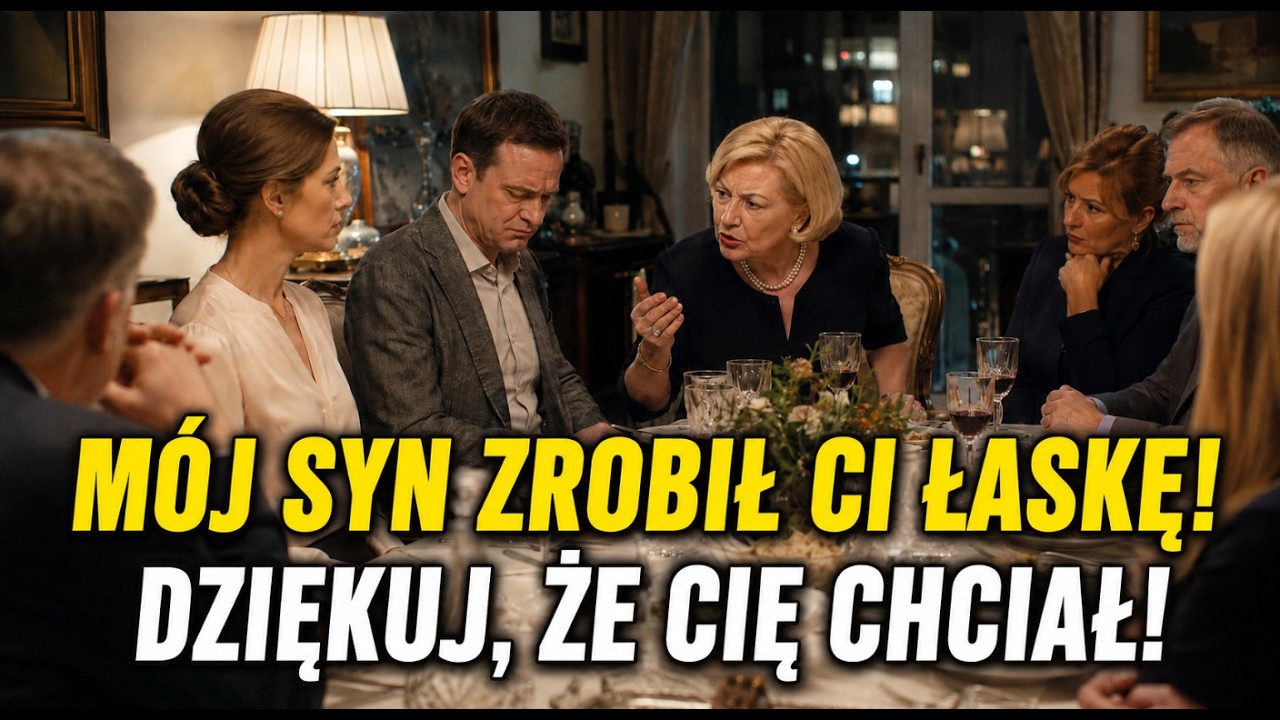
My daughter had no idea that I spent my career putting people like her behind bars. She brought me documents to sign, and in that moment, I understood everything. In a few weeks, one of us would be on the other side of the law. I held the pen in my fingers.

My daughter smiled, calm and confident. She was certain she could fool the mother she believed was simple, a woman who, in her telling, had only ever shuffled papers and stamped forms as a clerical mouse in a regional police station. That was how she liked to describe me. She had no idea that I had started with those very papers and spent the rest of my life locking up the kind of people who bring old folks folders like that to sign.
But did I send her to prison? Did my love for my daughter prove stronger than reason? My name is Irmina Stazińska. I am sixty-one years old, a short woman with a stubborn chin and hands equally at home gripping a pot or criminal files.
I live alone in a small two-room apartment in Warsaw. The building is old, brick, with worn banisters and the permanent smell of boiled soup on the stairwell. Behind my door it is always clean and quiet. No luxury, but order.
My home smells of black tea, paper, and slightly of old leather folders. Without that smell, I can no longer call the place home. My daughter used to call me a clerical mouse. She said it in front of strangers, that I spent my whole life in paperwork, stamping forms at the regional police.
She liked reducing my life to stamps. I never argued. Let her think she knows me. Yes, I really did start in the archives.
The regional station in Szczecin, a small office with peeling green paint, my chair against the wall, piles of files. First I would bind, thread, number, carry, and fetch. Tea for superiors, signatures, stamps. I stayed silent and worked, but my eyes were always open.
I read what I bound. Not as paper, but as other people’s lives. The same characters kept appearing in the files. Old people, lonely, trusting, ashamed.
A nephew helped arrange a power of attorney. A son asked for a signed contract to make payments easier. A daughter convinced her mother to open a joint account to help with money. And the result was always the same.
A person with a bundle of belongings stands in the corridor and whispers, “How did it happen that the apartment is no longer mine? ”
While others saw sums, dates, and paragraphs in those piles of paper, I saw faces, old bathrobes, worn slippers, trembling fingers over the signature line. That is probably why I was quickly moved from the archives to investigations. “You have a nose for this, Irmina,” my boss said.
“You’ll handle economic crimes. ”
So I became an economic crimes investigator. Not a newspaper hero, not a loud figure, just an ordinary investigator who digs through accounts, contracts, and statements. But my cases almost always concerned one thing: how old people get stripped of everything they have.
I learned to spot the patterns instantly. Broad powers of attorney just in case. Joint accounts for convenience. Guarantees for a few months.
“Mom, word of honor, we’ll pay it all back. ” Lifetime contracts where fine print gave the right to relocate the grantor to any suitable place. I conducted interrogations. I listened to sons justifying taking their mother’s apartment with concern.
Daughters-in-law tearfully explaining they only wanted to optimize expenses. I saw fake tears and real tears, the ones of those left without a roof over their heads. And I put people in prison. Exactly like my daughter.
People who hid greed under the word “care. ” Not with pleasure, but without mercy, because I knew that if I stayed silent today, tomorrow someone would knock with the exact same folder. My work reshaped me. I learned to speak calmly when everything inside was boiling.
I learned not to look away when someone tried to play on pity. I learned to trust only what is verified, recorded, and verified again. My private life could not survive it. My husband left.
He said, “Living with you is like being under investigation. You see everything, notice everything, trust no one. ” He found a gentler woman. I did not stop him.
I never had patience for the blind. I worked until retirement, leaving a little early by choice. My boss and I shook hands. He sighed.
“People like you almost don’t exist anymore. ” And I was tired. Not of the paperwork, of human greed. I moved from Szczecin to Warsaw.
Theoretically a louder, more chaotic city, but I breathe easier there. A big city likes loners. Easy to get lost and owe no one anything. I chose a home near greenery, but not too close to my daughter.
Close, yet at a safe distance. My apartment is small but very much mine. A reading chair by the window. A few photos on the wall, nothing excessive.
In the kitchen, a table where bills and a grid notebook are always neatly arranged. I write everything down in that notebook. When the pension comes, when I pay for gas and electricity, what I spend on food, what medicines I bought. No, I am not obsessive.
I simply know too well how easily someone else can take control of your life if you let it slip from your hands. My apartment documents are in a separate folder in the wardrobe. Bank statements in another. Insurance, policies, old contracts.
Everything divided, labeled, tied with rubber bands. Sometimes neighbors complain, “Oh, Irmina, I keep forgetting where things are. Chaos in my head. ” I just nod and say, “Write it down.
Paper remembers better than we do. ” And I think to myself: as long as I hold on to my papers, no one will take me with bare hands. I see Mila rarely. She lives in Łódź, with her husband Ewald, the children, her social circles.
That is normal, I tell myself. Children leave and build their own lives. That is how it should be. But every time she visits, I feel a slight, foreign chill.
This is no longer my little girl in a stretched sweater. This is a woman with pretty words on her tongue and quick calculations in her eyes. “My mother is simple,” she tells her friends, laughing. “She spent her whole life in archives, shuffling papers.
” She says “simple” the way you brush crumbs off a table. I smile. Let it be. Let her live believing I understand nothing.
It is even safer that way. What I did not know was that one day my daughter would decide to try on the role of those same relatives I had interrogated for years, and would bring me a folder, certain that I, old, alone, tired, would sign everything. That morning she called. Her voice was tender, almost sticky.
“Mommy, are you home? I want to come over for coffee. I have a few papers. A pure formality.
Will you help me? ”
I poured myself tea and thought it would be an ordinary visit. A little talk, a few child photos on her phone, a tired smile. I did not yet know that this visit would become an exam of memory, character, and who I really had been all these years.
A clerical mouse, or someone capable of putting even her own blood behind bars. A few hours later, they stood at my door. Mila in a light coat, hair perfectly arranged. Ewald, as always, a bit nervous, eyes darting, phone never leaving his hand.
It was new personal development courses. A crypto club. A unique marketplace where everyone would make money. Only a strange thing: all his projects started loudly and then quietly dissolved.
Jadwiga burst in first, hugging me around the waist so hard I lost my breath. She is only six but already so tall, with light braids and a serious gaze. Bruno, a four-year-old whirlwind, immediately crawled under the table looking for an imaginary dinosaur. We had tea, I brought out cake.
The conversation was ordinary: weather, kindergarten, school, traffic. I looked at Mila and thought how much she had changed. A girl with scabbed knees, now a woman whose every word is like a small coin. It shines, but its value must be checked.
Then the children went to the room to watch cartoons. Ewald suddenly had to take a call and stepped out to the stairwell on business. We were left alone. Mila scanned the kitchen, stopped at my pile of bills.
“Mom, you’re surely not handling everything completely by yourself? ”
“I have everything written down,” I replied. She picked up a bill. “You still go pay in person?
”
“Yes. It feels safer. ”
“Mom, that’s the last century. Everything is online now.
You could mix things up, forget. At your age, that’s normal. ”
At your age. Those words stung more than I wanted to admit.
“I don’t mix things up yet,” I said calmly. “But thank you for your concern. ”
She smiled, but there was a trace of iron in it. “You were always stubborn.
” She sighed. “I just worry. Your apartment is big for you alone. Two rooms.
What for? You basically live in the kitchen and your armchair. ”
I looked at her, at my books behind me, at the chair by the window, at my notebook. “This is my home, Mila.
I’m not superfluous in it. ”
She switched topics immediately, as if she had said nothing. She asked about my health, blood pressure, pills. “You’re sure you don’t forget to take them?
Because recently you said on the phone that today is Tuesday, and it was Thursday. I got scared. ”
I tensed. I remembered that conversation perfectly.
I had simply misheard her. She said Tuesday, and I asked to confirm. But in her version, it became me confusing the days of the week. Mila was weaving a web.
“Mom, you know I care about you. We just need to organize everything in advance so it’s easier for you, so it doesn’t happen that one day you can’t walk to banks, stand in lines, handle these bills. It’s torture. ”
I remained silent.
The words were right, but they made me cold inside. From that day on, her calls became more frequent. “Mom, when is your gas payment? You didn’t forget?
” “Mom, you locked the door, right? It’s dangerous in big cities. ” “Mom, what day is it today? ” Sometimes she called late at night.
“I lie in bed and think about you. What if you feel bad and no one is there? Maybe we should think about a joint account so I can pay in your name if something happens? It’s only for your convenience.
”
With each conversation, I heard her concern grow heavy, like a chain. Joint account, power of attorney, take care of everything in advance. I knew these words not as a mother, but as a former investigator. Then came the small jabs.
“Mom, you bought so much food again. Why? Old people often don’t feel hunger, then everything spoils. Maybe I should receive your pension instead and distribute what’s needed?
” “Mom, you’re too emotional. Someone could deceive you. People are bad now. You need protection.
Someone who will be there and control everything. ”
Control. That word was more honest than all the others. Ewald sometimes joined in.
“Mrs. Irmina,” he would say in his strained, polite tone, “we want you to live peacefully. I’m in business, I understand financial risks. You have an apartment, accounts, all this can be optimized so you don’t have to think about anything.
” I could picture him smiling at the phone, mentally moving my walls and my money into his projects. He was a typical character from my old cases. Eternal startups, clubs, investment packages. Always almost successful.
There was always a long list of reasons why there was no money yet, but it would come soon. I listened, nodded, but inside me grew a feeling I had carried into interrogation rooms for years. Something is wrong here, and it will show itself. Mila began visiting more often, alone.
The children ran around drawing and playing, while she walked through the apartment like an owner appraising it. “Mom, look yourself. You don’t even use half this stuff. Wardrobes stuffed with old folders, who keeps paper now?
Everything is electronic. Books. You’ve already read them all. What do you need them for?
We could simplify everything, sell this apartment, buy a smaller one, and with the rest…” She always stopped there. But I heard exactly how the sentence continued in her head. One day she sat across from me, placed her hands on the table as if we were at negotiations. “Mom, let’s talk like adults.
You’re not young. I’m not eternal either. We need to think ahead. Let’s do a broad power of attorney so I can help you with money, bills, contracts at any time.
You trust me, right? ”
I looked into her eyes. My little girl is over thirty. She has two children, a husband with dubious ideas, a mortgage, credit, and tired but greedy eyes.
Not greedy for food or things, but for easy money and peace. “I trust you,” I said quietly, “but I’ve worked with papers my whole life, and I know that trusting is one thing, and a signature is another. ”
She leaned back and sighed. “You’re complicating everything, Mom.
I just want to make it easier for you. ”
Her “easier” reminded me too strongly of those cases where grandmothers ended up in care homes and their oversized apartments became someone else’s investments. I still hoped everything would end with conversations, that she would understand and stop. But one morning she called with her sweetest voice.
“Mommy, I’ll drop by today. I have everything ready. It’s just signatures, okay? And I have great news.
If we do everything on time, we can still get subsidies, discounts, reliefs. You like order, after all. ”
I set down the phone and felt something heavy tighten in my stomach, like a knot. Everything ready.
That meant this time she was not coming to talk. She was coming with a folder. She came without the children. That was the first alarming sign.
Usually Jadwiga would burst in first, and Bruno would drag an imaginary dinosaur. This time only Mila stood in the doorway, a handbag in one hand and a gray folder in the other. Not flashy, not ugly. Ordinary, office-like.
That folder does not shout. It whispers, “Everything is already decided. Only the signature remains. ”
“Mom,” she kissed my cheek quickly and slipped into the hallway.
“It’s warm at your place. Good. I’m so tired from these trips. First coffee, then I’ll show you something.
It’s all for you. ”
For you. That was the second sign. We sat in the kitchen.
She turned the cup in her hands without touching the tea. The folder lay on the table between us like a third participant in the conversation. “Mom, I’ve been thinking a lot,” she began, looking sideways. “So much has happened these months.
Ewald has a new project. The children have activities. Pressure at work. And I keep worrying about you.
You’re alone. Big apartment, bills, banks. People go door to door, cheating old people. ”
I almost smiled.
If only she knew who she was talking to. “I manage,” I said gently. “But thank you for worrying. ”
She set the cup down sharply and slid the folder closer to me.
“Here. I prepared everything to make it easier for you. There are subsidies, reliefs, formalities. I consulted.
Mom, now the state has good programs for retirees if everything is handled well. Discounts on utilities, support, extras. ”
She spoke quickly, a little too loudly, like someone preemptively driving away objections. I opened the folder.
The first pages were innocent. Printouts from a website, general information, applications for reliefs, fine print, standard formulas. I turned the pages without stopping. This was a facade.
Deeper in, the real documents began. The first was a power of attorney, broad as a spilled river. I did not read it in full. My eyes caught the needed phrases on their own.
“Represent the interests of the principal in all banking institutions. Open and close accounts, receive, withdraw, and transfer funds without restrictions. Enter into contracts on behalf of the principal, including credit agreements, pledge agreements, surety agreements. ” The name of the attorney: Mila Stazińska.
I slid my finger over the lines without touching the paper. This was not small help. This was handing over the entire financial neck into one pair of hands. Her hands.
Something inside me stirred, but my face remained calm. “It’s a power of attorney, Mom,” Mila said quickly, noticing where I was looking. “You understand, a pure formality. I’ll just be able to pay everything for you if you can’t, or if something happens so the banks don’t torment you with paperwork.
I’m your daughter. ”
I did not answer. I turned the page. Next was a surety agreement.
Not just me and Mila, but me and some company with an English name. At the bottom flashed Ewald’s surname. “The guarantor bears full joint and several liability for the borrower’s obligations. ” The amount was not written in digits but in words, large, very large.
The company was recently registered under an address where, as far as I knew, only a virtual office existed. A typical scheme. Take a loan, don’t pay, disappear. And let the guarantor worry.
The guarantor was me. “It’s temporary,” Mila leaned toward me. Her voice became softer, almost pleading. “Ewald has to close a financial gap.
The project is about to take off. Clients are already waiting. But banks are terrible now. Without guarantors they won’t give normal terms.
You know how it works? ”
I knew. I knew far too well how it works. I set the agreement down without comment and picked up the next one.
It was a life annuity contract. At first glance respectable, printed on a nice form. I swept through it quickly. “Irmina Stazińska, the beneficiary of the annuity, transfers to the ownership of Mila Stazińska, the obligor of the annuity, the apartment belonging to her, located at…” followed by my address in Warsaw.
My floor, my square meters. “In return, the obligor of the annuity undertakes to provide the beneficiary with maintenance, care, and housing. ”
I had seen such contracts dozens of times. On paper: care and protection.
In reality: a suitcase and a bed in a care home. And one more sentence, carefully hidden among the others. “The obligor of the annuity has the right to determine the place of residence of the beneficiary at her own discretion, guided by conditions ensuring a dignified old age. ”
That was it.
One sentence, one door through which I could be driven from my own apartment to any so-called suitable place, to the outskirts, to a cheap boarding house, to a room without a window. All perfectly legal. My daughter did not know that I put people like her in prison. Not figuratively, not in my mind.
Really. For the same articles, according to the same schemes, with the same folders. I sat in my kitchen, held the documents, and smelled the familiar scent. Not paper, not coffee.
The smell of fraud wrapped in words of love. Mila nervously picked at the edge of the tablecloth. Her confidence cracked under the weight of my silence. “Mom, why are you looking at me like that?
” she finally blurted. “I did all this for you, so you wouldn’t have to think about nonsense. You should rest, read, walk. You say yourself you’re tired.
And we’ll handle everything. Bank, bills, renovation. You just sign, and everything will be done properly. ”
Properly.
That word echoed in my memory from interrogation protocols. Relatives always spoke exactly like that when they took the last roof from old people’s heads. Calmly, I closed the folder. “I’m old, Mila,” I said quietly.
“My eyes aren’t what they used to be. I need to read everything carefully, without rushing. I have a lawyer friend. She’ll explain things to me.
Then we’ll sign. ”
Her eyes widened. “What lawyer? Why?
Don’t you trust me? ”
I looked her straight in the face. Before me was no little girl. Before me was a person who had decided I was the weak point in their budget.
“I trust you as my daughter,” I said, “but documents are a separate matter. All my life, I told people: don’t sign anything without consulting a specialist. It would be ridiculous if I did otherwise myself. ”
She pushed her chair back abruptly, stood, and paced the kitchen.
“Mom, you’re complicating everything. It’s just papers. I spent so much time arranging all this, and you? ”
“All the more reason,” I interrupted gently.
“If everything is so good, the lawyer will confirm it. Then I’ll sign, you’ll be relieved, and so will I. ”
She stopped by the window. Her shoulders trembled, whether from anger or fear, I could not tell.
“Do what you want,” she finally snapped. “Just keep in mind that such opportunities don’t wait forever. Subsidies, reliefs, all have deadlines. And if you start delaying now, it means it wasn’t meant to be.
”
I did not answer. She grabbed her coat, not looking at me, shoved her phone into her bag. “Fine, I’ll leave the folder. Just please don’t make a drama out of it.
I’m not your enemy. ”
I walked her to the door. When the lock clicked behind her, the apartment became so quiet that I heard my own breathing. I returned to the kitchen, put the folder on the table, and closed my eyes for a moment.
Before me flashed the faces of old suspects. Their words, their justifications, their phrases about care. Now a new face joined them. My daughter’s face.
I opened my eyes, took the folder, went to my desk, turned on my old laptop, laid the documents one by one on the scanner glass. That same evening, I emailed all the files to Franciszka Radecka, my old friend, a lawyer, a woman who had once helped me tighten the noose around the necks of very confident fraudsters. In the message I wrote only one sentence: “Please look at this as if you were qualifying the actions of the signing party if she signed it all. ” And I added, “And what threatens those who slipped it to her?
”
Franciszka’s reply came quickly, too quickly for a busy person. “Irmina, this is classic. Call me urgently. ”
I stared at those three short lines and felt that old, familiar tension that always appeared before an arrest.
Except now there was no one to arrest. I had to save myself. Franciszka and I have known each other for many years. When I was starting out, she was already a lawyer who was not afraid to dig through the filth of economic cases.
We often found ourselves on opposite sides of the table, but always on the same side of justice. I dialed her number. “Well, hello, old witch,” I heard her raspy voice. “Why are you sending me something like that without warning?
My blood pressure spiked. ”
I smiled despite myself. “Sorry. I didn’t mean to kill you.
I wanted you to look at the documents. ”
“I looked. ” She cut me off. “That’s a kit for silently robbing an old woman.
A broad power of attorney, a surety for a shady company, an annuity contract with the right to haul you off anywhere. God knows, if you signed all that, in a year you’d be homeless, in debt, and probably in the cheapest care home. ”
She said aloud what I already understood, but hearing it in another person’s voice was painful. “Are you sure it’s Mila and her husband’s initiative?
” she asked. “Everything revolves around his company. ”
“Franciszka,” I said quietly. “She brought it to me herself.
Calmly. Confidently. ”
Silence fell on the line. “I understand,” she sighed.
“Then we’ll do this. First you protect yourself, then you decide what to do with them. ”
The next day we met in a small café near the courthouse. Franciszka walked in with quick steps, threw off her coat as if shaking off other people’s affairs, and sat across from me.
On the table she placed the same gray folder, now covered with her notes. “Look,” she opened it. “Everything is clear here. If your daughter claims it was care, I will read every word aloud in court with pleasure.
”
I was silent. She did not stroke my hand or comfort me. Good. “Here’s the plan,” she said.
“First, you go to the bank and put a special note on your accounts. Any power of attorney from relatives is to be treated as suspicious until personal confirmation. Without your physical presence at the branch, no one opens, closes, or withdraws anything, even if they bring a perfect document from the best notary. ”
I nodded.
Logical. I would advise any grandmother to do the same. “Second, we draw up a normal, safe power of attorney, limited only to minor municipal payments, possibly obtaining statements, without the right to take out loans, without the right to close or open accounts. If you want, we’ll give it to Mila, but so that even if she tries very hard, she can’t do any harm.
”
Something inside me twitched. Give her anything after all this? But I understood the move. Let her think she has control.
In reality, it’s a leash. “Third,” Franciszka pulled out a new thin envelope. “A will. You wanted to write one anyway.
Better to do it now, in cold blood. The apartment, the money, everything you have goes to a trust for Jadwiga and Bruno. Not for your daughter, not for her husband. For the grandchildren.
And an independent trustee will manage it, someone they can’t touch. I’ve already chosen a candidate. ”
I took the envelope. The paper was heavy, solid, completely different from that gray sticky folder Mila had brought.
“Will they understand? ” I asked. “This isn’t against them. ”
“They’ll understand,” Franciszka shrugged.
“Or they won’t. That’s no longer your problem. Your duty is to protect yourself and those who are still too small to sign anything. Jadwiga and Bruno have nothing to do with this.
They don’t need their parents’ debts, they need a chance to live without that filth. ”
I slowly nodded, and finally she smiled. “Nice move. You’ll propose to Mila yourself that we arrange it all properly at a notary.
She and her husband will come delighted, sure you’re signing their papers, and the notary will read aloud the documents we prepared. ”
I pictured the scene. Mila’s face when, instead of broad powers and an annuity, she hears the words “limited power of attorney” and “will in favor of minor grandchildren. ” Ewald’s face when he realizes his credit line is still hanging on him, not on my old neck.
Something cold and even clicked inside me. My investigator’s mechanism. “The deal stands,” I said. “When’s the notary?
”
“In a few days,” Franciszka replied. “I’ll prepare everything. You just call your daughter and say you agree. Let her be happy.
”
I went to the bank in the morning. It was cold. Warsaw wind pulled at my face, but inside I was calm. I walked into the familiar branch where I usually paid bills and approached the desk.
A young woman with a perfect eyeliner line smiled professionally. “May I help? ”
“I need the security department,” I said calmly, “and a personal client manager. I have a matter concerning the protection of my accounts.
”
I was led to a private office. I took out my ID and placed it on the table along with a few documents. I explained who I was, what I had done, and what papers had recently been pushed at me. The manager, a man around forty, listened carefully without interrupting.
“I want,” I said clearly, “a note in my file. Any powers of attorney from relatives are not to be executed without my personal presence. Even if they have ten stamps. ”
He let out a faint laugh.
“Mostly people come to us after the fact. You’re the first in a long time who wants to think ahead. We can make an internal note and set limits. Any operation above a certain amount only after personal confirmation.
”
“Please do it,” I said, “and set low limits. I don’t buy yachts. ”
We filed the application. I signed where needed.
I left the bank and felt as if an invisible fence had grown around my apartment and my money. That evening I called Mila. “Sweetheart,” I said in a tired voice. “I’ve thought about your proposal.
You’re right. ”
She immediately perked up. “See? ”
I sighed.
“These are complicated matters, powers of attorney, contracts. I don’t want to run around offices afterward. If we need to sign, let’s sign. But at a notary, as it should be.
You always said everything has to be done according to the law. ”
I heard her almost exhale with relief. “Mom, you won’t regret it. We happen to know a good notary in the center.
Ewald and I will organize everything. Just don’t change your mind. ”
“Alright. I won’t,” I answered.
“I trust you, after all. ”
I hung up and looked at my reflection in the dark window. A short woman, gray hair, wrinkles. So easy to write off, so easy to see as convenient.
But I knew who I was. I was the person who had spent years putting people like my daughter in prison. Now I was about to do almost the same thing, only first I would lead her through the mirror of her own intentions. The day of the notary was clear, almost sunny.
I arrived a little early, sat on a bench opposite the office, breathed in the smell of wet asphalt, and let go of everything unnecessary. Mila and Ewald appeared almost at the same time, getting out of a shiny car. Both elegant, excited. In their eyes, that light, greedy spark I knew so well from work.
“Mommy,” Mila pecked my cheek. “Finally. We’ll take care of everything, and you’ll be safe as a stone wall. ”
A stone wall, apparently, reminded them of my walls.
We went up the stairs to the notary’s office. Floors gleamed. On the desk, a green lamp, the smell of paper and expensive perfume. A middle-aged man looked at us over his glasses.
“Mrs. Irmina Stazińska? ” he confirmed. “Yes.
” I nodded. “Please sit. The documents are prepared. ”
Mila sat close to me.
Ewald, on the other side of the table, already pulled out a pen from his pocket, as if about to sign an agreement. The notary opened the folder. Not the gray one. Ours.
Franciszka’s. “Then let’s begin,” he said. “First, a limited power of attorney, under which Mrs. Irmina Stazińska authorizes Mrs.
Mila Stazińska to pay municipal bills and obtain account information. Without the right to withdraw funds, enter into credit agreements, or change the terms of deposits. ”
Out of the corner of my eye, I saw Mila flinch slightly. Ewald frowned.
“Excuse me,” he interrupted. “What about the other powers? There was supposed to be another document. The full scope I was given.
”
“Then we have the will,” the notary responded calmly, turning the page. “Under the will of Mrs. Irmina Stazińska, the apartment at…” he gave my address precisely, “and the funds accumulated in her accounts pass to a trust for the benefit of the grandchildren, Jadwiga and Bruno, managed by an independent trustee. ”
The air in the room changed, like before a storm.
Mila went pale, her lips trembled. “What trust? ” she whispered. “What independent trustee?
Mom, what does this mean? ”
I turned to her. Calmly. Very calmly.
“It means, Mila,” I said, “my care for your children, so they don’t have to answer for their parents’ debts, and so no one, even from the family, can take from them what I worked for all my life. ”
Ewald lunged forward. “This is a joke. We agreed on different documents.
Where is the annuity contract? Where is the surety? Where is…”
“Sir,” the notary cut him off dryly, “there are no annuity contracts or sureties in my file. I work on the documents given to me by Mrs.
Radzka as Mrs. Irmina’s attorney. If you have other drafts, you may execute them elsewhere. Without the participation of Mrs.
Irmina. ”
The word “mother-in-law” sounded like a verdict. Mila jumped to her feet. “Mom, have you lost your mind?
” she shouted, no longer wearing a mask. “What are you doing? You want to leave us with nothing, after everything we’ve done for you? ”
“What have you done for me?
” I asked quietly. She opened her mouth but found no words. I looked at her and saw not only my daughter. I saw all the faces that had passed through my office.
Some cried, some shouted, some stayed silent, but they all had the same kind of folders in their hands, and they all said the same thing. We only wanted what was best. “I’m not leaving you with nothing,” I said. “You have your own life, your own choices, your own debts, your own projects.
I’m only not allowing you to take my life under the guise of care. Those are different things. ”
Ewald jumped up. The chair scraped.
“You’ve ruined everything,” he hissed. “You have no idea what you’ve just done. ”
“I do,” I answered. “I did it my whole life.
”
The notary politely but firmly asked them to calm down or leave the office. They left, slamming the door so hard the walls shook. I signed the limited power of attorney. I signed the will.
My hand did not tremble. Leaving the notary’s office, I saw them down below on the sidewalk. Mila was crying. Ewald was whispering something in her ear, waving his hands.
They did not even look in my direction. And you know what? That was the first moment I felt not only pain. I felt an enormous, foreign weight slide off my shoulders.
The weight of their expectations, their plans for my walls and my money. I walked down the stairs, breathed in the cold Warsaw air, and thought, “Well, now the game is played by my rules. ”
After the notary visit came a true cold. Mila did not call for days.
No messages, no emojis, no photos of the grandchildren. The apartment was so quiet I could hear the water gurgling in the radiators. On the third day, a short SMS came. “You’ve ruined everything.
Don’t call. ”
No mom, no please. Just a dry sentence. I sat on the edge of the bed and held the phone for a long time.
I did not cry. Crying felt too late. Tears are needed when there is still hope. And I suddenly understood very clearly: there is nothing to count on there anymore.
Then came calls from mutual acquaintances. “Irmina, what have you done? Mila says you’ve become terribly suspicious. You think everyone is an enemy.
Come on, she only cared about you. ”
I listened and stayed silent. Let her talk, let her build her legend. Life went on in its quiet rhythm.
Mornings with tea, notes in the notebook, a walk to the store, sometimes the library, sometimes just a bench in the courtyard talking with a neighbor about potato prices. And then one morning, someone rang the doorbell. The ring was insistent, long, like people who won’t leave until you open. I looked through the peephole.
Two women stood on the landing. One younger with a tablet. Another older in a dark coat with a serious face. They did not look like salespeople or neighbors.
I opened the door. “Mrs. Irmina Stazińska? ” the older one asked.
“Yes. We are from social services. A report has been filed regarding you. May we come in?
”
Social services. Everything inside me tightened into a thin thread, but my face remained calm. “Please,” I said, stepping aside. They entered, carefully removing their shoes in the hallway.
The younger one was already entering notes on her tablet. The older one looked around. The hallway smelled of laundry powder and a hint of cinnamon. The kitchen, of tea.
The living room, of books and old folders. As always. “We’d like to ask you a few questions,” the older one said as we sat at the table. “We received an anonymous report.
It says that you allegedly forget to turn off the stove, confuse dates, don’t orient yourself, and may require the appointment of a guardian. ”
She said it in a calm voice, but I heard between the lines: someone went to great lengths to present me as mentally incompetent. “Who filed the report? ” I asked.
“It’s anonymous,” the younger one said, spreading her hands, “but it says it’s close relatives concerned about your condition. ”
I nodded. Everything had finally fallen into place. Since they failed to take the apartment and money peacefully, they decided to have me declared insane first.
Classic. “Very well,” I said. “Please, ask. ”
They started with simple things.
What is today’s date? What month? Who is the current president? I answered calmly, without haste.
Date, day of the week, news. Everything was on tidy shelves in my head, like the documents in the wardrobe. “Where are the documents regarding your apartment? ”
“There,” I pointed to the wardrobe.
“Second shelf, green folder. I can show you if you want. ”
“How do you pay your bills? ”
“In person at the bank.
Here is my notebook, here are the bills from recent months. Everything is noted by date and amount. ”
The older woman asked permission to look. I slid the notebook and folder toward her.
She reviewed them, and I saw her expression change. Numbers, dates, notes. No gaps. No oddities.
“Do you live alone? ” “Yes. ”
“Who helps you with shopping, cooking, cleaning? ” “I help myself, as long as my legs work and my head remembers.
”
We walked through the entire apartment. I opened wardrobes, showed neatly folded linens, clean dishes, a medicine cabinet with pills arranged and labeled. The younger one kept raising her eyebrows in surprise, as if she expected chaos and saw order instead. Back in the kitchen, I put the kettle on myself.
“May I make tea? ” I asked. “Of course,” the older said. “We won’t be long.
”
While the kettle hummed, I took a thin folder from the drawer. Not the gray one. Mine. It contained printouts of the documents Mila had brought, with Franciszka’s annotations.
I added to the lawyer’s opinion a short note describing the situation, out of habit, like a report. I placed the folder on the table. “Since you came to check my sanity,” I said calmly, “it’s only honest to show you this too. ”
The older woman took the folder and opened it.
Her eyes ran over the power of attorney, the surety agreement, the annuity contract. She read the lawyer’s opinion more carefully. Her face hardened. “This was brought to you?
” she looked at me. “My daughter,” I finished. “Personally, under the guise of care. After I refused to sign, my condition suddenly became so concerning that an anonymous report to your institution was needed.
”
The younger one stopped tapping her tablet. Her fingers froze. “Tell me,” the older woman asked, “have you ever actually forgotten something? Gas, water, doors?
”
I sighed. “I’m human. I might forget where I put my glasses. I might go to the store and forget to buy bread if someone else’s problems are swirling in my head.
But I never let a folder like that out of my hands. And I check the stove three times. Occupational deformation. ”
“Occupational?
” the younger repeated. For the first time in a while, I smiled. Not their official smile. Mine.
“For forty years, I worked as an investigator for economic crimes,” I said calmly. “In Szczecin, I specialized in exactly these cases. Powers of attorney, annuity contracts, taking over apartments, fraud against the elderly. I put in prison those who slipped such documents to old people.
That’s why, when my daughter came to me with that folder, I understood immediately what was happening. ”
Silence filled the room. Even the kettle seemed to hiss more quietly. “I understand,” the older woman finally said.
Her voice was no longer neutrally official, but human. “I need to record your account and attach a copy of these documents to the report. ” She turned to the younger one. “Please note: at present, there are no grounds to consider citizen Irmina Stazińska a person requiring the appointment of a guardian.
Social services note a possible conflict of interest on the part of relatives. ”
I listened to those dry words and felt not joy, but confirmation of what I already knew. I am fine. But those who decided to turn me into a convenient, incompetent person badly underestimated me.
They finished their tea and stood. “If you are subjected to pressure,” the older said, putting on her coat, “you can contact us directly or through your lawyer. We will record it separately. ”
“Thank you,” I nodded.
I was glad there were still people who look at facts, not at other people’s fairy tales. When the door closed behind them, I leaned back against the hallway wall and finally allowed myself to breathe deeply. Not because I was afraid of social services, but because at some point it had become truly terrifying. How far are those willing to go whom you once considered your own?
In the apartment, silence returned. The clock ticked away seconds. I walked to the living room, sat in the chair by the window, and thought, “Now I have not only protection, but also evidence. If they take one more step, this time I won’t just defend myself.
I’ll strike. ”
After the social workers’ visit, the apartment seemed different for a long time, as if the walls had become thicker, the air heavier but cleaner. I walked from room to kitchen, from kitchen to the document cabinet, and repeated to myself: they went so far as to try to make a madwoman out of me. Of me, Irmina, who sat over files for forty years and counted other people’s mistakes line by line.
The phone sat on the table, its screen silent. Patience stretched like chewing gum. Then it came alive. Messages from Mila poured in one after another like peas on a table.
“Did you sic them on us? ” “Mom, have you completely lost it? ” “How could you drag our family matters through offices? ” “If they start investigating us now, you’ll be left completely alone.
You understand? Completely alone. ”
I read them and felt no pain. Only dryness.
Words that could once wound me now sounded like a bad script from a cheap TV show. I set the phone aside and did not answer any of them. A few days later, I saw Ewald’s name where he least wanted to be. It was late autumn, evening.
Warsaw glittered outside the window with wet asphalt, neon lights, and car lights. I poured myself tea and, out of habit, turned on the news in the background. First there was something about politics, then about road repairs, then the anchor spoke familiar words: investment club, retirees, high, guaranteed interest. I raised my head.
On the screen, a logo appeared. I recognized it immediately. I had seen it on the surety agreement Mila had so calmly placed before me. In large letters, the name of the company registered in Łódź appeared at the bottom of the screen.
The same company whose director was Ewald. The camera briefly showed the office entrance. Glass doors, behind them an empty reception desk. Defrauded people, retirees, sat on chairs and spoke to the camera.
“We trusted them. They promised us security. They convinced us it was for our future. ”
I watched those people and heard their words as if someone were playing an old tape from my interrogation room.
Only this was no longer my case. My protocols. This was the reality of my daughter, her husband, their success. The reporter said the prosecutor’s office had opened proceedings regarding a financial pyramid, that the company had a large credit line, that the money had disappeared, and that the cryptocurrency experts and development coaches had suddenly become unreachable.
I muted the sound but left the picture on. I sat in the half-darkness with a cup of tea in my hands and thought, “Well, well. Your easy greed caught up with you. ”
A moment later, the phone rang.
It was not Mila. “Irmina? ” A low, familiar baritone sounded in the receiver. Something warm stirred inside me.
Tadeusz. Tadeusz Lisowicz, my former superior from the prosecutor’s office. He had retired a bit earlier than me, but I always pictured him with a folder, in a rumpled jacket, with that same gaze that made suspects’ palms sweat. “I was just reviewing the materials of a case,” he said.
“I thought of you. Looks like your family has turned up there. ”
I smiled crookedly, though there was nothing funny in it. “I already saw the report on TV.
Ewald’s company, investment club for seniors. ”
“So it really is your son-in-law. The case is ugly. Retirees, packages, webinars, fast money.
Classic, just on an unpleasant scale. And most importantly, I came across documents very similar to the ones you used to bring to my office in other people’s cases. Powers of attorney, sureties, annuities. ”
He paused for a moment, gathering his thoughts.
“Franciszka also told me they tried it on you,” he continued. “I won’t interfere if you don’t want me to. But I’ll be honest, Irmina. If you officially report an attempted fraud by your daughter and her husband, it will greatly strengthen the case.
They’ll probably be taken anyway for the financial pyramid, but your thread will show how deliberately they acted. That it was a system, not an accident. ”
I was silent. His breathing sounded on the line, a soft noise, an office, an apartment, it did not matter.
“You always told strangers,” he reminded me quietly, “‘file reports. Don’t be afraid of your own children. ’ And now you yourself became that old woman you once fought for. The question is: will you defend yourself to the end, or stop halfway?
”
Those words hit home. How many times had I sat across from a hunched woman or man with trembling hands and insisted, “If you don’t file a report, tomorrow they’ll do it to someone else. You’re not reporting your son, you’re protecting others. ” And now the universe had turned the mirror toward me.
“I’ll think,” I said. “Not because I doubt their guilt. I have no doubt about that. I only doubt whether I have the strength to live a life in which I put my own daughter behind bars.
”
“You have that strength,” Tadeusz replied calmly. “But the decision is yours. Just remember, you don’t have to spare them at your own expense. Not by law, not by conscience.
”
We said goodbye. I set down the phone and sat in the chair for a long time without turning on the light. That night I barely slept. Not from fear.
Before my eyes, other people’s stories slid like slides. A grandmother who refused to report her grandson because he was family. A year later, they found her in a semi-basement boarding house without belongings or documents. An old man whose son evicted him from his apartment under the pretext of renovation, he came to me with one bag, trembling lips, and the same phrase: “How can I report him?
He’s my son. ”
Every time such people gave up their defense, I was angry. Not at them, at the system, at the children, at that eternal blackmail of love. But inside me, the same question always rang: would you have been able to do it yourself?
Now I no longer had to imagine. Everything had become very concrete. I got out of bed, turned on the desk lamp, took out my thin folder, and spread on the table copies of the documents Mila had brought, the protocol from social services, Franciszka’s opinions, the bank statements about the safeguards I had introduced. Next to them, I placed a blank sheet of paper and began to write.
Not a report. Not yet. I was writing to myself. “If my daughter or her husband makes one more attempt to take control of my apartment, accounts, or health under the pretext of care, I will file a report of attempted fraud and see the matter through to the end, even if it means seeing her in the dock.
”
I wrote those sentences carefully, evenly, each word like a notch, like a border. When I finished, I signed it. Date in words, as always. Then I opened the bottom part of the wardrobe, where I keep the most important things.
A few family photos, my father’s old medal, the will I recently signed, and an envelope with a few banknotes for a rainy day. I put the sheet of paper there too. Closing the wardrobe doors, I suddenly felt something inside me click into place. Not softness, not reconciliation, but a hard, cold, yet honest stone.
I did not run to the prosecutor, I did not rush for revenge. I simply knew very clearly: I will not let them play with my life anymore. Not through powers of attorney. Not through social services.
Not through blackmail. A few days later, Mila called anyway. Her voice was hoarse, angry. “You know they’ve come after Ewald?
” she almost shouted. “They were at his place from the prosecutor’s office, asking questions about contracts with retirees. Did you sign something for them? Were you there?
What are you up to now? ”
I listened to that flood of words and thought, “This is exactly why they needed my apartment, my signature, my neck. ”
“Mila,” I interrupted calmly. “I signed nothing, and I went nowhere.
What is happening to Ewald is solely the result of his own actions. ”
“Don’t play the saint,” she hissed. “You always turned everything upside down. Your whole life you dug through other people’s filth.
Don’t you dare meddle in ours. ”
“You came to me with your filth yourselves,” I answered. “You brought it in a gray folder and placed it on my table. I just didn’t eat it.
That’s all. ”
She went silent. I could almost hear the thoughts turning in her head. “If you say one word against us…” she began, but did not finish.
I hung up. Calmly, without trembling. In that moment, I understood: there is no choice anymore. Either I live forever looking over my shoulder at their threats and whispers, or I live simply, with my head held high, ready at any moment to go and file a report.
I chose the second. If they cross the line once more, I will go all the way, even if my own daughter is standing on the other side of the courtroom. After all these days, I understood one simple thing. Waiting for someone to suddenly start loving me differently is pointless.
You don’t change them. You change yourself. Quietly, I took a few steps. First, I changed the locks.
The old metal cylinder that other hands had opened for years like their own went to the bottom of a drawer. The new key lay in my pocket. One. Only mine.
I installed a simple alarm. Let any attempt to enter without permission end with a blaring siren. I used to be afraid of loneliness. Now I feared only one thing: becoming convenient again.
At the bank, I divided my money. One part for daily life, another in a protected account no one knows about. A portion went to a small fund for free workshops for elderly people like me, so that no one else would sit over a kind-sounding power of attorney and think, “It’s the children. They wouldn’t do anything bad.
”
On Tuesdays, I started going to the neighborhood library. It smells of dust and old books. I stand by the board and explain in simple language to people my age that the word “power of attorney” does not mean love, and the word “mom” does not give anyone the right to reach into your pocket. They listen, nod, sometimes cry, and in those moments I feel needed.
Not as a wallet. As a person. Mila and I have almost no contact now. Sometimes short, spiteful messages come, sometimes silence.
I wrote to my grandchildren and sent them a book about money. Maybe they’ll read it, maybe not, but I left them a trace. Don’t let anyone destroy your life under the guise of care. Even those close to you.
Yes, I remained alone. No, it’s not a void. I have my home, my papers, my morning tea, and Tuesdays at the library. And most importantly, I have myself.
Not a victim, not a “mom, sign this,” but a woman who stopped in time. Love and respect cannot be bought with apartments, sureties, or fine signatures. They can only be earned.
If that is absent beside you, you have the right to close the door, even if someone close is standing behind it.