When Dolly Parton died in Nashville on August 25, 2026, at 80, the world immediately began looking back at the enormous public life she had built.
There were the rhinestones.
The towering blond hair.
“Jolene.”
“9 to 5.”
“I Will Always Love You.”
Dollywood.
Movies, television, philanthropy, books and a songwriting career that stretched across generations.
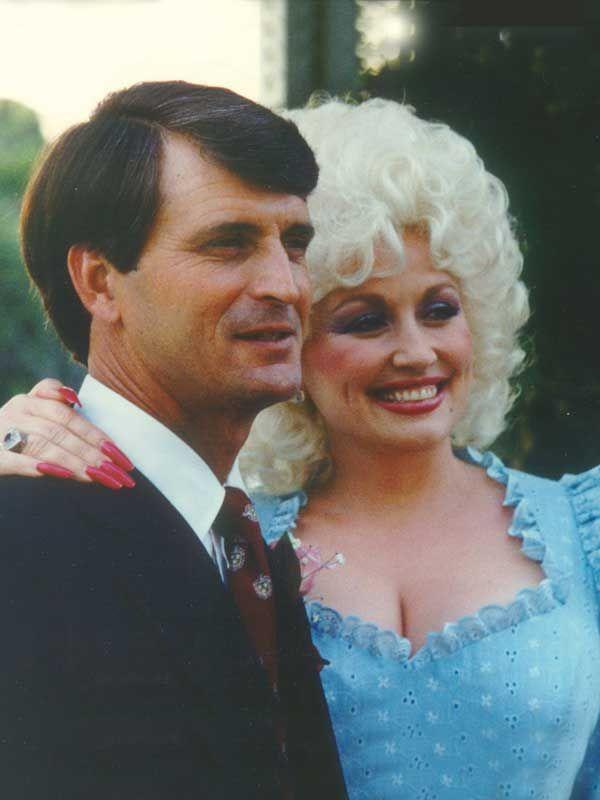
But behind one of the most recognizable women in American culture stood a man most of her fans could barely recognize at all.
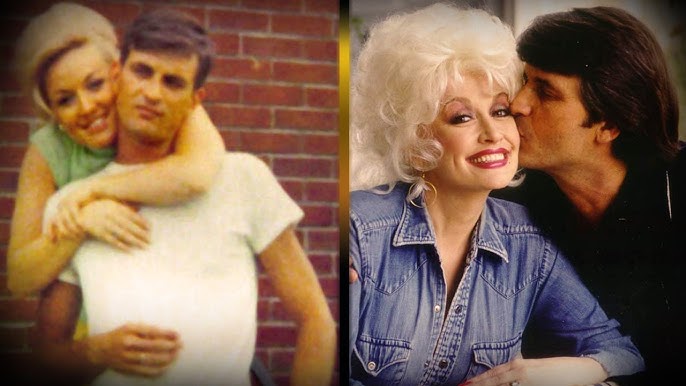
Carl Thomas Dean.
He avoided red carpets, rarely appeared in photographs with his wife and seemed almost determined not to become part of the celebrity machinery surrounding her.
And somehow, that arrangement lasted.
Dolly and Carl spent roughly six decades together, nearly 59 of them as husband and wife, before Dean died in March 2025 at 82. Seventeen months later, Dolly was gone too. In one of her final major interviews, she looked back on the marriage and called theirs a “great old love story.” She also described Carl as an anchor and said that without him, she would not have become the person the world knew.
Their relationship did not survive because Carl learned to love fame.
It survived because he never tried to.
And the story began long before anyone knew the name Dolly Parton.
1. On Her First Day in Nashville, Dolly Wasn’t Looking for a Husband
In 1964, Dolly Parton arrived in Nashville with music on her mind.
She was 18.
She had grown up as one of 12 children in East Tennessee and already knew exactly what she wanted: to write songs, sing them and somehow build a career in country music.
Marriage was not the immediate plan.
Then she went to the Wishy Washy Laundromat.
Outside, she met a 21-year-old Nashville man named Carl Dean.
Dolly later remembered something surprisingly specific about the encounter.
Carl looked at her face while they talked.
For a young woman already accustomed to attracting attention for her appearance, she found that unusual. She felt he was genuinely interested in who she was and what she thought.
It was not a glamorous first meeting.
There was no backstage pass.
No recording studio.
No celebrity party.
Just an 18-year-old newcomer and a local young man outside a laundromat.
That ordinary beginning would become one of the defining relationships of Dolly’s extraordinary life.
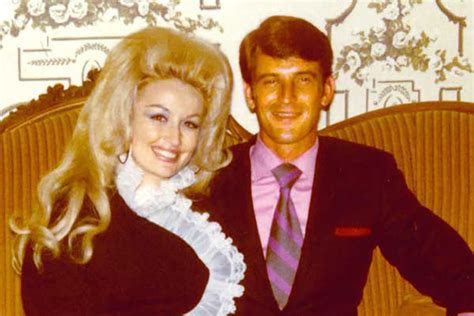
2. Two Years Later, They Quietly Got Married
By 1966, Dolly’s professional ambitions were beginning to take shape.
Carl was still there.
They decided to marry.
But even their wedding foreshadowed the unusual balance their relationship would maintain for decades.
On May 30, 1966, Dolly and Carl traveled to Ringgold, Georgia.
There was no celebrity guest list.
No publicity campaign.
The small ceremony was attended only by Dolly’s mother, Avie Lee, the minister and the minister’s wife.
Dolly was still at the beginning of her career.
Carl had married an ambitious young singer.
He had not yet married Dolly Parton, international icon.
That distinction would soon matter.
3. Dolly Became Famous. Carl Decided He Didn’t Want To
A year after the wedding, Dolly joined The Porter Wagoner Show.
Her career accelerated.
Recordings followed.
Hits followed.
Television followed.
Then came the solo superstardom that eventually made her one of the best-known entertainers in America.
Carl’s reaction was unusual for a celebrity spouse.
He did not try to follow her into the spotlight.
He moved away from it.
Carl worked in asphalt paving and eventually owned his own paving business. Dolly’s official biography of their relationship describes him as a man who preferred ordinary pleasures, including road trips in their RV and time at home.
That created an almost surreal contrast.
Dolly might spend one night performing before thousands of people.
Then she could return home to a husband who had little interest in being seen by any of them.
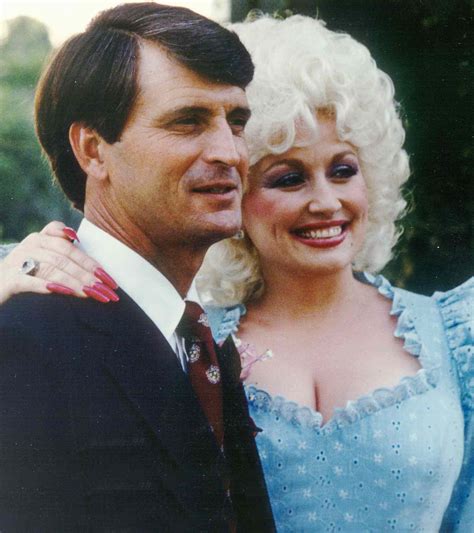
4. Carl Didn’t Want to Be “Dolly Parton’s Husband”
For years, fans wondered why Carl almost never appeared beside her.
Was the marriage troubled?
Did he dislike her career?
Was he jealous?
Was he even real?
Dolly had fun with the mystery.
But her explanations were remarkably consistent.
Carl simply did not want a public identity built around her fame.
In later interviews, she described him as independent, private and something of a loner. He enjoyed their farm and his own routines and did not need celebrity attention to validate himself.
Years later, Dolly joked that Carl had become:
“famous for not being famous.”
That may be one of the best descriptions of him.
He was married to one of the world’s most photographed women and turned invisibility into a kind of achievement.
5. Their Differences May Have Been the Point
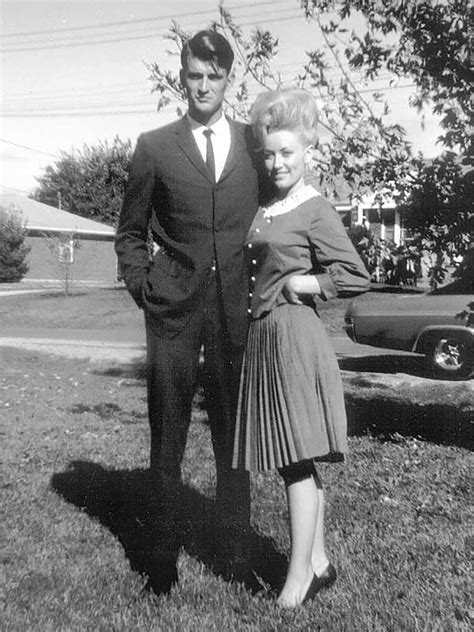
Dolly repeatedly said she and Carl were opposites.
She was outgoing.
He was private.
She loved an audience.
He avoided crowds.
She built a visual identity out of wigs, sequins and exaggeration.
Carl preferred life on the farm.
But Dolly did not describe those differences as flaws.
She said they kept the relationship interesting.
Carl had a humor she loved, and she considered him secure in himself—a crucial quality for a man married to a woman whose career would eventually eclipse almost every room she entered.
The great risk in many celebrity marriages is that two people are competing for the same oxygen.
Dolly and Carl did not appear to have that problem.
They wanted different things from the outside world.
That left them freer to want each other.
6. Dolly’s Famous Marriage Advice Sounded Like a Joke
When people asked Dolly why the marriage lasted so long, she often gave an answer that made people laugh:
“Stay gone!”
There was more truth in the joke than it initially seemed.
Dolly traveled constantly for work.
Carl liked his own life.
Instead of treating time apart as evidence of a failing marriage, they allowed each other independence.
Then, when Dolly returned home, they were happy to see one another again.
She later told PEOPLE that the distance helped preserve their enjoyment of each other’s company.
It was not a conventional romantic formula.
But it suited them.
Their marriage was not based on being physically attached every hour.
It was based on the assumption that both people were allowed to remain themselves.
7. The Private Romance Was Surprisingly Simple
For all of Dolly’s wealth and success, some of the romantic rituals she described with Carl were almost aggressively ordinary.
Daffodils.
Poems.
Picnics.
Camping.
Dinner at home.
In a 2020 interview, Dolly recalled that when the first yellow daffodils appeared, Carl would sometimes bring her a bouquet and write her a short poem.
She considered gestures like that priceless.
Their dates did not need to be elaborate.
Dolly might cook food they both loved, pack it into a picnic basket and head with Carl to a riverbank in their camper.
On other nights, she would turn an ordinary meal into an occasion by taking out cloth napkins, crystal and the “real china” instead of the paper plates they commonly used.
The extravagance was not the point.
The ritual was.
For a woman whose professional life required spectacle, romance at home seemed to work best when it didn’t.
8. One of Their Early Dates Was at McDonald’s
That same simplicity went back to the beginning.
Dolly later recalled that one of their early dates was at McDonald’s.
Decades after she became wealthy enough to eat almost anywhere, the basic rhythm had not completely changed.
They still liked food.
Roads.
A camper.
Privacy.
Dolly told PEOPLE in 2024 that she and Carl still enjoyed traveling in their RV and finding somewhere near a river for a picnic.
There is something revealing about that consistency.
Carl did not marry Dolly because she became rich and famous.
He had known her before any of that existed.
And Dolly did not seem to need Carl to participate in the mythology of Dolly Parton.
With him, she could step outside it.
9. The Public Image Was a Costume Carl Could See Through
Dolly spent decades joking openly about her appearance.
The wigs.
The makeup.
The high heels.
The figure.
The rhinestones.
She understood that “Dolly Parton” was partly a character she had constructed.
Carl knew what existed underneath it.
She once joked that the glamorous image never intimidated him because he knew exactly how bad she could look at home.
It was classic Dolly—a joke containing something more serious.
Carl had met her before the fully developed public persona existed.
The world’s version of Dolly Parton could never completely impress a man who had known Dolly before the world did.
Perhaps that was comforting.
10. Carl Supported the Career Without Trying to Live Inside It
Privacy should not be confused with disapproval.
Dolly repeatedly described Carl as supportive of her work.
He simply did not want to become part of the show.
She once explained that he was her fan “behind the scenes” and was happy to support her as long as she did not try to drag him into public appearances.
That line reveals the bargain.
Dolly could pursue her ambitions at full speed.
Carl could remain Carl.
Neither had to become the other.
It sounds almost too simple.
But nearly six decades suggest they understood something many couples never solve:
support does not always mean participation.
11. The Marriage Became More Mysterious as Dolly Became More Famous
The bigger Dolly became, the stranger Carl’s absence seemed.
Celebrity culture teaches audiences to expect spouses.
Red carpets.
Joint interviews.
Anniversary photographs.
Couple branding.
Carl refused almost all of it.
That absence inevitably generated speculation.
But Dolly rarely appeared bothered by it.
If anything, she enjoyed the jokes.
She knew the public wanted to see the mysterious husband.
Carl had no interest in satisfying that curiosity.
And Dolly protected his choice.
Their privacy was not accidental.
It was something they maintained.
12. Dolly Did Write Love Songs With Carl in Mind
One of the easiest mistakes in telling their story is to retroactively turn every Dolly Parton love song into a song about Carl.
That isn’t accurate.
Most famously, “I Will Always Love You” was written about Dolly’s professional separation from Porter Wagoner—not Carl.
But Carl did inspire music.
Dolly’s official site identifies him as an inspiration for “From Here to the Moon and Back,” a love song she later explained drew on her genuine emotions for the man she had loved for much of her life.
He also influenced “Just Because I’m a Woman,” a song confronting the double standards placed on women in relationships.
Carl might have avoided Dolly’s stage.
He still found his way into the songs.
13. After 50 Years, They Got Married Again
In 2016, Dolly and Carl reached their golden wedding anniversary.
Fifty years.
Dolly decided that was worth repeating the vows.
They renewed them privately, and Dolly joked that if she had it to do over again, she would—and that she planned to drag Carl into another 50 years whether he wanted it or not.
The joke felt particularly Dolly.
Romantic but unsentimental.
Sincere but never solemn for too long.
By then, their marriage had already outlasted many of the entertainment-industry relationships that once drew infinitely more publicity.
The private couple had quietly become one of Hollywood’s longest marriages.
14. Aging Changed the Marriage
No relationship that lasts six decades remains untouched by age.
By the early 2020s, Carl was growing older and increasingly unwell.
Dolly continued working.
But her attention also turned toward home.
After Carl’s death, she acknowledged that he had suffered significantly in his final years and that caring for him had consumed much of her focus.
This is where the story becomes more complicated than the lighthearted marriage advice.
“Stay gone” works when both partners are healthy and independent.
Late-life love can require something different.
Presence.
Caregiving.
Watching someone decline.
Dolly experienced that version too.
15. Carl Dean Died on March 3, 2025
Carl died on March 3, 2025.
He was 82.
Dolly announced the loss and asked for privacy.
His funeral was to be private, attended by immediate family.
For decades Carl had insisted on living outside public attention.
His death was handled in much the same way.
But Dolly did something very characteristic afterward.
She wrote.
16. Four Days Later, Dolly Turned Grief Into a Song
On March 7, 2025, Dolly released:
“If You Hadn’t Been There.”
This time, there was no ambiguity about whom the song was for.
Carl.
Dolly wrote that she had fallen in love with him when she was 18 and that they had spent 60 meaningful years together.
She added that great love stories do not simply end; they continue in memories and music.
And she called Carl the star of her life story.
The sentiment is important because Carl had spent his entire adult life avoiding being a public star.
Dolly finally gave him the title anyway.
Not on a red carpet.
In a song.
17. She Was Honest About How Hard It Was to Lose Him
Dolly did not pretend faith or work erased grief.
Shortly after Carl’s death, she said she was trying to understand how to live without someone who had been beside her for so long.
There was relief that his suffering had ended.
There was also the knowledge that she would continue missing him.
That mixture feels much more credible than simple inspirational language.
Relief and sorrow can coexist.
A caregiver can be grateful someone’s pain has ended and devastated by the silence they leave behind.
Dolly knew both.
18. She Went Back to Work Almost Immediately
Eleven days after Carl died, Dolly appeared publicly at Dollywood for the park’s 40th anniversary season.
She thanked people for their support.
Then she went back to discussing the future of the park.
This pattern had defined her career.
Pain did not necessarily stop the work.
Work sometimes became the way she moved through pain.
But in the months that followed, Dolly admitted there had been a cost.
19. Caring for Carl Had Made Her Neglect Her Own Health
In 2025, Dolly addressed widespread concern after postponing performances and undergoing medical treatment.
She explained that while Carl had been ill, she had focused so much on him that she had failed to pay enough attention to her own health.
After his death, those issues finally required attention.
This point deserves care.
It does not mean Carl’s illness caused Dolly’s eventual death.
That would be an unsupported conclusion.
What Dolly herself said was more limited: caregiving had led her to neglect some of her own medical needs.
Even then, she repeatedly reassured fans that she intended to keep working.
20. In Her Final PEOPLE Cover, She Finally Put the Marriage Into Perspective
By November 2025, several months had passed since Carl’s death.
Dolly spoke to PEOPLE about the relationship with unusual directness.
She called it a “great old love story.”
She noted how rare it was for two people to remain that close for so many years.
And she said Carl would remain in her heart and memories.
She also called him an anchor.
Then she said something even more revealing:
without Carl, she would not be where she was.
That statement pushes against one simplistic interpretation of their marriage.
Carl was not important because he managed Dolly’s career.
He didn’t.
He mattered because he gave her a life that existed outside it.
21. Her Musical Turned Their Private Marriage Into a Public Story
There was an irony in Dolly’s final years.
After spending decades protecting Carl’s privacy, she began putting more of their relationship into Dolly: A True Original Musical, the stage production based on her life.
Dolly joked that Carl had been “famous for not being famous,” and now she had exposed him.
But she also believed he would appreciate the way their relationship had been presented.
Watching an actor portray Carl had an unexpected effect on her.
She described the production as healing.
For moments, the theatrical version allowed Carl to feel present again.
A man who had avoided the stage all his life had become a character on one.
22. Dolly Never Stopped Planning
Grief did not turn Dolly into someone waiting passively for life to end.
Through 2026, she continued working.
Her Broadway musical was moving toward New York.
In June, she launched new business ventures.
In July, preparations for Dolly: A True Original Musical continued.
On August 19—less than a week before her death—her official website celebrated 82 new global sales certifications across 14 countries.
She was 80.
And still making plans.
That context matters because it prevents her final year from becoming nothing but a story about widowhood.
Carl’s death changed her.
It did not erase the rest of Dolly Parton.
23. Then, on August 25, 2026, Dolly Died
On August 25, Dolly Parton died in Nashville.
She was 80.
Her death was announced by her nephew Bryan Seaver on behalf of the family and later confirmed by her team. The Associated Press reported that she died after a brief battle with cancer.
The reaction was immediate.
Musicians.
Actors.
Fans.
Public figures.
People who had known Dolly personally and millions who only felt as if they had.
Tributes came from across generations because Dolly had managed something rare: she belonged simultaneously to country music history and contemporary American culture.
But among all the career retrospectives, one story inevitably returned.
Carl.
24. He Had Died Only 17 Months Earlier
Carl’s death and Dolly’s did not need to be turned into a supernatural story.
Nor should grief be invented as a medical cause.
Dolly remained active after Carl died.
She continued creating.
She made plans.
She received honors.
She worked on her musical.
But she also never pretended that nearly 60 years with someone could be removed cleanly from a life.
In her final major reflections, Carl was still there.
In memory.
In music.
In the Broadway version of her life.
In the way she explained herself.
And in the ordinary rituals she continued to remember.
The yellow daffodils.
The little poems.
The RV.
The riverbank.
The good china.
25. The Secret Wasn’t Really “Stay Gone”
Dolly’s “stay gone” joke made a wonderful headline.
But it was not the whole explanation.
Distance worked because there was trust underneath it.
Carl could disappear from public life without disappearing from Dolly’s.
Dolly could leave home to perform without Carl treating her success as a threat.
Both had identities that did not require the other person to shrink.
And when they were together, they deliberately returned to simple things.
Picnics.
Cooking.
Road trips.
Humor.
Home.
In a marriage surrounded by almost unimaginable fame, normality became one of their luxuries.
26. Privacy May Have Been One of Carl’s Greatest Gifts to Dolly
The public had access to almost everything about Dolly Parton.
Her childhood stories.
Her songs.
Her humor.
Her clothes.
Her business ventures.
Her films.
Her philanthropy.
Her opinions.
Her face.
Carl offered something different.
A relationship that did not have to belong to an audience.
For decades, people sometimes interpreted his absence as mystery.
Perhaps it was actually protection.
There were parts of Dolly’s life she did not have to monetize, perform or explain.
Carl was one of them.
27. The Most Famous Woman in the Marriage Could Still Come Home
Imagine the contrast.
A crowd screaming Dolly’s name.
A stage full of lights.
A limousine.
Photographers.
Awards.
Then home.
Carl.
No audience.
No need to impress anyone.
The woman underneath the costumes could eat from paper plates.
Or decide that tonight deserved the real china.
Dolly herself understood how absurdly different her worlds were.
But perhaps that was exactly the point.
Carl did not need “Dolly Parton.”
He had Dolly.
28. Their Love Story Wasn’t Perfect Because No Long Marriage Is
It is tempting, especially after both people are gone, to turn a six-decade marriage into a fairy tale.
That would flatten it.
They had separate lives.
Dolly traveled extensively.
Carl valued solitude.
Age brought illness.
The final years included caregiving and grief.
Dolly herself acknowledged that losing Carl required an enormous adjustment.
What made their story remarkable was not the absence of difficulty.
It was duration without loss of identity.
Two people remained themselves and still kept choosing the relationship.
That is harder—and more interesting—than perfection.
29. Carl Was There Before the World Arrived
There is one fact that gives the story much of its emotional power.
Carl met Dolly before nearly everything.
Before “Jolene.”
Before Porter Wagoner.
Before the Grammys.
Before Hollywood.
Before Dollywood.
Before the wigs became iconic.
Before generations of people felt they knew her.
At Wishy Washy Laundromat, she was an 18-year-old girl new to Nashville.
Carl saw her then.
And he remained part of her life until his death almost 61 years later.
Every version of Dolly the public came to know existed inside a relationship that had started before fame had anything to do with it.
30. In the End, Dolly Explained It Better Than Anyone Else Could
After Carl died, Dolly did not need to invent a dramatic secret about their marriage.
She called it what it was:
a great old love story.
That description is almost modest considering what surrounded them.
One of the most famous entertainers in America.
One of the least public celebrity spouses imaginable.
Nearly 59 years of marriage.
A relationship that began outside a laundromat and lasted through decades of enormous cultural change.
Carl spent his life staying out of Dolly Parton’s spotlight.
Dolly spent hers making sure his absence from the spotlight was never mistaken for absence from her heart.
When she finally memorialized him in 2025, she said great love stories live on in memory and song.
For Carl and Dolly, that now feels especially fitting.
The world knew almost everything about Dolly Parton.
Carl Dean was the part she largely kept for herself.
And perhaps that was exactly why, for nearly 60 years, it worked.