For generations of American children, Gene Autry represented something larger than a movie star.
He was the cowboy in the white hat.
The man who sang about home, Christmas, horses and the open range.
The hero who rode into trouble without losing his manners.
And by the late 1940s, the values attached to his screen persona had been formalized into what became known as Gene Autry’s Cowboy Code.
A cowboy should tell the truth.
Keep his word.
Help people in distress.
Respect women.
Keep himself clean in thought, speech and action.
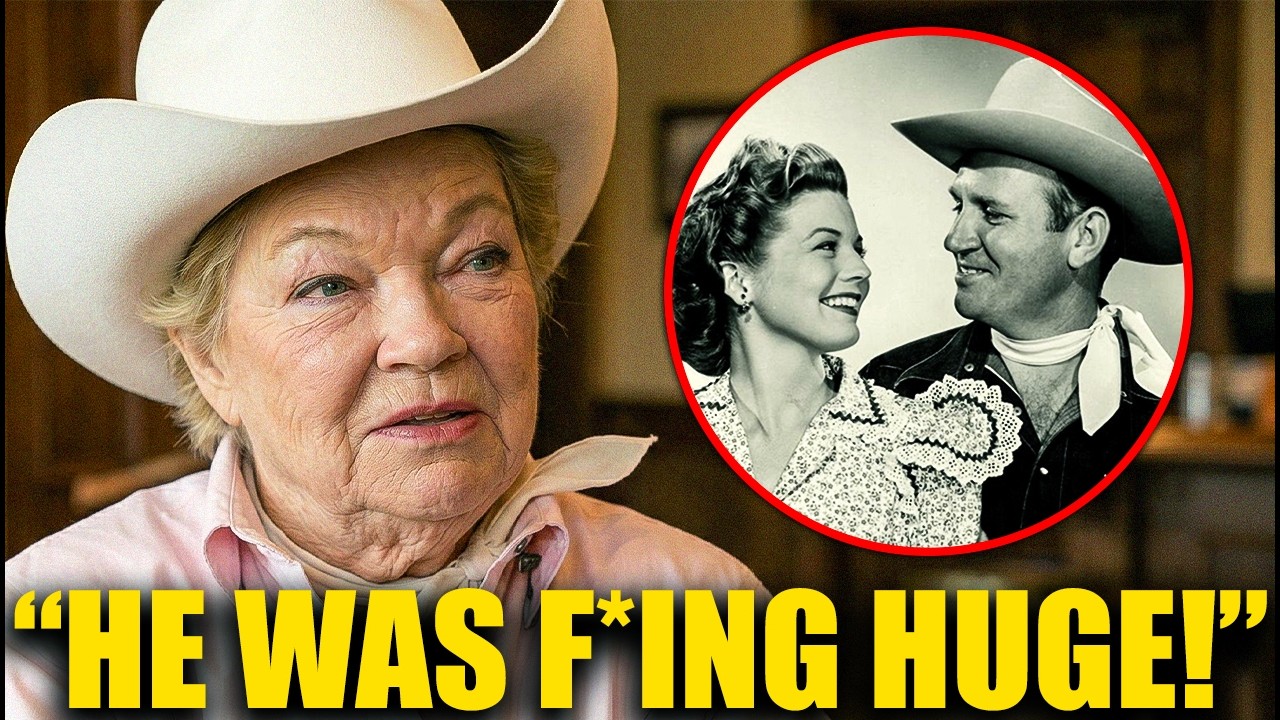
For children who listened to Melody Ranch, watched his movies on Saturday afternoons or later discovered him on television, Gene was not merely playing the good guy.
He seemed to be teaching America how a good man should behave.
That is why a discovery made decades later was so uncomfortable for some longtime fans.
While researching what became the major biography Public Cowboy No. 1, writer Holly George-Warren gained unusual access to Gene Autry’s private records and interviewed family members, friends, employees and business associates.
What she found did not destroy the Singing Cowboy.
But it did complicate him.
Among the details she documented was a lengthy, on-and-off relationship with Gail Davis, the actress Gene helped make famous as television’s Annie Oakley.
Gene was married to Ina Mae Spivey at the time.
According to George-Warren, Davis eventually wanted him to leave his wife.
Gene refused.
There was no deathbed confession.
No newly discovered videotape.
No 2026 interview with Davis—she died in 1997.
The truth is quieter than that.
And perhaps more revealing.
Because Gene Autry really did spend decades asking young Americans to live by a code.
He also spent those same decades discovering how difficult it could be to live perfectly by one himself.
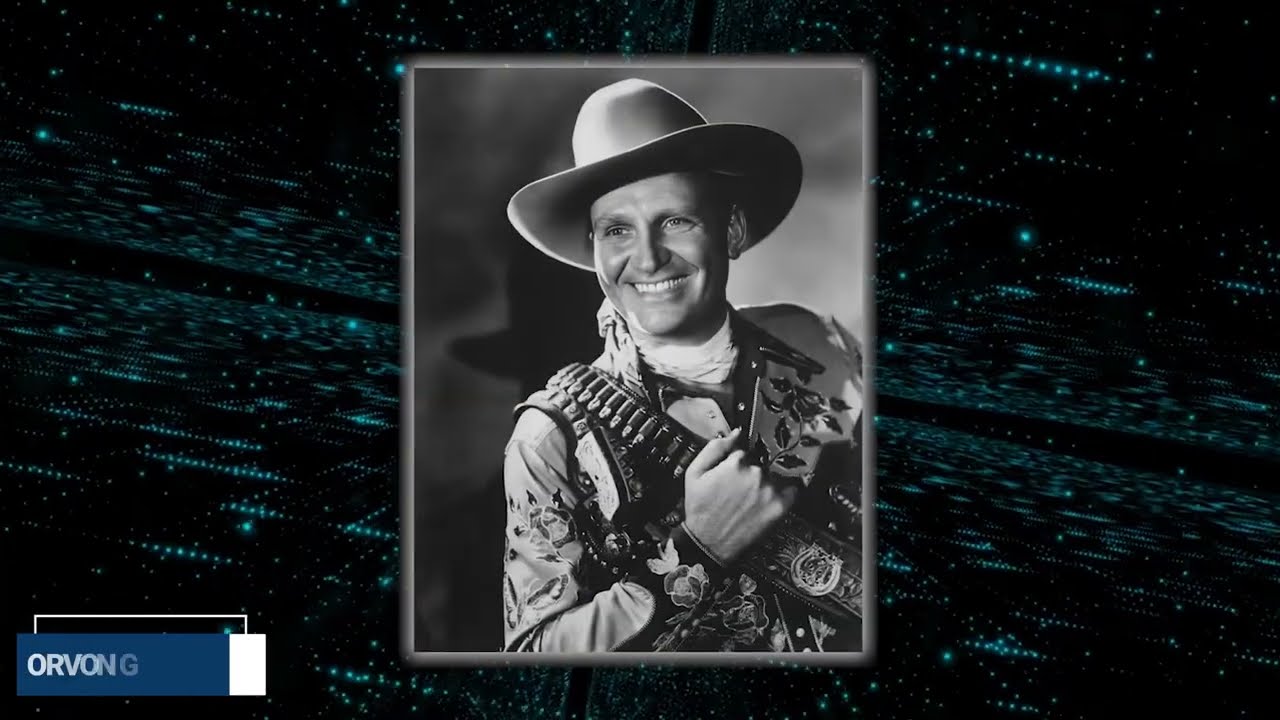
1. Before the White Hat, There Was a Poor Boy From Texas
Gene Autry was born Orvon Grover Autry on September 29, 1907, near Tioga, Texas.
Nothing about his childhood suggested one of America’s great entertainment fortunes was waiting for him.
His family struggled financially.
His father, Delbert, was restless and unreliable, a man Gene later described as something of a wanderer.
The family eventually settled in Oklahoma, where Gene grew up around music and developed an interest in the guitar.
He went to work as a railroad telegrapher.
According to the official Gene Autry biography, humorist Will Rogers encouraged the young singer, and by 1929 Autry was performing professionally as the “Oklahoma’s Yodeling Cowboy.” He signed with Columbia Records and soon joined Chicago radio’s enormously influential National Barn Dance.
America was entering the Depression.
Gene’s timing turned out to be extraordinary.
His songs offered listeners sentiment without sophistication.
Home.
Parents.
Heartbreak.
Hard work.
Loneliness.
Things ordinary people understood.
Then came “That Silver-Haired Daddy of Mine,” which became a landmark hit and was later associated with the industry’s first gold-record presentation.
Gene Autry was no longer a railroad employee with a guitar.
He was becoming a national voice.
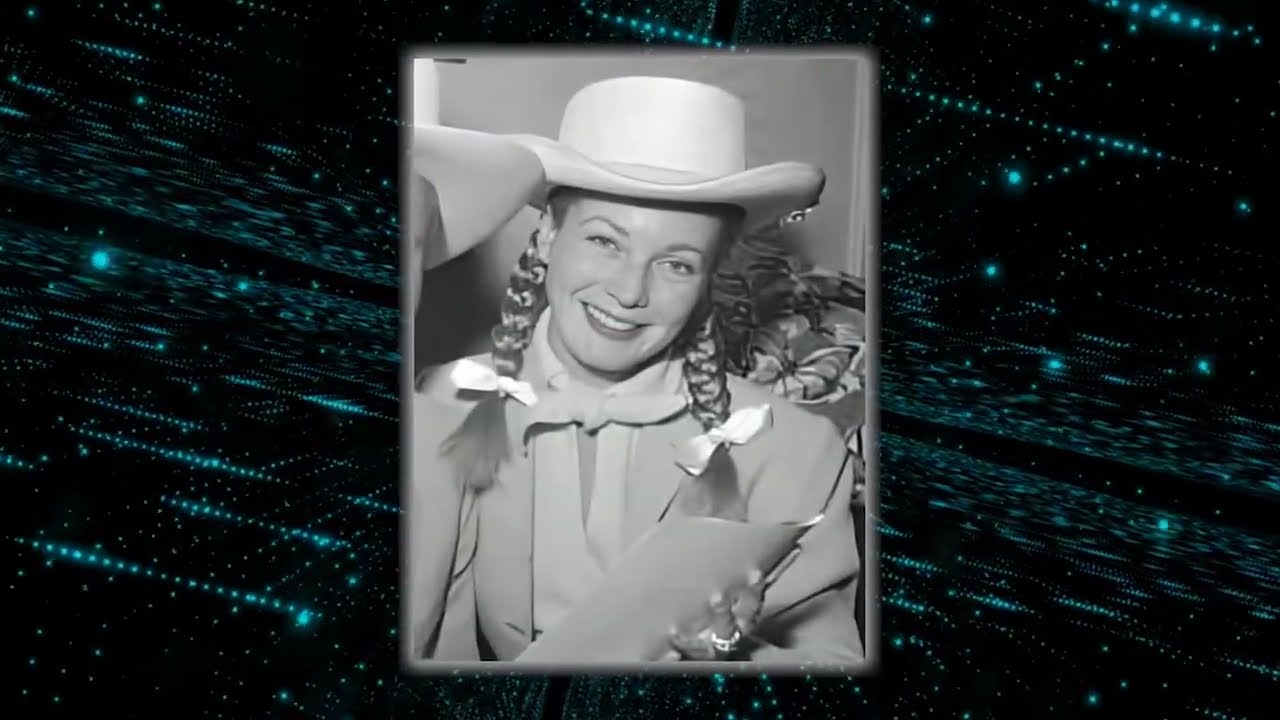
2. Ina Mae Was There Before Hollywood Turned Him Into a Myth
In 1932, Gene met Ina Mae Spivey.
According to the Autry family’s official history, he was smitten almost immediately.
Their courtship moved fast.
Gene proposed.
Ina accepted.
On April 1, 1932, they married.
It would last more than 48 years.
That number became part of the Gene Autry legend.
But Ina’s importance cannot be measured only by the length of the marriage.
She encouraged Gene as his career expanded.
She stood beside him as radio became movies, movies became live tours and eventually television and business.
One small decision of hers would become part of American Christmas history.
Gene initially wasn’t enthusiastic about recording “Rudolph the Red-Nosed Reindeer.”
Ina thought children would respond to its story of an outsider who eventually found acceptance.
Gene listened to her.
The record became enormous.
That matters when considering everything that came later.
Ina was not simply the wife left at home while Gene built his career.
She was woven into the career itself.
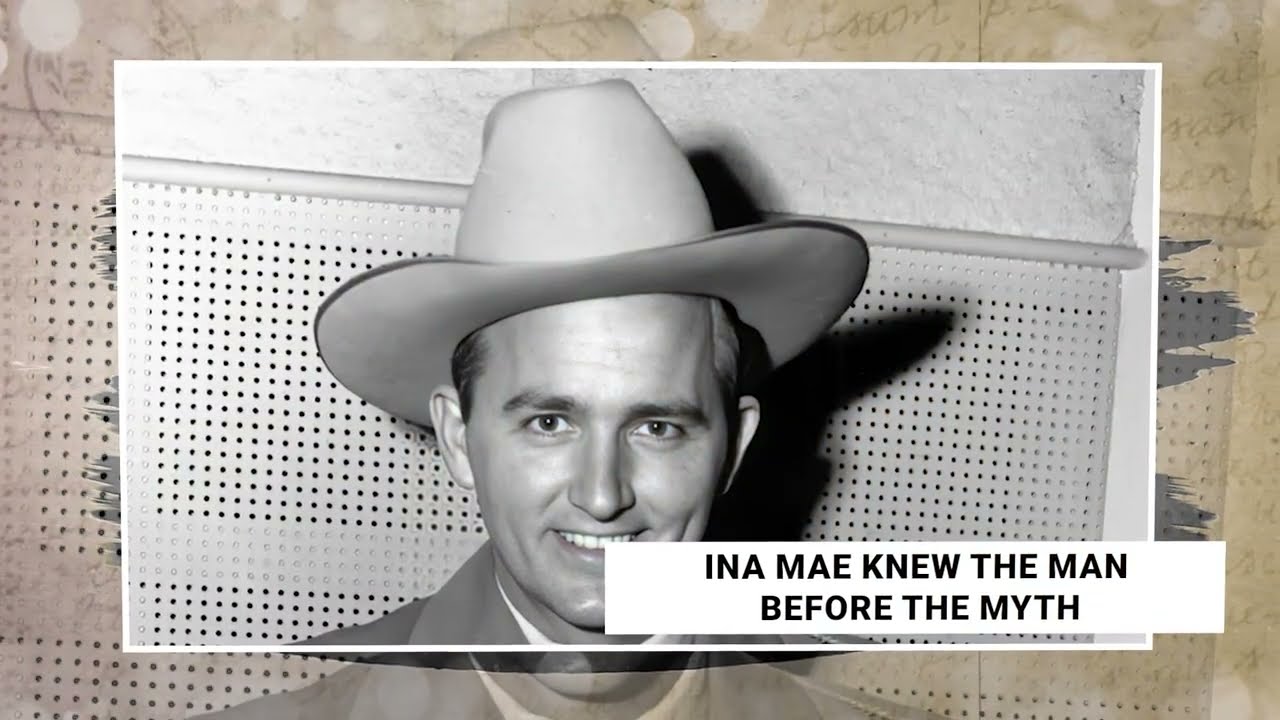
3. Then Hollywood Found Its Cowboy
Gene first appeared onscreen in the 1930s and quickly helped popularize an entirely new type of Western hero.
He didn’t just shoot villains.
He sang.
By 1940, theater exhibitors ranked him behind only Mickey Rooney, Clark Gable and Spencer Tracy among the country’s biggest box-office attractions.
He eventually appeared in 93 feature films.
He made hundreds of recordings.
His records sold in extraordinary numbers.
And there was Champion, his famous horse, almost a star in his own right.
For boys, Gene was adventure.
For parents, he was safe adventure.
That distinction was crucial.
There were rougher Western heroes.
There were more dangerous actors.
Gene’s product was trust.
If a child watched Gene Autry, good would eventually defeat bad.
A promise would matter.
Decency would matter.
The hero would remain a hero when the credits rolled.
At least that was the image.
4. The Cowboy Code Wasn’t Invented Years After the Fact
The Cowboy Code became one of the most enduring pieces of Gene Autry’s legacy.
It did not simply appear on nostalgic merchandise after his death.
Its roots reach back to Gene’s radio programs and publicity in the 1940s.
The official Autry archives trace versions of the code to his Melody Ranch broadcasts by 1947 and film publicity soon afterward.
Among its ten rules:
“He must always tell the truth.”
And:
“He must respect women, parents and his nation’s laws.”
Another instructed the cowboy to keep himself clean in his personal habits.
For a child, these were simple instructions.
For an adult living under enormous fame, temptation and pressure, they were considerably harder.
Gene would eventually prove that himself.
But before the contradictions became more visible, he did something that reinforced the heroic image enormously.
He went to war.
5. Gene Autry Really Did Put His Career Aside for World War II
In July 1942, Gene Autry entered the U.S. Army Air Forces.
This was not merely a publicity costume.
He trained as a pilot and earned his service pilot wings in June 1944.
He flew military cargo aircraft, including C-109 tankers used to transport fuel connected with the China-Burma-India theater, and he made a mission to that theater via the Azores, North Africa and the Middle East.
Later he joined Special Services and traveled with a USO troupe in the South Pacific before leaving military service after the war.
The service helped make Gene’s public identity even stronger.
The Cowboy Code said:
“The Cowboy is a patriot.”
Gene had acted on it.
This is why reducing him now to hypocrisy would be too easy.
He genuinely lived parts of the code.
He also genuinely failed at others.
Both belong in the story.
6. When He Came Home, Hollywood Had Changed
The entertainment business did not freeze while Gene was away.
New stars had risen.
Roy Rogers had become a formidable cowboy attraction.
The industry Gene returned to was different from the one he had left.
Gene adapted.
He resumed films.
Radio returned.
So did grueling personal-appearance tours.
And rather than allowing studios to control everything forever, Autry increasingly gained control of his own work.
He proved to be a remarkable businessman.
That instinct would eventually make him enormously wealthy.
But the relentless schedule also took a toll.
Biographer Holly George-Warren found evidence of something the clean-cut publicity had rarely emphasized:
Gene liked women.
And increasingly, he drank heavily.
7. The Man Who Told Children to Stay “Clean” Had a Drinking Problem
This part is not merely later gossip.
Even Gene’s second wife, Jackie Autry, discussed it publicly.
In a CBS profile, Jackie described Gene as having a “frisky side” and recalled the attention women gave him when he traveled.
She also acknowledged his heavy drinking.
Gene himself had apparently told Jackie about once falling from his horse during a Madison Square Garden appearance after drinking too much.
Biographical accounts describe alcohol becoming increasingly troublesome during the exhausting later years of Gene’s performing career.
This was the same man whose Cowboy Code emphasized clean personal habits.
The contradiction is obvious.
But it is also human.
Gene’s code may have been less a description of exactly who he was than a description of who he believed a cowboy ought to be.
There is a difference.
And that distinction becomes even more important when Gail Davis enters the story.
8. Gail Davis Wasn’t Just Another Pretty Western Actress
Gail Davis had something Gene recognized immediately.
She could ride.
She could shoot.
She looked natural in Western clothes.
And she possessed the kind of energy that made her more convincing with a horse and a six-shooter than standing around waiting for a cowboy to rescue her.
Davis appeared with Gene in several Western films and became closely associated with his professional world.
Unlike the fictional version found in some modern retellings, Gail was not a woman who sacrificed marriage forever because she secretly belonged to Gene.
She had a real life outside him.
She married Bob Davis while attending the University of Texas, had a daughter and divorced in 1952.
She later married automobile dealer Carl Guerriero, who died in 1982.
That factual detail matters.
Gail’s life should not be rewritten merely to make Gene’s romance sound more tragic.
The real connection between them is interesting enough.
9. Gene Saw Gail as Something Television Hadn’t Seen Yet
Television was still new when Gene began investing seriously in it.
In April 1950, he established Flying A Pictures.
The company produced The Gene Autry Show and several other Western series.
One of them was different.
It put a woman at the center.
Annie Oakley starred Gail Davis as a fictionalized version of the legendary sharpshooter.
The program premiered in 1954 and eventually produced 81 episodes.
It was the first television Western built around a female star.
For girls watching television in the 1950s, Annie was unusual.
She wasn’t simply waiting for the hero.
She was the hero.
She rode.
She shot.
She solved problems.
Davis performed much of her own riding and stunt work, and the show continued to live in reruns long after original production ended.
Gene Autry helped give her that opportunity.
What television viewers didn’t know was that their relationship apparently extended beyond business.
10. Decades Later, the Biography Filled in the Missing Chapter
Holly George-Warren did not approach Gene’s life as a scandal writer.
Gene Autry Entertainment itself selected her to produce a comprehensive biography.
She had interviewed Gene before his death and was later granted extensive access to documents, records and people close to him.
Her conclusion regarding Gail Davis was clear.
According to George-Warren, Gene and Gail had a lengthy, on-and-off romantic relationship.
This was not a single whispered encounter.
Nor was it merely fan speculation based on two attractive people appearing together.
And there was one detail that showed the relationship had reached an emotional boundary.
Gail wanted Gene to leave Ina.
Gene wouldn’t do it.
That decision tells us a great deal.
About Gene.
About Gail.
And about Ina.
11. Gene Wanted Gail—But Apparently Not Enough to Leave Ina
It would be easy to turn this into a melodramatic triangle.
The available evidence does not justify inventing private fights, hotel-room confrontations or tearful speeches.
What we do know is already powerful.
Gene remained married to Ina.
His relationship with Gail continued for a significant period.
Gail reportedly wanted more.
Gene refused to end his marriage.
There are many possible reasons.
Love for Ina.
Habit.
Loyalty.
Financial and business connections.
Public image.
Fear of scandal.
Some combination of all of them.
Unless Gene or Gail left a reliable account answering that precise question, claiming certainty would be storytelling rather than history.
The better question is not:
Which woman did Gene really love?
It is:
How did a man who publicly preached fidelity to moral principles reconcile those principles with a private relationship outside his marriage?
We cannot know exactly.
That uncertainty is part of the story.
12. Ina Almost Certainly Knew Gene Wasn’t the Man on the Poster
One of the dangers in telling stories like this is turning the wife into a clueless background character.
Ina Mae Autry was neither.
She had been there before Hollywood.
She understood Gene’s career.
She understood the touring.
She understood the attention surrounding him.
Contemporary and later accounts suggest his involvement with other women was not entirely invisible inside their world.
A Los Angeles Times review of George-Warren’s biography described Ina as likely aware of Gene’s long relationship with Davis.
But knowing is not the same as approving.
And staying is not proof that something did not hurt.
The historical record does not give us enough to write Ina’s private feelings for her.
What it does tell us is that she remained Gene’s wife.
For more than 48 years.
13. Their Marriage Was More Than a Publicity Arrangement
This is another point where sensational versions go wrong.
Once an affair is discovered, it becomes tempting to declare the marriage “fake.”
The evidence does not support that.
Ina encouraged Gene’s work.
She traveled with him.
She participated in the social and business world surrounding his career.
She helped steer him toward recording one of his greatest hits.
And the official Autry history describes her as a strong and important partner throughout the entertainment and business years.
Human relationships can contain contradictions.
Gene could betray Ina and remain deeply attached to her.
Ina could be wounded by him and still choose the marriage.
A 48-year relationship does not become meaningless because it was imperfect.
Nor does its length erase the affair.
Both truths belong together.
14. The Irony Was Especially Sharp Because Gail Played a Hero Too
There was another layer to the Gene-Gail relationship.
Gail Davis wasn’t merely another actress appearing beside him.
Her public image was also rooted in virtue.
Annie Oakley was produced as wholesome family entertainment.
Annie confronted rustlers, thieves and criminals.
She knew right from wrong.
She rarely needed rescuing.
Gail’s daughter later described her mother as deeply proud of the character and what Annie represented.
So two people associated with some of television’s cleanest Western morality were navigating a relationship considerably messier in real life.
That does not make Annie Oakley fraudulent.
It makes the distance between performance and private life visible.
Hollywood has always lived in that distance.
15. Gene’s Fame Made Temptation Almost Ordinary
George-Warren offered another useful perspective.
Modern audiences sometimes underestimate how famous Gene Autry really was.
He wasn’t simply “an old cowboy actor.”
At his peak, he was comparable to the rock stars who came later.
People followed him from city to city.
Women approached him.
He toured constantly.
He could perform two shows a day, seven days a week, for weeks at a time.
Jackie Autry later recalled that women could be extraordinarily direct around him, even handing him room keys.
None of this excuses infidelity.
It does explain the environment.
Gene’s fame gave him opportunities the young telegraph operator in Oklahoma could never have imagined.
His Cowboy Code asked him to resist.
Sometimes he didn’t.
16. The Most Interesting Version of Gene Autry Is Not Saint or Hypocrite
There are two easy ways to tell this story.
The first:
Gene Autry was exactly the moral hero America believed him to be.
The evidence makes that impossible.
The second:
Gene Autry was a fraud whose wholesome image concealed a completely corrupt man.
The evidence doesn’t support that either.
Gene served his country.
He worked relentlessly.
He entertained hospitalized children.
He helped build family-friendly television.
He encouraged a program that gave young girls an unusually independent female Western hero.
He also drank too much.
He had relationships outside his marriage.
He failed parts of the moral standard attached to his own name.
That is not a clean narrative.
Which is precisely why it is believable.
17. Then Gene Became Something Even More Unusual: A Cowboy Mogul
While much of Hollywood was still focused on the next role, Autry thought like an owner.
Television.
Radio stations.
Real estate.
Hotels.
Publishing.
Production.
Sports.
Gene increasingly accumulated assets rather than simply collecting performance checks.
By the later part of his life, the man who had grown up with little had built a remarkable business empire.
His most famous sports investment came when he became the original owner of the American League baseball franchise that became the Angels.
It would define his public life long after his days of riding Champion had ended.
The Singing Cowboy became a businessman in a cowboy hat.
And unlike many fading movie stars, his fortune continued to grow after the leading roles stopped.
18. “Rudolph” Ensured Children Who Never Saw His Westerns Still Heard His Voice
Gene’s cultural longevity is unusual.
A child might never have watched The Gene Autry Show.
Might never have seen one of his 93 films.
Might not know what Melody Ranch was.
And still know Gene Autry.
Because every December, the music returned.
“Here Comes Santa Claus.”
And especially:
“Rudolph the Red-Nosed Reindeer.”
Gene’s 1949 recording became one of the biggest Christmas hits ever released.
This helped preserve the wholesome image long after the cowboy craze faded.
Gene Autry didn’t merely belong to Western nostalgia.
He became attached to Christmas.
Few celebrity brands could be safer than that.
Which made the private contradictions even more difficult to discuss while he was alive.
19. Gail’s Career Eventually Moved Away From the Spotlight
Annie Oakley ended original production in the 1950s, although reruns carried it into another generation of childhoods.
Davis continued making personal appearances connected to Gene for years before eventually withdrawing from regular acting.
She remained proud of Annie.
In 1994 she received a Golden Boot Award recognizing her contribution to Western entertainment.
Three years later, Gail Davis died of cancer.
She was 71.
Her daughter was with her.
This single fact eliminates one of the most common modern distortions surrounding the story.
Gail did not recently appear at age 73 to confess an affair.
She did not release a new video statement.
She did not suddenly “break decades of silence” in 2026.
The fuller account of the relationship came through later biographical research.
That distinction matters.
20. Ina Died Before Gail
Ina Mae Autry died on May 19, 1980.
She and Gene had been married for more than 48 years.
They had no children.
Her death closed the longest personal relationship of Gene’s life.
Modern retellings sometimes portray what happened next as evidence that he hurried into the arms of a stranger.
Again, reality was more complicated.
Jacqueline Ellam had known Gene for years through banking and business.
They first crossed paths in 1963, when Gene was involved in a Palm Springs hotel transaction.
Their relationship remained professional and social for many years.
After Ina died, that changed.
21. Jackie Was Not Simply a Replacement for Ina
In December 1980, Jackie encountered Gene at a charity event and offered condolences over Ina’s death.
Soon afterward he invited her to a New Year’s Eve gathering.
Their courtship developed during the following months.
They married on July 19, 1981.
Gene was 73.
Jackie was 39.
The age difference naturally attracted attention.
But their marriage lasted until Gene’s death seventeen years later.
Jackie later described Gene not as a remote icon but as her best friend, companion and lover.
Again, the human story refuses to stay simple.
A man can have cheated during one marriage and later love another woman deeply.
One truth does not automatically invalidate another.
22. Gene Helped Build a Museum About a West He Had Helped Invent
By his later years, Gene Autry had become more than an entertainer.
He had helped shape America’s popular imagination of the West.
Not the historical West exactly.
The movie West.
Where heroes wore recognizable hats.
Where right and wrong could be distinguished within half an hour.
Where good men helped strangers.
Gene and Jackie, along with Joanne and Monte Hale, helped establish what became the Autry Museum of the American West. Jackie remained closely involved with the institution and Gene’s business and philanthropic legacy.
That makes the later biography especially interesting.
The people responsible for preserving Gene’s legacy did not insist on preserving a spotless myth.
Gene Autry Entertainment itself supported a serious biographer who went looking for the complicated man.
And the affair with Gail Davis became part of the record.
23. The Biography Did Not Try to Tear Gene Down
This point is important.
Holly George-Warren had unusual access to Gene’s world.
She interviewed him in 1997.
When she later undertook the biography, she was given access to personal records, family members, friends and employees.
She explicitly described encountering truths that were difficult to write.
The Gail Davis relationship was one of them.
But she also rejected sensationalism.
Her view was essentially that Gene had been the equivalent of an enormous touring rock star who faced constant temptation.
That does not absolve him.
It places him in context.
And that context allows the reader to do something more interesting than simply condemn or excuse him.
It allows us to see the person.
24. Some Fans Did Not Want That Person
When Public Cowboy No. 1 appeared, not every longtime Gene Autry admirer appreciated seeing flaws attached to a childhood hero.
One fan later told George-Warren that Gene had effectively served as a father figure after the fan’s own parents divorced.
Reading about Gene’s imperfections initially angered him.
That reaction is understandable.
Gene Autry did not occupy the same emotional space as a modern celebrity.
For some Americans, he belonged to childhood.
To Saturday afternoons.
To Christmas.
To an era when the television hero was supposed to be trustworthy.
Discovering the adult behind the childhood symbol can feel like losing something.
But biography is not responsible for protecting childhood.
It is responsible for getting closer to the truth.
25. And the Truth Makes Ina More Important, Not Less
One unexpected effect of learning about Gail Davis is that Ina Mae becomes more interesting too.
She is no longer merely Mrs. Gene Autry smiling in publicity photographs.
She was the woman who knew him before national fame.
Who encouraged him.
Who lived through the extraordinary rise.
Who watched women fall over him.
Who experienced the touring years.
Who saw the drinking.
Who apparently remained through his involvement with Gail.
Who helped persuade him to record “Rudolph.”
And who remained his wife until her death.
It is difficult to reduce that woman to victim or saint.
We simply do not know enough of her interior life.
But her 48 years beside Gene deserve at least as much attention as the affair.
26. The Same Is True of Gail
Gail Davis should not be reduced to “Gene Autry’s mistress.”
She became a television pioneer.
Annie Oakley gave children one of the earliest female heroes in television Westerns.
She could ride and shoot convincingly because she actually possessed those skills.
She performed much of the physical work herself.
And girls watching the program saw a woman solve the problem while male characters sometimes followed her lead.
Her relationship with Gene is part of her biography.
It is not her entire biography.
The irony, of course, is that Gene himself helped give her the role that would eventually outlast gossip about either of them.
27. Gene Autry Died One Year After Gail
Gail died in March 1997.
Gene Autry died on October 2, 1998.
He was 91.
By then, the age of the singing cowboy was long past.
But Gene’s cultural footprint remained enormous.
Movies.
Radio.
Television.
Records.
Live performance.
He remains the only entertainer represented by five separate stars on the Hollywood Walk of Fame, recognizing work across multiple entertainment fields.
His name remained attached to music, baseball and the museum devoted to the American West.
And every Christmas, “Rudolph” returned.
A private affair could complicate that legacy.
It could not erase it.
28. So Did Gene Autry Violate His Own Cowboy Code?
Yes.
At least in important respects.
A long relationship outside his marriage is difficult to square with an image built around personal discipline, trust and respect.
Heavy drinking is difficult to square with a rule demanding clean personal habits.
Pretending otherwise would merely rebuild the myth that serious biography has already complicated.
But another question matters too.
Did Gene ever claim that he personally achieved perfect compliance with every ideal associated with the Cowboy Code?
The code emerged as an ethical model attached to his entertainment and public persona.
Ideals are not valuable only when the person promoting them never fails.
Sometimes their existence makes the failure more visible.
Gene Autry was imperfect by the standards attached to his own name.
That does not necessarily make those standards meaningless.
29. The White Hat Was an Ideal, Not a Medical Report
This may be the fairest way to understand him.
The Gene Autry onscreen was deliberately simplified.
Heroes have to be.
A half-hour Western cannot contain a human lifetime.
The cowboy never had too much to drink and embarrassed himself.
He didn’t make emotional promises to two different women.
He didn’t worry about business contracts.
He didn’t age.
He didn’t disappoint his wife.
He rode into town, made things right and rode away.
Orvon Grover Autry could not live that way.
No one could.
The mistake was not that Gene failed to become the fictional cowboy.
The mistake was assuming the fictional cowboy had ever been a complete biography of Gene.
30. The Real Story Is Stronger Than a “Secret Confession”
There is a temptation with old Hollywood to make every rediscovered imperfection enormous.
“Shocking confession.”
“Secret finally exposed.”
“Truth revealed after 70 years.”
Gene Autry and Gail Davis do not need that treatment.
The relationship has already been documented by a biographer given unusual access to Gene’s world.
The official Gene Autry site itself has discussed George-Warren’s finding that the two maintained a lengthy on-and-off relationship and that Gail wanted Gene to leave Ina, while Gene refused.
That is the story.
No invented final interview is necessary.
No fabricated dialogue is necessary.
No mysterious letter has to appear from a locked drawer.
The known facts already contain everything that makes Old Hollywood compelling:
a beloved hero,
a loyal wife,
a talented younger costar,
a forbidden relationship,
fame,
temptation,
alcohol,
ambition,
and a public image almost no ordinary human being could fully live up to.
The Cowboy Was Real. So Were His Flaws.
For many Americans, Gene Autry will always remain the Singing Cowboy.
The voice from the radio.
The man beside Champion.
The star of childhood Westerns.
The singer behind Christmas memories.
The businessman who brought the Angels to Southern California.
The entertainer who served during World War II.
And the man whose Cowboy Code told children that truth, loyalty and decency mattered.
Those things were real.
So was Gail Davis.
So was Ina Mae.
So was the drinking.
So were the contradictions.
Learning that does not require throwing Gene Autry away.
Perhaps it allows us to see him more clearly.
The white hat was never proof that the man underneath it was without flaws.
It represented an ideal.
Gene spent decades giving that ideal to millions of children.
Sometimes he lived up to it.
Sometimes he did not.
And more than a quarter-century after his death, that may be the most credible way to remember him:
not as the perfect cowboy America imagined, and not as a fraud hiding behind a costume—but as a remarkably successful, deeply imperfect man who created a moral hero even he could not always become.