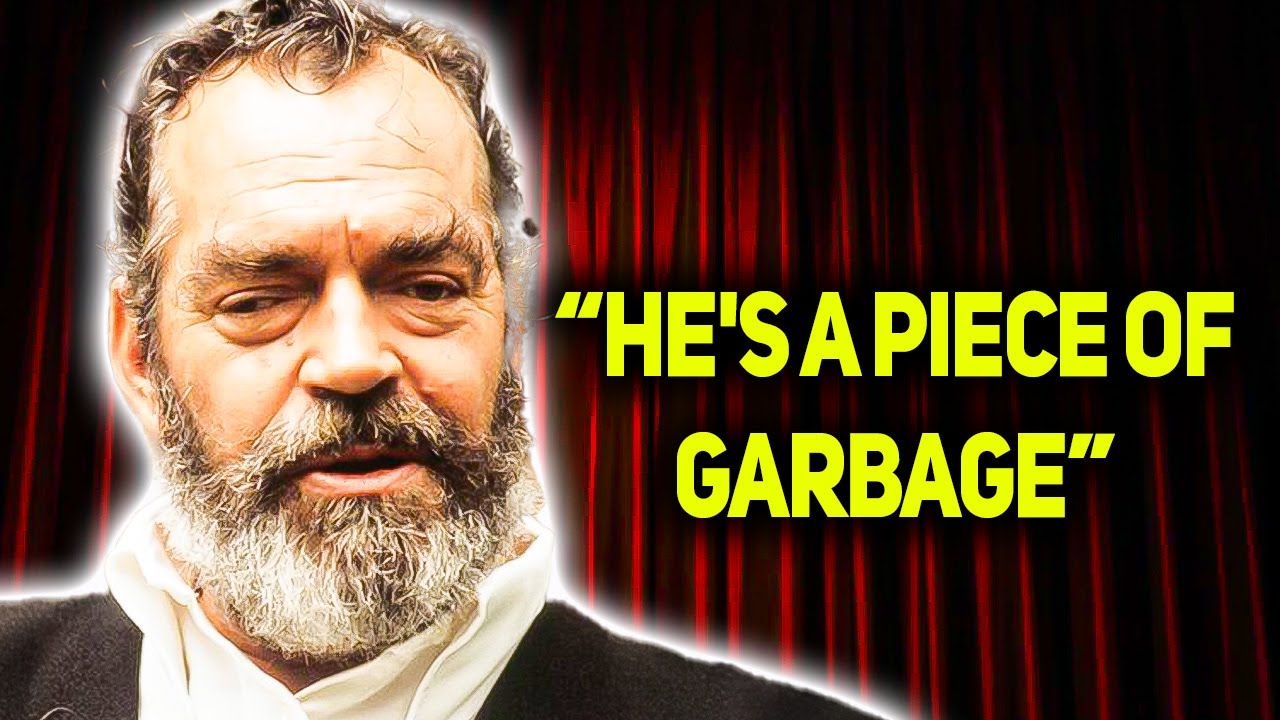
For years, a strange story has circulated about Jack Elam.
According to the tale, the famously wall-eyed Western villain couldn’t stand Gary Cooper.
Elam supposedly thought Cooper was lazy, overrated and rewarded mainly for looking good in a cowboy hat while hard-working character actors carried the scenes around him.
Some versions even claim Elam mocked Cooper’s Oscar-winning performance in *High Noon* and spent years complaining that Hollywood valued handsome leading men more than genuine acting talent.
It sounds believable.
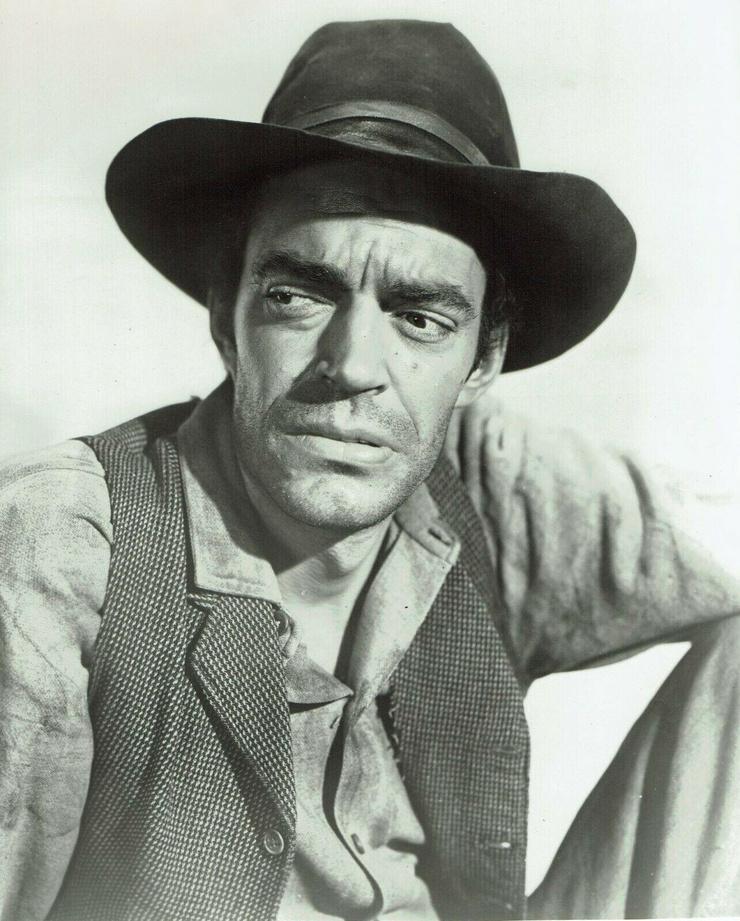
Jack Elam spent much of his career playing the rough-looking outlaw standing three places down the cast list.
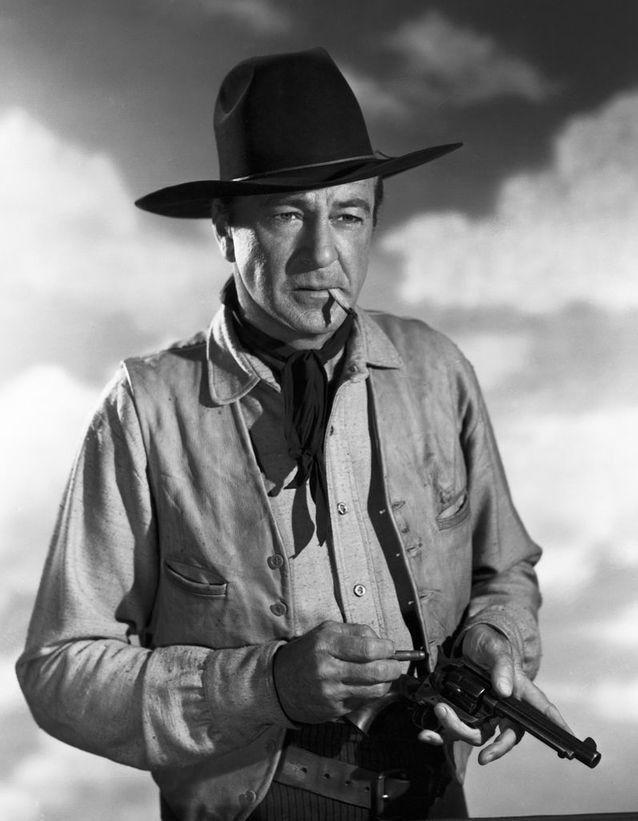
Gary Cooper was one of Hollywood’s great leading men.
One had the face studios put on movie posters.
The other had the face they put on wanted posters.
There is just one problem.
When Jack Elam himself talked about working with Cooper on *High Noon*, he remembered something very different.
He recalled spending about half a day working directly with the star.
Then he added:
“And what a gentleman he was!”
That one sentence changes the story.
And when Elam spoke years later about the professionalism of old Hollywood stars, he actually used Gary Cooper as an example of the kind of actor who came prepared, knew his lines, arrived on time and expected to work.
So the real Jack Elam story is not about a lifelong hatred of Gary Cooper.
It is better than that.
It is about a nearly blind accountant who was forced to abandon a successful career, discovered that the eye that had made his childhood difficult could make him unforgettable on camera, spent decades being shot, punched and arrested by Hollywood’s biggest Western heroes—and somehow became one of the most beloved character actors of his generation.
## 1. The Face America Recognized Before It Knew the Name
A lot of people who watched Westerns in the 1950s, ’60s and ’70s knew Jack Elam’s face before they knew Jack Elam’s name.
The crooked grin.
The weathered features.
The gravelly voice.
And especially that left eye.
It seemed to wander independently of the rest of his face.
Put Jack in a saloon and audiences immediately knew trouble had arrived.
He didn’t need ten lines of dialogue.
Sometimes he didn’t need one.
He could look across a room and make you wonder whether someone was about to be robbed, shot or cheated at cards.
Hollywood eventually understood exactly what it had in him.
But Jack did not grow up dreaming of becoming a famous Western villain.
For years, acting wasn’t even the plan.
Numbers were.
## 2. The Accident That Changed His Face Happened When He Was a Boy
Jack Elam was born William Scott Elam in Miami, Arizona, on November 13, 1920.
His childhood was not easy.
His mother died when he was very young, and he spent part of his childhood living with different families before eventually joining his father in California.
Then came the injury that would define his appearance for the rest of his life.
During an altercation with another boy, Jack was struck in the left eye with a pencil.
The damage left him blind in that eye.
The muscles around it were permanently affected.
What later became one of the most recognizable faces in Hollywood began as a frightening childhood accident.
For years, however, Jack tried to build a conventional life.
He followed a path that had nothing to do with movie guns or horses.
He became an accountant.
And he was apparently very good at it.
## 3. Before He Was a Cowboy Villain, Jack Elam Balanced Hollywood’s Books
Jack worked in accounting and auditing.
Among his jobs were positions connected with Standard Oil and, later, the movie business.
After serving in the U.S. Navy during World War II, he worked as an auditor for film-industry operations and as an office controller for William Boyd’s Hopalong Cassidy company.
That means Jack Elam entered Hollywood through the accounting department.
Not the casting office.
He studied ledgers.
Budgets.
Receipts.
Production expenses.
Years later, Jack talked about that period with almost comic pride.
He considered himself an excellent auditor.
There was something satisfying about numbers that acting could never provide.
A ledger either balanced or it didn’t.
Acting was different.
One person might tell you that you were wonderful.
Another might tell you that you were terrible.
Accounting gave Jack certainty.
Unfortunately, the work was also putting his remaining eyesight in danger.
## 4. A Doctor Gave Him a Choice He Couldn’t Ignore
Jack had only one functioning eye.
Accounting demanded endless hours staring at tiny numbers and financial records.
Eventually, his good eye began giving him trouble too.
He underwent treatment.
The situation did not improve enough.
Then came the warning.
If Jack continued doing the kind of close visual work required by his profession, he risked damaging the eye he still had.
For a man who had already lived much of his life without sight in one eye, the possibility of losing the other was terrifying.
The successful accountant had to find another way to make a living.
That is where one of the strangest career changes in Hollywood history began.
The damaged eye that was pushing him out of one profession was about to make him valuable in another.
## 5. Jack Didn’t Enter Acting Through a Normal Audition
Jack knew people in the film business because of his financial work.
When a filmmaker he knew needed help raising money for Western projects, Jack proposed a deal.
He would help arrange financing.
In return, he wanted roles.
Not romantic leads.
Not heroes.
He wanted to play heavies.
Bad guys.
The sort of men who walked into Western towns and gave the audience a reason to worry.
It was an unusual bargain.
It worked.
By the beginning of the 1950s, Jack Elam was appearing onscreen.
And Hollywood immediately discovered something.
His eye, which had caused so much difficulty in real life, was extraordinary on camera.
## 6. Hollywood Saw a Villain the Moment Jack Walked Into Frame
Jack didn’t look like Gary Cooper.
He didn’t look like Gregory Peck.
He didn’t look like Tyrone Power.
That became his advantage.
His face suggested danger before a screenplay had explained anything about his character.
In 1951, *Rawhide*, starring Tyrone Power and Susan Hayward, gave Jack one of his important early breaks.
He later remembered it as the film that truly launched his career.
Soon, the jobs kept coming.
Western after Western.
Crime pictures.
Television.
If producers needed an outlaw, a gunman, a drunken troublemaker or a man audiences would instinctively distrust, Jack Elam was becoming one of the first phone calls.
It was not glamorous work.
But Jack worked.
Constantly.
And in Hollywood, longevity can be a more impressive achievement than top billing.
## 7. Then Jack Elam Walked Into One of the Greatest Westerns Ever Made
In 1952, Gary Cooper starred as Marshal Will Kane in *High Noon*.
The movie would become one of the defining Westerns of American cinema.
Cooper played a newly married marshal who learns that a dangerous enemy is returning on the noon train.
Instead of leaving town, Kane stays.
He asks the townspeople for help.
One by one, they refuse.
The clock keeps moving toward noon.
Cooper’s performance won him the Academy Award for Best Actor.
And tucked into the movie is Jack Elam.
He plays Charlie, the town drunk.
His appearance is brief.
But according to Jack, his involvement in the film had originally been more substantial.
## 8. Much of Jack’s Work With Cooper Never Made the Final Movie
Jack later recalled that he was brought into the production after an early version of the film had already been assembled.
Additional material was filmed around the climactic sequence.
Jack remembered scenes in the jail with Cooper.
He also filmed material in the saloon, where his drunken character was supposed to provide another thread running alongside the approaching gunfight.
Jack said they filmed a good deal more than audiences eventually saw.
Then the filmmakers realized the existing climax was already working.
Most of Jack’s newly filmed material disappeared.
Only a small part remained.
That could have become the beginning of a bitter story.
A character actor works with one of Hollywood’s biggest stars, films material, then watches most of it vanish.
But when Jack remembered the experience, his frustration wasn’t directed at Cooper.
Quite the opposite.
## 9. What Jack Actually Said About Gary Cooper
Jack remembered being pleased that the additional filming gave him direct time with Cooper.
He recalled working about half a day with him.
Then came the line that destroys the supposed lifelong feud:
“And what a gentleman he was!”
Not:
He was lazy.
Not:
He couldn’t act.
Not:
He coasted on his looks.
A gentleman.
That matters because modern stories have sometimes built an entire rivalry out of quotes that are difficult to trace to Jack himself.
The documented recollections point in another direction.
And *High Noon* wasn’t the only time their paths crossed.
## 10. Jack Worked With Cooper Again on “Vera Cruz”
Two years after *High Noon*, Cooper starred with Burt Lancaster in *Vera Cruz*.
The cast was packed with actors who would become familiar Western faces.
Ernest Borgnine.
Charles Bronson.
George Macready.
And Jack Elam.
The movie gave Jack another opportunity to work in the same orbit as Cooper.
Other actors also remembered Cooper’s off-camera manner in strikingly similar terms.
Ernest Borgnine, who worked on *Vera Cruz*, later remembered Cooper as extraordinarily modest and gracious.
The picture that emerges is not of a star swaggering around the set while character actors resented him.
It is of a quiet leading man who often impressed the people around him precisely because he did not behave like one of Hollywood’s loudest celebrities.
## 11. Jack Even Used Cooper as an Example of Old-School Professionalism
Years later, Jack was asked about the difference between the old Hollywood he had entered and the industry that came later.
His answer is revealing.
He talked about stars such as Gary Cooper, Clark Gable and Robert Taylor.
Jack remembered those men as professionals.
They arrived on time.
They knew their lines.
They came prepared.
They expected to work.
He contrasted that attitude with the notion that actors should behave as if they were some special class of artistic genius.
To Jack, the old stars were tradesmen in the best sense of the word.
They had a job.
They showed up.
They did it.
That is almost the exact opposite of the claim that Jack considered Cooper a lazy star who skipped rehearsals and let other actors do the work.
## 12. Cooper Wasn’t Coasting Through “High Noon” Either
There is another reason the “lazy Cooper” story doesn’t hold up very well.
During *High Noon*, Cooper was not physically comfortable.
He was dealing with health problems, including hip and back trouble.
His worn appearance actually helped the movie.
Will Kane looks exhausted because Cooper, to some extent, was.
But director Fred Zinnemann’s recollections emphasize Cooper’s professionalism.
Despite physical problems, he kept working through long and difficult days.
His quiet acting style was not a lack of effort.
It was the style that had made him Gary Cooper.
Grace Kelly later said Cooper helped teach her something crucial about film acting:
the camera was already close enough.
She didn’t need to perform for the balcony.
That restraint was part of Cooper’s craft.
Jack Elam seems to have understood that better than the feud stories suggest.
## 13. Jack Himself Had a Very Different Philosophy of Acting
Jack was never precious about his profession.
He did not speak about acting as if every performance required mystical transformation.
His philosophy was brutally practical.
Memorize the lines.
Stand in front of the camera.
Do the job.
He had learned acting by doing it.
That practical attitude came directly from the world he had known before Hollywood.
Accounting had rules.
Auditing was work.
Acting, to Jack, was work too.
That explains why he admired actors who arrived prepared.
It also explains why directors kept hiring him.
Jack could be outrageous onscreen without necessarily being difficult off it.
He knew what the job required.
## 14. For Years, the Job Required Jack to Be Bad
Jack once summed up old Western villains in a wonderfully uncomplicated way.
His characters did not necessarily need traumatic childhoods.
They didn’t need elaborate psychological explanations.
If Jack’s character robbed a bank, there was a simple reason.
He wanted the money.
That was enough.
Hollywood used him accordingly.
He played thieves.
Killers.
Gunfighters.
Backstabbers.
Men who made the hero reach for a weapon.
His unusual eye became visual shorthand for danger.
And Jack understood exactly what the audience expected when his face appeared.
But eventually something unexpected happened.
Filmmakers discovered the same face could make people laugh.
## 15. Sergio Leone Used Jack’s Face in an Almost Wordless Masterpiece
In 1968, Sergio Leone cast Jack in *Once Upon a Time in the West*.
The opening is now legendary.
Three gunmen wait at a lonely railroad station.
Jack is one of them.
For long stretches, almost nothing happens.
Water drips.
A windmill creaks.
A train is coming.
And a fly torments Jack Elam.
The sequence works partly because Leone understood that Jack’s face could hold the screen without dialogue.
The eye.
The irritation.
The gun.
The fly.
For an actor who had spent years being hired because he looked threatening, it became one of the purest examples of screen presence in his career.
And making it was much less effortless than it looks.
## 16. Jack Said It Took a Day and a Half to Catch That Fly
Years later, Jack remembered the absurd difficulty of filming the sequence.
A special-effects approach could have made things easier.
Leone wanted a real fly.
So they tried attracting flies to Jack’s beard.
Jam.
Honey.
Even watermelon was used.
Flies appeared.
They simply wouldn’t cooperate with the shot.
Jack remembered the production spending roughly a day and a half before the right moment finally happened.
That story says something about his career.
Jack could make a few minutes onscreen look almost casual.
Behind those minutes might be hours of waiting, repetition and inconvenience.
The same was true of the great leading men he respected.
Movies looked effortless because professionals worked until the effort disappeared.
## 17. Then James Garner Helped Change Jack Elam’s Career
By the late 1960s, Jack had spent years being one of Hollywood’s dependable villains.
Then came *Support Your Local Sheriff!* in 1969.
James Garner played Jason McCullough.
Jack played Jake, one of the Danby clan.
The movie was a Western comedy.
That distinction mattered enormously.
Jack later identified it as a turning point.
Before that movie, the overwhelming majority of his roles had been villains.
Afterward, he increasingly found himself playing comic characters, eccentric sidekicks and lovable old troublemakers.
Hollywood finally realized the face that had frightened audiences could make them laugh just as easily.
Perhaps more easily.
## 18. The Villain Had Been Funny All Along
Look back at Jack’s villain performances and the comedy was often already hiding there.
The exaggerated suspicion.
The crooked expressions.
The timing.
That unpredictable eye.
He understood how to hold a reaction just slightly too long.
Comedy simply allowed the audience to enjoy what had previously been threatening.
Jack followed *Support Your Local Sheriff!* with *Support Your Local Gunfighter*.
He played alongside John Wayne in *Rio Lobo*.
The transformation continued.
The scary man from the saloon became the man audiences hoped would stay in the scene longer.
That kind of reinvention is rare.
Character actors are often trapped by the very qualities that make them successful.
Jack escaped.
## 19. He Could Still Steal a Movie Without Being the Star
By the 1980s, Jack was doing something few actors from his era managed.
He was still recognizable.
And still useful.
In *The Cannonball Run*, surrounded by Burt Reynolds, Dom DeLuise, Roger Moore, Farrah Fawcett and an enormous ensemble, Jack played the bizarre Doctor Nikolas Van Helsing.
It was broad comedy.
Nothing like the hard-edged Western killers of his early career.
That was the point.
The audience already knew Jack Elam’s face meant something.
Now the joke was discovering what kind of strange man he would play this time.
He returned for *Cannonball Run II*.
The villain had become a comic institution.
## 20. Jack’s Career Had Quietly Outlasted Entire Eras of Hollywood
Think about the span.
Jack began working when traditional studio Westerns were still a major part of American entertainment.
He acted in the era of:
Gary Cooper.
Tyrone Power.
Susan Hayward.
James Stewart.
Burt Lancaster.
Then came television Westerns.
*Gunsmoke.*
*Bonanza.*
*The Rifleman.*
*Cheyenne.*
Then Sergio Leone reinvented the Western.
Then Western comedy took over parts of Jack’s career.
Then *The Cannonball Run* placed him inside the broad celebrity comedy of the 1980s.
By the time younger viewers encountered him, they might have had no idea that this funny old man had once been one of the faces audiences were trained to fear.
That durability was Jack Elam’s real triumph.
## 21. He Understood Exactly How Cruel Hollywood Could Be to Character Actors
Jack had one of the sharpest descriptions ever given of a character actor’s career.
In essence, it went through five stages:
“Who’s Jack Elam?”
“Get me Jack Elam.”
“Get me a Jack Elam type.”
“Get me a young Jack Elam.”
“Who’s Jack Elam?”
It is funny because it is brutal.
First Hollywood doesn’t know you.
Then it needs you.
Then it tries to copy you.
Then it wants a cheaper, younger version.
Finally it forgets why you mattered at all.
Jack had survived nearly the entire cycle.
And he could laugh about it.
That is much more revealing than an invented grievance against Gary Cooper.
## 22. Jack Knew He Wasn’t the Handsome Leading Man—and It Didn’t Matter
Hollywood is built on faces.
Jack understood that.
Gary Cooper’s face told an audience:
hero.
Jack’s face told an audience:
do not turn your back on this man.
Neither one had chosen the face they were born with.
Jack’s childhood accident made the distinction even more dramatic.
But instead of spending his career wishing he looked like Cooper, Jack used what he had.
That is what great character actors do.
They turn specificity into value.
Jack didn’t need the romantic close-up.
He needed one crooked smile from the corner of the frame.
Sometimes audiences remembered that longer.
## 23. The Eye That Could Have Ended His Working Life Created His Legacy
This is the strange closed circle in Jack Elam’s story.
As a boy, the injury to his left eye changed his life.
As an accountant, that injury made his remaining eyesight so precious that a doctor warned him to abandon the work he knew best.
That could have been a disaster.
Instead, Jack moved toward acting.
Then Hollywood took one look at the eye that had caused him so much trouble and said:
We can use that.
The disability became visual identity.
The visual identity became steady work.
The steady work became a career.
And the career lasted more than four decades.
Sometimes the thing that closes one door becomes the reason another one opens.
## 24. Off Camera, Jack Wasn’t Much Like the Men He Played
Fans sometimes assume great screen villains must have carried a little menace into real life.
People who knew Jack generally remembered something else.
Humor.
Professionalism.
A mischievous personality.
He loved cards.
He loved stories.
Coworkers remembered him fondly.
The frightening eye was real.
The murderous personality was not.
One of the more touching chapters of his later life came through *The Aurora Encounter*, where he worked with Mickey Hays, a young boy with progeria.
Their friendship became part of the documentary *I Am Not a Freak*.
It showed a version of Jack audiences rarely encountered in saloon shootouts.
Warm.
Patient.
Deeply human.
The man Hollywood cast as a monster had no trouble recognizing the humanity in someone the world sometimes treated as different.
## 25. In 1994, the Western World Finally Put Jack Among Its Greats
Jack spent much of his career standing beside the stars who received larger names on the poster.
But Western fans knew what character actors contributed.
A hero is only as convincing as the world around him.
The bartender.
The outlaw.
The deputy.
The drunk.
The gunman waiting by the train.
Jack played all of them.
In 1994, he was inducted into the Hall of Great Western Performers at the National Cowboy & Western Heritage Museum.
It was an appropriate honor.
Jack Elam had never been the conventional Western hero.
He had helped make Western heroes believable.
## 26. Jack’s Last Years Were Far From Hollywood’s Center
Jack eventually settled in Ashland, Oregon.
By then, the great era of television Westerns was gone.
So were many of the men with whom he had worked.
Gary Cooper had died back in 1961.
Tyrone Power was gone.
John Wayne was gone.
Whole styles of filmmaking had come and disappeared.
Jack’s final screen credit came in the 1995 television movie *Bonanza: Under Fire*.
It was fitting that one of Hollywood’s great Western character actors finished inside the world that had made his face famous.
He died at his home in Ashland on October 20, 2003.
He was 82.
The cause was congestive heart failure.
His wife and family survived him.
Hollywood lost a man who had spent much of his career pretending to be someone audiences should fear.
Western fans reacted as though they had lost an old friend.
## 27. So Where Did the Gary Cooper Hatred Story Come From?
It is easy to see why people believe it.
The narrative feels perfect.
Gary Cooper:
tall.
Handsome.
Quiet.
Oscar-winning.
A leading man.
Jack Elam:
rough-faced.
Wall-eyed.
Usually supporting.
Usually the villain.
It is tempting to imagine Jack watching Cooper receive applause and thinking:
Why him?
But a story feeling psychologically satisfying does not make it true.
The traceable words Jack left behind tell us something else.
He remembered Cooper as a gentleman.
He placed Cooper among the old-school professionals who knew their lines and arrived ready to work.
He understood the restrained Western hero Cooper represented.
There may have been disagreements or private opinions we will never know.
But the sweeping claim that Jack Elam spent years publicly despising Gary Cooper is not supported by the strongest evidence.
## 28. In Fact, Jack Seemed to Respect the Very Thing Cooper Represented
Late in life, Jack talked nostalgically about older Westerns.
The cowboy, in his view, possessed a certain quietness.
That world had changed.
Action heroes had become louder.
Movies had changed.
Audiences had changed.
But Jack remained attached to the older image of the Western hero.
And when he described that tradition, Gary Cooper’s name was part of it.
That is telling.
Cooper was not the symbol of everything Jack hated about Hollywood.
He was part of the professional Western world Jack himself loved.
They simply occupied different positions within it.
Cooper stood in the center of the frame.
Jack waited at the edge with a gun.
Both were doing their jobs.
## 29. Gary Cooper Needed Actors Like Jack Elam
There is another way to look at the relationship between leading men and character actors.
It isn’t a competition.
Gary Cooper’s Will Kane works because the town around him feels populated by real people.
A marshal standing alone means nothing if the audience does not believe in the men who refuse to stand beside him.
Character actors create texture.
Danger.
Humor.
Suspicion.
They make the world feel lived in.
Jack Elam understood that function instinctively.
He didn’t need to overpower the leading man.
His job was to make the movie richer during the minutes he had.
He became exceptionally good at it.
## 30. Jack Elam Didn’t Need to Hate Gary Cooper to Prove His Worth
The invented rivalry ultimately makes Jack smaller.
It turns an extraordinary career into a story about resentment.
The real Jack Elam was more interesting.
A boy lost the sight in one eye.
A young man became an auditor.
A doctor told him continuing that work might cost him the other eye.
He walked away from a profession he knew.
He entered movies almost by accident.
Hollywood looked at the feature that made him different and turned it into a career.
He played villains until audiences knew his face.
Then he became funny enough to reinvent himself.
He worked beside Gary Cooper, James Stewart, John Wayne, Burt Lancaster, Charles Bronson, James Garner, Clint Walker, Willie Nelson and Burt Reynolds.
He survived the rise and fall of the classic Western.
He survived being typecast.
He survived becoming older in a business obsessed with youth.
And he understood the whole cycle well enough to laugh at it.
“Who’s Jack Elam?”
“Get me Jack Elam.”
“Get me a Jack Elam type.”
“Get me a young Jack Elam.”
“Who’s Jack Elam?”
More than two decades after his death, Western fans still know the answer.
Jack Elam was the man whose face told you trouble had arrived.
The villain audiences eventually learned to love.
The accountant who nearly lost his sight and found an entirely new life in front of a camera.
And when it came to Gary Cooper, Jack’s own memory was far simpler than the feud stories would have us believe.
He had worked with one of Hollywood’s greatest Western stars.
He remembered him as a professional.
And, most memorably, as a gentleman.
The supposed hatred makes a catchy story.
Jack Elam’s real life makes a much better one.
“`