In 1987, Gregory Peck was asked about a woman who had been dead for five years.
Her name was Ingrid Bergman.
To millions of moviegoers, they were still frozen together in black and white: Peck as the troubled, mysterious patient in Alfred Hitchcock’s *Spellbound*, Bergman as the psychiatrist determined to save him.
The film had been made more than four decades earlier.
Both actors had been married to other people at the time.
For years, whatever had happened between them remained outside the public story.
Then Peck finally said enough to change the way fans looked at the movie.
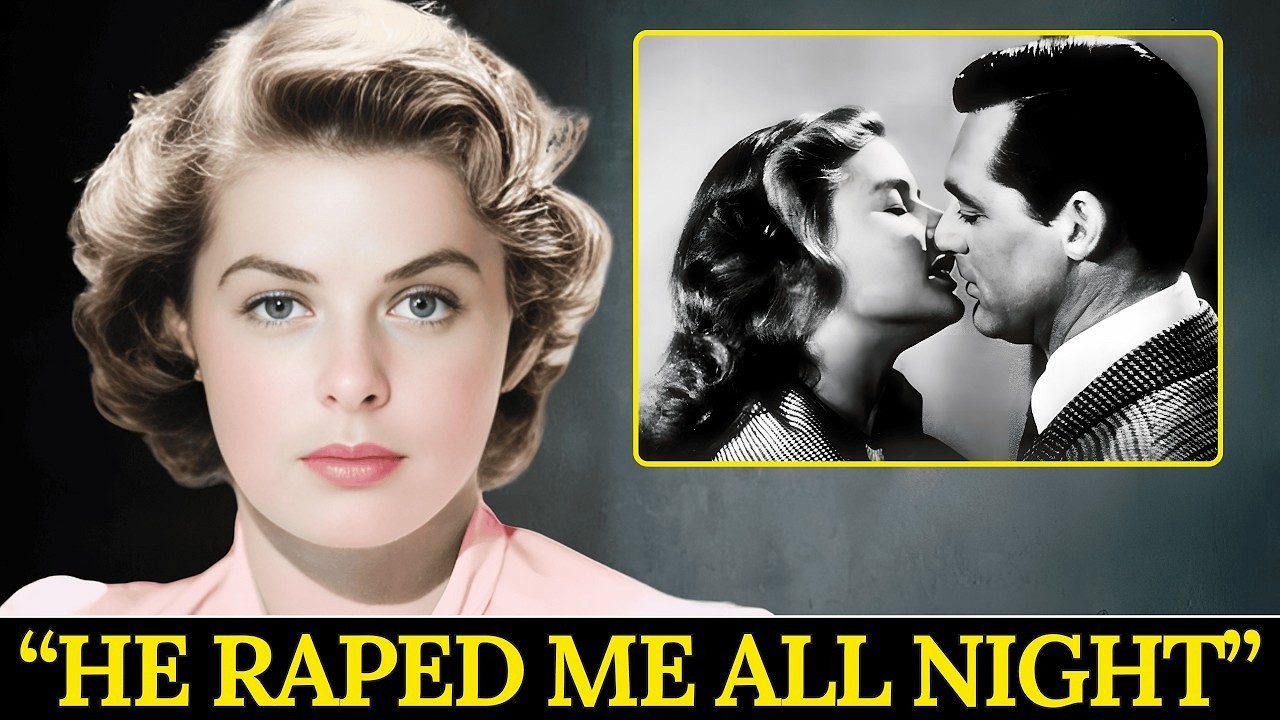
“I had a fiery kinda love for her,” he admitted.
And almost immediately, he pulled back.
“I think that’s where I ought to stop.”
He did not provide a scandalous list of details.
He did not attack Ingrid.
He did not pretend their connection had been meaningless.
He simply confirmed what Hollywood had never publicly known while she was alive:
Something real had happened between Gregory Peck and Ingrid Bergman during the making of *Spellbound*.
And then he protected the rest.
That restraint may be the most fascinating part of the story.
Because Ingrid Bergman’s private life would eventually become one of the most publicized scandals in Hollywood history.
She would be condemned in America.
Her affair with Italian director Roberto Rossellini would dominate newspaper headlines.
Her pregnancy would become a national moral controversy.
For a time, one of Hollywood’s most admired actresses became one of its most attacked women.
Yet the Gregory Peck chapter remained comparatively quiet.
To understand why, you have to go back to a very different Ingrid Bergman—the woman America believed it knew before everything changed.
## 1. Hollywood Had Fallen in Love With Ingrid’s “Natural” Image
Ingrid Bergman arrived in American films from Sweden in 1939.
Hollywood was an industry built on transformation.
Names were changed.
Hair was changed.
Teeth were changed.
Eyebrows were changed.
Personal histories could be rewritten until a studio had manufactured exactly the star it wanted to sell.
Producer David O. Selznick initially considered altering Ingrid too.
She resisted.
Her name was Ingrid Bergman.
Her eyebrows were her eyebrows.
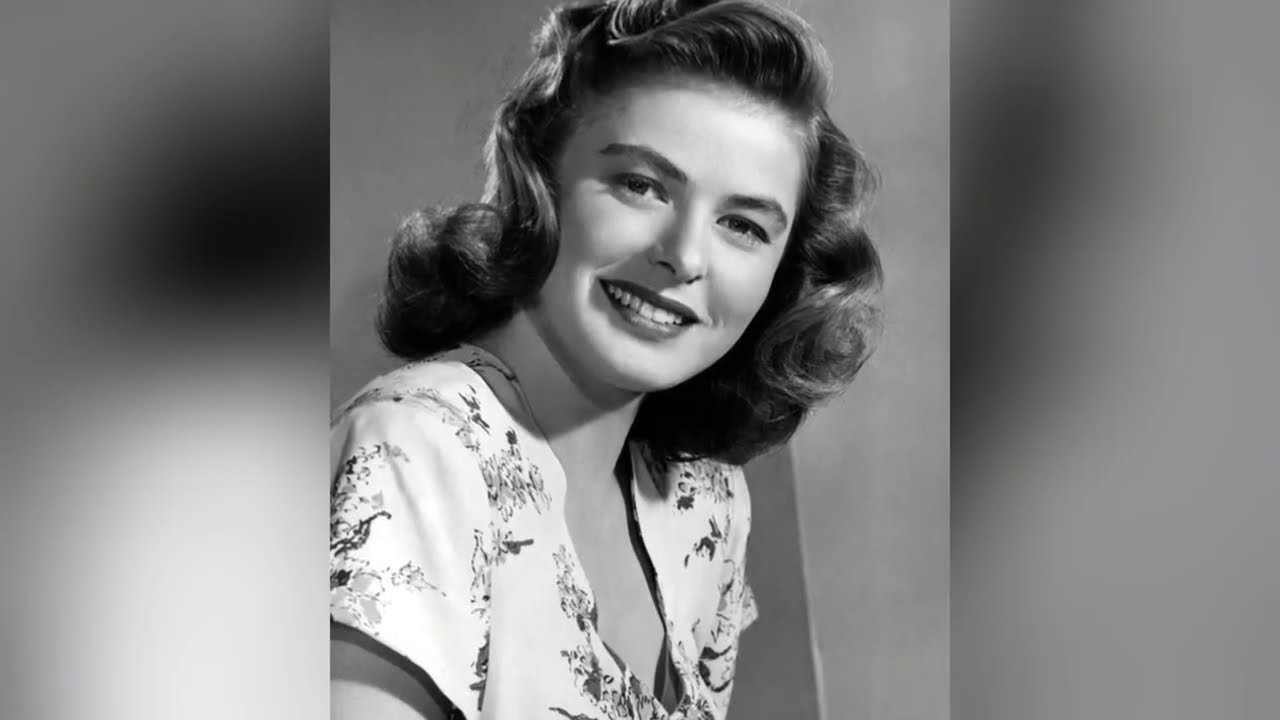
Her face was her face.
Rather than fight her natural appearance, Hollywood turned it into a marketing advantage.
Here was the anti-Hollywood Hollywood star.
Fresh.
Intelligent.
Elegant without appearing artificial.
Audiences responded.
## 2. “Casablanca” Made Her Immortal
By 1942, *Casablanca* transformed Ingrid into something larger than an ordinary movie star.
As Ilsa Lund, she was caught between love and responsibility.
Humphrey Bogart’s Rick loved her.
She loved him.
But the film refused to give audiences the easy romantic ending they might have expected.
Ilsa left Casablanca with Victor Laszlo.
Rick stayed behind.
The performance became one of the defining images of Hollywood romance.
Decades later, people who had never watched another Ingrid Bergman film still knew her face from *Casablanca*.
But Ingrid was not interested in repeating Ilsa forever.
She wanted difficult parts.
She wanted directors who challenged her.
And her career was accelerating quickly.
## 3. Then “Gaslight” Gave Ingrid Her First Oscar
In *Gaslight*, Ingrid played Paula, a woman whose husband systematically tries to convince her that she is losing her mind.
The performance brought her the Academy Award for Best Actress.
By the time Alfred Hitchcock was preparing *Spellbound*, Ingrid was no longer simply a promising European actress.
She was one of Hollywood’s most important female stars.
Gregory Peck occupied a very different position.
He was arriving.
Fast.
But he was still new.
## 4. Gregory Peck Was Becoming a Star Almost in Real Time
Peck’s film career had barely begun.
He had come from theater and quickly found himself placed opposite some of the most important actresses in Hollywood.
His appearance helped.
Tall.
Dark.
Serious.
A calm voice.
A screen presence that suggested integrity even before he said anything.
In 1944, *The Keys of the Kingdom* earned him his first Academy Award nomination.
Hollywood could see what it had.
Here was a potential major leading man.
Then David O. Selznick and Alfred Hitchcock put him opposite Ingrid Bergman.
## 5. “Spellbound” Was Designed Around Attraction and Danger
The film begins at a psychiatric institution.
Ingrid plays Dr. Constance Petersen, a brilliant psychiatrist whose life has been governed more by intellect than romance.
Gregory Peck arrives as the man believed to be Dr. Anthony Edwardes.
Almost immediately, Constance changes.
The reserved doctor falls in love.
Then the mystery begins.
Peck’s character is not who he claims to be.
His memory is fractured.
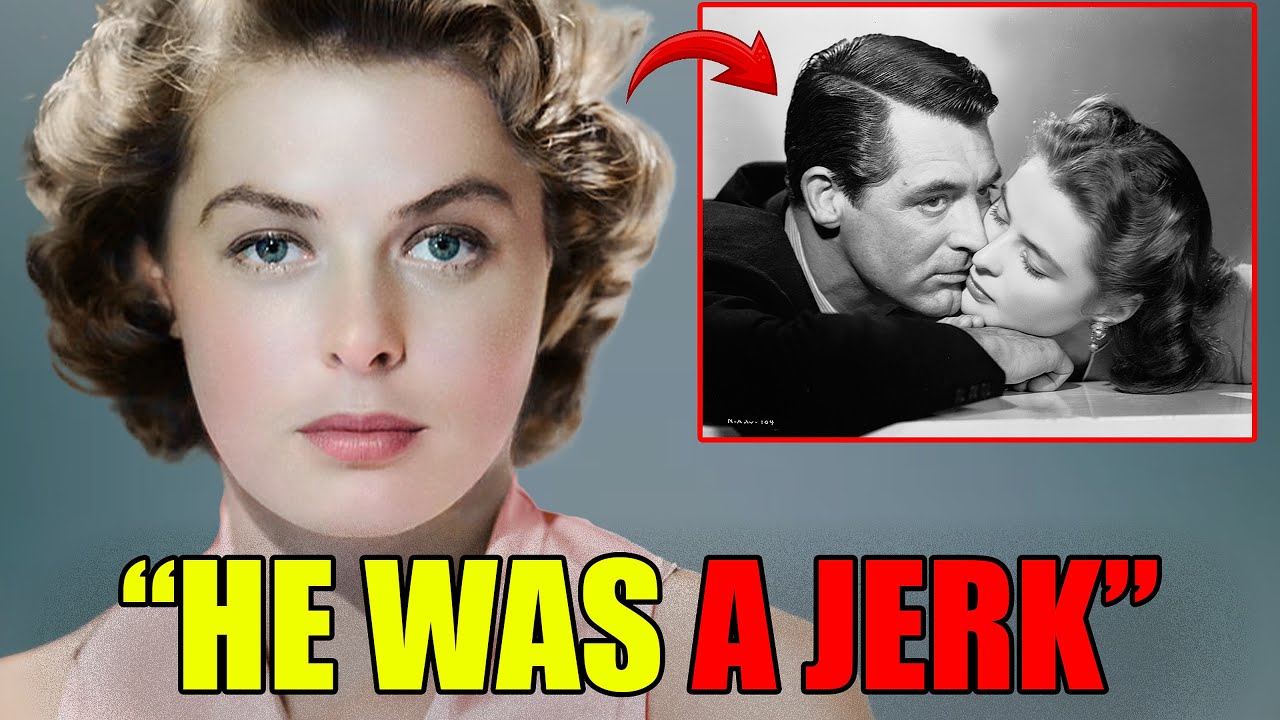
Certain visual patterns trigger terror.
He may be connected to a death.
He may even be a murderer.
Constance chooses to trust him anyway.
The entire film depends on the audience believing that Ingrid Bergman would risk everything for Gregory Peck.
That required chemistry.
They had it.
## 6. Even Hitchcock Had Initially Needed Work on the Love Story
Early versions of *Spellbound* leaned heavily into psychoanalysis.
Hitchcock and screenwriter Ben Hecht reshaped the material, putting greater emphasis on the romance.
It was a smart decision.
The psychology in *Spellbound* may feel dated now.
The attraction does not.
Hitchcock understood that the emotional engine was not simply:
Who committed the crime?
It was:
Why does Constance believe this man when believing him could destroy her?
That question works only if the audience feels what she feels.
With Bergman and Peck together, they did.
## 7. Behind the Camera, Their Lives Were Already Complicated
Ingrid was married to Petter Lindström.
They had a daughter, Pia.
Gregory Peck was married to Greta Kukkonen.
He was also already a father.
Neither actor was single.
That is an important part of the story because later internet retellings sometimes transform their connection into an innocent romance that circumstances prevented from blossoming.
Reality was more complicated.
There were spouses.
There were families.
There were careers.
And there was a film production requiring the two actors to spend weeks working closely together.
## 8. “Spellbound” Began Filming in 1944
Principal photography began in July 1944.
Hitchcock was famously precise.
He often knew exactly how he intended to shoot a scene before the actors arrived.
Ingrid sometimes resisted that rigidity.
When she struggled to find an emotional feeling Hitchcock wanted, his famous advice was essentially:
Fake it.
For an actress who cared deeply about emotional truth, the suggestion initially seemed almost insulting.
Later, Ingrid came to appreciate its practicality.
The camera did not need an actor to experience everything literally.
It needed the actor to create the effect.
But with Gregory Peck, not everything between them had to be manufactured.
## 9. Peck Later Said the Work Had Been “Close and Intense”
When Peck finally discussed Ingrid decades later, he connected what happened between them to the circumstances of *Spellbound*.
They were young.
They were working closely.
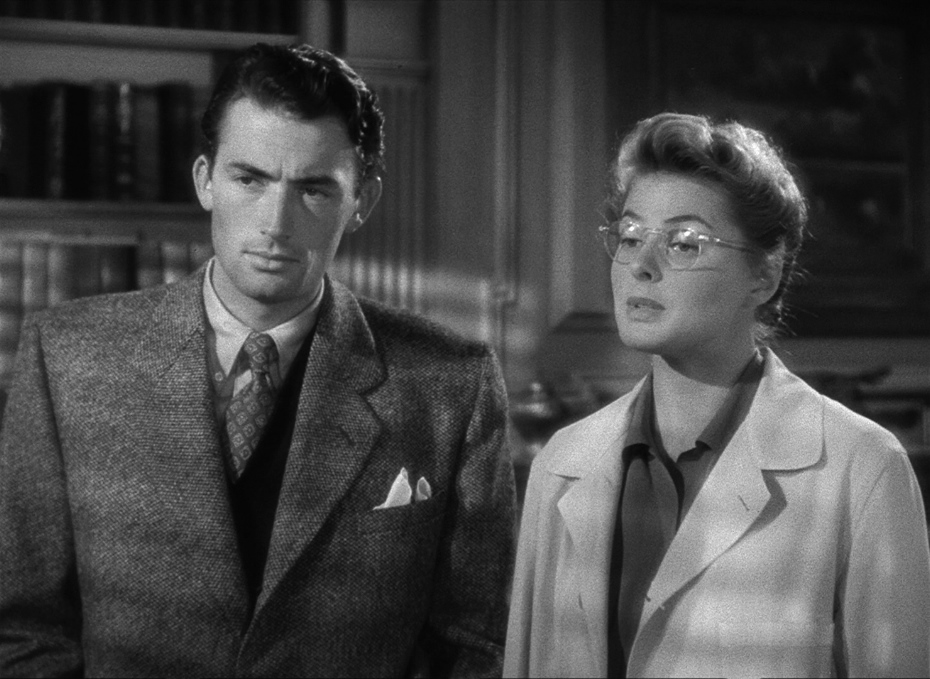
The work was intense.
That is not an excuse.
It is context.
Movie sets create strange temporary worlds.
Actors spend long days together.
They repeat emotional scenes again and again.
A director asks them to look at one another as though nobody else exists.
Then someone calls cut.
And real life returns.
Sometimes the boundary holds.
Sometimes it does not.
With Ingrid and Gregory, it apparently did not.
## 10. The Affair Remained Their Business
What is striking is how little public spectacle followed.
There was no tabloid explosion.
No public declaration from Ingrid.
No dramatic divorce connected to Peck.
No press conference.
No studio scandal.
During Ingrid’s lifetime, the relationship was not part of the widely known Bergman story.
That is why the later confession mattered.
It did not confirm some famous scandal everyone had already been discussing for forty years.
It exposed a private chapter after one of the two people involved could no longer comment on it.
## 11. The Movie Gave Audiences Plenty to Suspect—If They Knew Where to Look
Watch *Spellbound* now, knowing what Peck eventually said, and certain scenes acquire another layer.
Constance watches him.
He watches her.
Their closeness is central to the film.
But it is important not to make the opposite mistake and claim every glance was secretly documentary evidence.
They were actors.
Good actors.
Their job was to make a romance believable.
The fact that something developed privately does not mean every moment on screen was unscripted truth.
That distinction is what makes Old Hollywood stories interesting.
Performance and real feeling can exist at the same time without being identical.
## 12. “Spellbound” Became a Major Success
The movie premiered in 1945.
It was a crowd-pleaser and an important film for both stars.
It further established Peck as a major romantic leading man.
For Ingrid, it strengthened a remarkable run.
She had *Casablanca*.
*Gaslight*.
*Spellbound*.
And soon Hitchcock would give her an even more complicated role.
## 13. Ingrid and Hitchcock Reunited for “Notorious”
In *Notorious*, Ingrid starred opposite Cary Grant.
Again, Hitchcock placed her at the center of a story mixing danger and romance.
Again, the emotional situation was morally complicated.
Her character, Alicia Huberman, infiltrates a group of Nazis and marries a man she does not love as part of an intelligence operation.
Grant’s character loves her but struggles to admit it.
The film is now often ranked among Hitchcock’s finest achievements.
For Ingrid, it also reinforced an unusual pattern.
On screen, she was increasingly playing women whose love lives existed in dangerous gray areas.
Off screen, her own life was becoming less simple too.
## 14. Ingrid’s Marriage to Petter Lindström Was Under Strain
The image of a perfectly settled home life did not reflect everything Ingrid was experiencing.
Her career required long separations.
She traveled.
She worked intensively.
She formed powerful connections with people outside the marriage.
She was ambitious in a period when the culture often expected married women—especially mothers—to organize their lives around home first.
Ingrid did not live that way.
Acting was not a hobby she could put aside.
It was central to her identity.
That tension would eventually become impossible to contain.
## 15. Another Private Relationship Would Later Become Known
Gregory Peck was not the only man to enter Ingrid’s life while she was still married to Lindström.
Her relationship with photographer Robert Capa also became part of her documented biography.
Capa was brilliant, adventurous and famous for photographing war.
Ingrid met him in Europe after World War II.
Their relationship again complicated the simple public image of Ingrid as the serene, almost saintly Hollywood star.
But even that would eventually be overshadowed.
Then came Roberto Rossellini.
## 16. Ingrid Saw Rossellini’s Films and Wanted to Work With Him
Italian director Roberto Rossellini represented a radically different kind of cinema.
His neorealist films looked nothing like polished Hollywood studio productions.
Ingrid was fascinated.
She wrote to him.
The letter became famous.
She essentially offered herself as an actress who could speak several languages and knew only a few words of Italian.
Rossellini responded.
Eventually Ingrid traveled to Italy to make *Stromboli*.
What began as artistic admiration became something much larger.
## 17. This Time, the Private Relationship Became Public
Ingrid and Rossellini fell in love.
Both had complicated personal lives.
Ingrid was still married to Petter Lindström.
Then she became pregnant with Rossellini’s child.
There was no way to hide the situation behind studio publicity.
The scandal exploded.
In 1950 America, this was not treated simply as celebrity gossip.
It became a moral controversy.
The Ingrid Bergman audiences thought they knew collided violently with the woman making choices in her private life.
## 18. America Turned on One of Its Favorite Stars
The backlash was extraordinary.
Religious groups condemned her.
Newspapers treated the story as front-page material.
Politicians joined the criticism.
Ingrid, who had played Joan of Arc not long before, was suddenly portrayed as a symbol of moral failure.
The intensity feels startling now.
But it reflected both the era and the image Ingrid had carried.
Hollywood had marketed her as natural, wholesome and morally serious.
The public had confused that image with the woman herself.
Then the woman refused to behave according to the image.
## 19. Rossellini Became the Romance Everyone Remembered
This matters to the Gregory Peck story.
Once the Rossellini scandal exploded, it became the defining romantic controversy of Ingrid’s life.
The pregnancy.
The divorce.
The marriage.
The years in Europe.
The children they had together.
The films they made.
All of it was public.
Against that enormous drama, the earlier *Spellbound* relationship nearly vanished from historical memory.
It had not created headlines when it happened.
Peck did not talk.
Ingrid did not turn it into a public confession.
Rossellini swallowed the story.
## 20. Ingrid Paid an Enormous Professional Price
Hollywood did not simply treat the Rossellini affair as a private matter.
For several years, Ingrid’s American career was effectively disrupted.
She worked in Europe.
She made films with Rossellini.
She had three children with him, including twins Isabella and Isotta Ingrid Rossellini.
But the extraordinary Hollywood momentum of the 1940s had been interrupted.
There was a widespread assumption that America might never fully welcome Ingrid Bergman back.
Then came *Anastasia*.
## 21. “Anastasia” Became One of Hollywood’s Great Comebacks
In 1956, Ingrid returned to a major Hollywood production in *Anastasia*.
The role was almost too perfect symbolically.
She played a mysterious woman who may—or may not—be the surviving daughter of the murdered Russian royal family.
A woman whose identity is questioned.
A woman trying to reclaim a place she may have lost.
Audiences accepted Ingrid again.
The Academy did too.
She won her second Best Actress Oscar.
The actress once publicly condemned in America had returned to the center of the industry.
## 22. Ingrid Never Became the Same Kind of Star Again
And perhaps she did not want to.
After Rossellini, the illusion of untouched innocence could never be restored.
Ingrid was older.
More independent.
More complicated.
She worked internationally.
She performed on stage.
She made European films.
She returned to Hollywood when the role interested her.
The scandal that might have destroyed a more fragile career instead became one chapter in a career that kept expanding.
## 23. Her Marriage to Rossellini Eventually Ended Too
The relationship that had caused such a historic uproar did not last forever.
Ingrid and Rossellini separated and divorced in the 1950s.
She later married Swedish theatrical producer Lars Schmidt.
That marriage also eventually ended.
By this point, reducing Ingrid’s emotional life to one “great secret love” becomes almost impossible.
Her life did not fit that kind of simple romantic mythology.
She loved.
She left.
She was left.
She formed relationships.
She returned to work.
And through all of it, Gregory Peck remained a story almost nobody knew.
## 24. Ingrid Won a Third Academy Award Without Even Attending
In 1974, Ingrid appeared in *Murder on the Orient Express*.
The cast was enormous.
Albert Finney.
Lauren Bacall.
Sean Connery.
John Gielgud.
Vanessa Redgrave.
Anthony Perkins.
And Ingrid Bergman.
Her role as Greta Ohlsson was relatively small.
It won her the Academy Award for Best Supporting Actress.
Ingrid did not expect it.
In fact, she publicly suggested fellow nominee Valentina Cortese had deserved the award.
It was another glimpse of the directness that made Ingrid difficult to reduce to standard Hollywood behavior.
Three Oscars now stood beside her name.
But she was fighting something more serious than an awards race.
## 25. Ingrid Had Breast Cancer
In the 1970s, Ingrid was diagnosed with breast cancer.
She underwent surgery.
The disease returned.
She continued working.
Her illness gradually became harder to conceal, but she refused to allow it to define every conversation about her.
Acting remained important.
So did telling her own story.
That led to a book.
But not the book the sensational version of this story claims.
## 26. “My Story” Was Published While Ingrid Was Alive
In 1980, *Ingrid Bergman: My Story*, written with Alan Burgess, was published.
That date matters.
The memoir was not discovered by Ingrid’s daughters after her death.
It was not a secret diary found in a drawer.
It was a major published autobiography released while Ingrid was alive.
She participated in telling the story.
She discussed her childhood.
Hollywood.
Her marriages.
Rossellini.
Her career.
The public humiliation she had endured.
The book gave readers an unusually candid version of a life that had already been discussed by other people for decades.
But it did not create the famous Gregory Peck revelation.
That came later.
## 27. This Is Where the Original “Secret Memoir” Story Falls Apart
Modern retellings sometimes claim Ingrid left behind private pages in which she finally confessed a profound hidden love for Gregory Peck.
Some even attach dramatic quotations to her.
There is no good evidence for the sensational version.
The known autobiography was already available in 1980.
And the Peck relationship remained outside widespread public knowledge.
The important confession came from Gregory Peck himself.
After Ingrid could no longer answer.
## 28. Ingrid Still Had One Great Performance Left
Cancer had weakened her.
But in 1982, Ingrid accepted the role of former Israeli Prime Minister Golda Meir in *A Woman Called Golda*.
It became her final acting performance.
The physical demands were significant.
So was the transformation.
The luminous romantic star of *Casablanca* and *Spellbound* disappeared into an older political leader carrying the weight of a nation.
People involved in the production knew Ingrid was seriously ill.
She worked anyway.
## 29. “A Woman Called Golda” Became a Final Triumph
The performance was acclaimed.
But Ingrid did not live long enough to receive one of its greatest honors herself.
She won the Emmy for Outstanding Lead Actress in a Limited Series or Special.
Posthumously.
Her daughter Pia Lindström accepted the award.
It was an extraordinary closing chapter.
The actress whose personal choices had once caused American politicians to condemn her was now being celebrated for portraying one of the twentieth century’s most formidable political leaders.
Hollywood had changed.
America had changed.
Ingrid had endured long enough to see it.
## 30. Ingrid Died on the Date She Had Been Born
August 29, 1982.
Her 67th birthday.
Ingrid Bergman died after years of living with cancer.
The coincidence gave obituary writers an almost unbearably neat line:
Born August 29.
Died August 29.
Between those dates sat one of the great international acting careers.
Sweden.
Hollywood.
Italy.
France.
The stage.
Television.
Three Academy Awards.
Two Emmys.
And enough public controversy to destroy several lesser careers.
## 31. The Woman Who Had Been Condemned Was Now Being Celebrated
By the time Ingrid died, the old Rossellini scandal had changed meaning.
It no longer defined her in quite the same way.
Many younger viewers could hardly understand why the relationship had provoked such national outrage.
Her films had survived the moral panic.
*Casablanca* had become immortal.
*Notorious* had become a Hitchcock classic.
*Gaslight* remained one of her defining performances.
*Spellbound* still paired her with a young Gregory Peck.
But one important fact about that pairing remained largely private.
For another five years.
## 32. Then Gregory Peck Was Asked About Ingrid
By 1987, Peck had long since become one of Hollywood’s most respected leading men.
*Roman Holiday.*
*The Guns of Navarone.*
*Gentleman’s Agreement.*
And, above all, Atticus Finch in *To Kill a Mockingbird*.
He had spent decades projecting integrity.
He was no longer the young actor trying to establish himself opposite Ingrid Bergman.
Then interviewer Brad Darrach raised the subject of Ingrid.
Peck could have brushed it aside.
He could have said they were simply colleagues.
He could have protected the old public version indefinitely.
Instead, he acknowledged something real had happened.
## 33. His Choice of Words Mattered
Peck did not describe a casual flirtation.
He said he had a “fiery kinda love” for Ingrid.
Then he stopped.
That pause matters almost as much as the admission.
He did not explain where they met privately.
He did not describe intimate details.
He did not estimate how many nights they spent together.
He did not turn Ingrid into material for a late-life tell-all.
He confirmed the relationship.
Then he drew a boundary.
## 34. Peck Explained the Circumstances, Not the Details
He pointed back to the production.
They had been young.
They had spent weeks in close, emotionally intense work.
Anyone who has watched *Spellbound* understands what that work looked like.
Fear.
Trust.
Physical proximity.
Romantic intensity.
Again and again, the camera asked them to convince an audience that these two people were emotionally inseparable.
Off camera, the actors themselves crossed a boundary.
But Peck’s later language suggests he did not want to reduce Ingrid to an anecdote.
He offered context.
Not a bedroom inventory.
## 35. Why Did He Wait Until After Ingrid Was Gone?
We cannot know exactly.
Anything stronger would be speculation.
Perhaps discretion mattered more to actors of their generation.
Perhaps both marriages made silence useful.
Perhaps the relationship had ended without a reason to expose it.
Perhaps Peck believed it belonged to them.
What we do know is that Ingrid had already been dead for five years when he publicly confirmed it.
That creates an unavoidable imbalance.
We have Gregory’s later memory.
We do not have Ingrid sitting beside him giving hers.
Any responsible telling of the story has to acknowledge that.
## 36. Ingrid’s Silence Does Not Mean the Relationship Meant Nothing
Nor does it prove Gregory was the secret love of her life.
Both extremes go beyond the evidence.
This is where sensational Hollywood storytelling often fails.
A hidden affair becomes:
“The one man she never stopped loving.”
A private connection becomes:
“The romance that haunted her until death.”
There is no need to make those claims.
The documented fact is already powerful.
Gregory Peck himself later confirmed a romantic relationship with Ingrid during *Spellbound*.
He described his feelings as real and intense.
And for decades, the public had not known.
That is enough.
## 37. Ingrid Had Never Lived a Simple Love Story Anyway
Look at the relationships that shaped her life.
Petter Lindström was her first husband and the father of Pia.
Roberto Rossellini changed both her personal life and her career.
Lars Schmidt shared another long chapter with her.
Robert Capa represented another documented emotional relationship.
And somewhere within that complicated map sat Gregory Peck.
Brief.
Private.
Powerful enough that Peck still remembered it decades later.
But not necessarily the organizing romance of Ingrid’s entire life.
Human lives rarely arrange themselves that neatly.
## 38. The Real Story Also Makes “Spellbound” More Interesting
One reason audiences remain fascinated by behind-the-scenes romances is that they change the experience of rewatching the movie.
Now you know.
When Constance looks at Peck’s character, the actress playing her was involved with the man behind the role.
But the knowledge should deepen the film rather than replace it.
Ingrid was still acting.
Peck was still acting.
Hitchcock was still directing.
The romance on screen was crafted.
The relationship off screen was real.
Those truths overlapped for a short period in 1944.
Then the production ended.
Life continued.
## 39. Peck’s Career Moved Forward
He became one of the defining male stars of postwar Hollywood.
He played journalists, soldiers, sea captains, lawyers and romantic leads.
In 1962, *To Kill a Mockingbird* gave him the role most permanently associated with his name.
Atticus Finch became a symbol of moral courage.
Peck won the Academy Award.
For later generations, that was Gregory Peck.
The quiet authority.
The decent man.
Which makes the *Spellbound* admission feel especially human.
Before the monument came the young actor.
And young actors can make complicated choices.
## 40. Ingrid’s Career Became Even More Difficult to Summarize
Was she Ilsa Lund?
The saintly Hollywood import?
The woman denounced over Rossellini?
The European artist?
The comeback queen of *Anastasia*?
The older actress winning another Oscar?
Golda Meir?
All of them.
That is why reducing Ingrid to scandal always feels inadequate.
She was never only the woman who had an affair with Rossellini.
And she was never only the woman who secretly loved Gregory Peck.
She was an actress who repeatedly chose experience over image, sometimes at enormous personal cost.
## 41. Hollywood’s Rules Were Much Harsher for Ingrid Than for the Men Around Her
This is difficult to ignore.
Male stars had affairs.
Directors had affairs.
Producers had affairs.
Their reputations often survived with comparatively little moral theater.
When Ingrid became pregnant by Rossellini while married to another man, she became a symbol in a national morality debate.
The reaction was not simply about adultery.
It was also about gender.
Motherhood.
Celebrity image.
And the expectations Americans attached to a woman they believed represented purity.
Gregory Peck’s later revelation adds another interesting layer.
His connection with Ingrid had occurred years earlier.
It never produced the same public punishment because the public did not know.
## 42. The Difference Between the Peck Story and the Rossellini Story Was Visibility
With Rossellini:
pregnancy made secrecy impossible.
The relationship reordered Ingrid’s family.
It changed where she lived.
It reshaped her career.
It became public history.
With Peck:
the relationship appears to have been brief.
It stayed private.
The actors moved on.
No public event forced disclosure.
That difference is crucial.
It explains why one affair defined Ingrid’s reputation for years while another almost disappeared.
## 43. Ingrid Actually Told the World a Great Deal Before She Died
This is another reason the “secret memoir discovered later” angle does her a disservice.
Ingrid was not a silent woman whose daughters had to uncover her hidden truth after death.
She collaborated on a 500-page autobiography.
She spoke about painful parts of her life.
She allowed herself to look imperfect.
That took courage.
Especially for someone whose private decisions had once been treated as public property.
Her memoir did not require invented Gregory Peck passages to be revealing.
The real book was revealing enough.
## 44. And Yet Peck Remained Outside That Public Reckoning
That is precisely what makes his 1987 admission fascinating.
Ingrid was willing to revisit Rossellini.
Her marriages.
Family.
Work.
Controversy.
But the relationship with Peck did not become publicly established through her autobiography.
Then, five years after her death, Peck spoke.
Not much.
Just enough.
The silence before the admission became part of the story.
## 45. Maybe That Is Why His Final Sentence Feels So Powerful
“I think that’s where I ought to stop.”
There is something almost old-fashioned about it.
Today, celebrity revelation is an industry.
Podcasts.
Memoirs.
Documentaries.
Social media.
People monetize every private memory.
Peck had an extraordinary piece of Old Hollywood history sitting in his hands.
He could have expanded it.
He did not.
He acknowledged Ingrid had mattered to him.
Then he left part of the story where it had always been.
Private.
## 46. It Also Protects Ingrid From Becoming a Character in Someone Else’s Story
That restraint deserves notice.
By 1987, Ingrid could not respond.
She could not correct him.
She could not add context.
She could not say:
That is not how I remember it.
Or:
Yes, that is exactly how it happened.
Peck had the final public word only because he had lived longer.
Stopping where he did prevented the confession from becoming a complete appropriation of their shared past.
We know something happened.
We know he remembered it strongly.
We do not know everything.
And perhaps we were never supposed to.
## 47. The Original Clickbait Gets the Most Important Thing Backward
The sensational version says:
Ingrid Bergman finally confessed everything in her memoir.
She called Peck something outrageous.
Her daughters discovered the truth after she died.
None of that is necessary.
The known memoir appeared in 1980 while Ingrid was alive.
The famous confirmation of the Gregory Peck relationship came from Gregory Peck.
In 1987.
Five years after Ingrid died.
The true chronology is not less dramatic.
It is more dramatic.
Because it contains silence.
Timing.
And restraint.
## 48. Two Married Stars Made a Film About Forbidden Trust
That is the irony at the center of *Spellbound*.
On screen, Ingrid’s character risks professional respectability because she trusts a man everyone else has reason to fear.
She follows him.
Protects him.
Believes in him.
Off screen, Ingrid and Peck were also navigating a relationship they could not comfortably place inside their public lives.
The film does not explain the affair.
But history makes the pairing feel different.
The emotional closeness audiences believed in had more than one source.
## 49. Then They Walked Away From That Chapter
There was no Gregory-and-Ingrid public future.
No marriage.
No decades-long partnership.
No reunion marketed as the return of Hollywood’s secret lovers.
They simply continued.
That may be why the story remained hidden so effectively.
There was no reason for the public to search for it.
It had ended before anyone knew it existed.
## 50. Ingrid’s Most Famous Goodbye Was Still “Casablanca”
There is something fitting about that too.
Ingrid Bergman became immortal playing a woman forced to leave one man she loved in order to continue another life.
At the airport in *Casablanca*, Ilsa does not receive a conventional romantic ending.
She leaves.
Life does not resolve neatly.
Neither did Ingrid’s.
Her emotional history included relationships that lasted, relationships that exploded publicly and relationships that survived mainly as memories.
Gregory Peck belonged to the last category.
## 51. Gregory Peck Carried the Memory for More Than Four Decades
Whatever happened during *Spellbound* had occurred when Peck was still a young man at the beginning of his film career.
By the time he discussed Ingrid publicly, his life looked completely different.
He had become one of Hollywood’s elder statesmen.
He had made dozens of films.
Raised a family.
Remarried.
Won an Oscar.
Played Atticus Finch.
Yet Ingrid still occupied a place vivid enough for him to describe what he had felt as real.
That alone tells us the relationship had not simply disappeared from his memory.
## 52. But Memory Is Not the Same Thing as Destiny
That distinction matters.
We should resist the temptation to turn Peck’s admission into:
“She was the one who got away.”
He did not say that.
Or:
“She was the only woman he truly loved.”
He did not say that either.
What he gave us was smaller and more credible.
There had been love.
It had been intense.
It happened during a particular time.
Then life moved on.
Sometimes that is how significant relationships actually work.
## 53. Ingrid’s Death Did Not End the Questions Around Her
Great stars often become more mysterious after death.
Archives open.
Biographies appear.
Former colleagues talk.
Children tell stories.
Old letters are studied.
Memory competes with mythology.
Ingrid is especially vulnerable to that process because her real life was already so dramatic.
It is easy to attach one more secret.
One more confession.
One more supposedly hidden diary passage.
But responsible history requires separating what we can document from what merely sounds plausible.
## 54. What We Can Say With Confidence Is Already Remarkable
Ingrid Bergman and Gregory Peck starred together in Alfred Hitchcock’s *Spellbound*.
They were both married to other people.
A private romantic relationship developed during that period.
It did not become widely public while Ingrid was alive.
Ingrid’s autobiography, published in 1980, was not a posthumously discovered confession about Peck.
Ingrid died in 1982.
Five years later, Gregory Peck publicly acknowledged what had happened.
He described his feelings as intense.
Then he declined to go further.
Those facts do not need embellishment.
## 55. Perhaps the Unsaid Part Is Why the Story Has Lasted
If Peck had told every detail, the story might actually be less interesting.
Mystery requires empty space.
What did Ingrid think about the relationship decades later?
Did they ever privately discuss it again?
How did it end?
Did their spouses know?
What memories did Ingrid carry that never became part of her autobiography?
Some questions may have answers buried in archives.
Others may not.
But there is a difference between asking a question and inventing the answer.
The best Old Hollywood stories know when to stop.
Peck apparently did too.
## 56. Ingrid Bergman’s Real Life Was More Complicated Than the Image Hollywood Sold
As a young star, she had been marketed as natural.
Wholesome.
Almost untouched by Hollywood artificiality.
Then real life broke through.
Her marriage struggled.
Her relationships became complicated.
Rossellini made her a national scandal.
Europe gave her space when America rejected her.
America eventually welcomed her back.
She won again.
Worked again.
Loved again.
Got sick.
Kept acting.
And died on her 67th birthday after creating a final performance worthy of another major award.
No invented diary could make that life more dramatic.
## 57. Gregory Peck’s Admission Did Not Destroy Ingrid’s Legacy
Nor should it.
Knowing about the affair does not erase *Casablanca*.
It does not diminish *Gaslight*.
It does not make *Notorious* less brilliant.
And it does not turn *Spellbound* into home-movie footage of two lovers.
If anything, it reminds us that the people who created classic films were not statues.
They were young.
Ambitious.
Married.
Lonely.
Tempted.
Confused.
Sometimes reckless.
Sometimes discreet.
Human.
## 58. And That May Be the Real Reason Older Fans Still Care
People do not return to Old Hollywood only because the movies looked beautiful.
They return because those faces became part of their lives.
Gregory Peck seemed decent.
Ingrid Bergman seemed luminous.
Cary Grant seemed effortless.
Audrey Hepburn seemed graceful.
The screen distilled complicated human beings into unforgettable images.
Then, decades later, the real people occasionally break through.
That moment—when the icon becomes human—is what makes stories like this so powerful.
## 59. The Final Truth Is Smaller Than the Headline—and Stronger
Ingrid Bergman did not leave behind a sensational posthumous confession calling Gregory Peck “massive.”
Her daughters did not discover a secret memoir after her death revealing everything.
The real autobiography had already been published.
And Ingrid was alive when readers bought it.
The person who finally confirmed the Gregory Peck chapter was Gregory Peck himself.
Five years after Ingrid’s death.
More than four decades after they stood together before Alfred Hitchcock’s cameras.
Peck could have denied it.
He didn’t.
He could have turned it into gossip.
He didn’t do that either.
Instead, he admitted that his feelings for Ingrid had been real.
Then he stopped.
## 60. Maybe Gregory Peck Knew Exactly Where the Story Belonged
For generations, audiences have watched Ingrid Bergman and Gregory Peck fall in love in *Spellbound*.
They see Constance Petersen look into the face of a frightened man and decide to trust him.
They watch Peck look back.
They see Hitchcock’s camera move closer.
And they believe the romance because two gifted actors make it believable.
What audiences did not know was that somewhere beyond the script, something private had happened too.
It did not become Ingrid’s defining love story.
It did not replace Rossellini.
It did not produce a Hollywood marriage.
It did not even become public while she was alive.
It simply existed.
For a few intense weeks during the making of a movie, two young married stars became more than co-workers.
Then the cameras stopped.
Their lives separated.
Ingrid went on to experience scandal, exile, comeback, marriage, divorce, motherhood, cancer and one final celebrated performance.
Gregory Peck became one of the most respected actors in American cinema.
For more than forty years, the *Spellbound* chapter stayed largely where they had left it.
Between them.
Then in 1987, five years after Ingrid could no longer speak for herself, Peck opened the door just far enough for the public to see inside.
He admitted there had been love.
And then, almost as quickly, he closed it again.
“I think that’s where I ought to stop.”
Maybe he was right.
Because sometimes the most revealing Hollywood confession is not the one that tells us everything.
It is the one that tells us just enough to understand that the chemistry we saw on screen had a real story behind it—
and respects the two people involved enough to leave part of that story theirs.
“`