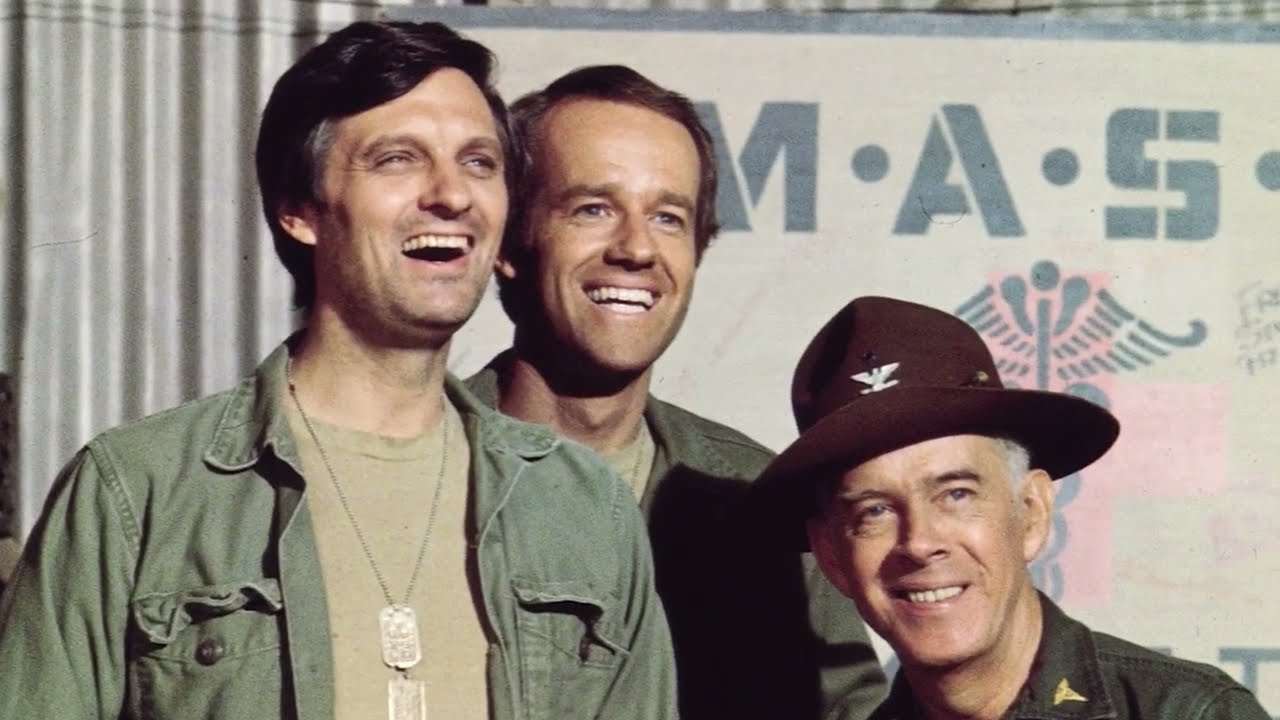
 For millions of Americans who watched MASH*, Radar O’Reilly was almost impossible not to love.
He was the nervous young corporal with the teddy bear.
The kid who somehow heard incoming helicopters before anyone else.
The company clerk who could finish Colonel Blake’s sentences before Blake himself seemed to know what he was going to say.
Surrounded by surgeons who had learned to survive war with sarcasm, martinis and dark humor, Radar represented something different.
Innocence.
He looked as though he had wandered into Korea straight from an Iowa farm and was still trying to understand why grown men could behave so badly.
But the man who played him was not Radar.
And according to people who worked on MASH*, that distinction could sometimes be startling.
Gary Burghoff was serious about acting.
Intense about details.
Sensitive about how he was treated.
Sometimes insecure.
Sometimes argumentative.
There are old accounts describing clashes with fellow cast members, including an extraordinary allegation involving Wayne Rogers and a thrown chair.
McLean Stevenson openly admitted that he and Burghoff had what he called a “love-hate” relationship.
And when MASH* was approaching its historic finale in 1983, one behind-the-scenes account reported that feelings toward Burghoff had been far less affectionate than feelings toward Radar.
That sounds like the beginning of a story about a beloved television character played by a man everyone secretly hated.
Except the evidence refuses to stay that simple.
Because Stevenson, in the same breath that he admitted their difficult relationship, called Burghoff a brilliant actor.
Alan Alda later praised the extraordinary care Gary brought to his scenes.
Loretta Swit remembered an immediate chemistry with him.
And Burghoff himself would later speak warmly about Alda and describe his years on MASH* as something he was deeply honored to have experienced.
So what really happened?
The answer is more interesting than a secret feud.
Gary Burghoff appears to have been a gifted, complicated and sometimes difficult man working inside one of television’s most demanding productions.
And somehow, the very intensity that could frustrate people behind the camera helped create one of the gentlest characters television ever produced.
Before Radar Became America’s Innocent Soldier
Gary Burghoff had already played Walter “Radar” O’Reilly before the television version of MASH* existed.
He originated the role in Robert Altman’s 1970 film.
When CBS adapted MASH* for television two years later, the cast was almost completely different.
Donald Sutherland was gone.
Elliott Gould was gone.
Robert Duvall was gone.
But Gary Burghoff remained.
He was the only principal performer from the movie to carry his character into the television series.
Yet the Radar television viewers came to love was not exactly the same Radar Burghoff had played on film.
The movie version was sharper.
More sardonic.
A little stranger.
Burghoff later explained that as the television series developed, he realized Radar needed to change.
The other characters were sophisticated adults. They understood hypocrisy. They argued about politics, morality and war.
Radar could serve another purpose.
With series creator Larry Gelbart’s help, Burghoff gradually transformed him into the innocent center of the camp.
Radar didn’t need to deliver a speech about the horror of war.
He could simply look frightened.
That could be more powerful.
Even some of Radar’s most memorable traits came from careful acting decisions.
The character’s extraordinary hearing became almost supernatural.
Burghoff gave Radar glasses, reasoning that poor eyesight might have sharpened his dependence on sound.
And when Gelbart introduced a teddy bear as a one-time prop, Burghoff immediately understood what it could mean.
He asked to keep it as part of the character.
It became inseparable from Radar.
To viewers, all of this looked effortless.
That was the illusion.
Behind Radar’s apparent simplicity was an actor thinking very hard about every detail.
And according to people who worked with Burghoff, sometimes he thought about those details so hard that collaboration became difficult.
McLean Stevenson Admitted Their Friendship Wasn’t Like Henry and Radar’s
On screen, Colonel Henry Blake and Radar seemed made for each other.
Henry was technically in command.
Radar often seemed to be the person actually keeping the camp running.
Their comedy depended on familiarity.
Henry would begin asking for something and Radar would already be handing it to him.
It felt less like commander and clerk than an absent-minded father being quietly managed by an unusually capable son.
Off camera, McLean Stevenson acknowledged that things were considerably more complicated.
Years later, Stevenson described his relationship with Burghoff as a “love-hate” relationship.
But what he said next is important.
He did not dismiss Burghoff as untalented.
Quite the opposite.
Stevenson said that among the early cast, Gary may have done the best job as an actor.
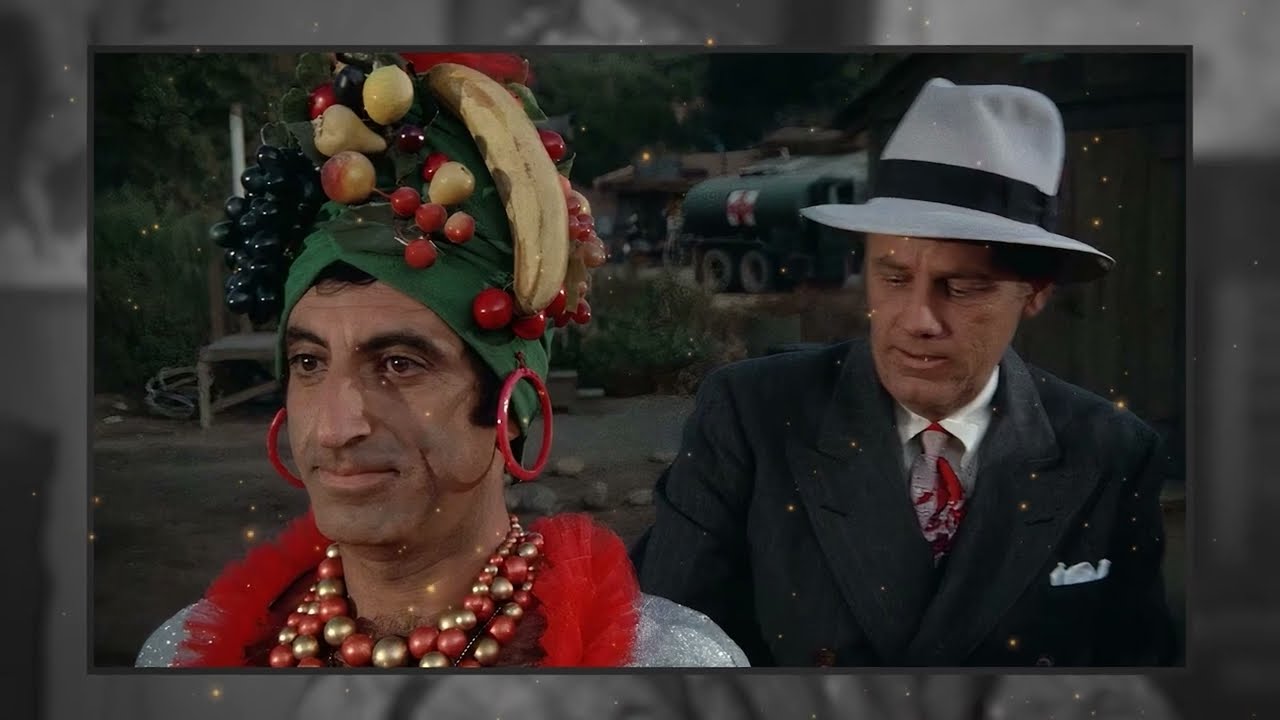
He called him brilliant.
Then he acknowledged the friction.
Sometimes, Stevenson said, he was a problem for Gary.
And sometimes Gary was a problem for him.
That is a much more revealing description than simply saying two actors hated each other.
They could frustrate each other.
They could clash.
And Stevenson could still watch Burghoff work and recognize exceptional talent.
That contradiction would follow Gary throughout his MASH* story.
Then There Is the Wayne Rogers Story
One of the darkest stories about Burghoff’s years on the series involves Wayne Rogers, who played Trapper John McIntyre.
The story has been repeated for decades, but it needs an important qualification.
It comes from Raymond Strait’s 1983 biography of Alan Alda.
According to that account, tension involving Burghoff once became so severe that Rogers lost his temper and threw a chair during a confrontation.
That is an extraordinary allegation.
But it should be treated for what it is:
an account published in a biography, not a universally documented incident confirmed independently by everyone involved.
Still, the fact that such a story entered the historical record at all tells us something about Burghoff’s reputation.
He could get under people’s skin.
He reportedly had strong opinions about scenes and motivation.
He wanted actions to make sense for Radar.
Writer-producer Allan Katz later remembered an episode in which Radar was supposed to eat breakfast intended for someone else.
Burghoff questioned the action.
Why would Radar eat somebody else’s breakfast?
The writers had to give him a character reason.
To an actor, that kind of question can reflect dedication.
To a writer trying to finish a television episode on schedule, it can become exhausting.
Both things can be true at once.
A 1983 Account Painted an Even Harsher Picture
When MASH* was ending in 1983, writer Burt Prelutsky published a retrospective in TV Guide.
His description of feelings toward Burghoff was brutal.
He reported that while Radar remained beloved, Burghoff himself had created significant personal friction on the set.
An unnamed cast member described Gary as someone who often believed others were against him and who could react badly when challenged.
The anonymous account also referred to a heated relationship with Alan Alda.
Over the years, those remarks have often been simplified into a sensational conclusion:
Everybody on MAS*H hated Gary Burghoff.
But anonymous comments cannot tell the entire story.
And remarks from the people involved complicate that narrative considerably.
Especially Alan Alda’s.
Alan Alda’s Own Words Don’t Sound Like Hatred
If Burghoff and Alda had tense periods, Alda did not spend his later years publicly trying to destroy Gary’s reputation.
When the Television Academy revisited the history of MASH*, Alda remembered Burghoff as an actor deeply committed to getting a scene right.
Gary, Alda recalled, would immerse himself in finding the truthful way to play even a small moment.
He worked out details.
He cared.
Loretta Swit’s memory was even warmer.
She remembered connecting with Gary immediately.
For her, their chemistry worked from the beginning.
And Burghoff himself later spoke admiringly about Alda’s role in shaping the culture of the series.
Gary described Alda as a kind of moral leader among the actors — someone who could speak for the cast when disagreements arose with the people in power.
That doesn’t mean every disagreement disappeared.
Human beings can admire each other and still clash.
Burghoff could resent a situation one day and respect Alda’s integrity the next.
Alda could be frustrated by Gary and still know exactly how good he was when a camera began rolling.
That is far more believable than imagining the MASH* set divided neatly between friends and enemies.
Gary Had Another Frustration: People Could Not Stop Seeing Radar
One of Burghoff’s complaints helps explain why he may sometimes have been so sensitive about recognition.
He had played Radar too well.
Gary was an experienced performer.
Before MASH*, he had appeared on Broadway in You’re a Good Man, Charlie Brown.
He had played Radar in a major motion picture.
He understood performance.
But because Radar seemed so childlike, Burghoff sometimes felt that people around him began treating the actor as though he were the character.
Gary later described writing an episode idea called “Radar’s Dream.”
In his concept, Radar would imagine himself as a superhero.
The idea allowed the normally small, innocent clerk to become powerful enough even to end the war.
Larry Gelbart reportedly liked the script.
It was never produced.
Burghoff later wondered whether part of the reason he never gained opportunities to write or direct on MASH* was that colleagues could not separate him from Radar’s man-child image.
Meanwhile, Alan Alda’s creative influence expanded enormously.
Alda wrote.
He directed.
His Hawkeye became increasingly central to the series.
For someone like Burghoff, who believed he had more to offer creatively, watching that evolution could understandably be frustrating.
But there is a difference between acknowledging that frustration and declaring that Burghoff therefore hated Alda.
The historical record supports tension.
It supports insecurity.
It supports a feeling that Gary wanted greater recognition.
It does not give us permission to read every private thought inside his head.
And Gary’s eventual explanation for leaving the show points somewhere else entirely.
Gary Burghoff Was Not Fired From MAS*H
This is one of the most important corrections to the darker versions of the story.
Gary Burghoff was not thrown off MASH* because the cast could no longer tolerate him.
He had a seven-year contract.
He completed it.
And when it expired, he chose not to renegotiate.
Burghoff later explained that his life had become badly unbalanced.
His career had consumed him.
His family was on the East Coast.
He had children who needed a father who was emotionally and physically present.
He later said that family had become the most important thing to him.
Executive producer Burt Metcalfe remembered another difficulty.
Burghoff suffered from insomnia and sleep problems, which could make the demanding production schedule even harder.
Director Charles Dubin remembered him as someone who felt he was not always receiving proper recognition.
But Dubin also described him as a sweet man.
Once again, the contradictions pile up.
Difficult.
Sensitive.
Talented.
Unhappy.
Warm.
Exhausted.
All of those descriptions may have applied at different moments.
By the end of his contract, Gary wanted out.
Not necessarily because he hated everyone.
Because he needed his life back.
Saying Goodbye to Radar Was Harder Than He Expected
When Burghoff left the regular cast, MASH* gave Radar a major farewell.
The two-part episode “Good-Bye, Radar,” shown during the eighth season, sent him back home to Iowa.
For fans, the idea was painful.
Radar had represented the innocence of the early series.
By the time he left, almost the entire original world around him had changed.
Henry Blake was dead.
Trapper was gone.
Frank Burns was gone.
Colonel Potter, B.J. Hunnicutt and Charles Winchester had arrived.
Radar had grown up.
Even Burghoff struggled with the emotion of filming his final material.
He later remembered being advised not to simply give in to tears during a farewell scene.
At first, he ignored the advice.
When he saw the footage, he realized the emotion had overwhelmed the acting.
He asked to perform the scene again.
That detail says a great deal about him.
Even at the end, even while leaving a job that had exhausted him, Gary Burghoff cared about getting Radar right.
He wasn’t simply walking away.
He was protecting the character.
The MAS*H Set Wasn’t Always a Peaceful Family for Anyone
Burghoff was not the only person capable of generating tension.
MASH* was produced under intense pressure.
Episodes had to be written, rehearsed, shot and delivered on a network television schedule.
Actors had opinions.
Writers had opinions.
Directors had opinions.
Sometimes everybody had too many opinions.
Writer-producer Ken Levine later told a wonderfully revealing story.
During table readings, actors were encouraged to give script notes.
Often those notes improved the episode.
But occasionally, Levine remembered, the process turned into a parade of tiny complaints.
One actor would question something.
Then another.
Then another.
The writers became irritated.
So they found a solution.
They wrote a winter episode.
That sounds harmless until you remember that exterior scenes for MASH* were filmed at the Malibu ranch in Southern California.
In summer.
With temperatures regularly reaching the 90s and sometimes 100 degrees.
Suddenly the cast found themselves standing outside in heavy parkas beside fire barrels, pretending to freeze in Korea.
Levine said the writers used the trick more than once.
The petty notes stopped.
It is a funny story.
It also demonstrates something important.
This wasn’t a production where Gary Burghoff alone was causing trouble while everyone else behaved like a happy family.
It was a workplace.
A tremendously successful, highly creative, high-pressure workplace populated by strong personalities.
Conflict came with the territory.
The Teddy Bear Tells a Different Kind of Story
Of all the objects associated with Radar, nothing became more famous than his teddy bear.
It represented childhood.
Home.
Everything war had not yet taken away from him.
When Radar left the 4077th, the bear remained behind.
Years later, the prop became part of its own mystery.
Burghoff spent years wondering what had happened to it.
Eventually it resurfaced in a memorabilia auction.
A collector acquired it, and Gary was later able to purchase it.
He even gave the bear a private name:
Tiger.
In 2014, Burghoff eventually sold the original prop at auction himself.
It brought more than $14,000.
In a notarized letter accompanying the bear, Gary described it as an important television icon and wrote about his long search for his old on-camera companion.
Whatever complicated feelings he carried about MASH*, the teddy bear clearly still mattered to him.
So did Radar.
That doesn’t sound like a man who spent the rest of his life trying to erase the show.
It sounds like someone whose relationship with the experience was complicated.
Just as many important relationships are.
Gary Was Gone Long Before the Famous Finale
Another myth sometimes creeps into stories about Burghoff.
Gary did not stay through all eleven seasons.
He left years before MASH* ended.
So when “Goodbye, Farewell and Amen” aired on February 28, 1983, Radar was already part of the 4077th’s past.
The finale became one of the greatest television events in American history.
About 105.9 million viewers watched.
Its Nielsen rating was 60.3.
Its share was 77 — meaning roughly 77 percent of television sets in use during the broadcast were tuned to MASH*.
For decades it stood as the most-watched American television broadcast ever, until Super Bowl audiences eventually surpassed it.
It remains the most-watched series finale in U.S. television history.
Gary Burghoff was not there for that final goodbye.
But Radar didn’t need to appear for audiences to remember him.
He was already embedded in the emotional history of the show.
Perhaps That Is Why the Backstage Stories Still Surprise People
There is something unsettling about learning that the man behind Radar could be difficult.
Television creates intimacy.
People invited Radar into their homes every week.
They worried about him.
They laughed when he anticipated Henry Blake’s orders.
They watched him sleep beside that teddy bear.
They saw him as decent in a world filled with madness.
After enough years, it becomes difficult not to feel as though the actor must somehow be the same person.
Gary Burghoff wasn’t.
He was more complicated.
He could be demanding.
He could feel slighted.
There are accounts suggesting he sometimes reacted badly when confronted.
He had difficult relationships with at least some colleagues.
But here is the part sensational headlines often leave out:
Those colleagues could still admire him.
McLean Stevenson could describe a love-hate relationship and call him brilliant.
Alan Alda could experience tension with Gary and later praise the truthfulness of his acting.
Loretta Swit could remember immediate magic between them.
Charles Dubin could acknowledge Gary’s frustrations and still remember a sweet man.
Gary himself could leave the series exhausted and unhappy, yet decades later say that he had been deeply honored to be part of it.
None of those facts cancel the others.
Together, they make sense of the man much better than the word “hated” ever could.
Radar May Have Required More of Gary Than Viewers Realized
There is another possibility worth considering.
The things that occasionally made Gary difficult may also have contributed to what made Radar so memorable.
Gary questioned motivation.
He obsessed over small details.
He worried about whether Radar’s actions made sense.
He did not always accept a piece of business simply because it was written on the page.
That could drive writers crazy.
It could slow things down.
It could create arguments.
But then the camera rolled.
And Radar felt real.
His innocence never became pure stupidity.
His fear never became cartoonish.
When people died, Radar’s reaction could make the loss feel worse because he did not have Hawkeye’s emotional armor.
When helicopters approached with wounded soldiers, Radar heard them first.
He was always the first person to know that another terrible day was about to begin.
Burghoff understood what that meant.
Perhaps better than audiences realized.
The Real Story Isn’t That Everybody Hated Gary Burghoff
It would make a wonderful headline.
America loved Radar.
His castmates hated Gary.
Simple.
Shocking.
Easy to remember.
It is also too simple.
There were people on MASH* who clearly found Burghoff frustrating.
There were harsh comments.
There were arguments.
There is the old story about Wayne Rogers and the chair.
There was a feeling, reported in 1983, that affection for Radar did not necessarily extend to the actor playing him.
Those things belong in the story.
But so do the compliments.
So does Burghoff’s affection for Alan Alda’s integrity.
So does Loretta Swit’s warm recollection.
So does McLean Stevenson calling him one of the best actors among them.
And so does Gary’s own explanation for leaving.
He wasn’t forced out.
His contract ended.
His career had swallowed too much of his life.
He wanted to go home.
More Than Fifty Years Later, Radar Still Wins
MASH* premiered in 1972.
More than half a century later, people still watch it.
New viewers discover Hawkeye.
They laugh at Klinger.
They grow attached to Henry Blake and then discover what happens to him.
They argue about Frank Burns and Charles Winchester.
And eventually they meet a young corporal behind a desk who somehow knows what everyone needs before they ask.
Radar still works.
That may be Gary Burghoff’s best defense.
Not against every criticism.
Not against every story from the set.
But against the idea that his difficult moments are the only thing worth remembering.
Gary gave Radar a vulnerability that survived fashions, generations and changes in television itself.
The performance earned him years of Emmy recognition and helped make the character one of the emotional anchors of one of America’s most beloved television series.
Perhaps the uncomfortable truth is that two versions of Gary Burghoff can exist at the same time.
There was the colleague who could be intense, sensitive and difficult enough to drive people crazy.
And there was the actor who could walk onto a set, push up Radar’s glasses, hear a helicopter nobody else could hear and make millions of viewers believe completely in the frightened young man standing before them.
The first version explains some of the tension behind MASH*.
The second explains why anyone still cares.
And maybe McLean Stevenson understood Gary better than any sensational headline ever could.
Their relationship was not simply love.
It was not simply hate.
It was both affection and frustration, admiration and conflict, all tangled together inside a television show being created under enormous pressure.
That sounds messy.
It also sounds human.
The people of the 4077th were never really a family.
They were actors doing a difficult job extraordinarily well.
Some became close.
Some clashed.
Some left.
But when the cameras rolled, they created the illusion that these people needed one another to survive.
Gary Burghoff helped make that illusion unforgettable.
And no matter what happened once the director yelled cut, somewhere in television history Radar O’Reilly is still sitting behind that desk, teddy bear nearby, listening for the helicopters.
He hears them before everyone else.
He always will.