For more than fifty years, people have tried to explain why Priscilla Presley left Elvis.
There were the obvious answers.
His fame.
The women.
The endless nights.
The strange hours.
The isolation of Graceland.
His increasingly complicated relationship with prescription medication.
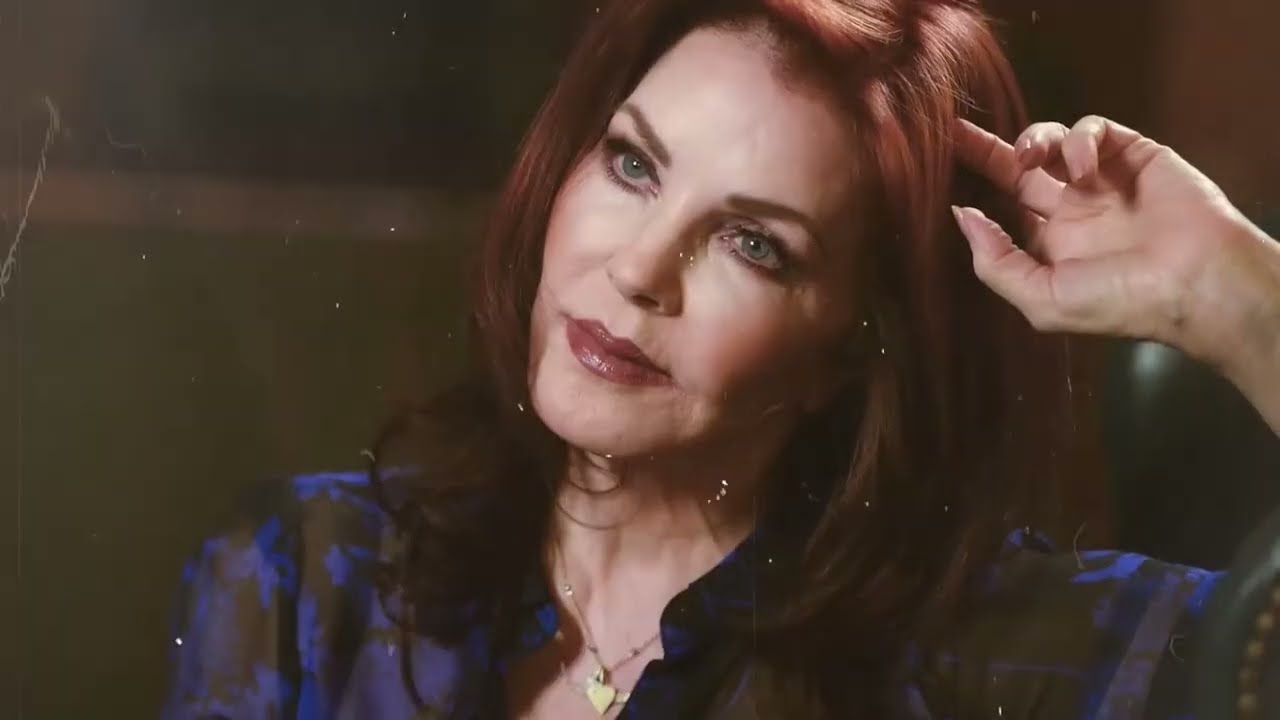
And, eventually, another man in Priscilla’s life.
But Priscilla herself has always insisted on something that makes the story far more difficult than a simple tale of betrayal.
She still loved Elvis when she left him.
Even decades later, when asked about the end of their marriage, she did not describe Elvis as a man she had stopped caring about.
Quite the opposite.
“He was the love of my life,” she said publicly in 2023.
And in her later memoir, looking back across more than half a century, she wrote of loving him deeply even after everything that had happened between them.
So why would a woman leave the man she still considered the love of her life?
The answer was not one scandal.
It was not one affair.
It was not one terrible night.
According to Priscilla, something had been disappearing slowly for years.
Herself.
She had entered Elvis Presley’s world as a teenager.
By the time she finally walked away, she was a wife, a mother and a young woman nearing thirty who had begun asking a frightening question:
Who was Priscilla if she was no longer living Elvis Presley’s life?
That question ultimately changed everything.
She Met Elvis Before She Had Really Become Herself
Priscilla Beaulieu was only 14 when she met 24-year-old Elvis Presley in West Germany in 1959.
Elvis was serving in the U.S. Army.
Priscilla’s stepfather, an Air Force officer, had also been stationed there.
By then, Elvis was already one of the most famous men on Earth.
Priscilla was a ninth-grade girl.
The difference between their worlds could hardly have been greater.
Yet Priscilla later said their connection in Germany was not built around the glamorous image the public imagined.
Elvis talked to her.
He spoke about his fears.
His ambitions.
And especially his mother, Gladys, whose death in 1958 had devastated him.
Priscilla listened.
That became their bond.
Years later, she would describe Elvis during those early meetings as gentle and emotionally open with her.
To a teenage girl, the attention of Elvis Presley must have felt almost impossible to comprehend.
But there was another consequence.
From the beginning, Elvis’s world was enormous.
Priscilla’s was still being formed.
When Elvis returned to the United States in 1960, she did not know whether she would ever see him again.
Eventually they resumed contact.
Then came the possibility of Priscilla moving to Memphis.
Her parents had serious concerns.
Elvis reassured them that she would continue her education and live under supervision.
In 1963, still a teenager, Priscilla moved into the orbit of Graceland.
It was the beginning of the life millions would later envy.
It was also the beginning of a problem Priscilla would not fully understand until years later.
Life at Graceland Revolved Around One Person
Elvis Presley did not live according to ordinary hours.
He slept late.
He stayed awake deep into the night.
His friends, employees and associates moved according to his schedule.
Movies might begin after midnight.
Meals could happen at strange times.
A spontaneous decision could reorganize everyone’s night.
At first, Priscilla wanted nothing more than to be part of it.
She was young.
She was in love.
And Elvis was Elvis.
But joining his world required adaptation.
A great deal of it.
In her memoir, Priscilla described Elvis influencing how she dressed, styled her hair and applied makeup.
He had strong preferences.
He liked dark hair.
Heavy eye makeup.
Specific clothing.
He cared about how they looked together.
Priscilla cooperated.
At the time, much of it felt like pleasing the man she loved.
Decades later, she understood the deeper consequence.
Little by little, she was learning how to become the woman Elvis wanted beside him before she had fully discovered the woman she wanted to be.
She later wrote that Elvis taught her how to dress, walk, behave and express affection in ways that suited him.
At one point, she described him as becoming not only her husband but something almost larger than ordinary human authority in her life.
That dynamic did not mean every moment was miserable.
Priscilla has repeatedly emphasized that there was real affection.
They laughed.
They traveled.
They had intimate private routines that outsiders never saw.
She has resisted attempts to reduce the entire relationship to cruelty.
But love and imbalance can exist at the same time.
And as Priscilla grew older, the imbalance became harder to ignore.
Then Came the Women
Elvis’s movie career repeatedly took him away from Graceland.
And with the movies came rumors.
Co-stars.
Women around the set.
Stories in magazines.
Photographs.
Priscilla was expected to endure a level of public speculation few young women could have been prepared for.
Elvis was one of the most desired men in the world.
The official image had to remain intact.
Privately, Priscilla increasingly understood that she was not the only woman receiving his attention.
She later described the emotional strain of the affairs and rumors surrounding him.
But simply saying “Elvis cheated, so Priscilla left” misses what happened.
She stayed.
For years.
That is one reason the eventual divorce cannot be explained by infidelity alone.
Priscilla had built her identity around being with Elvis.
Walking away from him meant walking away not simply from a husband but from the structure of her entire adult life.
And then, in 1967, that structure became official.
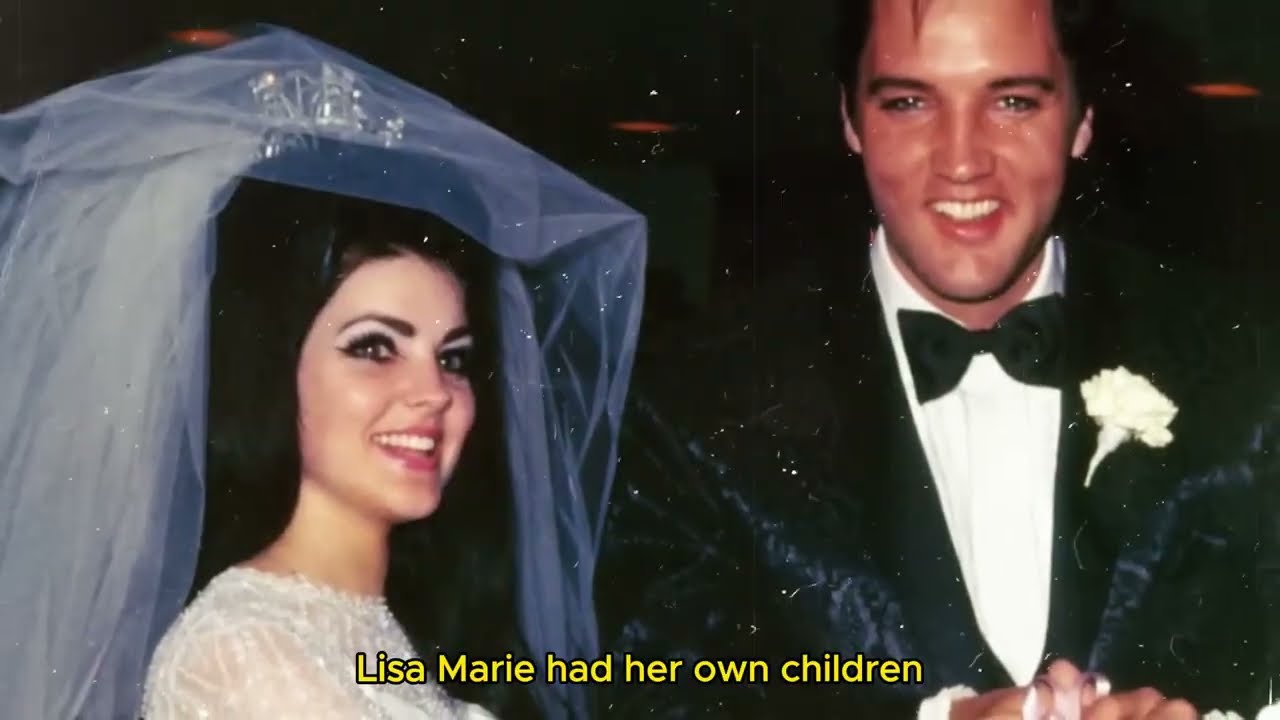
Elvis and Priscilla married in Las Vegas.
She was 21.
He was 32.
To the public, it looked like the final chapter of a fairy tale.
In reality, a completely new chapter was beginning.
Lisa Marie Changed the Balance
Nine months after the wedding, on February 1, 1968, Priscilla gave birth to Lisa Marie Presley.
Both parents adored her.
Photos from the period show a glamorous young couple staring at their baby.
Priscilla later remembered Elvis as nervous about holding Lisa Marie at first, frightened that he might somehow drop her.
There was tenderness there.
But motherhood also changed Priscilla’s priorities in ways Elvis’s life did not always accommodate.
She was no longer simply Elvis’s young companion.
She was a mother.
Lisa Marie needed schedules.
Presence.
Stability.
And Priscilla began discovering how exhausting it could be to serve two completely different worlds.
Elvis still lived at night.
Priscilla increasingly had responsibilities during the day.
In her later memoir, she remembered the impossible tension of trying to remain available to Elvis through the night while also being the mother Lisa Marie needed.
Something had to give.
Increasingly, that something was Priscilla.
Marriage Did Not Give Her the Independence She Expected
Priscilla had entered adulthood inside Elvis’s world.
By her twenties, she began becoming curious about another kind of life.
A life with work.
Interests.
Decisions that belonged to her.
She showed interest in modeling and acting.
Elvis was uncomfortable with the idea.
He had fallen in love with a particular vision of Priscilla.
He liked knowing where she was.
He liked the carefully maintained image of their relationship.
And Priscilla began to understand that becoming more independent could threaten the structure on which their marriage had been built.
Meanwhile, Elvis’s own career exploded again.
His 1968 television comeback special restored much of the cultural power he had lost during the Hollywood years.
Then came Las Vegas.
Touring.
Long absences.
Night after night, Elvis was surrounded by audiences, musicians, employees and admirers.
Priscilla was often home.
The more his world expanded again, the smaller hers could feel.
This is where the real reason for the divorce begins to become visible.
Not in one explosive argument.
In accumulation.
Even Their Intimate Relationship Changed
Priscilla has also been unusually candid about another painful part of the marriage.
After Lisa Marie was born, the physical relationship between Elvis and Priscilla changed.
In her account, she increasingly felt unfulfilled as a woman.
Elvis could be loving.
He could be affectionate.
But something between them had shifted.
The young woman who had spent years trying to meet every expectation began realizing she had desires and emotional needs of her own.
That realization was uncomfortable.
For years, her world had been organized around what Elvis needed.
What he liked.
What he expected.
Now she was beginning to ask:
What do I need?
The question seems ordinary.
For Priscilla, it was revolutionary.
Karate Gave Her Something She Had Not Felt in Years
Elvis loved karate.
Eventually, Priscilla began taking lessons too.
Something unexpected happened.
The physical training made her feel strong.
Independent.
Competent.
She could learn something that belonged to her.
And through karate she met instructor Mike Stone.
Priscilla eventually became romantically involved with him.
That relationship has been used for decades as a convenient explanation for the collapse of the Presley marriage.
Priscilla cheated.
She found another man.
Marriage over.
But Priscilla’s own later account is more complicated.
She acknowledged Mike Stone as an important catalyst.
He did not magically create problems that had never existed.
Instead, the relationship forced her to confront problems she had spent years trying not to see.
With Stone, Priscilla experienced the possibility of being treated as a woman with a separate identity rather than simply as Elvis Presley’s wife.
Suddenly, another life seemed possible.
That did not mean she stopped loving Elvis.
It meant love was no longer enough to erase everything else.
“I Needed a Life of My Own”
This is the line at the center of the entire story.
Priscilla did not say she woke up one morning and suddenly stopped loving Elvis.
She said she needed her own life.
For years, she had lived inside his.
His schedule.
His friends.
His career.
His image.
His preferences.
His fame.
Even people meeting Priscilla were often interested primarily because she belonged to Elvis.
She had spent much of adolescence becoming “Elvis’s girl.”
Then Elvis’s fiancée.
Then Elvis’s wife.
Then the mother of Elvis’s child.
But where, inside all those identities, was Priscilla?
By the early 1970s, she was determined to find out.
That decision did not arrive without guilt.
Priscilla knew exactly what she was leaving.
She knew Elvis could be vulnerable beneath the public confidence.
She knew his insecurities.
She knew his grief.
She had been listening to those fears since Germany.
But remaining inside a marriage simply because leaving might hurt Elvis was no longer sustainable.
She had a daughter.
And increasingly, she believed Lisa Marie needed a mother who had an identity of her own.
In 1972, Priscilla separated from Elvis.
Their divorce was finalized the following year.
She was 28.
A relationship that had shaped almost half her life was legally over.
But the extraordinary thing is what happened next.
They Walked Out of Divorce Court Together
Celebrity divorces are usually remembered through hostility.
Lawyers.
Money.
Custody battles.
Public accusations.
Elvis and Priscilla certainly had complicated emotions, but their final separation did not become a public war.
On October 9, 1973, their divorce was finalized in Santa Monica.
Photographers waited outside.
Then Elvis and Priscilla emerged.
Holding hands.
The image remains striking even now.
They had just ended their marriage.
Yet they did not look like two people determined to destroy one another.
Because according to Priscilla, divorce did not eliminate love.
“It was like we never left each other,” she would later say when discussing the years after their separation.
They remained connected through Lisa Marie.
They spoke.
Elvis could still call her.
Priscilla remained emotionally invested in what happened to him.
Marriage had failed.
The relationship did not simply disappear.
Elvis’s Health Became Harder to Ignore
The Elvis Presley of the mid-1970s was changing.
The man who had returned to the stage in black leather in 1968 had entered another, darker period.
Touring became relentless.
His weight fluctuated.
His health declined.
Prescription medication had become a growing problem.
Priscilla, like others around him, saw worrying changes.
In her later memoir, she remembered Elvis becoming bloated, exhausted and distracted, and she became increasingly alarmed by his dependence on prescription drugs.
But timeline matters.
This deterioration should not be turned into a simple explanation for the divorce.
Priscilla had already separated from Elvis before the most severe final stages of his decline.
She did not leave because one mysterious medical file suddenly revealed a secret.
She left because years of imbalance had convinced her the marriage could no longer allow her to become herself.
The drugs became part of the tragedy that followed.
They were not the single hidden key that unlocked the divorce.
That distinction makes the story sadder, not less dramatic.
Because Priscilla did not escape and stop caring.
She watched from outside the marriage as someone she still loved became increasingly difficult to reach.
Divorce May Have Made Their Relationship Easier
There is a painful irony in Priscilla’s recollections.
Once they were no longer married, some of the pressure disappeared.
She no longer had to perform the role of the perfect Presley wife.
Elvis no longer had the same authority over her daily life.
They could speak to each other simply as two people with an enormous shared history and a daughter they both loved.
Priscilla was finally building something outside Elvis.
She opened the Bis & Beau boutique in Beverly Hills with Olivia Bis.
She developed friendships and professional interests.
For the first time in adulthood, she could make choices without first asking how they fit into Elvis Presley’s world.
And Elvis remained present.
That is why describing the divorce as an act of rejection has never quite fit.
Priscilla had not decided Elvis meant nothing to her.
She had decided she could love him without continuing to be his wife.
There is a difference.
Then the Call Came in August 1977
On August 16, 1977, Elvis Presley died at Graceland.
He was 42.
The news stopped much of the world.
For Priscilla, the loss was far more personal.
He was her former husband.
The father of her daughter.
The man who had shaped her entire transition from girlhood into adulthood.
The person she had loved enough to leave.
Whatever grievances remained could no longer be resolved in another conversation.
Elvis was gone.
Priscilla was 32.
Lisa Marie was nine.
And suddenly the task Priscilla had begun when she left the marriage — creating a life of her own — had become inseparable from another responsibility.
Protecting her daughter’s relationship with her father’s memory.
Priscilla Could Have Walked Away From Elvis’s Legacy
She didn’t.
Years later, Graceland faced serious financial problems.
Maintaining the estate was enormously expensive.
The Presley estate was not producing enough cash to sustain it indefinitely.
Priscilla became central to the decision to open Graceland to the public in 1982.
It was a gamble.
It transformed the property.
Graceland became one of the most famous private homes in America and a lasting center of the Elvis legacy.
There is another irony here.
Priscilla left Elvis because she needed a life beyond his world.
Yet after his death, she became one of the most important people in preserving that world for everyone else.
That does not mean she returned to being defined solely by Elvis.
She also acted.
Built businesses.
Raised Lisa Marie.
Created a separate public identity.
But she never pretended Elvis had not mattered.
The task was learning how to let him matter without disappearing inside him again.
Age Changed the Way She Looked Back
Priscilla has told pieces of this story for decades.
Her 1985 memoir Elvis and Me revealed intimate details about their relationship.
She spoke about Elvis’s control over her appearance.
His affairs.
The loneliness.
The sexual difficulties.
Her own infidelity.
The painful decision to leave.
In 2023, Sofia Coppola adapted Priscilla’s story into the film Priscilla.
Watching her youth recreated on screen was emotional.
At the Venice Film Festival, Priscilla became visibly moved while discussing the relationship.
Again, she pushed back against the simplest interpretation.
She had not left because love vanished.
She said Elvis remained the love of her life.
The lifestyle had become impossible.
Then, in 2025, Priscilla published another memoir, Softly, As I Leave You: Life After Elvis.
The title itself says something important.
Leaving was not one violent break.
It was a long process.
And at 80, looking back from the distance of decades, Priscilla wrote with both affection and honesty.
She could love Elvis deeply and still describe behavior that hurt her.
She could protect memories of tenderness without pretending the marriage had been healthy in every way.
Age had allowed both truths to exist at once.
The Real Story Is More Difficult Than “Elvis Was the Villain”
Modern audiences sometimes want a clean judgment.
Elvis was bad.
Priscilla was good.
Or Elvis was misunderstood and Priscilla betrayed him.
Real relationships rarely fit either version.
There was an enormous imbalance from the beginning.
Priscilla was 14 when they met.
Elvis was 24 and already globally famous.
By the time she lived at Graceland, his preferences shaped much of her life.
He could be controlling.
He was repeatedly unfaithful.
His expectations limited Priscilla’s ability to discover who she was outside him.
Those facts matter.
So do others.
Priscilla remembers warmth.
Humor.
Emotional intimacy.
A father who loved Lisa Marie.
A man who shared fears with her that he did not show the public.
A former husband she remained connected to after the marriage ended.
One truth does not erase the other.
That is precisely why the relationship still fascinates people more than half a century later.
She Didn’t Leave Because She Had Stopped Loving Him
This is the point Priscilla has returned to again and again.
For years, her identity had been absorbed into something larger.
Elvis Presley’s girlfriend.
Elvis Presley’s wife.
The woman beside the King.
She had become famous before she had learned who she was without him.
By the end of the marriage, that was no longer enough.
She wanted interests of her own.
Work of her own.
Opinions of her own.
A schedule that did not revolve entirely around someone else.
She wanted to be a mother without spending every night trying to remain available to Elvis.
She wanted to grow up.
And growing up eventually required walking away from the person around whom her entire youth had revolved.
That is far more painful than simply falling out of love.
Maybe the Hand-Holding Outside the Courthouse Told the Whole Story
There is one image worth returning to.
October 1973.
The divorce is final.
Elvis and Priscilla step outside.
Cameras are waiting.
They hold hands.
At first glance, it makes no sense.
People getting divorced are supposed to walk in opposite directions.
But perhaps that photograph contains the real explanation.
Priscilla was not trying to erase Elvis.
She was separating love from marriage.
The marriage required her to remain inside his world.
Love did not.
She could care about him and still leave.
She could want him to be healthy and still understand that she could not make him healthy.
She could share a daughter with him without giving him control over her identity.
And she could remember the frightened young soldier in Germany who talked to her about losing his mother while also acknowledging the adult man whose behavior had hurt her.
That is what makes the story feel different when Priscilla tells it now.
There is no neat ending.
At 81, Priscilla No Longer Needs the Fairy Tale
More than six decades have passed since that teenage girl first sat listening to Elvis talk in Germany.
The girl grew older.
She became a wife.
A mother.
A divorcee.
An actress.
A businesswoman.
A grandmother and great-grandmother.
She survived Elvis.
She survived the loss of her daughter Lisa Marie in 2023.
She has spent most of her life being asked the same questions about a man who died when she was only 32.
Why did you leave him?
Did you still love him?
What was Elvis really like?
Perhaps the most truthful answer is the one that requires no bombshell.
No secret prescription ledger.
No newly discovered tape.
No dramatic confession whispered into a camera.
Priscilla has been telling us the answer for years.
She loved him.
And she left him.
Both statements are true.
She did not need to stop loving Elvis Presley in order to understand that staying married to him was costing her too much of herself.
She needed something that sounds almost painfully ordinary compared with the extravagance of Graceland.
A life.
Her own life.
And perhaps that is why the story still resonates with people who have never lived inside a mansion, never married a superstar and never had photographers waiting outside divorce court.
Because beneath all the fame, it is a very human dilemma.
How much of yourself can you give to someone you love before there is too little of you left?
Priscilla eventually answered that question.
She walked away.
Not because Elvis Presley had stopped mattering.
But because Priscilla Presley finally had to matter too.