When Claudine Longet stood before a Colorado judge in January 1977, waiting to learn whether she would be sent to jail for the shooting death of her lover, one familiar man was sitting in the courtroom.
He was not her husband.
Their marriage had already ended.
He was Andy Williams.
The smooth-voiced singer whose Christmas television specials had once shown Claudine and their children as part of an almost impossibly polished American family sat through the hearing and wiped tears from his eyes.
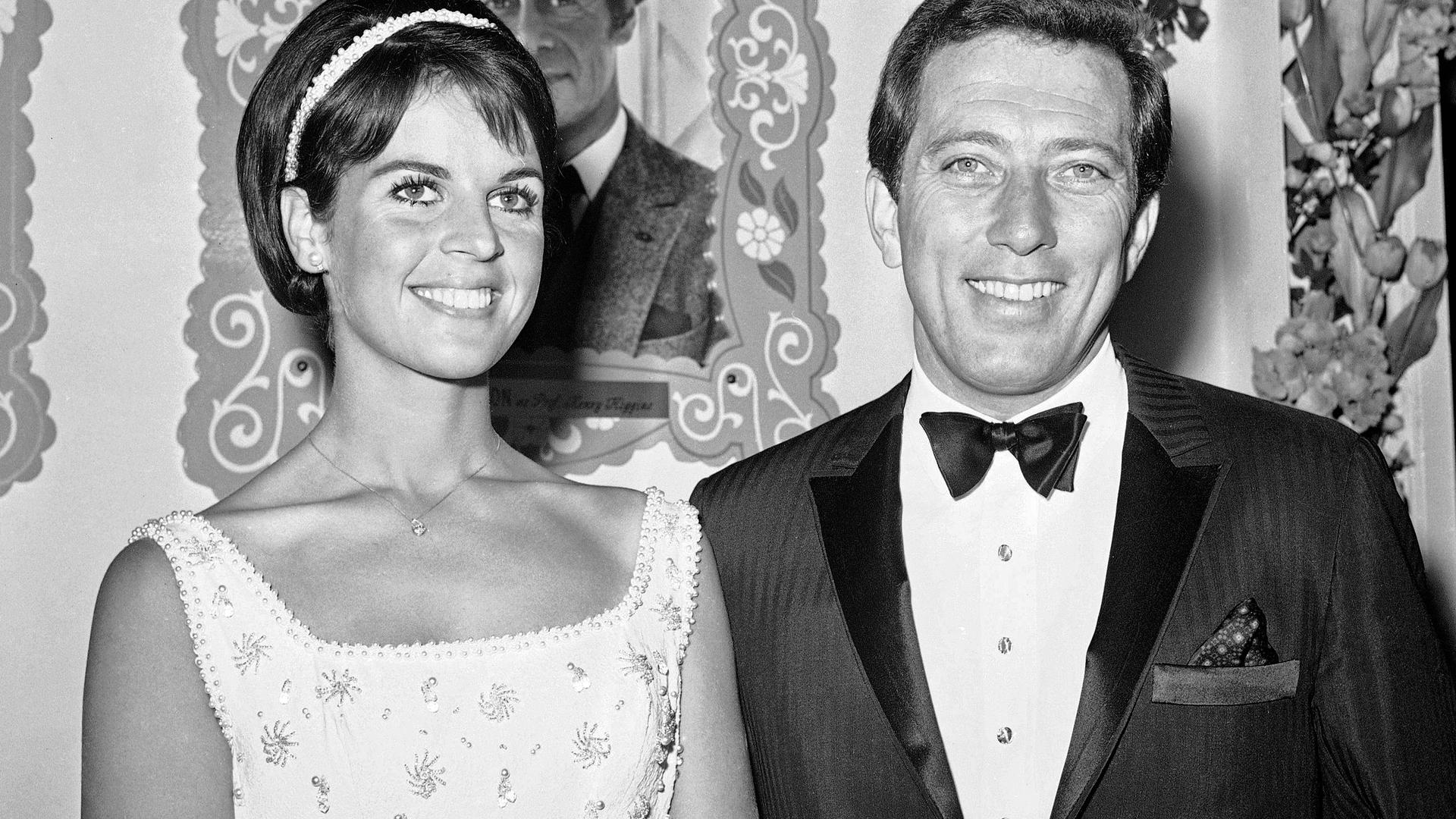
When the judge sentenced his former wife to 30 days in jail, Williams admitted afterward that he had hoped she would not be imprisoned.
Years later, he explained why he had stood by her through one of the most notorious celebrity trials of the 1970s.
He believed her.
“I thought she was innocent,” Williams said. “I thought it was an accident.”
But there was another reason.
Their three children were watching their family collapse under national attention, and Williams believed his job was to protect them.
That may be the most revealing part of a story usually remembered for scandal.
Because before Claudine Longet became the woman at the center of a fatal shooting in Aspen, she had been Andy Williams’ young French wife, a singer and actress welcomed into millions of American living rooms.
And long after their marriage failed, the bond between them proved much harder to break than a divorce decree.
When Longet died in May 2026 at the age of 84, nearly fifty years had passed since the shooting that ended her public career.
She had spent most of those decades away from the spotlight.
Yet the questions surrounding that night in Aspen never completely disappeared.
Neither did the memory of the man who stood beside her when nearly everyone else was judging her.
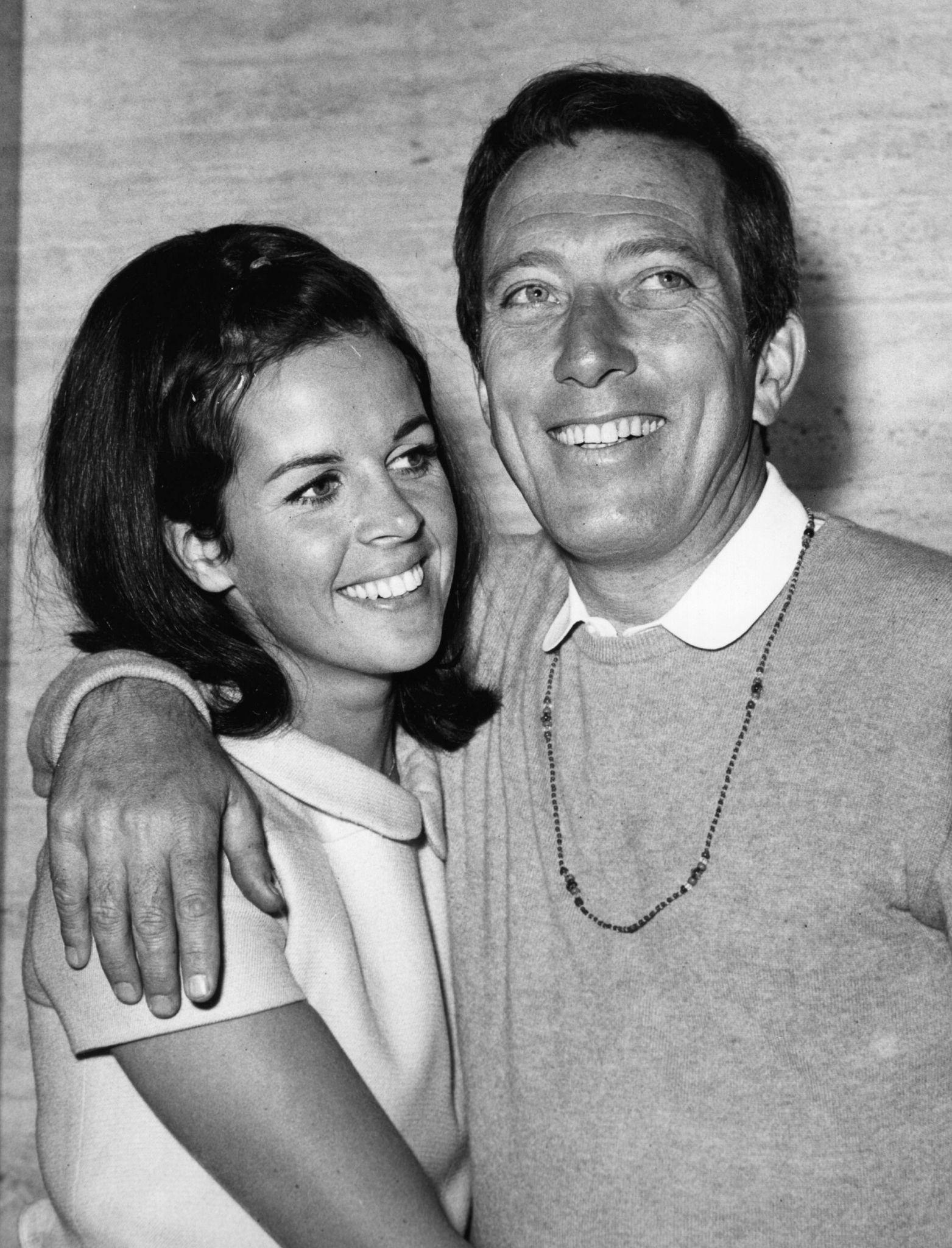
Before the Scandal, There Was a Broken-Down Car
Claudine Longet was born in Paris on January 29, 1942.
At 18, she left France for Las Vegas after being hired to dance in the Folies Bergère revue at the Tropicana.
It was an extraordinary leap.
One year she was a teenager in Paris.
The next she was performing in the neon world of Las Vegas at the beginning of the 1960s.
Then, according to Andy Williams’ own recollection, fate intervened in the most ordinary way possible.
A car stopped working.
Longet and a friend were pushing it along a Las Vegas road when Williams and his manager drove past.
They stopped to help.
Williams later joked that gallantry was not the only reason.
The two young women were attractive.
He noticed.
Within roughly a year, Andy Williams and Claudine Longet were married.
The year was 1961.
He was becoming one of America’s most successful popular singers.
She was still at the beginning of her career.
Their lives were about to become very public.
They Became Part of America’s Living Room
Andy Williams’ career exploded during the 1960s.
His recording of “Moon River” became inseparable from his image.
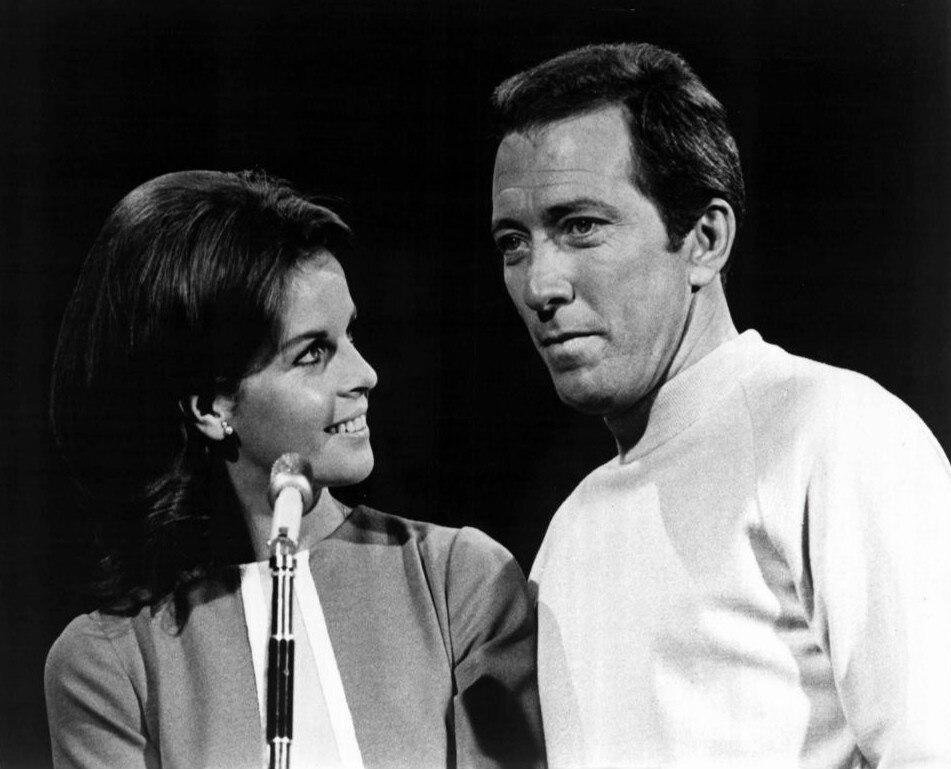
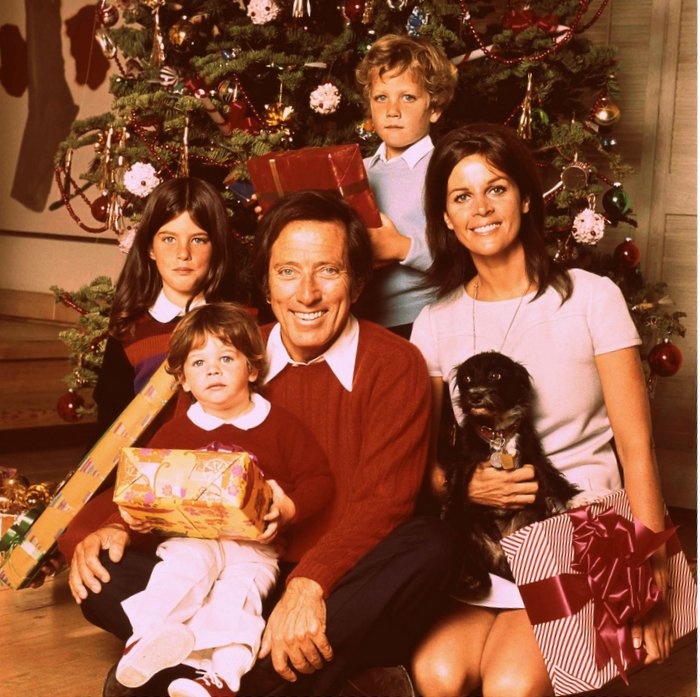
Then came The Andy Williams Show, the elegant sweaters, the effortless singing and the Christmas specials that became annual television traditions.
For viewers of a certain generation, Andy Williams did not simply appear on television.
He arrived every year like part of the holidays.
And Claudine became part of that image.
With her soft French accent, delicate singing voice and European style, she seemed almost perfectly suited to the polished television world around her husband.
She developed a career of her own.
Longet recorded albums, appeared on television and acted in movies.
Her best-known film role came opposite Peter Sellers in Blake Edwards’ 1968 comedy The Party.
She also appeared on Andy’s programs.
Eventually, their children appeared as well.
Noelle.
Christian.
Robert, known as Bobby.
To audiences watching at home, the Williams family seemed to embody a particular version of 1960s glamour.
Successful husband.
Beautiful wife.
Three children.
Television.
Music.
California.
Christmas.
But a television image can hide a great deal.
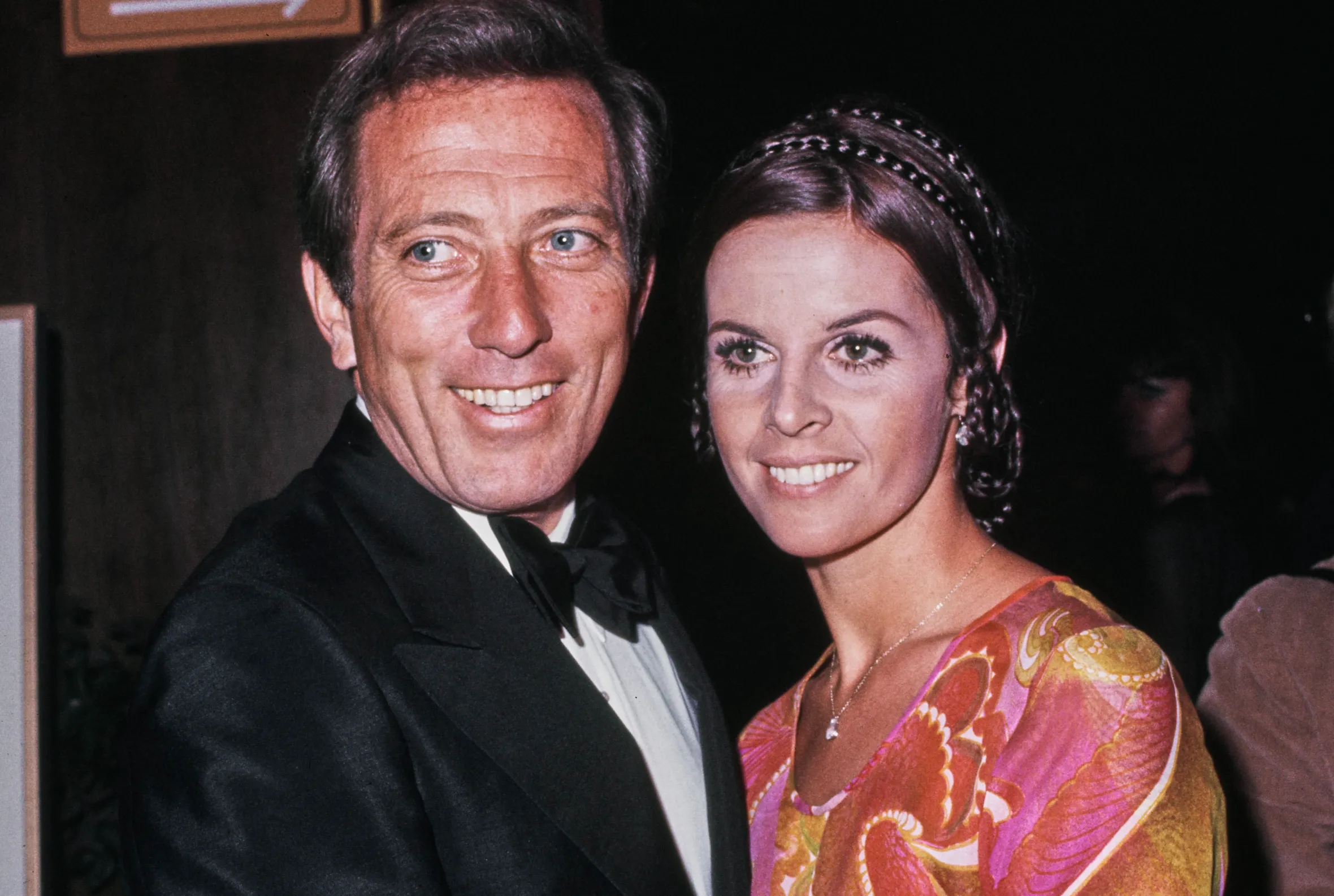
Andy Later Took Much of the Blame for the Marriage Failing
The marriage did not suddenly collapse in 1975.
Andy and Claudine had already been separated for years.
They formally separated in 1970 and eventually divorced in 1975.
By then, both had begun living increasingly separate lives.
What is striking is how Andy Williams later talked about it.
He did not spend his later years publicly blaming Claudine.
He blamed himself.
In a 2009 CBS interview, Williams said they had simply grown apart.
Then he added something much more personal.
He had rarely been home.
His career consumed his time.
When asked whether he regretted it, Williams did not hesitate.
He regretted what it had done to the marriage and to the children.
“It was all my fault,” he said.
“I just didn’t take care of my marriage.”
That admission complicates the clean-cut television picture.
Behind the Christmas specials was a singer constantly working, touring and building a career.
Behind the glamorous marriage was a young woman gradually creating a separate life.
Yet even after they separated, Andy and Claudine did not behave like bitter enemies.
They continued raising their children.
Longet and the children continued appearing on some of Williams’ Christmas programs even after the marriage had effectively ended.
They remained connected.
That detail would become crucial in 1976.
Then Claudine Met Spider Sabich
After separating from Williams, Longet eventually became involved with Vladimir “Spider” Sabich.
Sabich was one of the most recognizable American ski racers of his generation.
He had competed in the 1968 Winter Olympics and later became a professional skier.
He was handsome, athletic and popular in Aspen.
Longet and Sabich reportedly met at a celebrity ski event in the early 1970s.
Their relationship grew serious.
Eventually, Longet and her children were living with Sabich in his Aspen-area home.
From a distance, the relationship looked like another glamorous chapter.
A French entertainer.
A celebrated skier.
Aspen.
Parties.
Mountains.
Famous friends.
But by early 1976, there were reports that the relationship had become strained.
What exactly was happening between them remains part of the uncertainty surrounding what came next.
What is certain is the date.
March 21, 1976.
That afternoon, Spider Sabich was shot.
One Bullet Changed Everything
Sabich was inside the home he shared with Longet when he suffered a single gunshot wound to the abdomen from a .22-caliber firearm.
He died soon afterward.
Longet did not deny that she had been holding the gun.
Her explanation was that the shooting was accidental.
According to her account, Sabich had been showing her how to handle the weapon when it discharged.
Investigators were not satisfied simply accepting that explanation.
Questions immediately followed.
What had happened between the couple before the shot?
Where was each person standing?
Why had the weapon fired?
Was the relationship ending?
Was the shooting truly accidental?
In a town where Sabich was well known and well liked, emotion was intense.
And once the name Claudine Longet entered the story, the case became national news.
The former wife of Andy Williams.
The elegant French singer Americans had seen on television.
The Olympic skier.
The Aspen mansion.
The gun.
It had every element the media could magnify.
Then Andy Williams did something many people did not expect.
He showed up.
Her Ex-Husband Walked Beside Her Into Court
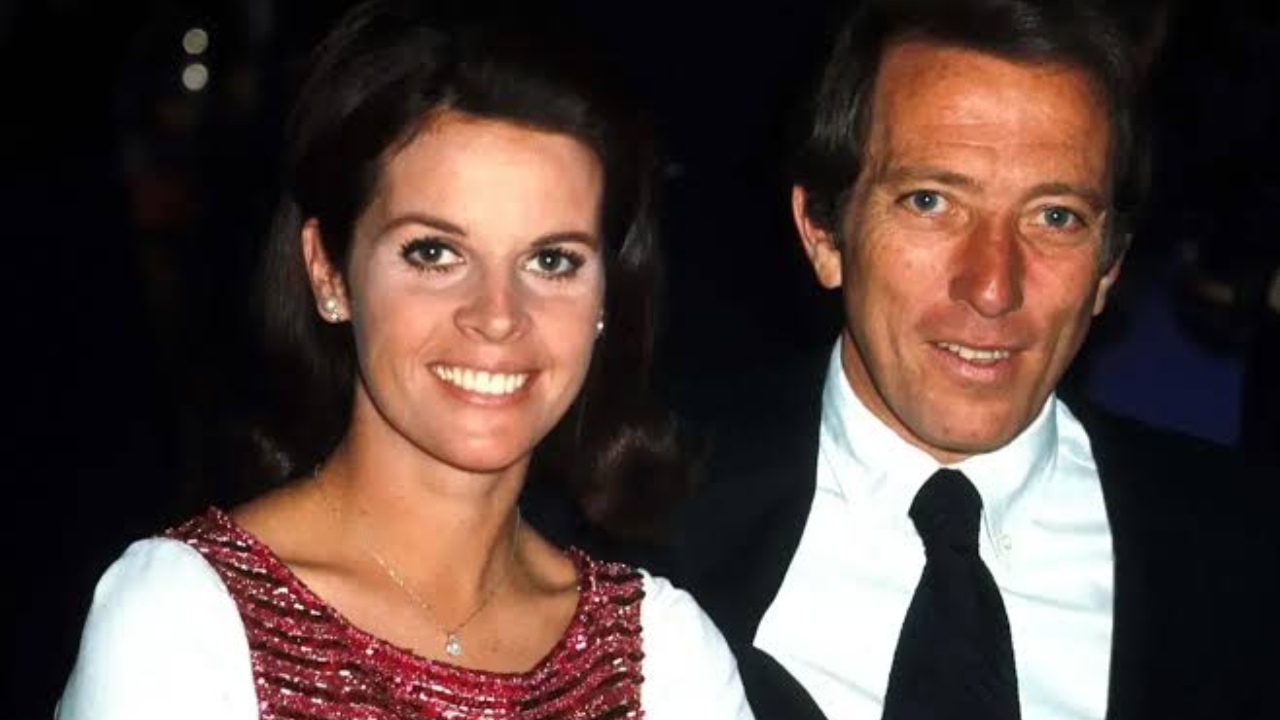
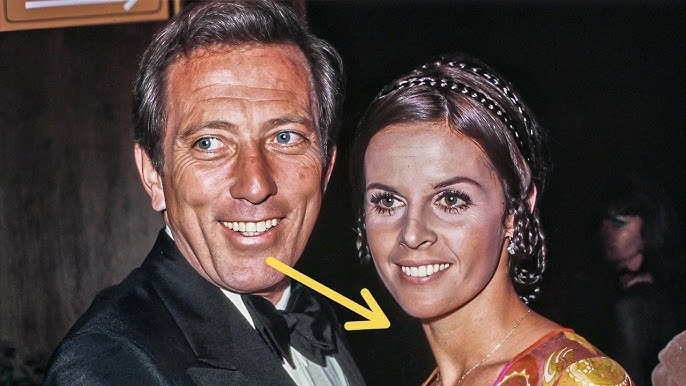
Photographs from the period remain striking.
Claudine Longet walking toward the courthouse.
Andy Williams beside her.
They had already been divorced.
Sabich had been her new partner.
Yet Williams publicly supported her.
CBS later recalled that he escorted Longet to court proceedings, testified to her character and helped support their family during the case.
To people who expected jealousy or bitterness, the loyalty seemed remarkable.
Williams later explained it in unusually simple terms.
He believed the shooting had been an accident.
But he also had three children with Claudine.
They were not spectators to a celebrity scandal.
This was their mother.
And Andy was still their father.
“I wanted to make sure that I took care of them as best I could,” he said decades later.
That distinction is important.
Standing beside Longet did not require Williams to erase the end of their marriage.
It did not mean he was pretending they were still a couple.
It meant that divorce had not erased their family.
The Investigation Made Serious Mistakes
The case against Longet became complicated before the jury ever began deliberating.
Law-enforcement officials had gathered evidence that prosecutors wanted to use.
But some of that evidence had been obtained improperly.
A blood sample was taken from Longet without a warrant.
Other material, including portions of her diary, also became the subject of legal challenges.
The judge excluded evidence because of those procedural problems.
This later fueled competing interpretations of the case.
People convinced Longet was guilty believed critical evidence had been kept from the jury.
People sympathetic to Longet emphasized that constitutional rules on evidence apply even in high-profile cases.
The important point is not to pretend we know what the excluded material would have proved.
The important point is that the investigation itself created legal problems that affected what jurors were permitted to hear.
Longet went to trial facing a serious charge of reckless manslaughter.
The courtroom became one of the most watched stages in America.
But the final verdict was not what either extreme expected.
The Jury Rejected the Most Serious Charge
After days of deliberation in January 1977, jurors did not convict Longet of the felony charge prosecutors had originally pursued.
Instead, they found her guilty of the lesser misdemeanor offense of criminally negligent homicide.
That legal distinction mattered.
The jury did not conclude that prosecutors had proved the more serious accusation.
But neither did it completely accept a version of events in which Longet bore no criminal responsibility.
The verdict left room for controversy.
Aspen residents reacted angrily.
Some believed the punishment would never match the fact that a young man was dead.
Others argued that celebrity had influenced the case.
Longet continued to maintain that the shooting had been accidental.
Then came sentencing.
And Andy Williams was there again.
Andy Williams Wiped Away Tears
On January 31, 1977, Longet appeared before Judge George Lohr.
She pleaded for mercy, speaking about her three children and the damage a jail sentence could do to them.
The judge sentenced her to 30 days in jail.
He also imposed two years of probation and a $250 fine.
Contemporary reporting noted that the sentence allowed unusual flexibility over when the jail term would be served within the court’s limits.
To many observers, 30 days seemed extraordinarily light after a death.
The reaction in Aspen was bitter.
But inside the courtroom, Andy Williams was visibly emotional.
The Associated Press reported that he wiped tears from his eyes during the hearing.
Afterward, he said he had hoped she would not receive jail time.
Think about how strange that scene must have appeared to the public.
This was the man whose marriage to Claudine had already ended.
The man whose family image with her had once been broadcast into American homes.
Her new lover was dead.
She had been convicted.
And Andy was still sitting there.
That scene may explain more about their relationship than any glamorous photograph from the 1960s.
Thirty Days Could Not End the Story
Longet served the jail sentence.
The criminal case was over.
The consequences were not.
Spider Sabich’s parents filed a $1.3 million civil lawsuit against her.
That case was eventually settled.
And according to later reports, the agreement included a provision barring Longet from publicly discussing Sabich, the shooting and the settlement.
That matters when looking back on her later silence.
For decades, people wondered why Claudine never gave the definitive interview.
Why no major memoir?
Why no televised confession?
Why no attempt to reclaim the story?
The settlement provides at least part of the answer.
Silence was not merely a publicity choice.
There were legal constraints around what she could publicly say.
As a result, one of the most discussed celebrity cases of the 1970s entered a strange state.
Everyone else could talk about it.
Journalists.
Neighbors.
Lawyers.
Commentators.
Comedians.
Fans.
Critics.
But the woman at the center of the case largely disappeared from the public conversation.
Popular Culture Was Merciless
The trial did not remain inside legal reporting.
It became entertainment.
Saturday Night Live mocked the case.
The Rolling Stones recorded a song titled “Claudine” based on the scandal, though it remained officially unreleased for decades.
The woman once known for a gentle voice and television appearances was now a punch line connected to a death.
There was no realistic path back to the career she had known before 1976.
Longet largely left show business.
Her recordings and old television appearances remained.
But her public identity had changed permanently.
Ask someone who remembered her from the early 1960s and they might think of Andy Williams.
Ask someone who knew her name after 1976 and they were far more likely to think of Spider Sabich.
A single afternoon had overtaken everything that came before it.
Then Came Another Unexpected Chapter
One of the lawyers on Longet’s defense team was Ron Austin.
Their connection eventually became personal.
Longet later married him.
They remained together for decades and lived largely outside the celebrity spotlight.
That detail has always added another strange twist to an already unusual story.
The young French performer who had once married one of America’s most recognizable singers eventually married one of the men who had helped defend her in the trial that ended her career.
But there was no great second act in Hollywood.
No comeback tour.
No prestige interview explaining everything.
No attempt to recreate the Claudine Longet of the 1960s.
She withdrew.
And she stayed withdrawn.
Andy Williams Went Back to the Stage
Andy Williams continued.
His career survived the scandal that had engulfed his former wife.
He recorded.
Performed.
Eventually built a major presence in Branson, Missouri.
He remarried in 1991.
But he never seemed interested in rewriting the Claudine chapter as a story of betrayal.
When he discussed the marriage years later, his regret focused heavily on his own failures.
When he discussed the shooting, he remained clear about his belief that it had been an accident.
And when asked why he supported her, he returned to the children.
There is something very old-fashioned in that loyalty.
Not necessarily romantic.
Not necessarily an attempt at reconciliation.
Family.
Whatever had happened between Andy and Claudine as husband and wife, they remained the parents of Noelle, Christian and Bobby.
Williams appears to have understood that the moment his ex-wife entered a criminal courtroom, his children entered it emotionally too.
So he stood beside her.
The Christmas Specials Look Different in Retrospect
For older viewers, this may be the most bittersweet part.
Old footage still exists of Andy Williams, Claudine and their family during the years before everything changed.
The sweaters.
The songs.
The children.
The carefully lit television sets.
The image of domestic happiness.
Knowing what came later can make those clips uncomfortable.
But perhaps it should not erase them.
People are rarely only the worst thing that eventually happens in their lives.
The marriage had genuine history.
There were children.
There were years of work and family life.
There was friendship even after separation.
The Christmas television image was incomplete.
But that does not automatically make every smile false.
Real families can be happy during one chapter and fractured in another.
That may be one reason the Andy-Claudine story still resonates.
The public likes stories with clean categories.
Happy marriage.
Bad divorce.
New romance.
Crime.
Punishment.
Life almost never cooperates.
Andy Williams Died Without Turning Against Her
Williams died in 2012 at the age of 84 after battling bladder cancer.
By then, nearly four decades had passed since the Sabich case.
He had every opportunity to distance himself from Claudine.
Instead, when the subject came up publicly, he continued to describe the shooting as something he believed was accidental.
He also continued to own his share of responsibility for the failure of their marriage.
That does not settle the legal or factual questions surrounding Sabich’s death.
Andy Williams was not in the room when the gun fired.
His belief was exactly that:
his belief.
But as evidence of the relationship between Andy and Claudine, it matters enormously.
He knew her as a wife.
An ex-wife.
The mother of his children.
And even after their marriage ended in ways he regretted, he refused to reduce her to a courtroom headline.
Then, in 2026, Claudine Longet Died Too
On May 14, 2026, Claudine Longet died at the age of 84.
Her nephew confirmed the death.
No cause was publicly announced.
The news brought the old story back into headlines.
For many younger readers, the name meant little.
For Americans who remembered 1960s television, Andy Williams’ Christmas programs or the Aspen trial, it reopened a time capsule.
More than sixty years had passed since the French dancer and the American singer met because of a broken-down car.
Fifty years had passed since Spider Sabich died.
Almost half a century had passed since Longet’s conviction.
And still, there was no final public account from her that resolved every argument.
Maybe there never could have been.
The criminal verdict answered a legal question.
It did not erase uncertainty.
Longet said accident.
Prosecutors challenged her account.
Police mistakes prevented some material from being considered.
The jury convicted her of a lesser offense.
Sabich was still dead.
And those facts remained unchanged.
The Story Has Two Tragedies
It is easy to call this “the tragic story of Claudine Longet.”
But that framing risks forgetting Spider Sabich.
He was 31 when he died.
He was not simply a character in someone else’s celebrity scandal.
He was a successful athlete with a family, friends and a life that ended abruptly from a bullet fired from a gun Longet was holding.
Whatever one believes about intent, his death is the central tragedy.
The second tragedy is what happened to everyone connected to that moment.
Sabich’s family lost a son and brother.
Claudine’s children watched their mother become a national scandal.
Longet’s career disappeared.
Andy Williams found himself standing publicly beside the woman he had divorced as cameras recorded every expression.
There is no version of that story in which somebody truly wins.
Perhaps That Is Why Andy’s Presence Still Matters
The shooting will always be the part that gets attention.
But Andy Williams’ behavior gives the story its emotional depth.
He did not have to accompany Claudine.
He did not have to speak in her defense.
He did not have to sit through sentencing.
He could have said the divorce had ended his responsibility.
Instead, he saw a former wife in crisis and three children who still needed both parents.
So he showed up.
Years later, he did not make himself the hero of the story.
He said he believed Claudine.
He said he wanted to take care of their children.
And when reflecting on the marriage itself, he blamed much of its failure on his own absence.
That is not how celebrity divorces are usually remembered.
It is certainly not how scandals are usually sold.
But it is probably why the story remains more interesting than a simple tale of fame followed by disgrace.
Fame Made Claudine Visible. Scandal Made Her Impossible to See Clearly.
Before 1976, Claudine Longet was often viewed through Andy Williams.
His beautiful French wife.
The mother appearing with their children.
The soft-voiced singer.
After 1976, she was viewed almost exclusively through Spider Sabich’s death.
The defendant.
The woman who received 30 days.
The celebrity some believed had been treated too gently.
Both images flatten a complicated person.
Neither tells us everything.
And because Longet spent so much of her remaining life in privacy—and because the civil settlement limited what she could publicly discuss—the public never received the neat final confession people often expect from famous scandals.
She simply lived on.
Year after year.
Decade after decade.
Out of sight.
One Moment Did Redefine Her Life
The original story is right about one thing.
A single moment can change the way an entire life is remembered.
Claudine Longet had already been:
a dancer,
a singer,
an actress,
a wife,
a mother,
an immigrant who built a career in American entertainment.
After March 21, 1976, nearly all of that became background.
One gunshot became the headline.
But if we look only at the scandal, we miss the part of the story that is perhaps most human.
The marriage before it.
The children caught inside it.
The husband who regretted being away too much.
The divorce that somehow did not become hatred.
And the extraordinary courtroom image of Andy Williams sitting there after the marriage was over, wiping tears from his eyes as his former wife was sentenced.
They Were No Longer Husband and Wife
That is the detail worth remembering.
Andy Williams and Claudine Longet were not trying to save their marriage in 1977.
That marriage was finished.
He had his life.
She had hers.
Spider Sabich had been the man in Claudine’s life when tragedy struck.
And yet when the world turned toward Claudine with cameras, questions and accusations, Andy stepped back into the frame.
Not as a lover.
Not as a husband.
As family.
Maybe that was because he believed her version of what happened.
Maybe it was because of guilt over the way their own marriage had failed.
Certainly, by his own account, it was because of their children.
Whatever combination of feelings brought him into that courtroom, he stayed.
Nearly fifty years later, that may be the one element of the story that still feels unexpected.
Fame had brought Andy Williams and Claudine Longet together.
Divorce had separated them.
A death and a criminal trial brought them publicly side by side again.
Then life carried them apart once more.
Andy died in 2012.
Claudine followed in 2026.
Spider Sabich had been gone since 1976.
The people at the center of the story are now all gone.
What remains are the records.
The photographs.
The verdict.
The old Christmas footage.
And one image that seems almost impossible until you understand the history behind it:
Claudine Longet sitting in court as the judge prepared to send her to jail.
And nearby, the ex-husband she had left years before—
Andy Williams,
still there.