At 70, Mr Bean Finally Confirms What We All Suspected…
For more than three decades, Rowan Atkinson has been responsible for one of the strangest achievements in television comedy.
He made much of the world laugh with a character who barely spoke.
Mr. Bean did not need clever political jokes.
He did not need topical references.
He did not even need viewers to understand English.
He needed a face.
A teddy bear.
A Mini.
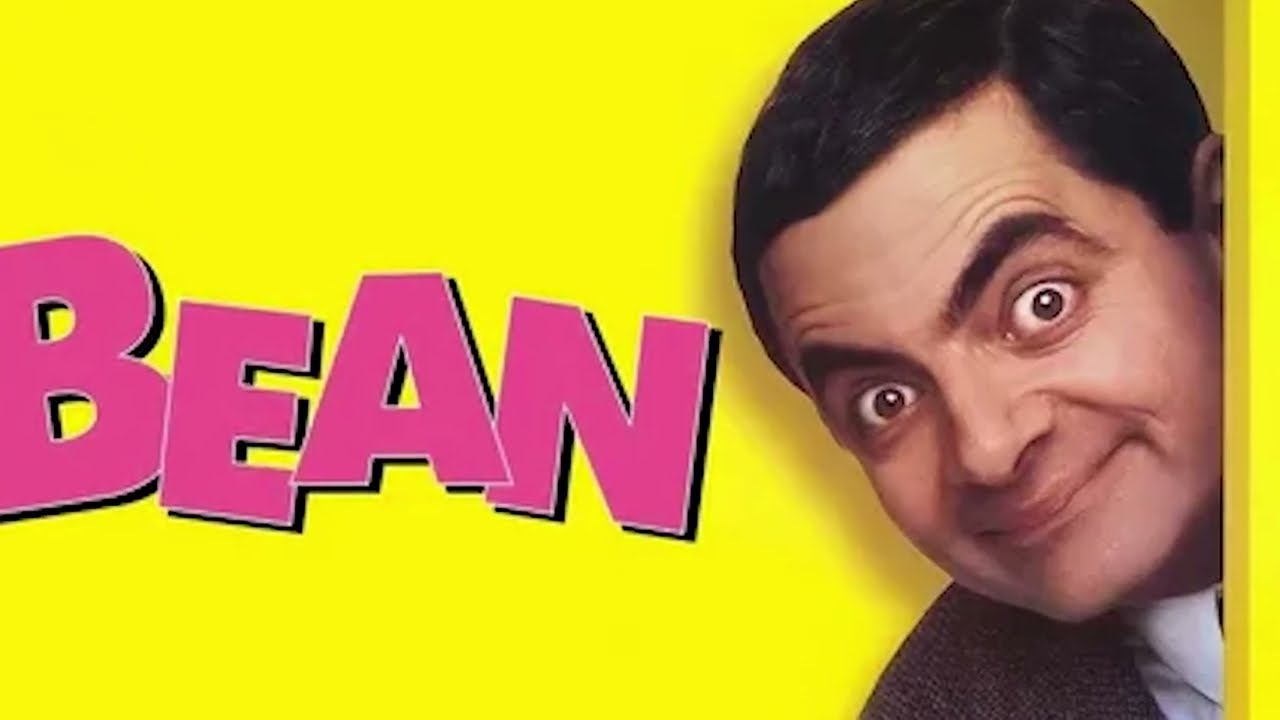
And a grown man capable of turning something as ordinary as sitting an exam, going to church or preparing a sandwich into total disaster.
From Britain to America, Asia, Europe and the Middle East, people understood him.
By 2025, the main official Mr. Bean YouTube channel had passed 35 million subscribers, while the character had been distributed in more than 200 territories.
Thirty-five years after Bean first appeared on British television, children who had not even been born when the original series ended were still watching him.
That kind of longevity usually creates a simple story.
The performer invents a beloved character.
The character makes him rich and famous.
He loves playing the role forever.
But Rowan Atkinson has never described the relationship that way.
In one remarkably candid interview, he admitted:
“I don’t much enjoy playing him.”
Then he explained why.
The responsibility of making Mr. Bean funny, Atkinson said, was “stressful and exhausting.”
He would often look forward to the end of the process.
For fans, the admission sounded almost shocking.
How could a man who looked so completely at home inside Mr. Bean dislike performing him?
The answer is more complicated than “Rowan Atkinson secretly hated Bean.”
In fact, Atkinson later clarified something important.
He likes the character.
He likes Bean’s world.
What he dislikes is the pressure of being the one person responsible for making that world work.
And that tension — between affection for the character and anxiety about performing him — may explain more about Rowan Atkinson than any dramatic story about hidden pain ever could.
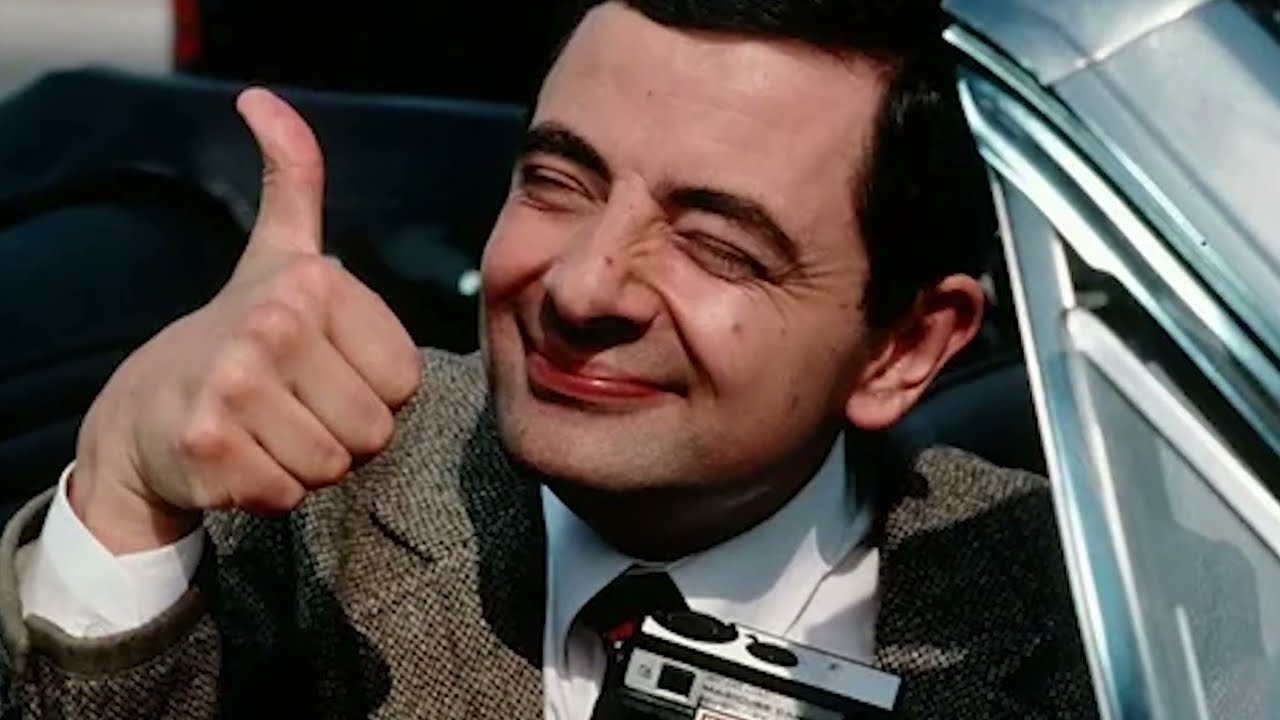
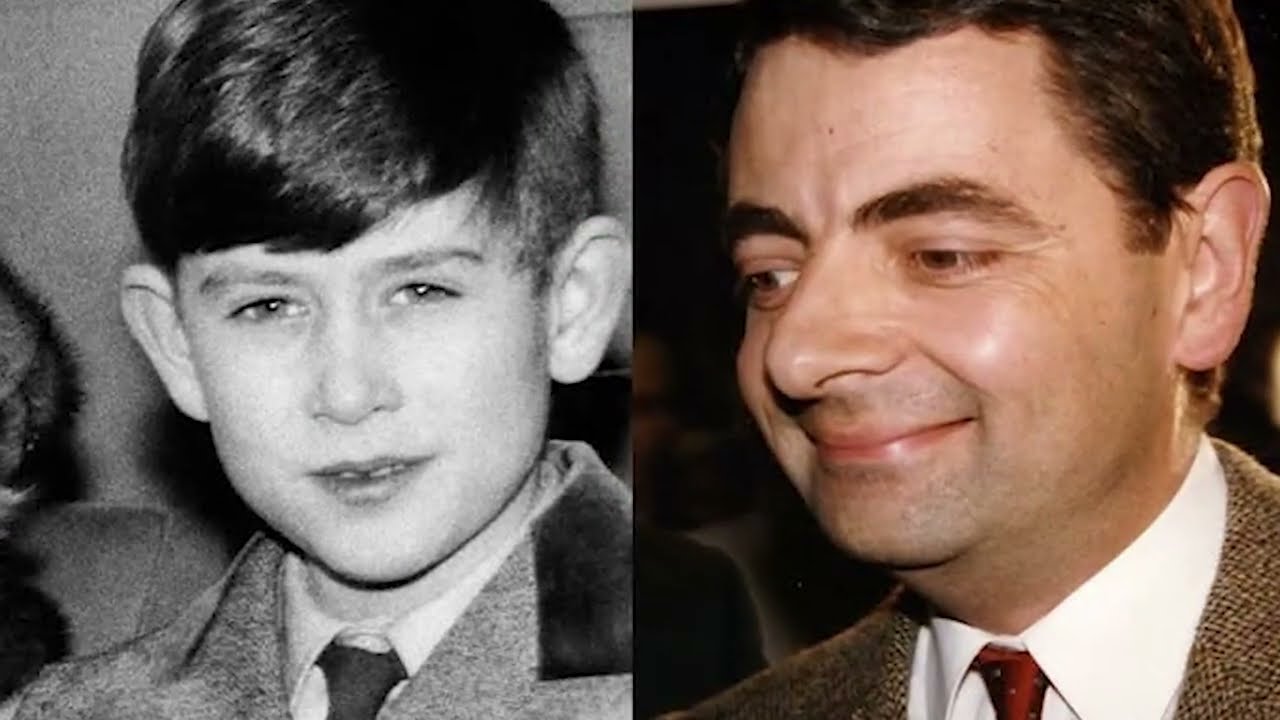
Before Mr. Bean, There Was a Quiet Boy Who Barely Seemed Like a Performer
Rowan Sebastian Atkinson was born on January 6, 1955, in County Durham in northern England.
Nothing about his early academic path suggested that one day his face would become recognizable almost everywhere.
He was academically gifted.
He studied electrical engineering at Newcastle University.
Then he continued at Queen’s College, Oxford, where he pursued a master’s degree in engineering science.
Comedy was growing alongside that education.
But the young Atkinson did not necessarily enter a room looking like a future international entertainer.
People who remembered him from school described him as shy.
He also had a slight stutter.
At Durham’s Chorister School, other pupils reportedly teased him because they thought his appearance looked unusual — even “alien.”
Tony Blair, Britain’s future prime minister, attended the same school a couple of years above him.
Yet the image of Atkinson as a traumatized child completely unable to speak should be treated cautiously.
The better-documented picture is subtler.
He was quiet.
Reserved.
Slightly hesitant in speech.
And then something very strange happened when he performed.
He became impossible to ignore.
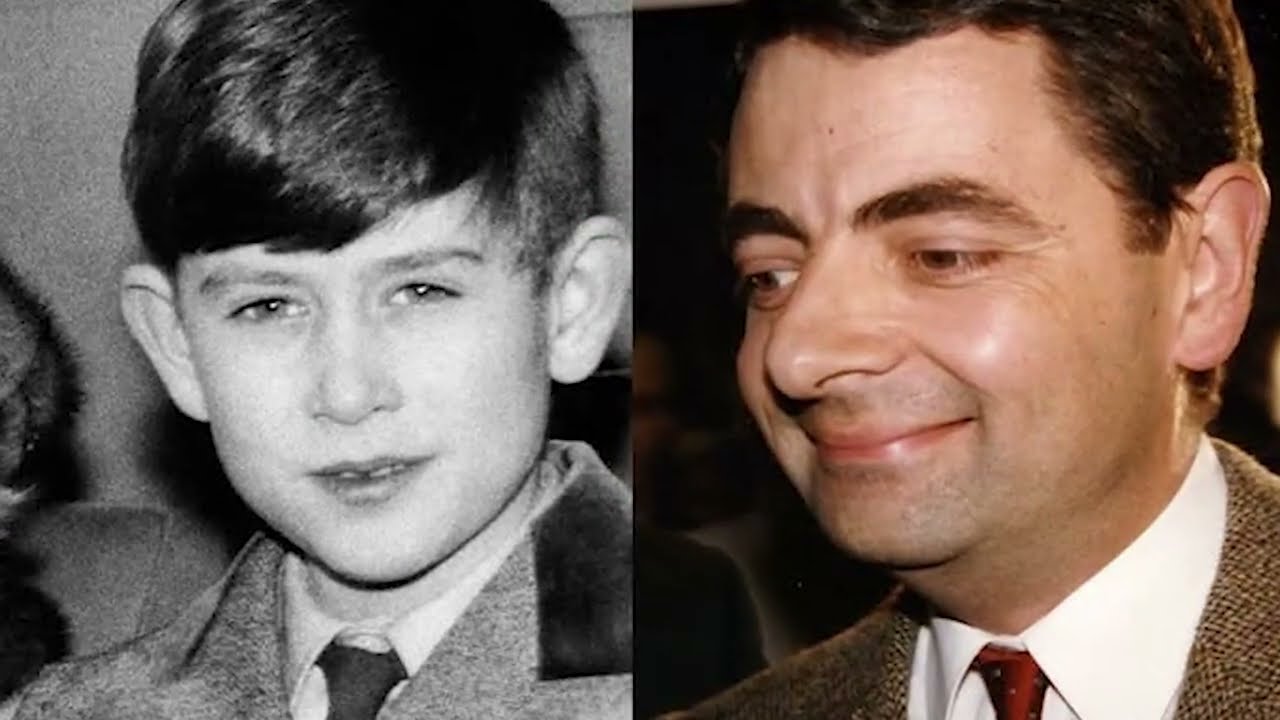
Richard Curtis Initially Thought Rowan Was Almost Part of the Furniture
One of the best stories about Atkinson’s early years comes from Richard Curtis.
Curtis would eventually help create Blackadder and Mr. Bean and become one of Britain’s most successful comedy writers.
But when he first encountered Atkinson in an Oxford comedy group, there was no obvious sign of the performer who was about to change his life.
Atkinson simply sat there.
Meeting after meeting.
Quiet.
Curtis later joked that he almost thought of Rowan as a stuffed object sitting in the corner.
Other people submitted sketches.
They talked.
Discussed ideas.
Atkinson barely seemed to participate.
Then one day he stood up.
And performed.
Curtis remembered being astonished by two sketches Atkinson suddenly delivered.
The quiet engineering student transformed.
That contradiction would become central to his career.
Offstage, Atkinson could be withdrawn and uncomfortable with publicity.
In performance, his face, body and voice became extraordinarily precise instruments.
The man who did not always want to talk about himself discovered that he could communicate almost anything as someone else.
Long Before Bean, Rowan Learned That His Body Could Be Funnier Than Dialogue
Atkinson’s early career established him as much more than a silent comedian.
He became nationally known through Not the Nine O’Clock News.
Then came Blackadder.
If Mr. Bean later demonstrated what Atkinson could do with almost no language, Blackadder demonstrated exactly the opposite.
Edmund Blackadder was verbal.
Cruel.
Sarcastic.
Quick.
The comedy depended on insults, timing and elaborate lines delivered with devastating contempt.
Atkinson was superb at it.
That distinction is important.
Mr. Bean was not created because Atkinson could not work with dialogue.
He had already demonstrated that he could.
Bean represented a different kind of challenge.
Could comedy work with almost nothing except behavior?
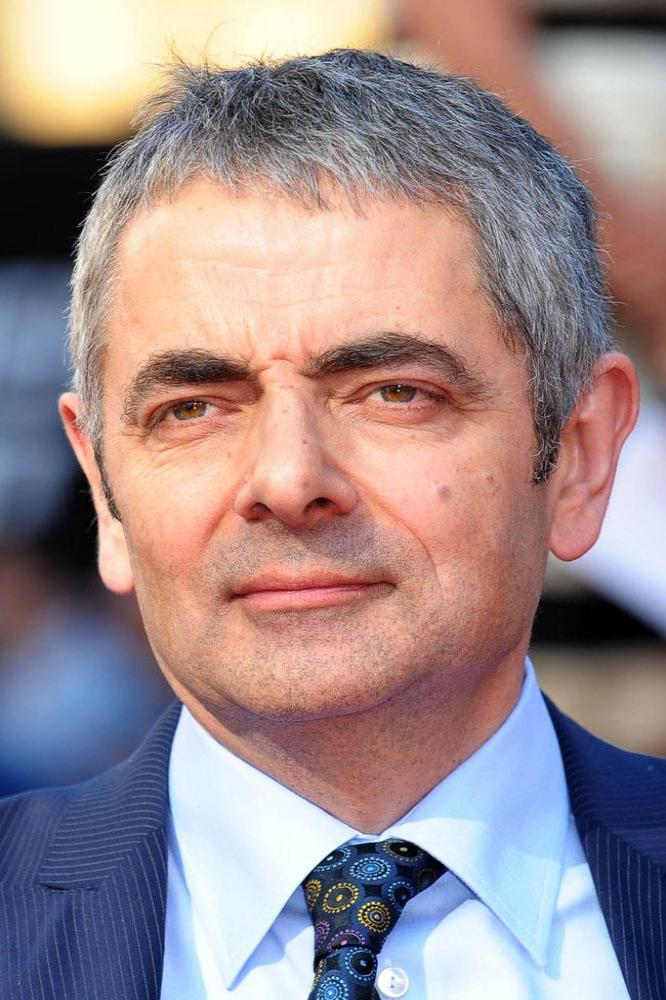
The Idea Behind Mr. Bean Was Surprisingly Simple
Atkinson had been experimenting with the physical character long before the television series arrived.
The character changed names and evolved over time.
Eventually, “Mr. Bean” stuck.
Bean was not exactly a child.
But he behaved with a child’s selfishness, curiosity and disregard for social rules.
He did not understand why other people found him inappropriate.
That was crucial.
Atkinson later explained why he never found Mr. Bean’s worldwide success especially mysterious.
Watching a grown adult behave like a child without realizing how inappropriate he is, Atkinson argued, is fundamentally funny.
And because most of Bean’s comedy is visual rather than verbal, language presents almost no barrier.
A man struggling to change into swimming trunks without exposing himself does not require translation.
Neither does someone trying to cheat on an exam.
Or destroying a room while trying to solve a tiny problem.
The audience understands immediately.
That simplicity became one of the most powerful forms of comedy export ever created.
On January 1, 1990, Britain Met Mr. Bean
The first television episode aired on ITV on New Year’s Day, 1990.
About 13.45 million viewers watched.
For context, this was not a heavily serialized comedy demanding weeks of commitment.
It was essentially a series of situations.
An exam.
A beach.
A church service.
Bean enters an ordinary environment.
He encounters a small difficulty.
Then he solves it in the worst possible way.
That structure became timeless.
The original live-action series produced relatively few episodes compared with modern sitcoms.
Yet Bean grew far beyond them.
Movies followed.
Animation followed.
Advertising.
Online videos.
Merchandise.
Clips recycled for new generations.
And remarkably, the character survived the transition from scheduled television into the internet era.
That should not have been guaranteed.
Comedy often ages badly.
Mr. Bean did not rely heavily on contemporary references.
His worst enemy was usually a chair, a sandwich, another person, or his own terrible decision-making.
Those problems do not expire.
But Making Something Look Effortless Wasn’t Effortless at All
This is where Rowan Atkinson’s comments become much more interesting.
Audiences see Mr. Bean and think spontaneity.
A funny face.
A ridiculous walk.
A stupid idea.
Atkinson experiences something very different.
Responsibility.
When he discussed playing Bean in 2021, he was unusually direct.
He said he did not much enjoy doing it.
Why?
Because the burden of making the scene funny rested heavily on him.
There was nowhere to hide.
If Bean picked up a toothbrush incorrectly, Atkinson had to decide exactly how.
If Bean reacted to a stranger, the expression had to communicate the joke.
If a sequence had no dialogue, movement itself had to tell the story.
And if it wasn’t funny?
There was no brilliant line from another actor to rescue it.
Atkinson said the weight of that responsibility was unpleasant.
He found it stressful.
Exhausting.
He looked forward to finishing.
The world saw simplicity.
The performer felt pressure.
Blackadder Was Easier for a Very Specific Reason
Atkinson made an illuminating comparison.
He said the process of making almost anything could be difficult for him — with a possible exception:
Blackadder.
Why?
Because the responsibility was shared.
Writers.
Other performers.
An ensemble.
If one moment failed, another could carry the comedy.
Mr. Bean was different.
Bean was the machine.
Much of the humor depended directly on Atkinson’s face and body.
He could not simply deliver the script and leave the rest to somebody else.
That is why calling Mr. Bean merely “silent comedy” undersells the difficulty.
Silence removed tools.
The fewer tools a performer has, the more exact the remaining ones need to become.
He Didn’t Hate Mr. Bean
The 2021 quote created an easy headline:
Rowan Atkinson hates playing Mr. Bean.
But Atkinson complicated that interpretation himself the following year.
When British GQ asked whether he enjoyed playing Bean, his answer was essentially:
Yes and no.
On a film set, he said, playing Bean could make him anxious.
He worried about whether he was doing the right thing.
Whether he was telling the story properly.
Whether his performance was good enough.
There was always a feeling that perhaps it wasn’t.
But then Atkinson said something almost opposite.
Mr. Bean was so different from Rowan Atkinson that entering Bean’s world could actually feel reassuring.
Atkinson described himself as being “very happy in his world.”
That is the real relationship.
Not hatred.
Not hidden misery.
A performer who loves the imaginative space of a character—
while dreading the responsibility of executing him perfectly.
That is far more believable.
And perhaps far more revealing.
Rowan Atkinson Has Always Been Harder on His Work Than Audiences Are
This helps explain why Mr. Bean could exhaust him.
Atkinson does not appear to approach comedy as something casual.
He worries about whether it works.
That mindset is almost invisible inside Bean.
Bean does not worry.
Bean simply acts.
He is supremely confident even while doing something catastrophically stupid.
Rowan is almost the opposite.
The man controlling Bean worries whether each moment is correct.
The character worries about almost nothing.
Perhaps that distance is one reason Atkinson has been able to inhabit him so effectively.
Bean is not Atkinson with the volume turned up.
He is an escape into someone fundamentally different.
Even the Famous Opening Credits Added to the Mystery
Fans have long wondered about something else.
Why does Mr. Bean appear to fall from the sky in a shaft of light?
Was he literally dropped onto Earth?
Is Mr. Bean an alien?
The theory has survived for decades because the imagery almost invites it.
Atkinson himself once acknowledged that Bean has a slightly “alien” quality.
The animated series later had fun with the idea by introducing creatures that resembled Bean.
But treating that as definitive proof that Mr. Bean was formally “revealed to be an alien” oversimplifies the joke.
The ambiguity is funnier.
Bean moves through ordinary human society as if nobody ever gave him the instruction manual.
He understands basic survival.
Everything else seems optional.
Whether that makes him an extraterrestrial or simply the strangest man in Britain may not matter.
The important thing is that he always feels slightly out of place.
The Movies Made the Burden Even Bigger
Bean eventually became too successful to remain confined to short television episodes.
In 1997 came Bean.
Then Mr. Bean’s Holiday in 2007.
A character built around compact physical sketches now had to carry feature-length stories.
For Atkinson, that meant expanding Bean without destroying what made him work.
Too much dialogue and he stops being Bean.
Too little story and a feature film collapses into disconnected sketches.
The movies nevertheless helped push the character even further around the world.
And yet the bigger Bean became, the greater the expectations became too.
Imagine walking onto a set knowing that millions of people already have a precise idea of what your character should be.
Then imagine most of the joke still depends on you.
That is the burden Atkinson was describing.
Animation Gave Him a Way to Keep Bean Without Physically Becoming Bean
This may be the clearest evidence that Atkinson does not simply dislike the character.
In 2002, Mr. Bean: The Animated Series began.
The format changed the relationship.
Atkinson still provided Bean’s vocal sounds.
He remained creatively involved.
But animation removed much of the physical burden.
In 2021, Atkinson specifically said that performing Bean vocally was easier than performing him visually.
That distinction mattered.
He could continue the character without forcing his own body to carry every facial contortion, fall and physical gag.
And years later, he was still there.
In 2024, a fourth animated season was announced.
52 new episodes.
Atkinson remained executive producer.
He continued voicing Bean.
And his statement about the project did not sound like a man desperate to erase the character.
He said he had “always enjoyed this iteration” of Mr. Bean and the freedom animation gave the character.
That sentence completely changes the “Rowan secretly hated Bean” narrative.
He did not reject Bean.
He found a form of Bean that suited him better.
Thirty-Five Years Later, Bean Was Still Growing
By 2025, the brand was celebrating 35 years.
The main official YouTube channel crossed 35 million subscribers.
Banijay reported that Mr. Bean had been distributed in more than 200 territories.
The fourth animated season arrived.
This is extraordinary longevity for a character whose live-action television run began before widespread household internet access.
Many comedy characters belong permanently to the generation that first watched them.
Bean escaped that limitation.
Grandparents can recognize him.
Parents recognize him.
Children who discover him through a phone or tablet recognize him.
They do not need background.
Bean does something stupid.
They laugh.
The entire premise reloads itself instantly.
The Man Behind Bean Never Became Bean
Another reason the character remains intriguing is how different Rowan Atkinson appears away from him.
Bean is socially oblivious.
Atkinson is private and self-conscious.
Bean is impulsive.
Atkinson is analytical.
Bean never doubts himself.
Atkinson openly worries that his performance may not be good enough.
Bean treats every situation as if he can invent the rules himself.
Atkinson has spent decades thinking carefully about why comedy works.
Fans sometimes assume physical comedians must resemble their characters.
Atkinson is one of the clearest examples of why that is wrong.
Mr. Bean may look spontaneous.
Rowan Atkinson is not careless.
The apparent chaos is constructed.
His Engineering Background Makes the Contrast Even More Fascinating
Atkinson trained as an electrical engineer before comedy took over his life.
It is tempting to see a relationship between that background and the precision of his physical comedy.
A Bean routine often works almost like a machine.
Set up a problem.
Introduce an attempted solution.
Let the solution create a larger problem.
Repeat.
Then escalate until the entire mechanism collapses.
Whether Atkinson himself would describe the process as engineering is another matter.
But his comedy certainly demonstrates an obsession with structure.
A tiny gesture early in a sketch may become essential thirty seconds later.
An object is placed somewhere because it will eventually cause disaster.
The audience should feel chaos.
The performer cannot actually be chaotic.
That may be the great illusion behind Mr. Bean.
Atkinson Didn’t Stop Making Comedy When Bean Became Difficult
Another problem with stories portraying Mr. Bean as a lifelong psychological burden is what Atkinson did afterward.
He kept making comedy.
Johnny English became another successful character.
Then came Man vs Bee for Netflix.
And in 2025, Atkinson returned as Trevor Bingley in Man vs Baby.
The four-part Netflix comedy once again put him at the center of escalating physical disaster.
This matters.
Atkinson is not a performer who has spent decades trying to escape comedy.
At 70 and beyond, he continued creating it.
What changed was the character.
Trevor is not Bean.
Atkinson himself emphasized that Trevor was designed as a much more normal, decent, three-dimensional man.
Mr. Bean is selfish and strange.
Trevor is basically a good person whose circumstances get out of control.
That difference allowed Atkinson to use some of the same physical skills without merely repeating Bean.
At 71, Rowan Atkinson Still Has Nothing to Prove
As of 2026, Atkinson is 71.
The character that made him globally recognizable is 36 years removed from his television debut.
There is no reason Atkinson needs to put on the brown jacket again for live action merely because audiences want him to.
He already proved Mr. Bean could work.
He proved it on television.
In movies.
Animation.
Online.
Across languages and cultures.
The interesting question is no longer whether Rowan Atkinson can still perform Bean.
It is whether he would enjoy doing it enough to want to.
And based on his own comments, the distinction between live action and animation matters enormously.
That Is Why “He Secretly Hated Mr. Bean” Gets the Story Wrong
It is certainly a more dramatic headline.
The silent clown who made the world laugh was secretly miserable.
Mr. Bean was a mask.
Every smile hid pain.
The laughter cost Rowan Atkinson his happiness.
But that story asks Atkinson’s actual words to carry far more than they do.
What he described was not a tortured secret life.
He described creative pressure.
Perfectionism.
Responsibility.
Exhaustion.
And ambivalence.
He could love the imaginative world of Bean while finding the physical process of performing him unpleasant.
Anyone who has ever loved the result of difficult work while disliking the process can understand that.
The Silence Wasn’t a Shield. It Was the Challenge.
Atkinson’s slight stammer makes the near-silent nature of Mr. Bean an interesting biographical detail.
But it should not be transformed into a simplistic explanation.
Mr. Bean was not merely invented so a man afraid to speak could hide from his own voice.
Atkinson had already become famous performing highly verbal comedy.
He could deliver complex dialogue brilliantly.
What Bean gave him was something else.
A chance to test visual comedy almost completely.
Could expression replace language?
Could posture replace a punch line?
Could somebody in Texas, Tokyo, Paris and Mumbai laugh at exactly the same gesture?
The answer turned out to be yes.
That is more impressive than a story about hiding.
The Greatest Trick Was Making It Look Easy
Watch Mr. Bean now.
Take almost any classic sequence.
Bean sits in an exam.
Bean attends church.
Bean visits a swimming pool.
Bean prepares for Christmas.
Bean drives his Mini.
Nothing appears technically complicated.
There are no giant visual effects.
No elaborate speeches.
No complex mythology.
Just a man trying to navigate ordinary life.
Yet behind those ordinary situations was a performer worrying constantly about timing.
Story.
Gesture.
Reaction.
Whether the joke worked.
Whether he was good enough.
That is the contradiction fans rarely saw.
The less Mr. Bean appeared to think—
the more Rowan Atkinson had to.
Perhaps That Is the Real Man Behind Mr. Bean
Not a secretly broken comedian.
Not a man trapped forever by childhood pain.
And not an actor who despised his most famous creation.
Something quieter.
A very private, highly analytical performer who created a character with almost no self-awareness.
A perfectionist who played a man completely convinced by his own terrible ideas.
An actor who could communicate internationally precisely because his character said so little.
And a creator who found the burden of making that simplicity convincing far heavier than audiences imagined.
When Atkinson said playing Mr. Bean was “stressful and exhausting,” he was not destroying the character’s magic.
He was explaining how much work the magic required.
Mr. Bean Never Worried Whether We Were Laughing
Rowan Atkinson did.
That may be the simplest way to understand the difference between them.
Bean walks into a room absolutely certain that whatever he is about to do makes sense.
Atkinson walks onto a set wondering whether the scene will work.
Bean improvises solutions without shame.
Atkinson analyzes the performance.
Bean does not care what strangers think.
Atkinson has spent a career concerned with whether an audience understands the joke.
One man is almost incapable of self-doubt.
The other created him.
Perhaps that is why they fit together so well.
And Bean Still Hasn’t Completely Left Him
Thirty-five years after the first episode, Atkinson was still executive-producing and voicing the animated character.
At the same time, he had found other ways to make audiences laugh.
That is not the story of a man running from Mr. Bean.
It is the story of someone who learned which version of the character he could still enjoy.
Live action demanded his whole body.
Animation gave him freedom.
Other projects allowed him to build new characters.
The relationship evolved.
Maybe that is exactly what had to happen for Bean to survive this long.
The Truth Is Less Tragic — And More Interesting
Rowan Atkinson made comedy look effortless.
It wasn’t.
Mr. Bean made silence look simple.
It wasn’t.
Millions watched a strange man destroy ordinary situations without saying much more than a few noises.
Behind him stood a performer worrying about almost every detail.
That is the revelation worth remembering.
Not that Mr. Bean was secretly created from misery.
Not that Rowan Atkinson spent decades pretending to love a character he hated.
But that one of the world’s simplest-looking comedy creations required an extraordinary amount of thought from the man performing him.
Mr. Bean rarely seemed worried about anything.
Rowan Atkinson worried enough for both of them.
And somehow, from that tension, came a character who could make almost anyone laugh—
without needing to explain the joke.