MASH Cast Reveals What Most Fans NEVER Figured Out
The cast of MASH* thought they had already said goodbye to Colonel Henry Blake.
McLean Stevenson was leaving the show.
The farewell episode had been filmed.
Henry had received his discharge, said goodbye to the 4077th and boarded a helicopter for home.
As far as most of the actors knew, that was the ending.
Then they were called back to the set.
There was one more scene.
Gary Burghoff, who played Radar O’Reilly, was given a final piece of material.
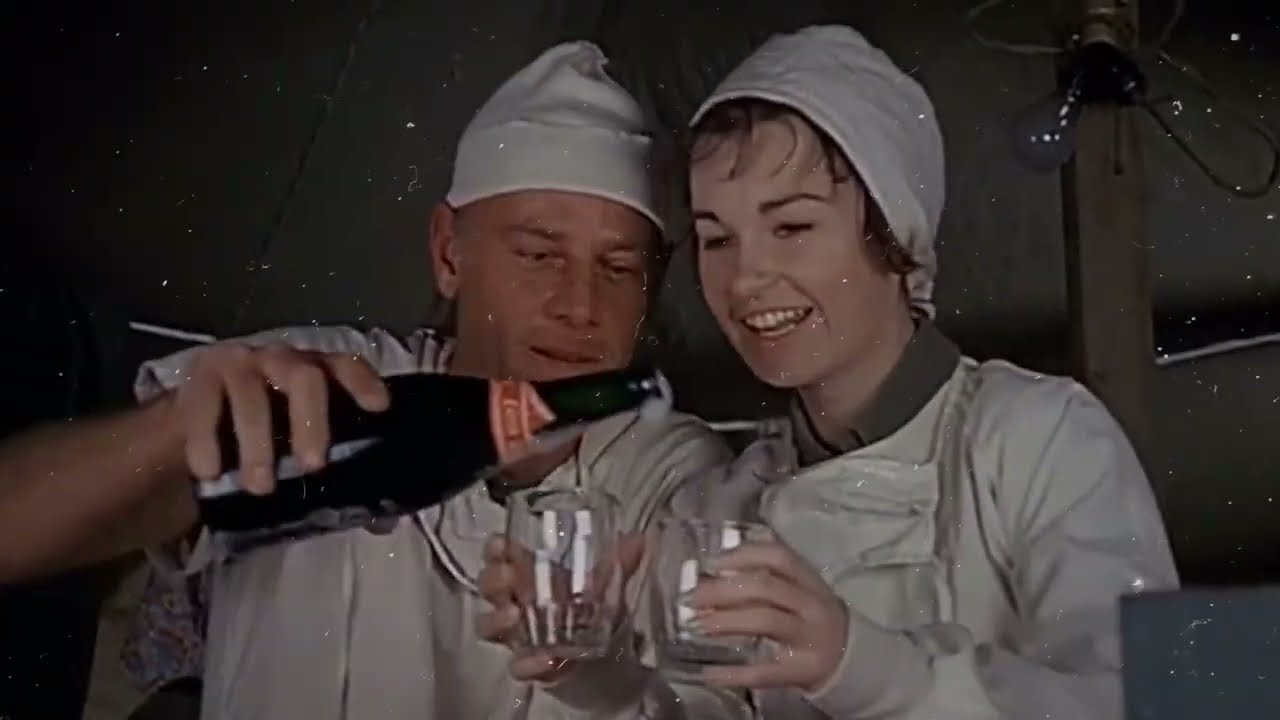
The cameras rolled.
Radar entered the operating room.
And television history changed.
“I have a message,” he began.
Henry Blake’s plane had been shot down over the Sea of Japan.
There were no survivors.
The surprise visible on many of the actors’ faces did not require much acting.
They had not known.
Fifty years later, Jamie Farr could still remember how deeply that moment shook the cast.
And that may be the perfect place to begin understanding MASH*.
Fans watched the 4077th for eleven seasons.
They knew the tents.
The Swamp.
Rosie’s Bar.
The operating room.
Hawkeye’s bathrobe.
Radar’s teddy bear.
Klinger’s dresses.
Colonel Potter’s horse.
But the familiar world viewers saw each week was constantly changing behind the cameras.
Major actors left.
Entire relationships were rebuilt.
A real wildfire destroyed part of the set while the finale was being made.
And the episode remembered as the cast’s final goodbye was not actually the final episode they filmed.
More than four decades after MASH* left television, some of its most fascinating stories are not about scandals.
They are about how a show repeatedly lost pieces of itself—
and somehow became stronger.
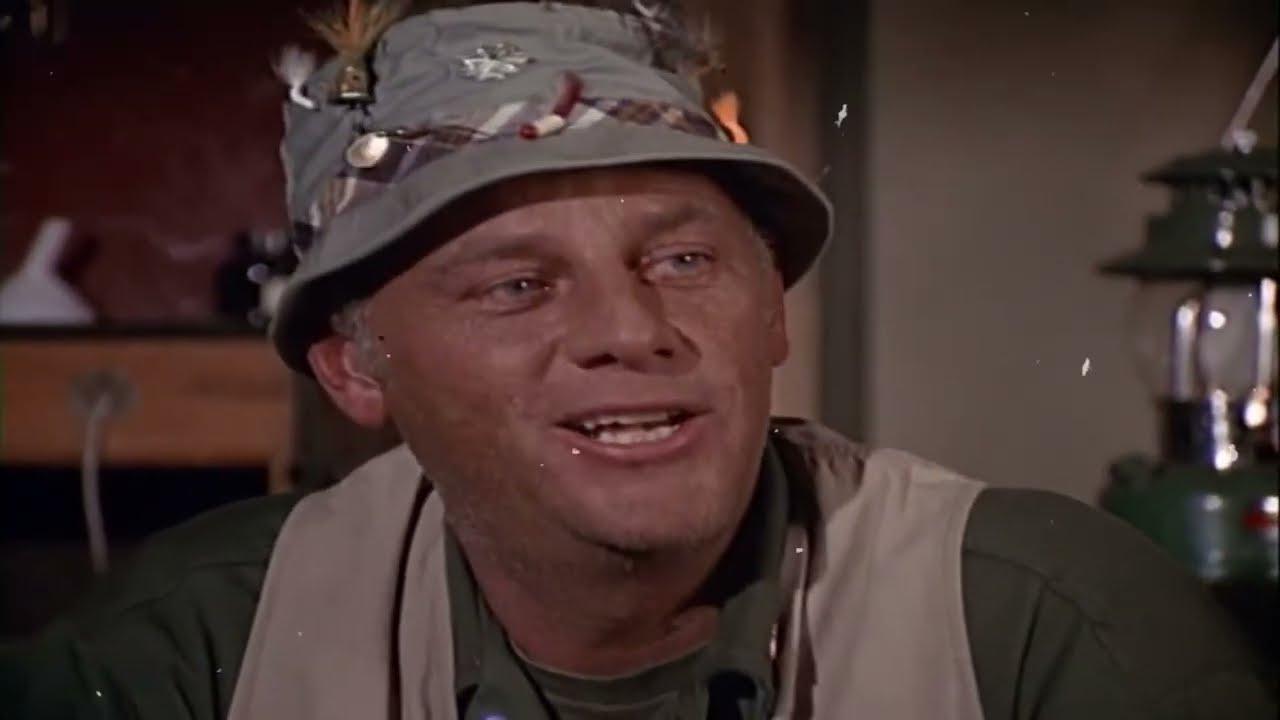
Nobody Told the Cast Henry Blake Was Going to Die
When Abyssinia, Henry was produced in 1975, McLean Stevenson’s departure was no secret.
He was leaving MASH* after three seasons.
The writers therefore had to decide what to do with Colonel Henry Blake.
The comfortable option would have been obvious.
Send him home.
Let him leave Korea alive.
Allow viewers to imagine him returning to his wife and children in Illinois.
Instead, writers Larry Gelbart and Everett Greenbaum chose something brutal.
Henry would make it out of the camp.
But he would not make it home.
The decision was deliberately hidden from much of the cast and crew.
They filmed Henry’s emotional departure.
The actors believed the episode was essentially complete.
Only afterward did producers reveal the final scene.
Jamie Farr recalled decades later that the cast was stunned when they learned what would happen.
Gary Burghoff had the hardest task.
Radar had to walk into an operating room filled with people who had just finished saying goodbye to Henry and tell them that Henry was dead.
The surgeons barely stop working.
There is no swelling heroic speech.
No elaborate funeral.
War does not allow them one.
A wounded patient is already on the table.
They have to continue.
That was the point.
The Scene Broke One of Television’s Safest Rules
Sitcom characters were not supposed to leave like that.
Especially beloved ones.
Henry Blake was funny.
Warm.
Frequently overwhelmed.
He was not a warrior.
He was a doctor trying to survive long enough to get home.
And the show had just spent an episode convincing viewers that he had succeeded.
Then it took that relief away.
The backlash was fierce.
Viewers complained.
Some CBS affiliates reportedly objected.
The production later decided it would not send another departing regular out in the same fashion.
But the episode also established something crucial about MASH*.
The show could make you laugh for twenty minutes—
and still remind you that the people were standing in a war zone.
Larry Gelbart later summarized the philosophy plainly:
MASH* was not going to be all happy endings.
For Jamie Farr, the effect endured for half a century.
For viewers, it became one of the first clues that this was not an ordinary sitcom.
And almost immediately, MASH* faced another enormous problem.
Henry Blake was not the only original star leaving.
Two Major Characters Disappeared at Almost the Same Time
At the end of season three, the 4077th lost Henry Blake.
Then viewers discovered Trapper John McIntyre was gone too.
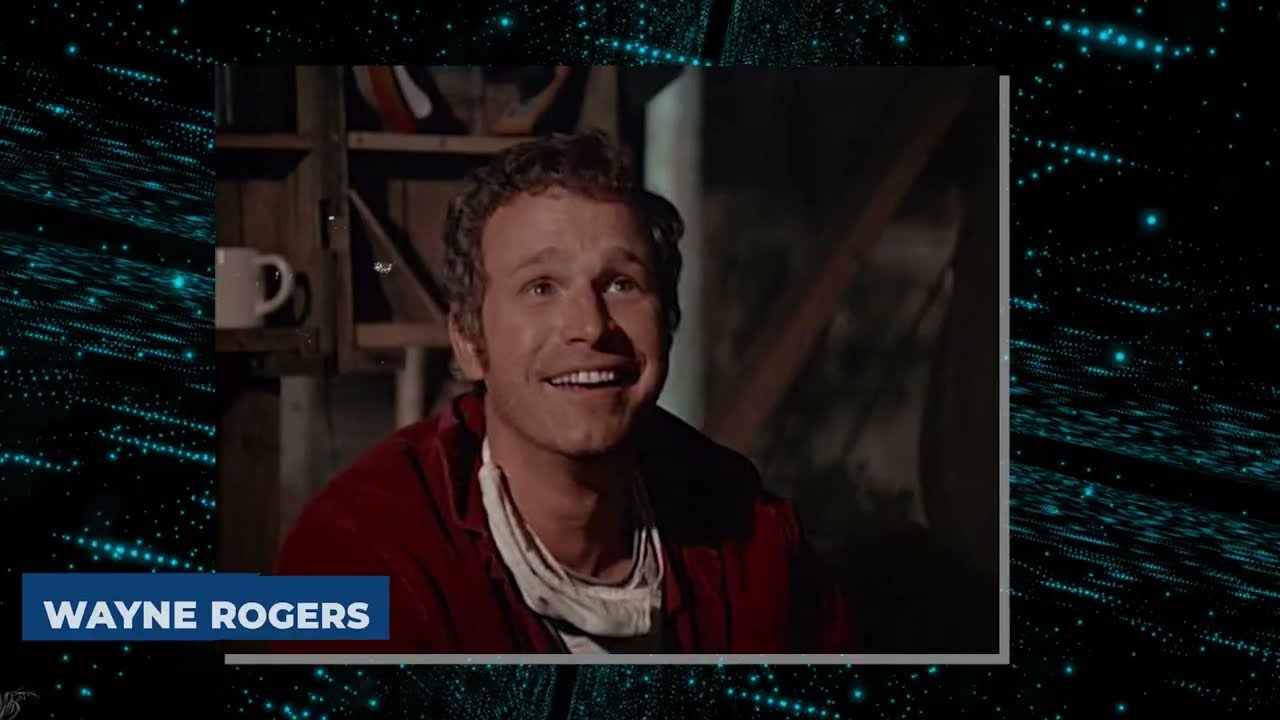
Wayne Rogers had left the series following a contract dispute.
Think about what that meant.
Hawkeye and Trapper had been the central comic partnership.
Henry had been their bewildered commanding officer.
Within a very short period, MASH* lost two pillars of its original chemistry.
Many television shows would have tried to solve that problem by finding substitutes who felt almost identical.
A new lovable, slightly incompetent colonel.
Another womanizing surgeon to trade jokes with Hawkeye.
MASH* did something smarter.
It replaced the actors—
but not the personalities.
That decision may be one of the greatest reasons the show survived for another eight seasons.
B.J. Hunnicutt Was Not Trapper John 2.0
Mike Farrell joined the cast as Captain B.J. Hunnicutt.
He could have been another Trapper.
The writers deliberately made him different.
Trapper had been impulsive, mischievous and unfaithful.
B.J. was a devoted husband and father.
He missed his wife Peg.
He obsessed over the daughter growing up without him.
His friendship with Hawkeye became just as important as Hawkeye’s friendship with Trapper had been—
but it did not feel like the same relationship with a different face.
Hawkeye and Trapper had behaved like two bachelors tearing through a nightmare together.
Hawkeye and B.J. eventually felt more like brothers.
B.J.’s homesickness also gave the show a new emotional register.
The war was not simply preventing him from having fun.
It was stealing time from his family.
Every letter from home reminded him of what he was missing.
That distinction gave MASH* new stories instead of forcing it to repeat old ones.
And the same strategy was used with Henry Blake’s replacement.
Colonel Potter Was Almost the Opposite of Henry Blake
Harry Morgan had already appeared on MASH* in a different guest role before becoming Colonel Sherman Potter.
When Potter took command of the 4077th, he changed the structure of the camp immediately.
Henry Blake had been a civilian doctor drafted into a role he did not naturally command.
Potter was career Army.
Older.
Experienced.
Disciplined.
He knew military procedure.
At first glance, that should have made him the enemy of Hawkeye and B.J.
But Potter was also practical.
He knew war.
He understood doctors.
And he cared deeply about the people serving under him.
The writers did not try to duplicate McLean Stevenson.
They gave Harry Morgan a character built around his own strengths.
The result was remarkable.
Viewers who had loved Henry gradually accepted Potter without having to forget Henry.
That is much harder than it sounds.
Television audiences can resent replacements.
MASH* avoided much of that problem by refusing to ask the replacements to pretend nothing had changed.
The camp had changed.
So the relationships changed too.
Then Frank Burns Left — and the Writers Refused to Replace Him With Another Frank
Larry Linville’s Major Frank Burns had been one of the show’s great comic antagonists.
He was pompous.
Hypocritical.
Jealous.
Often incompetent.
He gave Hawkeye and Trapper—and later B.J.—someone to fight.
When Linville left, the easiest solution would again have been duplication.
Find another arrogant officer.
Make him foolish.
Let Hawkeye humiliate him every week.
Instead came Major Charles Emerson Winchester III.
David Ogden Stiers’ Winchester was arrogant all right.
But there was one enormous difference.
He was brilliant.
Winchester might despise the camp.
He might look down on almost everyone around him.
He might be insufferably proud of his Boston upbringing.
But Hawkeye could not dismiss him as a bad surgeon.
Sometimes Charles was every bit as good as Hawkeye.
Sometimes better.
That changed the conflict.
Hawkeye could ridicule Frank.
He had to respect Charles.
And over time, viewers discovered that Winchester had emotional depths Frank Burns had rarely been allowed to show.
He could be selfish.
Then unexpectedly generous.
Cold.
Then deeply moved by music, family or a patient.
Once again, MASH* did not repair a hole by reproducing what had been there before.
It changed the shape of the hole.
The Cast Changes Secretly Became One of the Show’s Greatest Strengths
Look at the transformation.
Trapper became B.J.
Henry became Potter.
Frank became Winchester.
Later, Radar left and Klinger moved into the company-clerk position.
These were not simple recastings.
Each change altered the chemistry of the 4077th.
That meant a season-eight episode did not feel like a season-two episode with slightly older actors.
The show had grown.
The people around Hawkeye were different.
Hawkeye himself was different.
Margaret Houlihan changed enormously.
Klinger changed.
Father Mulcahy became richer.
The series gradually moved from the wild, anarchic comedy of its early years toward something more reflective.
Some fans preferred the early seasons.
Others loved the later ones.
But the willingness to evolve helped prevent MASH* from becoming a museum exhibit while it was still being produced.
That becomes even more remarkable when you remember the strangest number in the show’s history.
The Korean War Lasted About Three Years. MAS*H Lasted Eleven Seasons.
The Korean War began in 1950.
The armistice came in 1953.
Yet MASH* aired from September 1972 until February 1983.
Eleven television seasons depicting characters trapped inside a conflict lasting roughly three years.
If you attempt to construct a literal calendar around every Christmas, winter, birthday and reference on the show, things quickly become impossible.
But eventually, chronology stopped being the point.
Korea became something closer to an emotional condition.
The characters were stuck.
The audience understood that.
Every time a helicopter brought wounded soldiers into camp, the same absurd truth returned:
The doctors were saving people from a war they had no power to end.
That allowed the series to explore much more than historical chronology.
Fear.
Homesickness.
Friendship.
Burnout.
Love.
Death.
Authority.
Mental strain.
And the moral absurdity of using extraordinary medical skill to repair human bodies so that war could continue destroying others.
The show’s eleven-year run became part of the metaphor almost by accident.
For viewers, the 4077th sometimes felt endless because it felt endless to the characters too.
Alan Alda Became More Influential — But MAS*H Was Never Simply “Alan Alda’s Show”
As the years passed, Alan Alda became increasingly important behind the camera.
He wrote episodes.
Directed episodes.
Helped shape Hawkeye’s emotional development.
Eventually, he directed the finale itself.
That has led to a common shorthand that Alda gradually “took over” MASH* and made it more serious.
There is some truth buried inside that idea.
His creative influence absolutely grew.
But the reality was more collaborative.
Larry Gelbart and Gene Reynolds had established the show’s unusual ability to jump between comedy and tragedy early.
Burt Metcalfe later became a central creative force.
Dozens of writers and directors contributed.
Loretta Swit, Mike Farrell, Harry Morgan, Jamie Farr, David Ogden Stiers and the rest of the ensemble brought their own understanding to increasingly complex characters.
Gelbart remembered Alda as deeply committed, but not simply as someone who won arguments by overpowering everybody.
He could demonstrate what he thought worked through performance.
MASH* evolved because many people were pushing it.
Alda became one of the most important of them.
But the 4077th was never a one-man operation.
And that collaborative nature would become crucial when the show finally decided to end.
Ending MAS*H Was Almost as Difficult as Keeping It Alive
By the early 1980s, the series had done nearly everything a television show could hope to do.
It had survived cast turnover.
Won major awards.
Shifted tone without losing its identity.
Become a cultural institution.
But every war has to end.
Eventually, so did MASH*.
The writers began constructing a feature-length farewell:
Goodbye, Farewell and Amen.
The story would give the major characters emotional endings.
Hawkeye would confront a traumatic breakdown.
B.J. would struggle with the possibility of leaving without properly saying goodbye.
Charles would discover a group of Chinese musicians whose deaths transform his relationship with music.
Margaret would face her future.
Klinger, of all people, would decide to remain in Korea.
Potter would say farewell to the unit he had led.
Then reality intervened.
A real disaster hit the fictional war zone.
A Wildfire Actually Burned the MAS*H Set
On October 9, 1982, a wildfire swept through the outdoor filming location at what is now Malibu Creek State Park.
Part of the MASH* set burned.
This was not a controlled special effect.
The production had a major problem.
They were in the process of making the finale.
The outdoor camp viewers had recognized for years had been damaged by an actual fire.
The writers could not simply pretend nothing had happened.
So they adapted.
The destruction was incorporated into the story.
In the finale, a brush fire threatens the 4077th and forces the unit to evacuate.
Viewers watching in 1983 saw fire damage that fit naturally inside the fictional Korean War.
Many had no reason to know that the production was writing around a real California wildfire.
It is one of those rare moments when television history and real life physically collided.
And it somehow made the ending more appropriate.
The 4077th was disappearing.
So was the set.
But there is an even stranger fact about the famous finale.
The Finale Wasn’t the Cast’s Final Episode to Film
When audiences watched Goodbye, Farewell and Amen on February 28, 1983, everything felt final.
The camp was being dismantled.
Characters were leaving in different directions.
Hawkeye flew away in a helicopter.
Below him, B.J. had arranged stones into one final word:
GOODBYE.
It is difficult to imagine a more definitive ending.
Except that the cast had not actually filmed their final material there.
Production scheduling meant Goodbye, Farewell and Amen was completed before several regular episodes.
Six episodes were filmed afterward.
The final episode the cast actually shot was:
As Time Goes By.
That episode became the penultimate broadcast installment.
So one of television’s most famous goodbyes was not the actors’ real goodbye to the set.
Their actual last production day came later, in January 1983.
That fact changes the way you look at the finale.
The tears and farewells were part of a story.
The cast still had work ahead.
Then came the day when there really would be no next call time.
The Last Day Created a Time Capsule
As Time Goes By centers on a time capsule being assembled at the 4077th.
Characters contribute objects representing their experience in Korea.
The episode was therefore strangely appropriate as the final installment the cast filmed.
Jamie Farr later remembered that actual items were also gathered as the production came to an end.
There was a sense that everyone knew they were closing something unusually important.
Eleven seasons is a long time.
For some performers, MASH* had occupied a huge portion of their adult lives.
The tents were sets.
The operating room was a soundstage.
The war was fictional.
But the relationships were not.
When filming finally stopped, people who had spent years arriving at the same workplace suddenly had nowhere to return.
Then they had to wait for America to say goodbye too.
Nobody Expected 105.9 Million People
On February 28, 1983, CBS broadcast Goodbye, Farewell and Amen.
The numbers remain astonishing.
An estimated 105.9 million viewers watched.
The program earned a 60.3 Nielsen rating and a 77 share.
In other words, roughly 77 percent of television sets in use during the broadcast were tuned to MASH*.
For decades, it stood as the most-watched television broadcast in U.S. history until Super Bowl audiences eventually surpassed its raw viewer total.
But one distinction remains.
It is still the most-watched U.S. television series finale ever.
Think about what that meant in 1983.
No streaming.
No replay on demand that night.
No social media reaction thread.
Millions of Americans experienced the goodbye together.
For one evening, the 4077th became almost a national gathering place.
The Show Had Nearly Failed at the Beginning
The ending makes another fact easy to forget.
MASH* was not an instant ratings monster.
Its first season struggled.
CBS moved it around the schedule.
There was no guarantee that the show destined to draw more than 100 million people to its finale would survive its early years.
It did.
Then it evolved.
That may be the most important pattern in the entire history.
The show did not become legendary because everything went according to plan.
It became legendary because it repeatedly adapted when plans failed.
Actors left?
Create different characters.
A beloved commanding officer departed?
Turn the farewell into one of television’s most shocking lessons about war.
The original comic chemistry changed?
Build another kind of chemistry.
A wildfire burns the set?
Write the fire into the finale.
The show lasted longer than the war itself?
Stop treating chronology as the most important thing.
MASH* kept converting problems into story.
The Cast Could Change Because the Core Idea Was Bigger Than Any One Character
Hawkeye became the show’s most consistent central figure.
But MASH* was never only Hawkeye.
Nor was it only Henry.
Radar.
Margaret.
Klinger.
B.J.
Potter.
Winchester.
Trapper.
Frank.
Mulcahy.
What held them together was not simply the Korean War.
It was the contradiction at the center of the show.
Doctors were trying desperately to preserve life inside a machine designed around death.
Everything else grew from that.
That is why Potter could replace Blake without becoming Blake.
Why B.J. could replace Trapper without becoming Trapper.
Why Winchester could replace Burns without becoming Burns.
They all entered the same contradiction from different angles.
The 4077th did not need identical personalities.
It needed people with different ways of surviving the same absurd situation.
Even the Laugh Track Became Part of the Battle Over What MAS*H Was
From the beginning, Larry Gelbart resisted the conventional sitcom laugh track.
CBS wanted it.
Gelbart did not.
A compromise emerged.
The series often used laughter in lighter scenes but avoided it during operating-room sequences.
That choice sounds small today.
It wasn’t.
It signaled that the show was constantly negotiating its identity.
Was this a sitcom?
A war drama?
A satire?
A medical series?
A tragedy with jokes?
Eventually television critics would popularize a useful word for shows like it:
dramedy.
But MASH* was doing the work before the label became comfortable.
That uncertainty was part of its power.
A joke could be followed by blood.
A practical joke could sit beside a letter from home.
A beloved character could receive his discharge—
and still never make it home.
Henry Blake’s Death Changed More Than One Episode
Return to that operating room in 1975.
Radar enters.
His voice struggles.
The announcement comes.
Everyone freezes.
Then the surgeons return to work.
For years, fans debated whether Henry needed to die.
Some hated the decision.
Some considered it brilliant.
But whatever your reaction, the scene demonstrated the show’s central argument with unusual clarity.
War does not respect narrative expectations.
A man does not survive simply because audiences love him.
Getting orders to go home does not guarantee arrival.
And grief sometimes has to wait because somebody else is bleeding.
That one scene helped establish the emotional permission MASH* would use for the rest of its run.
The writers could make viewers uncomfortable.
They could let comedy fail.
They could leave pain unresolved.
The series became safer in some ways as it grew more successful.
But emotionally, it was often willing to go places sitcoms had rarely gone.
Fifty Years Later, Jamie Farr Still Remembered the Surprise
That is why Jamie Farr’s recent recollection matters.
It is not a manufactured “cast secret.”
He was there.
He remembered the actors thinking Henry’s goodbye was complete.
He remembered being brought back.
He remembered learning what Radar was about to say.
Decades of reruns can make a famous scene feel inevitable.
Of course Henry dies.
Everybody knows that.
Except the people filming the episode did not know.
For them, there was a moment before the scene became television history.
That gap between what viewers know now and what the actors knew then is where behind-the-scenes history becomes fascinating.
It turns something familiar back into something uncertain.
Time Has Changed the Cast Too
More than four decades have passed since the 4077th disappeared from CBS.
Many of the performers who made the show are gone.
McLean Stevenson died in 1996.
Larry Linville in 2000.
Harry Morgan in 2011.
Wayne Rogers in 2015.
William Christopher in 2016.
David Ogden Stiers in 2018.
Loretta Swit, the unforgettable Margaret Houlihan, died in 2025.
Alan Alda, Jamie Farr, Mike Farrell and Gary Burghoff are among the principal cast members whose memories still connect the present directly to the original production.
That makes the surviving recollections increasingly valuable.
The stories are no longer just promotional anecdotes for a current television show.
They are oral history.
Maybe That Is Why MAS*H Still Feels Different
Many successful television shows become artifacts of their decade.
The hairstyles date them.
The jokes date them.
The pacing dates them.
MASH* certainly looks like a program produced in the 1970s and early 1980s.
But its central questions have not aged nearly as much.
How do you remain decent inside an indecent situation?
How much laughter do people need in order to survive fear?
What happens when institutions demand obedience from people who know the institution is wrong?
How do friendships survive pressure?
And how do you say goodbye when nobody is ready?
Those questions kept working even after the uniforms and jeeps became historical objects.
Perhaps that is why audiences continued watching in syndication for decades.
They were not returning only for nostalgia.
They were returning to people.
Fans Thought They Knew the 4077th Because They Had Seen It So Many Times
That is the strange thing about classic television.
Repetition creates certainty.
You know Radar will walk through the door.
You know Henry’s plane will go down.
You know B.J. will arrive.
You know Potter will take command.
You know Winchester will eventually reveal a softer side.
You know Hawkeye will see “GOODBYE” from the helicopter.
Everything feels fixed.
But none of it felt fixed while the show was being made.
McLean Stevenson left.
Wayne Rogers left.
Larry Linville left.
Gary Burghoff left.
New actors arrived with no guarantee audiences would accept them.
The writers kept rebuilding.
A wildfire destroyed part of their world.
They rewrote around it.
And after they filmed the most famous television goodbye of their generation—
they went back to work and filmed six more episodes.
That may be the thing most fans never fully notice.
MASH* always looked like a show about people trapped in one place.
Behind the camera, it survived because it never stopped changing.
And That May Be the Real Secret of MAS*H
The 4077th was temporary by definition.
A mobile hospital.
People arrived.
People left.
Some went home.
Some did not.
The cast eventually began behaving the same way.
Actors departed.
Characters disappeared.
Relationships changed.
What looked like a threat to the show became part of what gave it life.
By the time 105.9 million people watched the finale, MASH* was not the same series that had premiered eleven years earlier.
And that was precisely why it was still alive.
The original cast had not all remained.
The tone had not remained.
The writing had not remained.
Even the physical set could not remain untouched.
But the central idea survived:
In a place built around death, people still tried to heal one another.
Sometimes with surgery.
Sometimes with friendship.
Sometimes with a joke.
And sometimes by simply standing beside each other when there was nothing left to say.
That is why Henry Blake’s death still hurts.
Why the replacements worked.
Why a real wildfire could become part of the story.
Why one word made of stones could break millions of hearts.
And why, more than half a century after the show began, the people who lived through MASH* can still tell us things that make familiar scenes feel new again.
Fans thought they knew the 4077th.
They knew the episodes.
What they could not see was how often the people making them had no idea what would happen next.