At 82, Jessi Colter Finally Opens Up About Waylon Jennings
By the time Waylon Jennings finally understood what his addiction was doing, he had already spent roughly two decades chasing one stimulant after another.
First came pills.
Then cocaine.
Near the end, Waylon later admitted, he was spending as much as $1,500 a day on cocaine.
He could stay awake until he crashed, sleep, get up and start again.
For years, the man America celebrated as an outlaw seemed almost indestructible.
But what finally frightened him was not what he saw in a mirror.
It was what he saw on Jessi Colter’s face.
In a remarkably candid 1988 interview, Waylon explained that addiction did something terrible to the people forced to watch someone they loved destroy himself.
Then he identified one of the reasons he finally pulled himself out:
He could see it happening to Jessi.
Their young son, Shooter, was seeing it too.
That admission changes the way one of country music’s most famous marriages looks in hindsight.
Jessi was not simply the glamorous woman standing beside the Outlaw.
She was not merely the voice singing harmony.
And she certainly was not an untouched “angel” calmly observing Waylon’s chaos from a safe distance.
She lived inside it.
She loved him through it.
She built a career of her own while it was happening.
And when Waylon finally reached the point where he could see clearly again, one of the first things he noticed was the damage on the faces of the people who had stayed.
That is the real story Jessi Colter has spent years telling.
It does not require a hidden tape, a secret grave or a box beneath the floorboards.
The truth they actually left behind is powerful enough.
Before Waylon, She Was Mirriam Johnson
Long before America knew Jessi Colter, there was Mirriam Johnson.
She was born May 25, 1943, in Phoenix, Arizona.
Her mother was a Pentecostal minister.
Faith did not enter Jessi’s life after Waylon Jennings began falling apart.
It was there from the beginning.
She learned piano in church and was playing there by the time she was 11.
Music, spirituality and family were intertwined before Nashville ever entered the picture.
That matters because decades later, when Waylon’s addiction reached its worst point, Jessi repeatedly returned to the language and discipline she had known as a child:
Wait.
Pray.
Love someone without pretending you can control them.
But Mirriam was not destined to remain only a church pianist.
As a young woman she met one of the most recognizable guitarists of the era:
Duane Eddy.
They married in the early 1960s.
She toured, wrote songs and learned the music business from the inside.
Songs she wrote were eventually recorded by artists including Dottie West and Nancy Sinatra.
She was already learning a lesson that would follow her for decades:
A talented woman could stand very close to an enormously famous man and still have to fight to keep her own identity visible.
After her marriage to Eddy ended, she returned to Arizona.
That was where Waylon Jennings entered the next chapter.
Waylon First Heard a Voice
The beginning was musical.
Waylon knew Duane Eddy and had been asked to sing a duet with Mirriam while she was still married to Eddy.
Later, after the marriage was ending, Waylon encountered her again in Phoenix.
He liked her voice.
He liked much more than that.
The two eventually married in October 1969.
Around this period, Mirriam Johnson became Jessi Colter professionally.
Waylon helped her obtain a deal with RCA and was involved with the recordings that became her early album A Country Star Is Born.
They were now tied together romantically and musically.
But there was already an imbalance in visibility.
Waylon Jennings was becoming increasingly impossible to ignore.
His voice sounded lived-in.
His image grew rougher.
His dissatisfaction with Nashville’s machinery became part of his appeal.
Jessi’s career would develop differently.
And for a time, far more quietly.
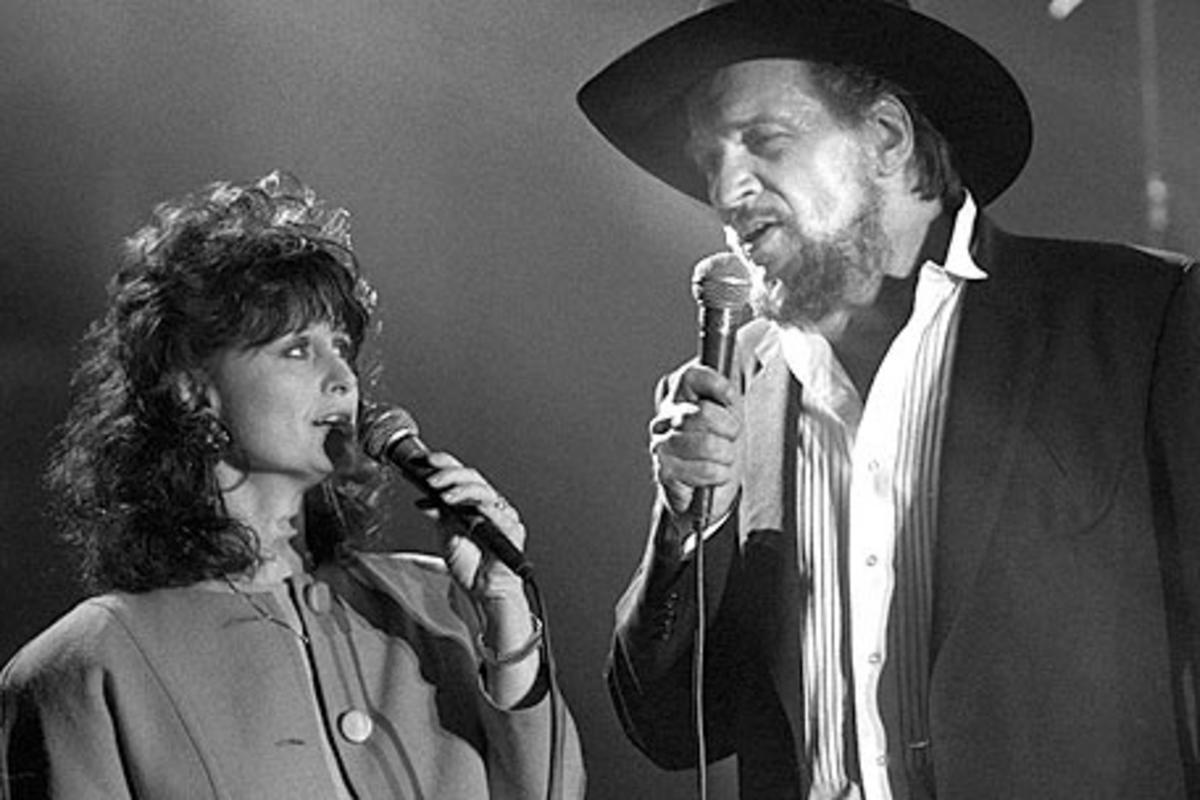
Then in 1975 she sat at a piano and recorded a song that made it impossible to dismiss her as merely Waylon Jennings’ wife.
“I’m Not Lisa” Changed Everything
The opening words were almost painfully simple:
“I’m not Lisa.”
Jessi wrote the song herself.
Its narrator, Julie, loves a man who remains emotionally trapped by the memory of another woman, Lisa.
It was a devastating idea delivered without melodrama.
The song went to No. 1 on Billboard’s country chart.
Then something even more unusual happened.
It crossed over.
“I’m Not Lisa” reached No. 4 on the Billboard Hot 100.
Suddenly Jessi Colter was not simply adjacent to fame.
She had a massive hit of her own.
Over the years, listeners have naturally heard parallels between the song and Jessi’s own life.
A woman insisting on being seen for herself.
A woman struggling against somebody else’s emotional shadow.
A woman refusing to become a substitute.
That reading is tempting.
But “I’m Not Lisa” should not be treated as a literal diary of her marriage to Waylon.
What matters is that the song established something important:
Jessi possessed an artistic identity independent of him.
The timing could hardly have been more significant.
Because while Jessi was emerging as a star, Waylon was moving deeper into the mythology that would define both of them.
Then Nashville Put Them on a Wanted Poster
In 1976, RCA assembled previously released material from Waylon Jennings, Willie Nelson, Tompall Glaser and Jessi Colter.
The result was Wanted! The Outlaws.
The packaging was unforgettable.
An Old West-style wanted poster.
Four rebellious-looking country performers.
A ready-made movement.
The album became the first country album certified platinum for sales of more than one million copies.
It helped cement the phrase Outlaw Country in American culture.
There was just one funny problem.
Waylon himself later admitted much of the “Outlaw” label was marketing.
And when discussing Jessi, he joked that calling his sweet wife an outlaw was difficult.
That contrast is revealing.
The public saw rebels.
Waylon and Willie in dark clothes.
Long hair.
Beards.
Creative independence.
A rejection of Nashville’s polished establishment.
But life at home did not unfold like an album cover.
The outlaw image made danger look romantic.
Drug addiction was not romantic.
And Waylon knew the difference.
The Pills Came Before the Myth
Waylon was remarkably candid about his drug use later in life.
He said the problem predated the peak of the Outlaw Country phenomenon.
Pills were common around musicians trying to work punishing schedules.
They kept a person awake.
They gave energy.
At first, that could even look productive.
Jessi later described the deception in similar terms: because Waylon continued working, the early stages did not always look like total collapse.
That was part of what made it dangerous.
The person was still showing up.
Still performing.
Still recording.
Still making money.
So how bad could things really be?
Very bad.
Waylon eventually moved from pills to cocaine.
Years passed.
What once helped him keep moving became the thing controlling the movement.
By his own estimate, he spent around 10 years using pills and another 10 with cocaine.
Near the end, he said his habit could cost $1,500 a day.
That was not outlaw glamour.
That was addiction.
And the difference became increasingly impossible for Jessi to ignore.
The Public Saw an Outlaw. Jessi Saw the Hours Between the Shows.
This is where the romance of the era and the reality of the marriage separate.
Audiences saw Waylon walk onto a stage and take control of a room.
They heard “Luckenbach, Texas.”
“Are You Sure Hank Done It This Way.”
“I’ve Always Been Crazy.”
They saw a black hat, a leather vest and a man who appeared almost constitutionally incapable of answering to anyone.
Jessi saw the downtime.
The withdrawal.
The isolation.
Waylon himself later admitted that during roughly the last five years of his drug use, he withdrew heavily from people.
He would sit alone with cocaine when he could have been creating music or living his life.
That regret remained with him.
He knew he had wasted years.
But he eventually realized something worse:
Those years were not being taken only from him.
They were being taken from Jessi and their family as well.
That distinction sits at the center of their marriage.
Addiction is often described through what it does to the addict.
Jessi’s story forces another question:
What does it do to the person sitting beside them?
Why Didn’t Jessi Just Leave?
It is the easy question.
And perhaps the wrong one.
From a distance, decades later, relationships become clean narratives.
Good decision.
Bad decision.
Stay.
Leave.
Save yourself.
But people living inside long marriages rarely experience their lives as simple diagrams.
Jessi loved Waylon.
They had built music together.
They had built a family.
Their son, Waylon Albright “Shooter” Jennings, arrived in 1979.
They shared friends.
Homes.
Songs.
History.
Faith.
Disappointment.
Humor.
And years when things were good enough to make the bad years harder to abandon.
Jessi would later be candid that Waylon’s addiction was real and destructive.
But she also understood something crucial:
She could not decide for him that he was finished with drugs.
No amount of arguing could manufacture willingness.
No amount of love could substitute for his own decision.
That realization became one of the hardest lessons of their life together.
Jessi Had Seen Another Outlaw Try to Change
Johnny Cash was part of their world.
Jessi knew what it looked like when a famous, complicated man confronted addiction and faith.
For a time, she wondered whether some similar outside intervention could work on Waylon.
Then she reached a different conclusion.
Waylon was not going to stop because somebody told him to.
Not Jessi.
Not another musician.
Not a preacher.
Not an industry executive.
He would have to decide.
So Jessi did something that sounds passive but probably felt anything but passive:
She waited.
She prayed.
And she watched.
Until March 1984.
That was when Waylon finally said he was ready to try.
March 1984: They Went Into the Arizona Desert
This is the chapter no invented mystery can improve.
There was no secret Tucson grave.
No cassette confession.
No buried court document.
There was a rented house in the Arizona desert.
Waylon and Jessi canceled their gigs.
They drove out on the tour bus.
Waylon intended to get off cocaine.
But even then, his commitment was not as firm as the ending makes it seem.
According to Waylon’s own later account, he initially told Jessi he expected he might be using cocaine again within 30 days.
He was going to clean himself up.
Get some distance.
Let his body recover.
But permanent sobriety?
He was not yet promising that.
Then withdrawal began.
And it hurt.
Jessi remembered it as physically and emotionally brutal.
Waylon’s body reacted.
His sleep was disrupted.
His mind had to clear after years of chemical interference.
And something unexpected happened as it did.
He began seeing the world around him again.
Including Jessi.
Then Waylon Looked at Her Face
Years later, when asked why he quit, Waylon gave an answer far more revealing than the Outlaw legend.
He spoke about what addiction does to the people who care about an addict.
They have to sit there and watch.
They have to watch someone they love destroy himself.
Waylon said that realization was one reason he managed to pull out.
Because he could see it on Jessi’s face.
And Jessi was not the only one.
Shooter was four or five.
Waylon noticed that his little boy knew something was wrong.
The child would try to connect with his father.
Waylon might be present for only a moment.
His attention was fractured.
Years later, Shooter remembered that period in the simple language of a child:
the time when Daddy used to cuss.
That hit Waylon differently.
He wanted to see his son grow up.
Suddenly, sobriety was not only about avoiding death.
It was about being present for a life that was continuing without him.
One Day, a Word Came Out Differently
Waylon’s own account of the change contains a tiny moment that feels more convincing than any grand declaration.
After weeks of getting clean, he was with Jessi in Arizona.
His mind had begun clearing.
Waylon said something about whether somebody knew that he had quit.
Then he heard himself.
Quit.
Not:
“stopped for a while.”
Not:
“taking a break.”
Not:
“getting cleaned up.”
Quit.
He looked at Jessi.
They both understood that something had shifted.
For years he had fought the people around him.
Now the decision sounded as though it had finally come from inside.
Waylon did not return to the addiction.
Jessi Did Not Claim She Saved Him
This may be one of the most important parts of Jessi Colter’s account.
It would be easy for a memoir to turn the story into:
Faithful wife saves troubled outlaw.
Jessi resisted that simplification.
She believed her presence and prayers mattered.
Waylon later wrote that they did.
But Jessi was explicit that his method should not be treated as a template for other people struggling with addiction.
He stopped largely through willpower in an isolated setting.
That can be dangerous.
She did not romanticize it.
And she did not claim she had somehow cured him.
Waylon was ready.
He had to make the choice.
She was there when he did.
That makes the story stronger, not weaker.
Love can support someone.
Love cannot make their decision for them.
Sobriety Did Not Erase the Cost
Waylon got clean.
That did not mean the past disappeared.
Years of hard living had consequences.
The Country Music Hall of Fame notes that addiction eroded his career before he faced it and recovered.
His health later became increasingly serious.
He underwent major heart surgery.
He dealt with diabetes.
Circulatory complications eventually became severe.
In 2001, part of his left leg was amputated because of diabetes-related problems.
A year earlier, the Country Music Hall of Fame had elected him as a member.
On February 13, 2002, Waylon Jennings died from complications related to diabetes.
He was 64.
Jessi had been married to him for more than three decades.
The Outlaw was gone.
For her, the silence that followed was not liberation.
It was grief.
“It Took a Long Time to Recover”
Jessi did not suddenly become the keeper of a frightening secret after Waylon died.
She became a widow.
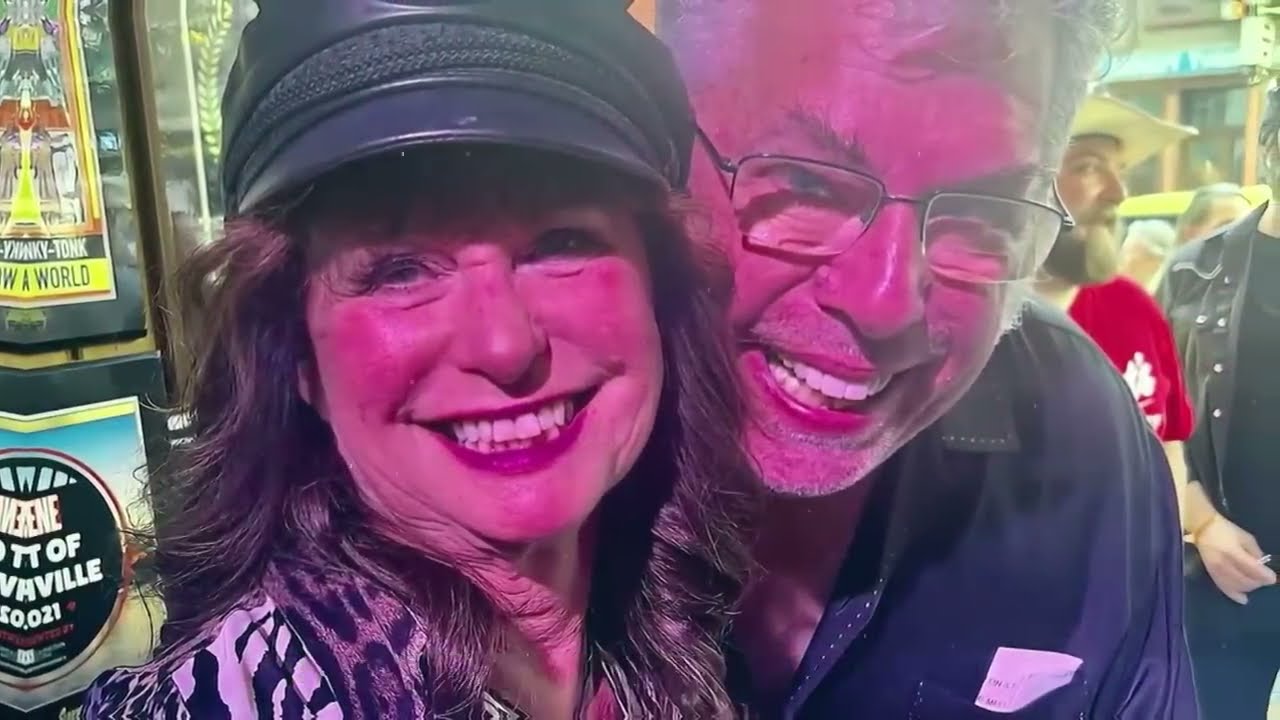
When she discussed those years in 2017, she described the recovery in simple terms:
It took a long time.
A very long time.
That makes sense.
Long marriages contain contradictions outsiders rarely understand.
Waylon could be the man whose addiction caused enormous pain.
He could also be the man Jessi loved.
The songwriter.
The musician.
The father of her son.
Her duet partner.
The man who made her laugh.
The man whose life had intertwined with hers for 33 years.
Death does not simplify those contradictions.
It freezes them.
Then the survivor has to learn how to carry all of them at once.
Jessi Eventually Did Something the “40 Years of Silence” Story Gets Completely Wrong
She talked.
In detail.
In 2017, Jessi published:
An Outlaw and a Lady: A Memoir of Music, Life with Waylon, and the Faith That Brought Me Home.
This was no vague series of hints about hidden floorboards.
It was an actual memoir.
Jessi wrote about her childhood.
Her music.
Her faith.
Waylon.
Their marriage.
His drug abuse.
Their famous friends.
And the complicated spiritual journey that ran through their lives.
That same year she sat down at the Country Music Hall of Fame for a lengthy public discussion.
She spoke about meeting Waylon.
Their relationship.
Their careers.
The Outlaw era.
The difficult parts of their marriage.
Her faith.
Then she performed.
Among the songs:
“Storms Never Last.”
And, inevitably:
“I’m Not Lisa.”
There was no forty-year vow of silence to break.
Jessi had already been telling the story.
You simply had to listen to what she actually said.
“Storms Never Last” Sounds Different After You Know the Story
Jessi wrote “Storms Never Last.”
She and Waylon recorded it together.
The song’s central promise is uncomplicated:
Bad times end.
Storms move on.
In isolation, it is a beautiful country love song.
Placed beside the history of their marriage, it becomes harder to hear casually.
For Jessi, storms were not abstract.
Neither were they always temporary in the comforting way a three-minute song suggests.
Some storms lasted years.
Some left permanent damage.
Some could only end when another person decided he was finished standing in the rain.
But Waylon did eventually make that decision.
And that is part of why Jessi’s story never settled comfortably into tragedy.
There was damage.
There was also recovery.
She Was Never Just “Waylon’s Wife”
This deserves emphasis because the Outlaw legend can swallow everybody standing near it.
Jessi had her own No. 1 record before Wanted! The Outlaws became a phenomenon.
In fact, the Country Music Hall of Fame notes that when the compilation was released, Jessi was the only one of its four artists who already had a gold record.
She had written major songs.
She had chart success.
She possessed a voice unlike Waylon’s.
She had an artistic identity separate from the black hat beside her.
And yet there is truth in the idea that parts of Jessi’s own art sometimes moved into the background.
Kris Kristofferson later observed that her commitment to Waylon and to raising Shooter affected the amount of attention she gave her own work.
That should not be turned into a simple story of sacrifice imposed upon her.
Jessi made choices.
Some undoubtedly cost her professionally.
Others gave her the family life she valued.
Again, the real story resists an easy label.
The Outlaw Era Was Bigger Than the Poster
America loves mythology.
And Wanted! The Outlaws supplied a nearly perfect one.
Waylon.
Willie.
Tompall.
Jessi.
Rebels fighting Nashville.
But the people inside the photograph knew how much of the image had been packaged.
Waylon said so himself.
The label helped sell records.
The music was real.
The desire for creative freedom was real.
But “outlaw” became a product too.
That makes Jessi’s position especially interesting.
She was the only woman in the group.
A preacher’s daughter surrounded by men celebrated for rebellion.
A singer whose biggest hit was a vulnerable piano ballad.
A wife who eventually watched one of country music’s great symbols of defiance discover that he could not defeat cocaine by posing as an outlaw.
Real rebellion, in the end, looked very different.
It looked like quitting.
Waylon Wanted His Survival to Mean Something
Near the end of that remarkably open 1988 interview, Waylon was asked how he wanted to be remembered.
His answer did not center on record sales.
Not the Outlaw movement.
Not Willie Nelson.
Not Buddy Holly.
Not chart statistics.
He wanted people to understand that someone could mess up badly, hit bottom through drugs, come back and still do something worthwhile.
That aspiration reframes the whole legend.
The outlaw image celebrated a man who refused control.
The older Waylon found pride in regaining control of himself.
And Jessi was there for both versions.
After Waylon, Jessi Found Her Way Back to Music
Grief did not end Jessi’s creative life.
She continued writing.
She continued recording.
She released Out of the Ashes in 2006.
Then came The Psalms in 2017, recorded with producer Lenny Kaye.
The title alone tells you something about where Jessi had gone emotionally.
Back to the faith that had preceded Waylon.
Back to the church pianist.
Back to the girl who understood music as something spiritual before it became professional.
But she did not simply retreat into the past.
In 2023, at age 80, she released another album:
Edge of Forever.
It was produced by Margo Price and mixed by Shooter Jennings.
The past and present were now sitting in the same studio.
And inside that album was a genuine old recording connected to Waylon.
Not a murder confession.
Not a threatening tape.
Something much more human.
Waylon Had Given Jessi an Old Song
The track was called “Lost Love Song.”
Jessi had held onto it for years.
Waylon had given her a tape of the song long ago because he thought she would like it.
She did.
There was one mystery:
Jessi never knew who wrote it.
She was not even certain Waylon knew.
Decades after he handed her that recording, she finally put her own voice to the song on Edge of Forever.
This is the kind of detail celebrity mythology often overlooks because it is too quiet.
A husband gives his wife a song.
He dies.
She keeps it.
Years pass.
Then, in her 80s, she sings it.
No conspiracy is necessary.
The emotional weight is already there.
At 80, Jessi Did Something Else Nobody Expected
She fell in love again.
For years after Waylon’s death, Jessi remained alone.
Then eventually she decided she was open to another relationship.
She met a Wyoming rancher and horseman.
The relationship developed slowly.
They got to know one another.
A few years passed.
They reconnected.
There were dates.
Then something charmingly ordinary happened.
He asked her to go on a picnic.
Jessi later said it made her feel almost like a teenager again.
In 2023, she remarried.
For an older audience, that part of the story may be as meaningful as anything about Outlaw Country.
Because it rejects another easy myth:
That after one great love ends, everything important in a person’s emotional life must also end.
Jessi did not erase Waylon.
She did not replace him.
She kept living.
When Asked About Waylon, She Didn’t Describe a Horror Story
In 2023, NPR’s Mary Louise Kelly asked Jessi about the relationship that still lived behind some of the songs.
Jessi was remarried.
Waylon had been gone for more than two decades.
She had every opportunity to reduce those years to pain.
She did not.
She called their relationship:
“a great ride.”
Three words.
They contain almost everything.
Excitement.
Danger.
Love.
Instability.
Adventure.
Fear.
Music.
Family.
Loss.
A ride can be beautiful without being safe every second.
A ride can frighten you and still become one of the defining experiences of your life.
That description feels much closer to the Jessi-and-Waylon story than either extreme.
Not:
Waylon was secretly a monster.
Not:
Love conquered everything.
A great ride.
Complicated enough to be true.
At 83, Jessi Doesn’t Need to “Finally Confess”
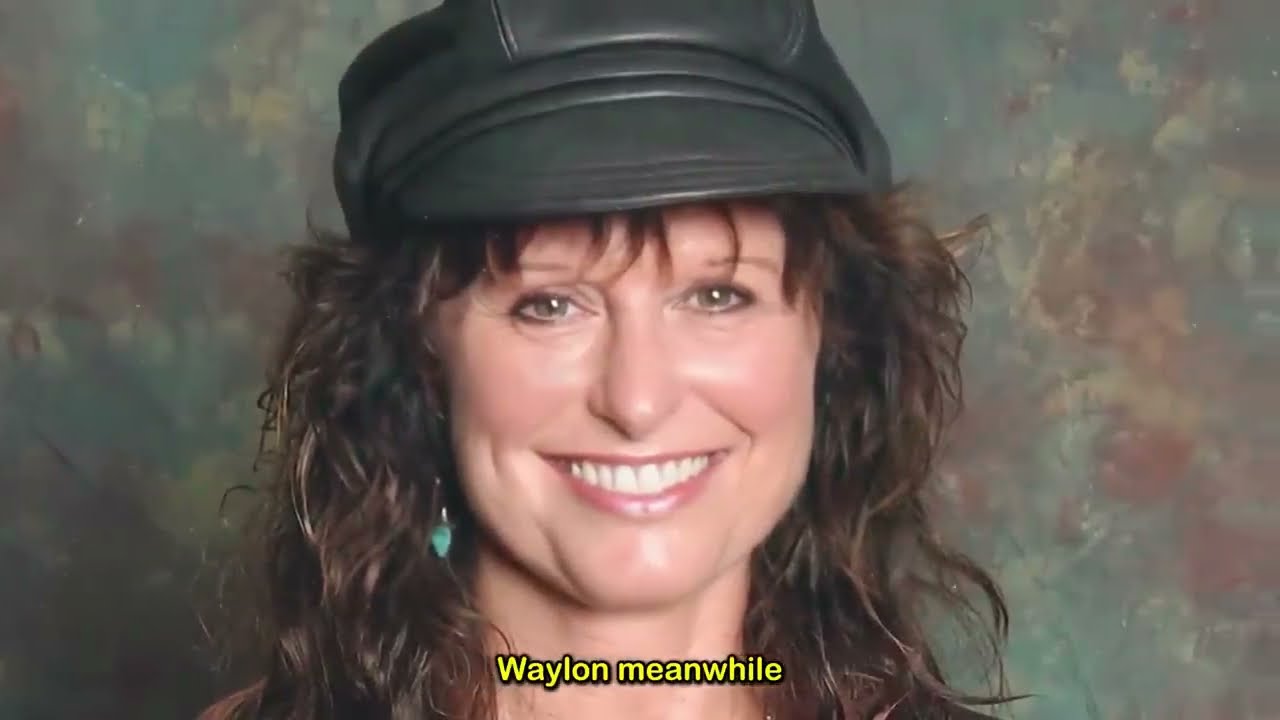
As of 2026, Jessi Colter is 83.
She has already written the memoir.
Already discussed the addiction.
Already talked publicly about the marriage.
Already recorded the songs.
Already described the faith that sustained her.
Already lived long enough to love again.
What remains fascinating is not some imaginary secret she has supposedly withheld.
It is how differently the same history looks when viewed from her side.
The Outlaw Country story is usually told through men.
Waylon Jennings fighting Nashville.
Willie Nelson leaving town.
Creative control.
Black hats.
Drugs.
Roads.
Rebellion.
Jessi’s version asks quieter questions.
Who was waiting at home?
Who watched the addiction?
Who raised the child while someone else struggled?
Who stayed without pretending staying was easy?
Who had a career of her own?
And who had to rebuild when the legend died?
Those questions produce a much richer story.
The Most Important Waylon Jennings Revelation Came From Waylon Himself
There is a certain irony in all of this.
Stories about famous dead musicians often promise that somebody else is finally revealing their “darkest secret.”
But one of the most revealing things about Waylon Jennings does not come from a leaked letter.
It comes directly from Waylon.
He knew he had hurt people.
He knew cocaine had consumed years he could never recover.
He knew addiction had isolated him.
And when his mind finally began clearing in Arizona, he looked at Jessi and their little boy and understood that his destruction had become theirs too.
That realization helped him stop.
There is no buried grave in that story.
There does not need to be.
Maybe That Was Jessi’s Real Role
Not savior.
Not victim.
Not saint.
Not silent accomplice.
Witness.
Jessi Colter witnessed Waylon Jennings at heights millions of fans could only imagine.
She also witnessed him at depths most of those fans never saw.
She watched the Outlaw become an addict.
She watched the addict become sober.
She watched him grow older.
She watched his body pay for years of punishment.
She watched him become a father trying to make up for lost presence.
Then she watched life without him begin.
And through all of it, she kept a life of her own.
Songs.
Faith.
Children.
Records.
Grief.
New music.
Eventually—
new love.
The Woman Beside the Outlaw Was Never Standing Still
That may be the biggest misconception of all.
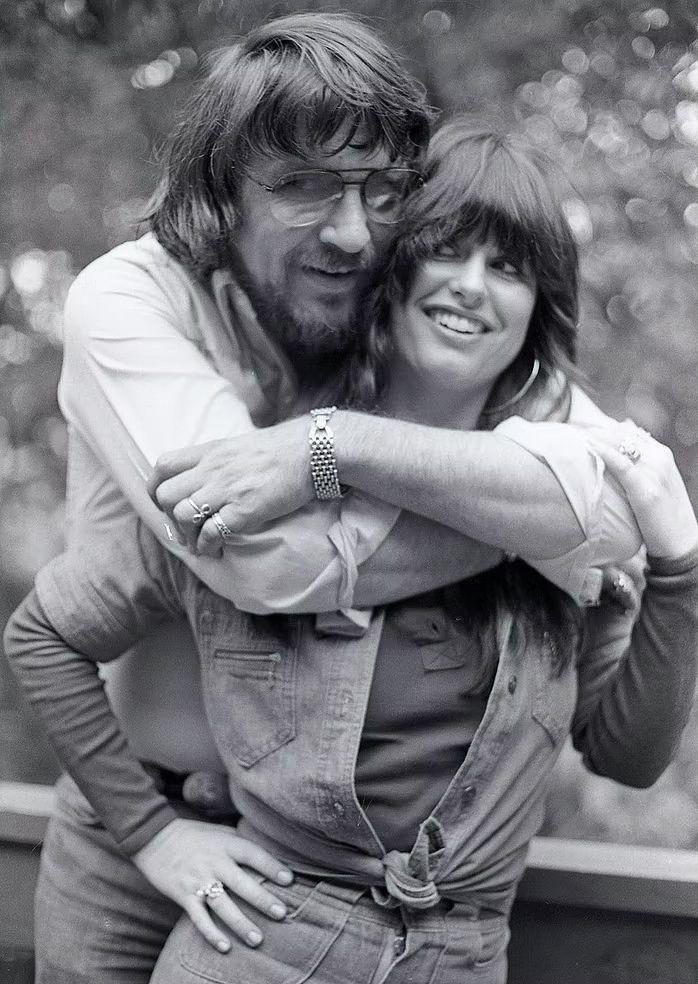
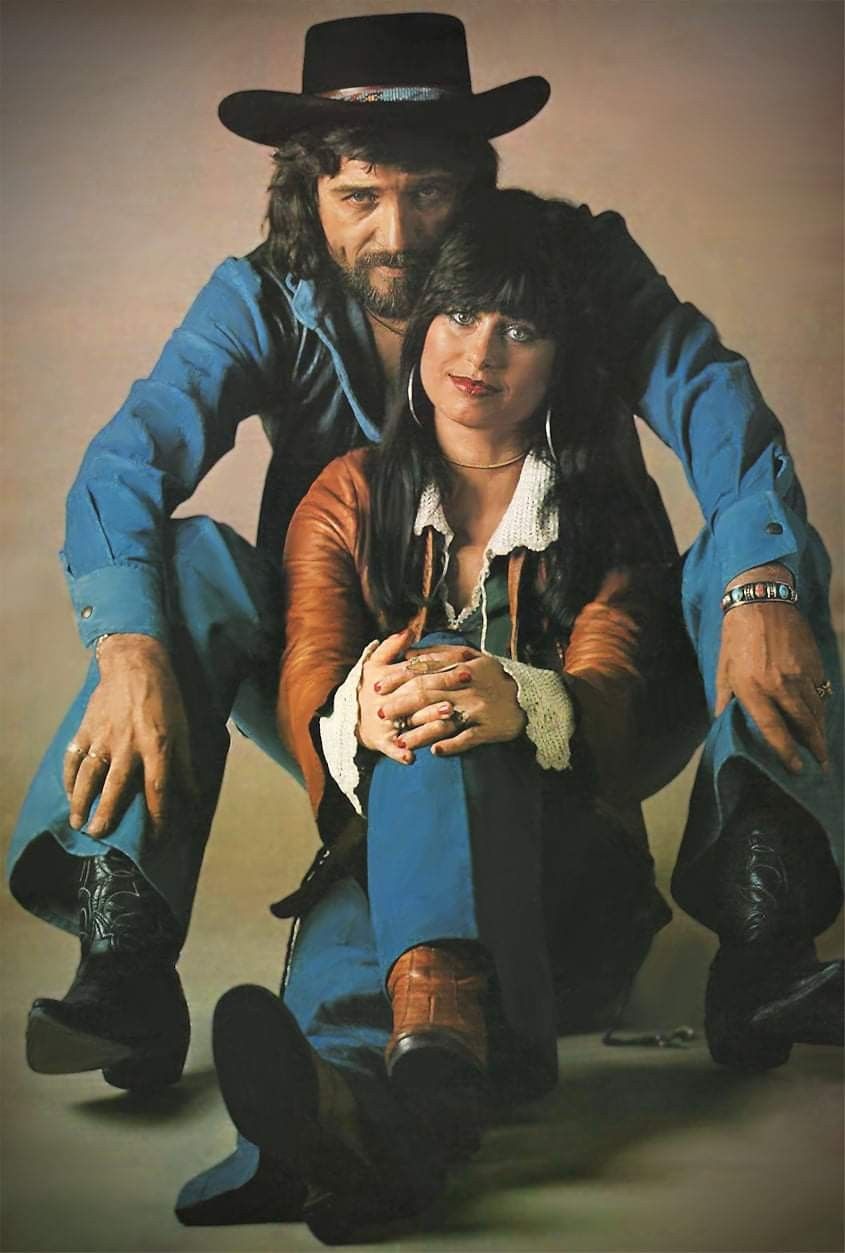
Look at an old photograph and Jessi appears frozen beside Waylon.
The beautiful couple.
The Outlaw and the Lady.
But Jessi’s life did not freeze when the shutter clicked.
She had been an artist before him.
She became famous beside him.
She survived addiction around him.
She grieved after him.
She published without him.
She recorded without him.
She fell in love again after him.
At 83, Jessi Colter is not simply the last keeper of Waylon Jennings’ memory.
She is still Jessi Colter.
And perhaps that makes one old lyric feel more appropriate than ever.
She spent a lifetime refusing to disappear inside someone else’s story.
Waylon Was the Outlaw. Jessi Was the Person Who Saw What the Legend Cost.
Country music history remembers the black hat.
The leather.
The baritone.
The rebellion.
The records.
Jessi remembers those things too.
But she also knew what happened when the stage lights went out.
And years later, Waylon himself confirmed the part that matters most.
At the bottom of his addiction, when his own suffering had become almost normal to him, he began noticing the suffering around him.
Jessi’s face.
Shooter reaching for his attention.
Friends watching helplessly.
A family living inside somebody else’s addiction.
That was when the great Outlaw finally began to understand that freedom did not mean doing whatever he wanted.
Sometimes freedom meant being able to stop.
Waylon did.
Jessi stayed long enough to see it.
They had more years together.
Then she lost him.
Then, slowly, she found a life beyond that loss.
More than two decades later, when asked to sum up what they had shared, Jessi did not reach for bitterness.
She did not reach for sainthood either.
She called it a great ride.
Maybe no description fits them better.
Because the truth about Jessi Colter and Waylon Jennings was never buried under the floorboards.
It was there in the songs, the addiction, the recovery, the faith—and on Jessi’s face when Waylon finally looked closely enough to see it.