5 Signs an Elderly Person May Be in Their Final Year – Subtle Warnings You Shouldn’t Ignore
Sometimes the first sign that an older person’s health is changing is not a dramatic emergency.
It may be something much quieter.
Dad leaves half his breakfast untouched when he used to clean his plate.
Mom starts taking two naps a day instead of one.
A shirt that fit normally a few months ago suddenly hangs loosely from the shoulders.
Someone who always walked to the mailbox now stops halfway to catch their breath or asks another person to go instead.
Individually, changes like these can have many explanations.
But when several begin happening together — and continue getting worse — they can be a sign that an older adult is becoming more frail or that an underlying health problem needs attention.
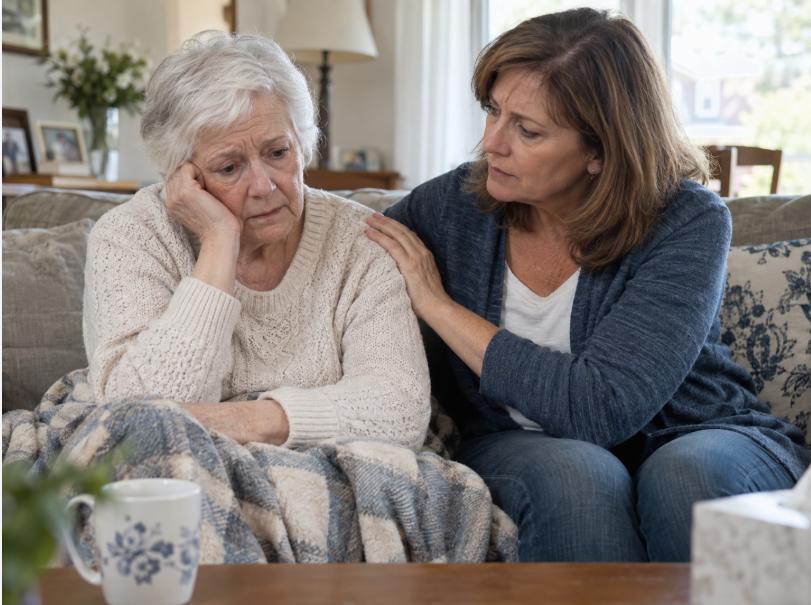
That does **not** mean anyone can look at five symptoms and predict how much time a person has left.
No checklist can do that.
Some of these changes can be caused by treatable problems such as infection, medication side effects, dehydration, depression, nutritional problems, or other medical conditions.
The important thing is not to guess how much time remains.
It is to notice meaningful changes early enough to ask the right questions.
Here are five changes families should pay attention to.
## 1. Unexplained Weight Loss or a Noticeable Change in Appetite
Often, the scale is not the first clue.
The clothes are.
A belt suddenly needs another hole.
Pants become loose around the waist.
A blouse hangs differently across the shoulders.
Cheeks look thinner in family photos.
And meals start coming back to the kitchen half-finished.
An older person may say:
“I’m just not hungry.”
Or:
“Food doesn’t taste the same anymore.”
A smaller appetite can happen for many reasons as people age.
Medications may affect taste or appetite.
Dental problems may make chewing uncomfortable.
Swallowing may become harder.
Depression, loneliness, digestive problems, chronic illness, or other medical conditions may also affect how much someone wants to eat.
That is why unexplained weight loss should not automatically be dismissed as:
“Well, people get thinner when they get old.”
### What families can do
Instead of arguing over every unfinished meal, start by noticing the pattern.
Has the person been eating less for several weeks?
Are their clothes becoming noticeably looser?
Are they skipping meals they previously enjoyed?
Do they feel full after only a few bites?
Are they having trouble chewing or swallowing?
If the weight loss is persistent or unexplained, mention it to their healthcare professional.
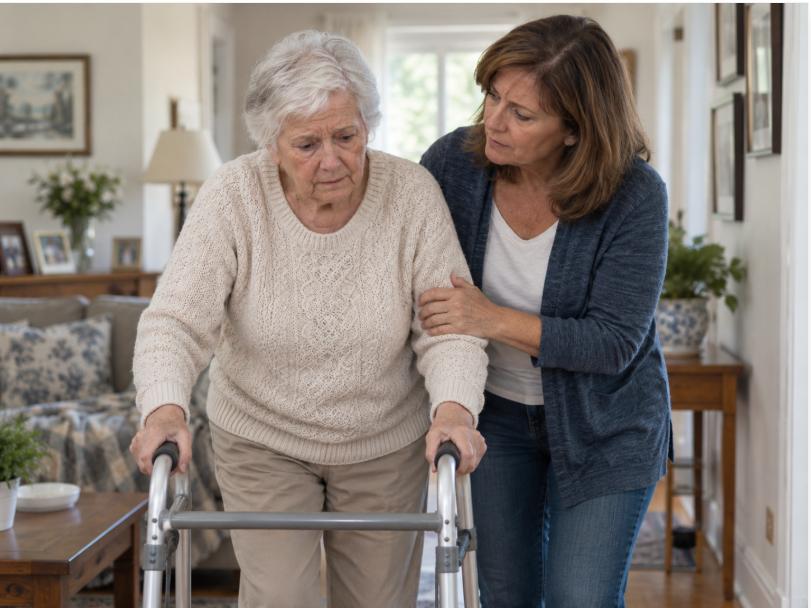
The goal is not to force someone to finish a plate.
It is to understand **why** their eating has changed.
If appetite is poor, smaller meals and familiar foods may sometimes feel less overwhelming than a large plate.
But persistent weight loss deserves more than guesswork.
It deserves attention.
## 2. A Major Drop in Energy — Not Just “Being Tired”
Everyone has slower days.
And an 80-year-old person probably will not have the same energy they had at 40.
That is normal.
What matters is a noticeable change from **their own usual level**.
Maybe Dad used to shower, get dressed, make coffee, and read the newspaper before 9 a.m.
Now simply getting dressed leaves him exhausted.
Maybe Mom used to grocery shop once a week.
Now walking from the parking lot to the entrance feels like too much.
Perhaps someone who rarely napped begins sleeping much of the afternoon.
Or conversations become shorter because staying awake and engaged requires more effort.
That kind of change is more important than the number of candles on the birthday cake.
### Look for changes in everyday function
Ask yourself:
Can they still get out of a chair as easily as before?
Are they walking less?
Do simple household tasks take much longer?
Are they spending noticeably more time in bed or in a chair?
Do they need help with things they handled independently only a few months ago?
A decline in energy can happen for many reasons.
It does not prove that someone is approaching the end of life.
But a persistent and significant decline is worth discussing with a healthcare professional, particularly when it appears together with weight loss, shortness of breath, weakness, or other new symptoms.
One of the most useful things a family can do is stop comparing an older adult with other people their age.
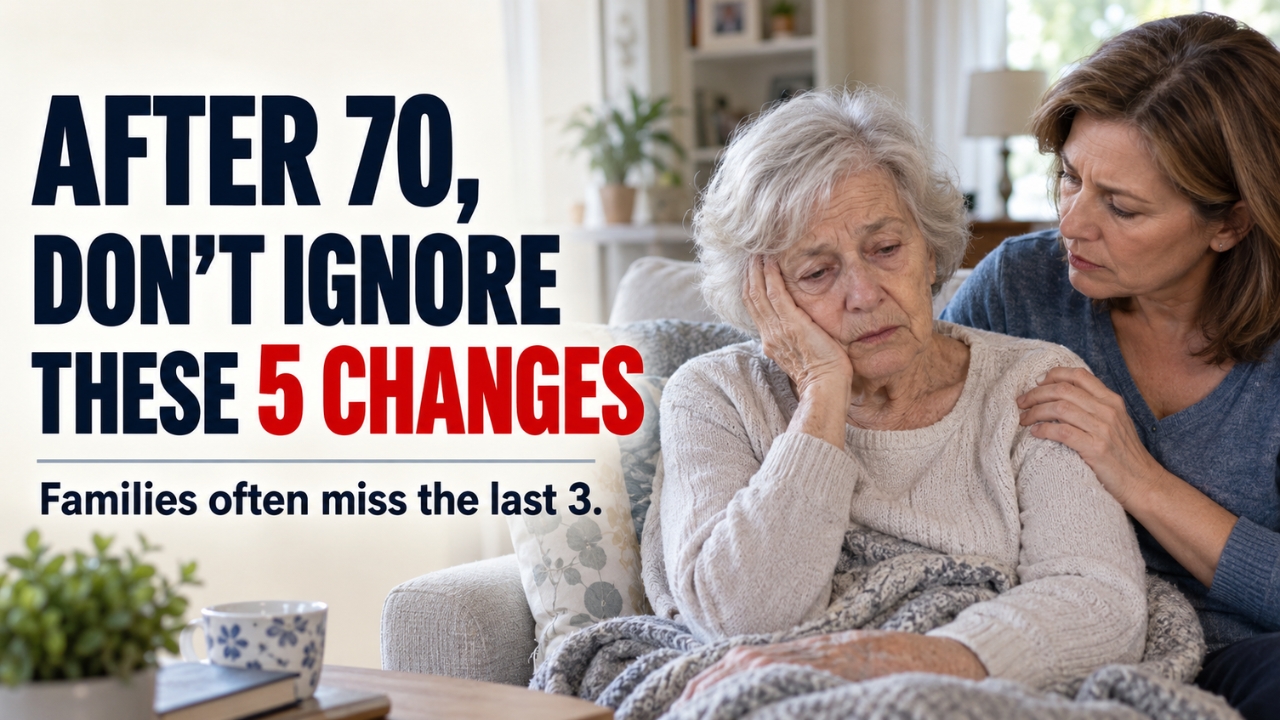
Compare them with **themselves six months ago**.
That often tells you much more.
## 3. New Confusion, Disorientation, or an Unusual Change in Behavior
This is one families should be especially careful not to dismiss.
There is a difference between occasionally forgetting where you put your glasses and suddenly seeming like a different person.
Maybe your mother becomes confused about where she is.
Your father suddenly cannot follow a conversation he handled normally yesterday.
An older relative becomes unusually sleepy, agitated, frightened, suspicious, or withdrawn.
They may seem much less interested in what is happening around them.
Families sometimes respond with:
“He’s getting old.”
But a sudden or significant change in thinking should not automatically be blamed on age.
Confusion can have many causes.
And some need medical attention.
### Pay attention to how quickly the change happened
A gradual change over months is different from confusion that appears over hours or days.
If someone becomes suddenly confused, markedly disoriented, unusually difficult to wake, or dramatically different from their normal mental state, contacting a healthcare professional promptly is important.
Do not assume that sudden confusion simply means the person is “fading.”
And do not argue with or shame someone who is confused.
Speak calmly.
Use simple sentences.
Reduce unnecessary noise.
Offer reassurance.
And seek help to understand what may be causing the change.
Sometimes the most useful thing a family member can say is:
“This is not normal for Mom. She was not like this yesterday.”
That information can matter.
## 4. Illnesses Are Happening More Often — or Recovery Is Taking Much Longer
Think about how someone recovered from illness a year or two ago.
Perhaps a respiratory infection once meant a few bad days and then a steady return to normal.
Now an illness seems to knock them down for weeks.
Or they recover — but never quite return to the level of strength they had before.
That pattern deserves attention.
As people become more frail, even a relatively ordinary illness can take a greater toll.
An infection may be followed by weakness.
Weakness can lead to less movement.
Less movement can make returning to normal routines harder.
And sometimes each setback leaves the person a little less independent than before.
Families may notice a pattern like this:
**Illness → hospital or bed rest → partial recovery → another illness → another decline.**
That does not tell you exactly what will happen next.
But it is useful information to bring to the medical team.
### Older adults may not always show illness in the way families expect
Sometimes the first noticeable change is not a dramatic fever.
It may simply be:
“He seems much weaker today.”
“She suddenly doesn’t want to eat.”
“He is more confused than usual.”
“She just isn’t herself.”
A new and significant change deserves attention, especially when the person already has serious health conditions.
And if illnesses are becoming frequent or recovery is becoming harder, families can ask the healthcare team a very useful question:
**“What should we expect from here?”**
That question can open a broader conversation about treatment, recovery, comfort, safety, and the older person’s own goals.
## 5. Everyday Independence Is Shrinking Noticeably
This may be the most useful change to watch because it is visible in ordinary life.
A person does not suddenly wake up one morning labeled “frail.”
Usually, their world becomes smaller little by little.
First, they stop driving at night.
Then they stop going to the grocery store alone.
Later, getting into the shower becomes difficult.
Then cooking seems like too much work.
Eventually, they may need help dressing, getting out of bed, using the bathroom, or moving around the house.
One change by itself may simply represent an adjustment.
But when several abilities disappear over a relatively short period, it tells you something important:
**The person needs more support than they used to.**
That is not failure.
And accepting appropriate help does not mean giving up independence.
Quite often, the right support is what allows an older adult to remain independent in the areas that matter most.
### Ask a different question
Families often ask:
“Can Mom still live alone?”
That is a very big question.
Try breaking it down.
Can she prepare food safely?
Can she get in and out of the shower?
Can she manage medications?
Can she get up after sitting?
Can she reach the bathroom safely at night?
Can she call for help if something happens?
Can she keep track of appointments and bills?
These smaller questions provide a much clearer picture of what support might actually be needed.
## What If Several of These Changes Are Happening at the Same Time?
This is where the overall pattern matters.
Imagine an 82-year-old man who:
has lost noticeable weight,
eats much less,
sleeps most of the afternoon,
needs help showering,
has had two significant illnesses in several months,
and no longer returns to his previous level of strength afterward.
No single sign tells his family exactly what the future holds.
But together, those changes justify a more serious conversation with his healthcare team.
Families can ask:
**“Are these changes reversible?”**
**“Is there something we should be treating?”**
**“What kind of decline should we expect?”**
**“What can we do to help him stay comfortable and independent?”**
**“Would additional home support, rehabilitation, palliative care, or another service be appropriate?”**
Palliative care is not the same thing as giving up.
It can be used alongside treatment for serious illness and focuses on symptoms, comfort, quality of life, and the goals that matter to the person.
The right approach depends on the individual.
## Some Changes Belong in a Different Category
There is an important distinction families should understand.
Gradual weight loss, declining energy, reduced function, and increasing frailty can unfold over months.
But some changes can be much more urgent.
For example, a person who suddenly develops severe trouble breathing, bluish or gray lips or skin, significant new confusion, loss of responsiveness, severe pain, or another dramatic change should not simply be watched at home because someone thinks:
“This must be part of getting old.”
Seek appropriate medical help.
Changes in breathing can also occur when someone is already known to be in the final stage of a serious illness.
In people who are very near the end of life, breathing may become irregular, shallow, noisy, or include pauses.
That situation is different from using breathing changes to predict that an otherwise stable older adult is in their “final year.”
Context matters.
If the person is already receiving hospice or end-of-life care, contact the hospice or healthcare team if you are unsure about what you are seeing.
They can explain what is expected and what can be done to keep the person comfortable.
## Don’t Turn Eating Into a Battle
One of the hardest things for families is watching someone they love eat less.
Food is emotional.
For decades, feeding someone may have been one of the ways the family expressed love.
So when Mom says she does not want dinner, the natural response is:
“You have to eat.”
One more bite.
Another spoonful.
Finish your shake.
But the first step should be understanding why the appetite changed.
If an older person is not known to be dying, persistent loss of appetite should be evaluated rather than automatically treated as an end-of-life sign.
If someone **is** already in the final phase of a serious illness and their healthcare team has explained that appetite loss is part of the dying process, forcing food may cause more distress than comfort.
In that situation, follow the guidance of the care team and the person’s wishes.
Sometimes care means offering food.
Sometimes care means accepting that they do not want it.
## Don’t Push Someone Through Severe Fatigue Just Because You Want Them to “Stay Strong”
Encouragement can be helpful.
Pressure often is not.
If someone is recovering from an illness or working with a rehabilitation plan, appropriate movement may be important.
But if an older adult is seriously ill or extremely fatigued, repeatedly telling them to:
“Get up.”
“Push yourself.”
“Don’t give in.”
may leave them feeling as though they are disappointing everyone around them.
A better question is:
**“What feels manageable today?”**
Maybe that is walking to the kitchen.
Maybe it is sitting outside for ten minutes.
Maybe it is simply getting washed and dressed.
The right level of activity depends on the person’s medical situation.
When in doubt, ask the healthcare team what level of activity is safe and realistic.
## One Conversation Families Often Wait Too Long to Have
You do not need to know that someone is dying to ask:
**“What matters most to you if your health gets worse?”**
That conversation can happen while someone is still alert and able to express their wishes.
Where would they prefer to receive care if they became seriously ill?
Who would they trust to speak for them if they could not speak for themselves?
What kinds of treatments are acceptable to them?
What matters more — living as long as possible, maintaining independence, staying at home, avoiding hospitalization, being comfortable, or some combination of these?
There is no universal right answer.
The important part is knowing **their** answer.
These conversations are often easier before a crisis than during one.
## What Families Should Remember Most
The five changes in this article are not a countdown.
They are not a prediction.
And they certainly do not mean:
“Five signs = one year left.”
Think of them instead as signals to pay closer attention:
**1. Unexplained weight loss or a major appetite change**
**2. A substantial decline in energy**
**3. New confusion, withdrawal, or behavioral changes**
**4. Increasing illness or slower recovery**
**5. Noticeable loss of everyday independence**
One of these may have a simple explanation.
Several appearing together may deserve a deeper conversation.
The goal is not to frighten an older person or their family.
It is to avoid overlooking changes that matter.
Sometimes the right response is treatment.
Sometimes it is rehabilitation.
Sometimes it is additional support at home.
Sometimes it is a conversation about comfort and care goals.
And sometimes it is simply spending more time together while there is still time to enjoy it.
Growing older comes with uncertainty.
No article can tell a family exactly how much time someone has left.
But paying attention can help families ask better questions, make better-informed decisions, and give an older loved one something far more valuable than a frightening prediction:
care that matches what they actually need.