Let’s be honest. When you think about getting older, what comes to mind? A cabinet full of pill bottles? Worrying about your genes being a ticking time bomb?
Or feeling like you need to run marathons just to stay healthy? It can feel like a losing battle. But what if I told you that living a long, vibrant life has very little to do with luck? I’m a physician who has spent decades listening to patients, and I’ve learned the truth firsthand.
Longevity isn’t a lottery. It’s built piece by piece through small daily choices we often overlook. I’ve had the privilege of knowing countless people who walked into their 90s with sharp minds and a great sense of humor. They didn’t have magic pills or perfect genes.
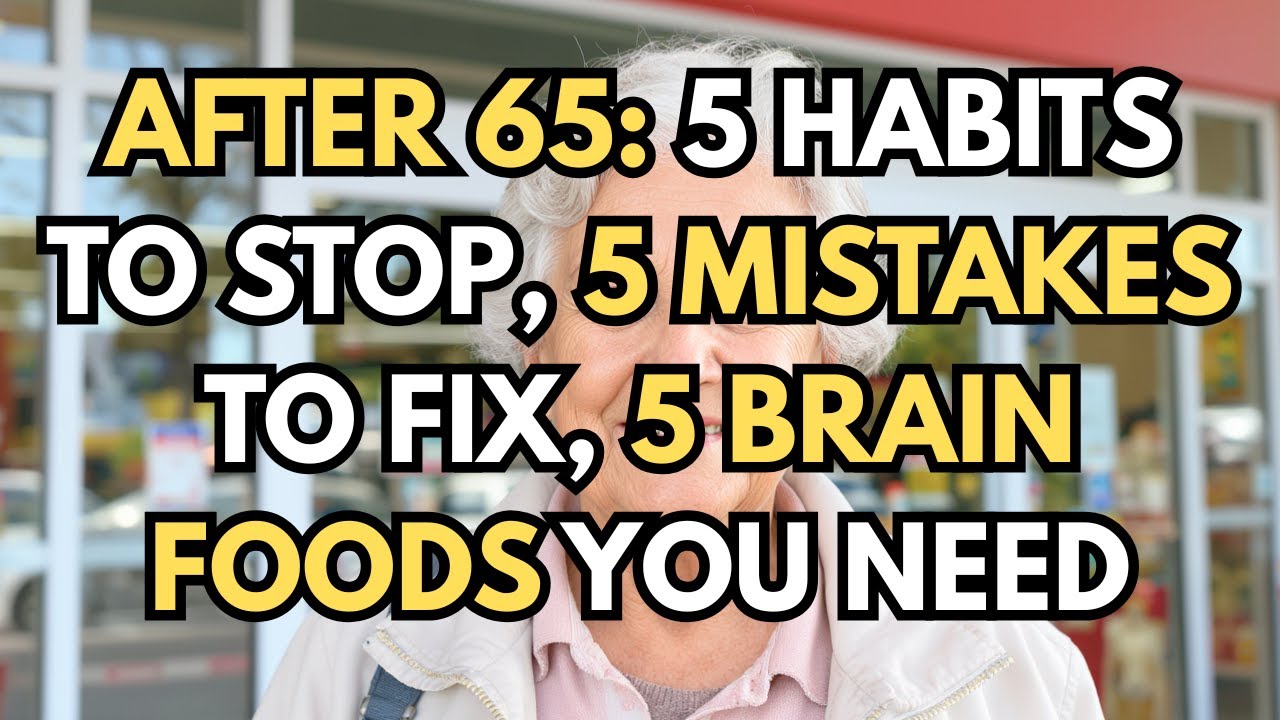
They simply learned how to avoid a few mental traps that trip most of us up. So, let me share five phrases you need to stop saying, five mistakes you need to fix, and five brain foods that can keep you sharp. Stay with me until the end, because the final secret about your life’s purpose is one of the most powerful shields against Alzheimer’s ever discovered. —
**Part One: Five Phrases to Stop Saying**
**Phrase #1: “I have nothing left to contribute.
”**
This thought often creeps in after retirement or when the kids have their own families. You look around and feel like the world is moving on without you. But this feeling of uselessness isn’t just sad—it’s dangerous for your brain. Your mind is built to solve problems and stay engaged.
When it isn’t, you can slip into depression and cognitive decline. Research from Stanford University found that older adults who lack a sense of purpose have a mortality risk two and a half times higher. I had a patient named Arthur, a retired engineer, who told me he felt lost. We talked, and he started volunteering twice a week at a local high school, mentoring their robotics club.
The change was incredible. His mind lit up again. Replace “I have nothing to contribute” with “I have a lifetime of experience to share. ” Write down your life story for your grandchildren.
Call a young person and offer advice. Sharing your wisdom keeps your brain active and strong. **Phrase #2: “My coffee or tea is hydrating enough. ”**
We all love our morning ritual, but here’s the scientific reality: caffeinated drinks are diuretics—they make you lose water.
As we age, our thirst signal becomes less reliable. This creates a perfect storm for chronic dehydration, which is a hidden cause of afternoon brain fog, dizziness, and fatigue. I remember a patient, Eleanor, who thought she was losing her memory because every day by 3 p. m.
she felt confused and exhausted. We didn’t run complex tests. We started with a simple water bottle. Within a week, her memory problems vanished.
It was just dehydration. Make this a non-negotiable goal: drink six to eight glasses of plain water every day. Keep a water bottle by your favorite chair and sip constantly. It’s the simplest, most powerful thing you can do for your brain’s clarity.
**Phrase #3: “I’m just going to lie down for a little while. ”**
This is usually said after a big meal. It seems harmless, but lying down right after eating dramatically increases your risk for severe acid reflux. As we age, the muscle that keeps stomach acid down weakens.
Lying down gives that acid a straight path back into your esophagus. This doesn’t just cause heartburn and disrupt sleep. Over years, constant acid exposure can lead to serious damage and has been linked to an increased risk of esophageal cancer. Let gravity be your friend.
After a main meal, stay sitting upright or take a gentle stroll for at least two hours before reclining. It’s a simple change that profoundly protects your long-term health. **Phrase #4: “I tried that already. It didn’t work.
”**
I hear this most often about exercise. It’s the voice of early surrender, and it’s how frailty begins. Our minds give up long before our bodies would have. Maybe you tried jogging and your knees ached, so you declared exercise isn’t for you.
But that’s like trying one food you dislike and deciding never to eat again. The problem isn’t the effort—it’s the approach. As we age, we need wisdom and adaptability. A body in motion stays in motion.
Replace that defeated phrase with “I will try a different approach. ” If jogging hurts, try swimming—it’s zero impact. If balance is a concern, explore chair yoga online. Persistence isn’t about banging your head against the same wall.
It’s about looking for a door. **Phrase #5: “I’m too tired to write down what the doctor said. ”**
This one truly worries me. We leave doctor appointments with a flood of new information, medications, and instructions.
It’s nearly impossible to remember everything perfectly, especially under stress. I’ve seen serious medication errors start with a simple misunderstanding. This isn’t a failure of intelligence—it’s a failure of system. Your memory is a fantastic tool, but it’s not a storage unit.
Make this your unbreakable rule: carry a small notebook and pen to every appointment. Before you go in, write down your three most important questions. As the doctor speaks, write down the answers and medication names. That five-cent notebook is the most powerful safety device you own.
—
**Part Two: Five Health-Eroding Mistakes to Fix**
**Mistake #6: Letting the brain retire. **
There’s a dangerous belief that when you retire from your job, you retire your mind. This is a profound mistake. Your brain is like a muscle—it weakens with disuse.
It operates on the principle: use it or lose it. When we stop challenging ourselves, the connections in our brain stagnate. But here’s the good news: your brain has a remarkable ability called neurogenesis. It can create new connections well into your 80s and 90s—but only if you give it a reason.
I think of Carol, a former accountant who felt her sharpness fading after retirement. She decided to learn Italian for a dream trip. She told me, “Doc, it was like turning the lights back on in a dusty room. ”
The solution isn’t going back to school.
Commit 15 minutes a day to learning something new. Pick up that old guitar, download a language app, or tackle a challenging jigsaw puzzle. This isn’t a hobby—it’s essential maintenance for your mind. **Mistake #7: Ignoring chronic heartburn.
**
So many of us brush off that burning sensation as just indigestion. We take an antacid and move on. But when it becomes chronic, it’s a warning sign you can’t ignore. Persistent reflux disrupts your sleep quality, often without you realizing it.
Poor sleep can worsen sleep apnea and contribute to stress. And what do stress and poor sleep do? They flood your brain with inflammatory chemicals that directly damage memory and cognitive health. It’s a vicious cycle.
If heartburn happens more than twice a week, don’t just treat the symptom. Talk to your physician. Getting to the root cause isn’t just about stomach health—it’s critical for protecting your brain from silent damage. **Mistake #8: Watching TV all day.
**
It’s so easy to let the recliner become your command center. But a sedentary lifestyle is devastating as you age. Many medical experts now call prolonged sitting “the new smoking. ”
When you sit for hours, your metabolism slows, circulation becomes sluggish, and you increase your risk for weight gain, high blood pressure, heart disease, and type 2 diabetes—all conditions that harm brain health.
The fix is simple: follow the 30-minute rule. Every 30 minutes of sitting, stand up, stretch, walk to the kitchen, or march in place during a commercial break. Just five minutes of movement resets your metabolism and gets your blood flowing. **Mistake #9: Ignoring hearing loss.
**
This mistake comes from not wanting to be a bother. You nod and smile during conversations when you’ve missed half of what was said. You turn the TV up louder and louder. But faking your way through hearing loss is one of the most taxing things you can do to your brain.
Research from Johns Hopkins University links untreated hearing loss to an increased risk of dementia. Here’s why: when you can’t hear properly, your brain works overtime to decode sounds, leaving fewer resources for memory and thinking. It also leads to social isolation, another major risk factor. Get your hearing checked annually, just like your blood pressure.
Addressing hearing loss isn’t about vanity—it’s about preserving your mental energy and staying connected to the world you love. **Mistake #10: Walking alone in the dark. **
This mistake comes from overconfidence in the body we remember, not the body we have today. After age 65, peripheral vision and low-light vision decline significantly.
A trip to the bathroom at night can become a hazardous journey. A single fall can lead to a broken hip, loss of independence, and a cascade of health problems. Safety isn’t something to assume—it’s something to build. Install motion-sensor nightlights in hallways and bathrooms.
They cost a few dollars and provide automatic light paths. If you go out after dusk, carry a flashlight. This isn’t about fear—it’s about being smart and protecting your independence. —
**Part Three: Five Essential Brain Foods**
**Food #11: Berries—blueberries and strawberries.
**
Think of these little fruits as your brain’s personal bodyguards. They’re packed with antioxidants called flavonoids, which protect brain cells from daily damage and aging. Studies show they slow cognitive decline and improve short-term memory. My patient Susan started adding blueberries to her oatmeal every morning.
After a few months, she stopped walking into rooms and forgetting why she was there. A small handful a day is all it takes. Frozen berries are just as nutritious and often more affordable. **Food #12: Fatty fish—salmon, herring, mackerel.
**
These fish are the best dietary source of DHA, an omega-3 fatty acid that’s a primary structural component of your brain. Think of it like insulation on an electrical wire. Without it, communication between brain cells becomes slow and fuzzy. A brain rich in DHA communicates clearly; a lack of it is linked to memory problems and Alzheimer’s risk.
Aim for two servings of fatty fish per week. If you truly dislike fish, talk to your doctor about a high-quality fish oil supplement. It’s one of the few supplements with strong scientific backing for brain health. **Food #13: Dark leafy greens—spinach, kale, collard greens, broccoli.
**
These are the multivitamin of the plant world, loaded with vitamin K, lutein, folate, and beta carotene. Research from Rush University found that people who ate one to two servings daily had the cognitive abilities of someone 11 years younger. It’s easier than you think. Blend a handful of spinach into a morning smoothie—you won’t taste it.
Wilt kale into soup, or have a small side salad with dinner. **Food #14: Nuts and seeds—especially walnuts. **
It’s almost as if nature gave us a clue, because a walnut looks like a tiny brain. Walnuts are unique because they’re high in both omega-3s and vitamin E, which protects nerve cells from oxidative stress—the cellular rust that contributes to aging.
A small handful, about a quarter cup, makes a perfect daily snack. Swap out crackers or chips for walnuts, and you’ve made a powerful upgrade for your brain. **Food #15: Turmeric. **
This bright yellow spice contains curcumin, one of the most potent natural anti-inflammatory agents on the planet.
Chronic low-grade inflammation is a major driver of age-related diseases, including Alzheimer’s. What makes curcumin special is that it can cross the blood-brain barrier and work its magic directly in your brain. Add it to soups, stews, or roasted vegetables. Try a golden milk latte—warm milk with a teaspoon of turmeric and a tiny pinch of black pepper.
The pepper helps your body absorb the curcumin much more effectively. —
So there you have it. We’ve unlocked the longevity code together. It’s not complicated secret science.
It’s the very code those vibrant, sharp-minded 90-year-olds live by. They didn’t get there by luck—they got there through simple daily wisdom. Hold on to this truth: a strong body and sharp mind in later years aren’t random gifts. They’re the direct result of the small conscious choices you make every day.
Your brain is not finished. It’s still fully capable of learning and growing, as long as you give it the right tools. That brings me to one final question. Knowledge is only powerful when put into action.
What is the one commitment you’re making to yourself after watching this? It could be as simple as “I’ll put a water bottle by my chair” or “I’ll try a new brain food this week. ” Maybe it’s “I’ll call my son just to share a story. ”
Please share your commitment in the comments.
When you write it down, it becomes real—and it inspires others to take that first step too. If you found value here, give this a like so it reaches more people. And if you want to continue this journey, subscribe—it’s not just subscribing, it’s joining a community of friends dedicated to living our best years together. Finally, think of one person—a friend, a spouse, a sibling—who needs to hear this message.
Share it with them. You never know, you might just change their life. Always remember: your sense of purpose is the most powerful anti-aging medicine on the planet.