The photo was perfectly clear. Riccardo, my husband of ten years, had his arms wrapped around a young woman, both of them grinning like they had just won the jackpot. My thumb hovered over the screen, ready to storm into the bedroom and shove the phone in his face. Instead, I took a slow breath.
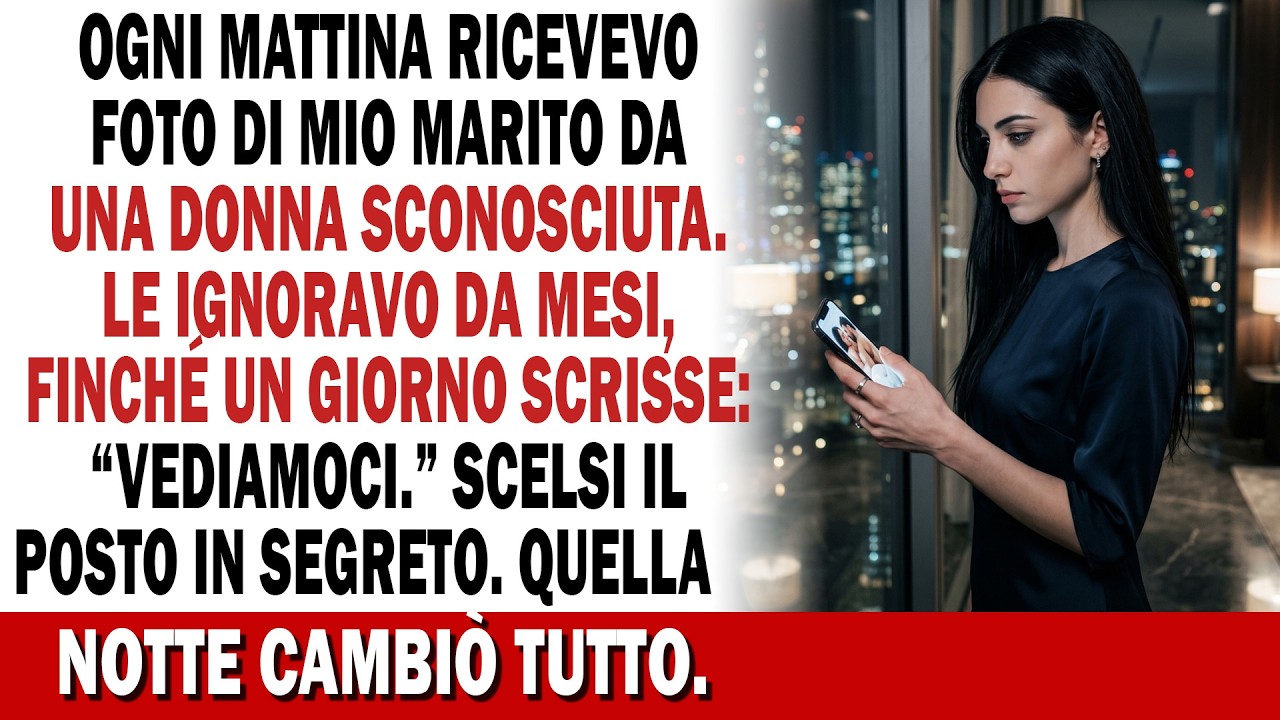
My fingers stopped trembling. I saved the image to a hidden folder on my phone, locked it, and went back to making dinner as if nothing had happened. It wasn’t shock that kept me quiet. It was strategy.
If I acted on impulse, I would lose everything. So I stayed silent, even when she started sending me messages directly. “Stay away from my husband,” she wrote. I marked it as read and said nothing.
The silence was my weapon. From that night on, I kept a careful record. Every photo she sent of their little dates, every hotel receipt I found in his jacket, every lipstick mark on his collar—all of it went into an Excel file on my laptop. I catalogued everything with the precision of a surgeon.
The woman grew bolder with each ignored message. At first, she just flaunted their happiness. Then came the taunts, the cruel little digs designed to make me feel small and replaceable. When I didn’t respond, she escalated to showing up at my own home.
One Sunday afternoon, while Riccardo was out playing billiards, the doorbell rang. I opened it to find her standing on my doorstep, arms crossed, chin raised like she owned the place. “So you’re the old hag he’s been stuck with,” she sneered, pushing past me into the living room. “I wanted to see what I was replacing.
”
I closed the door slowly and gestured to the sofa. “Sit. You’ll want to be comfortable for this. ”
She blinked, clearly thrown off by my calmness, but she sat anyway.
Her confidence was almost impressive, the way she crossed her legs and looked around my home with undisguised contempt. She had no idea that the woman standing before her had spent a decade practicing the art of patience in a courtroom. “What do you want from me? ” she asked, a smirk playing on her lips.
“A confession? A teary goodbye? I can give you both. ”
I didn’t sit.
I stood, hands clasped behind my back, the way I used to address juries. “I want nothing from you. I only wanted you here, in person, so we could talk properly. ”
She laughed, but there was a crack in it now.
“Talk about what? About how Riccardo prefers me? About how he laughs at you when you’re not looking? ”
I walked to the bookshelf and pulled out a heavy leather file.
The sound of it landing on the coffee table made her flinch. “No. I want to talk about the legal consequences of adultery and harassment. ”
Her eyes dropped to the file, then back to me.
For the first time, she looked uncertain. “I’ve been collecting evidence for two months,” I said, opening the file to reveal printed screenshots, hotel receipts, credit card statements, and a carefully organized timeline. “You’ve sent me over a hundred messages, dozens of photographs. You’ve been to our apartment twice—I have security footage.
You left lipstick in his jacket pocket, and I have the dry cleaning receipt. ”
The color drained from her face. “You see,” I continued, my voice as calm as a summer breeze, “I never ignored you because I was hurt. I ignored you because I was building a case.
Every message you sent, every photo of your little trips, every cruel word—it all goes into this file. And this file is going to cost you five hundred thousand euros. ”
She tried to speak, but the words came out as a strangled whisper. “You’re bluffing.
”
“I never bluff,” I said. “I’m a lawyer. I’ve spent my entire career making sure people like you face the consequences of their actions. ”
The front door opened, and Riccardo walked in, whistling some tune until he saw the two of us sitting there.
His face went white. The keys slipped from his hand and clattered on the floor. “What’s going on here? ” he asked, his voice unsteady.
I turned to him, holding out a copy of the file. “This, my dear husband, is your divorce papers. And yours,” I said, turning back to the woman, “is the invoice for your little games. ”
Riccardo took a step forward, reaching for me, but I stepped back.
“You can save the begging,” I said. “You can save the apologies. It’s all in the file. The court will decide what’s left.
”
For the first time that afternoon, a genuine emotion crossed the woman’s face—not anger, not defiance, but fear. Real, naked fear. “Please,” she whispered. “I have a job.
A reputation. If this gets out, I’ll lose everything. ”
“You should have thought of that before you decided to play house with someone else’s husband,” I said. Riccardo was shaking now.
“I never meant for it to go this far. It was just… it was just fun. She was fun.
I never wanted to lose you. ”
I looked at him, this man I had loved for a decade, and felt nothing. No anger. No sadness.
Just a quiet, empty acceptance of what he really was. “Is that why you stopped taking me to the hospital? ” I asked. He frowned.
“What are you talking about? ”
“You never went with me to any of my appointments, Riccardo. You don’t know what the doctor told me. ” I paused, letting the silence stretch.
“I can’t have children. I’ve known for years. And when I told you I wanted to go to a specialist, you laughed and said I was being dramatic. Then you went to her.
”
The woman looked at him with new eyes, seeing him for what he was. A liar. A coward. A man who’d rather run than face his own fears.
“Everything in this file is documented,” I said, closing the folder and picking it up. “I’ll be sending copies to your lawyers. Both of you. And I will not be settling for anything less than the full amount.
”
I walked to the door and opened it. “I’ll give you both five minutes to collect your things. After that, this house belongs to me and my solitude. ”
They didn’t argue.
They just stood there, two people who had destroyed their own lives, watching the door close behind them. The next morning, I filed everything with the court. Two days later, I received a text from the woman: “Please. I’m begging you.
I’ll do anything. ”
I marked it as read and blocked her number. Riccardo tried to call forty-three times over the following week. I didn’t answer a single one.
He sent long messages, paragraphs of apologies and promises, but I never opened them fully before deleting. The money came through faster than I expected. The settlement was exact, the way I had written it. I used a portion of it to buy a small apartment in the city, a place with a garden and a quiet view of the old church.
I planted roses on the terrace, the ones I had always wanted but Riccardo said were “too fussy. ”
It took me a long time to feel whole again. There were nights when I sat alone on the terrace, looking at the stars, and the weight of what I had lost pressed against my chest. But in the morning, the roses were still there, and the sun still rose, and I was still standing.
I learned a few things that year. I learned that silence can be the sharpest weapon. I learned that revenge, when built with patience and precision, can be cleaner than any outburst. And I learned that sometimes, the most loving thing you can do for yourself is walk away from someone who never truly saw you.
The file is locked away now, but I won’t destroy it. Not as a reminder of what they did, but as a reminder of what I survived. What I built. The last time I saw Riccardo, he was standing across the street from my new apartment.
He looked older somehow, softer, like the world had finally started to weigh on him the way it had weighed on me all those years. Our eyes met for a moment, and I thought I saw hope flicker in his expression. I turned and went back inside, closing the door quietly behind me. Some doors can be opened again.
And some, once closed, should stay closed forever.