When Kensington Palace moved swiftly to defend Kate Middleton from a damaging magazine profile, the statement was brief, sharp and unmistakable.
The Palace said the story contained inaccuracies. It pushed back. It drew a line. For many royal watchers, that was simply the institution doing what it is supposed to do: protecting a future Queen from claims it believed were misleading.
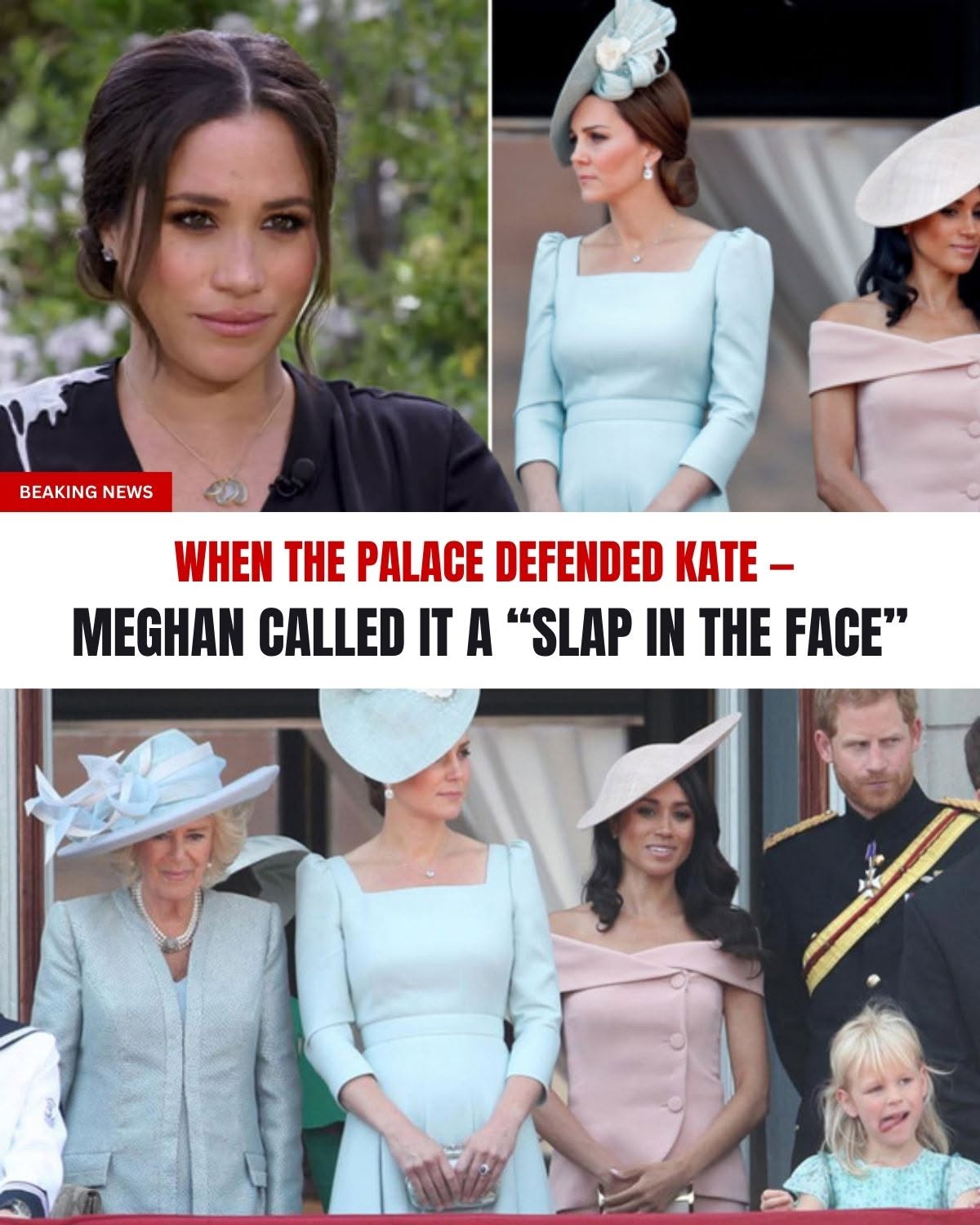
But for Meghan Markle, according to reports at the time, the moment carried a far more personal meaning. It was not just about Kate. It was about comparison. It was about hierarchy. And, in Meghan’s view, it appeared to confirm one of the deepest grievances she and Prince Harry had carried out of royal life: that some members of the family were protected faster, louder and more decisively than others.
To her supporters, it was proof of a double standard.
To her critics, it raised a colder question: was Meghan asking for protection — or demanding the same institutional treatment as the woman married to the future King?
The Kate Statement That Reopened an Old Wound
The controversy began in 2020, when Tatler published a profile of Catherine, then Duchess of Cambridge, under the headline “Catherine the Great.”
The article portrayed Kate as increasingly central to the monarchy after Harry and Meghan stepped back from royal duties. It also claimed she felt exhausted, trapped and burdened by a heavier workload. Other details touched on alleged tensions between Kate and Meghan, including the now infamous pre-wedding bridesmaid dispute.
Kensington Palace did not let the article sit unanswered.
Within roughly a day of the piece appearing online, the Palace issued a rare public response, saying the story contained “inaccuracies” and “false misrepresentations” that had not been put to Kensington Palace before publication.
For royal communications, that mattered. The monarchy often operates under the old rule of “never complain, never explain.” Palace statements about personal criticism are not handed out casually. When they do appear, the message is usually bigger than the sentence itself.
In this case, the message was obvious: Kate would not be left exposed.
That is where Meghan’s grievance, as reported by several outlets, found its emotional force. She had spent years claiming that negative stories about her were left to spread, harden and become public “truth.” Then, when Kate faced one high-profile article, the Palace acted.
To Meghan, reportedly, it felt like a slap in the face.
Meghan’s Version: “Everyone Knew It Wasn’t True”
The heart of Meghan’s complaint was not only that Kate received protection. It was that Meghan believed she had been denied the same protection when the story hurt her.
During her 2021 interview with Oprah Winfrey, Meghan directly addressed the long-running claim that she had made Kate cry before her wedding to Prince Harry. Meghan said the reverse had happened: that Kate had made her cry during a disagreement over flower girl dresses.
She also said Kate later apologised, sent flowers and took responsibility privately. Meghan was careful in that interview to say Kate was “a good person.” But her real frustration was aimed at the institution around them.
According to Meghan, people inside the Palace knew the public version of the story was wrong. Yet the narrative was allowed to stand.
That is the crucial detail. Meghan was not merely objecting to bad press. She was saying that the Palace had the power to correct a damaging claim and chose not to.
In her telling, silence was not neutrality. Silence helped create the villain.
Harry’s Bigger Argument: Public Support Never Came
Prince Harry’s complaint went even further.
In the same Oprah interview, Harry said there had been “many opportunities” for his family to show public support for Meghan, particularly because of the racial dimension of some media coverage. He claimed that no one in his family said anything publicly for a long period while Meghan was under intense scrutiny.
That allegation became one of the central emotional pillars of the Sussexes’ case against the royal machine: Meghan was not simply criticised; she was, in their view, left alone in a hostile media environment.
But there is an awkward complication.
The Palace had, in fact, defended Meghan before she became a working royal. In November 2016, Kensington Palace issued an unusually forceful statement on behalf of Prince Harry condemning abuse and harassment directed at Meghan when their relationship became public. The statement referred to racial undertones, sexism, social media abuse, paparazzi pressure and intrusion into her family’s life.
That statement is important because it prevents the story from being too simple.
It is not completely accurate to say the Palace never defended Meghan. It did — early, publicly and strongly.
The more precise argument is different: Meghan and Harry appear to believe the institution did not continue defending her once she was inside royal life and once the negative stories became tied to internal Palace dynamics.
That distinction matters. It is the difference between “they never protected her” and “they protected her once, then stopped when protection became politically inconvenient.”
Why Critics See Entitlement Instead of Injustice
For Meghan’s critics, the Kate comparison does not prove unfairness. It proves that Meghan misunderstood the hierarchy she had married into.
Kate was not just another royal wife. By 2020, she was the wife of the future King and the mother of a future King. Her public image was not simply personal; it was directly tied to the long-term stability of the monarchy.
From that perspective, a Palace intervention on Kate’s behalf was not a gesture of affection. It was institutional self-preservation.
That is the argument critics make: the Palace did not defend Kate because she was “favoured” as a woman over Meghan. It defended Kate because Kate’s role sat closer to the Crown.
And this is where the Sussex grievance becomes combustible.
Meghan’s supporters hear the story and see discrimination, coldness and a double standard.
Her critics hear the same story and see a woman who expected equal institutional protection without equal constitutional importance.
That is why this episode still triggers anger among royal watchers. It is not only about who cried before a wedding. It is about whether Meghan ever accepted that the monarchy is not built around personal fairness. It is built around rank, duty and succession.
The Palace’s Dilemma: Silence Can Protect — Or Destroy
The monarchy’s communications strategy has always depended on restraint. Palace aides rarely want to dignify every rumour with a response. If they deny one story, they create pressure to deny the next. If they correct one narrative, silence on another begins to look like confirmation.
But Meghan’s experience exposed the weakness of that system.
In the modern media environment, silence does not always look dignified. Sometimes it looks complicit. Sometimes it allows a story to mutate until the public treats it as fact.
That is what Meghan argued happened with the Kate crying story. Whether one accepts every part of her version or not, the communications failure is obvious: a private family dispute became a defining public narrative, and the Palace never found a way to contain it before it hardened into a symbol of the Meghan-Kate divide.
By the time Meghan spoke to Oprah, the story was no longer about bridesmaid dresses. It had become evidence in a much larger case: Meghan versus the institution.
But Kate Also Paid a Price
There is another overlooked part of this story. Kate, too, became trapped inside the same public drama.
For years, she was positioned as Meghan’s opposite: calm versus disruptive, dutiful versus rebellious, silent versus outspoken. That contrast helped tabloids build easy narratives, but it also turned both women into symbols rather than people.
Meghan suggested as much to Oprah when she said there did not need to be a villain if one admired the other woman. But by then, the “hero and villain” framing had already become too useful for the media to abandon.
The irony is that both women were damaged by the comparison, though in very different ways.
Meghan became the outsider who claimed she was unsupported.
Kate became the insider who, to some Sussex supporters, symbolised the protection Meghan never received.
The Palace may have thought it was defending Kate from one article. In reality, that decision became another piece of evidence in the Sussexes’ larger argument about favouritism.
The Oprah Response Changed Everything
When Harry and Meghan finally made their accusations on global television, Buckingham Palace responded with one of the most dissected royal statements in modern history.
The statement said the family was saddened by how challenging the previous years had been for Harry and Meghan. It said issues raised, particularly around race, were concerning and would be taken seriously. But it also included the now famous line: “some recollections may vary.”
That phrase was devastatingly effective because it did two things at once. It expressed concern, but it refused to fully accept the Sussexes’ version of events.
To supporters of the Palace, it was measured and necessary.
To supporters of Meghan and Harry, it was another dismissal.
To critics of the Sussexes, however, it exposed the central weakness in their campaign: they wanted the Palace to validate their pain publicly, while also accepting their account as the official truth.
And that was something the institution was never likely to do.
Protection, Favouritism — Or the Rules of the Crown?
The Kate statement still matters because it cuts straight to the unresolved question at the centre of the royal rift.
Was Meghan treated unfairly?
Or did she expect the monarchy to operate like a modern workplace, where emotional harm, reputational damage and public attacks should be addressed according to personal need rather than rank?
The answer depends on what one believes the Royal Family is supposed to be.
If it is a family, Meghan’s anger is easier to understand. A sister-in-law was protected. She felt she was not. The wound becomes personal.
If it is an institution, Kate’s protection becomes easier to explain. The future Queen was defended because her image served the Crown. Meghan’s image, especially after the Sussexes’ growing tensions with the Palace, became more complicated.
That is the brutal logic of monarchy. It does not protect everyone equally. It protects the line.
And perhaps that is why this moment still stings. For Meghan, it reportedly confirmed that she would never be treated as equally valuable inside the Palace machine. For critics, it confirmed something else entirely: that Meghan wanted the privileges of royal protection while increasingly rejecting the obligations that came with royal life.
Years later, the argument has not faded.
Because the question was never just whether Palace aides defended Kate.
The real question was whether Meghan ever truly understood what the Palace exists to defend.


