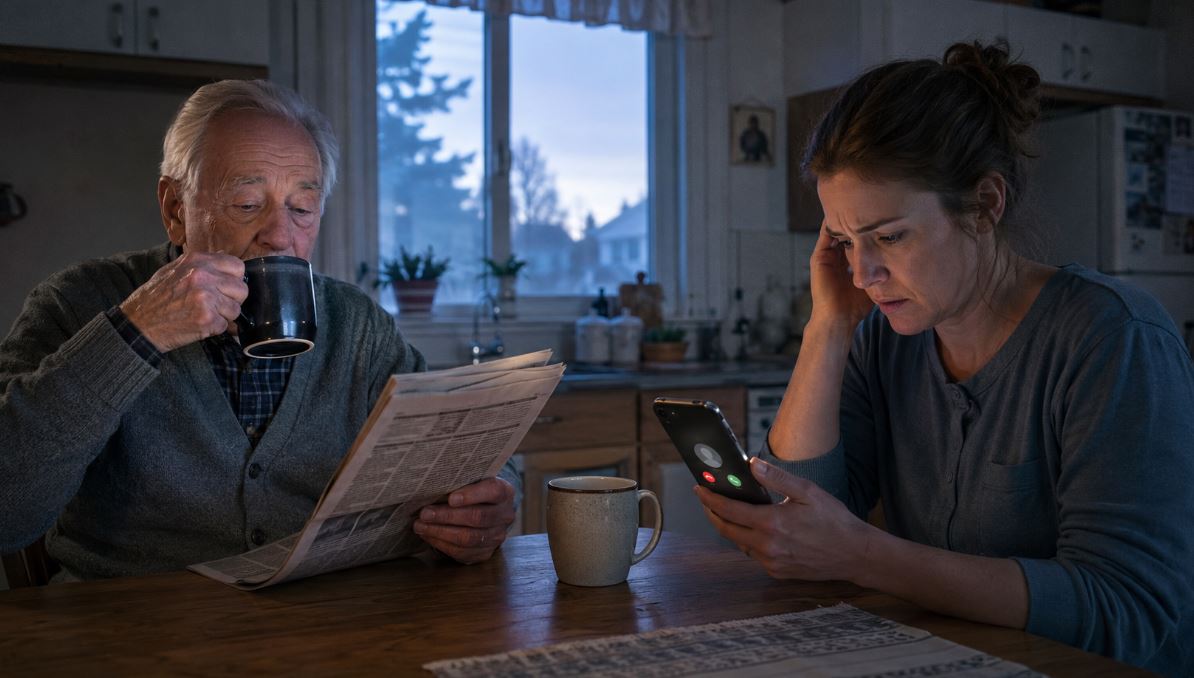
At exactly 6:00 in the morning, my phone rang.
I remember the time because the house was still quiet. The kind of quiet that comes before sunrise, when the world feels soft and unfinished.
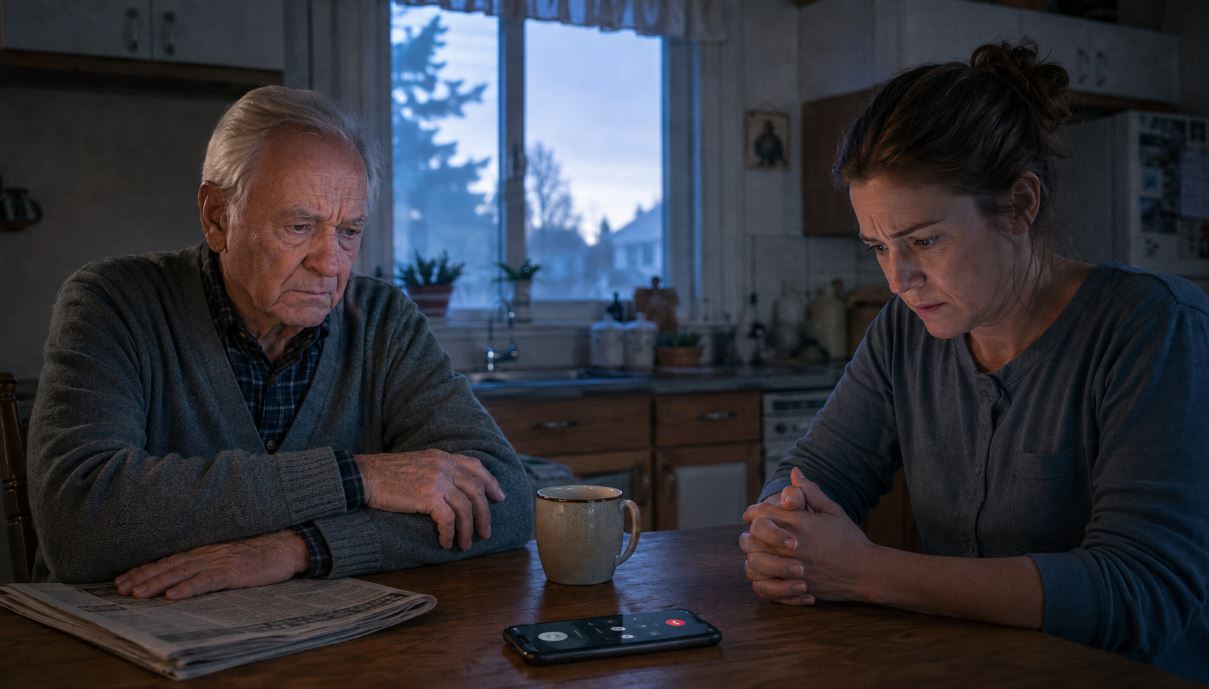
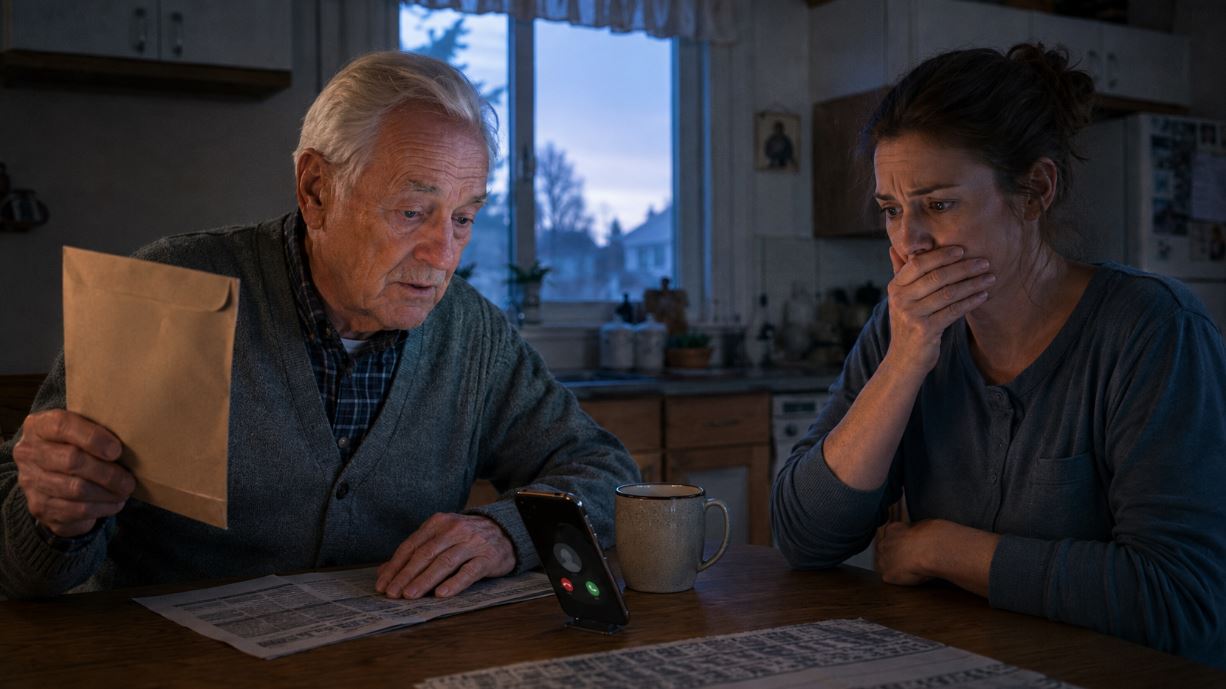
My grandfather was sitting across from me at the kitchen table.
He had one hand wrapped around a mug of black coffee. The other held the morning newspaper, folded neatly the way he always folded it. He was wearing his old gray cardigan, the one with a missing button near the bottom.
To anyone else, he would have looked like an ordinary old man starting an ordinary day.
But to me, he was the man who had raised me.
My parents gave birth to me.
Grandpa gave me a life.
His name was Walter Bennett. He was eighty-two years old, sharp as a tack, and stubborn enough to argue with a thunderstorm.
He had a bad knee, a slow walk, and a habit of pretending not to hear things he didn’t want to answer. But his mind was clear. Clearer than most people half his age.
That morning, he had come over early because he said he couldn’t sleep.
“I kept thinking about your grandmother,” he told me when I opened the door.
Grandma had been gone six years.
I made him coffee. He sat down. We talked about little things. The weather. The neighbor’s dog. The cost of eggs. The fact that my youngest son still refused to eat anything green.
Then my phone rang.
My father’s name flashed across the screen.
DAD.
That alone was strange.
My father almost never called me early unless he wanted something.
Grandpa lowered the newspaper and glanced at the phone.
“A little early for him,” he said.
I felt something tighten in my stomach.
I answered.
“Hello?”
My father did not say good morning.
He did not ask if I was awake.
He did not ask how I was.
He said, “Your grandfather died last night.”
For a moment, the room seemed to stop breathing.
I looked across the table.
Grandpa blinked once.
Then he slowly put his coffee cup down.
My father kept talking.
“Massive heart attack,” he said. His voice was flat. Not broken. Not shaken. Not even tired.
Just impatient.
“We don’t have much time. I need the combination to his safe before the bank gets involved.”
I didn’t speak.
Grandpa didn’t either.
His eyes stayed on my face.
From the background of the call, I heard my mother’s voice.
“Ask her about the house keys too,” she said. “If we move fast, we can get the realtor there before lunch.”
Then she laughed.
It was a small laugh.
A careless laugh.
The kind of laugh people make when they think no one important is listening.
My blood went cold.
Not because I believed them.
Grandpa was sitting right in front of me.
Alive.
Breathing.
Listening.
But because they wanted him gone so badly that they were willing to pretend it had already happened.
I looked at my grandfather.
His face had changed.
A minute earlier, he had been a tired old man with coffee and a newspaper.
Now he looked like a judge.
Calm.
Still.
Dangerously quiet.
I did the only thing I could think to do.
I tapped the speaker button and placed the phone in the middle of the table.
My father’s voice filled the kitchen.
“Are you there?” he snapped. “Don’t play games, Emily. This is serious.”
I swallowed.
“Yes,” I said. “I’m here.”
“Good. Listen carefully. The safe is in his bedroom closet, right? Behind the old coats?”
Grandpa’s eyes moved toward the hallway.
That was where his coat closet was in his own house.
Not mine.
My father kept going.
“I know he gave you the combination. He trusted you with everything. Always did.” His voice sharpened. “So now you need to do the right thing and share it with the family.”
The family.
That was what my father always said when he meant himself.
I said, “Why do you need the safe right now?”
There was a pause.
Then my mother cut in.
“Because we need to know what we’re dealing with,” she said. “There may be cash. Bonds. Jewelry. Your grandmother’s things. We can’t have anything disappearing.”
Grandpa’s jaw tightened.
My grandmother’s wedding ring was in that safe.
So were her letters.
So was the deed to his house.
So were the savings bonds he had put away for my children’s college.
And yes, there was money.
More than my parents probably knew.
But there was also something else.
A sealed envelope.
One I had seen only once.
Grandpa had shown it to me six months earlier.
“If anything happens to me,” he had said, “this goes to Mr. Cline.”
Mr. Cline was his lawyer.
At the time, I had asked, “Should I be worried?”
Grandpa had smiled sadly.
“Not about me,” he said. “About them.”
Now I understood.
My brother’s voice came onto the line.
“Emily, stop being difficult,” he said.
Of course he was there too.
My brother Mark never arrived early unless there was money on the table.
“Grandpa’s gone,” he said. “We have to make decisions. The funeral home. The obituary. The house. The truck. The accounts.”
Grandpa turned his head slowly toward the phone.
His hands were flat on the table now.
I could see the blue veins under his skin.
He had worked with those hands all his life.
Construction first. Then maintenance at the high school. Then odd jobs after retirement, because sitting still made him feel useless.
Those hands had fixed my first car.
Those hands had built the crib my son slept in.
Those hands had held mine when I signed my divorce papers.
And now his own son was talking about him like furniture to be divided.
My father sighed loudly.
“Look, we don’t have time to be sentimental. The man was eighty-two. This wasn’t exactly a surprise.”
My mother added, “Honestly, Walter held on longer than anyone expected.”
Grandpa closed his eyes.
Just for one second.
That hurt more than if he had shouted.
When he opened them again, they were shining.
But he did not cry.
He was not that kind of man.
He leaned back in his chair and listened.
My father continued.
“Here’s what we’re thinking. We list the house quickly. The market’s still decent. Mark can take the truck. I’ll handle the accounts. Your mother wants your grandmother’s jewelry. You can have some pictures or whatever.”
“Pictures or whatever,” I repeated quietly.
“What?”
I looked at Grandpa.
He gave the smallest shake of his head.
Not yet.
So I said, “Nothing.”
My mother’s voice became sweet.
That was always a warning sign.
“Emily, honey, I know you were close to him. But you need to understand something. You had him for years. You got the attention. You got the special treatment. Now it’s time to be fair.”
Fair.
That word nearly made me laugh.
Fair was not my father vanishing for weeks when I was a child because he “needed space.”
Fair was not my mother dropping me at Grandpa and Grandma’s house every weekend, then complaining that I loved them more.
Fair was not my parents borrowing money from Grandpa and never paying it back.
Fair was not them forgetting his birthday three years in a row.
Fair was not them calling him stubborn when he asked them to visit.
Fair was not them planning his funeral while he sat six feet away, alive.
Grandpa reached for his coffee again.
His hand trembled slightly.
I almost took the phone off speaker then.
Not because I wanted to protect my parents.
Because I wanted to protect him.
But he saw me move and put one finger on the table.
Stay.
So I stayed.
My brother spoke again.
“Dad, ask her about the bank card.”
My father lowered his voice, though speakerphone caught every word.
“Right. Emily, did Grandpa ever give you his PIN?”
Grandpa’s face went still.
I said, “Why would you ask that?”
“Oh, don’t act offended,” Mark said. “We’ll need money for funeral expenses.”
My mother laughed again.
“Funeral expenses first,” she said. “Then we’ll see what’s left.”
That was when Grandpa stood up.
Slowly.
Carefully.
He pushed the chair back without making a sound.
My father was still talking.
“We already called Pastor Jim. He said he could do Friday. Nothing fancy. Walter wouldn’t care. Closed casket, simple flowers. We don’t need to waste money impressing people.”
Grandpa walked down the hallway.
I heard the soft drag of his slipper on the floor.
My heart pounded.
For a terrifying second, I thought he was leaving.
Then I heard the drawer in the guest room open.
He came back holding a small brown envelope.
The envelope.
The one with Mr. Cline’s name written on the front.
He placed it beside the phone.
Then he sat down again.
My father said, “Emily? Are you listening?”
“Yes,” I said.
“Then answer me. Do you have the safe combination or not?”
Grandpa picked up the envelope.
His thumb ran over the sealed flap.
Then he leaned toward the phone.
His voice was quiet.
But it filled the whole kitchen.
“You don’t need the combination, Richard.”
Silence.
For three full seconds, no one spoke.
Then my mother gasped.
Mark cursed under his breath.
My father said, “Dad?”
Grandpa’s mouth twisted into something that was not a smile.
“Still here,” he said.
Another silence.
This one was different.
Heavy.
Terrified.
My mother was the first to recover.
“Walter,” she said quickly. “Oh my God. We were told—”
“No, you weren’t,” Grandpa said.
His voice was calm.
That made it worse.
“No one told you I died. No doctor called you. No hospital called you. No neighbor called you. You made that up.”
My father stammered.
“I was trying to— I thought—”
“You thought I was close enough to dead that it didn’t matter.”
No one answered.
Grandpa looked at me.
There was pain in his eyes now.
Not surprise.
That was the saddest part.
He was hurt, but he was not surprised.
He turned back to the phone.
“I want to thank you,” he said.
My father sounded confused.
“Thank me?”
“Yes,” Grandpa said. “For making this easy.”
Then he opened the envelope.
Inside was a folded letter and a business card.
He slid the card toward me.
Mr. Cline’s number.
“Emily,” he said, “call my lawyer.”
My father exploded.
“Now wait a damn minute.”
Grandpa did not raise his voice.
He never had to.
“I’ve waited long enough.”
“Dad, you misunderstood,” my father said. “We thought something happened. We were panicking.”
Grandpa looked at the phone.
“Panic sounds like crying,” he said. “Panic sounds like asking where I am. Panic sounds like calling an ambulance. What I heard was a realtor, a safe, a PIN, and a cheap funeral.”
My mother started crying.
At least, she tried to sound like she was crying.
It was a performance I knew well.
“Walter, please,” she said. “We’re family.”
Grandpa’s eyes hardened.
“Family doesn’t bury a man before checking if he’s breathing.”
That sentence stayed in the room like smoke.
I picked up my cell phone with shaking hands and dialed Mr. Cline.
He answered on the fourth ring, his voice rough from sleep.
“Cline.”
“Mr. Cline, it’s Emily Bennett.”
Before I could say more, Grandpa reached out.
I handed him the phone.
“Morning, George,” Grandpa said. “It happened.”
Mr. Cline did not ask what he meant.
He only said, “I’m sorry, Walt.”
“So am I.”
My father was shouting through the other phone now.
“Dad, don’t do anything stupid. You’re emotional. Let’s talk about this like adults.”
Grandpa ignored him.
He spoke into my phone.
“Can you be at Emily’s house by nine?”
“I can,” Mr. Cline said.
“Bring the papers.”
“I will.”
Grandpa handed the phone back to me.
Then he returned his attention to the speakerphone.
“Richard,” he said.
My father went quiet.
“Yes?”
“I changed my will six months ago.”
My mother made a small choking sound.
Mark said, “What?”
Grandpa continued.
“I changed it after Christmas. The Christmas where all of you said you were too busy to come by. Emily came over with her boys. They brought me soup. We played cards. She fixed the loose rail on the porch because you never did.”
My father said, “That doesn’t mean—”
“It means exactly what it means,” Grandpa said. “I left you a dollar.”
No one breathed.
“One dollar?” Mark said.
Grandpa nodded, though they couldn’t see him.
“One dollar each. Richard, Linda, Mark. One dollar. That way no one can say I forgot you.”
My mother’s voice turned sharp.
“Walter, that house belongs in the family.”
“It is staying in the family.”
I looked up.
Grandpa’s eyes met mine.
“To Emily.”
The kitchen blurred.
I shook my head before I could stop myself.
“Grandpa, no.”
“Yes,” he said.
“No, I didn’t ask for that.”
“I know. That’s why you’re getting it.”
My father shouted, “This is insane.”
Grandpa leaned closer to the phone.
“No, Richard. Insane is calling your daughter at dawn and telling her her grandfather is dead so you can rob his safe.”
“We weren’t robbing anything,” my father snapped.
“You asked for my PIN.”
“For funeral costs!”
“I’m not dead.”
That shut him up.
For a moment, all I could hear was the refrigerator humming and my own heartbeat.
Then Mark said, “Grandpa, come on. You can’t cut us out over one phone call.”
Grandpa’s face softened, but not with forgiveness.
With exhaustion.
“One phone call?” he said. “You think this is about one phone call?”
He looked out the kitchen window.
The first light of morning was beginning to touch the backyard.
“When your mother died, Emily came every day for three weeks. She washed the sheets. She cooked. She sat with me when I couldn’t sleep. You sent flowers with the wrong name on the card.”
My father said nothing.
“When I had knee surgery, Emily drove me to every appointment. Mark said he couldn’t take off work. Then I saw pictures of him fishing that same week.”
Mark muttered, “That was different.”
“When my furnace broke in January, I called you, Richard. You said you’d come by Saturday. You never came. Emily found out and brought two space heaters before dinner.”
I remembered that night.
He had tried to act like it was no big deal.
But the house had been forty-nine degrees.
Grandpa kept going.
“When I turned eighty, none of you came. Emily brought a cake. Her boys made me cards. One of them spelled birthday wrong, and I still have it on my fridge.”
His voice cracked then.
Only slightly.
But enough.
My mother whispered, “Walter…”
“No,” he said. “You don’t get to sound sad now.”
That was the moment I knew everything had changed.
Not because of the will.
Not because of the house.
Because Grandpa had finally stopped giving them chances to become people they were never going to be.
At nine o’clock, Mr. Cline arrived.
By then, my parents had called back seventeen times.
I did not answer.
Mark texted me first.
This is your fault.
Then:
You manipulated him.
Then:
You better not think you’re keeping that house.
I showed Grandpa the messages.
He read them without expression.
Then he said, “Save those.”
Mr. Cline was a small man in a navy suit with silver hair and kind eyes. He had been Grandpa’s lawyer for almost twenty years.
He shook Grandpa’s hand.
Then mine.
“I wish this were under better circumstances,” he said.
Grandpa nodded toward the kitchen table.
“Play it.”
Mr. Cline opened his leather briefcase and took out a small recorder.
I frowned.
Grandpa saw my face.
“I recorded the call from my end too,” he said.
“You knew?”
“I suspected.”
Those two words broke my heart.
He had suspected his own children might do something like this.
Mr. Cline placed the recorder on the table.
Grandpa looked at me.
“I need you to hear this part.”
“I heard enough,” I said.
“No,” he said gently. “This part matters.”
Mr. Cline pressed play.
At first, I heard only static.
Then my father’s voice.
Not from that morning.
From the day before.
“Dad’s getting weaker,” he said.
Then my mother.
“If we wait too long, Emily will get him to sign everything over.”
Mark laughed.
“She probably already has.”
My father said, “Then we move first.”
The recording stopped.
I felt sick.
Grandpa stared at the table.
“They came by yesterday,” he said. “They thought I was napping in the recliner. I wasn’t. I heard them in the kitchen.”
Mr. Cline added quietly, “Walter called me after they left.”
I covered my mouth.
“So this morning…”
Grandpa nodded.
“This morning proved it.”
He reached across the table and took my hand.
His skin was warm.
Alive.
“I’m sorry you had to be part of it,” he said.
I started crying then.
Not loud.
Just the kind of crying that happens when your body finally understands what your heart already knew.
“You don’t have to give me anything,” I said. “I only wanted you to be okay.”
“I know,” Grandpa said.
“That’s the whole point.”
Mr. Cline reviewed the documents with him.
Everything was legal.
Everything was clear.
The house would go to me.
A college fund had been set up for my boys.
Grandma’s jewelry would not go to my mother. Grandpa had written that her wedding ring was to be placed in a small box and given to me “only if Emily wants it, and only when she is ready.”
The truck would be donated to the trade school where Grandpa had worked part-time after retirement.
His savings would be divided between me, my children, and a small scholarship in Grandma’s name.
And my father, mother, and brother would each receive one dollar.
Mr. Cline said, “They may contest it.”
Grandpa shrugged.
“They can try.”
“They’ll be angry.”
Grandpa looked toward the phone, which had finally stopped ringing.
“They already were,” he said. “Now they’ll just be honest about it.”
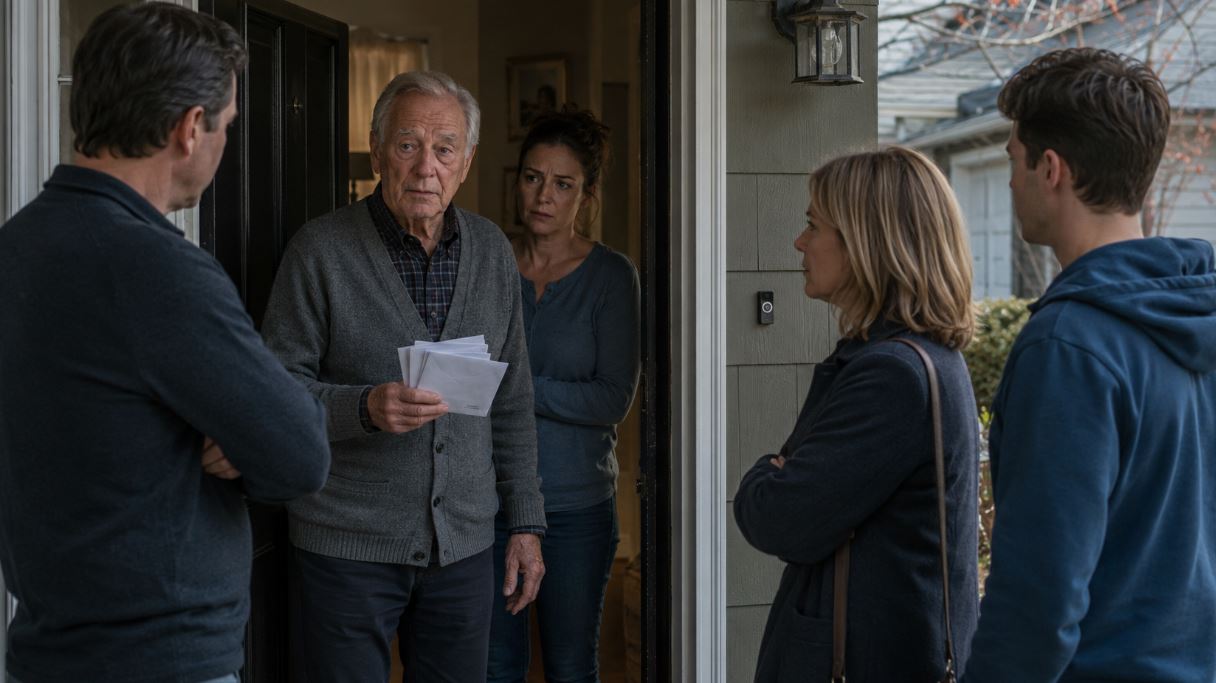
That afternoon, my father showed up at my door.
I saw him through the window before he knocked.
He looked furious.
My mother sat in the car with her arms crossed.
Mark stood beside my father, pacing like a man waiting for a fight.
Grandpa was in the living room.
He heard the knock.
“Don’t open it,” I said.
“I’m not hiding from my own son.”
He walked to the door slowly.
I stood behind him.
When he opened it, my father’s face changed.
For one second, I saw fear.
Then anger covered it.
“Dad,” he said. “We need to talk.”
“No,” Grandpa said. “You need to listen.”
My father looked past him at me.
“You did this.”
Grandpa stepped forward.
“No. You did.”
Mark pointed at me.
“She wants the house.”
Grandpa laughed once.
A dry, humorless laugh.
“She wanted me to eat breakfast.”
My mother got out of the car then.
Her eyes were red, but I did not know if it was from crying or rage.
“Walter,” she said, “please don’t destroy this family.”
Grandpa looked at her for a long time.
Then he said, “I didn’t destroy it. I just stopped paying for the illusion.”
No one knew what to say.
He reached into his cardigan pocket and pulled out three envelopes.
One for my father.
One for my mother.
One for Mark.
“I was going to mail these after I died,” he said. “But since you were in such a hurry, you can have them now.”
My father didn’t take his.
So Grandpa set it on the porch railing.
“What is it?” Mark asked.
“Your inheritance,” Grandpa said.
Mark ripped his open.
A single dollar bill fell out.
For a second, nobody moved.
Then my mother made a sound like she had been slapped.
My father’s face turned dark red.
“You think this is funny?” he said.
“No,” Grandpa replied. “I think it’s fair.”
“You’ll regret this.”
Grandpa smiled sadly.
“I’ve regretted many things, Richard. Loving you was never one of them. Trusting you was.”
That hit harder than shouting.
My father looked away first.
Grandpa stepped back into the house.
“I hope one day you understand what you lost this morning,” he said.
Then he closed the door.
We stood there in silence.
Outside, my father yelled.
Mark cursed.
My mother cried.
Then their car doors slammed, one after another.
The engine started.
They left.
Grandpa stood with one hand on the doorframe.
For the first time all day, he looked old.
Really old.
I put my arm around him.
“I’m sorry,” I whispered.
He patted my hand.
“So am I.”
That evening, he stayed for dinner.
My boys came home from school and ran straight to him.
They didn’t know anything about the will.
They didn’t know about the phone call.
They only knew Grandpa Walt was there, and Grandpa Walt always carried peppermints in his pocket.
My youngest climbed into his lap, even though he was getting too big for it.
Grandpa winced because of his knee, but he didn’t tell him to move.
My older son asked if they could play cards.
Grandpa said, “Only if you’re prepared to lose.”
For the first time that day, he smiled.
A real smile.
Later, after the boys went to bed, Grandpa and I sat at the kitchen table again.
The same table.
The same chairs.
But nothing felt the same.
He held his coffee with both hands.
“I don’t want you to remember me because of a house,” he said.
“I won’t.”
“I don’t want the boys to learn that money is how love is measured.”
“They won’t.”
He nodded.
Then he looked at me.
“But I do want them to learn this: when people show you who they are, don’t spend the rest of your life arguing with the truth.”
I wrote that down after he left.
I still have it.
Three months later, my father filed to contest the will.
Mr. Cline handled it.
The recordings helped.
So did the text messages.
So did the fact that Grandpa was alive, mentally clear, and more than willing to walk into a lawyer’s office and say, “My children tried to loot my life before I was dead.”
The case went nowhere.
My parents stopped calling.
Mark sent one final message:
Enjoy the blood money.
I deleted it.
Grandpa told me not to answer.
“Silence,” he said, “is sometimes the cleanest goodbye.”
He lived two more years.
Good years.
Not perfect years.
His knee got worse. His hearing got worse. He complained about every doctor he met. He still ate too much bacon. He still pretended store-bought pie was an insult to civilization.
But he laughed.
He came to my boys’ baseball games.
He taught them how to change a tire.
He sat on my porch during thunderstorms and told stories about Grandma.
And every Sunday morning, he came for breakfast.
Always at 6:00.
Always black coffee.
Always the newspaper folded in half.
When he did pass, it was peaceful.
No fake phone call.
No rush for the safe.
No realtor before lunch.
Just me, my boys, Mr. Cline, and a small service at the church Grandma had loved.
My parents did not come.
Mark did not come.
I thought that would hurt.
It didn’t.
Because the people who loved him were there.
The people who remembered his laugh were there.
The people who knew he hated lilies and loved peach pie were there.
The people who knew he was more than a house, a safe, a truck, or a bank account were there.
After the service, Mr. Cline handed me a final letter.
It was in Grandpa’s handwriting.
Emily,
If you’re reading this, I finally lost the argument with time.
Don’t be sad too long. I had more good days than bad ones, and most of the good ones had you in them.
I know the house may feel heavy. Keep it, sell it, rent it, paint it purple if you want. It is not a chain. It is a thank-you.
Thank you for showing up.
That is all love really is.
Showing up when there is nothing to gain.
Teach the boys that.
And if anyone ever tells you blood is everything, remember this:
Blood makes relatives.
Love makes family.
Grandpa
I read the letter three times.
Then I folded it carefully and placed it in the same safe my father had wanted so badly.
The combination?
Grandpa had given it to me years before.
Not because he trusted me with his money.
Because he trusted me with his heart.
And that was worth more than anything inside.