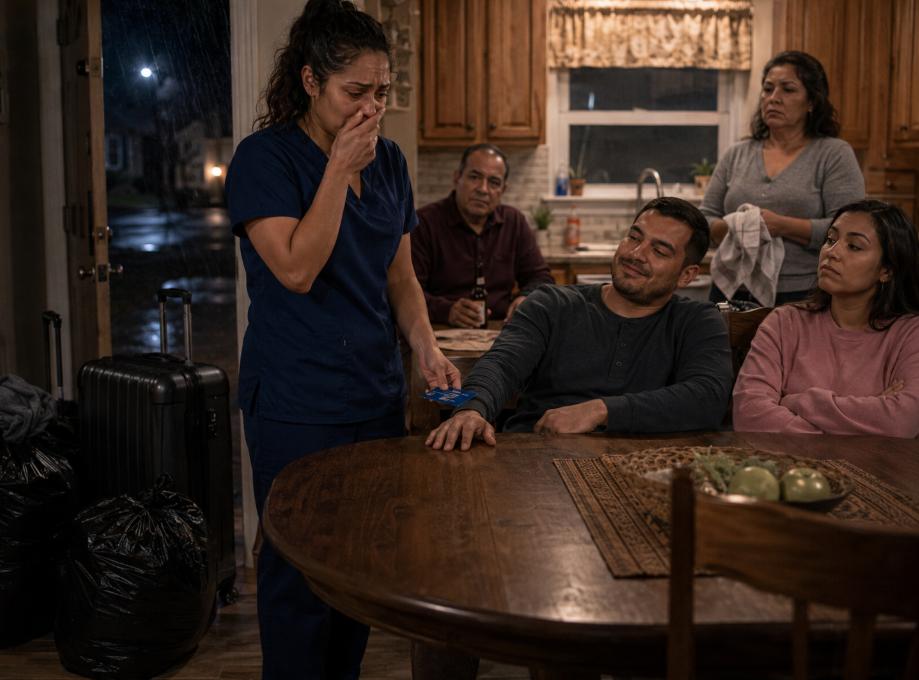
My brother slid my own ATM card across the kitchen table like he had just done something clever.
Behind him, his girlfriend was sitting in my chair.
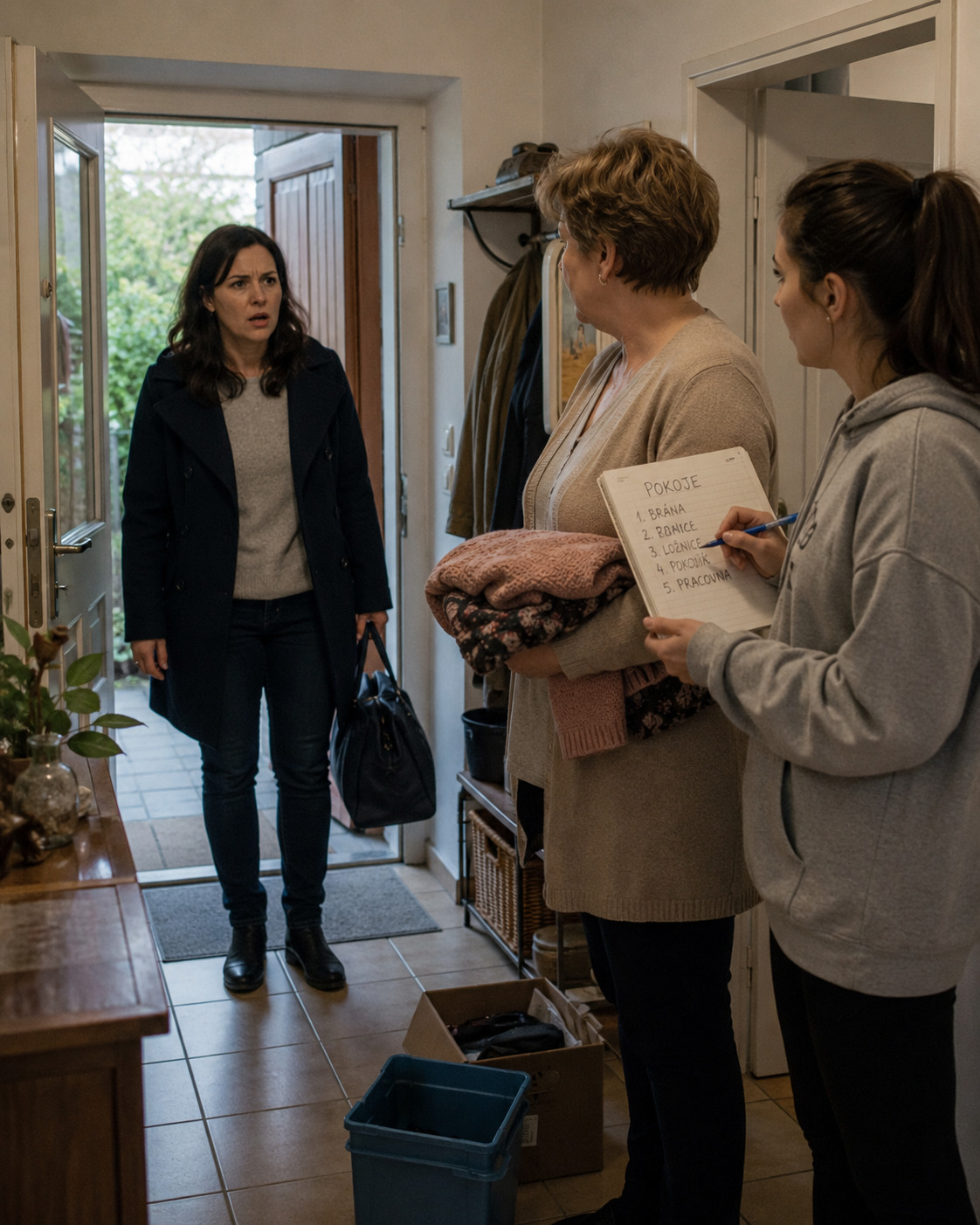
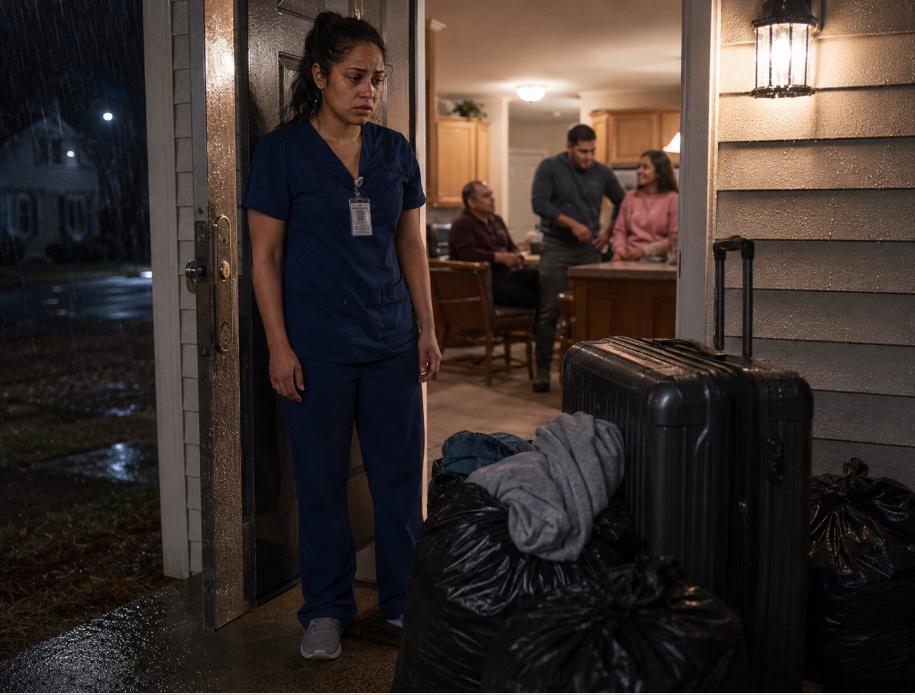
My clothes were packed in black trash bags by the front door.
My suitcase was already on the porch.
Outside, the March rain had turned cold enough to sting.
I had just finished a fourteen-hour shift in the NICU. My scrubs smelled faintly of hospital soap and baby formula. My feet hurt so badly I could feel my pulse in them.
All I wanted was a shower.
Instead, I came home to find my room emptied, my savings gone, and my family laughing in the kitchen.
My brother Liam leaned against the counter with Brittany tucked under his arm. She had been his girlfriend for three weeks. She was wearing a pink sweatshirt that said Blessed, and one of my blankets was already folded beside her like she had moved into my life before I even knew I was being removed from it.
My mother was wiping a clean counter.
My father sat at the table with a beer.
Nobody looked surprised to see me.
Nobody looked ashamed.
I stopped in the doorway.
“Why are my things packed?”
Liam smiled.
“Brittany’s moving in.”
I stared at him.
“What?”
“She needs the upstairs room,” he said. “You’ve had it long enough.”
My father took a slow drink.
“Don’t start, Maya.”
“Don’t start?” I repeated. “Those are my clothes in trash bags.”
Mom sighed, the way she always did when she wanted me to feel unreasonable.
“You’re twenty-nine years old. Most adult children don’t get to live at home forever.”
“I pay bills here.”
“You help,” she said. “That’s different.”
Brittany looked up from her phone, bored already.
Liam reached into his pocket.
Then he tossed something onto the kitchen table.
My blue ATM card.
For a second, my mind refused to understand what I was seeing.
That card should have been in my wallet.
My wallet had been in my coat.
My coat had been hanging by the garage door when I left for work at 4:45 that morning.
My mouth went dry.
“What did you do?”
Liam’s smile widened.
“Collected what you owed.”
My hands were shaking when I opened my banking app.
Checking: $12.11.
Savings: $0.43.
I blinked.
Then I checked again.
The numbers did not change.
The room tilted slightly.
There were withdrawals. Transfers. Online purchases. A furniture deposit. A charge from an electronics supplier. A pending order for cameras, lighting, and custom computer equipment.
Forty-two thousand dollars.
Gone.
That money was my graduate school fund.
It was two years of night shifts, double shifts, missed holidays, skipped vacations, cheap lunches, and shoes worn long after they should have been replaced.
It was also the last gift my Aunt Evelyn had ever left me.
I looked at my brother.
“You stole from me.”
Liam rolled his eyes.
“Here we go.”
“You emptied my account.”
Dad set his beer down hard.
“You lived under this roof for two years. Consider it rent.”
“Rent?” I whispered.
Mom folded her towel neatly.
“You sit on money while this family struggles.”
“I was saving for school.”
Liam laughed.
“Always school. Always acting like you’re better than us because you wipe babies for a living.”
I waited for my mother to react.
She didn’t.
That hurt more than Liam’s words.
I worked in a neonatal intensive care unit in Columbus, Ohio. People liked to imagine NICU nurses as soft voices and tiny knitted hats. Sometimes it was that.
But sometimes it was parents sleeping upright in chairs because they were afraid to leave an incubator.
Sometimes it was alarms at 3:00 a.m.
Sometimes it was a baby small enough to fit in your hands.
Sometimes it was saying, “One minute at a time,” because that was the only honest comfort left.
I knew how to stay calm in pain.
I knew how to move gently when everything was urgent.
But standing in my parents’ kitchen, soaked in exhaustion, looking at my empty account and my life in trash bags, I did not feel calm.
I felt stupid.
Because some part of me had still believed they would never go this far.
Liam grabbed one of the bags and shoved it toward the door.
“Your job here is done.”
That sentence did something to me.
It did not make me cry harder.
It stopped the tears completely.
Because for the first time, someone in that house had said the truth out loud.
My job.
That was what I had been to them.
Not daughter.
Not sister.
Not family.
A utility.
A paycheck.
A nurse with a car.
A quiet person who helped and apologized and tried to keep peace.
I looked at my father.
“It’s raining.”
“There are hotels,” he said.
“With what money?”
Liam smiled.
“Guess you should’ve budgeted better.”
My mother looked past me toward Brittany.
“Don’t make a scene.”
That was the last thing she said to me before I carried my own trash bags into the rain.
No one helped.
One bag split open on the porch. Socks spilled into a puddle. My gray hospital hoodie slid across the wet wood.
Through the window, I saw Brittany laughing at something on her phone. Liam kissed the top of her head. Dad turned up the television.
Mom closed the blinds.
I stood there in my wet scrubs, holding the broken bag, and understood something I should have understood years earlier.
They had not thrown me out because I was useless.
They had thrown me out because they thought they had already used me up.
I drove without knowing where I was going.
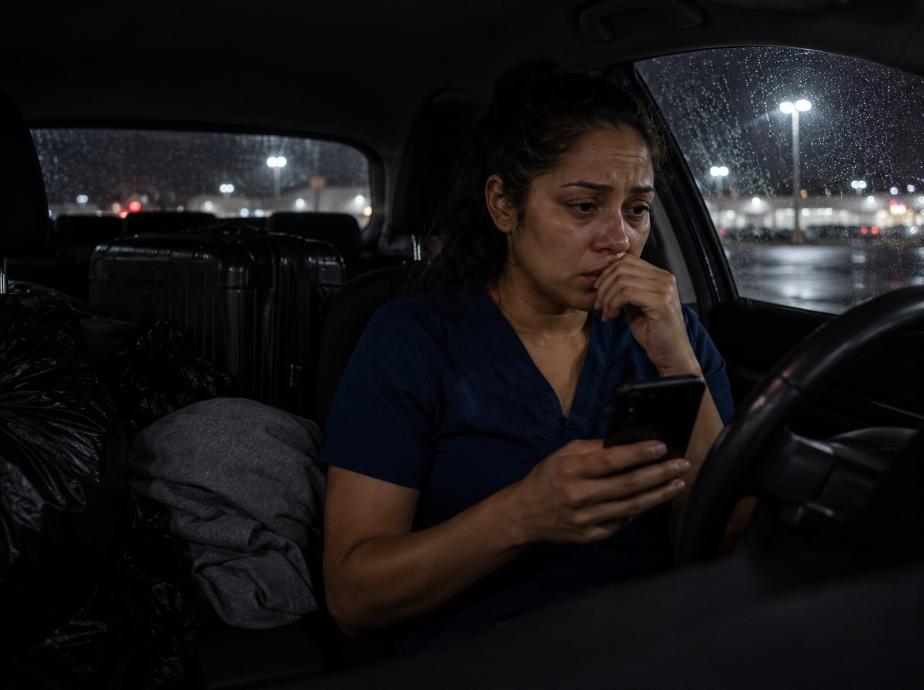
Eventually, I pulled into the parking lot of a twenty-four-hour Kroger because it was bright, public, and had security cameras.
I sat in my car with the heater running, rain tapping the windshield, my hands wrapped around the steering wheel.
I did not call my parents.
I did not call Liam.
I did not scream.
I stared at the banking app until the numbers blurred.
$12.11.
$0.43.
At 10:34 p.m., my phone rang.
The caller ID showed Buckeye Federal.
I almost ignored it.
Then I answered.
“Ms. Miller?” a woman said. “This is Patricia Norwood from fraud prevention. Are you somewhere safe to talk?”
No one at a bank had ever asked me that before.
I sat up.
“I’m in my car.”
“Are you alone?”
“Yes.”
“Good. I need you to listen carefully. Several transactions from your restricted education trust account have triggered internal review. Did you authorize the card use, cash withdrawals, digital transfers, and equipment purchases made today?”
I could barely speak.
“No.”
There was a pause.
Then Patricia said, “Do you know who made them?”
“My brother.”
“Did he have permission?”
“No.”
“Do your parents have legal authority over this account?”
“No.”
Her voice remained calm, but something in it changed.
“Ms. Miller, this is not a standard savings account. The funds are under restricted educational trust conditions. Certain disbursements require verification. Some transactions have already been blocked or placed on hold.”
I pressed my free hand to my mouth.
“What does that mean?”
“It means the account was designed to prevent misuse. Your aunt’s attorney is listed as a trust contact. Thomas Kessler. We have notified him.”
Aunt Evelyn.
For the first time all night, I closed my eyes.
My aunt had been my mother’s older sister.
In our house, she was treated like a cautionary tale. Never married. No children. Owned her own home. Spoke too directly. Refused to lend my parents money after my father lost a job and bought a fishing boat the same month.
Mom called her lonely.
Dad called her difficult.
I called her safe.
Aunt Evelyn was the person who took me to the library when I was little. She remembered the names of my teachers. She asked questions and waited for real answers. When I became a nurse, she sent flowers to the hospital with a card that said:
Some people are born to hold the fragile things.
When she got ovarian cancer, I drove her to appointments. I cleaned her kitchen. I read mystery novels aloud when her eyes were too tired.
Once, near the end, she held my wrist and said, “Your mother thinks endurance is the same thing as love.”
I did not know what to say.
Evelyn squeezed my hand.
“It isn’t.”
After she died, Thomas Kessler told me she had left me money for school.
Forty-two thousand dollars.
I knew it was in a special account. I knew it was meant for tuition and education-related expenses. But I had never fully understood how carefully she had protected it.
Now, sitting in a grocery store parking lot in soaked scrubs, I began to understand.
Patricia said, “Can you come to the main branch tomorrow morning at nine?”
“Yes.”
“Bring identification. Do not contact your family about the account. Do not try to recover the card yourself. If you are unsafe, call police.”
I almost laughed.
Unsafe.
That word sounded strange when applied to my family.
Then I looked at the trash bags in my back seat and realized it fit perfectly.
After the call ended, I sat there shaking.
Then I called the only person I trusted enough to see me fall apart.
My nurse manager, Sarah Donnelly.
She answered on the second ring.
“Maya?”
I tried to say her name, but nothing came out.
Her voice changed instantly.
“Where are you?”
“Kroger,” I whispered. “Off Henderson.”
“Stay in the car. Lock the doors. I’m coming.”
Fifteen minutes later, Sarah pulled up wearing sweatpants, rain boots, and a coat over pajamas.
She opened my car door, looked at my face, then looked at the trash bags.
“Oh, honey.”
That was all it took.
I broke.
Not in a graceful way.
Not one quiet tear sliding down my cheek.
I cried like a person whose body had finally found a witness.
Sarah did not ask for the whole story in the parking lot. She did not tell me to calm down. She did not say, “But they’re your family.”
She moved one of my bags into her car and said, “You’re coming home with me.”
Her husband Mark carried my bags into their guest room without asking one invasive question.
That kindness hurt.
When you grow up earning every inch of warmth, ordinary decency feels suspicious at first.
The next morning, Sarah drove me to Buckeye Federal.
The main branch had limestone walls, polished floors, and quiet voices that made me feel even more aware of my wrinkled scrubs and swollen eyes.
Patricia Norwood met me in the lobby.
She was in her sixties, with silver hair and careful eyes.
“Ms. Miller?”
“Maya,” I said automatically.
“Maya,” she said. “Mr. Kessler is already here.”
Thomas Kessler stood when I entered the conference room. He was tall, lean, and wore a navy suit that looked older than fashion but better than trend. Aunt Evelyn had trusted him for years.
His expression softened when he saw me.
“I’m sorry,” he said.
Not “What happened?”
Not “Are you sure?”
Just, “I’m sorry.”
For some reason, that made my eyes burn.
Patricia spread the transaction records across the table.
ATM withdrawals.
Online transfers.
A furniture outlet deposit.
A pending digital wallet transfer to Liam.
An order for streaming equipment.
A charge in Brittany’s name.
The bank had frozen most of the pending transactions once the categories violated the trust controls. Some cash was gone. Some money had already moved. But the attempt had left a trail so bright it practically glowed.
Thomas asked, “Did you ever give Liam permission to use your card?”
“No.”
“Did you tell your parents they could access the money?”
“No.”
“Did anyone give you written notice to leave the house?”
I gave a small, humorless laugh.
“They packed my clothes in trash bags.”
His mouth tightened.
“Family theft cases can become messy. People claim permission. They invent rent. They say there was an agreement. What we need is proof that this was planned and unauthorized.”
That was when I remembered the camera.
My father had installed a Wi-Fi security camera six months earlier. He said it was for porch pirates, but everyone knew he used it to track who came and went.
It sat on the living room bookshelf, angled toward the entryway and part of the kitchen.
It recorded audio.
And because my father could not figure out the app, I had set it up.
I still had the admin login.
“The camera,” I said.
Thomas looked up.
“What camera?”
I pulled out my phone.
My hands shook as I opened the app.
Thursday morning.
5:06 a.m.
Twenty minutes after I had left for work.
The video loaded.
There was Liam walking into the living room with my coat in his hands.
He checked the hallway.
Then he reached into my pocket and pulled out my blue ATM card.
My mother’s voice came from the couch.
“Did you get it?”
“Told you,” Liam said. “She never checks anything before work.”
My father entered the frame with a coffee mug.
“You remember the PIN?”
“At Speedway last week,” Liam said. “She didn’t even cover the keypad.”
My mother made a disgusted sound.
“Just do it before she checks her phone.”
Dad’s voice was flat, almost bored.
“ATM first. Then online. Susan, pack her clothes. Don’t fold everything. Bag it. If you make it neat, she’ll think she can negotiate.”
“What if she calls the police?” Mom asked.
“For what?” Dad said. “She’s been living under my roof. We’ll say she owed back rent.”
Liam laughed.
“She’s gonna cry.”
My mother smiled.
“Let her.”
I stopped breathing.
There they were.
My family.
Not angry in the moment.
Not overwhelmed.
Not misunderstanding.
Planning.
Over coffee.
In the calm light of morning.
For years, I had excused them.
They were stressed.
They were old-fashioned.
They didn’t know how to talk about feelings.
They loved me in their own way.
But the camera did not record “their own way.”
It recorded intention.
Thomas had me send him the file immediately.
His tone changed after that.
Not louder.
Sharper.
He contacted the trust department. Patricia froze remaining activity. Thomas called police. By afternoon, I gave a statement.
By evening, my phone became a swarm of messages.
Liam first.
You really went to the bank?
Then:
You gave me the card. Don’t act crazy.
Then:
Mom is crying. Hope you’re proud.
My mother sent paragraphs.
This has gone too far.
We were trying to teach you responsibility.
Families handle things privately.
A decent daughter would never humiliate her parents.
My father sent one message.
Drop this, or don’t come back.
I forwarded everything to Thomas.
He replied within a minute.
Do not engage. Preserve all communication.
So I did.
That was one of the hardest things I had ever done.
Not answering.
Not defending myself.
Not trying to make them understand.
People think leaving a toxic family is one dramatic choice. A slammed door. A final speech. A clean break.
It is not.
It is hundreds of small moments where you choose not to crawl back toward the people who taught you pain was love.
For the next two weeks, I slept on Sarah’s pull-out couch.
I went to work.
I folded my scrubs in a laundry basket.
I cried in the shower where no one could hear me.
At the NICU, the world was terrifying but honest. Alarms meant something. Numbers meant something. A baby’s oxygen level did not gaslight you.
My coworkers quietly became a net beneath me.
June from respiratory therapy left soup in the break room fridge with my name on it.
Caleb from night shift handed me a roll of quarters for laundry and said, “My husband’s poker jar will survive.”
Sarah made sure my schedule had two recovery days in a row.
No one demanded my gratitude.
No one kept score.
That was how I began learning the difference between people who said family and people who acted like it.
The investigation moved quickly because the evidence did not need much explanation.
The bank records tied transactions to Liam’s phone, email, and device.
The camera showed him stealing the card.
The audio showed my parents planning the false rent story.
Their texts showed intimidation after the fact.
The prosecutor did not treat it like a misunderstanding.
Thomas filed a civil claim for the stolen and attempted funds, legal fees, damages from the illegal lockout, and emotional distress. He also notified probate court that Evelyn’s protective trust conditions had been triggered.
Protective conditions.
Aunt Evelyn had known.
Maybe not exactly what Liam would do.
Maybe not the rain, or the trash bags, or Brittany in my room.
But she had known the shape of my family’s greed.
She had known that if money became visible, they would convince themselves it belonged to whoever demanded it loudest.
Three weeks later, Liam was charged.
I thought it would feel like relief.
It didn’t.
It felt like standing in the wreckage after a house fire. The flames were out, but everything still smelled burned.
The first hearing took place on a gray morning that smelled like wet wool.
Sarah came with me and sat close enough for our shoulders to touch.
My parents arrived dressed like respectable people.
Mom wore her church coat and had curled her hair.
Dad wore a suit that pulled tight across his stomach.
Liam looked pale and restless in a button-down shirt I had bought him for Christmas two years earlier.
Brittany was not there.
That told me more than I expected.
The prosecutor laid out the evidence.
Then he played the video.
There was Liam with my coat.
My mother asking, “Did you get it?”
My father saying, “We’ll say she owed back rent.”
Liam laughing.
“She’s gonna cry.”
Hearing it in the bank had broken me.
Hearing it in court placed it where it belonged.
On the record.
My family could no longer tell me I was sensitive.
They could no longer call it rent.
They could no longer pretend I had misunderstood.
After a recess, Liam returned smaller.
His public defender whispered to him, but panic had already loosened his mouth.
When the judge asked whether he understood the conditions, Liam blurted, “I didn’t plan it by myself.”
My father shot to his feet.
“You little liar.”
The judge’s head snapped up.
“Sir. Sit down.”
Liam kept talking.
“Dad said to call it rent. Mom packed the bags. They told me Maya thought she was better than us. They said it was only fair.”
My mother began crying.
Maybe real tears.
Maybe not.
But they were not tears for me.
They were tears for being seen.
I sat very still.
Sometimes justice does not look like revenge.
Sometimes it looks like liars becoming too heavy for their own lies.
Outside the courtroom, my mother tried one more time.
She approached me with a tissue in her hand and a trembling voice she had never used without an audience.
“You’ve made your point.”
“My point?”
“Your brother is terrified. Your father’s blood pressure is through the roof. The neighbors are asking questions. Do you have any idea what this is doing to us?”
Not what they had done to me.
What exposure was doing to them.
“I slept in my car in the rain,” I said.
“For one night, Maya.”
As if cruelty came with a grace period.
As if being abandoned only counted after a certain number of hours.
I looked at her, and for the first time in my life, I did not want her to understand.
That surprised me.
I had spent years trying to explain myself in ways she might finally hear.
Now I knew she heard everything.
She simply cared about what served her.
“No,” I said. “I’ve always been useful. You mistook that for weak.”
My mother’s face changed.
Not with guilt.
With recognition.
She understood the old door was gone.
I walked away before she could answer.
Liam eventually took a plea.
Unauthorized card use. Fraud connected to the restricted account. Restitution. Probation. Community service. A felony record. No contact.
Brittany left before the plea was even entered.
Apparently, she was “not signing up for legal drama.”
I wished her clarity.
The civil case moved more quietly, but the consequences were deeper.
Thomas laid out the evidence like a surgeon arranging instruments.
The trust terms.
The bank records.
The camera transcript.
Text messages.
Photos of my belongings in trash bags.
Sarah’s statement that I had arrived soaked, shaking, and without housing.
My parents tried to argue I owed rent.
Thomas asked for a lease.
They had none.
Written rent demands?
None.
Receipts?
None.
If this had been a legitimate rent dispute, why had Liam hidden the card use? Why had they discussed a false back-rent story before I came home? Why had they packed my belongings before telling me?
Their attorney did not have a clean answer.
The judgment came in late spring.
My parents and Liam were held financially liable for the unrecovered funds, legal fees, damages from the lockout, and punitive damages.
The number was larger than they could comfortably pay.
My parents had less savings than they liked to pretend. Liam had debt. The house had equity, but not enough to preserve their lifestyle and satisfy the judgment without pain.
A lien was placed.
Eventually, the house had to be sold.
The same house they had thrown me out of.
The same porch where my socks had spilled into the rain.
The same upstairs room Brittany had occupied for less than a month.
I did not go when the sign went up.
A neighbor sent me a photo.
I’m sorry I didn’t know sooner, she wrote.
In the photo, the For Sale sign stood beside my mother’s tulips. Behind it, I could see the upstairs window of the room that used to be mine.
For a long time, that house had felt like the center of my pain.
Now it was only siding, gutters, and debt.
My parents moved into a two-bedroom apartment near a shopping center and told relatives they were “downsizing after a stressful legal misunderstanding.”
That sounded like them.
Make theft sound like weather.
Make consequences sound like inconvenience.
By then, I had moved into a small apartment near the hospital.
Third floor.
No elevator.
A kitchen barely wide enough to turn around in.
I loved every inch of it.
If dishes stayed in the sink, no one called me lazy.
If I bought coffee creamer, no one drank it and blamed me for being selfish.
If I came home after a shift and cried, no one told me I was making the house tense.
The first night, I woke at 2:00 a.m. because the place was too quiet.
Then I remembered.
Quiet was allowed now.
That August, Thomas called me to his office.
He handed me a sealed cream-colored envelope.
My name was written across the front in Aunt Evelyn’s slanted handwriting.
“This was attached to the trust instructions,” he said. “It was to be given to you if a dispute ever arose over the funds.”
My fingers trembled as I opened it.
My dearest Maya,
If you are reading this, someone has probably tried to convince you that what I left you belongs to them.
It does not.
I did not leave you this money because I pitied you. I left it because I watched you become kind in a house that rewarded selfishness.
I watched your mother confuse control with love.
I watched your father confuse obedience with respect.
I watched them praise your brother for needing help and criticize you for surviving without it.
They mocked my life because I refused to make myself smaller for their approval.
Do not make yourself smaller.
This trust is not a gift meant to make you comfortable. It is a tool meant to make you free.
You do not owe gratitude for mistreatment.
You do not owe loyalty to people who only call you family when they need access.
And you do not have to set yourself on fire to prove you are warm.
I have always seen you.
Aunt Evelyn
I cried in Thomas’s office.
Not quietly.
I cried for the little girl carrying too many library books. For the nursing student studying while Liam shouted at video games downstairs. For the woman on the porch in wet scrubs. For every version of me that had mistaken being needed for being loved.
Because someone had seen me clearly before I knew how to see myself.
That letter changed the shape of my grief.
Before it, part of me still felt discarded.
After it, I felt delivered.
The next year was not a perfect movie montage.
It was night shifts.
Financial aid forms.
Therapy every Tuesday afternoon.
Learning not to apologize for things I had not done.
Blocked numbers.
Panic attacks in grocery store aisles.
Buying a new winter coat because the old one still felt like theft.
Holidays with Sarah’s family, where nobody made me earn a plate.
Slowly, the trust began doing what Aunt Evelyn meant it to do.
Not just pay tuition.
Build distance.
Buy time.
Create choices.
That fall, I started my nurse practitioner program.
The trust paid the tuition directly, exactly as Evelyn had designed it.
I kept her letter in my desk drawer.
On hard days, I read one line.
I have always seen you.
That was enough.
Two years later, I graduated with honors.
Sarah cried louder than anyone.
June brought flowers.
Caleb made a sign that said “Dr. Maya, Kind Of,” which was medically inaccurate but emotionally perfect.
No one from my biological family attended.
Their absence no longer felt like a wound.
It felt like clean air.
Eventually, I accepted a position at a children’s hospital in Seattle.
Seattle rained often.
The rent was ridiculous.
The traffic was worse than people warned me about.
But the first morning in my new apartment, I stood with coffee in my hand while gray light spread over the city, and I felt something I had never felt in my parents’ house.
Unwatched.
Nobody listening for my footsteps.
Nobody measuring my groceries.
Nobody deciding what I owed them for existing.
A few years later, I bought a small Craftsman house north of the city.
Old wood floors.
A kitchen window over the sink.
A porch that caught morning rain.
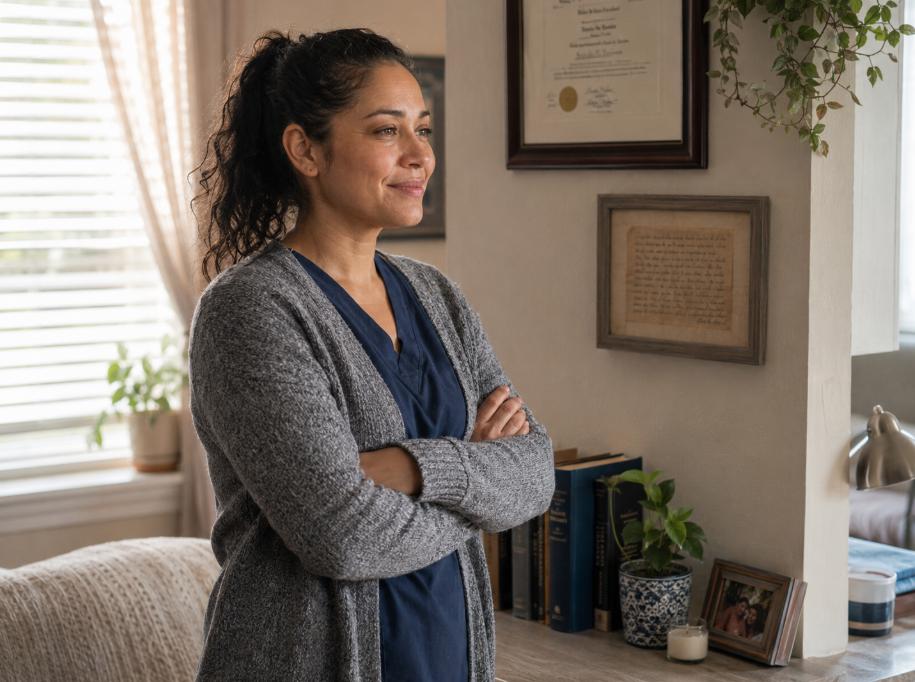
The first thing I hung on the wall was a framed copy of Aunt Evelyn’s letter.
The second was my nursing degree.
The third was a photo of Sarah, Mark, June, Caleb, and their dog Pickles at a backyard cookout, all of us laughing at something I no longer remembered.
That was my family wall.
Nearly three years after Liam stole my card, my phone buzzed on a rainy Tuesday evening while I was making tea.
Unknown number.
Columbus area code.
I let it ring.
A voicemail appeared.
I waited a full minute before playing it.
“Hey Maya, it’s me,” Liam said.
His voice sounded thinner.
Older.
“I know you probably don’t want to hear from me, but Mom’s health hasn’t been great. Dad’s having trouble with rent. I can’t get decent work with the record. Look, mistakes were made on both sides. But we’re still family. You’re doing well now. We heard about the house. I’m not asking for much. Just help us get back on our feet.”
Mistakes were made.
On both sides.
The oldest trick in the world.
Turn harm into fog.
Then ask the person you hurt to walk back into it.
I stood in my kitchen holding the phone.
Rain tapped against the window.
The kettle began to hiss.
Across the room, Evelyn’s letter hung in its frame, steady as a witness.
I tried to find anger.
There was none.
I tried to find grief.
There was some, but it was old now. A faded bruise. Tender only if pressed.
Mostly, I felt distance.
Peaceful distance.
Adult distance.
The kind you do not get by winning an argument.
The kind you get when you no longer need the people who taught you to beg for crumbs.
I deleted the voicemail.
Then I blocked the number.
Not because I wanted revenge.
Because access is not love.
Because forgiveness does not require reopening the door.
Because the word family is not a skeleton key people get to use after they have robbed you, humiliated you, and left you in the rain.
Sometimes freedom arrives looking nothing like freedom.
Sometimes it looks like your suitcase by the door.
A bank account showing forty-three cents.
A grocery store parking lot.
Wet scrubs.
Shaking hands.
A bank manager asking, “Are you somewhere safe?”
A friend driving through rain because you called.
An aunt who loved you enough to build protection into the fine print.
My brother thought he had stolen my future.
My parents thought they had put me back in my place.
They thought money was the thing they had taken.
They were wrong.
What they really took was the last excuse I had for staying.
By stealing my card, Liam created the paper trail.
By packing my clothes, my mother created the proof.
By threatening me, my father created the witness statement.
And by installing that camera to control me, they recorded the truth that set me free.
They planned their theft around the daughter they remembered.
The obedient one.
The exhausted one.
The one who still hoped love would appear if she worked hard enough.
But the woman who left that porch in the freezing rain was no longer that daughter.
She was cold.
She was broke.
She was shaking.
And for the first time in her life, she was leaving with the truth.