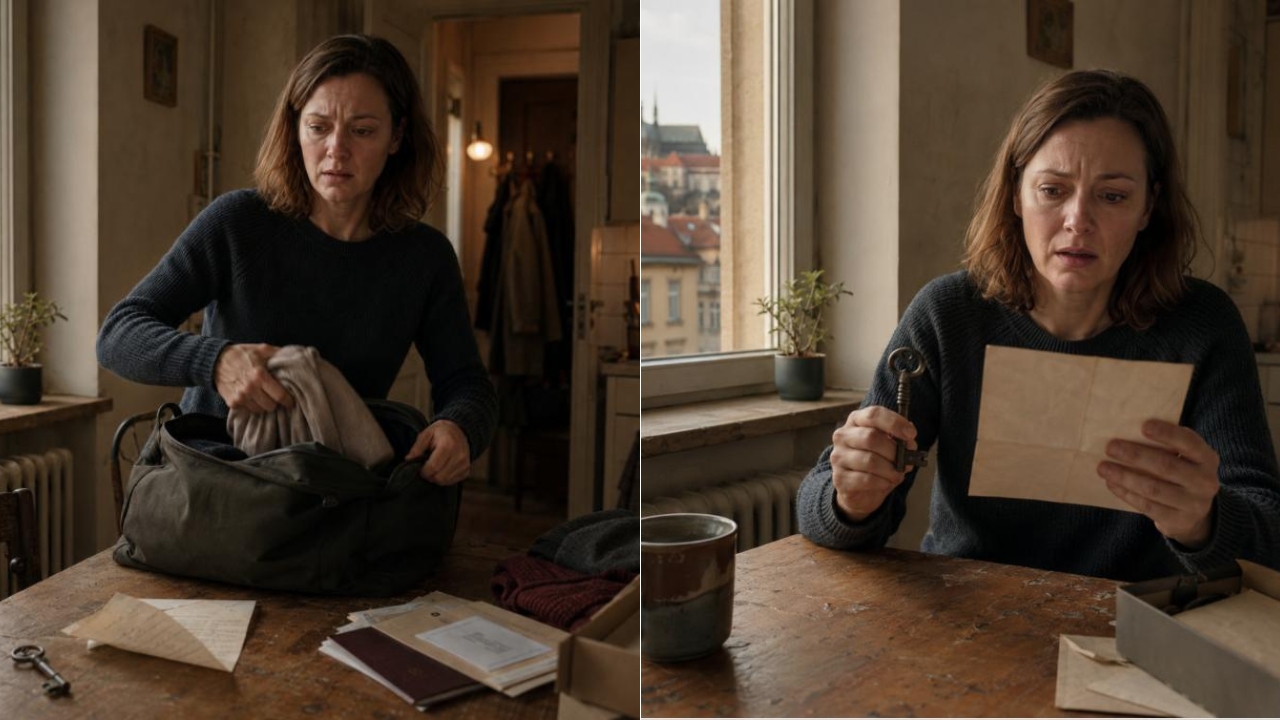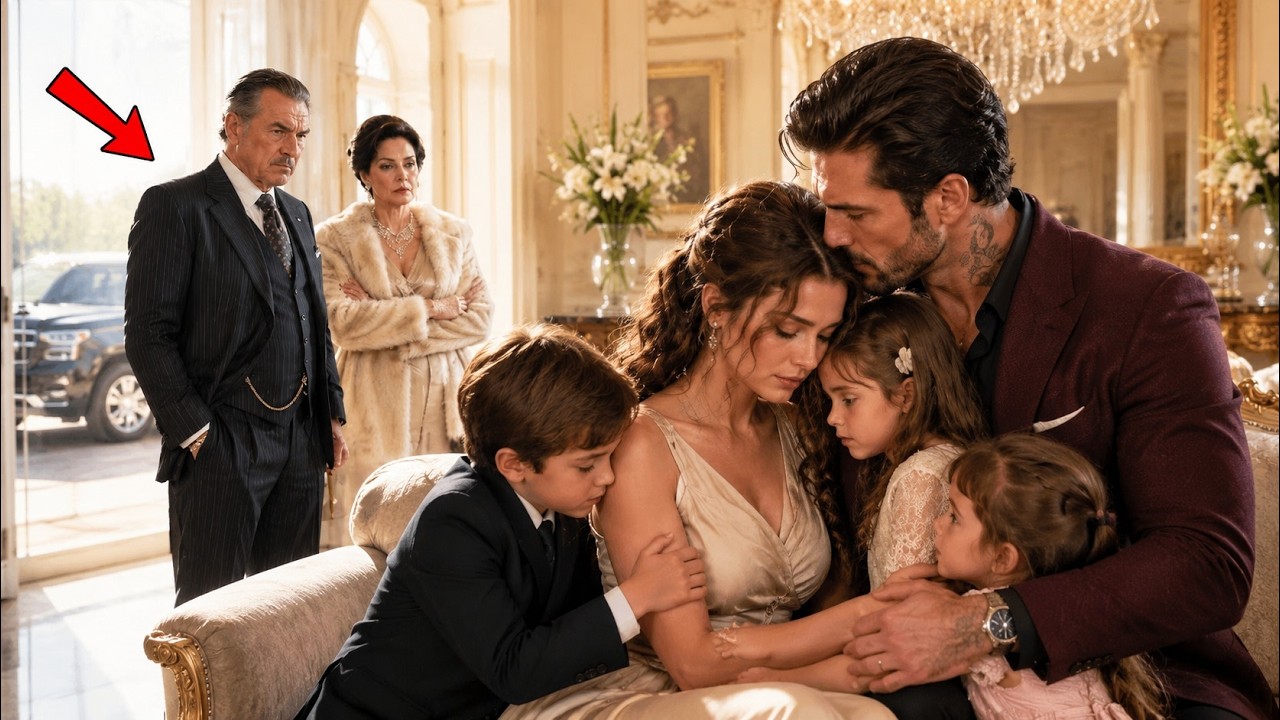
In a startling revelation, Lily Marsh was sold by her own father after a devastating infertility diagnosis, thrust into the guarded world of Beckett Vane, a cold mafia boss with three broken children. What began as a contract evolved into an unlikely, fragile family confronting trauma, trust, and healing under one roof.
 Lily Marsh’s life unraveled the day a doctor delivered the cruel, clinical verdict: she would never carry a child to term. The calm, detached voice was a cold blade, severing her future expectations. Armed only with a pamphlet on alternative parenthood, she returned home, grief heavy in her chest and no answers in sight.
Her mother’s insistence that her father be informed set off a chain of events that stunned Lily. Gerald Marsh, her father, greeted her not with comfort but with a transactional coldness. He slid a document across the table naming Beckett Vane, a man offering a peculiar kind of security — a father figure exchanging money for a daughter.
The term “suitable” was a chilling euphemism for a grim deal. Gerald’s priorities were clear — Lily was a commodity, her worth measured by potential financial gain and security rather than love or empathy. In a moment that shattered trust, Lily comprehended the brutal reality: her father had sold her to a man whose reputation was shadowed by mystery and menace.
Beckett Vane’s world was starkly different. Arriving in a silent black car to a sprawling, sterile mansion, Lily entered a realm devoid of warmth but heavy with understated power. Beckett himself was a figure of contradictions — a hardened mafia boss who carried the weight of three children scarred by loss and abandonment.
Their marriage was a business arrangement with a precise timeline — three weeks to wed — but no emotional roadmap. Beckett’s children, Nate, Sasha, and Owen, greeted Lily with guarded suspicion, their past littered with failed relationships and broken trusts. They were not hostile out of cruelty; they were protectively wounded.

Each child’s distinct reaction revealed the depth of their pain. Nate, the eldest, was silent and distant, his gaze sharp and unyielding. Sasha immersed herself in books and memories of a mother she never fully knew. Owen, the youngest, vacillated between tentative affection and defensive withdrawal, embodying the innocence and confusion of a child betrayed too many times.
Lily’s initial role was one of survival — existing unnoticed, unheard, a shadow in the house. Her quiet evenings at the piano became a lifeline, the melodies a balm soothing fractured hearts. Beckett’s presence was measured, his love for his children expressed through structure and logistics, not words or embraces.
Slowly, fragile bridges formed. Sasha’s discovery of Lily’s musical gift sparked a tentative bond, and through the simple act of sharing a violin hidden away in storage, they began to mend a shared wound. Owen’s shy gestures of goodwill — drawings, crackers, cautious hand-holding — bloomed into slow trust, each small act a victory against past hurts.
Nate remained the elusive barrier, his distrust protecting him like armor. Lily chose honesty over forced affection, observing him from a distance, respecting his space while gently offering connection. Music became a silent language between them, a subtle dialogue of questions and answers that chipped away at his defenses.

Tensions mounted as Lily’s past rippled into the present. Her parents’ unexpected attempt to reclaim access shattered the fragile new family dynamic. A cold letter demanding loan repayment was a thinly veiled ultimatum, reinforcing the transactional nature of her existence. Yet, Beckett’s quiet support grounded her amid these pressures.
Beckett’s rare vulnerability emerged in late-night conversations where shared burdens softened his relentless exterior. Together, they confronted the truth: neither of them had fully chosen their paths, but necessity had forged an unbreakable bond. What began as a contract became a genuine partnership built on mutual need and gradual understanding.
The pivotal moment came quietly in a garden beneath an ancient oak tree, where the children’s guarded defenses finally began to yield. Small gestures — an unspoken nod, a request to share music, a left-side hug — marked the dawning of trust and belonging. The house once filled with silence slowly began to hum with life.
The marriage ceremony was a far cry from fairy tales — a courthouse formality followed by a tender, private celebration under autumn’s fading light. Emotions were held close but unmistakable: Sasha’s violin solo honored a lost mother, Nate’s subtle nod acknowledged acceptance, and Owen’s eager declarations brought joy and light into their shared world.

In this unlikely family of fractured souls, a profound transformation was underway. The cold calculations of contracts and transactions were giving way to something deeper — healing, connection, and the courage to envision a future beyond pain. Beckett and Lily found themselves not just bound by agreement but by choice and emerging love.
This story is an urgent testament to resilience amid cruelty, the complexity of human relationships forged in adversity, and the possibility of redemption. From a father’s ultimate betrayal to the formation of an unconventional family, Lily, Beckett, and their children redefine what it means to belong and to heal.
As they navigate the challenges of their pasts and the fragile hope of their present, this household stands as a beacon of endurance. Each day is a new test, a chance to rebuild trust where it was shattered and to write a narrative not dictated by loss but by the power of chosen family.
The tale of Lily Marsh and Beckett Vane remains unfolding, a sharp reminder that even in the darkest transactions life compels, humanity and heart can emerge to carve pathways to new beginnings. Their story demands attention, a profound narrative of survival, choice, and the quiet strength found in unity.