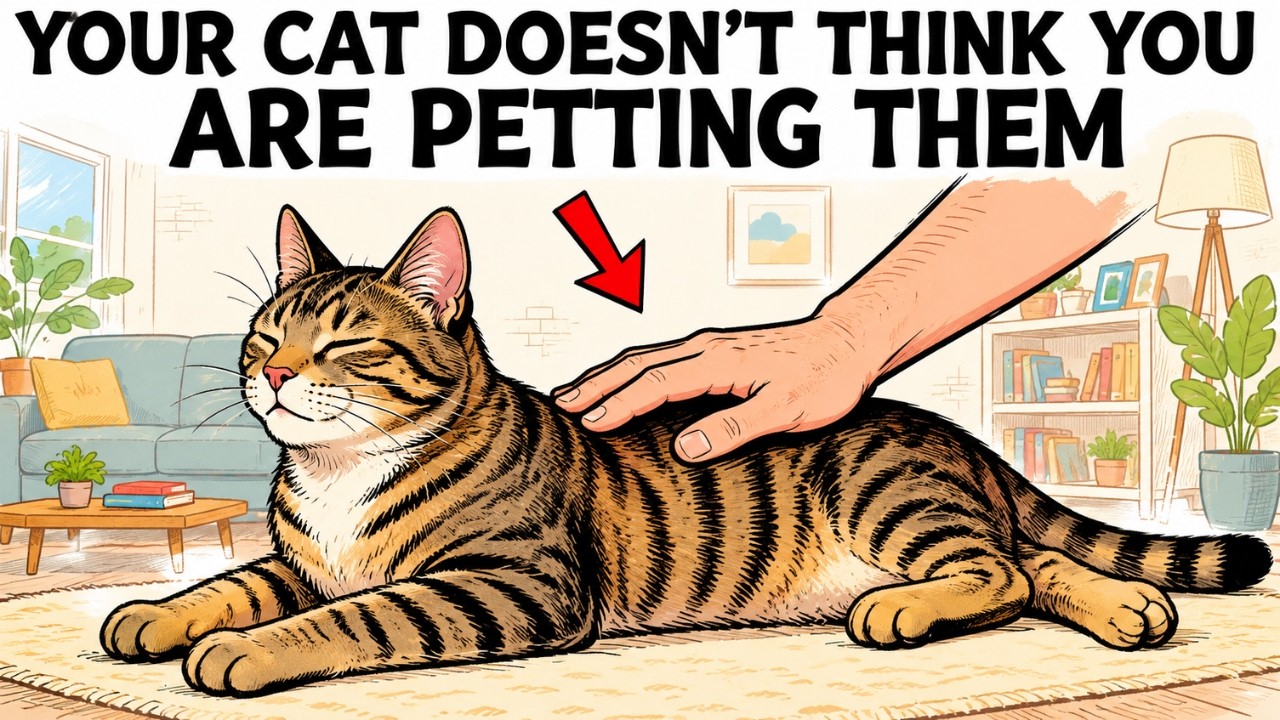
Your cat is resting beside you on the couch, eyes half closed, body soft beneath your hand.
They are purring. They lean into each slow stroke. For a few quiet seconds, it feels like one of those perfect little moments every cat owner understands.
Then the tail begins to move.
The skin along the back twitches. One ear turns slightly. Your cat looks toward your hand—and suddenly gives you a quick nip.
The moment can feel surprisingly personal.
You may pull your hand away and wonder what changed. Did your cat stop enjoying the attention? Were they pretending to like it? Did you do something wrong?
Most likely, your cat’s feelings did not suddenly disappear. The interaction may simply have reached a point that no longer felt comfortable.
Cats often communicate that limit before they bite. The problem is that their earliest signals can be so quiet that people do not notice them.
Once you begin recognizing those signals, petting stops feeling like a guessing game. It becomes a conversation.
Your Cat May Experience Touch Differently Than You Do
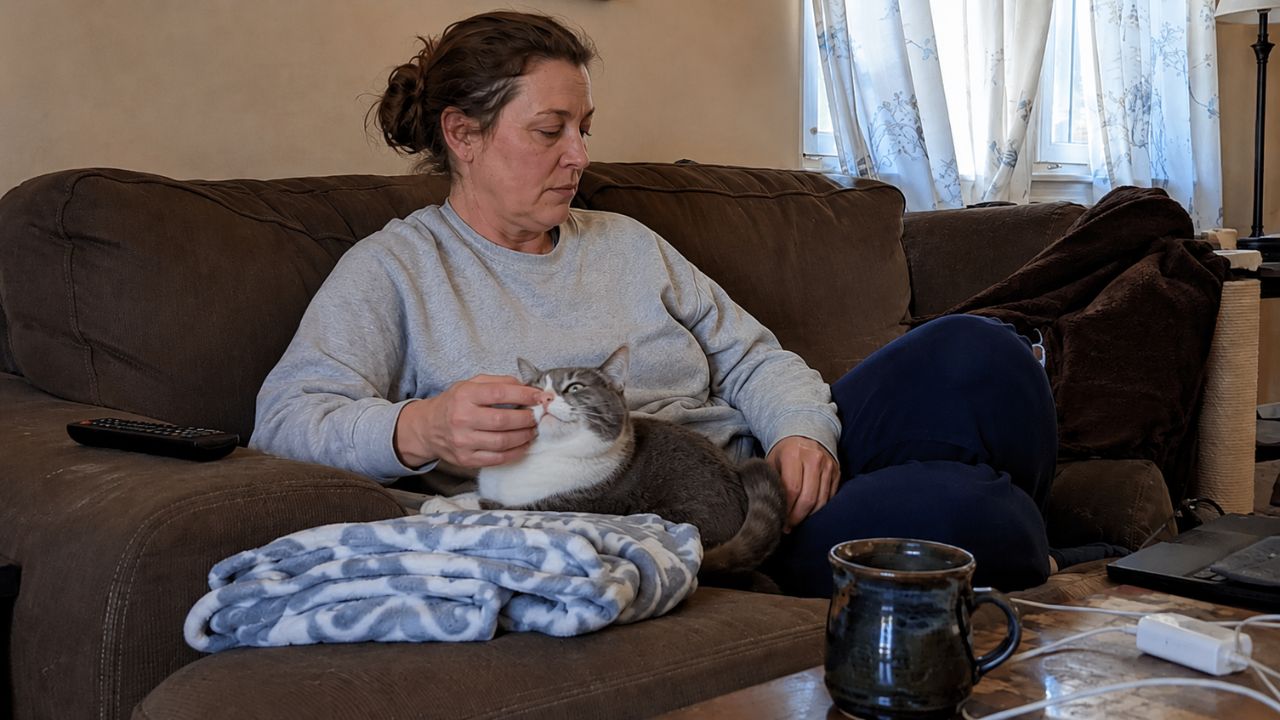
People often connect touch directly with love.
We hug the people we care about. We place a hand on someone’s shoulder to reassure them. When we pet a cat, we naturally believe we are offering the same kind of affection.
But cats may experience touch in a more complicated way.
Petting can involve comfort, scent, familiarity, physical sensitivity, personal space, and control. Its meaning may change depending on where the cat is touched, how long the contact lasts, who begins it, and whether the cat feels free to leave.
Some friendly cats groom one another, rub their faces together, or rest with their bodies touching. Because of this, human petting may sometimes resemble familiar social contact.
That does not mean every cat interprets petting in exactly the same way.
One cat may happily sleep across your chest. Another may prefer sitting a few feet away, quietly facing you from the other end of the sofa. A third may come close only when the room is calm and no one is reaching toward them.
These cats are not necessarily less affectionate. They simply have different ways of feeling safe.
Why Many Cats Prefer Their Face and Head
Many cats seem most comfortable when touched around the cheeks, chin, forehead, and the areas near the ears.
These places may feel safer than the belly, paws, legs, or tail. They are also areas cats often present during friendly interactions.
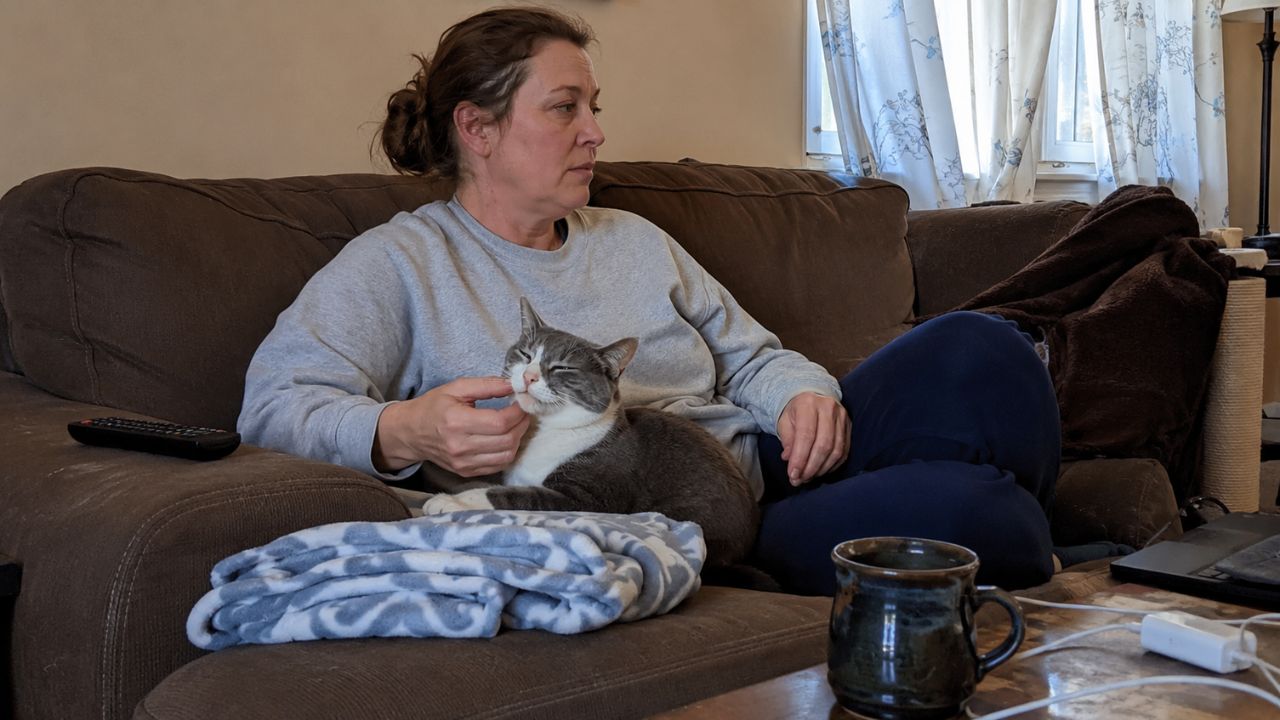
You may notice your cat turning their face as you pet them, placing one cheek directly beneath your fingers. They may lift their chin, lower their forehead, or gently push their head into your palm.
Your cat may be guiding the interaction toward the places they prefer.
Cats also have scent glands around parts of the face. When they rub a cheek against your hand, scent communication may be part of what is happening.
For people, affection and scent may seem like unrelated ideas. In a cat’s world, however, familiar scent can be closely connected with comfort, safety, and belonging.
A cheek rub may be a greeting, a request for more contact, an act of scent marking, or several of these things at once.
Whatever the exact meaning, your cat is choosing to interact with you.
That choice matters.
What It Means When Your Cat Leans Into Your Hand
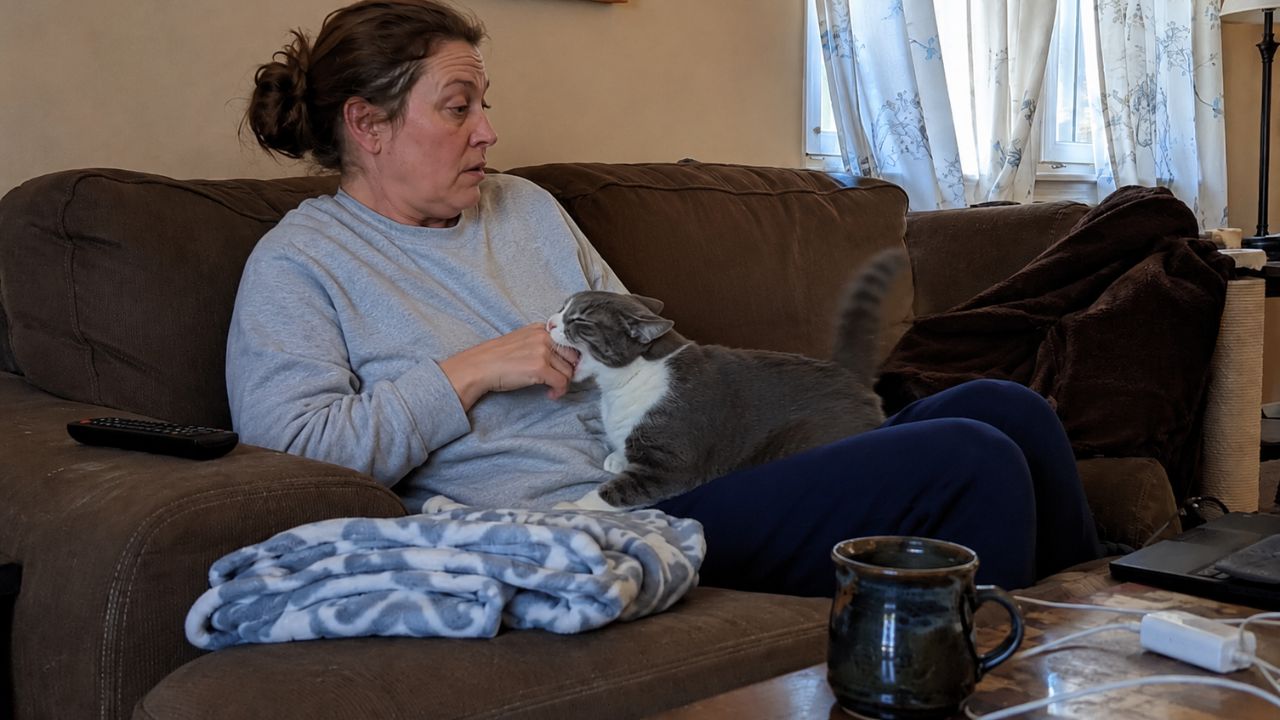
There is a small but meaningful difference between reaching for a cat and allowing the cat to complete the final distance.
You hold out one relaxed finger. Your cat moves forward to sniff it. Their nose touches your hand. Then the side of their face presses gently against your fingers.
Sometimes they continue into a slow cheek rub. Other times they push their forehead into you in a movement often called head bunting.
This behavior may reflect affection, social familiarity, scent marking, or a desire for continued contact. It should not be reduced to only one explanation.
The most important detail is that your cat is participating.
They are choosing how close to come. They are choosing where your hand touches them. They can continue, pause, or walk away.
For many cats, affection feels safer when it includes that sense of control.
Why Your Cat Grooms After You Pet Them
Your cat moves away, sits down, and immediately starts licking the exact place you just touched.
It is easy to feel rejected.
Owners sometimes laugh and say their cat is “washing off” the human smell. But grooming after petting does not automatically mean your cat disliked the interaction.
There are several possible explanations.
Your hand may have moved the fur out of place, and grooming may help restore its familiar texture. Your cat may be regulating the sensory stimulation caused by repeated touch. Grooming can also be a calming, familiar behavior that helps some cats settle themselves.
The cat may simply have decided that it was time to groom.
Look at what happens around the behavior.
A cat who licks their shoulder for a few seconds and then curls up beside you is giving a different message from a cat who runs away, hides, flattens the ears, or remains tense.
The grooming alone does not tell the whole story.
It is not necessarily your cat trying to erase you. It may simply be their way of returning their body to a familiar, comfortable state.
When Purring Turns Into a Nip
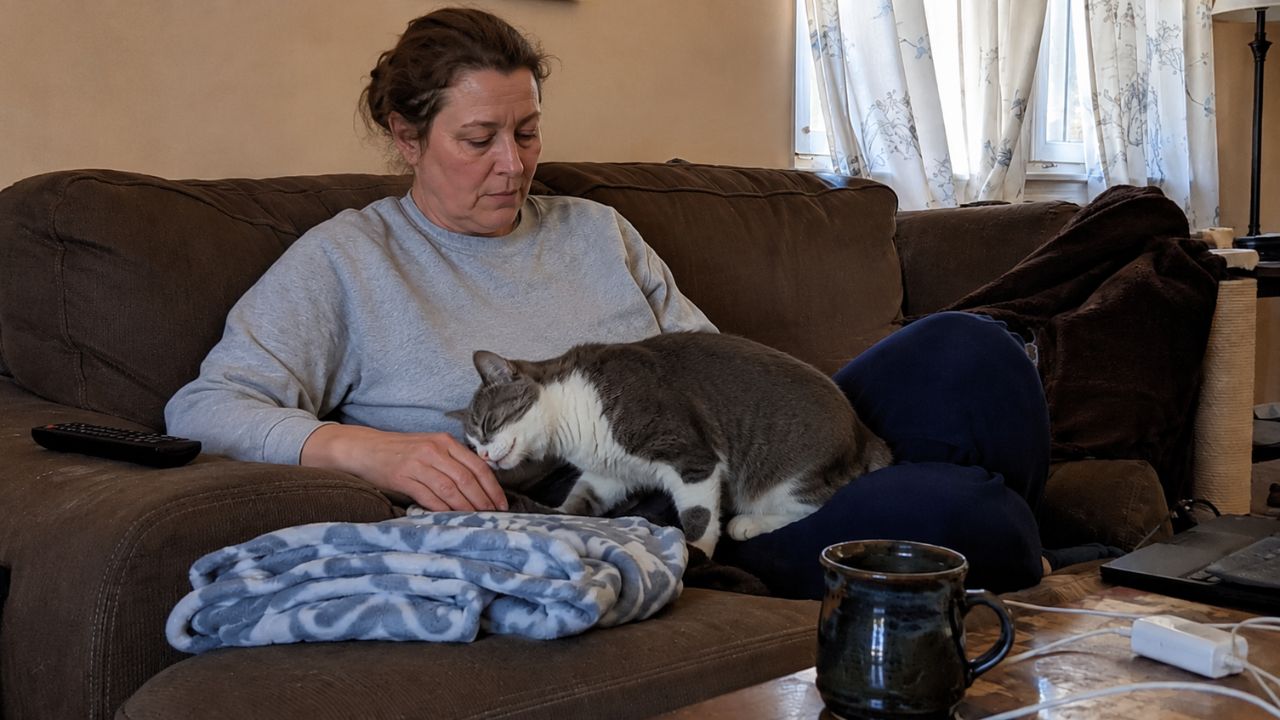
The bite may seem sudden because humans notice teeth more easily than subtle changes in body language.
But your cat may have been communicating for several seconds.
The tail may start flicking instead of resting loosely. The ears may rotate outward. The skin along the back may ripple beneath the fur. Your cat may stop leaning into your hand and become unusually still.
They may turn their head toward your fingers, shift their weight, or move slightly away.
These signs can be easy to miss, especially when the cat is still purring.
Repeated touch can become uncomfortable for some cats, particularly when the same area is stroked again and again. The first few strokes may feel pleasant. As the sensation continues, however, it may become irritating or overwhelming.
It is a little like hearing the same tapping sound repeatedly. At first, you barely notice it. Eventually, it is all you can notice.
Purring can make the situation more confusing.
Although cats often purr when relaxed, they may also purr when uncertain, seeking comfort, or trying to soothe themselves. Purring should be interpreted together with the rest of the body.
It is not unlimited permission to keep touching.
A quick nip does not necessarily mean your cat no longer loves or trusts you. It may simply mean, “That is enough,” “Not there,” or “I need space.”
Of course, not every bite is caused by overstimulation. Cats may also bite because of fear, play, frustration, or physical discomfort.
If a cat who normally enjoys being handled suddenly becomes sensitive, defensive, or distressed during ordinary touch, speak with a veterinarian. An unexpected change in tolerance can sometimes be associated with pain or another physical problem.
The Belly Is Not Always Asking for a Rub
A cat rolls onto their back in the middle of the floor, paws loose and belly fully exposed.
The position looks so relaxed that reaching down can feel almost irresistible.
But an exposed belly does not always mean the cat wants to be touched there.
Depending on the cat and the situation, belly exposure may reflect relaxation, comfort, trust, cooling, playfulness, or readiness to defend themselves. A cat on their back can use all four paws if they suddenly feel threatened.
Some cats genuinely enjoy belly rubs. Many do not.
Even when belly exposure is a sign of trust, trust and permission are not the same thing.
Your cat may trust you enough to show a vulnerable part of their body without wanting your hand placed there.
When the belly is touched, a cat may grab the hand, kick with the back feet, or bite. This does not necessarily mean they were trying to trick you.
It may simply be an instinctive response to contact in a sensitive, vulnerable area.
The Small Change That Can Transform Petting
One of the simplest ways to understand your cat is to pause.
Pet them gently two or three times, then stop.
Watch what happens next.
Does your cat lean back into your hand? Rub their cheek against your fingers? Move closer? Lift the chin or push the forehead toward you?
Those may be quiet requests for more.
Or does your cat turn away, shift position, walk off, or remain still without moving toward your hand?
That may be their answer too.
This does not need to become a strict training method. It is simply a respectful way to listen.
A man once believed his cat was aloof because she always sat at the far end of the sofa. Whenever he reached toward her, she moved away.
He assumed she did not enjoy affection.
One evening, he stopped trying to pull her closer. He rested his hand loosely on the cushion beside him and continued watching television.
He did the same thing the next evening and the evening after that.
Eventually, the cat began sitting a little closer. Then one night, she leaned forward and touched her cheek to one of his fingers.
It became a small routine. He placed his hand nearby, and she decided whether to approach.
She may never have been cold.
She may simply have needed affection to happen in a way that felt safe.
Try This the Next Time Your Cat Comes Close
Hold out a relaxed hand instead of immediately reaching over your cat’s head.
Let your cat close the final distance.
If they appear comfortable, begin near the cheeks, chin, forehead, or base of the ears.
After a few strokes, pause and let your cat’s response decide what happens next.
The Quiet Language Between You and Your Cat
Closeness with a cat is not created by touching them as often as possible.
It grows through attention.
It is noticing when they move closer and when they turn away. It is recognizing the cheek offered to your fingers, the tail that begins to flick, and the body that has suddenly become still.
It is understanding that a cat can enjoy your affection and still have limits.
Sometimes love looks like another gentle stroke beneath the chin. Sometimes it looks like stopping before your cat needs to ask more firmly.
And sometimes simply sitting in the same quiet room is already a form of trust.
The deepest affection we can offer a cat is not always another touch.
Sometimes it is the patience to wait until they ask for one.
What small gesture does your cat use when they want affection from you?