HAPTER ONE — I LEARNED TO HIDE THE TRUTH
Some children remember bedtime stories.
I remember learning how to hide pain.
By the time I was eight years old, I knew which clothes covered my arms best. Long sleeves were safer, especially at school. I knew how to smile when a teacher looked at me for a little too long, and I knew exactly what to say when someone asked whether I was okay.
“I’m fine.”
That was the answer I gave so often that eventually, I almost believed it myself.
Whenever someone noticed a bruise, my mother had the same explanation. I had fallen. I had bumped into a door. I had slipped while playing outside. The details changed, but the conclusion never did.
“It was an accident.”
I wanted to believe her.
I wanted to believe that she was telling the truth because the alternative was too frightening to understand. My mother was supposed to protect me. She was supposed to know when something was wrong. If she said everything was fine, then maybe everything really was fine.
But our house never felt fine.
My stepfather had a temper that could change the entire atmosphere of a room. Sometimes he was angry because dinner wasn’t ready quickly enough. Sometimes because the television was too loud. Sometimes because I had left something in the wrong place.
And sometimes, there was no reason at all.
That was the part I remember most clearly. Not knowing what would make him angry made every ordinary moment feel dangerous.
My mother rarely stood up to him. At the time, I was angry with her for that. I couldn’t understand why she didn’t simply take me and leave.
As I grew older, I began to realize that she was afraid too.
She had learned her own way of surviving. She stayed quiet. She cleaned up the messes. She apologized when she hadn’t done anything wrong. She convinced herself that if she kept the house calm enough, maybe the worst moments would eventually stop.
They never did.
CHAPTER TWO — THE DAY EVERYTHING CHANGED
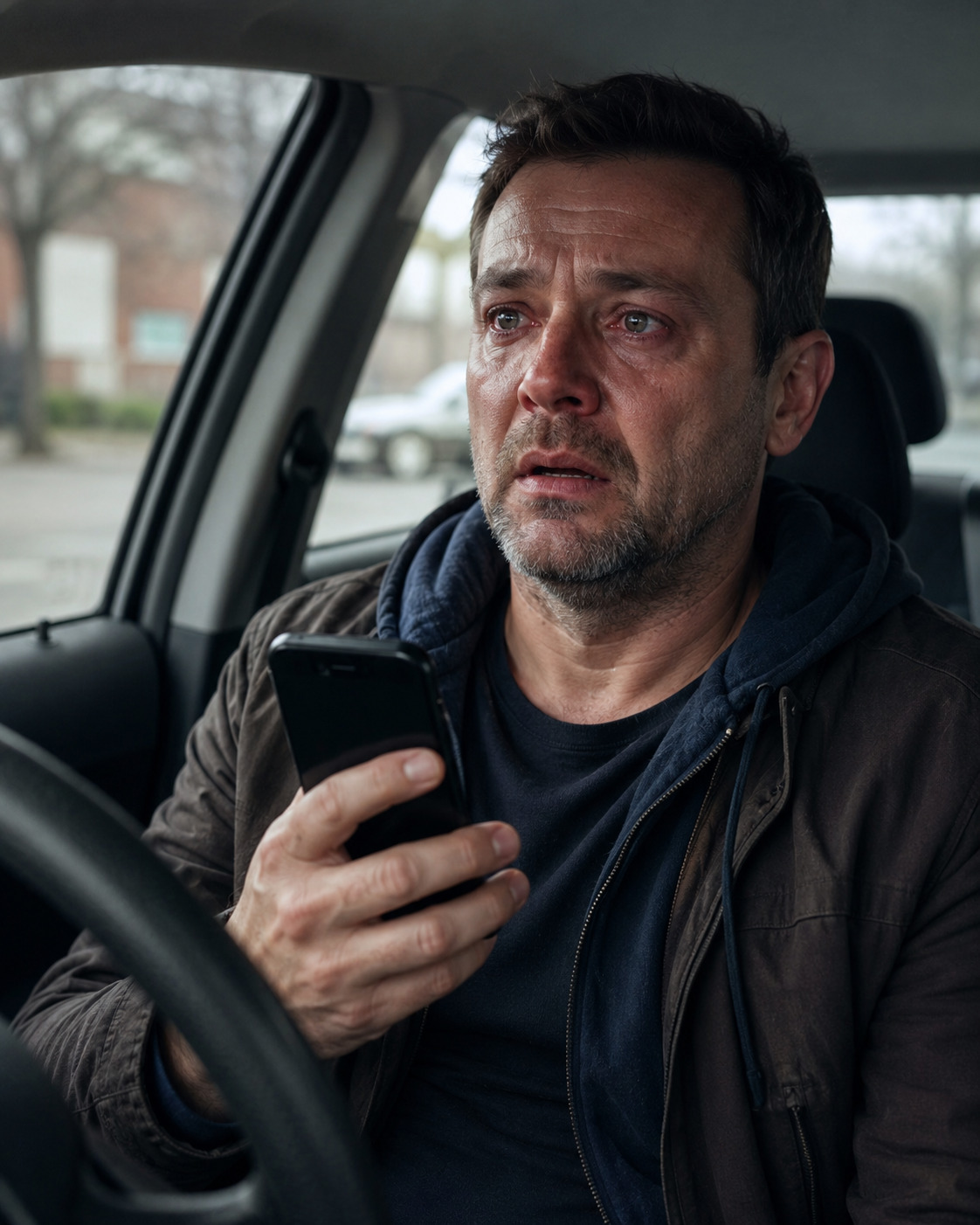
The day I ended up in the hospital began like any other rainy afternoon.
I was eight years old, and my mother had asked me to help clear the table. I remember the rain tapping against the kitchen windows. I remember the smell of dinner. I remember reaching for a glass.
Then I dropped it.
The sound of it hitting the floor was loud, but not unusually loud. It was just a glass. Something that could be cleaned up.
But when I looked up, my stepfather was already standing.
His chair scraped backward.
I remember the sudden silence.
I remember thinking, This is my fault.
That thought had become automatic by then.
The next thing I clearly remember is waking up beneath bright hospital lights.
My head hurt. My body felt heavy. Everything around me seemed distant and blurry. There were voices nearby, but I couldn’t make out every word.
A nurse asked my mother what had happened.
My mother answered immediately.
“She slipped in the bathroom.”
I closed my eyes.
I had heard that explanation before.
But this time, something was different.
The doctor examining me did not simply accept the answer and move on.
He asked questions.
He looked carefully at my injuries.
He reviewed the information from the emergency room.
And then he became quiet.
I didn’t understand what that quiet meant at the time. I only remember watching him leave the room.
A few minutes later, I saw him standing in the hallway, speaking firmly into a telephone.
After that, things began happening very quickly.
Two police officers arrived.
Then a child protection worker.
There were conversations I didn’t fully understand. People came in and out of the room. My mother looked frightened. My stepfather wasn’t there.
Eventually, the doctor came back.
He pulled a chair beside my bed and sat down so we were at the same level.
Then he said something I had never heard an adult say to me before.
“You are safe here.”
He paused.
“No one is angry with you.”
I didn’t know what to do with those words.
For years, I had believed that adults became angry because children made mistakes. I had believed that if I was more careful, quieter, better, and less troublesome, maybe things would stop happening.
The doctor didn’t ask me to prove anything.
He didn’t demand a confession.
He didn’t make me tell a story before I was ready.
Instead, trained specialists spoke with me slowly over time. They asked questions in a way that made me feel like I was allowed to think before answering.
For the first time, nobody seemed to be asking me to protect an adult.
CHAPTER THREE — THE FIRST NIGHT AWAY
That evening, I did not go home.
I was placed with a temporary foster family while the investigation continued.
I remember being terrified.
People sometimes imagine that a child who leaves an unsafe home immediately feels relieved. That wasn’t how it felt for me.
Everything was unfamiliar.
The room was unfamiliar.
The people were unfamiliar.
Even the quiet felt strange.
I cried myself to sleep that first night.
Not because I wanted to go back.
Because I had no idea what would happen next.
For the first time in my life, nobody was shouting through the walls. Nobody was slamming doors. Nobody was walking around the house trying to guess what kind of mood another person was in.
But peace can feel frightening when you have never had it before.
Over the following weeks, counselors helped me talk about things I had never known how to describe. I learned that sometimes children don’t have the words for what is happening to them. They only know that they are scared, that something hurts, or that they need to be careful.
I had spent years thinking I was simply bad at explaining myself.
The truth was that I had never been given a safe place to speak.
Eventually, my mother admitted that she had been living in fear for a long time.
She had known more than she wanted to admit.
She had seen enough to understand that something was wrong, but she had convinced herself that keeping the family together was the same thing as protecting me.
It wasn’t.
She later cooperated with the investigation and began receiving counseling herself.
I was still angry with her.
I loved her, but I was angry.
Both things were true at the same time.
That was something I had to learn as I grew older: loving someone does not erase the harm they allowed to happen.
CHAPTER FOUR — WHAT HOME BEGAN TO MEAN
Eventually, I moved in with my aunt.
She never asked me to pretend that everything was fine.
That was one of the first things I noticed about her.
She didn’t force me to talk before I was ready. She didn’t ask me to forgive anyone. She didn’t tell me to stop thinking about the past.
She simply made sure I had breakfast.
She made sure I had clean clothes.
She took me to school.
And when I woke up from nightmares, she was there.
For the first time, home became a place where I didn’t have to listen for footsteps.
I didn’t have to study someone’s face before speaking.
I didn’t have to apologize for existing.
It took me a long time to understand how extraordinary that actually was.
Years passed.
I finished school. I went to college. I learned how to build a life that wasn’t controlled by the things that had happened to me as a child.
Eventually, I became a pediatric nurse.
People often asked me why.
They expected an answer about loving children or wanting to work in medicine.
Those things were true.
But they weren’t the whole truth.
Whenever someone asked, I usually smiled and said:
“Because one doctor changed my life.”
That doctor had not performed a dramatic operation.
He had not discovered some rare disease.
He had simply paid attention.
He noticed that the explanation he was given did not fit what he was seeing.
And instead of looking away, he trusted his training and acted.
One phone call changed the direction of my entire life.
I sometimes wonder what would have happened if he had accepted the words, “She slipped in the bathroom.”
Maybe I would have gone home that night.
Maybe the next incident would have been worse.
Maybe I would have continued believing that pain was something I had to hide.
I don’t know.
I only know that he refused to assume.
And because he did, I got a chance to grow up somewhere else.
CHAPTER FIVE — THE LETTER
Many years later, I returned to the hospital.
By then, the doctor had retired.
I had thought about visiting him for a long time. I had imagined what I would say. I had written several versions of a letter in my head.
But when the moment finally came, I realized I didn’t need to make it complicated.
I wrote him a handwritten note.
It said:
“You probably don’t remember me. I was a frightened child who came into your hospital many years ago. But I remember you. I remember that you saw something was wrong when other adults accepted an explanation that didn’t make sense. I remember you telling me I was safe. Thank you for looking closely enough to see me.”
I never found out whether he kept the letter.
Maybe he read it once and placed it in a drawer.
Maybe he forgot about it entirely.
That would be okay.
He had already given me something far more important than a response.
He had given me a different future.
CHAPTER SIX — WHAT I KNOW NOW
For a long time, I thought my story was about the people who hurt me.
As I got older, I began to understand that it was also about the people who noticed.
The nurse who stayed beside me.
The specialists who allowed me to speak at my own pace.
The child protection worker who understood that a frightened child might not have the words immediately.
My aunt, who gave me a home without demanding that I become someone else.
And the doctor who looked at the facts instead of simply accepting the explanation.
I still remember the bruises.
I still remember the fear.
I still remember how carefully I learned to hide what was happening.
But those memories no longer define my entire life.
Today, when I work with children, I pay attention to the small things.
The child who suddenly becomes quiet.
The child who flinches when someone raises their voice.
The child who says everything is fine but never looks up.
Sometimes there is an innocent explanation.
Sometimes there isn’t.
The important thing is not to assume either way.
Because children do not always know how to ask for help.
Sometimes they hide pain because they have been taught that speaking will only make things worse.
Sometimes they protect the very adults who failed to protect them.
And sometimes, all it takes is one adult who is willing to pause and say:
“Something here doesn’t seem right.”
That doctor probably never understood how much his decision meant to me.
He may have gone home that night and continued with the rest of his life.
But I went somewhere else.
I grew up.
I found safety.
I went to college.
I became a nurse.
And eventually, I became the kind of adult I needed when I was eight years old.
That is why I still believe small decisions matter.
A question.
A careful examination.
A second look.
A phone call.
Sometimes, the most important thing a professional can do is not the most dramatic thing.
Sometimes it is simply refusing to look away.
And for one frightened child beneath bright hospital lights, that decision changed everything.