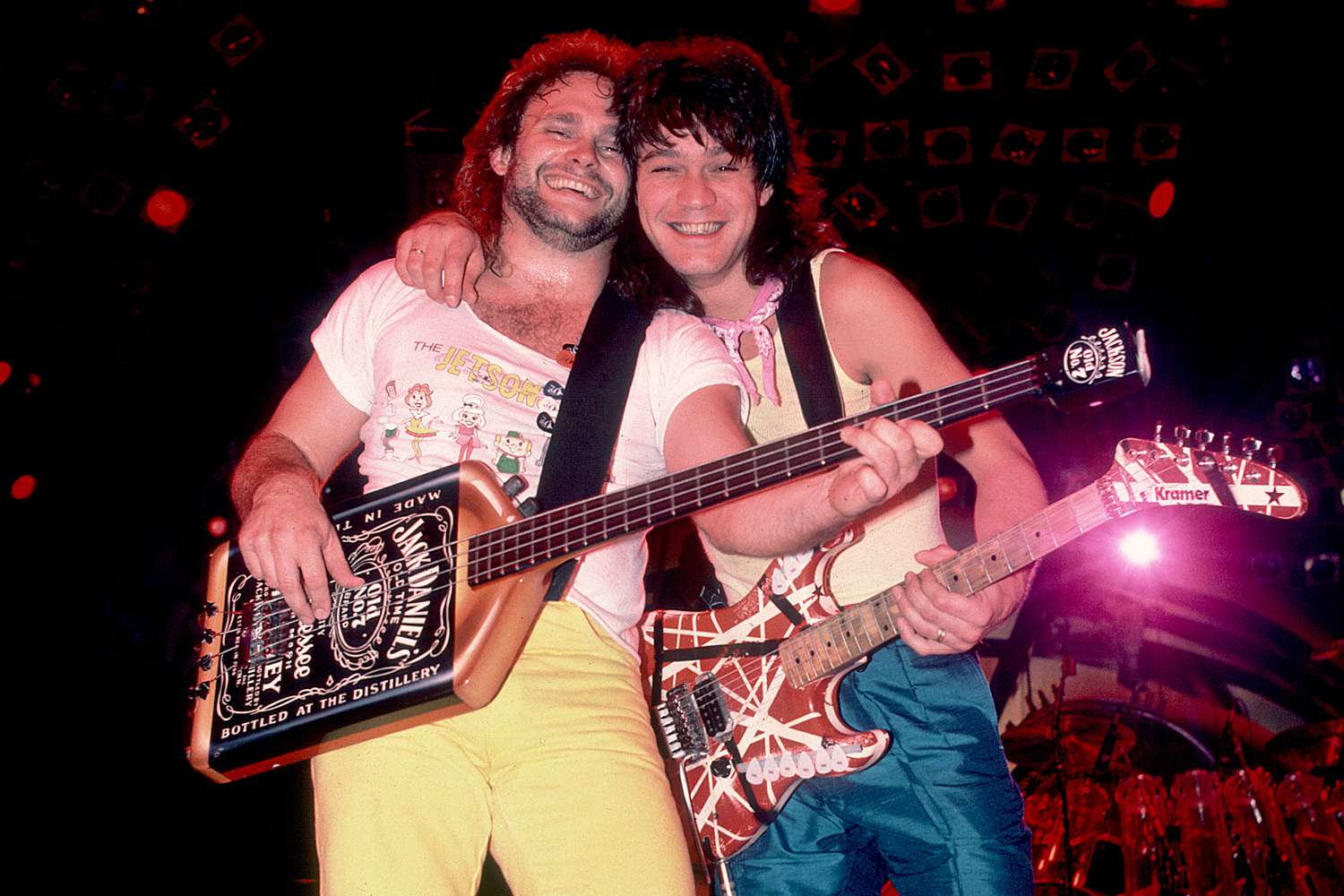
Michael Anthony had plenty of reasons to be angry.
He had spent three decades helping build one of the biggest rock bands America ever produced.
His bass anchored songs that became part of FM-radio history.
His high harmonies floated over choruses that millions of fans could recognize within seconds.
Then his role began shrinking.
His financial arrangement changed.
Eventually, Eddie Van Halen’s teenage son Wolfgang took his place.
Years later, Eddie publicly dismissed Michael’s musicianship with a line that stunned longtime Van Halen fans.
Yet when Michael Anthony was asked in 2025 what he actually regretted about his career, he did not talk first about money.
He did not attack Wolfgang.
He did not even return Eddie’s insult.
His answer was much sadder.
“The only regret that I have is how things, unfortunately, turned out for Van Halen.”
And then he explained why.
He and Eddie had never made peace before Eddie died.
Michael believed that, given more time, they probably would have.
That is what makes the story of Michael Anthony and Eddie Van Halen more complicated than a simple rock-and-roll feud.
For years they played together like brothers.
Then they stopped talking like strangers.
And just when there were signs the past might finally be put aside, time ran out.
1. Before the Stadiums, Michael Anthony Was the Guy With the PA System
Long before “Jump,” 1984 or sold-out arenas, Michael Anthony was Michael Anthony Sobolewski, a Southern California kid who had started out playing trumpet.
He eventually switched toward rock music and bass.
In the early 1970s, he played bass and sang lead in a local power trio called Snake.
Snake traveled in many of the same Pasadena-area circles as another young band built around two immigrant brothers with an almost frightening amount of musical talent:
Eddie and Alex Van Halen.
One night Snake opened for them.
The Van Halen band’s PA system failed.
Michael let them use his.
It seemed like a small favor.
It helped change his life.
Michael later encountered Alex around Pasadena City College.
When the Van Halen brothers needed another bassist, a mutual friend suggested Michael.
He went to jam with Eddie and Alex.
They tried to throw rhythmic changes at him.
He kept up.
When they finished, Michael remembered being asked whether he wanted to join.
His answer was essentially immediate:
Yes.
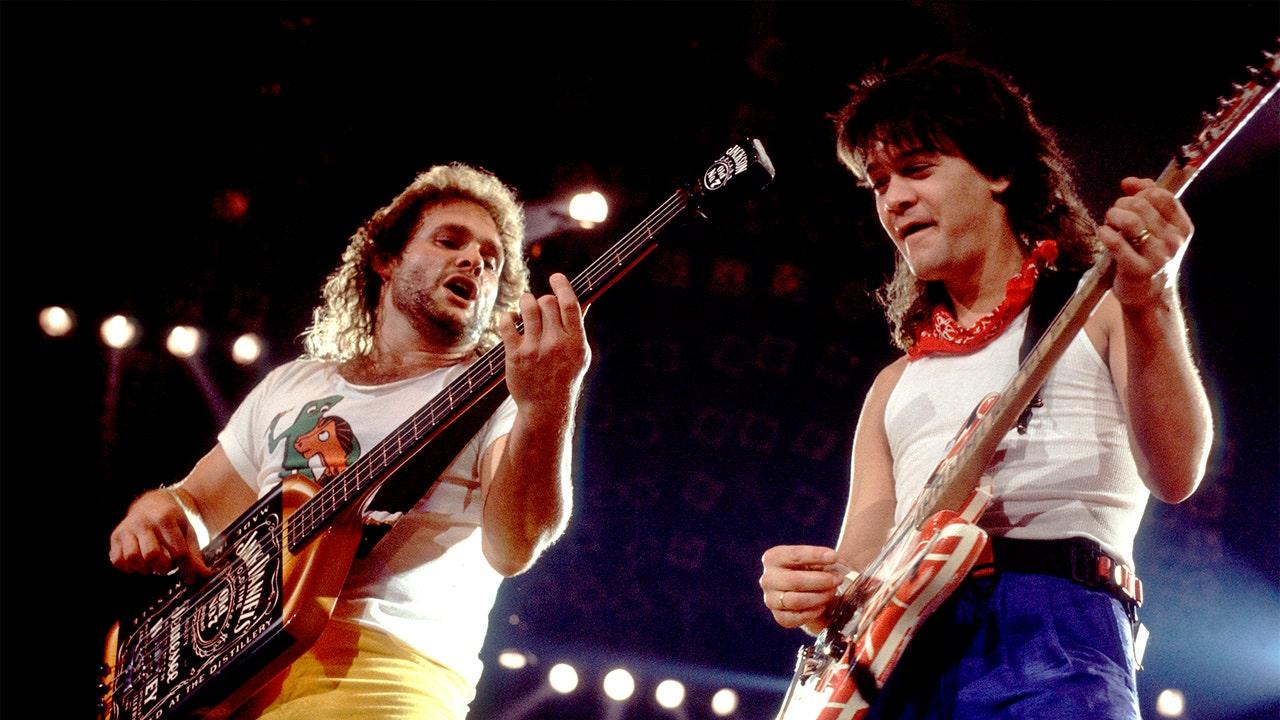
The classic lineup was taking shape.
Eddie Van Halen.
Alex Van Halen.
David Lee Roth.
Michael Anthony.
None of them yet knew exactly what they had built.
2. They Started in Backyards Before They Took Over America
The early Van Halen story has become part of Southern California rock mythology.
Backyard parties.
School gyms.
Local clubs.
Handmade flyers.
Keg parties.
Eventually the Sunset Strip.
Michael remembered his first show with the band as a Pasadena backyard party where he wore gold lamé and Eddie wore silver. By the time Warner Bros. executive Ted Templeman saw them at the Starwood in Los Angeles, they were already performing as if the nearly empty club were an arena.
That mattered.
Van Halen was not assembled by a record company.
The group learned how to win crowds before it had a record contract.
David Lee Roth became the visual explosion out front.
Alex drove the music from behind the kit.
Eddie sounded unlike almost any guitarist most audiences had heard.
Michael’s role was less obvious.
That did not make it less important.
3. Michael Anthony Had Something Van Halen Couldn’t Easily Replace
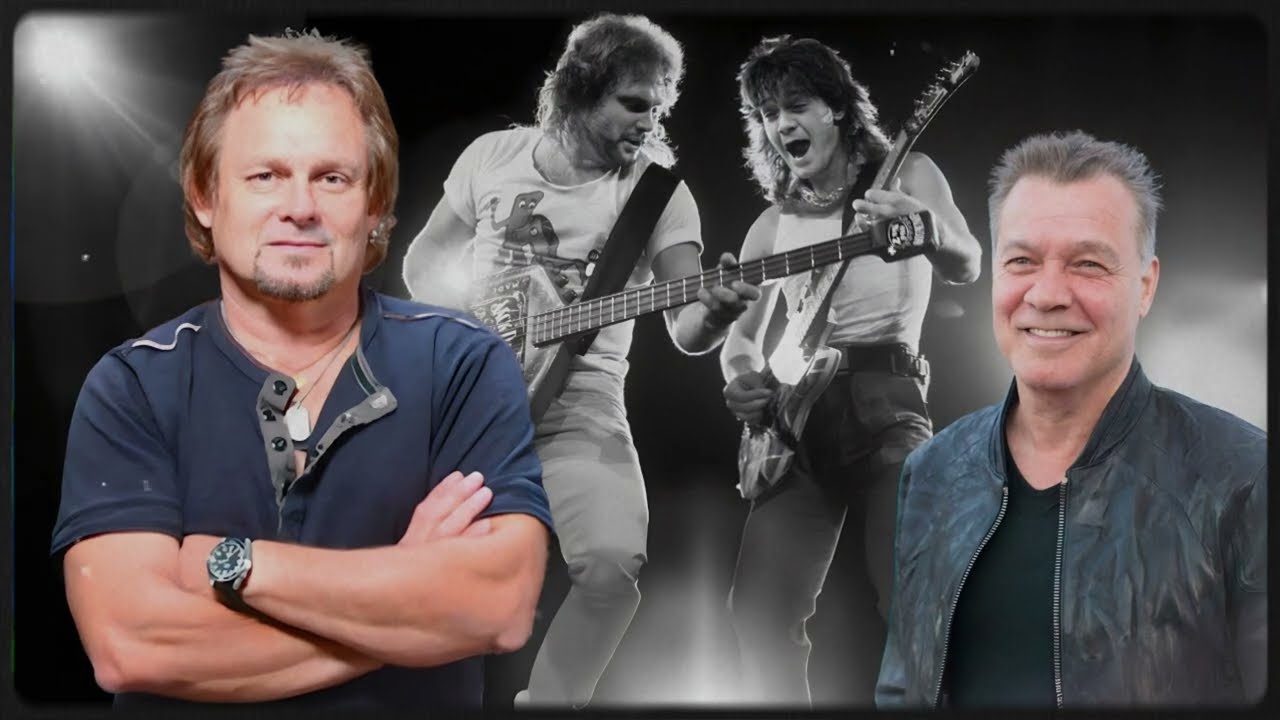
Listen to the old records without focusing on the guitar.
Behind Roth’s voice, another sound keeps appearing.
Those high backing vocals.
They are especially obvious on songs such as “Runnin’ with the Devil,” “Dance the Night Away,” “Somebody Get Me a Doctor” and later the Sammy Hagar-era material.
Michael Anthony possessed an unusually high natural range.
He later argued that his voice blending with Eddie’s became as recognizable a part of Van Halen’s sound as almost anything else the group did.
Sammy Hagar has been even less subtle about Michael’s importance.
When Hagar later tried to reproduce the classic Van Halen background-vocal sound on another project, he called producer Ted Templeman for advice because he wanted Michael’s voice to sound the way it had on the old records.
That is worth remembering.
Michael Anthony was not Van Halen’s primary songwriter.
He was not its virtuoso center.
Eddie was.
But bands are not mathematical equations.
Sometimes a sound becomes iconic because four specific people make it.
Take one away and something changes.
4. Then Came One of the Greatest Debut Albums in Rock History
Van Halen’s self-titled debut arrived in February 1978.
“Runnin’ with the Devil.”
“Eruption.”
“You Really Got Me.”
“Ain’t Talkin’ ’bout Love.”
“Jamie’s Cryin’.”
It announced a band that already seemed fully formed.
Michael’s playing was not designed to compete with Eddie’s guitar.
Often it did the opposite.
It gave Eddie room.
That philosophy made sense because early Van Halen recordings were built around the energy of a band that had spent years playing together live.
Michael later recalled that their arrangements were designed to work onstage, where there was no separate rhythm guitarist filling space behind Eddie.
That distinction can disappear when people reduce the Van Halen story to:
Eddie was the genius.
Therefore everyone else was replaceable.
Eddie unquestionably was the musical genius at the band’s center.
But the classic sound was a band sound.
For years, Michael was part of it.
5. By 1984, They Had Reached the Top
Then everything became enormous.
The album 1984 produced:
“Jump.”
“Panama.”
“Hot for Teacher.”
“I’ll Wait.”
“Jump” reached No. 1.
The tour was massive.
Van Halen had gone from backyard parties to one of America’s defining rock bands.
And during that triumphant period came one of the most controversial episodes in Michael Anthony’s history with the group.
It involved money.
More specifically, songwriting royalties.
6. What Happened to Michael’s Share in 1984?
This part of Van Halen history is often exaggerated.
Some retellings say Michael Anthony was stripped of virtually every dollar he ever earned from the band.
The available accounts do not establish that.
What former Van Halen manager Noel Monk described was more specific.
According to Monk, during the 1984 tour the other three members moved to change Michael’s royalty position, including his songwriting share connected to the 1984 material.
Michael signed an addendum.
Monk later told LA Weekly that he could not understand why Michael agreed to it and believed an enormous amount of money was at stake.
That distinction is important.
Songwriting and publishing royalties are not necessarily the same as every cent generated by records, touring or merchandise.
So saying Michael earned “virtually nothing” from 1984 goes further than the documented evidence.
But saying he accepted a significantly worse songwriting-royalty arrangement during Van Halen’s biggest commercial period?
That has substantial backing in Monk’s account.
7. The Most Puzzling Part Is That Michael Stayed
This is where Michael Anthony’s personality becomes central to the story.
He did not walk off the tour.
He did not publicly destroy the band.
He stayed.
Monk found that almost impossible to understand.
In his telling, Michael could have refused, leaving one of the world’s hottest bands facing a show without its bassist and key backing singer.
He did not.
The decision would become part of the way fans later interpreted Michael:
the easygoing guy who tolerated more than most people would have tolerated.
Whether that was loyalty, conflict avoidance, business naivety or simply a desire to keep Van Halen functioning is something only Michael can fully answer.
But the show went on.
Soon afterward, David Lee Roth left.
And Van Halen entered a completely new era.
8. Sammy Hagar Arrived—and Michael Was Still There
Replacing David Lee Roth should have destroyed Van Halen.
Instead, the opposite happened.
Sammy Hagar joined the band.
In 1986, they released 5150.
The album became Van Halen’s first No. 1 album in the United States.
“Why Can’t This Be Love.”
“Dreams.”
“Best of Both Worlds.”
“Love Walks In.”
The lineup of Eddie, Alex, Sammy and Michael became enormously successful in its own right.
For fans old enough to remember both eras, the argument never really ended:
Dave or Sammy?
But Michael was one of the people connecting them.
He sang behind Roth.
Then he sang behind Hagar.
Those voices were different.
Michael’s high harmonies remained.
9. Forty Years Later, 5150 Still Makes His Importance Easy to Hear
That history became particularly relevant again in 2026.
For the album’s 40th anniversary, Rhino released an expanded edition of 5150, remastered from the original tapes and accompanied by rare material and previously unreleased live recordings from 1986.
The official anniversary release specifically celebrates the lineup of Sammy Hagar, Eddie Van Halen, Alex Van Halen and Michael Anthony.
There is an irony in that.
Years after Michael’s place in Van Halen became contentious, the archive itself keeps returning to the sound he helped create.
You can debate who wrote which bass figure.
You can debate percentages.
It is much harder to erase a voice already embedded in the record.
10. But the Band Became Less Like Four Guys in a Room
Michael would later look back on the early years as a period when Van Halen felt more like four musicians working together.
Over time, that changed.
Eddie built his 5150 home studio.
The band’s internal dynamics shifted.
Members increasingly pursued different priorities.
Michael’s studio role also became less secure.
By Van Halen III in 1998, the change was impossible to miss.
Michael played bass on only three tracks.
Eddie handled bass on most of the remaining album.
Michael was still in Van Halen.
But increasingly, being “in Van Halen” no longer necessarily meant what it had in 1978.
11. The 2004 Tour Should Have Been a New Beginning
In 2004, Sammy Hagar returned to Van Halen for a reunion tour.
Michael Anthony was there.
For fans of the Hagar era, it should have been a celebration.
Instead, people around the band have since described a difficult environment.
Eddie was struggling badly during that period.
After the tour, Michael continued playing with Sammy.
That decision became part of the widening distance between Michael and the Van Halen brothers.
And then came the news that changed his status permanently.
Van Halen was preparing to reunite with David Lee Roth.
Michael Anthony would not be playing bass.
Wolfgang Van Halen would.
He was Eddie’s son.
And he was still a teenager.
12. Michael Said He Learned About His Replacement When the Fans Did
Michael’s version of the episode was blunt.
He said he found out he had been replaced at essentially the same time the public did.
Later, he described an even more painful moment.
Images of him on Van Halen’s old album artwork temporarily disappeared from the band’s website and were replaced with Wolfgang.
The change was reversed after fan reaction.
But Michael remembered the emotional sting.
The idea that someone might try to remove him from the band’s past hurt more than simply losing the job.
It is easy to understand why.
Replacing a musician going forward is one thing.
Rewriting old photographs feels like saying he had never been there.
13. But in 2026, Alex Van Halen Told a Different Part of the Story
This is where a responsible version of the story has to acknowledge conflicting recollections.
Michael said he learned about the change publicly.
In 2026, Alex Van Halen said the brothers had attempted to call Michael before Wolfgang became part of the lineup.
According to Alex:
“We did call him, and he just didn’t answer.”
Alex also emphasized that he loved Michael and considered him important to the band, particularly for his backing vocals.
Those accounts do not necessarily cancel each other out.
It is possible a call was attempted and never connected while Michael still ultimately learned of the decision through public channels.
What remains clear is that communication between them had broken down badly.
A band that had once spent endless hours together in Pasadena could no longer reliably get everyone on the same telephone call.
14. Michael Did Something Important: He Didn’t Blame Wolfgang
This is one of the strongest parts of Michael Anthony’s later story.
It would have been easy to resent Wolfgang.
Fans certainly argued about his presence.
But Michael repeatedly separated Wolfgang from the conflict.
In 2024, he said he understood why Eddie wanted to play music with his son.
Michael even suggested Wolfgang may not have been particularly interested in inheriting Van Halen as his permanent identity.
He praised Wolfgang as a musician and said plainly:
“I love Wolfie.”
That choice matters.
The son was not responsible for decades of tension among the adults.
Michael appears to have understood that.
15. Michael Built Another Life With Sammy Hagar
Being out of Van Halen did not end Michael Anthony’s career.
Far from it.
His friendship with Sammy Hagar became one of the most durable relationships in the entire Van Halen universe.
They played together in various configurations.
Then came Chickenfoot.
Hagar.
Anthony.
Joe Satriani.
Red Hot Chili Peppers drummer Chad Smith.
The band’s self-titled 2009 debut reached No. 4 on the Billboard 200 and was certified gold.
For Michael, Chickenfoot also recreated something he had missed.
Four musicians in a room.
Playing live.
Having fun.
He compared the energy to the early Van Halen years, before everyone began drifting in separate directions.
That may have been more meaningful than proving anything to Eddie.
He got to remember why he had become a musician in the first place.
16. Then Eddie Said Something Michael Could Not Ignore
In June 2015, Eddie Van Halen gave a remarkably candid interview to Billboard.
When Michael Anthony came up, Eddie did not merely say Wolfgang was a better fit for the current band.
He attacked Michael’s ability.
“Every note Mike ever played, I had to show him how to play.”
Eddie also minimized Michael’s contribution to Van Halen’s famous backing vocals.
The comments spread immediately.
For longtime fans, they were startling.
Whatever had gone wrong between the two men, Michael had been on every Van Halen studio album through Van Halen III.
He had stood onstage beside Eddie for decades.
Now Eddie was publicly describing him as if he had barely known how to perform the material.
17. Michael’s Response Was Almost the Opposite of Eddie’s
Michael did respond.
But he did not match Eddie insult for insult.
His statement was careful.
He said he was proud that his bass playing and vocals had helped create Van Halen’s sound.
Then he explained that he preferred to stay out of the mudslinging because ultimately it hurt the fans.
Sammy Hagar was much less restrained.
Hagar publicly called Eddie’s claim false and said that during his eleven years in Van Halen he had never seen the supposed ritual of Eddie having to teach Michael the entire catalog with a video camera.
Fans chose sides.
The relationship between Michael and Eddie did not improve.
And eventually the years began disappearing.
18. What Makes the Feud Sad Is That They Had Once Been So Close
The danger of looking only at the final conflict is that it rewrites the decades before it.
Michael and Eddie had not always been enemies.
There were tours.
Jokes.
Backstage chaos.
Thousands of performances.
The kind of experiences only people inside an enormous rock band can truly share.
In later interviews, Michael remembered the good periods simply:
when the drama was not happening, they had great times.
He described the band at its best as four brothers.
That makes the ending harder.
You do not need reconciliation with someone you never cared about.
19. Eddie’s Health Was Failing
Eddie Van Halen’s health problems stretched across many years.
He had previously dealt with tongue cancer and later fought additional cancer.
Much of the seriousness of his final illness was kept private.
Michael knew Eddie was ill.
He did not know how bad things had become.
When Eddie died on October 6, 2020, at 65, Michael posted photographs of them together and described himself as heartbroken.
The public lost a guitar hero.
Michael lost something harder to define.
An old friend?
A former brother?
A man he had unresolved anger toward?
Probably all three.
20. Sammy Hagar Got a Reconciliation Michael Never Did
There was another painful contrast.
Sammy Hagar had also been estranged from Eddie.
But before Eddie died, Sammy and Eddie managed to reconnect privately.
Michael did not.
He later said they had not spoken and never had the opportunity to resolve their problems.
“It bothers me because we had some issues that were never resolved.”
For anyone who has lost someone after years of distance, that sentence requires very little explanation.
Once someone dies, the argument freezes exactly where it was.
There is no next phone call.
No accidental meeting.
No chance to say:
We were young.
We were angry.
Forget it.
21. And the Cruelest Part Is That a Reunion May Actually Have Been Coming
After Eddie’s death, details emerged about an ambitious idea he had considered.
A massive Van Halen reunion bringing together musicians from different eras of the band.
Michael said he had spoken with Wolfgang about it.
In Michael’s view, Eddie seemed to have reached a point late in life where the old fights might finally have become “water under the bridge.”
There is no way to know whether the tour would actually have happened.
Van Halen reunion ideas had collapsed before.
Personalities were complicated.
Health was a factor.
David Lee Roth was unpredictable.
But for Michael, simply knowing Eddie had been thinking in that direction carried emotional weight.
Maybe they would have talked.
Maybe they would have played again.
Maybe the ending could have been rewritten.
Then Eddie died.
22. A Tribute Tour Was Discussed—but Van Halen Still Couldn’t Quite Come Together
After Eddie’s death, various musicians discussed ways of honoring him.
Joe Satriani later confirmed discussions with Alex Van Halen and David Lee Roth about a tribute project.
The concept never became a tour.
Alex subsequently said an argument with Roth over how Eddie would be honored helped end the plan, while Alex’s own serious back problems further complicated any return to touring.
It was almost painfully appropriate.
Even after Eddie was gone, assembling the Van Halen family remained difficult.
The music was simple compared with the relationships.
23. Michael Eventually Found Some Closure—Just Not With Eddie
In late 2023, Michael attended a Wolfgang Van Halen concert at the House of Blues in Las Vegas.
He went as Wolfgang’s guest.
Valerie Bertinelli was there too.
Michael and Wolfgang sat down and talked.
For Michael, it became important.
He later said:
“There was a lot of closure for me there.”
It was not reconciliation with Eddie.
Nothing could provide that anymore.
But perhaps it allowed Michael to separate the father from the son—and the painful ending from the decades that came before it.
He had no interest in making Wolfgang the villain.
They left the meeting on good terms.
24. By 2025, Michael Knew Exactly What He Regretted
Then came the question.
Career regrets?
Michael Anthony had an unusually rich list of possible answers.
He could have mentioned that 1984 financial agreement.
He could have mentioned losing songwriting credits.
He could have mentioned being reduced on Van Halen III.
He could have mentioned being replaced.
He could have mentioned Eddie humiliating him publicly in 2015.
Instead, Michael returned to the ending.
Van Halen, he said, should have gone out with:
“a fricking bang that shook the world.”
Instead, he felt it had ended with something closer to a whimper.
Most importantly, he and Eddie had never made amends.
That was the regret.
Not just what had been done to him.
What had been left unfinished.
25. In 2026, Michael Anthony Is Still Playing the Music
There is another reason this story matters now.
Van Halen history is not frozen in a museum.
In March 2026, 5150 received its 40th-anniversary expanded edition, bringing Michael’s voice and bass back into focus for fans who lived through that era and younger listeners discovering it.
Michael also continues performing with Sammy Hagar’s Best of All Worlds band alongside Joe Satriani and other veteran musicians.
Their 2026 shows deliberately celebrate music from the Van Halen years along with Hagar’s wider career.
So Michael is still standing on stages playing songs connected to the band that once pushed him out.
That does not look much like bitterness.
It looks more like acceptance.
26. Was Michael Anthony the Secret Genius of Van Halen?
Probably not.
And he does not need to be.
Eddie Van Halen was one of the most transformative guitarists in modern popular music.
Van Halen could not have existed in recognizable form without him.
David Lee Roth’s personality was crucial to the original band’s explosive identity.
Alex Van Halen’s drumming was integral.
Sammy Hagar changed the group without destroying it.
Michael’s contribution does not need exaggeration to become valuable.
He played bass.
He sang those unmistakable harmonies.
He helped provide the bottom underneath one of the busiest guitar players rock had ever heard.
He stood there through two enormously successful versions of the band.
And when another lineup tried to reproduce the old sound, fans immediately noticed what had changed.
That is a legacy.
27. Eddie’s 2015 Comments Didn’t Get the Final Word
This may be the most interesting thing about the story.
Eddie got to say:
“Every note Mike ever played…”
But records have a way of outliving arguments.
Put on the first Van Halen album.
Put on Women and Children First.
Fair Warning.
1984.
5150.
OU812.
For Unlawful Carnal Knowledge.
The sound is already there.
No interview can remove Michael from those recordings.
And in 2026, even Alex Van Halen—while disputing aspects of the story of Michael’s departure—publicly acknowledged that Michael mattered, specifically noting those backing vocals.
People can disagree about the business.
They can disagree about how much Michael contributed to songwriting.
They can disagree about why he ultimately disappeared from the lineup.
The records are harder to argue with.
28. Maybe That’s Why Michael Never Needed Revenge
For years, Michael Anthony’s public posture has been surprisingly consistent.
He will correct things he believes are wrong.
He will talk about being hurt.
He will acknowledge that relationships broke down.
But he has rarely seemed interested in destroying Eddie Van Halen’s legacy in order to restore his own.
Perhaps he doesn’t have to.
Van Halen’s history is big enough to hold two truths.
Eddie could be a revolutionary musician—
and someone capable of saying hurtful things about a former bandmate.
Michael could be treated unfairly—
without needing to pretend he was the band’s primary creative force.
They could love each other like brothers at one point—
and become estranged later.
Real families work that way too.
29. What Michael Wanted Was One More Chance
By the time Michael spoke candidly in 2025, the anger no longer seemed like the heart of the story.
Time was.
Eddie was gone.
A reunion that might have brought the old players together never happened.
The conversation Michael thought they eventually would have had never happened either.
That is why his answer about regret lands differently from a story about royalties.
Money can sometimes be renegotiated.
Credits can be corrected.
Old photographs can be restored to a website.
Death does not negotiate.
Once Eddie died, Michael could forgive him privately.
He could understand him differently.
He could speak kindly about Wolfgang.
But he could never hear Eddie’s side of that final conversation.
30. Van Halen Didn’t End the Way Michael Anthony Thought It Should
Michael Anthony joined a neighborhood rock band when none of them knew how big it would become.
They played backyard parties.
Then clubs.
Then arenas.
They made records that became part of American rock culture.
They fought.
One singer left.
Another arrived.
Millions of dollars changed hands.
Friendships changed.
Eddie’s studio became the center of a new version of the band.
Michael’s role diminished.
Eventually he was gone.
Then Eddie said things Michael never forgot.
And still, when Michael was asked for his biggest regret, he did not answer like a man trying to settle a score.
He answered like someone remembering what the band had once felt like when it was working:
four guys living something that seemed impossible.
He wanted that story to end differently.
He thought he and Eddie eventually would have put the past behind them.
They never got the chance.
There are plenty of Van Halen arguments fans can continue forever.
Roth or Hagar.
Who wrote what.
Who deserved which percentage.
Whether Michael should have been replaced.
Whether Wolfgang should have joined.
Whether Eddie was right about Michael’s playing.
But the question Michael Anthony can no longer resolve is much simpler.
What would Eddie have said if the two of them had finally sat down together?
After nearly half a century of music, money, anger, loyalty and memories, Michael Anthony was left without that answer.
And years later, that—not the royalties, not the replacement, not even the insult—is the part he still calls his one regret.