For years, Sigourney Weaver seemed to have made peace with Ellen Ripley.
She had fought the creature.
Survived it.
Watched everyone around her die because of it.
Thrown herself into a furnace rather than allow a corporation to possess it.
Then, because Hollywood has never been especially good at accepting the word “final,” she was cloned and brought back again.
Eventually, Weaver appeared ready to leave Ripley where she belonged.
In the past.
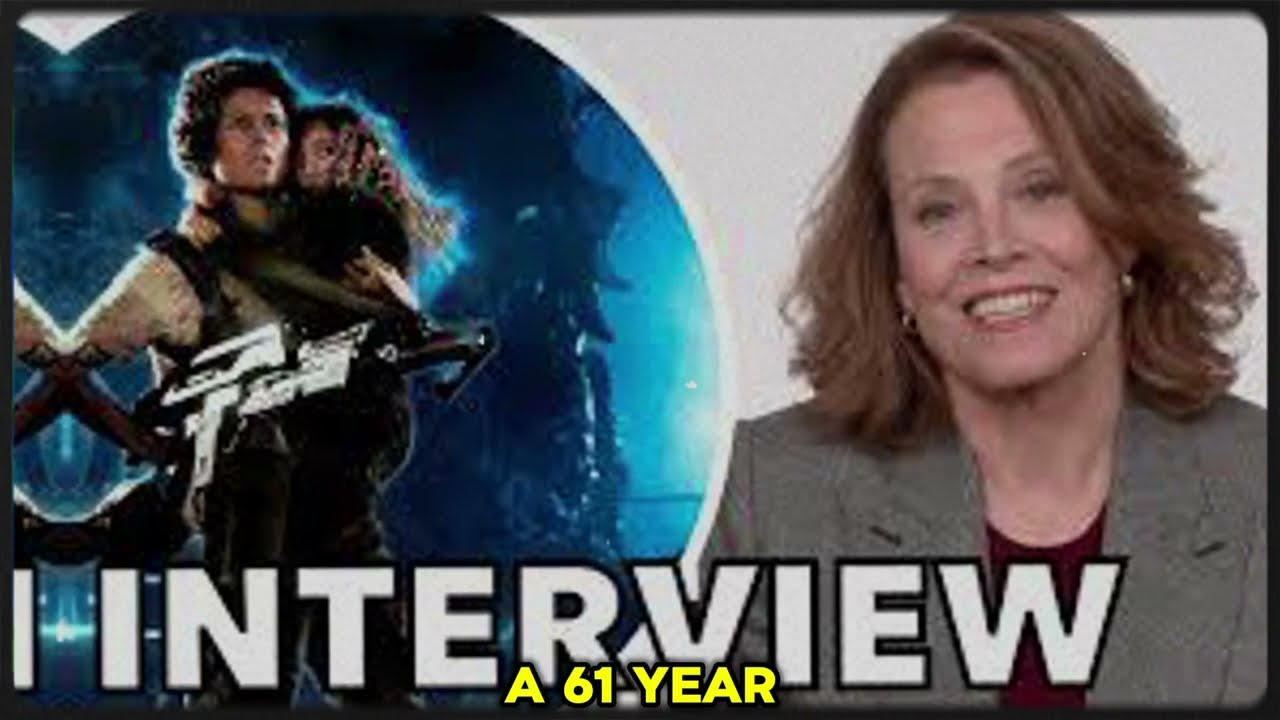
Then something unexpected happened.
In 2025, Weaver revealed that she had met with Disney about a possible return to the character she first played in 1979.
The meeting did not mean another Ripley film had been approved.
No production was announced.
No release date existed.
But longtime Alien producer and writer Walter Hill had written roughly 50 pages imagining where Ripley might be now.
Weaver read them.
And instead of immediately saying no, she became intrigued.
What interested her was not another story about Ripley crawling through air ducts while a Xenomorph chased her.
She had done that.
Many times.
This version, she said, was different.
It asked what society might have done to a woman like Ripley after everything she had survived.
Suddenly, one of cinema’s most famous survivors did not feel entirely finished.
That possibility is remarkable when you consider how complicated Weaver’s relationship with the Alien films has been.
The franchise made her famous.
It helped transform the possibilities for women in science fiction.
It earned her an Academy Award nomination.
It also put her inside one of the most chaotic productions in Hollywood history.
Weaver has watched directors fight studios, scripts change beneath everyone’s feet and Ripley herself die because the actress believed the character needed an ending.
Yet nearly five decades after an unknown theater actress first stepped aboard the Nostromo, Sigourney Weaver is still thinking about Ellen Ripley.
To understand why, you have to go back to the beginning.
And to a movie almost nobody knew would change anything.
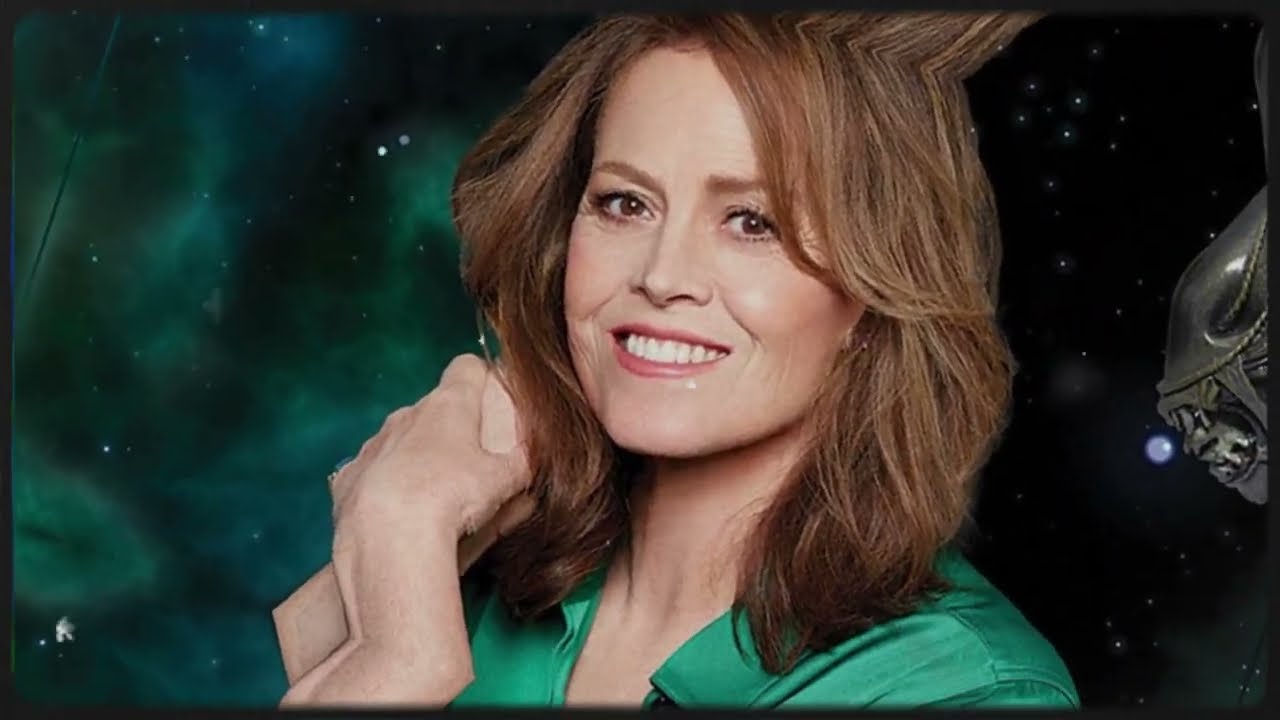
She Wasn’t Supposed to Become an Action Icon
When Alien was being assembled in the late 1970s, Sigourney Weaver was hardly an obvious Hollywood star.
She had studied at Yale School of Drama.
She had worked in experimental theater.
She had made a tiny appearance in Woody Allen’s Annie Hall.
Her real ambition was still closely connected to the stage.
Movies were not yet the center of her life.
Then Ridley Scott began casting a strange science-fiction picture about working people aboard a commercial spacecraft.
This was important.
The crew of the Nostromo were not glamorous space explorers.
They complained about money.
They argued about procedure.
They looked tired.
They worked.
Space in Alien did not feel like a pristine technological future.
It felt like another place ordinary employees had been sent to do a difficult job.
And Ripley was originally not conceived as the revolutionary female character she would become.
Early versions of the material treated the crew in gender-neutral terms or assumed male characters.
Ridley Scott later recalled the studio asking a simple question:
Why couldn’t Ripley be a woman?
Nobody delivered a grand speech about changing movie history.
They simply made the choice.
Weaver later said there was even a storytelling advantage to it.
Audiences would not automatically expect the woman to become the survivor.
In 1979, that mattered.
Viewers had no reason to assume the tall, relatively unknown actress would still be alive when the credits rolled.
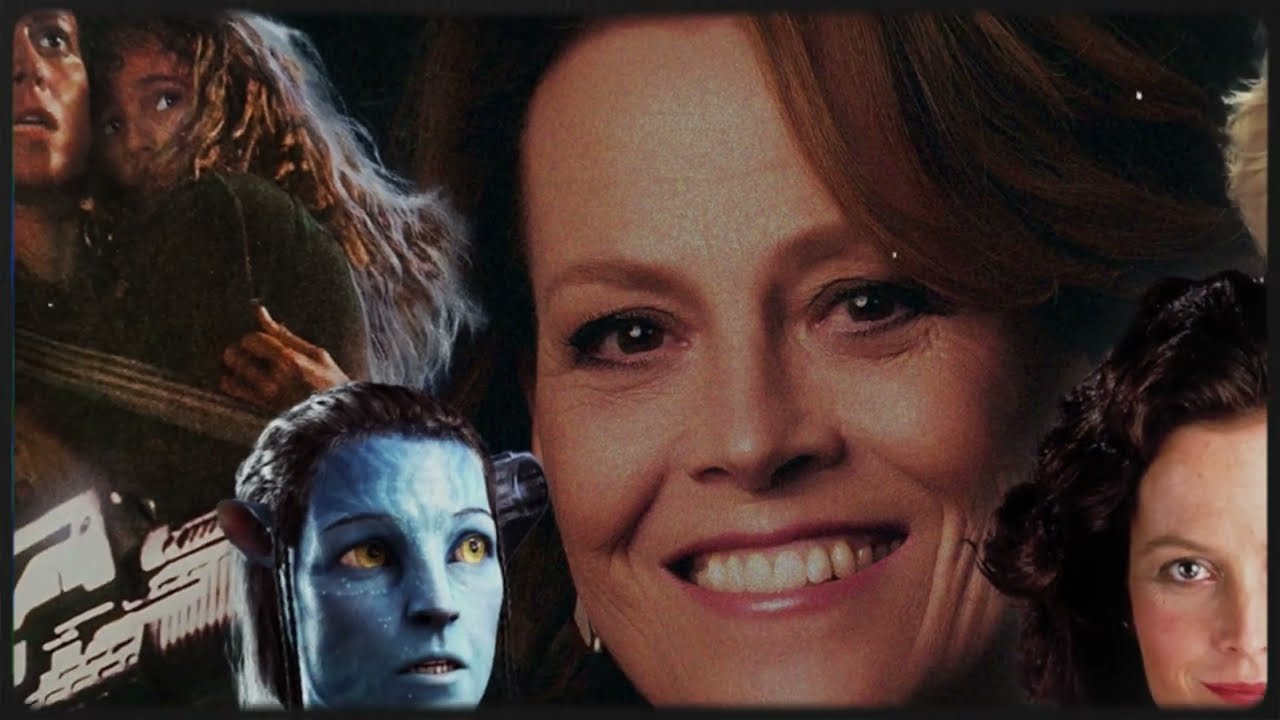
Even Weaver Didn’t Fully Understand What She Was Starting
When Weaver encountered Scott’s designs for the sets, the eggs and the creature, she realized she had never seen anything quite like them.
She wanted to be part of the film.
But she did not imagine she was creating a franchise.
The word did not carry the same meaning in Hollywood that it does today.
They were making one movie.
And Weaver was still learning how to act for the camera.
Years later, she joked that Scott once had to tell her to stop looking into the lens.
She was a theater-trained performer adjusting to the strange intimacy of film acting.
That uncertainty may have helped Ripley.
Ripley does not behave like someone who knows she is an action hero.
She is afraid.
She gets things wrong.
She survives because she pays attention.
Early in the movie, when others want to break quarantine protocol and bring an infected crewman aboard, Ripley insists on following the rules.
She is overruled.
The consequences are catastrophic.
That moment would become one of the defining elements of the character.
Ripley was not stronger because she shouted louder than everybody else.
She was strong because she noticed danger and refused to pretend it wasn’t there.
The audience slowly realized something the other characters did not.
Ripley was often right.
Then Everyone Else Started Dying
One of the great tricks of Alien is that it does not announce its hero.
Tom Skerritt’s Dallas looks like a conventional leading man.
John Hurt was an established actor.
The ensemble felt balanced.
Then the creature began eliminating them.
By the final act, Ripley remained.
The transformation was not presented with heroic music or a speech about empowerment.
She simply had to survive.
Weaver later resisted the tendency to describe Ripley as some deliberately constructed “strong woman.”
For her, the question itself was strange.
Women are strong, Weaver has said.
Women do not give up.
That was Ripley.
The character did not need to behave like a male action stereotype in order to survive.
She could be frightened and competent at the same time.
She could make practical decisions while other people panicked.
And because Alien treated her survival as part of the story rather than a slogan, audiences accepted it.
The film became a phenomenon.
The unknown actress suddenly had a character people would spend the next several decades asking her to play again.
And Weaver had reportedly earned only about $30,000 for the movie that changed her life.
The next time Hollywood wanted Ripley, the conversation would be very different.
Sigourney Weaver Initially Said No to Aliens
Today, Aliens is considered one of the great sequels.
Weaver nearly didn’t make it.
When the idea first appeared, her reaction was straightforward.
Why repeat something that had already worked?
The original Alien had a complete structure.
Ripley survived.
The creature was gone.
At the time, sequels were not yet automatically expected every time a movie succeeded.
Weaver was skeptical.
Then James Cameron entered the story.
Cameron did not simply want to remake Ridley Scott’s film.
Scott had made haunted-house horror in space.
Cameron wanted something bigger.
More aggressive.
Almost a war film.
Most importantly, Cameron did not view Ripley as an accessory to the monster.
He viewed Ripley as the story.
Weaver later recalled Cameron telling her he did not want to make the film without her.
That changed the conversation.
Instead of asking Ripley to repeat what she had already done, Cameron asked what surviving the first movie would have done to her.
That question transformed the sequel.
Aliens Made Ripley Pay for Surviving
At the beginning of Aliens, Ripley is not celebrated.
She is traumatized.
The world she knew has moved on.
She is treated skeptically when she tells people what happened to the Nostromo.
The company that sent her into danger does not want responsibility.
Then she is asked to return to the place where everything began.
The film gives Ripley something the original never had time to explore:
trauma.
She has nightmares.
She is frightened.
She does not want to go back.
But she does.
Then Cameron introduces Newt.
The relationship changes Ripley.
Protecting the girl gives her fear another purpose.
By the time Ripley straps weapons together and descends alone to rescue Newt, she is doing something audiences in 1986 had rarely seen a woman do in a major action movie.
But again, the power of the scene is not simply that Ripley carries a gun.
It is that audiences understand why she is going.
Ripley is terrified.
She goes anyway.
That distinction turned her into an icon.
Hollywood Had to Take a Science-Fiction Hero Seriously
The Academy Awards rarely treated science-fiction performances as major acting contenders.
Then came Sigourney Weaver in Aliens.
At the 1987 Oscars, Aliens received seven nominations.
One was for Best Actress.
Sigourney Weaver.
Think about how unusual that was.
This was not a costume drama.
Not a historical biopic.
Not an intimate domestic tragedy designed around an actor’s showcase.
Weaver was competing for Best Actress after spending much of a movie fighting extraterrestrial creatures alongside heavily armed Colonial Marines.
She did not win.
Marlee Matlin won for Children of a Lesser God.
But Weaver’s nomination mattered.
It demonstrated that a genre performance could be emotionally serious enough to enter Hollywood’s most traditional category.
Ripley was no longer simply the survivor of a successful horror movie.
She had become one of the central movie characters of her era.
Naturally, the studio wanted more.
That is where things became complicated.
Alien 3 Was Supposed to Be the Next Chapter
Instead, it became a warning.
The development of Alien 3 has become almost as famous as the finished movie.
Different writers proposed radically different versions.
Ideas came and went.
William Gibson wrote one version.
Eric Red wrote another.
Vincent Ward developed perhaps the most unusual concept: a largely wooden satellite world populated by monks who interpreted the Alien as a spiritual punishment.
That version did not survive.
But pieces of different concepts kept moving through development.
Meanwhile, Fox wanted another Alien movie.
Money had already been spent.
Sets were being designed.
The release machine was moving.
The story was not ready.
Eventually, the studio hired a young director named David Fincher.
He was not yet the filmmaker behind Se7en, Fight Club, Zodiac or The Social Network.
He was a gifted commercial and music-video director attempting his first feature.
And he stepped into chaos.
Weaver Watched a Young David Fincher Fight the Studio
Years later, Weaver described Alien 3 as an education in how not to make a movie.
Her criticism was not primarily aimed at Fincher.
Quite the opposite.
She believed Fox had hired a talented filmmaker and then failed to give him the freedom and preparation necessary to make the film properly.
Fincher himself later recalled the extraordinary situation.
Production began without the kind of finished screenplay a movie that complicated needed.
Changes kept coming.
Studio notes kept coming.
Arguments kept coming.
He tried to create a coherent film while the ground beneath him continually shifted.
Weaver, now powerful enough to be a co-producer as well as the star, was much closer to the machinery behind the franchise than she had been in 1979.
What she saw changed her.
This was no longer a group of filmmakers quietly discovering what Alien might become.
It was a valuable corporate property.
There were budgets.
Release dates.
Expectations.
And people with very different ideas of what audiences wanted.
The experience was bruising.
Fincher later distanced himself from the film.
Weaver never did so quite as completely.
She Actually Liked One of Alien 3’s Most Radical Ideas
Ripley has almost no resemblance to the heroic image from the end of Aliens when she arrives on Fiorina 161.
Newt is dead.
Hicks is dead.
Bishop is destroyed.
Ripley is isolated on a prison planet populated almost entirely by men.
Her head is shaved.
Her appearance is stripped down.
The movie refuses to give audiences the comforting sequel many wanted.
Even Weaver’s shaved head became symbolic of that approach.
Contrary to some later stories that frame it as a humiliating studio demand, Weaver embraced the idea.
She remembered Fincher proposing that Ripley should be bald and immediately recognizing how right the choice felt for the world they were creating.
It told her Fincher was willing to take risks.
Decades later, Weaver continued defending that side of the movie.
In 2025, she again praised Alien 3 for being utterly different from the first two films.
She understood why audiences hated losing Newt and Hicks.
But safety was never what interested her about Alien.
The original movie had shocked audiences precisely because people they expected to survive did not survive.
Space was dangerous.
That remained true.
But This Time Weaver Wanted Ripley to Die
The ending of Alien 3 seemed definitive.
Ripley discovers that she is carrying an Alien queen.
The corporation wants it.
She understands exactly what that means.
So she refuses to give it to them.
She chooses death.
For Weaver, the decision had a creative logic.
There were only so many ways to keep repeating the cycle:
Ripley wakes up.
Nobody believes her.
Alien appears.
People die.
Ripley fights it.
Repeat.
She wanted the series to be free of that obligation.
She also later said she had heard discussion of combining the Alien and Predator worlds and wanted no part of that direction, although the precise development timeline of those projects has been debated.
Whatever the mixture of reasons, Ripley’s sacrifice felt like an ending.
The woman who had spent three movies resisting corporate attempts to exploit the creature made the final decision herself.
The company could not have Ripley.
It could not have the queen.
End of story.
Except it wasn’t.
Hollywood Found a Way to Bring Back a Dead Woman
Five years later came Alien Resurrection.
Ripley was dead.
So the movie cloned her.
This was exactly the kind of premise that could have made Weaver laugh and walk away.
Instead, she saw an opportunity.
This was not really Ellen Ripley anymore.
Ripley 8 carried Alien DNA.
She moved differently.
Reacted differently.
She possessed an uncomfortable connection to the creatures she once hated.
That allowed Weaver to return without simply repeating herself.
She was no longer playing the terrified warrant officer from the Nostromo.
Nor the protective survivor from Aliens.
Nor the exhausted woman of Alien 3.
This Ripley was something new.
By then, Weaver’s value to the franchise had changed enormously.
The actress reportedly paid about $30,000 for the first Alien was earning roughly $11 million for Alien Resurrection.
That financial arc tells its own story.
In 1979, Sigourney Weaver was fortunate to have the role.
By 1997, an Alien film without her was difficult for the studio to imagine.
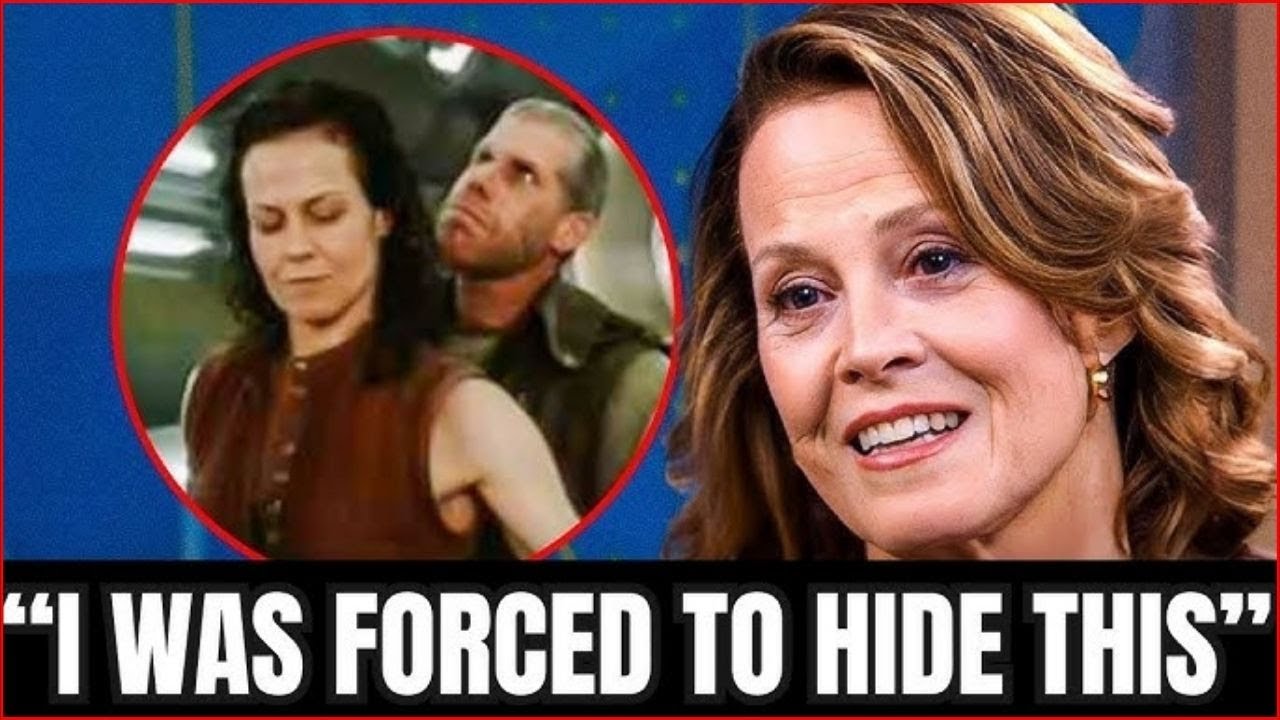
Then She Made the Basketball Shot
One of the most famous stories from Alien Resurrection involves a scene that lasts only seconds.
Ripley 8 stands on a basketball court and throws the ball over her shoulder without looking.
It drops through the hoop.
The moment perfectly establishes that this new Ripley has abilities an ordinary human does not.
The obvious way to create the shot would have been with a movie trick.
Instead, Weaver practiced.
And during filming, she actually made the shot.
Ron Perlman’s astonishment became part of the legend surrounding the scene.
It is a small piece of trivia compared with the larger history of the franchise.
But fans still talk about it because it represents something Weaver brought to Ripley from the beginning.
Commitment.
If a physical detail could make the character more believable, she wanted to try it.
The franchise around her could become increasingly elaborate.
Ripley still needed to feel real.
Why Ripley Lasted When So Many Action Heroes Didn’t
There have been hundreds of movie characters designed to look tough.
Few lasted like Ellen Ripley.
Part of the reason is that Ripley was never defined only by strength.
She was frightened.
Angry.
Exhausted.
Maternal.
Suspicious.
Practical.
Sometimes wrong.
She survived not because the screenplay declared her invincible but because she continued making decisions while everyone else was falling apart.
That distinction became increasingly important to Weaver.
Over the years, people repeatedly asked why she had played so many “strong women.”
She never entirely accepted the premise.
At the Venice Film Festival in 2024, while discussing the effect Ripley had on generations of women, Weaver returned to the same idea.
She simply plays women.
Women are strong.
Women do not give up.
Her answer explains why Ripley has aged better than many characters designed specifically as symbols.
Ripley was never required to announce what she represented.
She simply did the job.
The Character Changed Other Actresses Too
When Winona Ryder joined Alien Resurrection, she brought her own history with Ripley.
Ryder had grown up admiring Weaver.
She remembered Ripley as one of the first female characters in science fiction who felt genuinely powerful rather than decorative.
That generational shift mattered.
Weaver had entered the first Alien without understanding that she was becoming a model for future actresses.
By the fourth film, one of the major stars working opposite her could openly describe having been influenced by the character as a child.
The influence continued.
For decades, actresses, filmmakers and fans have pointed to Ripley when discussing women in action, horror and science fiction.
Yet Weaver herself remained wary of turning the character into a simple slogan.
She knew Ripley worked because she was human.
Take away the fear and you weaken her.
Take away vulnerability and she becomes a cartoon.
That philosophy may explain why Weaver repeatedly resisted returning simply because another studio wanted another sequel.
She Wasn’t Interested in Keeping Ripley Alive Forever
Weaver has never behaved as if Ripley were something she owned and had to protect from aging.
Quite the opposite.
She allowed her to die.
Then returned only when Resurrection offered a different version.
Later, proposed sequels came and went.
Directors imagined alternate continuations.
Neill Blomkamp famously developed ideas for a movie that could have reunited Ripley with elements from Aliens.
Nothing happened.
Eventually, Weaver began sounding increasingly certain that her time as Ripley had passed.
There was something sensible about that.
Ripley had already survived more than enough.
Why drag her through another corridor simply because people recognized the name?
Then Walter Hill sent her something.
And the question changed.
The New Idea Wasn’t Really About the Monster
Walter Hill has been connected to Alien since the beginning.
He and David Giler helped shape the original movie and remained associated with the franchise for decades.
Hill knew Ripley before audiences knew Ripley.
So when he developed a new treatment centered on where she might be now, Weaver read it differently than she might have read a random sequel pitch.
What caught her attention was the emphasis.
This was not simply:
The Alien is back. Ripley must kill it again.
Weaver described the material as more interested in Ripley herself.
What happens to someone after surviving experiences nobody else can understand?
How does society view her?
What kind of person would Ripley have become?
And, importantly for Weaver, the concept apparently contained humor and emotional complexity alongside the science fiction.
She liked it enough to meet with Disney.
That does not mean she has agreed to return.
As of 2026, there is no announced Ripley movie built from that treatment.
But the fact that Weaver took the meeting matters.
For a performer who spent decades insisting she would not come back simply for another commercial sequel, interest means something.
The Timing Is Fascinating
The Alien universe is very much alive again.
Alien: Romulus brought the theatrical series to a younger audience.
FX’s Alien: Earth expanded the world into television and received a second season.
New filmmakers continue exploring the mythology Ridley Scott introduced in 1979.
Meanwhile, Weaver herself has entered another famous science-fiction universe through The Mandalorian and Grogu.
She does not need Ripley for relevance.
That is what makes the possible return interesting.
At 76, Sigourney Weaver has nothing left to prove about Alien.
She already made the character immortal.
If she returns now, it would almost certainly have to be because somebody found a story she believes is worth telling.
That is a much higher bar than simply offering her another fight with a Xenomorph.
Alien Changed Hollywood, But It Also Changed Weaver
In the beginning, Weaver was a theater actress trying film.
She did not know whether Alien would matter.
She did not even know whether she wanted movies to become her career.
Then Ripley changed everything.
The first film made her famous.
Aliens proved she could carry a blockbuster and still deliver an Academy Award-nominated performance.
Alien 3 taught her how badly large movies could go wrong when creative authority became confused.
Alien Resurrection allowed her to play with the character rather than simply repeat her.
Each film gave her a different Ripley.
That may be why she never talks about the franchise as though it were one continuous experience.
Ridley Scott’s Alien was one thing.
James Cameron’s Aliens was another.
Fincher’s troubled Alien 3 was another.
Jean-Pierre Jeunet’s strange Resurrection was another again.
Weaver was the thread connecting all of them.
But she never wanted the thread to become a chain.
Perhaps That Is the Real Truth About Sigourney Weaver and Alien
There is a tempting version of this story in which Sigourney Weaver finally exposes Hollywood.
The studios betrayed her.
The sequels broke her.
She secretly hated everything.
Then, decades later, she reveals the truth.
That story is dramatic.
It is also too simple.
Weaver does have criticisms.
Strong ones.
She has never hidden how difficult Alien 3 became.
She has openly described watching Fox undermine a gifted young David Fincher and called the experience a lesson in how not to make a film.
But she has also defended the movie’s ambition.
She has praised Fincher.
She has celebrated Ridley Scott.
She has remained close to James Cameron.
She returned willingly for Resurrection because the idea interested her.
And decades later, she still speaks about Ripley with affection.
The relationship is not love or hate.
It is more complicated.
Alien gave Weaver the role that changed her life.
Weaver gave Alien the human being audiences cared enough about to follow through the nightmare.
Neither would have become quite the same phenomenon without the other.
And Now Ripley Is Waiting Again
Almost fifty years after the Nostromo crew answered that fatal signal, Ellen Ripley exists in a strange place.
She is dead in one continuity.
Cloned in another chapter.
Immortal in popular culture.
And possibly waiting for one final story.
Sigourney Weaver is careful not to promise anything.
She knows what happens when franchises begin making promises before stories are ready.
She lived through Alien 3.
But she read Walter Hill’s pages.
She liked what she found.
She met with Disney.
And for the first time in years, the question is no longer simply whether Sigourney Weaver would ever play Ellen Ripley again.
The more interesting question is:
What kind of story could persuade her to do it?
Perhaps that is where the franchise has finally returned to something it understood in 1979.
The Alien itself is terrifying.
But the monster was never enough.
What made the first movie unforgettable was the person trapped in the room with it.
A frightened, intelligent woman who kept thinking when everyone else stopped.
A woman nobody expected to become the hero.
Sigourney Weaver was 29 when audiences first met Ellen Ripley.
She is 76 now.
Hollywood has changed.
Science fiction has changed.
The Alien universe has grown far beyond one ship, one creature and one survivor.
But Ripley still belongs to Weaver in a way few characters belong to any actor.
And if she does step back through that airlock one more time, she has made one thing clear over nearly five decades:
It cannot simply be because the studio wants another Alien movie.
There has to be a reason for Ripley to survive again.
After everything she has already survived, she has earned that much.