The Green Mile Cast Reveals What Most Fans NEVER Figured Out
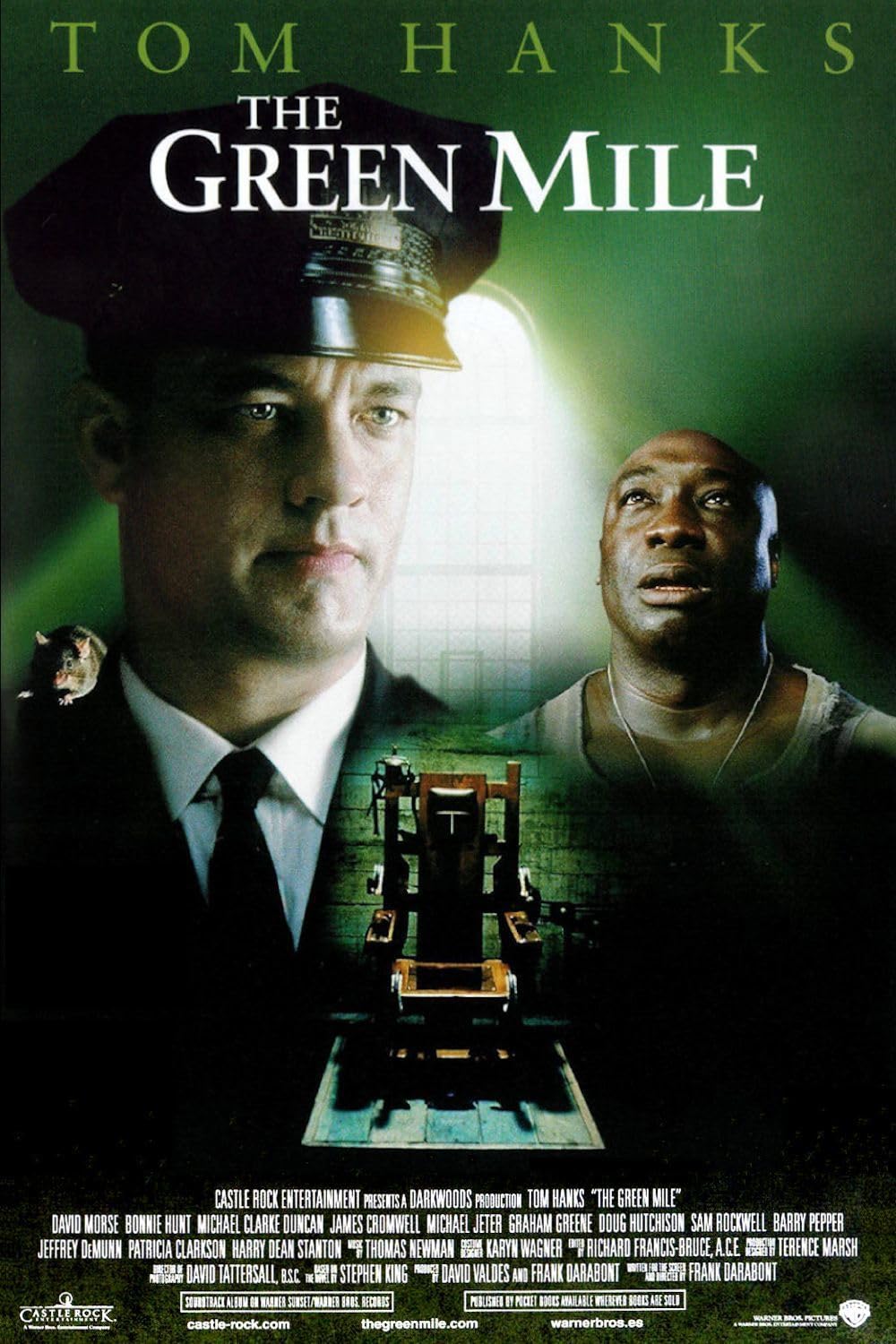
Before Michael Clarke Duncan became John Coffey, before audiences heard that extraordinary voice and watched a giant condemned man quietly transform everyone around him, he was standing on the set of another movie.
That movie was Armageddon.
Duncan was physically impossible to miss.
He was massive, with the kind of build Hollywood usually knew exactly how to use.
Bodyguard.
Bouncer.
Enforcer.
The threatening man standing behind somebody more famous.
It was the sort of casting box Duncan had spent years trying to escape.
Then Bruce Willis pulled him aside.
Willis knew Stephen King’s The Green Mile. He also knew Frank Darabont was preparing the film.
And according to Darabont, Willis told Duncan something remarkably direct:
“This is your part.”
He urged him to read for John Coffey.
Looking back, it sounds like one of those perfect Hollywood stories where destiny instantly falls into place.
But that is not what happened.
Michael Clarke Duncan walked into his first audition—
and Frank Darabont did not think he was very good.
That may be the first thing many fans of The Green Mile never knew.
The man whose performance would eventually earn an Academy Award nomination did not immediately convince the director.
He had to fight his way into John Coffey.
And what Darabont saw beneath that nervous first reading would ultimately change both the film and Duncan’s life.
Before John Coffey, Hollywood Mostly Saw Michael Clarke Duncan’s Size
Duncan had not grown up with the kind of career path that usually leads to Oscar night.
Before acting became his profession, he worked a variety of physical jobs.
He had worked security.
He had been a bodyguard for entertainers.
His size opened doors—but often very specific doors.
Early screen appearances frequently used him exactly as expected.
The huge guy.
The intimidating guy.
The guard.
The man whose physical presence was his primary character trait.
Even when Duncan began getting better opportunities, there was always a danger Hollywood would see the body before the actor.
Then came Armageddon in 1998.
Michael Bay cast Duncan as Bear, one of the oil drillers recruited for the impossible mission at the center of the film.
It was a much more visible role.
And Duncan paid attention.
Bay later remembered how dramatically Duncan improved while making the film.
Duncan watched the experienced actors around him.
Bruce Willis.
Ben Affleck.
Steve Buscemi.
He studied.
He learned.
And Willis noticed him.
That relationship would matter far beyond Armageddon.
Because another filmmaker was facing a casting problem that seemed almost impossible to solve.
Frank Darabont Needed More Than a Giant
Frank Darabont had already adapted Stephen King once with extraordinary results.
The Shawshank Redemption had not initially dominated the box office, but its reputation was growing.
For The Green Mile, Darabont faced a very different challenge.
John Coffey had to be physically overwhelming.
But size alone was useless.
Coffey needed gentleness.
Fear.
Innocence.
Mystery.
Pain.
A man who looked capable of crushing anyone in the room had to make the audience want to protect him.
That contradiction was the role.
Finding somebody enormous was possible.
Finding somebody enormous who could make viewers believe in Coffey’s almost childlike vulnerability was much harder.
Bruce Willis believed Duncan could do it.
So Duncan came in.
And the first reading did not settle anything.
Duncan’s First Audition Wasn’t the Legendary Triumph People Might Expect
Darabont later recalled Duncan’s first reading with unusual honesty.
He wasn’t great.
Duncan was nervous.
He was relatively inexperienced.
That might have ended the story immediately.
Hollywood auditions are full of talented actors who never get called back.
But Darabont could not forget Duncan.
Not because of the reading itself.
Because of the man who had walked into the room.
There was something gentle about him.
Something sweet.
A quality Darabont believed belonged inside John Coffey.
So the casting search continued.
Other actors were considered.
Duncan kept coming back.
And each time, something changed.
Darabont Auditioned Him Again. And Again.
The process stretched for months.
According to Darabont, Duncan improved significantly every time he returned.
The Washington Post later reported that Duncan auditioned four times before finally receiving a screen test.
That detail matters.
Today, it is difficult to imagine anybody else as John Coffey.
Duncan seems inevitable.
But he wasn’t.
The filmmakers were taking a major risk.
This would be one of the emotional centers of a large Tom Hanks movie.
Duncan did not have decades of celebrated dramatic performances behind him.
What he had was presence—
and an emotional quality Darabont could not forget.
By the time Duncan reached the screen test, the difference was visible.
He had grown into the role.
The actor was beginning to disappear.
John Coffey was appearing.
Bruce Willis Had Seen Something Before Everyone Else
This is why Willis’ role in the story is so remarkable.
He did not direct The Green Mile.
He did not star in it.
He did not receive an on-screen credit for discovering John Coffey.
He simply recognized something in a fellow actor.
Duncan later became closely identified with The Green Mile, but Willis had watched him earlier, while Duncan was still figuring out what kind of actor he could become.
Willis did not merely recommend a large man for a large character.
He apparently sensed that Duncan had something audiences had not yet been allowed to see.
Darabont eventually saw it too.
And once filming began, the production faced an interesting problem.
Michael Clarke Duncan was a huge man.
John Coffey needed to look even bigger.
John Coffey Was Larger Than Michael Clarke Duncan
Duncan was roughly 6-foot-5 and extraordinarily muscular during the production.
That sounds enormous.
Until you look at the other actors around him.
David Morse, who played Brutus “Brutal” Howell, was only slightly shorter.
James Cromwell, who played Warden Hal Moores, was actually taller than Duncan.
Yet in the finished film, Coffey seems to tower over almost everyone.
That was not an accident.
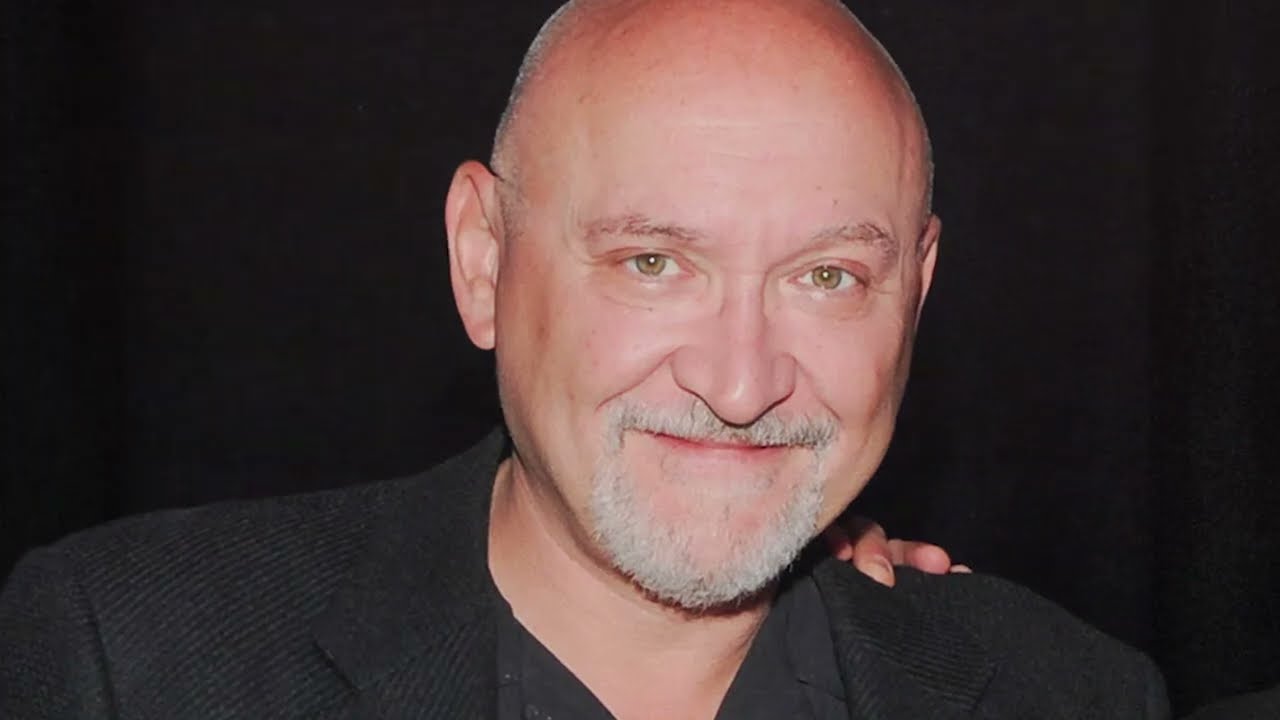
The production used practical tricks and carefully designed effects to increase the illusion of Coffey’s size.
David Morse later recalled that Duncan sometimes walked on raised platforms or apple boxes while the other actors walked beside him.
The filmmakers also manipulated the physical environment around Coffey.
His furniture could be scaled differently.
Camera placement helped.
Perspective helped.
Set construction helped.
According to behind-the-scenes material, the effects could make Duncan appear roughly nine inches taller than he really was.
Audiences saw a giant.
But Duncan himself later joked that people meeting him in real life were often surprised he wasn’t actually seven feet tall.
The illusion had worked almost too well.
The Size Was an Effect. The Gentleness Wasn’t.
That distinction is essential.
Special effects could make Michael Clarke Duncan taller.
They could not manufacture John Coffey’s emotional presence.
The softness in his voice.
The hesitation.
The fear.
The way his enormous body seems to collapse inward when Coffey is frightened.
Those things came from Duncan.
The film constantly plays with that contradiction.
John enters Cold Mountain Penitentiary appearing almost monstrous in scale.
The guards prepare themselves for danger.
Then he speaks.
He is afraid of the dark.
He asks whether the lights will remain on.
Suddenly, physical expectations no longer mean anything.
That is why casting Duncan mattered so much.
A more polished actor might have delivered a technically perfect performance.
But John Coffey needed something almost impossible to fake.
Goodness.
Darabont had sensed that quality before Duncan had fully mastered the audition.
It was the reason he kept bringing him back.
Tom Hanks Was Almost the Opposite Casting Problem
If finding John Coffey was difficult, casting Paul Edgecomb was comparatively simple.
Darabont had met Tom Hanks previously.
Hanks admired The Shawshank Redemption and had indicated that he wanted to work with Darabont.
So Darabont sent him The Green Mile.
Hanks responded quickly.
The younger Paul Edgecomb was settled.
But one problem remained.
The film does not begin with Tom Hanks.
It begins decades after the events on the Mile.
Paul is now an elderly man living in a retirement home, still carrying a memory he has never fully escaped.
Originally, there was serious consideration given to having Hanks play that version of Paul too.
They tested it.
Tom Hanks Was Tested as Old Paul
Makeup artists created old-age tests for Hanks.
Two different approaches were explored.
The footage still exists in the film’s home-video special features.
Hanks can be seen performing as the elderly Paul under heavy aging makeup.
But Darabont ultimately changed direction.
Instead of asking viewers to spend the framing story looking at Tom Hanks under prosthetics, he cast veteran character actor Dabbs Greer.
Greer was in his 80s.
He did not need to convince the audience that time had passed.
It was visible in his face.
His fragility.
His voice.
His movements.
And Darabont was delighted with the choice.
This is one of those decisions that seems obvious only after the finished film exists.
Had the makeup worked perfectly, audiences might remember The Green Mile today as another showcase for Hanks playing two ages.
Instead, Dabbs Greer gave the film something different.
The feeling that Paul really had carried this story for a lifetime.
Old Paul Wasn’t an Optional Epilogue
That also corrects another story sometimes repeated about The Green Mile.
The retirement-home material was not simply an unnecessary ending attached to the real story.
For Darabont, Old Paul was central to the film’s structure.
He later explained that without elderly Paul, there was no real beginning or end.
There was narrative—
but no context.
The story had to be a memory.
That is why The Green Mile begins long after John Coffey is gone.
Paul is still living with what happened.
Then he sees Fred Astaire and Ginger Rogers dancing to “Cheek to Cheek” in Top Hat.
Something inside him breaks open.
The audience does not yet know why.
Much later, we understand.
John Coffey had never seen a movie before.
Watching that same Fred Astaire and Ginger Rogers sequence had brought him joy shortly before his death.
What looks like an old man crying over an old movie is actually six decades of guilt and memory returning all at once.
Darabont loved that kind of delayed explanation.
Show the audience something mysterious.
Let them remember it.
Then reveal its meaning later.
It is the same philosophy that makes the entire film work.
Even Stephen King Walked Onto the Mile
During production in 1998, Stephen King visited the set.
By then, King had already experienced almost every possible version of Hollywood adaptation.
Some faithful.
Some radically different.
Some he admired.
Others he famously did not.
The Green Mile set made an impression.
Contemporary reporting described King being taken through the massive prison environment constructed for the film.
Then came “Old Sparky.”
The electric chair.
King allowed himself to be strapped into it.
Photographs were taken.
It is an extraordinary image when you understand what you are seeing.
The man who imagined the execution chamber on the page sitting inside Hollywood’s physical recreation of it.
And the chair looked frighteningly convincing.
Old Sparky Was Built From Real-World Research
The production did not simply buy a generic movie electric chair.
Behind-the-scenes materials describe the design as a composite inspired by actual execution chairs.
The filmmakers studied real prisons.
Production designer Terence Marsh wanted Cold Mountain to feel old, institutional and slightly mysterious.
The windows were elongated.
The corridor had the faded green flooring that gives the story its title.
The death-house environment needed to feel simultaneously ordinary and ominous.
That distinction matters.
If the prison had looked like a Gothic horror set, the audience could emotionally distance itself.
Instead, the Mile looks like a workplace.
People drink coffee there.
Talk about home.
Argue.
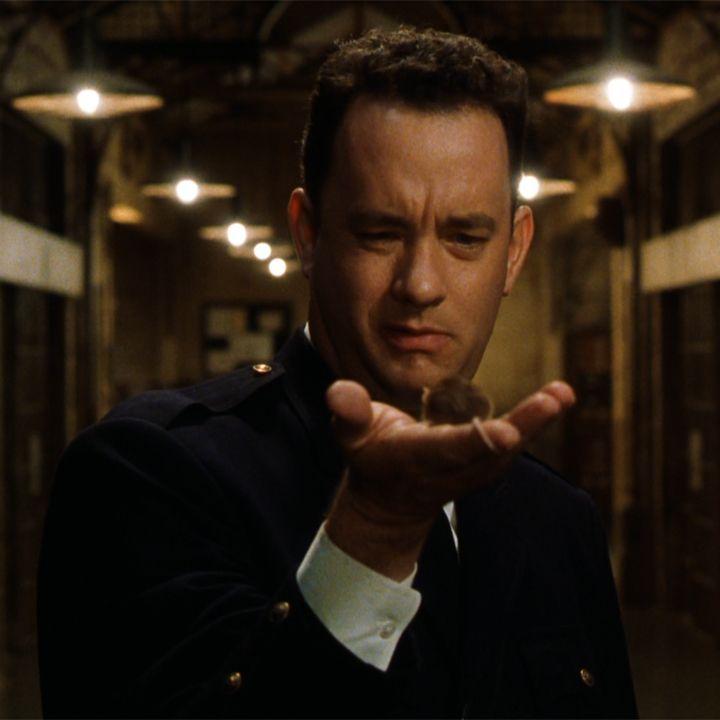
Feed a mouse.
Make jokes.
Then somebody is strapped into a chair and killed by the state.
The ordinary setting makes the horror worse.
The Film’s Most Horrifying Execution Required Another Kind of Illusion
One of the scenes audiences remember most vividly is Eduard Delacroix’s execution.
Percy Wetmore deliberately fails to wet the sponge placed beneath the electrode.
The execution becomes prolonged and horrifying.
The scene is brutal precisely because the film has already explained how the procedure is supposed to work.
Routine becomes catastrophe.
Behind the finished sequence was extensive practical-effects work.
The production used effects, dummies, lighting, smoke and carefully controlled filmmaking to create something that feels far more dangerous than what was actually occurring on set.
That is an important distinction from some of the stories circulating about the film.
“Old Sparky” looked realistic.
The execution looked horrifying.
But the production was still carefully creating an illusion.
That ability to make manufactured events feel morally real is one of the film’s greatest strengths.
The Green Mile Hid Effects in Places Most Viewers Never Noticed
Making Duncan look larger was only one example.
Behind-the-scenes documentaries reveal just how much invisible craftsmanship went into the movie.
There were physical and digital effects around Coffey’s healing power.
The filmmakers had to make a mouse seem to perform with impossible precision.
Duncan’s scale had to remain convincing from shot to shot.
An animatronic body was needed for elements of the execution sequences.
Many of these effects succeed because audiences do not consciously notice them.
The supernatural parts of The Green Mile rarely feel like the film has suddenly become an effects spectacle.
They feel like something impossible entering a very physical world.
That restraint is crucial.
John Coffey is miraculous.
The world around him is brutally ordinary.
Some “Hidden Meanings” Are Better Treated as Interpretation, Not Secret Fact
Fans have spent more than a quarter-century analyzing the film.
And many of those interpretations are compelling.
John Coffey is frequently read as a Christlike figure.
The initials J.C. make the comparison hard to ignore.
He is innocent.
He heals.
He takes suffering into himself.
He knows people will kill him despite his goodness.
And eventually he accepts death because life has become too painful.
That reading is powerful.
But it should be described honestly.
It is an interpretation supported by the film—
not necessarily a secret code the cast suddenly revealed years later.
The same is true of Mr. Jingles.
Mr. Jingles Quietly Tests Everyone’s Capacity for Compassion
The tiny mouse may seem like comic relief.
But watch how characters respond to him.
Delacroix shows affection.
John restores him after Percy crushes him.
Percy hurts him because he can.
Paul and the other guards gradually protect him.
Whether or not the filmmakers intended the mouse as a formal “moral compass,” the effect is difficult to miss.
How someone treats something small and defenseless tells us who that person is.
That idea later expands.
A mouse is easy to dismiss.
So is a condemned prisoner.
Especially one society has already labeled monstrous.
The deeper question is whether compassion still matters after the system has decided someone no longer deserves it.
The film never answers that question comfortably.
That may be one reason audiences have continued returning to it.
Two Deleted Scenes Actually Survived
The movie runs three hours and nine minutes.
Even at that length, material was removed.
But the deleted scenes that can actually be documented are more specific than some internet lists suggest.
Two were later recovered and released with home-video editions.
One shows Arlen Bitterbuck saying goodbye to his family.
The other is a quiet prayer scene involving John Coffey and Paul as Coffey’s execution approaches.
Darabont explained that they were removed largely for pacing.
Neither scene completely changes the story.
That is precisely why they are interesting.
They show what filmmakers have to sacrifice even in an extraordinarily long movie.
Good scenes can still disappear if the larger film works better without them.
And for longtime fans, those recovered moments offer something rare:
a little more time with people whose ending they already know.
The Green Mile Wasn’t a Box-Office Disappointment
Another myth that sometimes attaches itself to the film is that audiences only discovered it later on television and home video.
Its afterlife certainly became enormous.
But its original theatrical performance was already substantial.
Released in December 1999, The Green Mile was rated R and ran more than three hours.
Its reported production budget was about $60 million.
It earned approximately $136.8 million domestically and roughly $286.8 million worldwide according to Box Office Mojo.
For a three-hour adult prison drama, those are strong numbers.
Then awards season arrived.
And the actor Bruce Willis had urged to audition received one of Hollywood’s biggest honors.
Michael Clarke Duncan Became an Oscar Nominee
The 2000 Academy Awards gave The Green Mile four nominations:
Best Picture.
Adapted Screenplay.
Sound.
And Best Supporting Actor—
Michael Clarke Duncan.
Pause on that for a moment.
Only a few years earlier, Duncan had been working security and taking small parts that frequently emphasized his size.
Then Bruce Willis told him to read for John Coffey.
His first reading did not convince Frank Darabont.
He came back.
Improved.
Came back again.
Earned a screen test.
Won the role.
And then found himself nominated for an Academy Award alongside some of the most respected actors in the business.
He did not win.
Michael Caine took the Supporting Actor Oscar for The Cider House Rules.
But Duncan no longer needed to prove he was more than “the big guy.”
Millions of people already knew.
John Coffey Changed the Way Audiences Saw Duncan
After The Green Mile, Duncan continued working steadily.
The Whole Nine Yards.
Planet of the Apes.
The Scorpion King.
Daredevil.
Sin City.
Comedy.
Action.
Voice work.
Villains.
Heroes.
But no role ever completely displaced John Coffey.
Duncan understood that.
Years later, he joked that whenever people described him, they always seemed to say:
the actor from The Green Mile.
Not one of the many other movies.
John Coffey stayed attached to him.
Perhaps that was inevitable.
The film asked audiences to look at Duncan’s enormous body and then spend three hours learning that his size was almost the least interesting thing about him.
Hollywood had spent years using Duncan to signify danger.
Darabont used him to signify gentleness.
That reversal became unforgettable.
The Film’s Real Miracle May Have Happened Before the Cameras Rolled
It is easy to focus on the supernatural miracles inside the story.
John heals Paul.
He heals Mr. Jingles.
He pulls Melinda Moores back from death.
But behind the camera, a different transformation was taking place.
A performer who had not yet been given a role of this emotional size was being asked to carry one.
Darabont could have rejected Duncan after the first audition.
He had reason to.
Instead, something about Duncan remained in his mind.
That decision is a reminder that casting is not always about choosing the person who gives the most polished first reading.
Sometimes it is about recognizing what might exist if the performer is given time.
Darabont saw sweetness.
Gentleness.
Soulfulness.
Then Duncan did the work required to turn those qualities into a performance.
Bruce Willis opened the door.
Darabont kept it open.
Duncan walked through it.
More Than a Decade Later, The Story Became Painfully Personal
Michael Clarke Duncan died in September 2012.
He was only 54.
The reaction from the people who had worked with him made clear that the warmth audiences associated with John Coffey had not been entirely invented.
Bruce Willis called Duncan a dear friend.
Darabont described him as exceptionally gentle.
And Tom Hanks offered perhaps the most moving description.
He called Duncan:
“the treasure we all discovered on the set of The Green Mile.”
It is difficult to hear that sentence without thinking back to the casting story.
Because in a literal sense, that is what happened.
Hollywood already had Michael Clarke Duncan.
He had already been standing on sets.
Already appearing in movies.
Already working beside stars.
But The Green Mile discovered what else he could do.
And once audiences saw it, they could never unsee it.
Nearly 27 Years Later, The Film Still Doesn’t Feel Disposable
The Green Mile opened on December 10, 1999.
More than a quarter-century later, scenes from it remain instantly recognizable.
John arriving on the Mile.
Mr. Jingles.
Del’s execution.
The trip to Melinda’s house.
“Cheek to Cheek.”
John asking not to have the hood placed over his face.
Paul watching the chair.
The revelation that Mr. Jingles is still alive.
Old Paul wondering how much longer his own life will continue.
The film is long.
Sentimental.
Supernatural.
Morally uncomfortable.
And deeply earnest.
Those qualities could easily have made it age badly.
Instead, they seem to be part of why viewers continue returning.
The movie does not behave as though cynicism is smarter than compassion.
It asks the audience to take kindness seriously.
That is increasingly unusual.
And Some of the Best Secrets Aren’t Really Secrets
There is no need to invent elaborate hidden color codes.
No need to claim the cast spent mysterious silent afternoons imprisoned in the set.
No need to insist the studio almost destroyed the ending without reliable evidence.
The documented production history is already extraordinary.
Michael Clarke Duncan nearly had to grow into John Coffey during the audition process.
Bruce Willis helped put him in the room.
Darabont kept calling him back because he could not forget the gentleness beneath the enormous physical presence.
The filmmakers secretly increased Duncan’s apparent height because several cast members were almost as tall—or taller.
Tom Hanks was tested as elderly Paul before Dabbs Greer got the role.
Stephen King sat in the terrifyingly realistic Old Sparky.
Two deleted scenes were eventually recovered.
A three-hour R-rated prison drama earned nearly $287 million worldwide.
And the actor once typecast because of his body became an Academy Award nominee because he showed audiences his heart.
Those facts need very little embellishment.
Maybe The Most Important Thing Fans Never Figured Out Happened Before John Coffey Ever Walked the Mile
Today, Michael Clarke Duncan’s performance looks inevitable.
That is what great casting does.
It makes every alternative seem impossible.
We look at John Coffey and think:
Of course it had to be Duncan.
But for months, Frank Darabont did not know that.
Duncan himself did not know it.
His first audition certainly did not prove it.
There was only a possibility.
Something Bruce Willis saw.
Something Darabont could not forget.
Something Duncan gradually learned how to put on screen.
And eventually, that possibility became one of the most beloved performances of the 1990s.
That may be the most beautiful behind-the-scenes story in The Green Mile.
Not a hidden symbol.
Not a scandal.
Not a secret studio war.
A man who had spent years being judged by his size was finally given a role that demanded audiences look past it.
They did.
And once they met John Coffey, they never looked at Michael Clarke Duncan the same way again.