Some of the most famous marriages in history looked perfectly conventional from the outside.
A president and his first lady.
Two celebrated writers.
A world-famous Mexican painter and his equally famous wife.
A Hollywood leading man and the woman he married just as his career exploded.
A comedian who spent years making other people laugh while hiding an enormous part of herself.
For decades, later retellings have reduced these relationships to one sensational idea:
The husband had no idea his wife really loved women.
The truth is much more interesting.
Some husbands truly may not have understood everything happening inside their marriages.
Others almost certainly knew more than the public did.
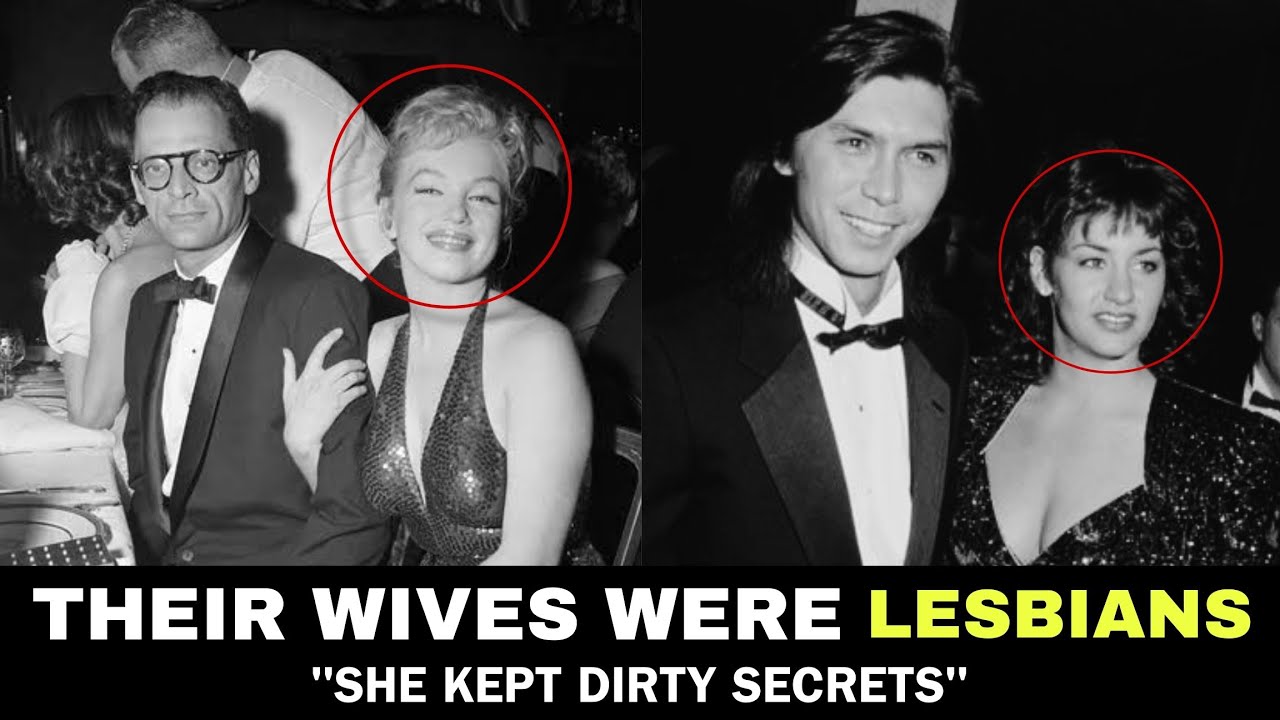
Some couples built arrangements that would still be considered unconventional today.
And several of the women involved were not lesbians at all, but bisexual, queer, or simply resistant to the labels later generations tried to place on them.
What connects these nine marriages is not deception.
It is the gap between the relationship the world saw—
and the much more complicated emotional life happening behind it.
In several cases, love for another woman did not erase love for a husband.
Sometimes the marriage survived.
Sometimes it did not.
Sometimes everybody involved knew.
And sometimes history spent decades getting the story wrong.
1. Virginia Woolf and Leonard Woolf — The Husband Wasn’t Nearly as Clueless as the Legend Suggests
Virginia Woolf married Leonard Woolf in 1912.
Their partnership became one of the most important literary marriages of the twentieth century.
Together they founded the Hogarth Press.
Leonard became Virginia’s editor, critic, business partner and one of the people most closely involved in caring for her during periods of severe mental illness.
Then Virginia met Vita Sackville-West.
The two women met at a dinner party in December 1922.
Friendship became fascination.
Fascination became romantic attachment.
Their surviving letters leave little doubt that the relationship carried emotional and sexual desire.
In 1926, Vita wrote that she had become consumed by wanting Virginia.
Virginia’s own letters were equally affectionate and intimate.
And from that relationship came one of the most unusual novels of the twentieth century:
Orlando.
Virginia used Vita as the inspiration for the title character, who moves through centuries and changes sex along the way.
Vita’s son, Nigel Nicolson, later famously described Orlando as the longest and most charming love letter in literature. (time.com)
A sensational version of this story usually places Leonard Woolf completely in the dark.
That is difficult to sustain.
The Woolfs moved in Bloomsbury circles where unconventional relationships were hardly unimaginable.
Leonard knew Vita.
He knew Virginia was intensely attached to her.
Accounts of the relationship suggest that what was happening was understood far more openly inside their circle than later tabloid-style retellings imply.
One biography of Leonard even describes the relationship as essentially understood by both husbands, with concern focused partly on Virginia’s emotional vulnerability rather than discovery of some shocking secret. (sandiegoreader.com)
That completely changes the story.
Leonard was not simply the foolish husband sleeping beside a woman whose “real life” escaped him.
Virginia loved Vita.
Virginia also shared a profound intellectual and domestic partnership with Leonard.
Those facts did not cancel one another.
And perhaps the most surprising thing about the Woolf marriage is not that Virginia loved another woman.
It is that the marriage proved capable of containing a relationship outsiders might have assumed would automatically destroy it.
2. Vita Sackville-West and Harold Nicolson — A Marriage Built Around Knowing
If Leonard Woolf complicates the “clueless husband” narrative, Harold Nicolson destroys it.
Vita Sackville-West married diplomat and writer Harold Nicolson in 1913.
They had children.
They built a home together.
They wrote constantly to one another.
And both had relationships outside the marriage.
With people of the same sex.
The National Trust, which now preserves Sissinghurst Castle Garden—the home most closely associated with Vita and Harold—describes their marriage as one filled with love and an understanding of each other’s desires.
That understanding allowed both partners to pursue same-sex relationships while remaining married. (nationaltrust.org.uk)
Vita had relationships with several women.
One of the most dramatic was with Violet Trefusis.
The two women became so involved that in 1920 they fled together to France.
Their husbands went after them.
Later came Virginia Woolf.
And this time there was remarkably little possibility that Harold misunderstood what was happening.
The surviving correspondence makes that clear.
After Vita became involved with Virginia, she wrote to Harold openly about what had happened between the two women.
Harold himself had relationships with men.
One of the more serious was with writer and editor Raymond Mortimer.
Their marriage survived because the central question was not:
“Are you attracted only to me?”
It was:
“Does the bond between us remain?”
Apparently, for decades, it did.
Harold and Vita remained married until Vita’s death in 1962.
This marriage is perhaps the clearest proof of why the original “wives were secretly lesbians” framing fails.
Harold was not deceived in the conventional sense.
Vita’s relationships with women were not evidence that her marriage was automatically false.
Their arrangement was unusual.
Complicated.
Sometimes painful.
But very real.
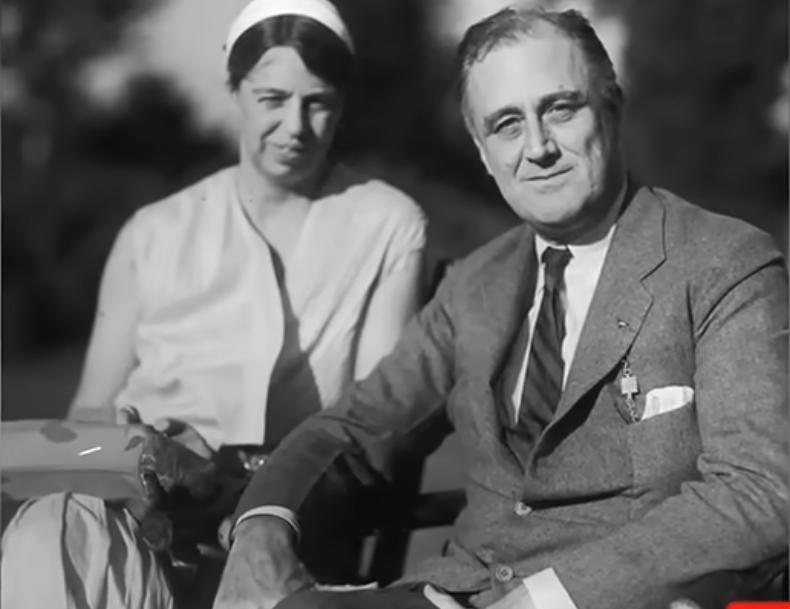
3. Eleanor and Franklin Roosevelt — Two Parallel Emotional Lives Inside America’s Most Famous Marriage
Few marriages in American history have been examined more closely than Franklin and Eleanor Roosevelt’s.
They married in 1905.
Then, in 1918, Eleanor discovered letters revealing Franklin’s relationship with Lucy Mercer.
The discovery fundamentally changed the marriage.
Eleanor considered divorce.
The couple remained together instead.
From that point forward, their partnership increasingly became political, familial and public rather than conventionally romantic.
Then another person entered Eleanor’s life.
Her name was Lorena Hickok.
“Hick,” as Eleanor called her, was a pioneering journalist who began covering Eleanor during Franklin Roosevelt’s 1932 presidential campaign.
The two women became extraordinarily close.
Hickok fell in love with Eleanor.
And the thousands of surviving letters between them suggest Eleanor reciprocated emotionally, at least for a period.
The National Park Service now states directly that their correspondence suggests reciprocal romantic attachment. (nps.gov)
Their letters spoke of missing one another.
Longing.
Physical closeness.
Emotional dependence.
Hickok eventually became so close to Eleanor that she even lived in the White House for a time.
Later storytelling often makes Franklin Roosevelt oblivious to all of this.
That is far harder to prove.
The Roosevelt marriage had already changed years before Hickok arrived.
Franklin had his own long emotional history with Lucy Mercer.
Eleanor had built a far more independent life.
And Hickok was not some invisible stranger slipping secretly through White House hallways.
She was known to the Roosevelt circle.
What remains debated is exactly how Franklin understood the emotional and physical dimensions of Eleanor’s relationship with her.
What is not debated is that Lorena Hickok became one of the most important intimate relationships of Eleanor Roosevelt’s life.
That makes the marriage more interesting than the simple story of a president who “never knew.”
By the 1930s, Franklin and Eleanor were living inside a partnership with boundaries very different from what the public image of President and First Lady suggested.
4. Frida Kahlo and Diego Rivera — Diego Knew More Than Almost Everyone
If any husband on this list was definitely not clueless, it was Diego Rivera.
Frida Kahlo and Diego Rivera married in 1929.
They divorced in 1939.
Then married each other again in 1940.
Their relationship became almost as famous as their paintings.
They loved each other.
They betrayed each other.
They fought.
Separated.
Returned.
And carried on affairs.
Both of them.
Frida had relationships with men.
She also had relationships with women.
Modern biographical accounts generally describe her as bisexual, although applying contemporary identity labels to historical figures always deserves some caution.
What makes the original story particularly misleading is the claim that Diego dismissed Frida’s female relationships as innocent friendships.
Biographical reporting indicates almost the opposite.
Rivera knew about Frida’s relationships with women and appears to have been considerably more tolerant of them than he was of her relationships with men. (biography.com)
That may tell us more about Diego’s own attitudes than about Frida.
He was notoriously unfaithful himself.
One of his affairs was with Frida’s own younger sister Cristina.
That betrayal deeply wounded Frida.
Yet Frida and Diego kept returning to one another.
A surviving 1940 letter from Frida to Diego, preserved by the Smithsonian Archives of American Art, shows affection surviving even after years of affairs and conflict. (smithsonianmag.com)
This was not a marriage in which one man innocently believed his wife belonged emotionally only to him.
It was a relationship built inside mutual infidelity, artistic obsession and a bond neither seemed able to sever permanently.
Frida’s love for women was one piece of that story.
Not a secret that suddenly explains all the rest.
5. Colette and “Willy” — The Marriage Collapsed Just as Colette Began Living More Openly
Long before Hollywood struggled with queer identity, French writer Colette was writing and living in ways that scandalized polite society.
Born Sidonie-Gabrielle Colette, she married Henry Gauthier-Villars in 1893.
He was better known by the pen name:
Willy.
The marriage became both literary partnership and exploitation.
Willy pushed Colette to write material based on her school experiences.
Those stories became the enormously successful Claudine novels.
But they were published under Willy’s name.
Colette received little of the credit and none of the control she deserved.
Meanwhile, both husband and wife had extramarital relationships.
By 1906, the marriage was collapsing.
Around the same period, Colette began a passionate relationship with Mathilde de Morny, known as Missy.
Missy was an aristocrat who frequently dressed in masculine clothing and openly defied gender expectations.
Colette and Missy lived together.
They performed together.
And in 1907 they created one of the scandals of Belle Époque Paris when they kissed onstage at the Moulin Rouge.
Police were called amid the public reaction.
Their performance was effectively shut down. (smithsonianmag.com)
Again, the interesting story is not:
“Willy never realized his wife liked women.”
Both partners were already living beyond conventional marital boundaries.
Colette separated from Willy and eventually built the independent literary identity he had once obscured.
She later married men again.
Her life included relationships with both men and women.
The marriage with Willy matters because it shows how a woman could move from a controlling conventional arrangement into a much more openly self-directed life—
artistically and sexually.
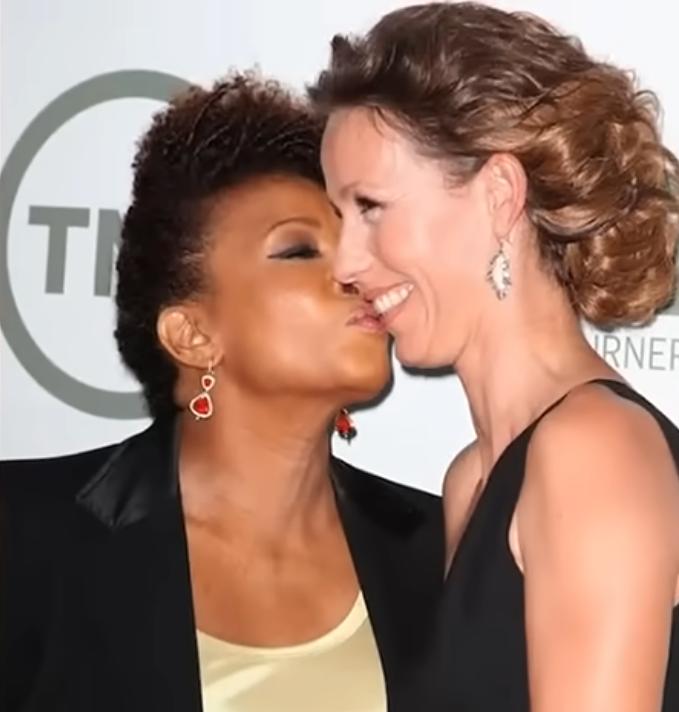
6. Wanda Sykes and Dave Hall — She Married Before She Was Ready to Live Openly
Unlike the earlier historical figures, Wanda Sykes has described her own identity directly.
She is gay.
But her public coming-out came relatively late.
From 1991 until 1998, Sykes was married to record producer Dave Hall.
Years later, she has spoken about that period as part of a life in which she had not yet fully arrived at the place where she could live openly as herself.
After the divorce, her comedy career accelerated.
She became one of America’s most recognizable stand-up performers and television writers.
Then in 2006, she met the woman who would become her wife, Alex.
They married in October 2008.
Only weeks later, during a rally opposing California’s Proposition 8, Wanda publicly announced that she was gay.
The coming-out was not even carefully planned.
She had recently married Alex and suddenly found herself speaking not merely as a supporter of marriage equality, but as someone whose own marriage rights were under attack. (people.com)
What we do not have good evidence for is the melodramatic claim that Dave Hall was completely blindsided years later by some shocking revelation.
That reaction belongs to the imagination of the original article, not to a well-sourced public record.
The compelling story is Wanda’s.
A woman married to a man.
Later divorced.
Years before she would publicly say:
This is who I am.
For older readers, it is worth remembering what the entertainment industry looked like when Sykes married Hall in 1991.
Ellen DeGeneres had not yet come out publicly.
Same-sex marriage seemed politically unimaginable.
The social cost of being openly gay could be enormous.
Wanda’s story is less about deceiving a husband than about how long it can take a person to live publicly in a way that matches their private identity.
7. Portia de Rossi and Mel Metcalfe — Hollywood Made the Closet Feel Like Career Insurance
Portia de Rossi’s case demonstrates just how powerful professional fear can be.
Before Ally McBeal made her famous, de Rossi married filmmaker Mel Metcalfe in 1996.
The marriage lasted until 1999.
De Rossi later said the marriage had originally been connected to immigration concerns and a possible green-card arrangement, though she did not ultimately follow through with that plan.
She later described the relationship simply as something that was not right for her. (biography.com)
But something larger was happening.
Portia was terrified of being exposed as gay.
When she later met Ellen DeGeneres, de Rossi said she was still closeted and believed that openly dating one of the world’s most famous lesbians might destroy her acting career.
She had spent years in Hollywood carefully controlling what people knew about her.
Even members of her own family did not initially know the truth about her sexuality. (people.com)
That is far more revealing than imagining her former husband as the foolish man who failed to notice.
Portia herself was actively frightened of the truth becoming public.
That is what the closet means.
It is not simply keeping a secret from one spouse.
It can mean constructing an entire public life around the fear that one piece of truth will destroy everything else.
Portia eventually stopped doing that.
She came out publicly.
She began a relationship with Ellen.
They married in 2008.
The woman who once believed being openly gay could end her career eventually became half of one of the most visible same-sex marriages in American entertainment.
8. Lou Diamond Phillips and Julie Cypher — The Story Became Even More Complicated Years Later
At first glance, this seems like the original headline’s strongest example.
Lou Diamond Phillips became famous almost overnight playing Ritchie Valens in La Bamba.
In 1987, he married Julie Cypher.
Cypher worked in film and music production.
While involved in the music world, she met singer Melissa Etheridge.
A relationship developed.
Cypher separated from Phillips in 1990 and entered a long partnership with Etheridge.
For the next decade, Julie and Melissa became one of America’s most visible same-sex celebrity couples.
They had two children together, with David Crosby serving as biological father.
From the outside, the story seemed simple:
Julie had married a man—
then realized she was a lesbian.
Except that years later, Julie Cypher said something that complicated the entire narrative.
During therapy with Etheridge in 1999, Cypher reportedly said:
“I’m just not gay.”
The relationship ended the following year. (latimes.com)
Julie later married a man.
This is exactly why sexuality should not be forced into neat retrospective categories.
At one point she publicly identified as lesbian and lived for years in a same-sex relationship.
Later she said that identity no longer described her.
That does not make the relationship with Etheridge false.
Nor does it retroactively prove that her marriage to Lou Diamond Phillips was false.
Human beings are more complicated than the labels headlines want.
This case might actually be the strongest argument against the original title.
A woman can leave a husband for another woman—
and the final story still may not be:
“His wife was secretly a lesbian all along.”
9. Alice Walker and Mel Leventhal — The Relationship With Tracy Chapman Came Decades After the Marriage
Alice Walker’s original section contains one of the clearest factual problems.
Walker married civil-rights lawyer Mel Leventhal in 1967.
Their interracial marriage in Mississippi came during a period when interracial relationships were still met with intense hostility.
They had a daughter, Rebecca.
The marriage ended in divorce in 1976.
Nearly two decades later, Walker had a romantic relationship with singer Tracy Chapman.
Walker has openly acknowledged that relationship.
Asked about Chapman in a 2006 interview, she responded warmly and confirmed that she had loved the relationship. (theguardian.com)
But the timeline destroys the original claim.
The Tracy Chapman relationship occurred in the 1990s.
Walker and Leventhal had divorced in 1976.
There is therefore no basis for telling the story as though Mel spent their marriage unknowingly competing with Chapman.
Walker has also described herself as bisexual, not exclusively lesbian. (theguardian.com)
That distinction matters.
Her attraction to women does not erase the reality of her relationships with men.
Nor does a later female partner prove that an earlier husband had been unknowingly living inside a fraudulent marriage.
What Alice Walker’s story really demonstrates is something much broader:
A person’s emotional history can continue evolving long after a marriage ends.
The identity the world eventually learns may not have been understood in exactly the same way decades earlier.
So Which Husbands Really “Had No Clue”?
This is where the original story begins falling apart.
Leonard Woolf?
There is substantial evidence that Virginia’s attachment to Vita was not simply invisible to him.
Harold Nicolson?
He definitely knew.
His marriage with Vita was built around mutual awareness of same-sex relationships.
Diego Rivera?
Biographical accounts say he knew about Frida’s relationships with women and was comparatively tolerant of them.
Franklin Roosevelt?
The exact limits of his knowledge regarding Eleanor and Hickok remain unclear, but the White House relationship was hardly a simple conventional marriage by that point.
Mel Leventhal?
Alice Walker’s relationship with Tracy Chapman came decades after their divorce.
The original headline promised blind husbands.
The historical record gives us something much better:
marriages that operated by rules outsiders could not see.
The Husbands Were Sometimes Keeping Secrets Too
Another thing the sensational version largely ignores is that several of the men were living complicated romantic lives themselves.
Franklin Roosevelt had Lucy Mercer.
Diego Rivera was famously unfaithful.
Harold Nicolson had relationships with men.
Willy and Colette both had affairs.
That matters because it destroys the idea that these marriages consisted of innocent husbands being secretly betrayed by wives with hidden lives.
In some cases, secrecy ran in both directions.
In others, there was surprisingly little secrecy between the spouses themselves.
The public was the one that did not know.
That distinction changes everything.
Society Gave These Women Reasons to Hide
It is easy from the twenty-first century to ask:
Why didn’t she simply tell everyone?
Because “everyone” was not always safe.
Virginia Woolf and Vita Sackville-West lived in Britain during a period when homosexuality between men was criminalized and lesbian sexuality was socially stigmatized even when not explicitly prohibited in the same way.
Eleanor Roosevelt was the First Lady of the United States.
Imagine the political consequences in the 1930s if newspapers had openly framed her relationship with Lorena Hickok as a lesbian affair.
Wanda Sykes was building a career in American entertainment before openly gay television stars were commonplace.
Portia de Rossi has explicitly described fearing that disclosure would destroy her acting career.
The closet was not simply cowardice.
Often it was a survival strategy.
But “Lesbian” Is Still the Wrong Label for Several Women Here
This is another reason accuracy matters.
Frida Kahlo had relationships with men and women.
Alice Walker describes herself as bisexual.
Julie Cypher’s own understanding of her sexuality changed.
Vita Sackville-West had relationships with men and women.
Historical scholars debate which modern terminology is appropriate for Virginia Woolf.
The point is not to erase their relationships with women.
It is to avoid rewriting their identities merely because one modern headline performs better than another.
There is a much more powerful idea available:
Love does not always organize itself according to the categories outsiders expect.
That principle explains nearly every marriage in this story.
Vita and Virginia Reveal the Entire Puzzle
Perhaps no two people illustrate this better than Vita Sackville-West and Virginia Woolf.
They loved one another.
Both were married.
Vita remained deeply bonded to Harold.
Virginia remained deeply bonded to Leonard.
Vita’s relationship with Virginia influenced Orlando.
Virginia’s intellectual life remained inseparable from the publishing partnership she built with Leonard.
Neither marriage can be reduced to:
“She didn’t really love her husband because she loved a woman.”
People are capable of multiple forms of love simultaneously.
History becomes misleading when it insists only one can be genuine.
Eleanor Roosevelt’s Letters Reveal Something Similar
Lorena Hickok mattered enormously to Eleanor.
That does not make Franklin irrelevant.
Franklin mattered to Eleanor politically, historically and personally even after their conventional marital intimacy had changed.
The Roosevelt partnership became one of the most consequential political collaborations in American history.
At the same time, Eleanor could write intensely affectionate letters to Hick.
Both stories belong to her.
Removing either one makes her life smaller.
And Frida Refused to Make Herself Small for Anyone
Frida Kahlo’s life has been flattened repeatedly.
First she was remembered mainly as Diego Rivera’s wife.
Then later culture turned her into a symbol of suffering.
Then into a feminist icon.
Then into a queer icon.
Every label captures something.
None captures all of her.
She loved Diego intensely.
She also had affairs.
So did he.
She was attracted to women.
She was attracted to men.
The remarkable part is not that Diego somehow missed all of this.
It is that these two explosive people knew enough about each other to understand exactly how difficult their marriage was—
and still married twice.
Modern Cases Show How Quickly the World Has Changed
Wanda Sykes and Portia de Rossi belong to a different historical period from Virginia Woolf or Eleanor Roosevelt.
Yet even their stories show how recent some freedoms are.
Wanda publicly came out only in 2008.
Portia spent years believing coming out could destroy her career.
Melissa Etheridge came out publicly in 1993, during a period when openly lesbian celebrities were still extraordinarily rare in mainstream American entertainment. (people.com)
Those dates are not ancient history.
Many Americans alive today were already adults.
That matters for older readers.
The social world in which these women made decisions was different from the one younger generations inherited.
Perhaps the Real Secret Wasn’t Inside the Marriage
Maybe it was outside it.
The public expected:
husband.
Wife.
Marriage.
One approved romantic story.
Anything that did not fit had to be hidden, denied or simplified.
Yet inside several of these relationships, the reality was already more complicated.
Harold knew about Vita.
Diego knew about Frida.
Leonard understood far more about Virginia than clickbait later gave him credit for.
The spouses were not necessarily the people being deceived.
Sometimes society was.
Sometimes society simply had no language it was willing to use.
History Loves a Simple Betrayal Story
A husband discovers his wife’s secret.
Shock.
Humiliation.
Marriage destroyed.
That is a clean narrative.
It is also frequently wrong.
Real relationships resist clean endings.
Vita and Harold remained married.
Virginia and Leonard remained together.
Frida and Diego divorced—and remarried each other.
Wanda and Dave divorced years before Wanda publicly came out.
Alice Walker’s most famous relationship with a woman happened long after her marriage ended.
Julie Cypher left a husband for a woman, then years later questioned the very label the public had attached to her.
There is no single pattern.
That is the pattern.
What These Nine Marriages Actually Reveal
Not that famous men were stupid.
Not that their wives were secretly living fraudulent lives.
Not that attraction to women automatically invalidates a marriage to a man.
They reveal something more human.
Some people understood themselves slowly.
Some understood themselves clearly but lived in societies that punished honesty.
Some husbands knew and accepted more than outsiders could imagine.
Some marriages made space for multiple relationships.
Others could not survive them.
Some people changed.
Some labels changed.
And some love stories remained meaningful even when another love story existed beside them.
The Truth Was Often Hiding in Plain Sight
Virginia put Vita into Orlando.
Eleanor wrote letters to Hickok.
Vita told Harold what she was doing.
Frida lived with unusual openness by the standards of her time.
Colette turned female desire into literature.
Wanda eventually stood before a crowd and publicly identified herself as gay.
Portia stopped protecting a Hollywood career at the expense of being open about who she was.
Alice Walker later talked about loving Tracy Chapman.
Julie Cypher complicated everyone else’s expectations by eventually saying the label she had once used no longer felt right.
The clues were not always invisible.
The world often simply preferred a simpler story.
And That May Be the Biggest Twist
The original question asks:
How could these men not know?
But after looking closely at the evidence, another question becomes more interesting:
What if some of them did?
What if the real secret was not being kept from the husband—
but from a public that expected marriage to look only one way?
Harold Nicolson knew Vita loved women.
Diego Rivera knew Frida did.
Leonard Woolf lived close enough to Virginia’s relationship with Vita that the idea of complete obliviousness becomes difficult to defend.
Their marriages were not simple.
But “complicated” does not mean “fake.”
That may be the part history took longest to understand.
Behind some of the twentieth century’s most famous marriages were other love stories.
Some hidden.
Some tolerated.
Some openly understood inside the home but concealed from the world.
And once you remove the sensational headline, the truth becomes far stranger—and far more human.
The husbands were not always the last to know. Sometimes the public was.